
Faux Marble vs. Faux Stone Pillar Mailbox: Which Look Fits
Same column, same easy install, same locking box. The whole decision comes down to which surface reads right on your house.
 Dream Mailboxes Team
7 min readUpdated August 2026
Dream Mailboxes Team
7 min readUpdated August 2026

USA Made custom mailboxes. Shop our modern, mid-century, contemporary, wall mounted mailboxes...
Same column, same easy install, same locking box. The whole decision comes down to which surface reads right on your house.
Dream Mailboxes Team
7 min readUpdated August 2026
The short answer
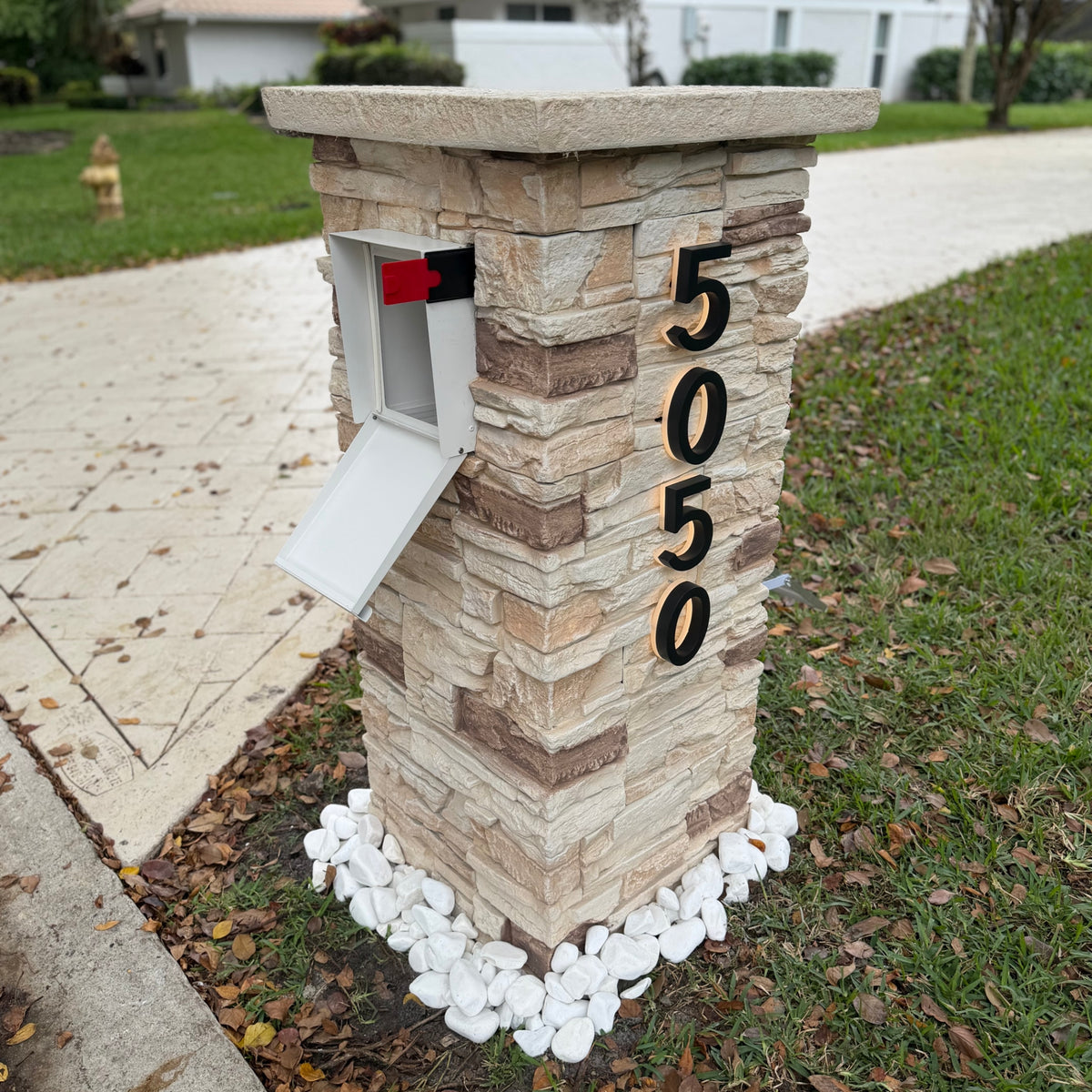
Pick by the face of your home. The Dream Mailboxes faux marble pillar reads refined and veined, and it belongs on formal, estate, and upscale facades. A faux stone pillar reads rugged and textured, and it suits craftsman, rustic, mountain, and stone-clad homes. Under the surface they're the same column: about 20 by 20 inches, cast from real stone in premium polyurethane, lightweight, weatherproof, and built around an integrated locking box, so no mason is involved either way. Choose the look, then let us install it to USPS spec.
People land on this comparison expecting a spec fight, and there really isn't one. Both pillars come out of the same mold logic: real stone captured in a polyurethane cast, roughly a 20-inch-square column, light enough to handle without a crew, sealed against weather, with a locking mailbox already built in. Neither needs a mason. Neither needs a footing poured and cured. So the choice isn't marble-versus-stone on durability or hassle. It's marble-versus-stone on how the column looks parked at the end of your drive, next to the house you already own. That's a design question, and it has a right answer for your specific curb.
Start with what doesn't change, because it's most of the product. Each pillar is a cast column, close to 20 by 20 inches, made from premium polyurethane pulled from real stone masters. That's why the texture looks convincing up close and not like a molded plastic novelty. The material is lightweight and weatherproof, so it ships to you as a finished piece, handles without heavy equipment, and shrugs off sun and freeze-thaw. Inside sits an integrated locking mailbox, so the column isn't just decorative, it's a working, secure box. And because it's cast rather than built on site, there's no mason, no block core, no wet trade waiting to cure. Whichever surface you pick, that whole package comes with it.
The practical upshot: you're not trading away security, durability, or easy install to get one look over the other. You get all of that with both. So spend your decision budget on the part that actually differs, which is the finish.
It also means you can shop this the way you'd pick a countertop or a paint color rather than a construction project. There's no crew to schedule, no permit conversation, no curb torn up for a week. The column arrives finished, gets set to a base, and it's done. That frees you to focus entirely on the aesthetic, which is genuinely the only variable that should sway you here.
Marble reads as refinement. The faux marble pillar carries soft veining and a smoother, more polished surface, and that finish does formal work at the curb. On a brick estate, a columned entry, a symmetrical traditional facade, or any home that already leans upscale, a marble column echoes the material vocabulary the house is speaking. It signals intention. It looks like it was specified, not picked off a shelf.
Where marble can feel wrong is on a deliberately rugged or rustic house. Set a polished veined column in front of a heavy timber-and-stone cabin and the two materials argue. Marble wants a home with some formality to answer it. Give it that, and it's the more elegant of the two by a clear margin.
Stone reads as substance. A faux stone pillar carries visible texture, deeper relief, and the varied, layered coloring of real rock, and that surface belongs on homes built around natural material. Craftsman bungalows, rustic and mountain builds, and any home with stone cladding, a stone chimney, or a stacked-stone base all give a stone column something to rhyme with. It looks like it grew out of the same palette as the house.
Stone is also the more forgiving choice stylistically, which is why it lands as the more versatile of the two. Its texture and mixed tones sit comfortably next to brick, wood, stucco, and transitional facades that aren't strictly formal. If your home doesn't clearly call for polished marble, stone is usually the safer, more flexible pick.
This is where you fine-tune the match. The marble line trends toward lighter, veined tones, slate-gray and off-white among them, that hold the refined, cooler read the finish is known for. The stone line offers earthier, more varied coloring, the browns, grays, and blended tones that mimic natural rock. The move is to pull your column's tone from something the house already wears: the mortar, the roof, a stone accent, the trim. A column that borrows a color already on the facade looks placed rather than added. If you want to hold two finishes side by side before you decide, our gallery shows both installed on real homes.
"Nine times out of ten, the customer already knows the answer once they look at their own front door. Marble follows a formal house. Stone follows a natural one. We just help them not overthink it."
— Dream Mailboxes design team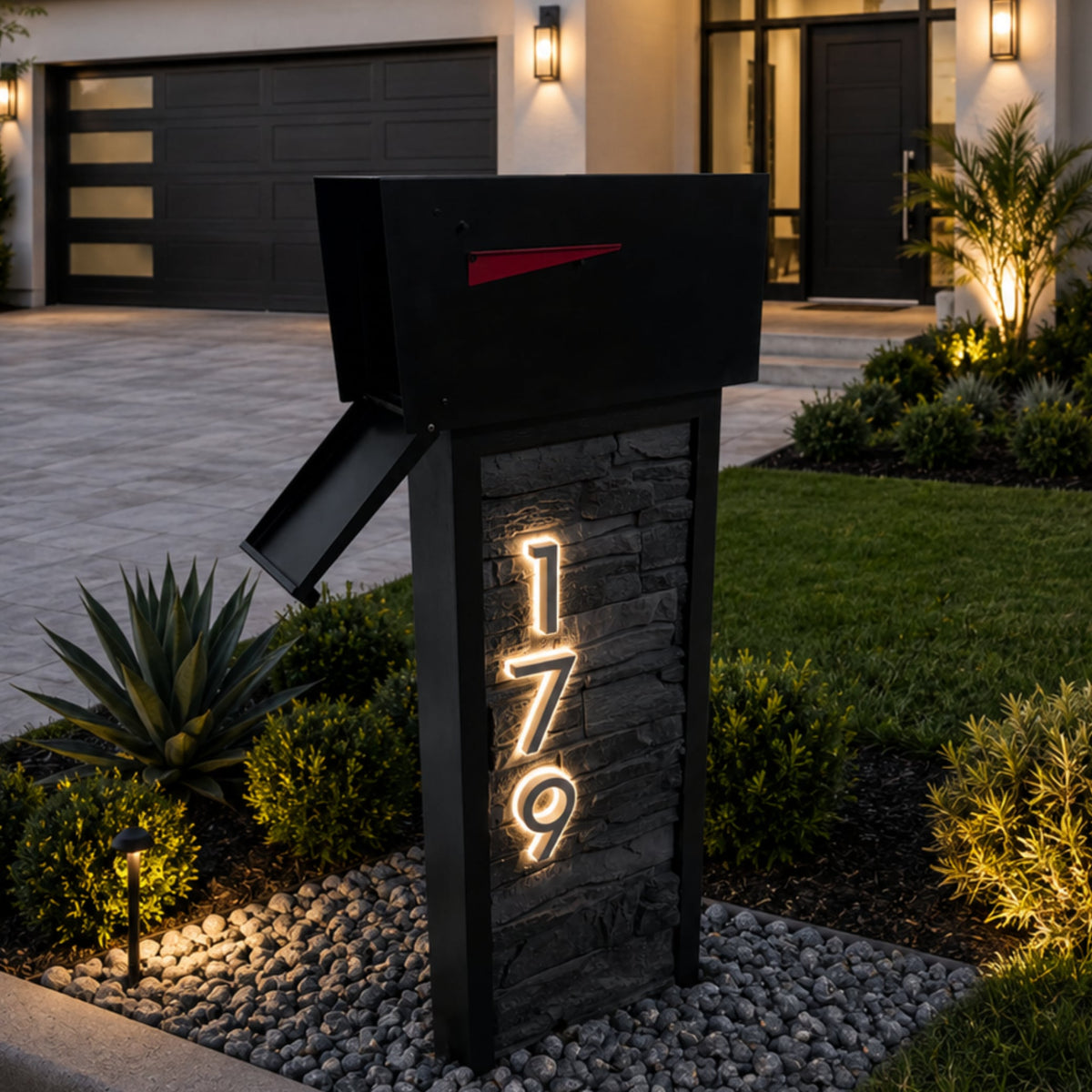
Both columns are cast, weatherproof, and light enough to position without a crew, so neither is a heavy-masonry project. That said, a pillar still wants a proper base and a solid anchor so it sits square and stays put. This is the part worth getting right, because a set column isn't a post you can wiggle later. The Postal Service's curbside standards (DMM 508) spell out the height and setback a carrier needs, and once your pillar is placed to spec, it's placed. There's no nudging it three inches after the fact. This is exactly why we offer professional installation: we set the base, level the column, and land the box in the USPS window the first time, so the one shot you get is the right one.
Upkeep is a non-event for both. The polyurethane cast doesn't rot, warp, or fade, and it doesn't hairline-crack the way a real stucco or masonry surround can when water gets behind it. A rinse when it's dusty is the whole routine. On cost, the two finishes sit in the same band as premium made-to-order pillars, so price usually isn't the deciding factor between them. You're choosing on look, not on budget, which is how it should be. If one finish costs a little more in a given season, it won't be enough to override the right visual match for your house.
| Faux Marble Pillar | Most versatileFaux Stone Pillar | |
|---|---|---|
| Look | Refined, veined, polished | Rugged, textured, natural relief |
| Best home style | Formal, estate, upscale, traditional | Craftsman, rustic, mountain, stone-clad, transitional |
| Finish options | Lighter, cooler veined tones (slate, off-white) | Earthy, varied rock tones (browns, grays, blends) |
| Pairs with | Brick, columned entries, symmetrical facades | Stone, wood, brick, stucco, mixed materials |
| Install | Cast, lightweight, no mason; set to a base | Cast, lightweight, no mason; set to a base |
| Maintenance | Near zero; occasional rinse | Near zero; occasional rinse |
| Watch-out | Can clash on a rustic house | Set once to USPS spec; no moving it after |
Stand at the curb and look at your own house. The material it's already wearing points at the answer, and you usually don't need to labor over it.
Both of these are the same well-built, secure, easy-to-set Dream Mailboxes pillar underneath, so there's no wrong answer on quality. There's only the right visual match for your curb. If you're on the fence, send us a photo of the front of your house and we'll tell you honestly which finish we'd set there. Reach out before you decide, and we'll get it right the first time.
Yes. Both are roughly 20 by 20 inch columns cast from real stone in premium polyurethane, lightweight, weatherproof, and built around an integrated locking mailbox. The marble and stone versions differ in surface look, not in construction or install.
No. Both ship as finished cast columns and set to a proper base, so there's no block core, no coat to trowel, and no mason. That's the point of a cast pillar. Our professional installation handles the base and levels the column to USPS spec.
Follow the facade. Faux marble suits formal, estate, and traditional homes with its refined, veined surface. Faux stone suits craftsman, rustic, mountain, and stone-clad homes with its textured, natural finish. When a house mixes materials, faux stone is usually the more versatile match.
Not easily, so place it right the first time. A set column is anchored to a base, and the USPS height and setback have to be correct when it goes in. Having us install it means the box lands in the carrier's window on the first try.
No. Both are premium polyurethane that won't rot, warp, or fade, and neither hairline-cracks the way real stucco or masonry can. An occasional rinse is all either one asks. Upkeep shouldn't factor into your marble-versus-stone decision at all.
We design, build, and install faux marble and faux stone pillars, and we set them to spec with our own installation team. This is the comparison customers ask us to make most before they pick a finish.