How a Locking Package Vault Stops Porch Piracy
A courier can drop a box in. A thief can't reach one back out. That one-way trick is the whole idea.
 Dream Mailboxes Team
7 min readUpdated July 2026
Dream Mailboxes Team
7 min readUpdated July 2026

USA Made custom mailboxes. Shop our modern, mid-century, contemporary, wall mounted mailboxes...
A courier can drop a box in. A thief can't reach one back out. That one-way trick is the whole idea.
Dream Mailboxes Team
7 min readUpdated July 2026
The short answer
A locking package vault uses a one-way drop, a hinged chute or anti-theft baffle, so a carrier can push a parcel inside but a hand can't fish it back out. You retrieve it later with a key or code. It beats a bigger open box because capacity isn't security, and it beats a porch drop-off because nothing sits exposed. For a single unit that does both jobs, Dream Mailboxes' VaultBox pairs a locking mailbox on top with a package vault below.
You order something, it ships, and then it lands on your step and just sits there. Most days that's fine. The bad days follow a pattern anyone can spot from a slow-moving car: a box in plain view, on a quiet street, nobody home. A package vault removes the part of that picture a thief needs, which is a package they can actually pick up.
The mechanism is simpler than it sounds. Inside the vault is either a hinged chute that swings inward and falls shut behind the parcel, or a slanted baffle that a box slides down and past. A carrier lifts the door, sets the package in, and lets go. Gravity and the baffle do the rest, the parcel drops into a locked chamber that has no path back to the opening. Reach an arm in and you find the baffle, not the box.
That's the difference between a lock and a deterrent. A camera might record a theft. A big lid might slow someone down. A one-way vault makes the grab physically not work, then holds the parcel behind a key or code until you get home. There's no window where the package is both delivered and reachable, and that window is the only thing porch piracy depends on.
The obvious shortcut is to buy the largest open mailbox you can find and assume more room equals more protection. It doesn't. An extra-large mailbox is the right buy for a household drowning in catalogs and padded envelopes, and it solves that problem well. What it can't do is stop a theft, because an open box is open to everyone. If your hand reaches the parcel, so does the next person's. A larger box is just a larger, more obvious target sitting in the open.
Volume and security are two different questions. Size up when your mail piles up. Lock up when your packages disappear. Asking one open box to do both is how people end up disappointed by a box that was never built to guard anything.
Delivery instructions like "leave it behind the planter" help a little, but they still end with a parcel on the ground for hours. Same for a hidden nook by the door. The moment the box is set down, the clock starts and anyone who wanders up can take it. A vault flips that: the package is secured the instant the carrier lets go, not whenever you happen to come home. You're not hiding the parcel and hoping. You're locking it.
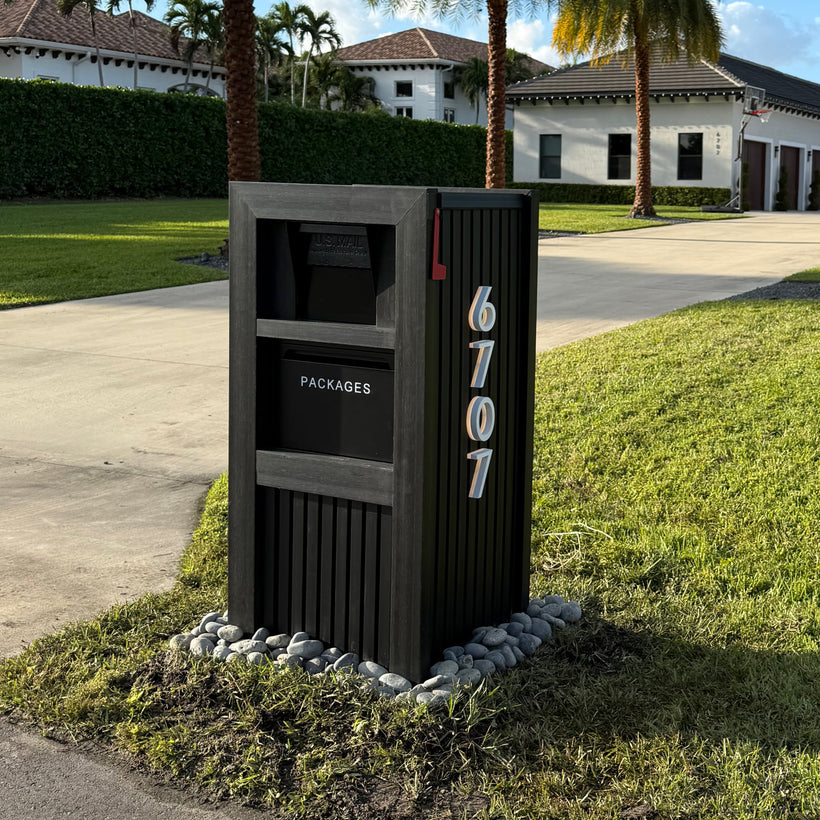
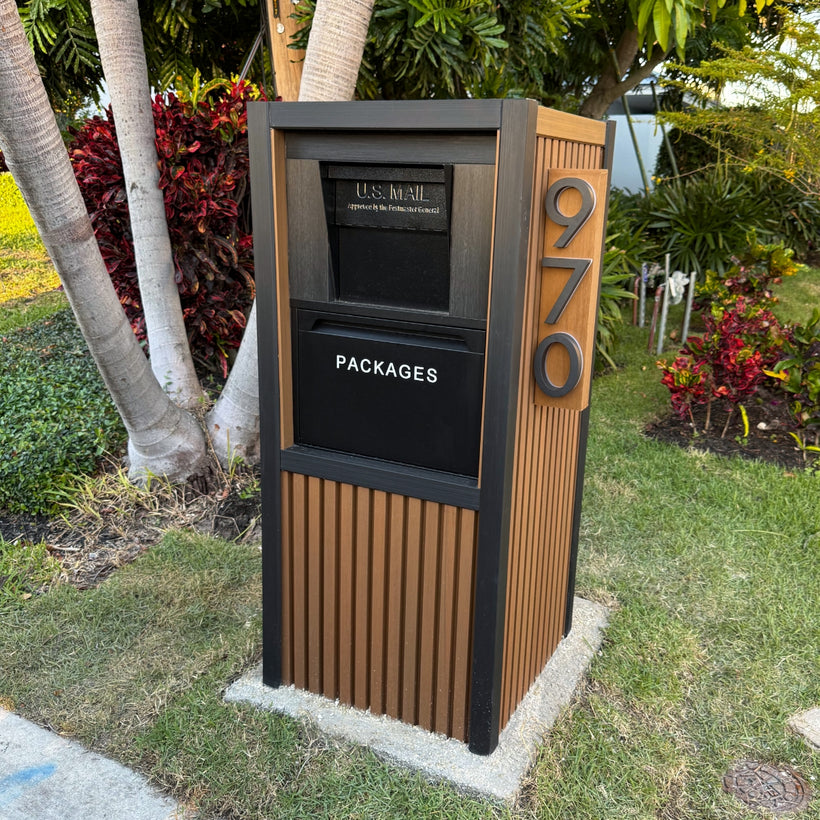
Most curbs have two problems, not one. Packages get the headlines, but letter mail is where quieter theft happens, and the stakes there are checks, cards, and the account numbers that feed identity fraud. Dream Mailboxes' VaultBox Elite handles both in a single unit: a locking mailbox up top for your daily mail, and a package vault below with the one-way drop for parcels.
The dimensions are built around real deliveries. The unit stands 52 inches high, 25 inches wide, and 27 inches deep overall, and the vault gives a parcel clearance of 16 inches wide, 17 inches deep, and 9.5 inches tall inside. That's sized for the boxes households actually receive, not a token slot that sends couriers back to the ground. Like everything Dream Mailboxes builds, it's USA-made and hand-built to order, with a design mockup sent for your approval before the unit is even assembled.
| Standard mailbox | Locking mailbox | Best for packagesLocking package vault | |
|---|---|---|---|
| Fits parcels | Letters, small envelopes | Letters and thin parcels | Boxes, up to the vault clearance |
| Theft resistance | None; open to anyone | Mail is locked away | One-way drop, no reach-back-out |
| Retrieval | Just open the door | Key or code | Key or code, on your time |
| Who it's for | Low-theft, letters only | Protecting sensitive mail | Anyone who gets packages |
| Leaves items exposed | Yes, in easy reach | Only oversized parcels | No; sealed until you open it |
| Best when | You barely get mail | Checks and cards are the worry | Porch piracy is the worry |
"The vault only earns its keep if the carrier can use it in three seconds without leaving the truck. Get the drop and the setback right, and it protects everything that lands after."
— Dream Mailboxes install team
Where the vault sits changes whether it works. Set it to the same USPS placement expectations as any curbside box, roughly 41 to 45 inches to the bottom and 6 to 8 inches back from the curb face, so a carrier can deliver without leaving the vehicle. That's exactly when they'll actually use the drop instead of tossing the box on the ground. A vault they have to park and walk to is a vault that gets skipped.
Because a package vault is heavy and made to order, Dream Mailboxes also installs nationwide, setting the post in concrete with a thick footer and a rock bed around the base so the whole unit can't be walked off. Anchoring matters as much as the lock: a vault that lifts out isn't secure, it's just a portable box. A camera is worth adding on top, though we don't sell them, since a thief who sees a lens and a locked vault has two reasons to skip your house instead of one.
Match the box to your actual worry, not to the biggest thing on the shelf.
No single box is magic, but a one-way vault comes close for the one thing it's built for. Not sure which clearance fits the parcels you actually receive, or how it'll sit on your curb? Tell us what you order and your setback, and we'll spec the right vault for you.
A carrier lifts the door and drops your parcel through a one-way chute or baffle into a locked chamber that has no path back to the opening. A hand reaching in finds the baffle, not the box. You open the vault later with a key or code.
That's the exact problem the design defeats. The one-way drop on a package vault lets a box fall in but blocks the path back out, so there's nothing to grab even if someone tries. Retrieval only happens through the locked door.
No. An extra-large mailbox solves high mail volume, not theft. If a hand can reach the parcel, it isn't secure. Size up for capacity, but add a locking vault for security.
The VaultBox Elite gives a parcel clearance of 16 inches wide, 17 inches deep, and 9.5 inches tall inside, with the unit standing 52 inches high, 25 inches wide, and 27 inches deep overall. That fits the boxes most households actually receive.
Follow the same USPS placement expectations as any curbside box, roughly 41 to 45 inches to the bottom and 6 to 8 inches back from the curb, so carriers can use it from the vehicle. Anchoring the heavy unit to a footing also stops anyone walking off with the whole thing.
We design and build USA-made package vaults, locking mailboxes, and the VaultBox for homeowners who'd rather not gamble on the front step. These guides come from questions our customers ask before they buy.
Everything to get right before the box goes in the ground.