Installing a Faux Stone or Marble Pillar Mailbox (Why It's a Pro Job)
A column mailbox is heavy and effectively permanent. Placement has to be right the first time, which is exactly why it earns a pro.
Dream Mailboxes Team6 min readUpdated July 2026
A pillar reads like masonry from the street. Unlike masonry, you can't slide it over after it sets.
The short answer
A pillar or column mailbox is the one build type most people should not install themselves. It needs a real concrete base and it can't be moved once set, so placement has to be correct on the first try. The clean path: Dream Mailboxes' faux marble pillar, a polyurethane column cast from real stone, paired with our nationwide professional installation at the $699 pillar tier. See the full faux stone lineup to pick a finish.
You picked a pillar because you want the box to look built-in, like it grew out of the landscaping. That's the right instinct. It's also why the install is a different animal from screwing a post box to a 4x4. A column has mass, it sits on concrete, and once that concrete cures the box lives exactly where you set it. There's no nudging it three inches toward the driveway next spring. So the whole game is getting the position and the base right the first time.
Why placement is the whole job
A curbside mailbox has to sit where the carrier can reach it from the truck. The U.S. Postal Service's mailbox guidelines put the bottom of the box at a set height off the road and a set distance back from the curb face, and those numbers are spelled out in the Postal Service's published standards (DMM 508). On a light post box, missing by an inch is a five-minute fix. On a pillar, it's a jackhammer.
41–45 inUSPS's expected height from the road to the bottom of the box, set 6–8 inches back from the curb face. A set pillar can't be moved, so you get one shot to hit that target.
Source: USPS — Mailbox Guidelines
This is the core reason a column deserves a pro. Height and setback are the homeowner's responsibility no matter who installs, and with a permanent base there's no margin for a redo. An installer measures the setback, checks the box-slot height against the finished grade, and confirms the carrier's approach before any concrete goes in the ground.
What the pillar actually is
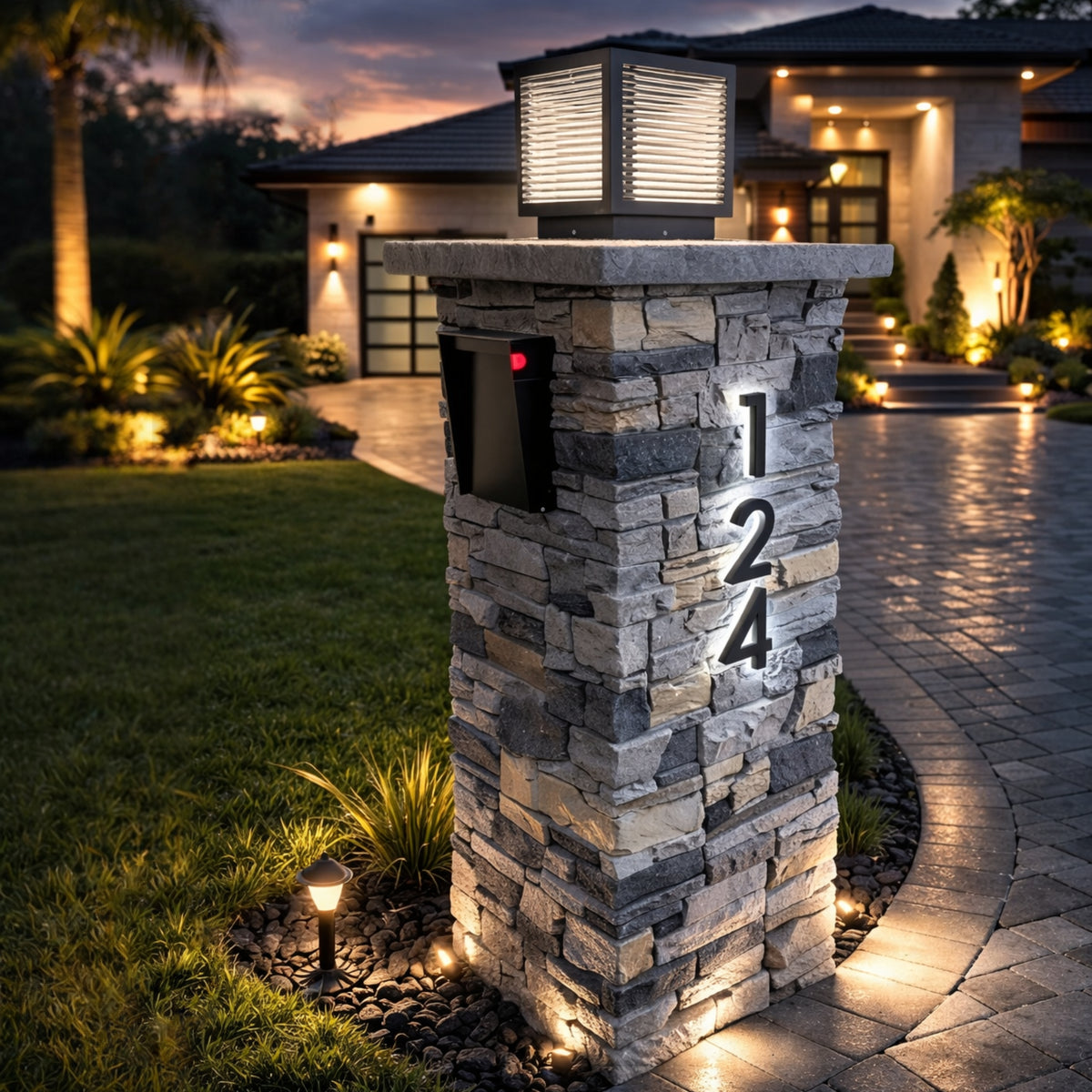
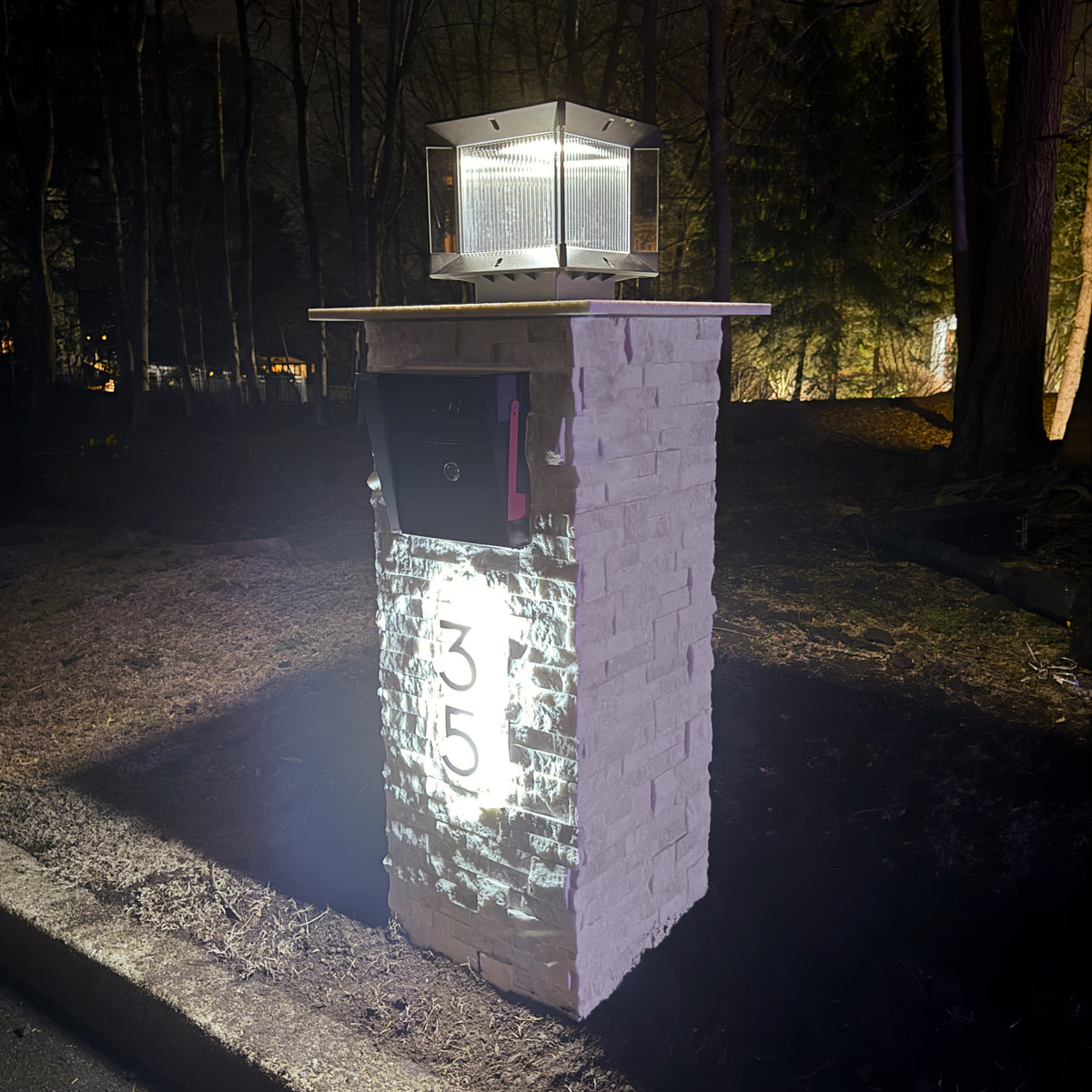
Worth clearing up, because the word "stone" scares people off. Our faux marble pillar is roughly a 20 x 20-inch column made of premium polyurethane cast from real stone. It carries the veining and texture of the real thing, but it's a fraction of the weight and it's weatherproof in a way natural masonry isn't. There's an integrated locking mailbox built into the column, so it's a finished unit, not a shell you have to fit a box into.
That means no mason. A true masonry pillar is brick or block laid by hand, which is a skilled trade, a multi-day pour-and-cure, and a structure you're stuck with. The faux column skips all of that and still gives the curb the same substantial, built-in look.
The base still matters
Lighter than masonry doesn't mean it floats. The column still anchors to a proper concrete base so it stays plumb through freeze–thaw, mowers, and the occasional bumped tire. Our install crews set the post in concrete about two feet deep, pour a four-inch-thick concrete footer under it, and finish with a decorative rock bed around the base so the transition to the ground looks intentional. Same method described in our install instructions. That footer is what keeps a heavy column from leaning after a couple of seasons.
Real Stone / Masonry Pillar
Best for most homesDream Mailboxes Faux Stone Pillar
Weight
Very heavy; solid brick or block
Light polyurethane cast from real stone
Mason needed
Yes, a skilled trade
No mason; a set-and-anchor install
Install time
Multiple days, then cure time
One visit plus base cure
Placement forgiveness
None; permanent once laid
None either, so a pro measures first
Weather
Can crack, spall, or stain over time
Weatherproof; won't rot or spall
Maintenance
Repointing, sealing, repairs
Occasional cleaning, nothing structural
Cost direction
Highest; skilled labor plus materials
Lower; unit plus a flat install tier
"On a pillar, ninety percent of the work happens before the concrete does. Measure the setback, confirm the carrier's reach, then pour. You don't get a second location."
— Dream Mailboxes install team
The finished look people want from masonry, without the mason, the crack risk, or the multi-day build.
How we recommend doing it
For almost everyone, the honest recommendation is the faux column plus our install, not a DIY masonry project. Here's why Dream Mailboxes fits this job specifically.
You want the stone look without a mason: the faux marble pillar gives you real-stone texture in a unit one person can position.
You want it set correctly the first time: our professional installation runs nationwide at a $699 pillar tier, with the post set in concrete, a four-inch footer, and a rock-bed finish.
You're matching a stone or stucco home: browse the faux stone collection to find a finish that reads with your facade.
You want no surprises at build: every pillar is made to order, and we send a design mockup for your approval before we build it.
If you already know your setback and the finish you're after, that's most of the spec. Tell us the site details and we'll size the base and confirm placement before anything's poured. Send us your setback and we'll spec it.
Common questions
Who installs a faux stone or pillar mailbox?
Dream Mailboxes does, nationwide. Our professional install for a pillar is a $699 tier: we set the post in concrete about two feet deep, pour a four-inch footer, and finish with a rock bed. A pillar is one of the few mailbox types we steer people away from installing themselves, since it can't be moved once set.
How do you install a pillar mailbox?
The base is the job. The column anchors to a concrete footing so it stays plumb, and the box slot has to land at the USPS height of 41–45 inches off the road, 6–8 inches back from the curb. Because the position is permanent, the measuring happens before the pour, which is where a pro earns the fee.
Can I get a faux stone column mailbox without a mason?
Yes, that's the whole point of the faux marble pillar. It's polyurethane cast from real stone, so it looks like masonry but installs as a single anchored unit. No brick-laying, no repointing, no multi-day build.
Is the faux pillar as durable as real stone?
For a mailbox, it holds up better in the ways that matter. Real masonry can crack, spall, or stain and needs sealing and repointing over time. The faux stone column is weatherproof and won't rot or spall, so upkeep is basic cleaning rather than structural repair.
Why can't I just move it later if placement is off?
Because it sits on a cured concrete footer. Once that base is set, relocating the pillar means breaking out the concrete and pouring a new base, so it's effectively permanent. That's why placement gets measured against the USPS setback and height standards before any concrete goes in.


 Dream Mailboxes Team
6 min readUpdated July 2026
Dream Mailboxes Team
6 min readUpdated July 2026