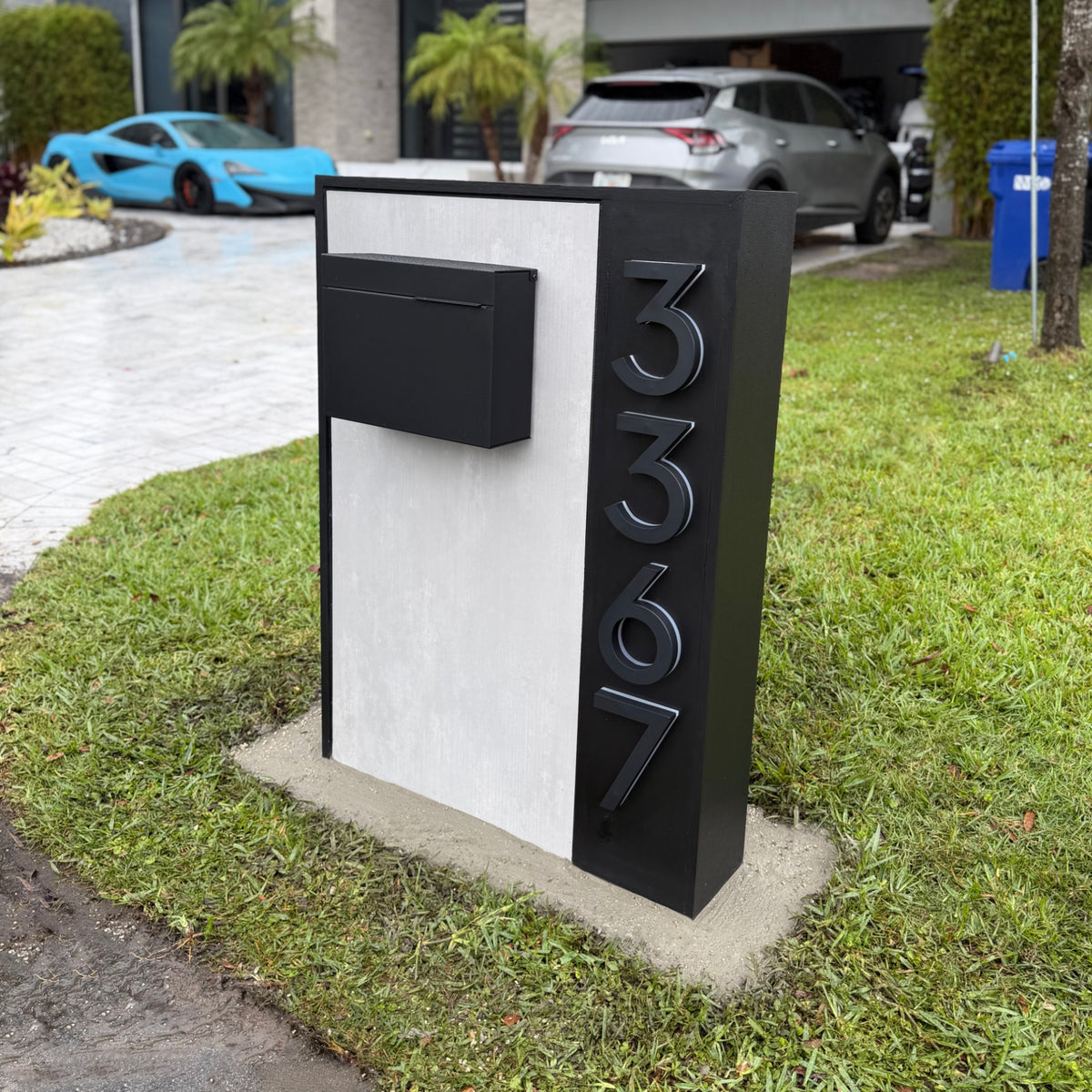
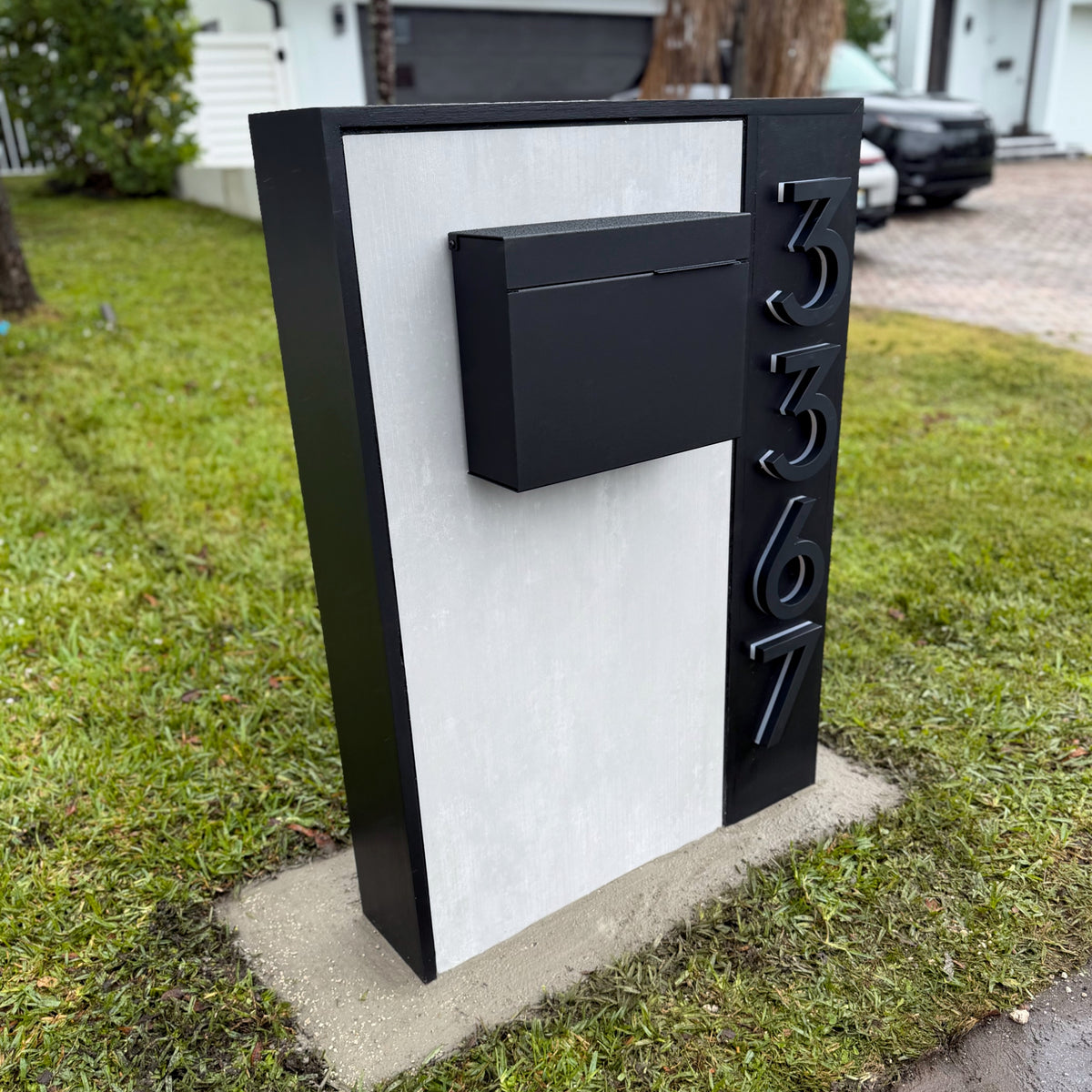
The mailbox isn't the only place your house number belongs. When the setback is long or the entry is gated, a lit plaque on the column or wall is what actually gets you found after dark.
Dream Mailboxes Team6 min readUpdated August 2026
A backlit plaque turns your address into something a driver reads at speed, in the dark, from the road.
The short answer
If your home sits back from the road, hides behind a gate, or presents a wall to the street instead of a mailbox, put your number where a driver actually looks: on the column, the wall, or the gate itself. Dream Mailboxes builds LED backlit address plaques from $99 to $499 in custom sizes, finishes, and light colors, solar or low-voltage, so the address reads at night from the street. See them installed in the gallery, or tell us your entry and we'll size one to it.
Daytime, almost any address works. The trouble starts at night, and the homes that struggle most aren't the ones with a box at the curb. They're the ones where the number lives somewhere else entirely: a stone entry column, a stucco privacy wall, a driveway gate, a monument sign at the corner of the lot. A pressed vinyl numeral on any of those disappears the moment the sun goes down. A halo-lit plaque doesn't. It's the difference between a delivery driver slowing to guess and one who pulls straight in.
Why a lit address earns its keep after dark
The payoff is simple and it shows up on the nights that matter. An address someone can actually read from the road helps a first responder find your driveway on the first pass instead of the third. Ready.gov makes the point plainly: a clearly visible house number helps emergency crews reach you. At 2 a.m., in the rain, that visibility is not a nicety. It's the whole reason the number exists.
The everyday version is deliveries and guests. A lit plaque means the courier finds you without a phone call, the dinner guest stops circling the block, and the rideshare pulls to the right gate. On a long rural drive or a dark cul-de-sac, an unlit number is functionally invisible from a moving car. A backlit one carries.
41–45 inThe height USPS expects for a curbside address, set 6–8 inches back from the curb. It's a useful benchmark for any lit plaque too: mount your number in a driver's sightline, roughly headlight-to-eye height, not down at the ankles or up in the dark.
Source: USPS — Mailbox Guidelines
How halo-lit plaques are built
The look most people want is the halo: numbers that appear to float on the plaque with a soft glow behind them, not a harsh bulb shining in your eyes. Our LED plaques are backlit for exactly that effect. The face carries the numerals and the light washes out from behind, so from the road you read a clean, even-lit address rather than a bright spot. It's legible without being a floodlight, which matters when the plaque sits a few feet from a bedroom window or a neighbor's line of sight.
Because these are made to order, the plate itself is finished to match where it's going. Aluminum reads modern and holds a powder-coated finish that won't rust. A slate or stone-toned face suits a formal entry or a masonry column. The point is that the plaque belongs to the wall or gate it mounts on, rather than looking like a hardware-store add-on stuck to it.
Solar or low-voltage: how you power it
There are two honest ways to light a plaque, and the right one depends on your entry. Solar is the no-trenching option. A small panel charges through the day and a dusk-to-dawn sensor brings the plaque up automatically at nightfall, so there's no wiring to run and no switch to remember. It's the easy retrofit for a column or wall that has no power nearby, and it's why solar is the default choice for most gate and monument installs.
Low-voltage or hardwired power is the choice when you want maximum, all-night brightness and you already have landscape lighting or a nearby circuit to tie into. It never depends on a cloudy week of charging. If your entry columns are already wired for path or uplighting, running the plaque off that same low-voltage line is clean and reliable. Both options can include the dusk-to-dawn sensor so the plaque manages itself either way.
"We ask one thing first: where does a driver's eye actually land when they pull up to your house at night? Nine times out of ten it's the column or the wall, not the mailbox. That's where the lit number belongs."
— Dream Mailboxes design team
A slate-faced plaque on a wall front reads as part of the architecture by day and a clear address by night.
Sizing and finish
Size the plaque to the distance it's read from, not to the space on the wall. A number viewed from a fast rural road needs to be bigger than one on a short suburban approach. As a rule, go one size larger than feels necessary indoors, because everything shrinks from a moving car. Custom sizing exists for this reason, so the plaque fits the column face or the gate panel and the numerals stay legible at speed.
Finish is where the plaque either blends or clashes. Match the plate to the material behind it and the metal already on your entry. A dark slate face on light stucco reads with good contrast. A crisp aluminum plaque suits a modern wall. Light color matters too: a warm glow feels residential and calm, a cooler white reads sharper and more contemporary. All of it is specified before we build, and we send a mockup to approve so you see the exact plaque on your exact entry before anything is made.
Mailbox
Best for mostEntry Column
Wall / Monument
Gate
Best when
Box sits at the curb in the sightline
Driveway has pillars or an entry column
Home fronts the street with a wall, no curb box
Property is gated at the road
Read from
Curb distance, short
The road, at the turn-in
The road, often at speed
The road, before the gate opens
Power
Solar or low-voltage
Solar, or tie into existing pillar wiring
Solar for no-trench walls
Solar; most gates have no power
Night visibility
Good if box is lit and near the road
Excellent; eye lands here on approach
Excellent; large face, high contrast
Strong; marks the actual entrance
Setback fit
Weak on long driveways
Strong; column sits at the road
Strong; wall is at the street
Strong; gate is the front line
Watch-out
Invisible if home is far back
Size numerals for the turn-in speed
Mount in the headlight sightline
Confirm mounting on the gate material
How to choose
Work backward from where a driver's eye lands at night, then light that spot. For most homes with a defined entrance, that's the column at the turn-in, which is why it's the default we steer people toward. But the honest answer depends on your entry, so match it to your situation.
Long setback, box at the road: a lit plaque on the entry column beats the mailbox number, because that's what a driver sees at the turn. Browse the LED backlit line for column-scale sizes.
Gated entrance: put the number on the gate or the flanking pillar, solar-powered, so responders and guests find the actual opening, not just the lot.
Wall-front home, no curb box: a wall or monument plaque is the address, so size it big and mount it in the headlight sightline.
Already have landscape lighting: go low-voltage and tie the plaque into the existing line for steady, all-night brightness.
Not sure it'll look right: see finishes and mounts installed in the gallery before you decide on a size.
The recommendation is the same one we give at the counter: light the address where it's actually read, and build the plaque to the entry it lives on. Dream Mailboxes makes custom LED plaques for exactly that, mailbox, column, wall, or gate, with a mockup you approve first. Tell us what your entry looks like and we'll size one to it. Start with a quick note about your setup.
Common questions
Can I put an LED address plaque somewhere other than the mailbox?
Yes, and often you should. A backlit plaque mounts on an entry column, a stucco or stone wall, a monument sign, or a driveway gate. On homes with a long setback or a gated entrance, those spots read far better from the road than a number on the box.
Do LED plaques need to be wired, or is solar enough?
Both work. Solar plaques charge through the day and switch on at dusk with a sensor, so there's no trenching or wiring, which makes them the easy choice for gates and walls with no power nearby. Low-voltage or hardwired plaques give steady all-night brightness and are ideal if you already have landscape lighting to tie into.
How big should the numbers be to read from the road?
Size to the distance and speed the plaque is read from, then go one step larger. Numbers that look fine up close shrink fast from a moving car, so a fast rural approach needs bigger numerals than a short suburban drive. Custom sizing lets us fit the plaque to the column or gate and keep it legible at speed.
Why does a visible address matter beyond convenience?
Emergency response. Ready.gov notes that a clearly visible house number helps responders reach you, and at night an unlit number on a distant wall is effectively invisible. A lit plaque means the crew, the courier, and the guest all find the right entrance the first time.
Can I match the plaque to my home's finish and light color?
Yes. Every plaque is made to order in custom sizes and finishes, from modern aluminum to slate and stone tones, with a warm or cooler light color. We send a mockup of the exact plaque on your exact entry to approve before we build, so there are no surprises at install.
Dream Mailboxes Team
Custom & modern mailboxes, built for the curb
We design and build LED backlit address plaques and mailboxes for homeowners who want the front of the house to read clearly, day and night. See finishes and mounts in our gallery, or tell us about your entry and we'll size a plaque to it.


 Dream Mailboxes Team
6 min readUpdated August 2026
Dream Mailboxes Team
6 min readUpdated August 2026