
The Best LED Mailbox for a New-Build Home
A new build is the one moment you can plan the wire before the post goes in. Spec the LED mailbox now and the hard part is already solved.
 Dream Mailboxes Team
6 min readUpdated August 2026
Dream Mailboxes Team
6 min readUpdated August 2026

USA Made custom mailboxes. Shop our modern, mid-century, contemporary, wall mounted mailboxes...
A new build is the one moment you can plan the wire before the post goes in. Spec the LED mailbox now and the hard part is already solved.
Dream Mailboxes Team
6 min readUpdated August 2026
The short answer
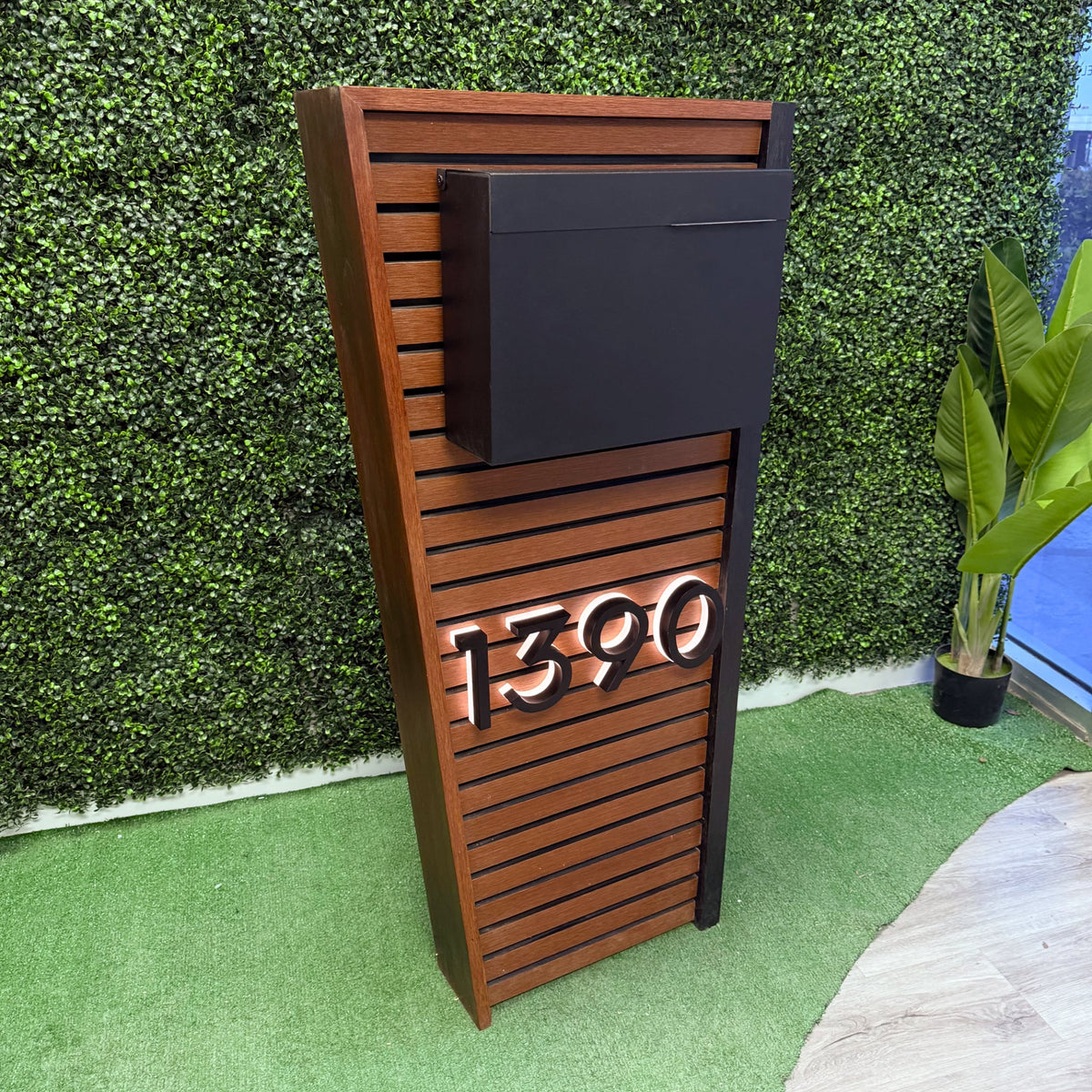
The best LED mailbox for a new build is one you spec during construction, and Dream Mailboxes' LED backlit-number mailboxes are built for exactly that window. They're halo-lit, custom, and made to order in your color, and because you're pouring a driveway and running low-voltage anyway, our nationwide install team can plan the wire while the ground is still open. Retrofitting light to a finished curb is the hard way. Doing it now is the easy one.
Almost every LED mailbox question we get from a new-construction owner is really a timing question in disguise. People ask which model, which finish, solar or hardwired. The bigger lever is when you decide. A new build gives you a short, precious window where the driveway isn't poured, the landscaping isn't in, and a low-voltage run to the curb is a line on a plan instead of a weekend with a trencher. Miss that window and everything gets harder. Catch it and a lit mailbox stops being a project and becomes a detail you specced alongside the light fixtures.
Think about what's already happening on the lot. You're setting the driveway, grading the yard, and in most builds running low-voltage for path lights or landscape lighting. A mailbox at the end of the drive sits right in the middle of all of it. Adding a run to that spot while the ground is open costs almost nothing extra. The trench is a few more feet, the wire is cheap, and nobody has to cut into a finished surface to get there.
Now picture the retrofit. The concrete is down, the sod is rooted, and the address you want lit is thirty feet from the nearest power. Getting there means trenching across a lawn you just paid to install, or committing to solar and hoping the spot gets enough sun. Neither is a disaster, but both are the expensive, disruptive version of a thing that was nearly free a few months earlier. That's the whole case for timing it now.
The single most useful thing you can do is decide the mailbox location and its power before the driveway pour. Mark where the box goes, then have your electrician or landscape crew stub a low-voltage line to it on the same pass as the rest of the yard lighting. Our LED mailboxes run on solar or low-voltage / hardwired power with a dusk-to-dawn sensor option, so once that stub is in, the box just connects to it. No transformer surprises, no guessing.
If you're not sure where the run should land, that's a good reason to bring the installer in early rather than late. When our professional install is part of the plan, we set the post in concrete about two feet deep on a four-inch footer, and the wiring gets planned as part of that same visit instead of bolted on afterward. The install instructions walk through the placement and the power side so your builder and electrician are working from the same page.
New builds tend to lean clean and contemporary, and a halo-lit backlit number is the mailbox detail that actually fits that look. Instead of a stick-on plaque, the address glows off the box itself after dark, quiet and architectural. Because ours are made to order, the finish is chosen to match, not settled for. You approve a color and a mockup before we build, so the box reads as part of the facade rather than a hardware-store afterthought parked at the curb.
The payoff isn't only aesthetic. A clearly visible, lit address is easier for guests, deliveries, and emergency responders to find at night, which Ready.gov flags as a real safety point. And the exterior details buyers notice first are the ones the National Association of Realtors consistently ranks among the higher-value touches at resale. On a new home you're already investing in the facade. The mailbox is the last thing they pass and the first thing they read.
"On a new build we can plan the wire before the driveway's even poured. That five-minute conversation at framing is the difference between a clean low-voltage run and trenching across a finished lawn later."
— Dream Mailboxes install team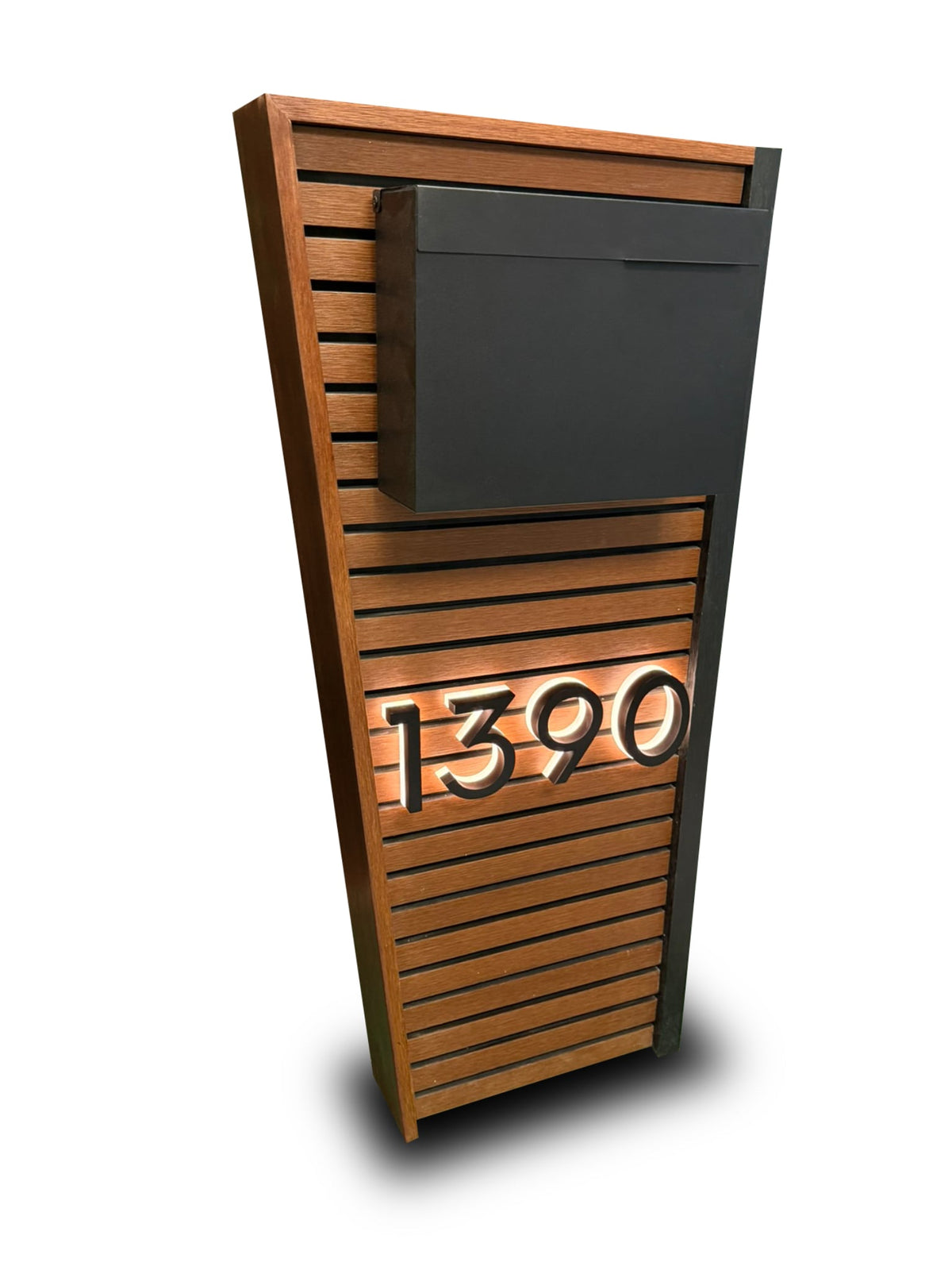
Here's the comparison laid out plainly. The models are the same either way. What changes is how much work and cost sit between you and a lit box, and that gap is almost entirely about timing.
| The easy waySpec at the new build | Retrofit LED later | |
|---|---|---|
| Wiring | Low-voltage run planned before the pour, ground still open | Trench across a finished lawn, or fall back to solar |
| Disruption | None; part of the yard-lighting pass | Cutting into sod, paths, or driveway you already paid for |
| Finish match | Color and box chosen to match the new facade | Matched to a home that's already built and lived in |
| Placement | Set to USPS spec once, with the crew on site | Worked around existing landscaping and hardscape |
| Cost | Marginal; a few extra feet of trench and wire | Higher; a separate visit and its own excavation |
| Timeline | Folded into the build schedule | A standalone project after move-in |
| Result | Clean hardwired run, lit box, no scars | Works, but the easy window has closed |
The model matters less than the order of operations. Get the timing right and any of our LED boxes drops in cleanly. Here's how we'd sequence it on a new build.
Building now is the best chance you'll get to do this the easy way. Lock the location, plan the wire, and let the lit mailbox be one more finished detail instead of next year's dig. If you're mid-build and want a second set of eyes on the timing, talk it through with us before the driveway goes down.
Because the wiring is nearly free while the ground is open. On a new build you can plan a low-voltage run to the curb on the same pass as your landscape lighting, before the driveway is poured. After move-in, powering the same spot usually means trenching across a finished lawn. Our LED backlit-number mailboxes are made for that window.
Either works. Our LED boxes run on solar or low-voltage / hardwired power with a dusk-to-dawn sensor option. On a new build we usually recommend planning a low-voltage run, since the trench is already open and a hardwired box doesn't depend on how much sun the spot gets. If you'd rather not run wire, solar is the fallback.
LED mailboxes are made to order and run about four to five weeks to build, plus your install window. Ordering while the home is still being framed means the box is ready when the curb is, rather than becoming a separate project after you've moved in.
Yes. When our professional install is part of the plan, we coordinate the placement and the power so the run is stubbed to the right spot before the pour. The install instructions give your builder and electrician the same reference we work from.
Yes. The light doesn't change the placement. USPS expects the bottom of a curbside box 41–45 inches above the road and 6–8 inches back from the curb face, and setting it during the build lets you hit that the first time with power already waiting at the box.
We design, build, and install LED backlit-number mailboxes for homeowners who want the address to read cleanly after dark. We wrote this for new-construction owners because the wiring is the part that's easy now and hard later, and we'd rather you catch it in time. Planning a build? Get in touch or see how our install fits your schedule.