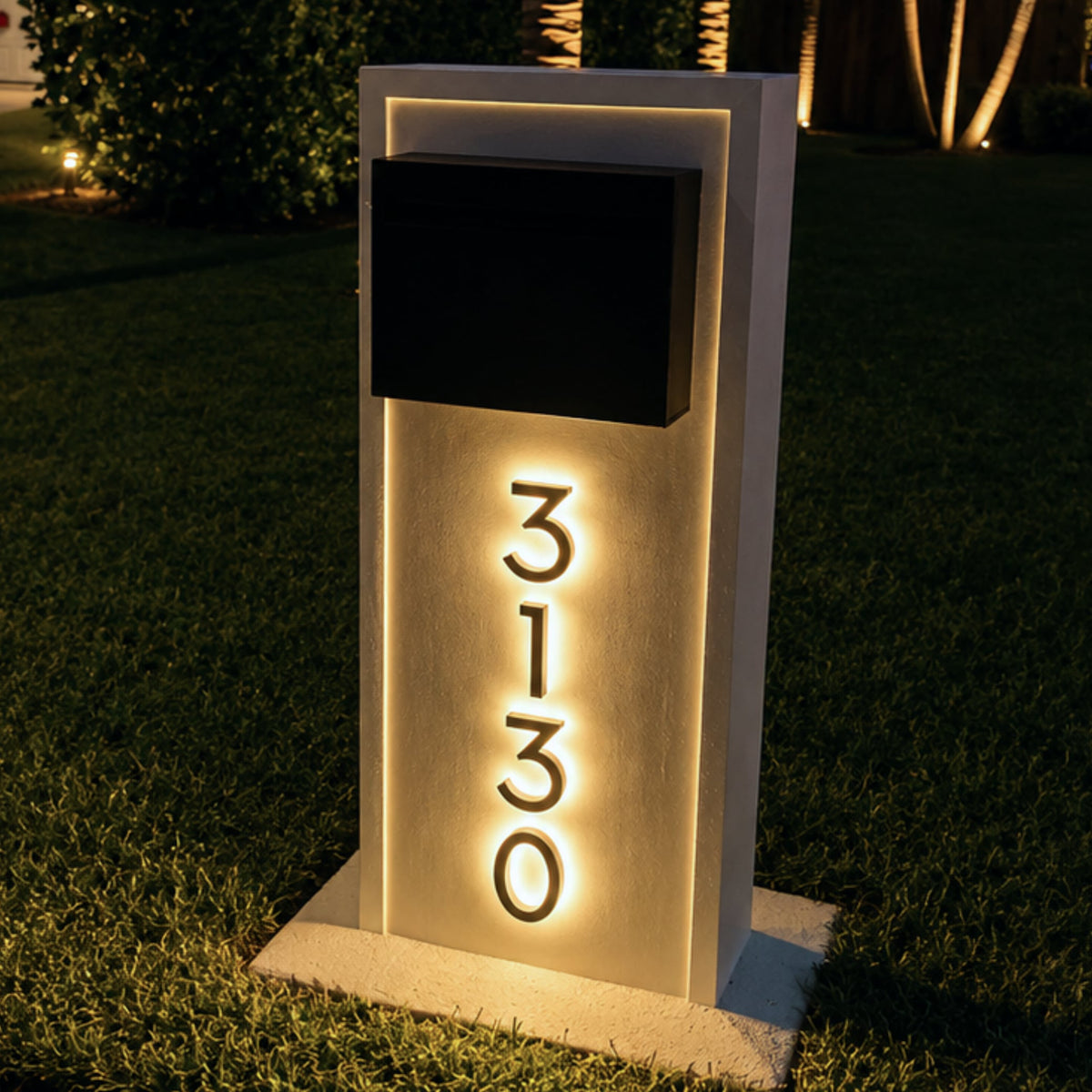
On an unlit country road, the box at the curb has to be found in the dark by a carrier, a delivery driver, and, on a bad night, a first responder. That is a lighting problem before it is a mailbox problem.
Dream Mailboxes Team6 min readUpdated August 2026
After dark, the only thing that matters is whether your address can be read from a moving vehicle.
The short answer
For a dark rural road, the best choice is a mailbox with LED backlit address numbers, set to USPS placement so a carrier can read it from the vehicle without a flashlight. If your mail travels a long way back to the house, step up to an extra-large box so a full day of packages fits in one trip. Dream Mailboxes builds these with halo-lit numbers and installs them nationwide, so the light and the height are both right the first time.
A country address fails at night for a simple reason. There are no streetlights, no neighbor's porch glow, and no house number a driver can see from 40 feet away. A carrier slows, sweeps a flashlight, and hunts for a small vinyl number on a dented box. A delivery driver on a tight route does the same, or gives up and marks it undeliverable. A rideshare rolls past your turn twice. And a responder trying to find you in an emergency loses time you may not have. The box itself is fine. The problem is that nobody can find it. That is what a lit mailbox solves, and it is why lighting, not size or finish, is the first thing to get right on an unlit road.
Why the mailbox has to be findable, not just present
During the day, a mailbox at the curb does its job by being there. At night on a rural road, being there is not enough. The people who need to find it are moving, often at speed, and they are reading from the driver's seat. If your address numbers are unlit vinyl, they are effectively invisible until a headlight or a flashlight catches them at close range. By then the vehicle has passed the driveway.
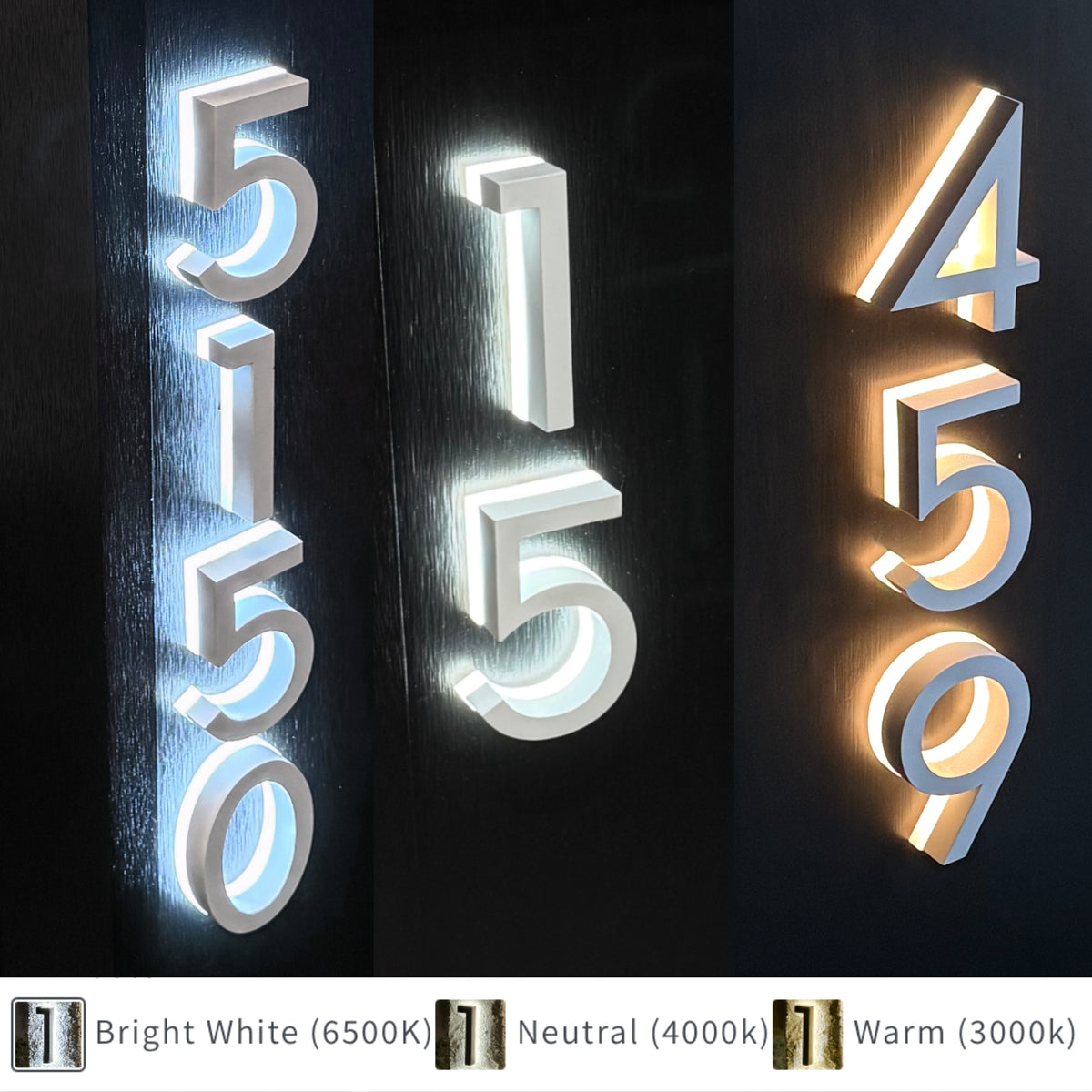
A mailbox with LED backlit numbers flips that. The address glows on its own, dusk to dawn, so it is legible from well down the road and from a moving vehicle. The carrier does not slow to a crawl. The delivery driver finds the drop on the first pass. And the same glow that helps a courier helps anyone else who needs your address in the dark, which is the part most buyers do not think about until they need it.
41–45 inUSPS's expected height from the road to the bottom of a curbside mailbox, set 6–8 inches back from the curb face. Get the box in that window and a seated carrier reads a lit address at eye level, without leaning out or stopping.
Source: USPS — Mailbox Guidelines
Placement is half the lighting job
A backlit box only pays off if a driver can actually see it from the road at the right height. That is a placement problem as much as a lighting one. The Postal Service's curbside standards (DMM 508) put the bottom of the box 41 to 45 inches above the road and 6 to 8 inches back from the curb face. That window is not arbitrary. It sets the lit numbers roughly at the eye line of a seated carrier, so the address reads straight ahead instead of down at the ground or up into a headlight's glare.
Set the same box too low, tucked behind a mailbox cluster of weeds, or angled away from the road, and the light is wasted. This is exactly where a professional install earns its keep on a rural property. Get the post plumb, the height in spec, and the face square to the road, and the glow does what it is supposed to. That placement is the homeowner's responsibility, and it is worth doing once, correctly.
"On a dark road, the win is a driver reading your numbers before they reach the driveway, not after. Lit address, set to USPS height, square to the road. That is the whole recipe."
— Dream Mailboxes install team
Halo-lit numbers read from down the road, dusk to dawn, without a flashlight or a porch light doing the work.
Capacity for the long walk back
Rural drives are long. If the box sits a few hundred feet from the house, every trip to fetch the mail is a real errand, and after dark it is one you would rather make once. A standard box forces a second trip the moment a couple of parcels show up, which on a dark road is exactly when you least want to be walking back and forth. An extra-large mailbox holds a full day of letters and packages together, so a lit, oversized box means you spot it, walk out once, and clear everything in a single trip.
This is why the lighting and the size decisions belong together on a rural road. The light gets your mail delivered reliably. The capacity keeps you from making the long, dark walk twice. Pair them, and the box works with the distance instead of against it.
Durability far from the house
A curbside box on a country road takes weather no porch-adjacent mailbox ever sees. Full sun, hard freeze-thaw, wind-driven rain, and the occasional brush from a plow or a wide truck. The electronics have to survive all of it, season after season, out where nobody is checking on them daily. That rules out anything flimsy.
Our lit boxes are built on rust-proof, powder-coated aluminum and UV-stable composite that will not rot, warp, or fade, with LED address lighting rated for outdoor life and offered in solar or low-voltage wiring. A dusk-to-dawn sensor means the numbers light themselves every night with nothing for you to switch. Set on a post concreted about two feet deep, the whole assembly is built to stay put and stay lit far from the house.
Standard box
Best for a dark roadLED-backlit box
LED + extra-large
Road visibility
Unlit; needs headlights up close
Glowing numbers, legible from down the road
Same lit numbers on a bigger, easier target
Night-finding
Carrier and couriers hunt with a flashlight
Found on the first pass, dusk to dawn
Found fast, with room to leave parcels
Capacity
Letters and a small parcel
Letters plus a package or two
A full day of mail and packages in one trip
Long walk back
Often a second trip
Usually one trip
One trip, even on a heavy delivery day
Durability
Varies; often thin steel
Rust-proof aluminum or composite, outdoor LED
Same build, larger body
Placement
Up to you to hit USPS spec
Set to 41–45 in. so lit numbers sit at eye level
Same spec, professionally installed
Best for
Lit streets, short driveways
Unlit rural roads, normal mail volume
Unlit roads with a long drive and lots of parcels
How to choose
Start with the road, not the box. If your address sits on an unlit stretch where drivers rely on headlights alone, lighting is the first decision and everything else follows from it. From there, size the box to your driveway length and your delivery habits, and let a professional set the height so the glow lands where a carrier can read it.
Unlit road, normal mail: a LED backlit number mailbox is the core pick; the lit address does the finding for you.
Long driveway or heavy deliveries: add capacity with an extra-large box so a lit target also means one trip back.
Worried about being found in an emergency: a glowing, correctly-placed address helps responders reach you, which the guidance at Ready.gov ties directly to a clearly visible address.
Still comparing options: tell us your road and driveway and we will point you to the right lit build.
The honest recommendation for a dark rural road is a Dream Mailboxes LED backlit number mailbox, sized up to extra-large if your mail travels a long way home, and set by our install team so the numbers glow at the height a carrier reads from the seat. That combination fixes the real problem, which is not the box but whether anyone can find it after dark. Tell us about your road and we will spec it with you.
Common questions
Do the LED numbers turn on by themselves at night?
Yes. Our LED backlit mailboxes offer a dusk-to-dawn sensor, so the address lights itself every evening and shuts off at daybreak with nothing for you to switch. You can run them on solar or low-voltage wiring depending on the site.
How high should a lit mailbox sit on a rural road?
Set the bottom of the box 41 to 45 inches above the road and 6 to 8 inches back from the curb face, per USPS guidelines. That window puts the lit numbers roughly at a seated carrier's eye level, which is exactly where they need to read from a moving vehicle. Our install team sets it to spec.
Will a backlit mailbox help emergency responders find my house?
A clearly visible address helps responders reach you, which Ready.gov flags as important for emergency access. On an unlit road, a glowing address at the curb is far easier to spot at speed than unlit vinyl numbers, so a lit, correctly-placed box makes your home easier to find in the dark.
Should I get an extra-large box or a standard one?
It depends on your driveway and delivery habits. If mail travels a long way back to the house or you get frequent packages, an extra-large mailbox lets you clear a full day in one trip, which matters most after dark. On a short drive with light mail, a standard lit box is plenty.
Are the LEDs durable enough for years outdoors?
They are built for it. The lighting is rated for outdoor life and the boxes are rust-proof powder-coated aluminum or UV-stable composite that will not rot, warp, or fade. Every build carries a one-year warranty that covers defects and the solar components.
Dream Mailboxes Team
Custom & modern mailboxes, built for the curb
We design, build, and installLED backlit and extra-large mailboxes for homeowners on the roads where the box actually has to be found. We wrote this from the questions rural customers ask us most before they order.


 Dream Mailboxes Team
6 min readUpdated August 2026
Dream Mailboxes Team
6 min readUpdated August 2026