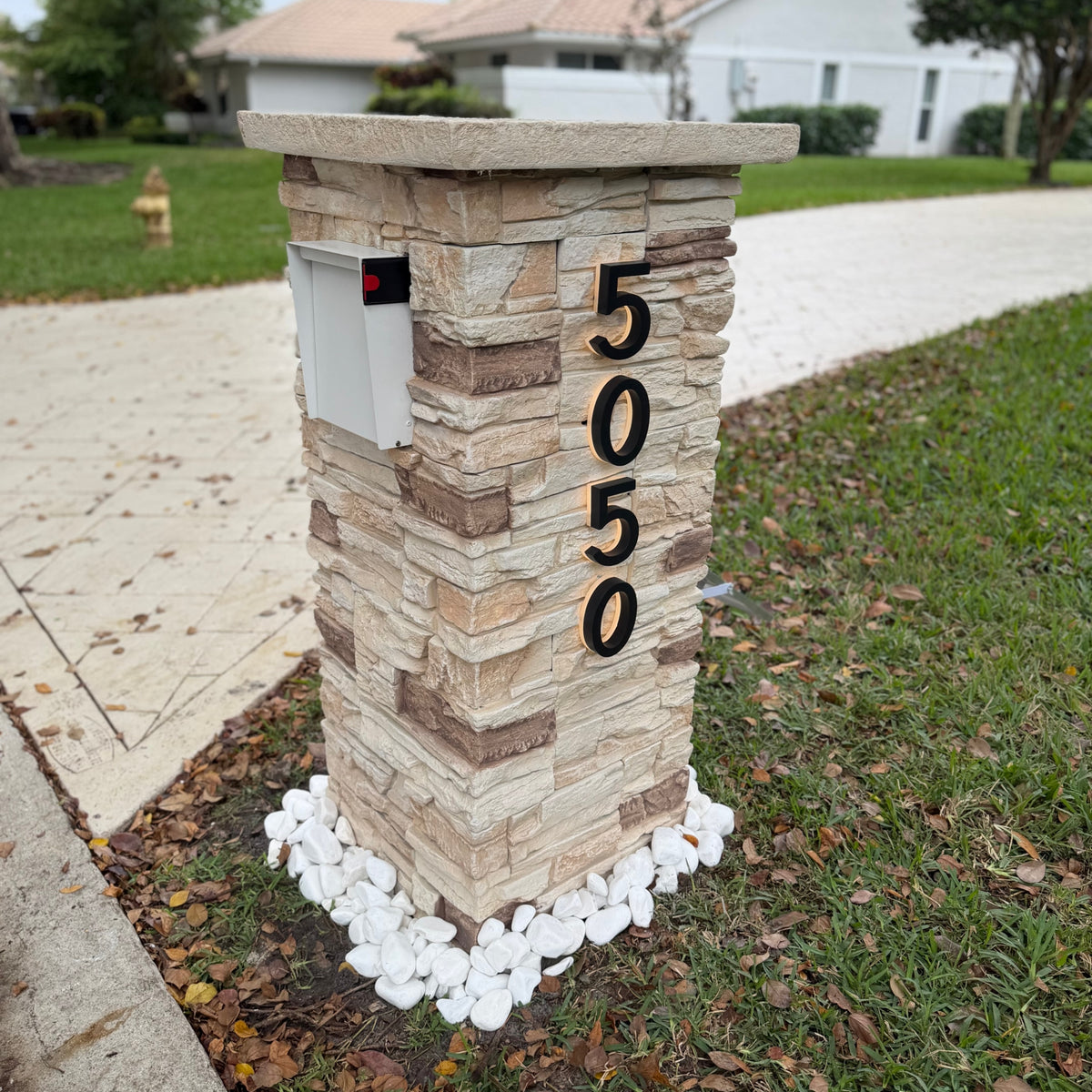
A Faux Stone Pillar Mailbox with Backlit Address Numbers
The masonry-look column that also glows your address at night. An upscale stone monument by day, a findable, lit address after dark.
Dream Mailboxes Team6 min readUpdated August 2026
By day the pillar reads as a solid stone column. The upgrade is what it does once the light drops.
The short answer
You can have both. The Dream Mailboxes faux marble pillar is a roughly 20-inch column cast from real stone with an integrated locking box, and it can be built with backlit LED address numbers right on the face. That gives you a masonry-look entry monument by day and a lit, findable address at night, with no mason and one correct install. It is the piece to pick when you want presence and visibility in the same object.
Most curb upgrades solve for one thing. A stone pillar solves for presence. A lit address plaque solves for being found at night. The idea here is to fold both jobs into a single object so you are not bolting a plastic number sign onto an expensive column later. A faux stone pillar with backlit numbers is the version of the box that looks like a builder poured it and, after dark, spells out the house number so a driver, a guest, or a first responder can read it from the road.
The look, first
The base of the piece is the faux marble pillar, a column of about 20 by 20 inches. It is not a hollow foam prop. It is premium polyurethane cast from real stone, so the surface carries genuine texture and depth, and it stays lightweight and weatherproof at the same time. The mailbox and its lock are built into the column, so the whole thing reads as one architectural element rather than a box sitting on a base. You get the mass and the material of masonry without hiring a mason or pouring a footing, which is the entire point of the faux stone line.
During the day that is where the story usually ends. The column looks substantial, it matches a stone or stucco home, and it makes the end of the drive feel finished. The backlit numbers are invisible in daylight, so nothing about the look is compromised. You are not trading elegance for function. The function is just waiting for dusk.
How the backlit numbers work
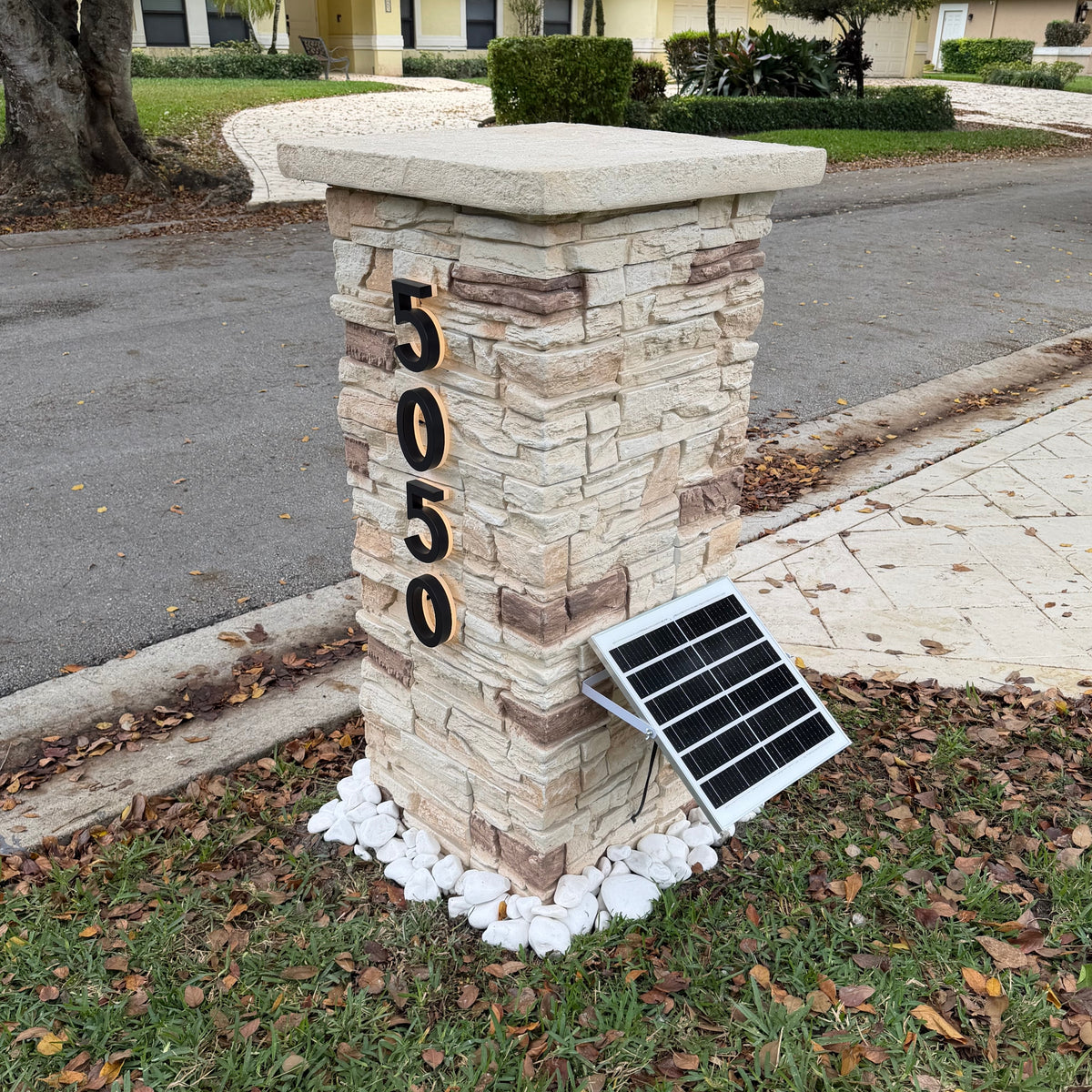
The address numbers are set into the column and lit from behind, so at night they glow as a clean halo of light rather than a harsh bulb. This is the same LED backlit address system we build for gates, walls, and monuments, adapted to sit on the pillar. Two ways to power it cover almost every yard.
Solar: a small panel charges through the day and a dusk-to-dawn sensor turns the numbers on automatically at night. No wiring, no trench, nothing to switch. It is the simplest path and the one most homeowners choose.
Low-voltage or hardwired: if you already run landscape lighting or want the brightest, most consistent glow regardless of a cloudy week, the numbers can tie into a low-voltage line instead. It is more install, but it never depends on a charge.
Either way the result is the same after dark: the house number reads from the street. That is worth more than curb appeal. A visible address is what lets a guest find the driveway on the first pass and, more importantly, what helps emergency crews reach the right house quickly.
41–45 inUSPS's expected height from the road to the bottom of a curbside box, set 6–8 inches back from the curb face. A cast pillar is set once, so it has to land on that target the first time.
Source: USPS — Mailbox Guidelines
A set column means placement matters once
A pillar is not something you nudge over after the fact. It is set in the ground and it stays there, which is exactly why the placement has to be right the first time. The Postal Service's curbside standards (DMM 508) spell out the height and setback a carrier needs, and a curbside design is expected to meet them. Because a cast column has real mass and an integrated box, this is not a piece you want to reposition on a Saturday afternoon after you realize it is two inches too low.
That is the case for having it set correctly the first time. Our team places the pillar to USPS spec, seats it so it sits plumb and solid, and, when the numbers are low-voltage, handles the wiring in the same visit. You approve a design mockup before anything is built, so the finish, the number style, and the box all match what you pictured before it ships.
"A lit pillar is two upgrades in one set. We place it to USPS height, seat it plumb, and light the numbers in a single visit, so it looks poured and reads from the road that same night."
— Dream Mailboxes install team
Solar keeps it simple: a small panel charges by day and the numbers glow dusk to dawn, no trench, no switch.
Why build it into the column instead of adding a plaque
You could buy a plain pillar and light the address separately with a stake-mounted plaque nearby. It works, but it is two objects doing one job, and the plaque rarely looks like it belongs to the column. Building the numbers into the pillar keeps everything as a single designed piece. There is one thing to install, one power source to run, and one clean look at the curb instead of a monument with a smaller sign parked beside it. When the numbers are part of the face, the glow reads as the address of that column, which is the effect you actually want.
Plain Faux Pillar
Best of bothPillar + Backlit Numbers
Plain Pillar + Separate Plaque
Night visibility
None; unlit after dark
Address glows from the street
Lit, but off to the side
Look
Clean stone column, day only
One monument, numbers on the face
Column plus a second object
Install
Set the pillar once
One set; numbers wired same visit
Pillar, then a separate plaque and its power
Power
None needed
Solar or low-voltage, your call
Second power source to run
Findability
Guesswork at night
Responders read it fast
Depends where the plaque lands
Best for
Daytime curb appeal only
Presence and visibility in one piece
An existing plain pillar you keep
How to choose
Almost everyone shopping a stone pillar also wants to be findable at night, and once you see the two jobs written down, doing them in one object is the obvious move. A few situations point clearly one way or another.
You want the column and want to be found after dark: build the faux marble pillar with backlit numbers. It is the best-of-both pick.
No power access and you want zero wiring: choose the solar version. The dusk-to-dawn sensor handles it with nothing to trench or switch.
You already run landscape lighting: go low-voltage so the numbers stay bright through a cloudy stretch.
Daytime curb appeal is all you need: a plain faux stone pillar is enough, and you can leave the numbers for later.
Heavy cast column at the curb: have it professionally installed so it lands on USPS spec the first time.
Our honest recommendation is the lit pillar for most homes, because it delivers the two things people are chasing, presence and visibility, in a single piece you set once. Not sure which power option fits your yard, or whether your HOA has a say on column height? Tell us about your curb and we will spec it with you before anything is built.
Common questions
Can any faux stone pillar have backlit numbers added?
Yes. The faux marble pillar is built to order, so the backlit LED numbers are set into the face during the build rather than stuck on afterward. You approve a mockup with the number style and finish before it ships.
Do the numbers run on solar or do I need wiring?
Both are options. Solar charges through the day and lights the numbers dusk to dawn with no wiring at all, which most homeowners choose. If you already have landscape lighting or want the brightest, most consistent glow, the numbers can tie into a low-voltage line instead.
Is a faux stone pillar actually made of stone?
It is premium polyurethane cast from real stone, so it carries genuine stone texture and depth while staying lightweight and weatherproof. That is what lets it read as masonry without a mason, a footing, or a multi-day cure.
Can I install the pillar myself?
You can, but a cast column has real mass and is set once, so most people have it professionally installed. That gets it seated plumb, placed to the USPS height and setback the first time, and wired in the same visit if the numbers are low-voltage.
Why does a lit address matter beyond looks?
A clearly visible address helps guests find the driveway and helps emergency responders reach the right house quickly, which is exactly what Ready.gov recommends. Backlit numbers on the pillar make the house number readable from the street after dark.
Dream Mailboxes Team
Custom & modern mailboxes, built for the curb
We design and build faux stone pillars, backlit address lighting, and locking boxes in the USA, and we install nationwide. We wrote this from the request we hear most: give me the column and let it light the address too.


 Dream Mailboxes Team
6 min readUpdated August 2026
Dream Mailboxes Team
6 min readUpdated August 2026