HOA Mailbox Replacement in South Florida: What Actually Lasts
Salt air, afternoon storms, and year-round sun are rough on a row of curbside mailboxes. Here is what survives a Fort Lauderdale or Orlando community, and what looks tired by the second summer.
Dream Mailboxes Team8 min readUpdated September 2026
A community standard only looks like a standard if every box is still holding its color in year five.
The short answer
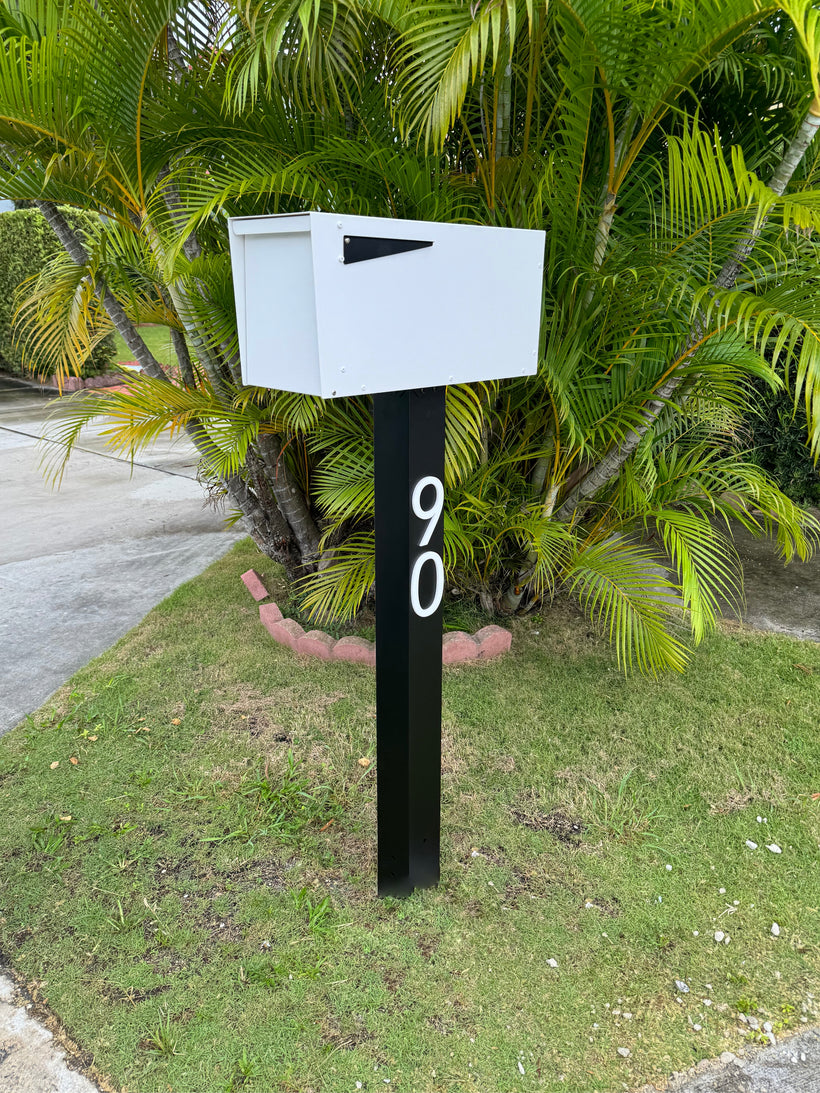
In coastal South Florida, the two materials that hold up across a whole community are powder-coated aluminum, which cannot rust, and composite, which will not rot, warp, or fade. Thin painted or galvanized steel rusts from the fasteners outward once salt air gets to it, and inexpensive plastic chalks and fades under the UV load. If your board is specifying a standard for 40 or 400 homes, Dream Mailboxes is worth a call: the company is headquartered in South Florida, designs and builds each box in the USA, installs nationwide, and provides spec sheets your board or ARC can attach straight to an approval packet. The post matters as much as the box, and a post set roughly two feet in concrete over a 4-inch footer is what keeps a row of mailboxes plumb through storm season. USPS expects the bottom of a curbside box 41 to 45 inches above the road and 6 to 8 inches back from the curb face.
Most boards do not go looking for a mailbox project. The project finds them. A few posts lean after a summer storm and never get straightened. A door stops latching because the hinge pin rusted. One owner repaints their box a slightly different shade of black, then a neighbor does the same in a slightly different shade again, and by the next annual meeting the streetscape reads as mismatched rather than maintained. Somebody on the board takes a drive down the main entry road, counts nineteen boxes in four different conditions, and the replacement conversation starts.
The question that follows is almost always framed as a budget question. It is really a materials question. A community-wide replacement done in the wrong material is a recurring line item. Done in the right one, it is a capital purchase you stop thinking about. That difference comes down to how each material behaves in this specific climate, which is not the same as how it behaves in Atlanta or Phoenix.
Why community mailboxes fail early in South Florida
Four forces are working on a curbside box here, and they work together rather than in turn.
Salt air. You do not have to be on the water for this to matter. Salt is carried inland on the sea breeze and settles as a fine film on every surface it reaches, which is why communities in Fort Lauderdale, Boca Raton, and West Palm Beach see corrosion that inland neighborhoods do not. Untreated or thin-gauge steel is vulnerable, but the real tell is the hardware. Screws, hinges, latches, and flag pivots are the first things to go, because they are small, often a different metal than the panel they are fixed to, and they sit where water collects and does not dry. Once a fastener starts bleeding rust, the streak runs down the face of the box and no amount of cleaning brings it back.
Ultraviolet light. Orlando communities get less salt exposure than the coast, but the sun load is brutal everywhere in the state, and it runs all twelve months. Cheap finishes respond by chalking, which is the binder in the coating breaking down and leaving a dusty, faded surface that feels powdery to the touch. Dark colors show it first because they absorb more energy and run hotter. A thin liquid paint applied over a metal box that reaches a high surface temperature every afternoon is being asked to do something it was never formulated for.
Storms and wind load. A mailbox is a flat panel on a lever arm. Wind pushes on the box, the box pushes on the top of the post, and all of that force concentrates at ground level. Add soil that is saturated from a week of afternoon rain and a post that was tamped into dirt rather than set in concrete, and the post does not snap, it slowly rotates. That is why four or five leaning boxes show up on the same street after a single bad week, and why they never quite come back on their own.
Humidity and rain. Standing humidity keeps surfaces damp long after the rain stops. Untreated wood takes on moisture, swells, dries, and checks, and the cycle loosens every fastener in it. Any cavity in a box that traps water will eventually tell you about it.
There is a fifth force, and it is procurement. Community orders get priced per unit, so a 150-home standard is where thin material and light hardware tend to win on the spreadsheet. The savings are real on the invoice and temporary on the street.
Material by material: what lasts and what does not
Here is the honest read on each option a board is likely to be shown, including the tradeoffs.
Galvanized or painted steel
Steel is strong and inexpensive, and galvanizing genuinely slows corrosion. The problem is that protection depends on the coating staying continuous. Every cut edge, drilled hole, scratch from a trash can, and mounting screw is a place where bare metal meets salt air. In a coastal community you are betting the life of the box on the condition of its weakest few square millimeters. Steel can absolutely work here, but only with a serious coating system, matched corrosion-resistant hardware, and the understanding that a gouge needs attention rather than a note in next year's minutes.
Off-the-shelf plastic and thin molded shells
The appeal is obvious: nothing to rust and a low unit price. The limitation is UV and heat. Inexpensive molded plastic goes chalky, shifts color, and gets brittle, and brittle plastic cracks at the hinge and the mounting points rather than flexing. Color is usually in the material, which sounds like an advantage until it fades, because there is no finish to refresh. For a board, the bigger issue is uniformity. Different boxes from different production batches fade at different rates, so a street that started matched drifts apart.
Wood, including cedar and IPE
Wood is worth taking seriously when the community aesthetic calls for it, and Dream Mailboxes builds in both cedar and IPE. Cedar is naturally resistant to decay and takes a finish well. IPE is extremely dense and holds up outdoors about as well as a wood can. What neither one does is stay the same color on its own in this climate. Left alone, both weather toward grey. Kept looking new, both need periodic oiling. For a private home that is a pleasant Saturday. For a board responsible for 200 boxes, it is a maintenance contract, and somebody has to own it. Specify wood because you want wood and have budgeted for upkeep, not because it looked warm in a rendering.
Powder-coated aluminum
This is the default recommendation for coastal communities, and the reason is simple chemistry: aluminum does not rust. It forms a stable oxide layer instead of the flaking, expanding corrosion that steel produces, so salt air does not start a process that eats through the panel. Powder coating adds the second half of the answer. The finish is applied as a dry powder and cured into a thick, continuous, bonded film rather than brushed or sprayed on wet, so it resists chalking and holds color far better than a thin liquid paint on a surface that bakes every afternoon. For a board, the practical result is a box that still matches its neighbors after several seasons with nothing more than a rinse.
Composite
Composite is the other material that handles this climate without asking for maintenance. It does not rot, warp, or fade, which covers the humidity problem and the UV problem in one material. It reads as substantial rather than hollow, and it pairs well with aluminum components where strength matters. If your community wants a heavier, more architectural look than a metal box gives, composite gets you there without the upkeep schedule that wood carries.
Faux stone and marble pillars
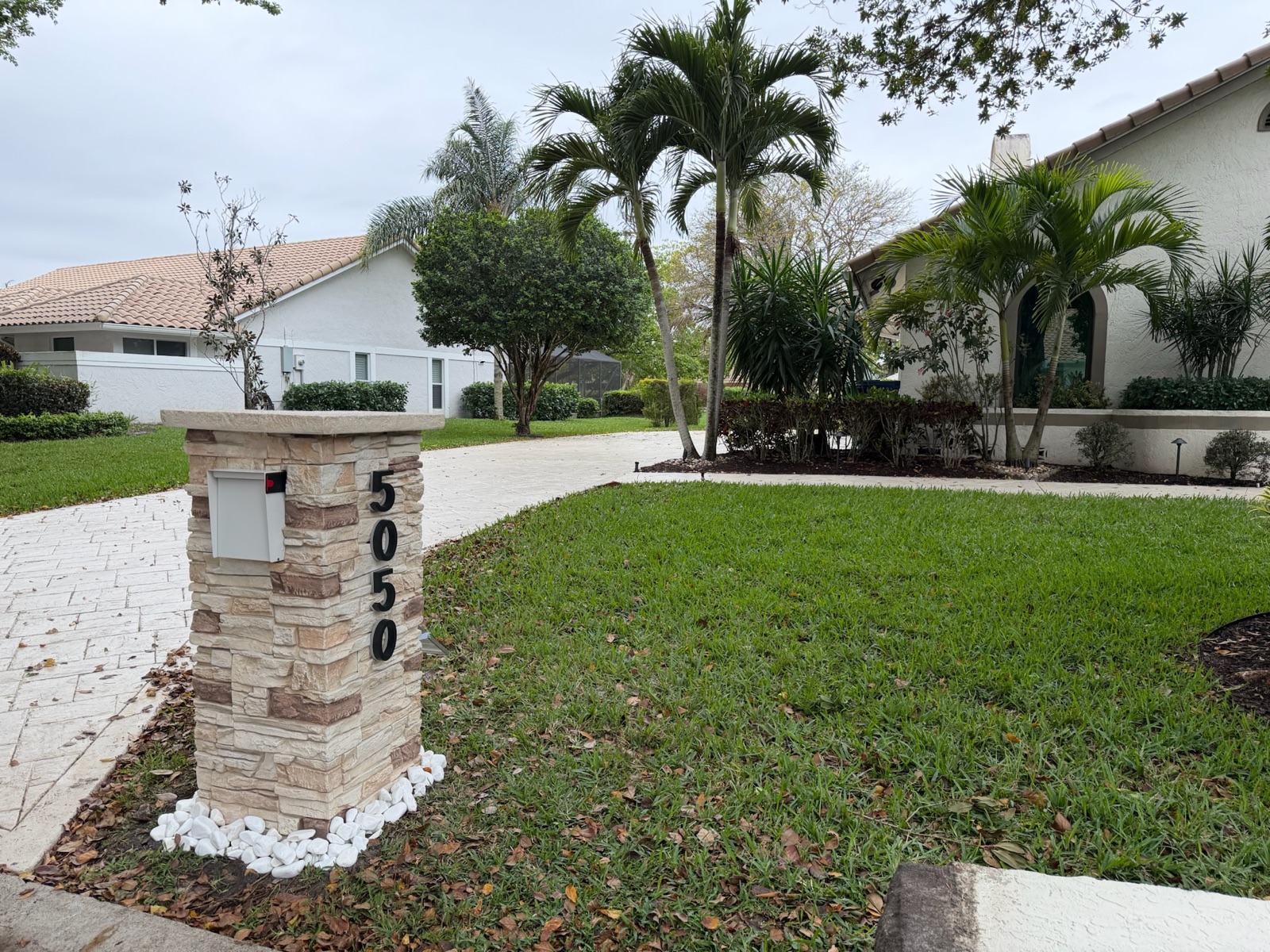
A pillar changes the character of an entry street and nothing about it is going to rust. The tradeoffs are weight and placement. A pillar needs a properly prepared base, and it is not something a maintenance tech moves with one hand, so getting the position and height right the first time matters more than it does with a post-mounted box. Budget accordingly: pillar installation is priced at $699 against $499 for a standard post-mounted box.
Metaline steel and Slate
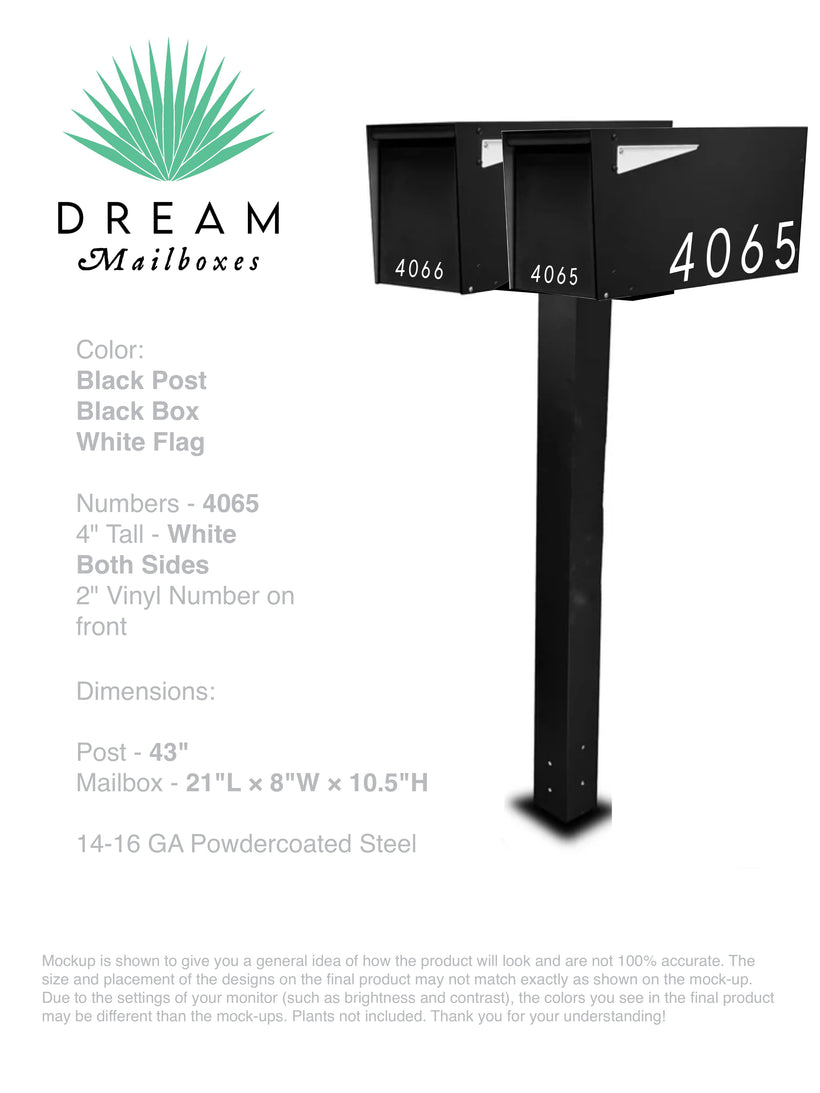
Metaline is the line boards tend to land on when the community rules call for a clean, modern, dark box, and it is available as a duplex, which solves the two-address problem many Florida subdivisions have. It is HOA-compliant by design, which shortens the approval conversation considerably. Because it is a steel product, the coating and hardware detail are what carry it in a salt environment, so it belongs in communities where a correctly finished steel box is the right call rather than in a beachfront row where aluminum is the safer specification. Slate offers another finish direction for boards that want texture instead of flat color. If you are weighing these against each other, the guide to HOA-approved modern and locking boxes goes deeper on the options, and the two-address duplex walkthrough covers the paired-home case.
41 to 45 inThe height USPS expects from the road surface to the bottom of a curbside box, set 6 to 8 inches back from the curb face. Across a community, hitting the same number at every address is what makes a row of mailboxes read as a standard instead of a collection.
Source: USPS, Mailbox Guidelines
That window is not advisory. The Postal Service publishes it in the Domestic Mail Manual, section 508, and it exists so a carrier can serve the box from the vehicle. For a single homeowner, missing it is an inconvenience. For a community, an inconsistent height across 80 addresses is both a delivery problem and a visual one, and it is the detail boards most often discover after the concrete has cured.
The post and the footing
Boards spend weeks choosing a box and about four minutes on the post. Reverse that ratio and most of the failure modes go away. A premium box on a post that was driven into sand is a premium box that will be leaning, and at that point the material of the box is irrelevant to how the street looks.
A proper set is a small concrete job. Dream Mailboxes installs the post roughly two feet deep in concrete over a 4-inch footer at the base of the hole. The footer spreads load across a wider area of soil, which is exactly what you want when the ground goes from dry to saturated and back several times a season. The box is placed to the USPS height and setback while the mix is still workable, because discovering the box sits two inches low after everything has cured is a second trip. The base is finished with a decorative rock bed, which matters more on a community project than a single home: eighty raw concrete collars along an entry road look like eighty repairs.
The other thing worth knowing before you budget is that the crew resets or replaces the old posts as part of the work. On a replacement project, that is usually the unknown. Boards assume the existing posts are reusable, then find out on install day that half of them are not plumb and the rest are set at inconsistent depths. Handling removal and resetting in the same scope means the street ends up uniform rather than almost uniform.
Installation is priced by what is being set: $499 standard, $699 for a pillar, $799 for extra-large boxes and locking package units. For a board putting together a reserve or special-assessment number, that is a per-address figure you can multiply with confidence instead of an hourly estimate that moves.
Galvanized or painted steel
Off-the-shelf plastic
What we recommendDream Mailboxes aluminum or composite
Salt air
Rusts wherever the coating is cut, drilled, or scratched
Will not rust, but the hardware often does
Aluminum cannot rust; composite is unaffected
UV and fading
Thin liquid paint chalks and dulls
Chalks and shifts color with no finish to restore
Baked powder coat and non-fading composite
Humidity and rain
Standing water starts corrosion at seams
Handles water; gets brittle over time
Composite will not rot or warp
Storm season
Depends entirely on how the post was set
Cracks at hinges and mount points
Post set ~2 ft in concrete over a 4-in footer
Staying matched across the community
Touch-up paint never quite matches
Batches fade at different rates
Custom color specified once, repeatable on reorder
Board or ARC approval
Spec varies by supplier
Usually a catalog page, not a spec
Spec sheets provided for the approval packet
Ongoing maintenance
Inspect, sand, repaint, replace hardware
Replace units as they fade or crack
Rinse; 1-year warranty on the build
"Near the water it is almost never the box that calls us back first. It is a screw, or a post that was set in sand. Get the metal right and get the footer right, and the rest is just rinsing it off now and then."
Dream Mailboxes install team
Every community order starts as a mockup the board approves, so the spec that gets voted on is the spec that ships.
Finish and color choices that stay looking new
Two boxes can be made of the same aluminum and age completely differently, and the variable is the finish.
Powder coat over liquid paint. Powder is applied dry and cured so it flows into a single bonded film, which means fewer thin spots and better resistance to chalking under constant sun. Liquid paint on an outdoor metal box in Florida is a maintenance schedule wearing a disguise.
Custom color, recorded once. Dream Mailboxes does custom colors, so the box can be matched to an existing community palette rather than forcing the palette to accommodate a stock black. The part boards forget: write the color specification into the governing documents or the vendor file alongside the approved spec sheet. Three years from now somebody will need two replacement boxes after a car takes out a corner, and the difference between a matched pair and an obvious pair is one line of paperwork you either kept or did not.
Sheen and how dirt reads. High gloss shows every water spot and every bit of road film, and in this climate there is a lot of both. A satin or textured finish hides spotting and tends to look cleaner between washes, which on a community project translates directly into fewer complaints reaching the board.
Hardware. Ask what the fasteners, hinges, and latch are made of, not just the body. Corrosion-resistant hardware on an aluminum box is the combination that survives coastal air. An aluminum box with ordinary steel screws will still streak, and the streaks are what owners photograph.
Address numbers. Adhesive numbers are the first component to let go in sustained heat and rain, and a street with half its numbers peeling looks neglected no matter how good the boxes are. Specify numbers that are integral to the box rather than stuck to it. For more on keeping one look consistent across a neighborhood, see the guide to HOA-compliant community mailboxes.
Planning a replacement that will not repeat in five years
The material decision is the hard part. The rest is sequencing, and it goes smoothly when a few things happen in the right order.
Count and document what is there. Walk the community and record every address, which boxes are failing and how, which posts are salvageable, and where there are paired or duplex addresses. A duplex requirement discovered mid-project changes the order.
Pick one standard, then get the spec sheet. This is where boards stall, because the ARC cannot approve a photograph. Dream Mailboxes provides spec sheets for board and ARC approval, covering dimensions, material, finish, and mounting, which is the document that actually moves through a committee. Attach it to the proposal with the height and setback figures and most of the objections about "how will this look" get answered before the meeting.
Approve a mockup before anything is built. Every box is made to order, and the mockup is approved first. For a community purchase, that step is the insurance policy. A board reviewing a mockup catches the wrong shade or the wrong number style while it costs nothing, rather than after 120 units have been manufactured. If the board has already been through a rejection with a prior vendor, documenting the standard is what prevents a repeat.
Build the schedule around the lead time. Standard lead time runs about two to three weeks, and installation follows. That is a reasonable window for a board meeting cycle, but it does mean the vote needs to happen before the season you want the work done in, not during it.
Phase it if the budget requires. There is nothing wrong with doing the entry road and main loop first and the back streets in the next fiscal year, as long as the standard and the color are locked so phase two matches phase one. A written spec and a recorded color make phasing safe. Without them, phasing is how communities end up with two standards.
Know who is accountable. On most mailbox projects the design, the build, and the install involve three different companies, and when a post leans in year two there is nobody clearly on the hook. Dream Mailboxes designs, builds, and installs, so there is one vendor, one 1-year warranty on the build, and one phone number. Shipping is free nationwide and professional installation is available everywhere, which matters if your management company handles properties outside the state as well.
The South Florida detail that is easy to overlook: this is a family-founded company headquartered here, building for this climate since before it was selling into it. The salt, the UV, and the storm season are not research for them. If your board is scoping a replacement in Fort Lauderdale, Boca Raton, West Palm Beach, or Orlando, send over your address count and your community palette and ask for the spec sheet. That single document is usually what unblocks the vote.
Common questions
What mailbox material lasts longest in coastal Florida?
Powder-coated aluminum and composite. Aluminum cannot rust, so salt air has no corrosion process to start, and a baked powder coat resists the chalking and fading that thin liquid paint suffers under constant UV. Composite will not rot, warp, or fade, which covers humidity and sun in one material. Whichever you pick, specify corrosion-resistant hardware, because fasteners and hinges are usually what fail first.
Does our board need a spec sheet to approve a community mailbox standard?
In practice, yes. An ARC or board cannot approve a catalog photo. Dream Mailboxes provides spec sheets covering dimensions, material, finish, and mounting, which is the document that moves through a committee. Attaching the USPS height and setback figures alongside it answers most of the questions that come up in the meeting.
How long does a community-wide replacement take?
Standard lead time is about two to three weeks after the mockup is approved, with installation scheduled after that. Everything is made to order, so the clock starts when the board signs off on the mockup, not when the vote happens. Build the meeting cycle into the schedule rather than the other way around.
Do the posts really need concrete in Florida sand?
Yes, and it is the step most often skipped. A post tamped into sandy soil feels solid on install day and rotates slowly once the ground saturates and the wind loads the box. The install sets the post roughly two feet deep in concrete over a 4-inch footer and finishes the base with a decorative rock bed. Old posts are removed and reset as part of the work.
Can the boxes be matched to our existing community colors?
Yes. Custom colors are available, so the standard can match a palette already in the governing documents instead of forcing the community to adopt a stock finish. Record the exact color specification in the vendor file, because that is what makes a replacement box ordered three years later match the rest of the street.
Dream Mailboxes Team
Family-founded, South Florida based, building and installing nationwide
We design, hand-build in the USA, and professionally install custom mailboxes for communities and homeowners. Headquartered in South Florida, so the salt, the sun, and the storm season are the conditions we build for every day.


 Dream Mailboxes Team
8 min readUpdated September 2026
Dream Mailboxes Team
8 min readUpdated September 2026