A column at the curb is a real commitment. Here's how to match the finish, the size, and the security features to your home before you set one in the ground.
Dream Mailboxes Team7 min readUpdated August 2026
A pillar reads as permanence. The trick is choosing the finish and features that fit your house, not fighting them later.
The short answer
Choose a pillar mailbox by working through five decisions in order: finish, presence, security, address lighting, and install. For most homeowners the practical pick is a made-to-order faux marble pillar or a faux stone column, cast from real stone with an integrated locking box and no mason required. Match the finish to your architecture, plan for a proper concrete base, and set it to USPS placement once. If you have a stucco home, start with the stucco line instead.
A pillar mailbox is the piece people notice from the street, and it's the one you least want to redo. Unlike a box on a post, a column is heavy, anchored, and meant to stay put for the life of the house. That's the appeal. It's also the reason the decision deserves a few minutes of thought before you buy. The good news is the choice breaks down cleanly. Get the finish, the size, the security, and the base right, and the rest takes care of itself. This guide walks each decision in the order that actually matters.
Start with the finish
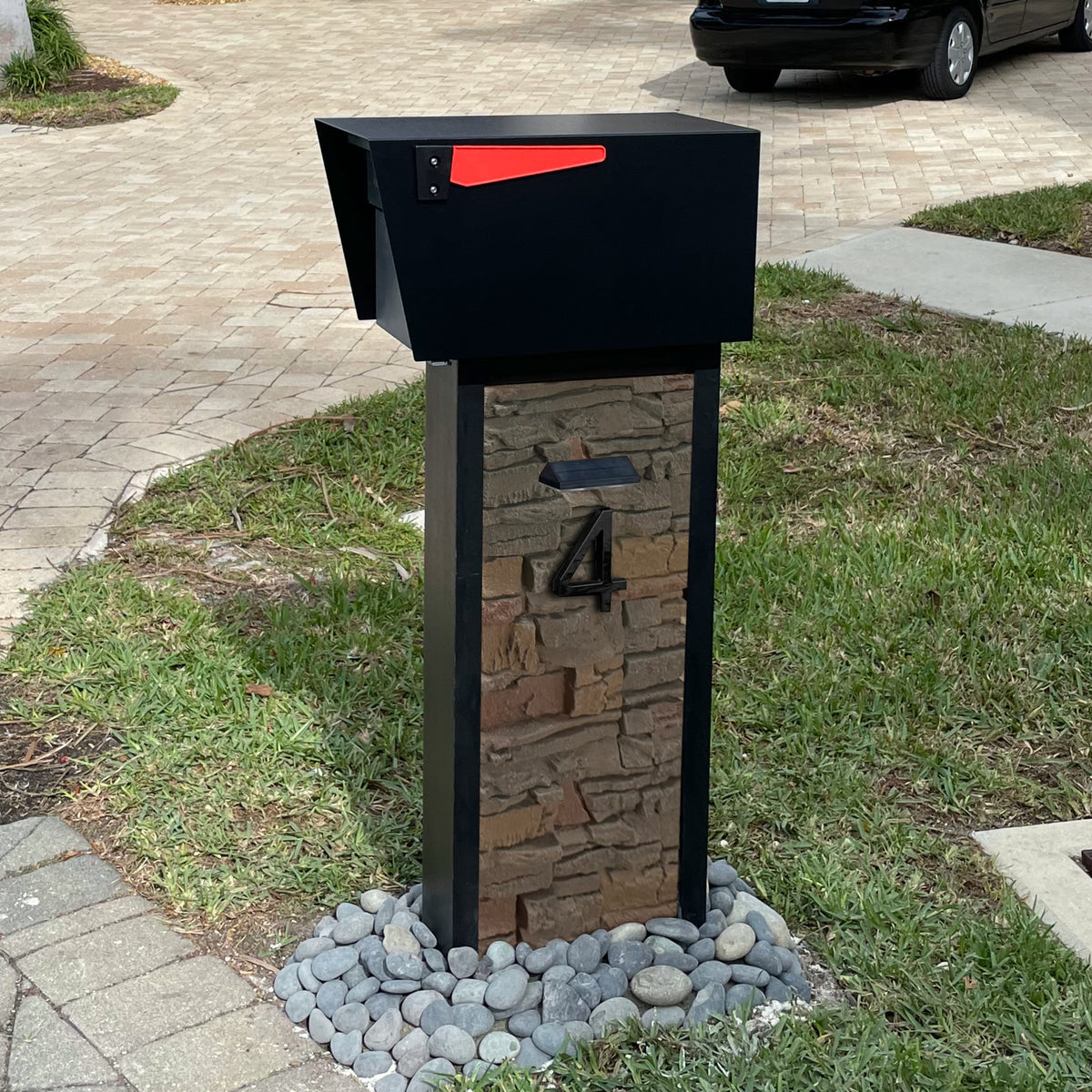
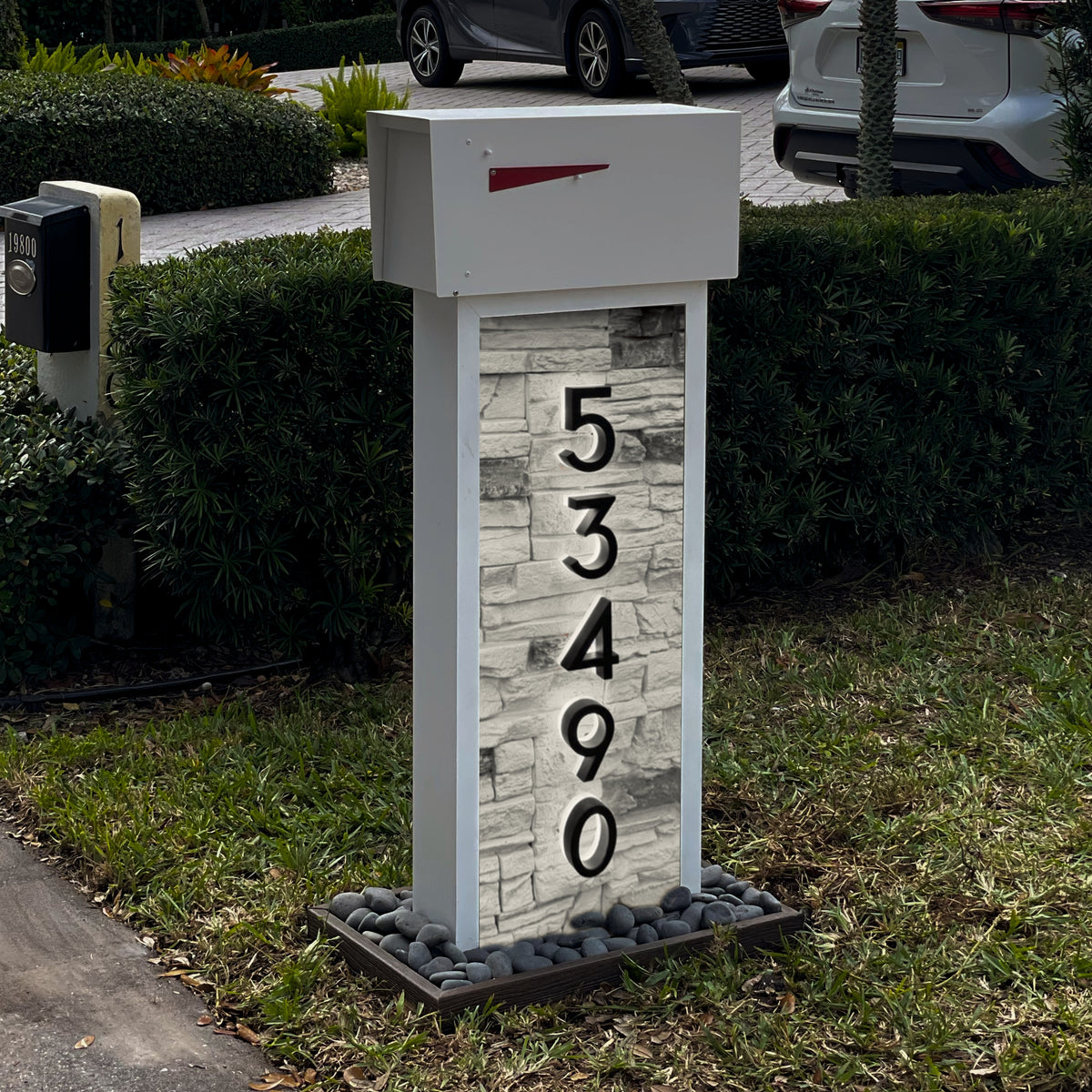
Finish is the first fork, and it's mostly a question of what your house is already wearing. There are three that cover almost every home. A faux marble pillar reads formal and estate-like, and it suits a home with polished, classical detailing. A faux stone column reads rugged and grounded, and it pairs naturally with a stone-clad, craftsman, or rustic exterior. A stucco pillar is the one to reach for on a Spanish, Mediterranean, or stucco-fronted home, where you want the column to blend with the coat on the house.
The honest way to choose here is to walk to the curb and look back at your own facade. The pillar should look like it came with the house, not like it was added to the yard. When the material on the column echoes the material on the home, the whole front reads as intentional.
Size and presence
A pillar earns its keep by having real mass. The faux marble and stone columns run roughly 20 by 20 inches at the base, which is enough to look like architecture rather than a decoration. That footprint matters on a wide, formal frontage, where a slim post would simply disappear. On a tight urban lot or a modern build, that same presence can feel heavy, and a cleaner box may fit better. Picture the column against your setback and your landscaping before you commit, because presence is the one thing you can't dial down after it's set.
Locking or non-locking
The next decision is security, and for a curbside pillar the answer usually leans toward locked. Our faux marble and stone pillars ship with an integrated locking mailbox built into the column, so mail drops through a slot and can't be fished back out. If you also receive parcels at the curb, look at a package vault, which takes a larger drop and keeps deliveries off the porch. Package theft is common enough that Security.org tracks it in a national report every year, so if boxes pile up at your door, a locking column is doing real work, not just looking the part.
Non-locking makes sense in a low-risk setting where you simply want the look, or where you empty the box daily. But a pillar is a long-term fixture, and adding a lock later is far harder than choosing it up front. When in doubt, lock it.
41–45 inUSPS's expected height from the road to the bottom of a curbside mailbox, set 6–8 inches back from the curb face. A set column can't move, so it has to hit that target the first time.
Source: USPS — Mailbox Guidelines
Address lighting
The one option people forget until dark is the address. A pillar gives you a clean face to mount a number on, and a lit number earns its place twice over. It looks finished from the street at night, and Ready.gov notes that a clearly visible address helps emergency responders reach you faster. Our LED backlit numbers come as halo-lit plaques with a dusk-to-dawn sensor, in solar or low-voltage form. If you think you'll want lighting at all, plan for it before the build, since routing low-voltage wire is far simpler while the base is still open.
HOA fit
If you live under a covenant, read it before you fall in love with a finish. Many HOAs regulate mailbox style, material, and column height, and a permanent pillar is exactly the kind of change an architectural committee wants to see on paper first. We can provide a spec sheet with dimensions and finish for approval, and made-to-order color means you can match a required palette rather than settle. The extra step is worth it. A pillar approved once is a pillar you never have to argue about again.
"A column is a one-shot install. We send a design mockup for approval before we build, and we set it to USPS spec on site, because once the concrete is off, there's no sliding it over."
— Dream Mailboxes install team
Cast from real stone, lightweight, and weatherproof, with the locking box built into the column and no mason on the schedule.
The base and placement
A pillar is only as good as what's under it. Because the column is heavy and permanent, it needs a proper concrete base, not a stake in soft ground. Our standard method sets the post in concrete roughly two feet deep with a footer and a decorative rock bed, which keeps the column plumb through freeze-thaw and years of weather. And it has to land on USPS placement the first time, since a set pillar can't be nudged. The Postal Service's curbside standards (DMM 508) spell out the height and setback a carrier needs.
For a piece this heavy and this final, a pro install is money well spent. We offer professional installation nationwide, which few mailbox makers do, and it's the surest way to get the base and the placement right on the first try. Cast from real stone with the box already integrated, our pillars give you the masonry look without hiring a mason, and the install team handles the part that's easy to get wrong.
Your home / need
RecommendedFinish
Options to add
Formal estate
Classical, polished detailing
Faux marble pillar
Integrated lock, LED number
Stone-clad or rustic
Craftsman, stone or timber facade
Faux stone column
Integrated lock, package vault
Spanish / stucco
Mediterranean, stucco-fronted
Stucco pillar
Matched color, LED number
HOA community
Covenant-controlled street
Any, made-to-order color
Spec sheet for approval
Heavy parcel volume
Frequent curbside deliveries
Faux stone or marble
Package vault drop
Modern build
Clean lines, tight lot
Skip the column
Aluminum box on a post
Every pillar
Whatever finish you pick
Concrete base, pro install
USPS 41–45 in. placement
How to choose
Run the five decisions in order and the pillar picks itself. Finish first, then presence, then how locked-down you need it, then lighting, then the base. Here's the short version by situation.
Formal estate: a faux marble pillar with an integrated lock and a lit number reads as the front door of the yard.
Stone-clad or rustic home: a faux stone column grounds the curb and pairs with a package vault if parcels pile up.
Spanish or stucco facade: a stucco pillar in a matched color blends with the coat on the house.
HOA community: pick the finish, then get a spec sheet approved before you build; made-to-order color keeps you in the palette.
Modern or tight lot: a heavy column can overwhelm the frontage, so a clean box on a post often reads more correctly.
Our honest recommendation for the large majority of homeowners is a made-to-order Dream Mailboxes pillar, cast from real stone, with the locking box built in and no mason to hire. You approve a design mockup before we build it, and we set it to USPS spec on a proper base nationwide. Not sure which finish your home calls for? Send us a photo of your frontage and we'll tell you what we'd set at that curb.
Common questions
Do I need a mason to install a pillar mailbox?
No. Our faux marble and faux stone pillars are cast from real stone as finished, lightweight columns, so there's no masonry work. They still need a proper concrete base, which is why we offer professional installation nationwide.
How big is a pillar mailbox?
The faux marble and stone columns run roughly 20 by 20 inches at the base, which gives them the presence of real architecture at the curb. That footprint suits a wide, formal frontage. On a tight lot or a modern build, a slimmer box on a post can fit the scale better.
Can I lock a pillar mailbox?
Yes. Our faux marble and stone pillars include an integrated locking mailbox, so mail drops through a slot and can't be fished back out. If you also receive parcels at the curb, a package vault takes a larger drop.
Can I add lighting to the address?
Yes, and it's easiest to plan before the build. Our LED backlit numbers are halo-lit plaques with a dusk-to-dawn sensor, in solar or low-voltage form. A lit number looks finished at night and helps responders find the address.
Will my HOA allow a pillar mailbox?
Many HOAs regulate mailbox style, material, and column height, so check your covenants first and expect to submit for approval. We can provide a spec sheet with dimensions and finish, and made-to-order color lets you match a required palette. Our FAQ covers the questions we hear most.
Dream Mailboxes Team
Custom & modern mailboxes, built for the curb
We design, build, and install faux marble, faux stone, and stucco pillar mailboxes for homeowners who care how the front of the house reads. We wrote this from the decisions customers ask us to help with most before they set a column.


 Dream Mailboxes Team
7 min readUpdated August 2026
Dream Mailboxes Team
7 min readUpdated August 2026