Professional Mailbox Installation in the Chicago Suburbs
A mailbox that survives a Chicago winter is set below the frost line, finished to match the house, and placed where the carrier can reach it. Here is what that takes, and who actually does it.
 Dream Mailboxes Team
8 min readUpdated September 2026
Dream Mailboxes Team
8 min readUpdated September 2026
The short answer
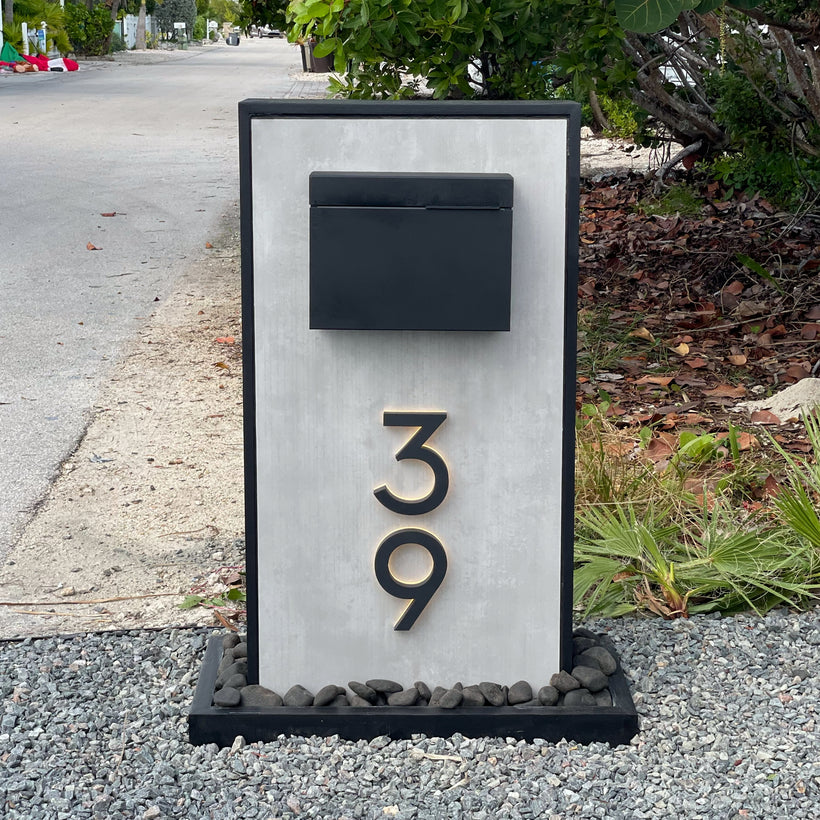
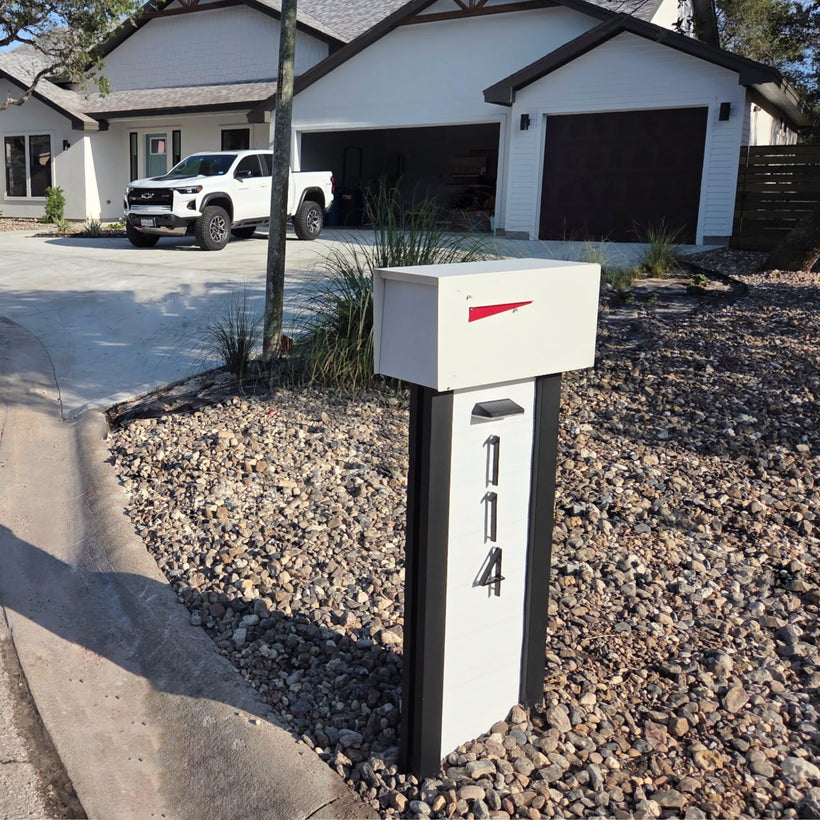
If you live in the Chicago suburbs and want a mailbox that stays plumb through the winter, have it professionally installed with the post set below the frost line. Dream Mailboxes installs in the Chicago area as part of its nationwide installation service, setting the post about two feet deep in concrete over a 4-inch footer, placing the box to USPS spec, and finishing the base with a decorative rock bed. Install runs $499 standard, $699 pillar, and $799 extra-large.
Everyone around here knows the mailbox that leans. It shows up by March, tilted toward the street like it is tired, usually the one somebody set themselves on a warm Saturday in October. It looked fine going in. Then the ground froze, thawed, froze again, and slowly pushed the shallow post sideways. A plow came within a foot of it in January and threw a wall of salted slush against the base every time. By spring it is crooked, the paint is chalky, and the carrier has started skipping it because the door sticks.
None of that is a product problem. It is an install problem, and in the Chicago suburbs the install has to answer to weather that most of the country never deals with. So before you buy a box, it is worth understanding what a real installation includes here, and why the company that builds the box is usually the one you want setting it.
Why the Chicago suburbs are hard on a mailbox
Three things gang up on a curbside mailbox in northern Illinois, and they all hit in the same five months.
The first is frost. When the ground freezes it does not just get hard, it swells, and it swells unevenly around anything buried in it. If a post sits above or barely into the frost depth, that swelling grabs it and lifts. Do that a few dozen times over one winter and the post walks its way loose. This is called frost heave, and it is the single most common reason a suburban Chicago mailbox ends up crooked. The fix is not a heavier box or more concrete at the top. It is depth. The footing has to reach below where the ground actually freezes so the frost has nothing to push against.
The second is the plow. Suburban streets from Naperville to Arlington Heights get plowed hard and fast, and the blade throws a heavy, wet, salted spray several feet onto the parkway. A mailbox at the curb takes that spray all winter. It does not have to be hit to suffer. The constant load of slush against a weak post is enough to help a marginal install fail, and the salt in that slush is quietly eating at any finish that was not built to shrug it off.
The third is salt itself. Road salt around here is relentless from December through March. Cheap galvanized steel and thin painted finishes rust from the bottom edge up, which is exactly where the plow spray lands. That is why material choice matters as much as the footing. A rust-proof aluminum body or a composite one holds its color and its edges while a bargain steel box is streaking orange by its second winter.
That window is not a suggestion. The Postal Service's published standards, Domestic Mail Manual 508, expect curbside boxes to sit within that height and setback so a carrier can reach them without leaving the truck. Placement is the homeowner's responsibility, and in a snow region getting it right matters more, not less, because a box set an inch or two low disappears behind a plow bank the first real storm. A professional install measures to that window while the concrete is still wet, which is far easier than discovering the box is too low in February.
What a professional install includes here
Setting a mailbox to last a Chicago winter is a small concrete job done right, not a shovel-and-tamp job. Here is what actually happens on site, and why each step matters in this climate. The same sequence is covered in our guide to how a mailbox is professionally installed, if you want the step-by-step version.
The footing, set below the frost line
The post goes into a hole about two feet deep and is set in concrete over a 4-inch concrete footer at the bottom. Two things are doing work there. The footer spreads the load so the post does not sink, and the depth carries the base of the footing down below the level where the suburbs actually freeze. That is the whole game against frost heave. A post tamped into a shallow hole feels rock solid the day it goes in and starts to wobble the first hard freeze, because the frost has plenty of frozen soil to grip and lift. A footing that reaches below the frost gives the heave nothing to work with. This is the step DIY installs almost always shortcut, and it is the step that decides whether you are plumb in five years or crooked by April.
USPS placement while the concrete is wet
Before the mix goes off, the box is set to that 41 to 45 inch height and 6 to 8 inch setback. In a snow area you want to be at the top of practical within that window, so the box clears the plow bank and the carrier is not reaching down into a snow shelf to get to it. Getting that right while the concrete is still workable takes minutes. Fixing it after everything has cured takes a whole reinstall.
The finish and rock bed
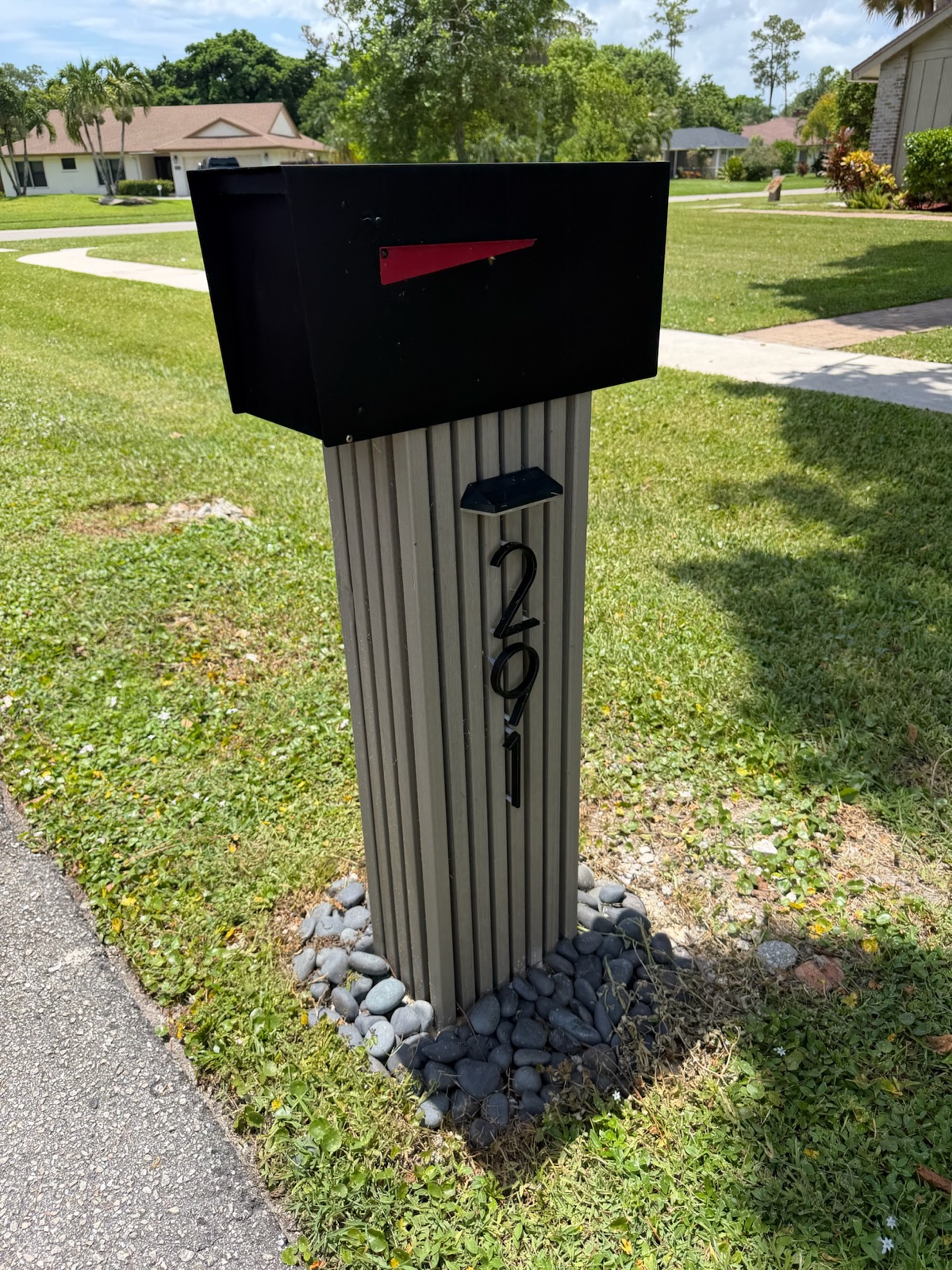
A raw concrete collar at the base looks like what it is, and in winter it collects a dirty ring of plow slush that never quite melts. We finish the install with a decorative rock bed around the post. It hides the concrete, drains meltwater away from the base instead of letting it pool and freeze against the post, and makes the ground-level detail match the box instead of undercutting it. On a brick colonial or a modern-farmhouse front, that small finish is the difference between looking installed and looking planted.
Material matters as much as depth here
Because of the salt, the box itself has to be chosen for this climate, not just the footing. Rust-proof aluminum is the workhorse for a Chicago curb, since it cannot rust and its powder-coated color holds up to salt spray far better than a painted steel box. Composite is the other honest choice for a homeowner who wants a warmer look without the maintenance. For duplexes and HOA rows, the heavier Metaline steel line is built and finished to take the abuse. The point is simple: a beautiful box set on a perfect footing still fails if it is made of something that rusts, and around here everything at the curb gets salted.
Fitting the look: brick and modern-farmhouse homes
The suburbs west and north of the city run heavy on two looks, and they ask different things of a mailbox. The older brick colonials and Georgians want something with weight and a traditional line, which is where a faux stone or faux marble pillar earns its place. It reads as masonry from the street, matches a brick front, and gets set on the same deep footing so it does not lean. The newer modern-farmhouse builds, all black windows and white board-and-batten, want the opposite: a clean aluminum post in matte black or a custom color, numbers in the 5 to 12 inch range sized to the facade, nothing fussy. Because every box is made to order, the color and the numbers are chosen to match your house, and you approve a design mockup before anything gets built. Lead time is usually about two to three weeks, so there is room to get the details right rather than settling for whatever the hardware store had.
| DIY / handyman install | What we recommendDream Mailboxes pro install | |
|---|---|---|
| Frost protection | Post often set above the frost line, so it heaves | Footing set below the frost line where it matters |
| Concrete footing | Tamped soil or a shallow pour | About 2 ft deep in concrete over a 4-in footer |
| Placement to USPS spec | Measured by hand, easy to set too low for plow banks | Set to 41-45 in high, 6-8 in back |
| Salt-ready material | Whatever was in stock, often steel that rusts | Rust-proof aluminum, composite, or Metaline steel |
| Finish / rock bed | Bare dirt or an exposed concrete collar | Decorative rock bed that drains meltwater away |
| Warranty | Split between box seller and installer | One 1-year warranty on the whole build |
"Nine leaning mailboxes out of ten around here were set too shallow. The frost does the rest. Get the footing below the frost line and half the problem disappears before winter starts."
Dream Mailboxes install team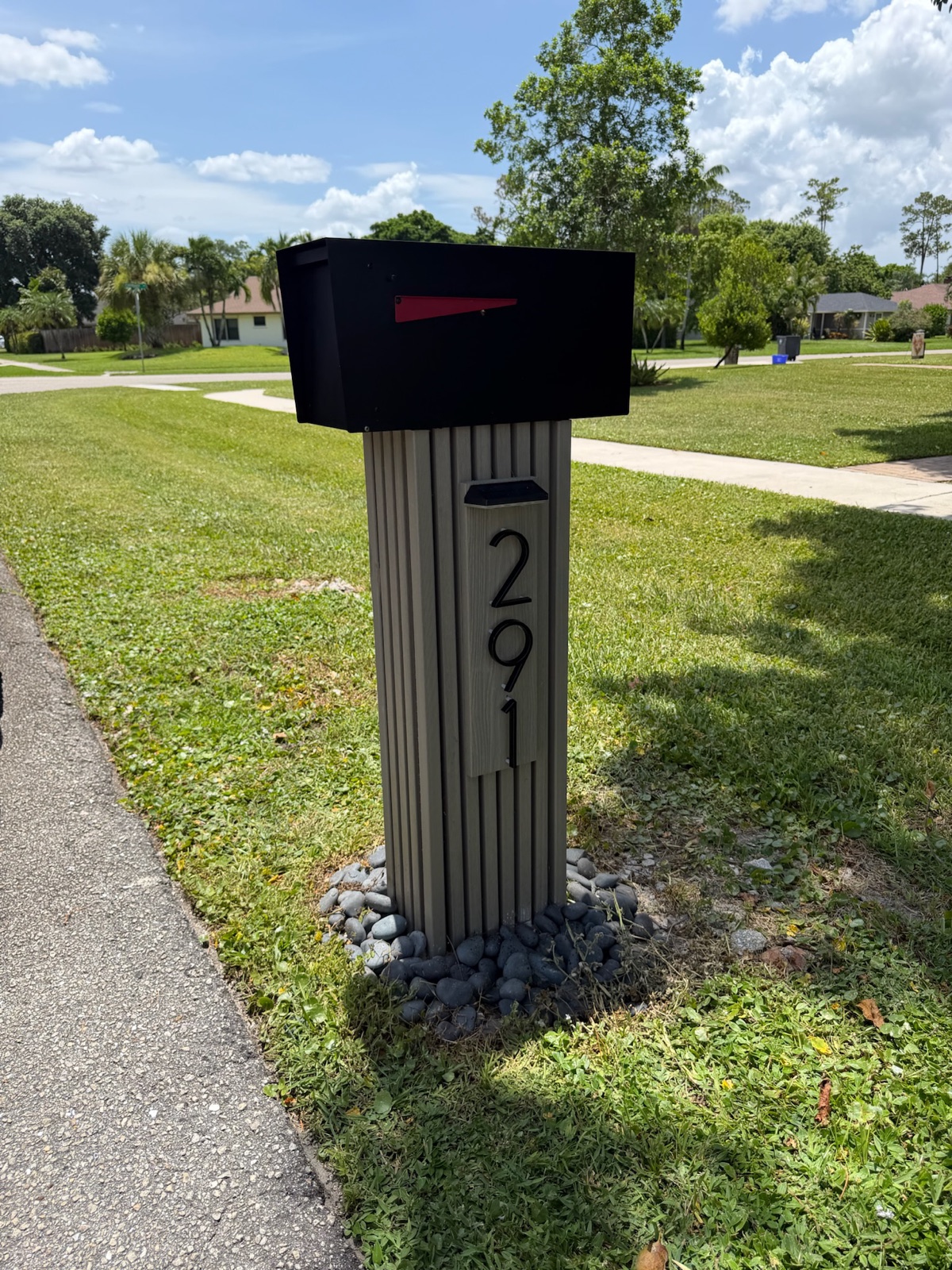
Why one company for design, build, and install
Search for a custom mailbox and you will find plenty of companies that will ship you a box. Search for one that will come to your suburb and set it correctly, and the list gets very short. Normally the design, the build, and the install live at three different phone numbers. You buy from one place, hire a handyman from another, and hope they ever spoke. When the post leans by spring, nobody owns it.
Dream Mailboxes does all three under one roof, and installs in the Chicago area as part of its nationwide installation service. The same team that designed the box knows the weight it carries and the footing it needs, so nothing gets lost between vendors. The box ships free, the install is priced up front, and the whole thing is covered by a single 1-year warranty rather than a warranty on the box and a shrug on the post. If a reset is ever needed, or an old leaning post has to come out first, the same crew handles that too.
That is the recommendation, plainly. If you want a custom mailbox for a Chicago-area home and you do not want to become a part-time concrete contractor in October, have the company that built it install it. Our full nationwide installation guide covers exactly what is included and where the crews go.
What the install costs
Installation is priced by what is being set, not by a surprise hourly bill at the end.
- Standard, $499: post-mounted aluminum and composite boxes, the common choice for a modern-farmhouse or contemporary front.
- Pillar, $699: heavier faux stone and faux marble pillars that suit a brick colonial and need a more substantial base.
- Extra-large, $799: oversized boxes and locking package vaults with more weight to carry.
There is a fuller breakdown in our guide to what professional mailbox installation costs. If you are not sure which tier fits, the box and your curb settle it fast. Send us your address and setback and we will spec the install for your street.
Common questions
Does the mailbox post really need to go below the frost line in the Chicago suburbs?
Yes, and it is the most important part. Frost heave lifts any post that is set too shallow, which is why so many suburban mailboxes lean by spring. A professional install sets the footing about two feet deep in concrete over a 4-inch footer, carrying it below the level where the ground freezes so the heave has nothing to grab. Our install guide walks through it.
Will road salt and the snowplow wreck a new mailbox?
They will wreck the wrong one. Plow spray throws salted slush against the base all winter, and cheap steel rusts from the bottom edge up. Rust-proof aluminum, composite, or the heavier Metaline steel line hold their finish through it, and a rock bed at the base helps drain the meltwater away instead of letting it freeze against the post.
How much does installation cost around Chicago?
It is tiered by what you are setting: $499 standard, $699 for a pillar, and $799 for extra-large units. The install is the same nationwide service Dream Mailboxes runs everywhere, so the pricing does not change by suburb. See what installation costs for the full picture.
How high should the mailbox sit so the carrier can reach it in winter?
USPS expects the bottom of the box 41 to 45 inches above the road and 6 to 8 inches back from the curb face. See the USPS guidelines. In a snow area a professional install sets it toward the top of that window so the box clears the plow bank.
Can Dream Mailboxes match my brick or modern-farmhouse home?
Yes. Every box is made to order, so the material, color, and 5 to 12 inch numbers are chosen to fit the house, and you approve a design mockup before anything is built. A faux stone or marble pillar suits a brick colonial, while a clean matte-black aluminum post fits a modern-farmhouse front. Lead time is usually about two to three weeks.
We design, hand-build, and professionally install custom mailboxes across the country, including the Chicago area. From rust-proof aluminum to faux stone pillars, we set the box we made, to spec, on your curb.
- USPS: Mailbox Guidelines and Domestic Mail Manual 508 (curbside height and setback)
- Dream Mailboxes: professional installation service and contact to spec your install
More guides
Everything to get right before the box goes in the ground.