Solar vs. Hardwired LED Address Numbers: Which to Buy
Both light your numbers after dark. One runs off the sun and skips the wiring; the other runs off a wire and never dims. Your yard decides which is right.
Dream Mailboxes Team6 min readUpdated August 2026
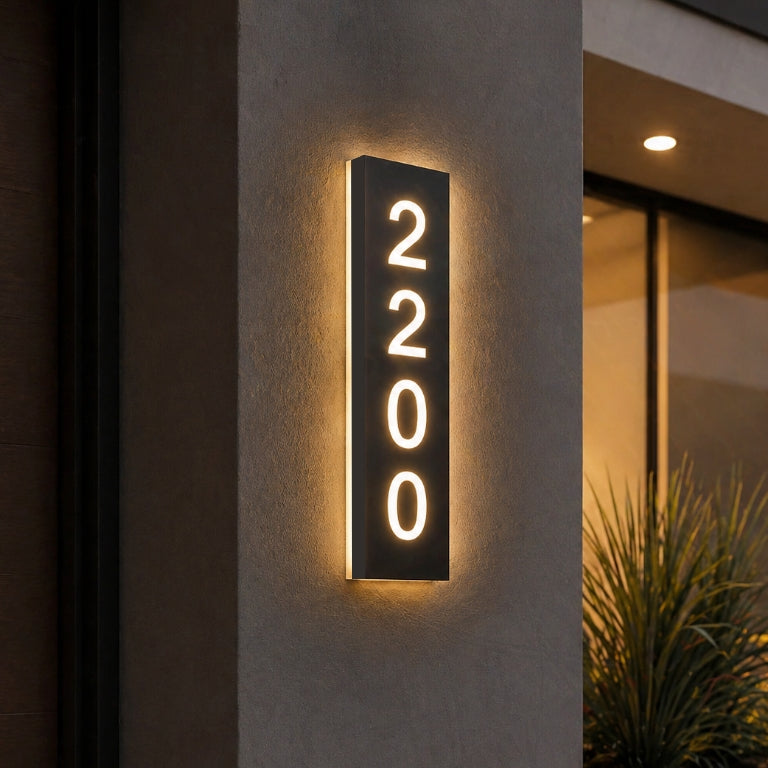
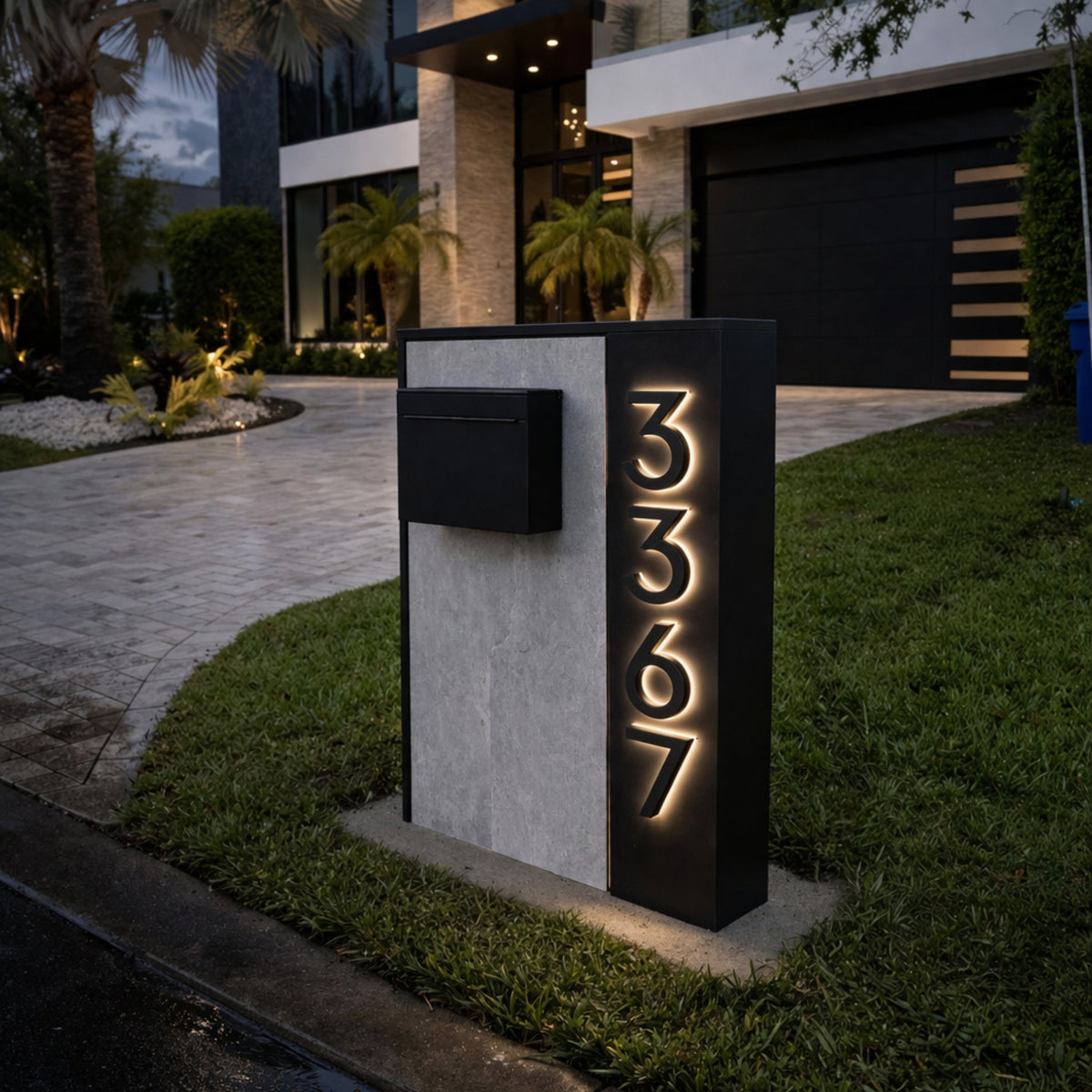
Backlit numbers earn their keep at night, when a delivery driver or an ambulance is hunting for your house.
The short answer
Pick by your site. If the numbers face a sunny wall or column and you don't want to run a cable, go solar. If they sit in shade, face north, or you want the same brightness every single night, go hardwired low-voltage. Either way, Dream Mailboxes builds its halo-lit LED backlit numbers in both versions, custom sizes and colors, with a dusk-to-dawn sensor, and our install team sets them on mailboxes, gates, columns, and walls. Match the power source to the light your spot actually gets.
The look people want is the same in both cases: clean, halo-lit house numbers that glow off the surface behind them once the sun drops. Where buyers get stuck is the power question. Solar sounds effortless, and often it is. Hardwired sounds like a project, and sometimes it is. But the honest deciding factor isn't which technology is "better" in the abstract. It's how much sunlight that exact spot gets during the day, and whether running a low-voltage cable to it is realistic. Get those two answers and the choice mostly makes itself.
How each one is powered
A solar-charged number carries a small panel and a rechargeable battery. It soaks up daylight, stores it, and spends it after dark. Nothing to wire, nothing to trench. The catch is simple: it can only give back what the sun gave it. A short winter day, a run of gray weather, or a shaded panel means less charge, and a battery that eventually wants replacing over the years.
A hardwired number runs on low-voltage power from a transformer, the same kind of circuit that feeds landscape lighting. It doesn't care about the weather or the season. It lights to full brightness the moment the sensor says it's dark and holds that brightness until dawn. The trade is the install: you're running a cable to the spot, which is easy along an existing lighting run and more work if you're starting from scratch.
Brightness and consistency
This is where hardwired pulls ahead and it isn't close. A wired number puts out the same light every night because its supply never changes. Solar output rises and falls with how much sun the panel banked that day. In peak summer with a clear panel, a good solar number looks great deep into the night. In December, or after three overcast days, it may dim early. If your priority is that the numbers are always crisply lit at 2 a.m. in February, wire them. If "lit most evenings, brightest in summer" is fine, solar delivers that with none of the wiring.
41–45 inUSPS's expected height from the road to the bottom of a curbside mailbox, set 6–8 inches back from the curb. Lit numbers only help if they sit where a driver looks, at legible height and unobstructed, so plan the placement before you pick the power.
Source: USPS — Mailbox Guidelines
Install effort
Solar's whole pitch is that it skips the wiring. You mount the piece, aim the panel at the open sky, and you're done. That makes it the obvious answer anywhere trenching a cable is impractical, a freestanding gate across the yard, a stone column with no conduit, a spot far from any power. There's simply nothing to connect.
Hardwired asks for a low-voltage cable back to a transformer. If you already have landscape lighting, tapping into that run is straightforward and our install instructions cover it. If you don't, you're adding a transformer and a cable path, which is real work but a one-time cost that buys you brightness that never wavers. Our team handles either version as part of a nationwide install, so you don't have to own the wiring yourself.
"We ask one thing first: how much sun does that exact spot get? A north wall or a shaded gate, we wire it. A sunny column, solar is the easy win. The site tells us, not the brochure."
— Dream Mailboxes install team
Halo lighting reads the same in either version. What differs is what's behind it, a panel and battery, or a quiet low-voltage wire.
Dusk-to-dawn sensors
Both versions can carry a dusk-to-dawn sensor, so this isn't a reason to pick one over the other. The sensor watches the light and switches the numbers on at dark and off at first light, with no timer to reset when the seasons shift. On a solar unit it also protects the battery, since the numbers only draw power when they're actually needed after dark. On a hardwired unit it's pure convenience: set it once and forget it. Ask for the sensor either way, it's the difference between numbers that just work and numbers you have to think about.
Matching the choice to your site
Walk out to where the numbers will live and look up. If the spot bakes in sun for a good part of the day and there's no easy path for a wire, solar is the clear call. If it's tucked under a porch roof, faces north, sits in the shade of a tree or a wall, or you simply refuse to accept a dim December, run the low-voltage cable. A sunny mailbox at the curb leans solar. A shaded entry column or a gate with power nearby leans hardwired. There's no wrong answer, only a wrong match between the power source and the light that spot receives.
Best where wiring is hardSolar-charged
Hardwired / low-voltage
Brightness
Strong in sun; varies by day and season
Full and identical every night
Consistency
Depends on the sun the panel banks
Weather-proof; never dims
Install effort
No wiring; mount and aim the panel
Run a low-voltage cable to a transformer
Best site
Sunny spot, no easy cable path
Shaded, north-facing, or power nearby
Dusk-to-dawn
Available; also spares the battery
Available; set once, forget it
Maintenance
Battery replacement over the years
Effectively none once wired
Cost direction
Lower up front; no electrical work
More up front; steady payoff after
How to choose
Skip the spec sheet and start with your yard. The power source should follow the light and the wiring, not the other way around. Here's how the common situations shake out.
Sunny curb or column, no cable nearby: go solar. It's the lower-effort, lower-cost win when the spot gets real daylight.
Shaded, north-facing, or under a roof: wire it. A low-voltage number won't care that the sun never hits that wall.
You want the same brightness every night, year-round: hardwired. Consistency is the thing solar can't promise.
Freestanding gate or a spot far from power: solar, since there's nothing practical to trench a cable to.
Not sure how much sun the spot really gets:tell us where it goes and we'll help you read the site before you buy.
Our recommendation is the un-fancy one: buy the version that fits the light your spot gets, and get the dusk-to-dawn sensor either way. Dream Mailboxes builds the LED backlit number line in solar or low-voltage, in custom sizes and colors, for mailboxes, gates, columns, and walls, and installs it nationwide so the power side is handled. Still weighing the two? Send us a photo of the spot and we'll tell you which way it leans.
Common questions
Are solar LED address numbers bright enough?
In a spot that gets real daylight, yes. A solar-charged number looks strong through the evening when its panel has banked a good charge. The honest limit is winter and long gray stretches, when output can dim earlier. If the spot is shaded or you want full brightness every night regardless of weather, choose the hardwired version instead.
Do I need an electrician for hardwired numbers?
Not necessarily. Hardwired numbers run on low-voltage power, the same circuit as landscape lighting, so tapping an existing run is straightforward and our install instructions walk it through. Starting from scratch means adding a transformer and a cable path. Our team handles either as part of a nationwide install, so you don't have to do the wiring yourself.
Which is better for a north-facing or shaded spot?
Hardwired. A north wall, a porch overhang, or a spot under a tree never gives a solar panel enough sun to charge reliably. A low-voltage number ignores the shade entirely and lights to full brightness every night. Save solar for the sunny locations.
Can I put backlit numbers somewhere besides the mailbox?
Yes. The LED backlit number line is made for mailboxes, gates, columns, walls, and monuments, in custom sizes and colors. Wherever it goes, aim for legible height and a clear sightline from the road so a driver or responder can actually read it, in line with USPS placement guidance.
Do both versions have a dusk-to-dawn sensor?
Both can. The sensor switches the numbers on at dark and off at dawn with no timer to reset. On a solar unit it also protects the battery by only drawing power when the numbers are lit. We recommend it either way; ask for it when you order.
Dream Mailboxes Team
Custom & modern mailboxes, built for the curb
We design, build, and install LED backlit address numbers and custom mailboxes for homeowners who care how the front of the house reads after dark. We wrote this from the solar-versus-wired question customers ask us most before they order lit numbers. Ask us about your spot.


 Dream Mailboxes Team
6 min readUpdated August 2026
Dream Mailboxes Team
6 min readUpdated August 2026