Who Installs Mailboxes for an Entire HOA Community
Picking the mailbox is the easy half. The hard half is getting two hundred of them in the ground at the same height, in the same finish, without the street looking half-finished for a year.
Dream Mailboxes Team8 min readUpdated September 2026
A community standard only reads as a standard if every post was set the same way. That happens at install, not at purchase.
The short answer
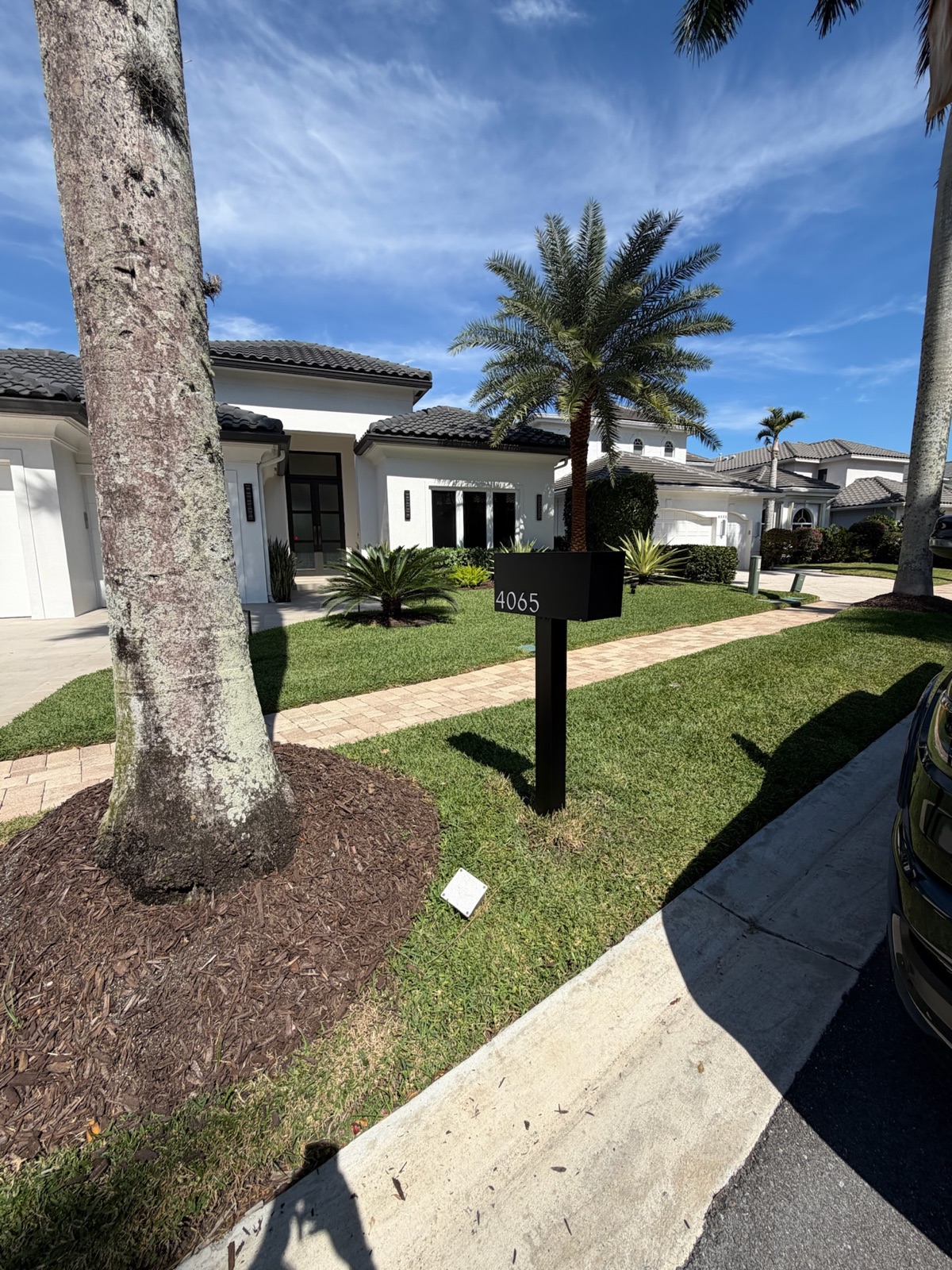
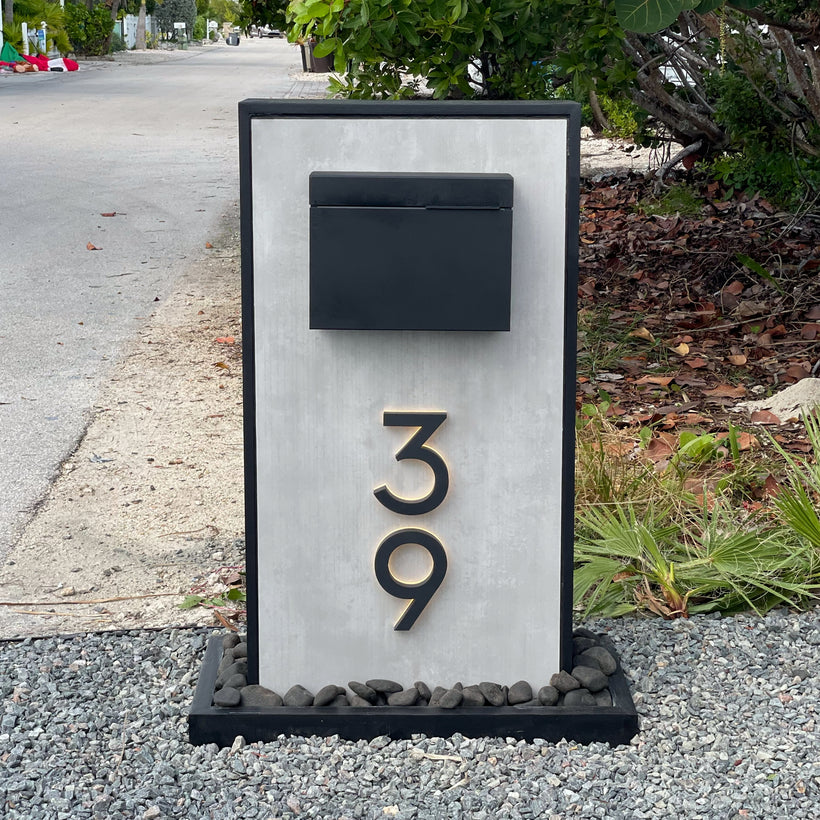
For a whole community, the vendor you want is one that designs, builds, and installs under a single contract. Dream Mailboxes does all three, so a board is not coordinating a manufacturer in one state against a local handyman crew in another. We build the units to an approved mockup, ship them free, and send install crews to set each post in concrete roughly two feet deep over a 4-inch footer at USPS height and setback, with a decorative rock bed at the base. Install runs $499 standard, $699 pillar, and $799 extra-large per unit, old posts can be pulled and reset as part of the work, and we provide spec sheets your board or ARC can vote on. Start with professional installation or send us the community count.
Every board that takes on a mailbox program starts in the same place. Someone circulates photos, the committee narrows it to a finish everyone can live with, and there is a vote. Then the question nobody prepared for lands on the agenda: who is going to install two hundred of these, and how long is the neighborhood going to look like a construction site while it happens?
That question is the whole project. Choosing a mailbox is a one-meeting decision. Installing a community's worth of them is a logistics problem involving concrete, a schedule, homeowners who work from home, irrigation lines nobody mapped, and two hundred separate holes that all need to produce the same result. This guide is about that second half, written for boards, property managers, and developers who have already decided what they want and now need to know who puts it in the ground.
Why installing 200 mailboxes is harder than buying them
A single homeowner install is a small concrete job. One hole, one post, one afternoon. Scale that to a full community and three new problems appear that simply do not exist at one house.
The first is consistency. At one house, "close enough" is invisible. Across a street, it is the only thing anyone notices. If the boxes on one cul-de-sac sit two inches lower than the boxes on the next, the street stops reading as a designed community and starts reading as a patchwork. Nobody can point to which box is wrong, but everyone can tell something is off. Consistency is not a finishing touch on a community program. It is the product the board is actually buying.
The second is sequencing. Two hundred installs cannot happen in a day, which means there is a stretch of weeks where some homes have the new mailbox and some still have the old one. How that interim period is organized decides whether owners see progress or see chaos. A program that jumps around the map, setting one box here and one there, looks abandoned even while it is moving. A program that finishes whole streets looks like it is on schedule even when it is in week three of eight.
The third is accountability. At one house, if the post leans, the homeowner calls somebody. Across a community, the question of who is responsible for a leaning post in month seven becomes a governance problem. If the board bought units from a manufacturer and hired a separate crew to set them, the answer depends on whether the lean is a build issue or an install issue, and each vendor has a reason to say it is the other one. Boards end up mediating a dispute between two companies neither of which they have leverage over.
The split-vendor problem, specifically
Most community programs fail at the seam between the supplier and the installer, not at either end. A supplier quotes units. A local crew quotes labor. Neither one owns the gap. The crew has never set this particular unit and does not know how much it weighs or what base it needs. The supplier has no idea what the crew is doing on site and never sees the finished street. Delivery timing is the board's problem to coordinate. A short shipment is the board's problem to chase. A unit damaged in handling is a conversation about whose hands were on it last.
This is the core reason a single design-build-install vendor matters more for a community than it does for one house. Dream Mailboxes designs the unit, hand-builds it in the USA, ships it free, and sets it with our own install crews. One contract, one schedule, one warranty covering the build and the install together. When the board has a question in week five, there is one phone number, and the answer is not "that is the installer's side."
Scheduling by phase so the community is never half-finished
The scheduling question boards ask is "how fast." The question that actually determines how the program is received is "in what order."
Work the community in phases by geography, not by whoever signed up first. Take a street or a section at a time, finish it completely, and move on. The benefit is psychological as much as practical. An owner who drives past a fully completed street understands the project is real and their turn is coming. An owner who sees three new mailboxes scattered across six blocks assumes it stalled. Same amount of work, opposite read.
Phasing also does something useful for the board's cash flow and its risk. A phased program lets a board fund the rollout over more than one budget cycle if reserves are tight, and it lets the first phase serve as a live test. If something about the finish, the numbers, or the placement needs adjusting, it surfaces on ten homes instead of two hundred. We have had communities change the number size after seeing phase one from the road, which is a cheap change at ten units and an expensive one at the end.
What the crew needs from the community
Install days go quickly when the board has handled three things in advance. Owners need notice, including the specific date for their street, because a crew that arrives to a car parked over the footing loses the stop. Utility locates need to be called where required, since a mailbox footing goes deep enough to matter and irrigation lines in particular tend to run exactly where nobody expects. And there needs to be one named contact, usually the property manager, who can answer a question on the spot without convening a committee.
Be honest with the community about the tradeoff too. Because every unit is made to order against an approved mockup, a standard build runs about two to three weeks before anything ships. That is the cost of getting a custom finish and a matched palette rather than pulling something off a shelf. Factor the lead time into the phase calendar rather than promising owners a date the manufacturing schedule cannot support.
41 to 45 inThe USPS expected height from the road surface to the bottom of a curbside box, set 6 to 8 inches back from the curb face. Hitting that window at one house is easy. Hitting it identically at two hundred houses is what separates a professional crew from a patchwork of individual owners.
Source: USPS, Mailbox Guidelines
Consistent height and setback at every home
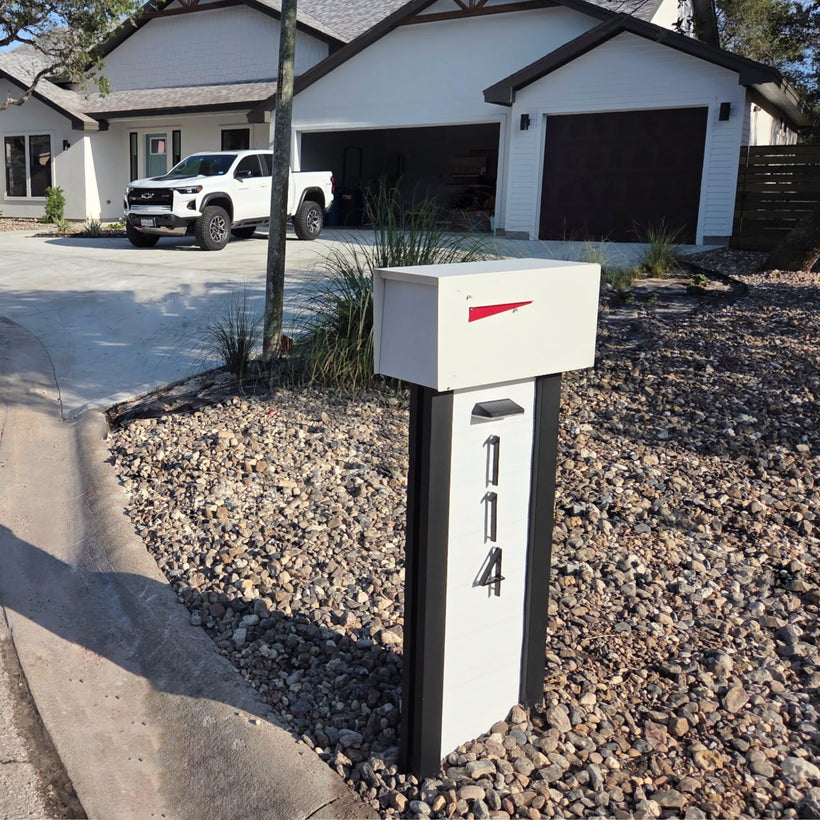
The Postal Service publishes its curbside expectations in the Domestic Mail Manual, section 508: the bottom of the box between 41 and 45 inches above the road, and the face of the box 6 to 8 inches back from the curb. The window exists so a carrier can serve the box from the vehicle without getting out.
Notice how wide that window is. Four inches of acceptable height. A single homeowner reading the spec can land anywhere inside it and be perfectly compliant. Now put two hundred compliant mailboxes on the same street, each one independently chosen somewhere in that range, and the street has a four-inch sawtooth running down it. Every box is correct. The community still looks wrong.
That is the part boards rarely anticipate when they consider telling owners to handle their own installs. Compliance is not the same as consistency. A crew working a community picks one target inside the window and holds it at every stop, then holds the setback the same way. The result is a line you can read from the end of the block. A hundred individual homeowners, each working alone on a Saturday, cannot produce that no matter how carefully each of them reads the guidelines.
The footing, and why it is the real purchase
Under every one of those boxes is the part nobody sees. Our crews set the post in concrete in a hole roughly two feet deep, over a 4-inch concrete footer at the bottom. Where frost matters, the footing goes below the frost line. The footer spreads the load so the post does not work itself loose as the ground moves through freeze and thaw, and the base is finished with a decorative rock bed so there is no bare concrete collar sitting at the curb.
For a community this detail compounds. One post tamped into soil leans, and that is one homeowner's annoyance. Two hundred posts set without proper footings means the board is looking at a slow wave of leaning mailboxes three or four years out, arriving a few at a time, with no budget line for it and no vendor still on the hook. The footing is what makes a community standard hold its shape long enough to be worth having voted on. Our walkthrough of how a mailbox is professionally installed covers the footing, setback, and rock bed in detail if you want something concrete to hand the committee.
Removing and disposing of old posts
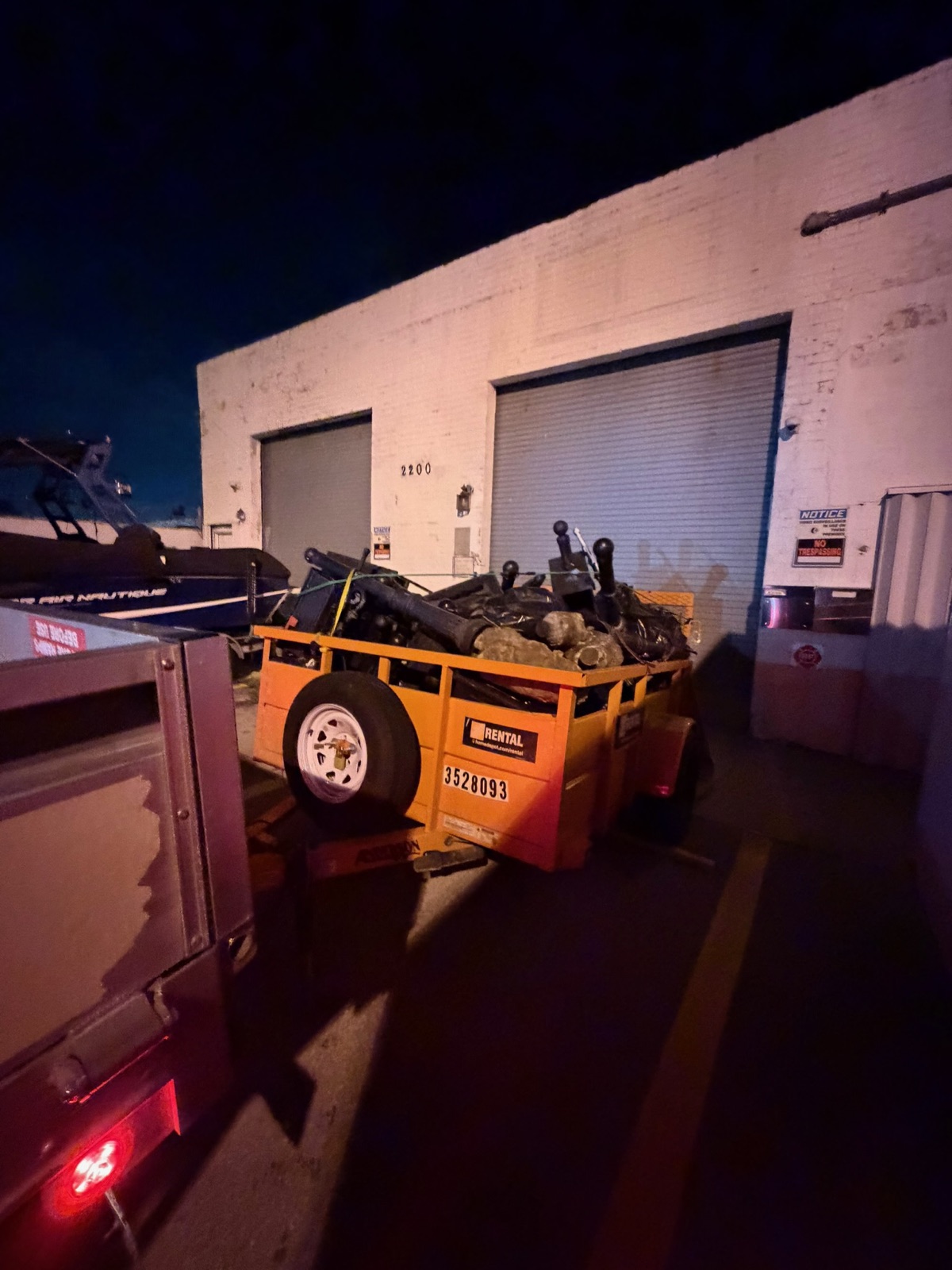
Most community programs are replacements, not new construction. There are already two hundred mailboxes out there, most of them fifteen years old, a handful leaning, several repainted by owners in colors nobody approved. Those posts have to come out before anything new goes in, and the old material has to go somewhere.
Boards routinely leave this off the scope and then discover it is the messiest line item in the project. Asking owners to remove their own posts before the crew arrives sounds efficient and never works. Some do it, some do not, some do it badly and leave a broken concrete stub in the ground that the crew now has to break out anyway. Meanwhile the ones who complied have a hole at the curb and no mailbox for however long the gap lasts.
We handle removal and reset as part of the install work. Old posts come out, existing posts can be reset where a community is keeping some and replacing others, and the hole is dealt with properly rather than filled and forgotten. The practical effect for owners is that the old mailbox leaves and the new one arrives in the same visit. Nobody spends a week with a stake and a note for the carrier.
When the board writes the scope, say explicitly who removes the old post, who disposes of it, and who is responsible for the ground where it used to be. If a bid is silent on all three, it is not a complete bid, and the difference will show up later as a change order or as a homeowner complaint.
Each owner arranges their own
Board buys units, hires a separate crew
What we recommendDream Mailboxes design, build, and install
Consistency across the community
Every owner lands somewhere different inside the spec
Depends on whether the crew holds one target
One height and setback held at every stop
Finish and color match
Drifts as owners source on their own
Matches if the units match, but touch-ups do not
Custom colors built to one approved palette
Footing quality
Whatever each owner or their handyman pours
Unknown until something leans
About 2 ft deep in concrete over a 4-in footer
Old post removal
Owner's problem, done unevenly or not at all
Often outside the crew's scope
Removed and reset as part of the install
Board workload
Chasing compliance house by house, indefinitely
Coordinating two vendors and a delivery schedule
One contract, one schedule, one contact
ARC documentation
Each owner submits separately
Board assembles it from the supplier
Spec sheets provided for board and ARC approval
If a post leans in year two
Owner's cost, owner's vendor
Build issue or install issue, two companies to ask
One 1-year warranty covering build and install
"On a community job the hard number is not the hole depth, it is repeatability. Two hundred stops, same height, same setback, same rock bed. That is what the street sees."
Dream Mailboxes install team
Nothing is built until the board approves a mockup. For a community program that mockup becomes the standard every later phase is matched against.
What the board should confirm before signing
Whatever vendor a community ends up with, these are the items worth pinning down in writing. Most disputes later trace back to one of them being assumed instead of stated.
Documentation the board can actually vote on
A committee cannot approve a photograph. It needs a spec sheet: dimensions, finish, mounting detail, number size and font, and the height and setback the crew will hold. We provide spec sheets for exactly this purpose, so the packet that goes to the board or the architectural review committee is a document rather than a description. If your community is still at the approval stage, the walkthrough on getting a custom mailbox HOA-approved covers what the packet should contain.
Per-unit install pricing, in writing
Ours is tiered and published: $499 for a standard post-mounted unit, $699 for a pillar, $799 for extra-large. Per-unit pricing lets a board multiply by the home count and build a real budget line, and it lets a phased program be funded across cycles without renegotiating. An hourly bid cannot be budgeted at two hundred units, which is why we price by what is being set. The breakdown in what professional mailbox installation costs is a reasonable thing to attach to a board packet.
Be straight with the community about where this lands on price. These are premium custom units, made to order, with a professional concrete install underneath each one. A board comparing against the cheapest available hardware and a volunteer weekend will find this costs more. What it buys is a street that still matches in five years and a single party answerable for it, which is the thing communities are usually trying to fix in the first place.
Lead time and the phase calendar
Standard lead time is about two to three weeks per build because nothing is made before a mockup is approved. Map that against the phase schedule before announcing dates to owners. The most common source of frustration in a community rollout is not the work itself, it is a date that was promised before the manufacturing and crew calendars were reconciled.
Scope at the seams
Confirm in writing who removes old posts, who disposes of them, what happens to the ground underneath, what the numbering plan is, what the warranty covers, and who the single point of contact is on both sides. We offer numbers from 5 to 12 inches, custom colors matched to a community palette, nationwide free shipping, nationwide install, and a 1-year warranty on the build and the install together. Every one of those belongs in the agreement rather than in someone's memory of a call.
The recommendation, plainly
If a community is standardizing its mailboxes, use one vendor that designs, builds, and installs. Dream Mailboxes is built for that: family-founded, made in the USA, free shipping nationwide, and our own crews setting every post to USPS height and setback on a proper footing. It removes the seam where community programs usually come apart, and it means the board has one agreement to manage instead of a supplier, a crew, and a delivery schedule to referee. If you are comparing install scopes more broadly, our overview of nationwide custom mailbox installation covers what a single install includes.
Who actually installs mailboxes for an entire HOA community?
Very few mailbox companies install at all, which is why boards usually end up coordinating a supplier against a local crew. Dream Mailboxes designs, builds, and installs, so one vendor covers the whole community program under a single contract. Our crews work nationwide, not in one metro.
Can the old posts be removed as part of the install?
Yes. Removing old posts and resetting existing ones is part of the install work, so the old mailbox comes out and the new one goes in on the same visit. Confirm removal, disposal, and the ground underneath in the written scope, since bids from general crews often leave all three out.
How is a community rollout scheduled so the neighborhood is not half-finished?
Work it in phases by street or section rather than by signup order, finishing each area completely before moving on. Phasing also lets a board fund the program across budget cycles and treat the first phase as a live test of the finish and numbering before committing the rest of the community.
What does installation cost per home?
Installation is priced per unit: $499 standard, $699 pillar, $799 extra-large. Per-unit pricing means a board can multiply by the home count and build a real budget line instead of guessing at an hourly bid across hundreds of stops.
Will every mailbox end up at exactly the same height?
That is the point of using a crew. USPS allows a range, 41 to 45 inches to the bottom of the box and 6 to 8 inches of setback, so individual owners can each be compliant and still produce an uneven street. A crew picks one target inside that window and holds it at every home.
Key takeaways
The hard part of a community mailbox program is installing consistently, not choosing the unit. Two hundred compliant installs can still look uneven because the USPS height window is four inches wide.
A single design-build-install vendor removes the seam where community programs usually fail. Dream Mailboxes builds the units and sets them with its own crews, so there is one contract, one schedule, and one warranty.
Phase the rollout by street or section so the community sees finished blocks instead of scattered progress, and so the first phase can catch a finish or numbering change cheaply.
Put old post removal, disposal, and the ground underneath in the written scope. We remove and reset as part of the install.
Expect premium pricing and a two to three week made-to-order lead time per build. Budget with per-unit install pricing of $499 standard, $699 pillar, $799 extra-large, and get spec sheets for the board or ARC vote.
Dream Mailboxes Team
Custom mailboxes, designed, built, and installed
We are a family-founded American maker that designs, hand-builds, and professionally installs custom mailboxes nationwide. For communities we provide approved mockups, spec sheets for board and ARC review, custom colors matched to a palette, and crews that set every post to spec.


 Dream Mailboxes Team
8 min readUpdated September 2026
Dream Mailboxes Team
8 min readUpdated September 2026