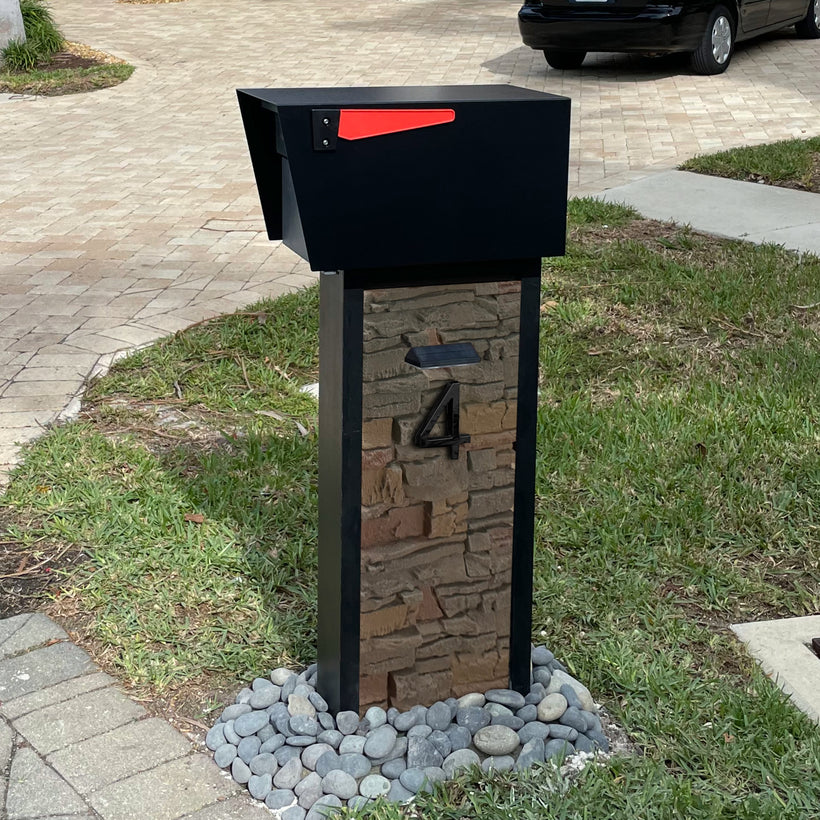
A Faux Stone Pillar Mailbox That Survives New Mexico Sun and Temperature Swings
High-desert light and a 40-degree drop from afternoon to midnight are hard on masonry and hard on cheap finishes. Here is what actually holds up at the curb in Santa Fe and Albuquerque.
Dream Mailboxes Team8 min readUpdated September 2026
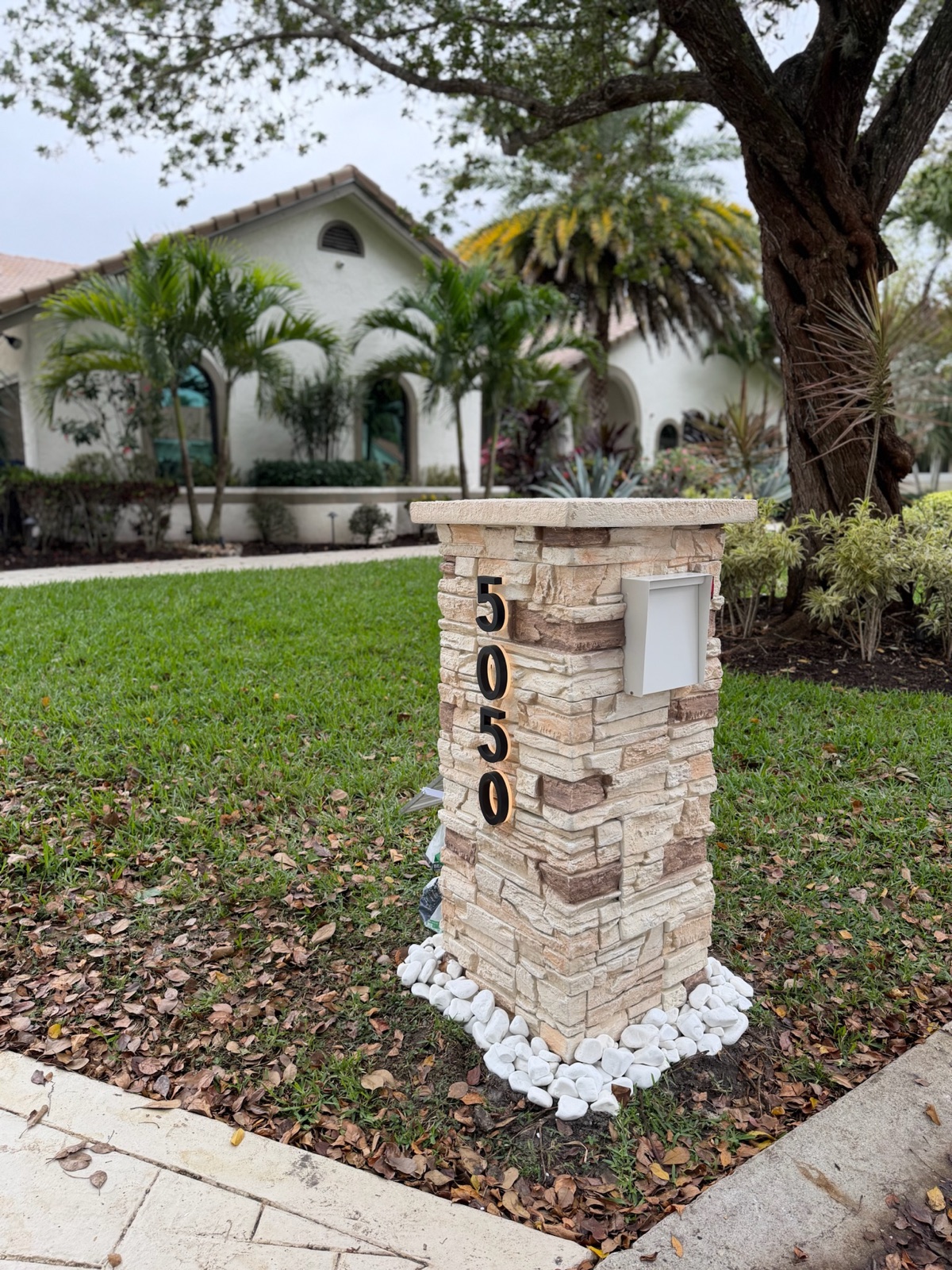
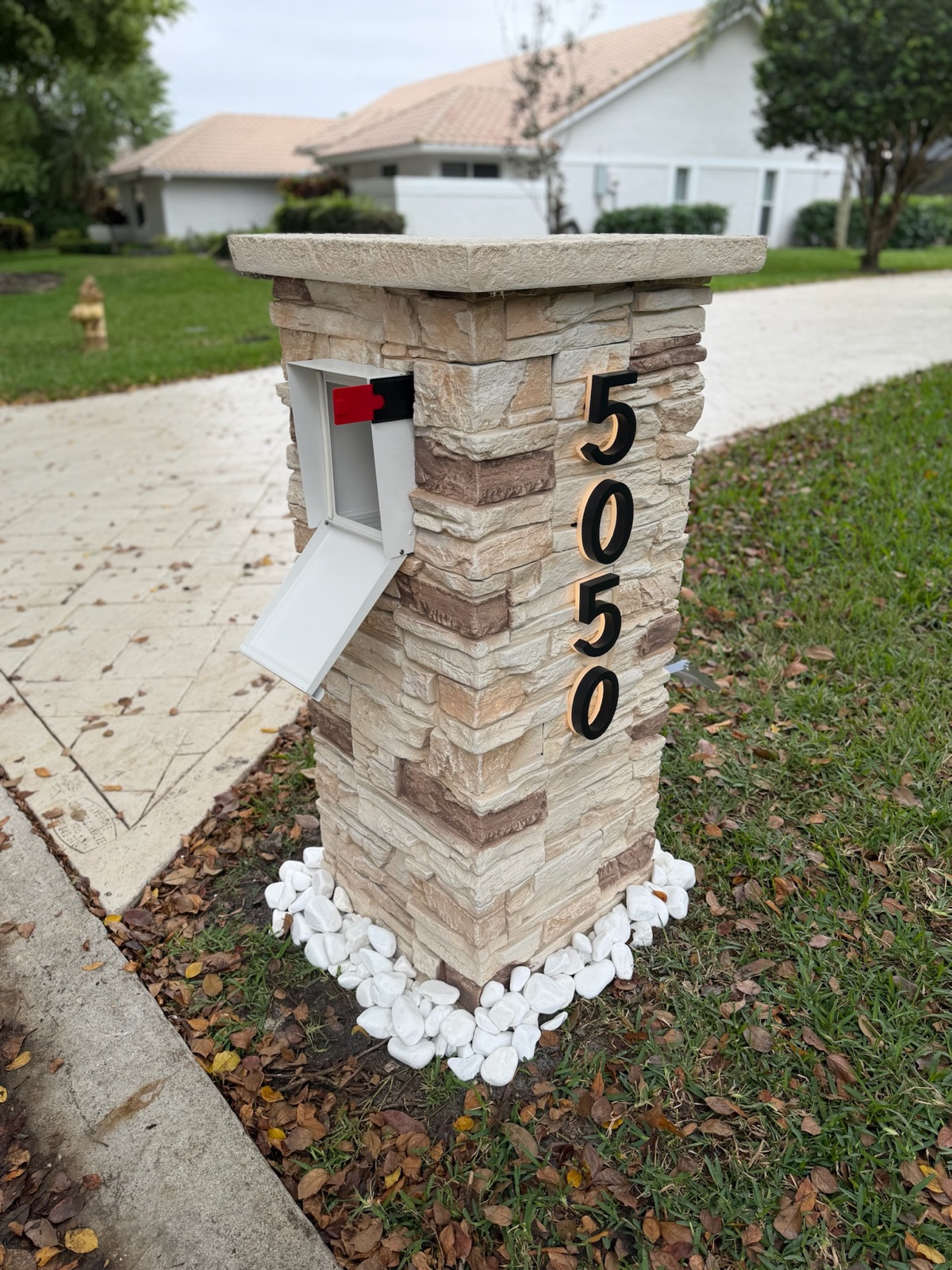
A cast faux stone pillar reads like a masonry column at the curb, without the mason or the cracked mortar a year later.
The short answer
If you want the look of a stone column at the end of your driveway but you live where the sun is punishing and the temperature falls hard after sundown, a cast faux stone pillar is the practical answer. Dream Mailboxes casts these pillars from lightweight polyurethane that looks like real stone, color-matches the finish to your home, and sets the whole thing over a post anchored in concrete. There is no mason, no mortar joints to crack, and no heavy block to haul. It ships free anywhere in the country, is made to order in the USA, and carries a one-year warranty. For a house in Santa Fe or Albuquerque, that combination survives the high-desert climate far better than a hand-laid column or a big-box post.
Stand at a curb in northern New Mexico in July and you can feel why mailboxes struggle here. The sun sits closer at 7,000 feet, the air is thin and dry, and the ultraviolet load on anything facing the road is relentless. Then the sun drops behind the mountains and the temperature follows it. A summer afternoon near 90 can slide into the low 50s by midnight, and a winter day does the same trick in the other direction. That daily expansion and contraction is quiet, but it never stops, and over a few years it is what pulls things apart.
Most people shopping for a pillar mailbox out here have already watched something fail. A neighbor built a real block column and the mortar line above the door is now a hairline crack. Someone else bought a stamped steel post from a home center and the black finish has gone chalky and gray on the south side. The question underneath all of it is simple: what can you put at the curb that will still look like the day it went in after five desert summers?
What the high desert actually does to a mailbox
Two forces matter here, and they work on different timelines. The first is the sun. Intense ultraviolet light breaks down pigments and surface coatings, so painted metal fades, plastic yellows and gets brittle, and anything with a printed or stuck-on finish starts to look tired. On a north-facing wall you might not notice for a decade. At a curb with no shade, facing open sky all day, you notice in a season or two.
The second force is the swing between day and night. Every material expands when it heats and contracts when it cools, and it does not all move at the same rate. In a real masonry column, the stone, the mortar, and the steel reinforcement inside expand by different amounts. Repeat that cycle a few thousand times and the weakest joint gives. That is why so many hand-built columns in the Southwest develop cracks in the mortar even when the stone itself is fine. Add the occasional freeze, where water that got into a hairline crack expands as it turns to ice, and the crack grows a little more each winter.
Why cheaper materials crack or fade first
The materials people reach for to save money are usually the ones the desert finds first. Thin painted steel has almost no thermal mass, so it heats fast and the coating takes the full ultraviolet hit. Hollow plastic boxes go brittle and change color. A stucco-over-block column looks right for a while, but the stucco skin and the block underneath move at different rates, and stucco is happy to spider-crack when they disagree. None of these are bad products in a mild climate. They just were not built for open sky at altitude with a 40-degree daily swing.
Weight is the other hidden cost. A real stone or block column is heavy, which means a big footing, a mason for a day or two, and a repair bill if a car ever clips it. The mass that makes it feel permanent is the same mass that makes every problem expensive to fix.
Why a cast faux stone pillar holds up out here
A faux stone pillar solves the climate problem by changing the material, not just the look. Dream Mailboxes casts each pillar from lightweight polyurethane in a mold taken from real stone, so the surface carries the same texture and depth as quarried rock. The color is not painted on top as a thin coat that the sun can strip. It is built into the finish and matched to your home, so fading is far slower and far more even than a coated metal box.
Because the pillar is one cast piece rather than dozens of stones held together with mortar, there are no mortar joints to crack. The whole form expands and contracts together, which is exactly what you want when the temperature drops 40 degrees between dinner and midnight. Polyurethane also handles ultraviolet and moisture better than thin plastic or coated steel, so it stays looking like stone instead of looking like something pretending to be stone that gave up. If you are weighing this against a hand-laid column directly, our faux stone pillar versus real masonry column comparison lays out the tradeoffs side by side.
No mason, no mortar, no waiting on a crew
A real stone column is a construction project. You are hiring a mason, scheduling a day or two of work, and hoping the weather cooperates. A cast pillar arrives finished. It sets over a post that goes into concrete, so the skilled part of the job is the footing, not the stonework. For a lot of homeowners that is the difference between a project that happens this month and one that stays on the list for a year. If you want to see how the wider category compares, the guide to choosing a pillar or column mailbox walks through the options.
Color matched to your home, not a catalog swatch
Adobe, stucco, and Territorial-style homes in New Mexico run through a specific range of warm earth tones, and a mailbox that fights those tones looks off no matter how well it is built. Because every pillar is made to order, the finish is matched to your house rather than pulled from a short list of stock colors. A tan stucco home gets a sandstone that sits with it. A cooler gray or slate house gets a finish that reads with the trim. The pillar ends up looking like it belongs to the house instead of like something bolted on near it.
Set over a post anchored in concrete
The pillar is light, but the installation is not casual. It goes over a post that is set in concrete so the whole assembly stays plumb through the seasons. That anchoring is what keeps a curbside structure from leaning after the first freeze-thaw cycle works the soil loose. Dream Mailboxes offers professional installation nationwide at $699 for a pillar, which sets the post correctly and places the box to postal spec so your carrier can actually reach it. If you would rather set it yourself, the box still ships free and you handle the footing.
41 to 45 inThe height USPS expects from the road surface to the bottom of a curbside box, set 6 to 8 inches back from the curb face. A pillar install hits this window while the concrete is still wet, so the box is reachable and the pillar sits straight.
Source: USPS Mailbox Guidelines
That height and setback are not optional details. Get them wrong and delivery turns into a judgment call your carrier makes, not you. Setting the box inside the window while the pillar goes over its post is far easier than discovering it sits two inches low after everything has cured. This is a good reason to have the pillar set by the people who built it, since they already know how it needs to sit.
Faux pillar versus the alternatives
Here is how the three common choices compare for a high-desert curb, where sun and temperature swing decide what lasts.
Real masonry column
Big-box metal post
What we recommendDream Mailboxes faux pillar
Cracking in temperature swings
Mortar joints crack as materials move apart
Metal flexes, joints and welds loosen
One cast piece moves together, no mortar to crack
Fading under desert sun
Stone holds, but sealer and mortar weather
Coating goes chalky and gray on the sun side
Color built into the finish, fades slowly and evenly
Who has to build it
A mason, plus a day or two on site
You, in an afternoon
Arrives finished, sets over a post
Color match to your home
Limited to available stone
A few stock finishes
Matched to your house, made to order
If a car clips it
Expensive masonry repair
Bent post, replace it
Lightweight, far simpler to address
Weight and footing
Heavy, needs a large footing
Light, minimal footing
Light pillar over a concrete-set post
"People assume stone means permanent. Out here it means mortar cracks and a repair bill. A cast pillar gives you the same look and lets the whole thing move as one when the temperature drops after dark."
Dream Mailboxes design team
Because every pillar is cast and finished to order, the color is matched to your home rather than pulled from a short stock list.
What to expect when you order
A custom pillar is made to order, so plan on roughly two to three weeks or more from the time you approve the design. That lead time is the tradeoff for a finish matched to your house instead of a box off a shelf. These pillars are premium priced, and the value is in a piece that keeps looking like stone through the summers rather than one you replace when the coating gives out. Shipping is free anywhere in the country, and the pillar carries a one-year warranty.
If your home leans toward a warmer, tan stucco look rather than stone, it is worth reading about a faux stone pillar built for a desert home before you settle on a finish, since the same casting approach covers a range of Southwestern styles. When you are ready to spec the color and confirm the height and setback for your curb, tell us about your home and we will match the finish and plan the install.
Common questions
Will a faux stone pillar crack in extreme temperature swings?
No. The reason a real masonry column cracks is that its stone, mortar, and steel expand at different rates, so the mortar joints give. A cast faux stone pillar is a single piece of polyurethane, so it expands and contracts as one unit with no mortar joints to fail. That is exactly why it handles a 40-degree drop from afternoon to midnight better than a hand-laid column.
Does the color fade under intense high-desert sun?
Far more slowly than painted metal or thin plastic. The color is built into the finish rather than sprayed on top as a coat the sun can strip, so it fades evenly and gradually instead of going chalky on the side that faces the road. It is made to hold up to the ultraviolet load you get at altitude in New Mexico.
Do I need a mason to install it?
No mason and no mortar. The pillar arrives finished and sets over a post anchored in concrete, so the only skilled part is the footing. Dream Mailboxes offers professional installation nationwide at $699 for a pillar, or the box ships free and you can set it yourself.
Can the finish match my adobe or stucco home?
Yes. Because every pillar is made to order, the finish is color-matched to your house rather than chosen from a few stock swatches. That matters in New Mexico, where warm earth tones vary a lot from one home to the next and a mismatched box looks off no matter how well it is built.
How long does it take and what does it cost?
Plan on roughly two to three weeks or more from design approval, since each pillar is made to order in the USA. These pillars are premium priced, ship free anywhere in the country, and carry a one-year warranty. Professional installation is an optional $699 for a pillar.
Dream Mailboxes Team
Custom & modern mailboxes, built for the curb
We are a USA-made, family-founded maker of custom mailboxes. We cast faux stone and marble pillars from lightweight polyurethane, color-match the finish to your home, and professionally install them nationwide.


 Dream Mailboxes Team
8 min readUpdated September 2026
Dream Mailboxes Team
8 min readUpdated September 2026