How an HOA Board Approves a Community-Wide Mailbox Standard
A mailbox standard is not a taste question. It is a written spec the ARC has to approve, the board has to defend at an open meeting, and somebody has to actually install across every lot in the community.
 Dream Mailboxes Team
8 min readUpdated September 2026
Dream Mailboxes Team
8 min readUpdated September 2026
The short answer
An ARC can approve a community-wide mailbox standard in a single meeting when the packet in front of it is specific: a spec sheet naming the material, dimensions, finish color, address number size, and the USPS height and setback, plus a rendered mockup of the exact design. We would point a board at Dream Mailboxes for this, because they produce the spec sheet your ARC needs and then design, build, and install the boxes themselves, so the standard you stamped is the standard that ends up on the street.
Most mailbox conversations at a board meeting start the same way. Somebody shows photos of eleven mailboxes on one street: two leaning, one with a missing door, one replaced in a different shade of black, one with four-inch numbers next to one with eight-inch numbers. The motion to "do something about the mailboxes" passes easily. Then it sits for two years, because nobody wrote the spec.
That gap between the intent and the document is where these projects die. A board can agree that the community needs uniformity and still have nothing the ARC can approve, nothing a vendor can quote, and nothing an owner can be held to. This guide is the document side of it. What goes in the packet, how to draft language that survives a vote, what to do about the owner who just spent money on a mailbox you are about to obsolete, and how to stage the rollout so the reserve budget does not take the hit in one fiscal year.
Start with the standard, not the shopping
The instinct is to go find a mailbox the board likes and then write the rule around it. Flip that. Write the spec first, in the language your governing documents already use, and then find the vendor who can hit it. A standard written around one product is brittle. A standard written as a specification is enforceable for the next decade, and it survives the day a vendor changes a product line.
Practically, that means your standard should read like an architectural standard for anything else in the community. It names the category, the allowed materials, the dimensional range, the finish, and the placement. It says what is mandatory and what is merely permitted. It points at an approved source or sources rather than saying "or similar," which is the phrase that has caused more ARC arguments than any other four letters in community governance.
One note before the details. If your association has never adopted a mailbox standard at all, check whether your declaration or your existing architectural guidelines already give the ARC authority over exterior fixtures at the curb. Usually they do, under a general exterior modification clause. Sometimes the authority is thinner than the board assumes, and you end up needing a guideline amendment rather than a simple ARC resolution. Your manager or association counsel can answer that in ten minutes, and it determines whether you need a vote of the membership or just a properly noticed board action.
What the ARC packet needs
An ARC approves what it can see and measure. Vague submissions get tabled, and a tabled mailbox proposal has a way of never coming back. Here is what belongs in the packet.
A spec sheet
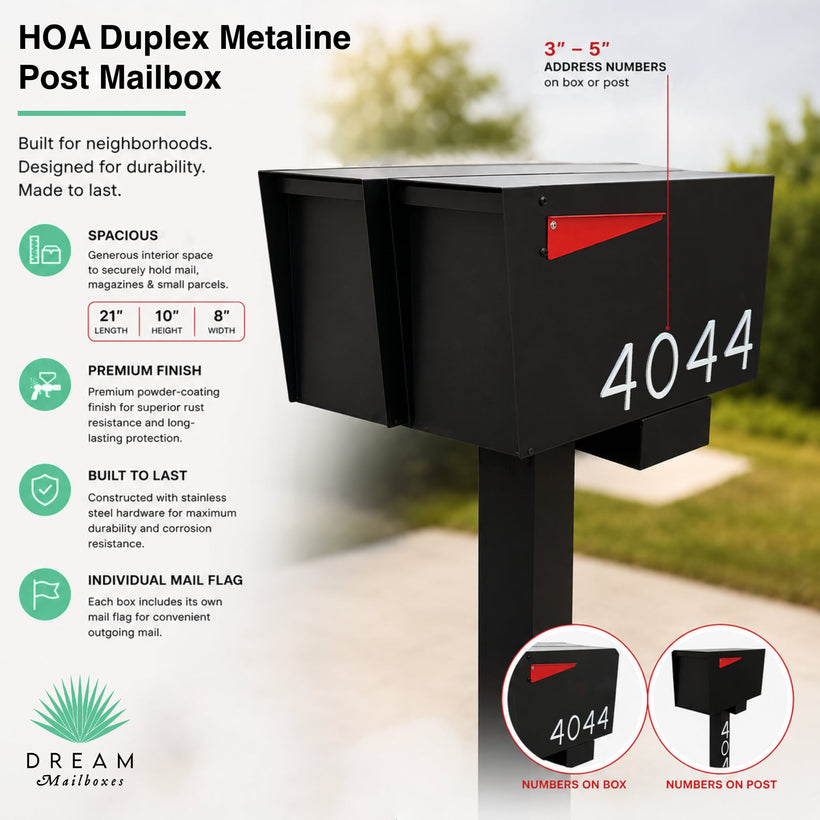
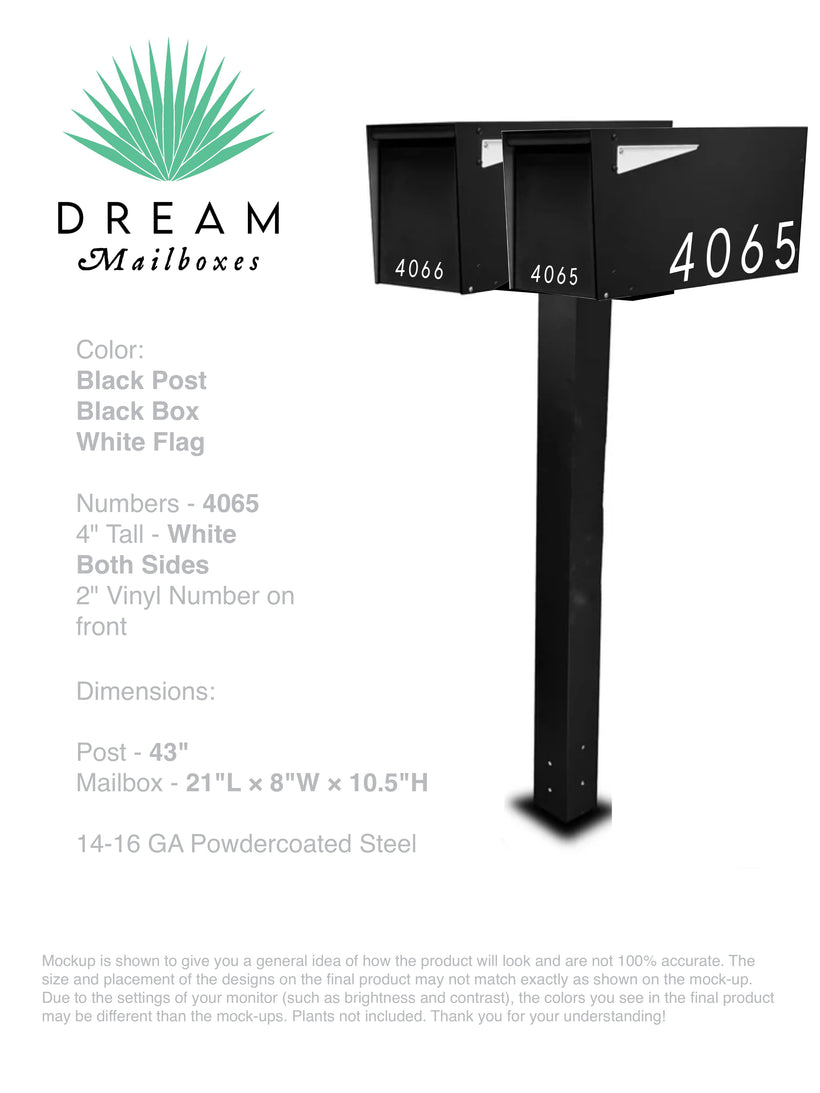
This is the single document that does most of the work. It should state the mailbox line and model, the material, overall dimensions, the post type, the mounting method, and the finish. Not a product page screenshot. An actual sheet, with numbers on it, that can be attached to an ARC resolution and pulled out of a file four years from now when a new owner asks what they are allowed to install.
This is worth asking a vendor for directly. Dream Mailboxes provides spec sheets specifically for board and ARC approval, which sounds like a small thing until you have tried to assemble one yourself out of marketing photos. If you are handling a single-home submission rather than a community program, the mechanics are nearly identical and we cover them in our guide on getting a custom mailbox HOA-approved.
Finish and color, named precisely
"Black" is not a finish. Communities have been through this with front doors and shutters already. Name the color, and if the community has an existing palette, say which entry in that palette the mailbox matches. Custom color is available on a made-to-order build, which means you can genuinely match the mailbox to the trim color already in your guidelines rather than accepting the closest stock option and living with a slight mismatch down every street.
Also specify the sheen or texture, because two powder coats at the same color read differently in direct sun if one is satin and one is gloss. In a community where a hundred boxes sit in a row, that difference is visible from a car.
Address numbers
Number size is the detail boards skip and then regret. Set one size and one style for the whole community. Available number heights run from 5 to 12 inches, which is a wide enough range that leaving it open guarantees inconsistency. Pick a size, write it into the standard, and say which faces carry numbers. Legibility from the street matters for emergency response, so this is an easy item to justify if an owner asks why the board cares.
Height and setback
Put the federal placement requirement in the standard verbatim. It gives the ARC an objective measure, it removes the appearance of the board inventing rules, and it is the line that keeps a carrier serving the box.
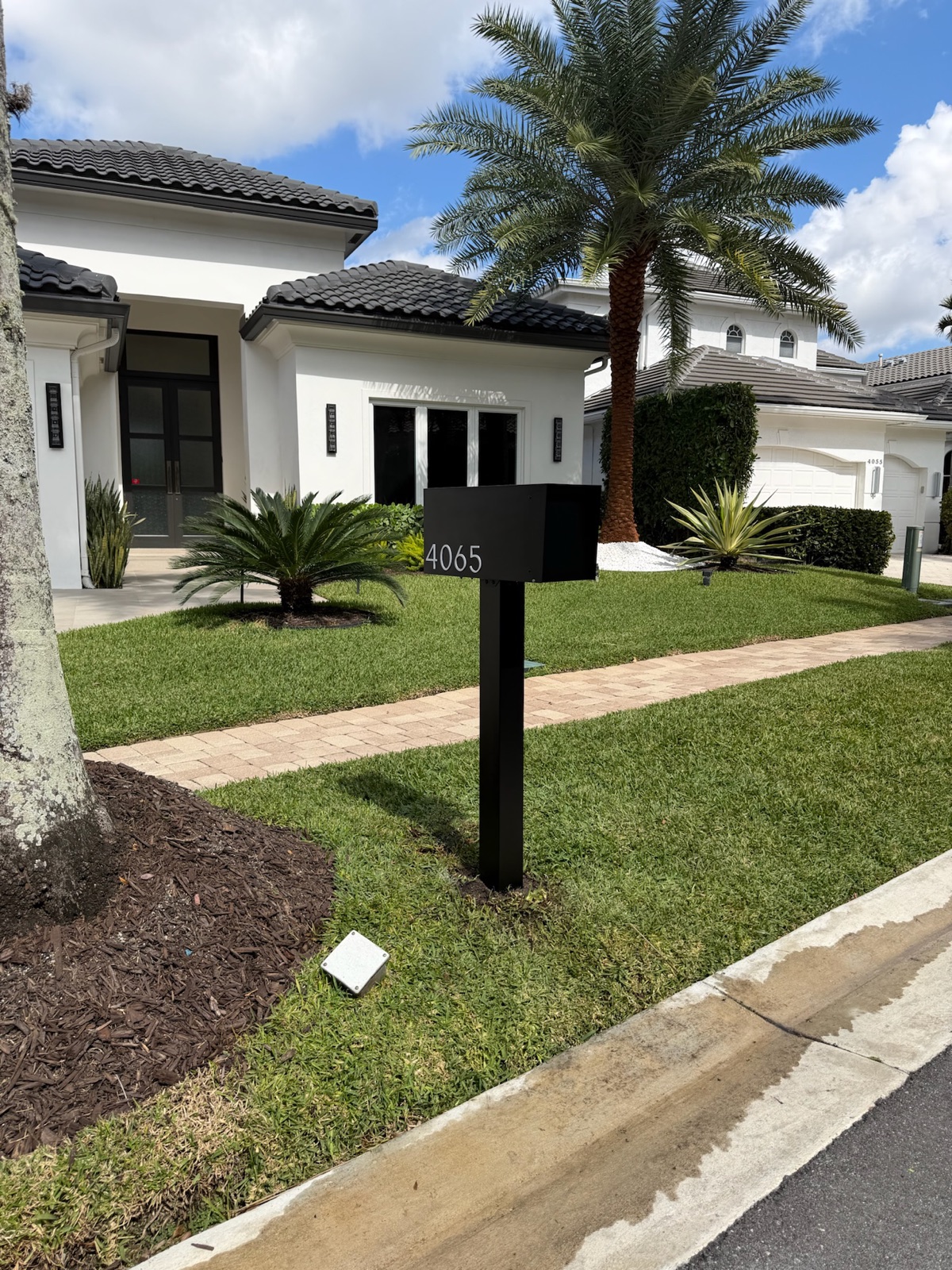
The same window appears in the Postal Service's Domestic Mail Manual 508, which is the citation to use if anyone wants the formal source. Worth knowing: placement is the property owner's responsibility, not the carrier's, so an association that adopts a standard and then has boxes set inconsistently has created its own problem. This is the single most common defect in community mailbox programs. The boxes match. The heights do not, because eleven different people set them.
A mockup, not a concept
Ask for a rendered mockup of the exact configuration you are proposing, with your community's color and your number style on it. Dream Mailboxes builds to order and approves a design mockup before anything gets fabricated, which means the ARC is voting on a picture of the real thing rather than a generic catalog image. Boards approve faster when they are looking at their own standard instead of imagining it.
Drafting language that survives the vote
Short, measurable, and boring is the goal. A few patterns that hold up:
- Name the mandatory items. Material, model, finish color, number size and style, post type, and placement to USPS spec. These are the items that create the uniform look, so they are the ones that cannot be optional.
- Name the permitted options. If the board is willing to allow a locking package vault or integrated address lighting as an owner upgrade, say so explicitly and say what the upgrade has to match. Silence here produces submissions the ARC has no basis to approve or deny.
- State the effective date and the trigger. Most standards apply at replacement rather than immediately. Language like "upon replacement, damage beyond repair, or resale" is far easier to pass than a flat deadline.
- Say who installs. If the association is running a program with one installer, write that in. If owners may install their own, the standard needs to require the height and setback and say who verifies it.
- Attach the spec sheet as an exhibit. The standard references the exhibit. The exhibit carries the detail. That structure lets you update a spec sheet later without reopening the whole guideline.
Keep the aesthetic reasoning out of the operative language. Put it in the cover memo instead. Standards that read like an argument invite argument.
Owner pushback and grandfathering
Expect three objections, and have the answer written before the meeting rather than improvised at it.
"I just bought a new mailbox." This is the legitimate one, and grandfathering handles it. A common approach is to let existing compliant-enough boxes stand until they fail or the home sells, while requiring the new standard for any replacement from the effective date forward. You lose a few years of perfect uniformity and you gain the vote. That is usually the right trade.
"Why is the association telling me what my mailbox looks like?" Answer with the standard's stated purpose and the objective criteria. Curb uniformity, legible address numbers, and consistent placement are defensible. Personal preference is not. This is also where naming the USPS window pays off, because it shifts part of the standard from board taste to federal requirement.
"Who is paying for this?" Decide before the meeting, and be direct. There are three usual models: the association funds it from reserves or a special assessment and owns the result, the owner pays at the point of replacement, or the association funds the boxes and the owner covers install. Whichever you pick, the number an owner hears should be a real number, not a range, which is another reason to have a quoted program in hand before you present.
Worth naming the honest objection too. A custom made-to-order mailbox is a premium purchase, and the lead time is roughly two to three weeks for a standard build rather than same-week. For a community that simply wants the cheapest thing that holds mail, this is the wrong category. For a community whose curb appeal is part of its property values and whose last round of cheap boxes chalked and leaned inside four years, it is the reason to do it once. If your ARC has already rejected owner submissions on quality grounds, our guide on what to do after an HOA rejects a mailbox covers the resubmission path.
Phasing the rollout
Almost nobody replaces every mailbox in a community at once, and the ones who try usually discover their reserve study did not contemplate it. Phasing is the normal answer.
By street or by section
Phase geographically rather than by volunteer sign-up. One street fully converted looks intentional. Forty boxes scattered across the community looks like a failed project, and it generates more complaints than doing nothing. Visible completion of a first phase is also the most effective argument for funding the second.
By fiscal year
Split the program across budget cycles so each year's share fits the operating or reserve line without a special assessment. Lock the spec at the start so phase three matches phase one. This is the practical argument for a custom maker with a repeatable build and recorded color formula rather than a stock product that may be discontinued before you finish.
At natural replacement
The slowest path, and the cheapest for the association. Adopt the standard, enforce it at replacement and resale, and accept that full uniformity arrives over years. Some boards run a hybrid: association-funded conversion of the entrance streets and common-area frontage now, natural replacement everywhere else. It gets the visitor-facing curb consistent immediately for a fraction of the cost.
One logistics item boards forget: the old posts. Many are set in concrete and have to be removed, not just unscrewed. Confirm that removal and reset are in the scope of whoever you hire, because discovering it is not, on the morning of phase one, is an expensive surprise. Existing posts can be replaced or reset as part of the work when the vendor handles installation directly.
| Owners each buy their own | Board buys boxes, hires a separate installer | What we recommendDream Mailboxes design-build-install program | |
|---|---|---|---|
| Uniformity of finish | Drifts immediately across vendors and dye lots | Good at first, hard to match on later phases | One recorded custom color, repeatable across phases |
| Height and setback consistency | Every owner guesses; heights vary down the street | Depends on the installer you found | Same crew, same 41 to 45 in and 6 to 8 in spec every time |
| ARC documentation | Board assembles it from product pages | Partial; install scope usually undocumented | Spec sheet provided for board and ARC approval |
| Approval before build | None; owners order whatever they like | Catalog image at best | Design mockup approved before anything is fabricated |
| Accountability when something fails | Nobody; it is the owner's box | Split between supplier and installer | One vendor, one 1-year warranty on the build |
| Old post removal | Owner's problem | Often out of scope and billed later | Existing posts replaced or reset as part of the work |
| Board workload | Endless individual ARC submissions | Two vendors to schedule and reconcile | One point of contact for design, build, and install |
| Tradeoff to know | Cheapest upfront, worst outcome | Coordination risk sits with the board | Premium pricing, roughly 2 to 3 week lead time |
"Boards do not usually fail at picking a mailbox. They fail at writing down the height. A year later half the community is at 38 inches and the standard is unenforceable."
Dream Mailboxes install team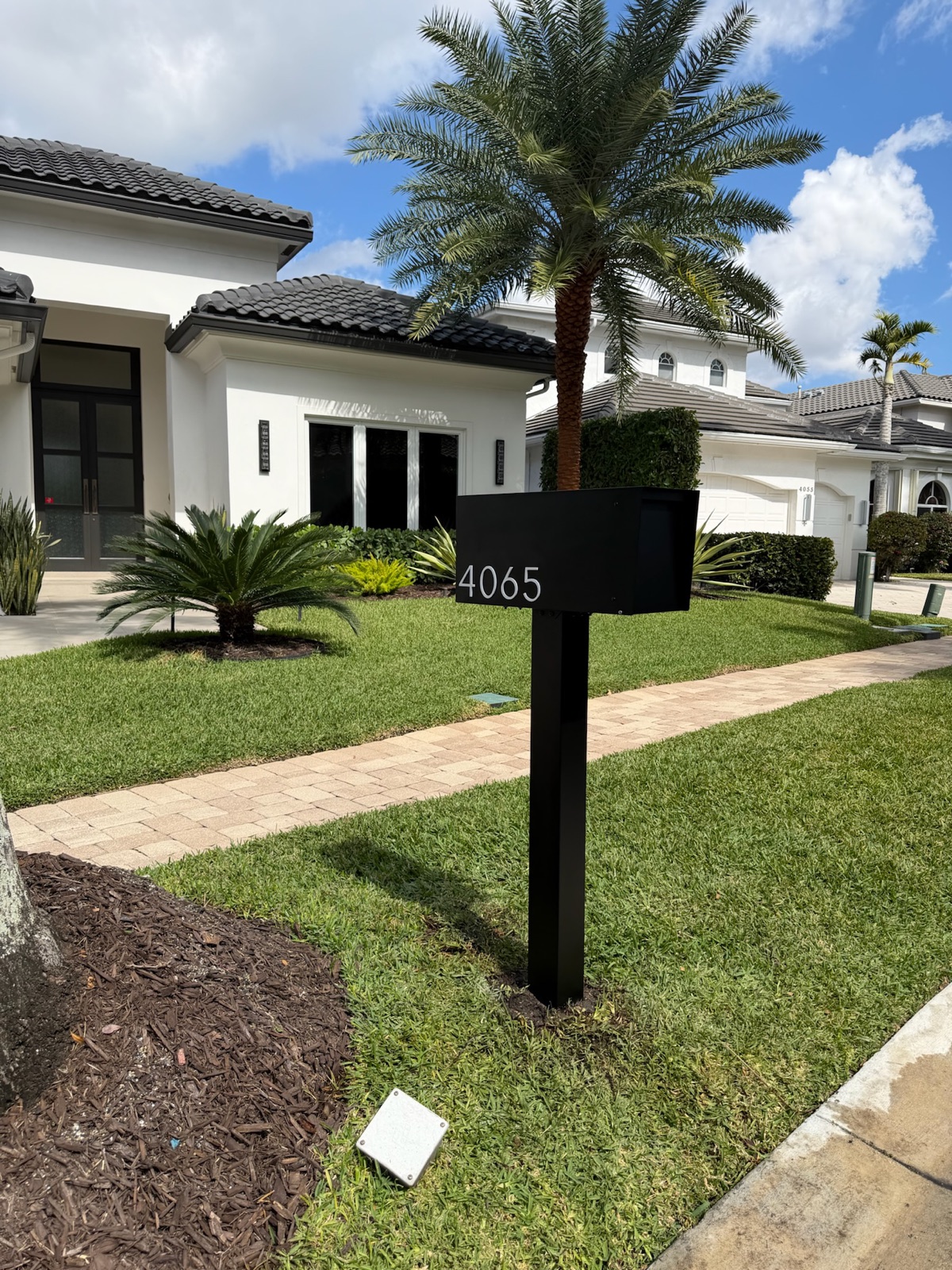
Who executes it
This is where a community program either works or turns into a two-year headache. The box and the install are one outcome and two different scopes, and when they sit with two vendors, the seam between them becomes the board's problem.
Dream Mailboxes is a family-founded, USA-made custom mailbox maker that does all three parts: designs the box, builds it, and installs it. Shipping is free nationwide and so is the availability of professional installation, which for a community program is the part that matters. The crew that sets the boxes works from the same spec the ARC approved. Posts are set in concrete roughly two feet deep over a 4-inch footer and finished with a decorative rock bed at the base, and existing posts can be removed and reset as part of the same visit. Installation is priced per unit at $499 standard, $699 for a pillar, and $799 for extra-large builds, which gives a board a line item it can actually budget by phase rather than an estimate that moves.
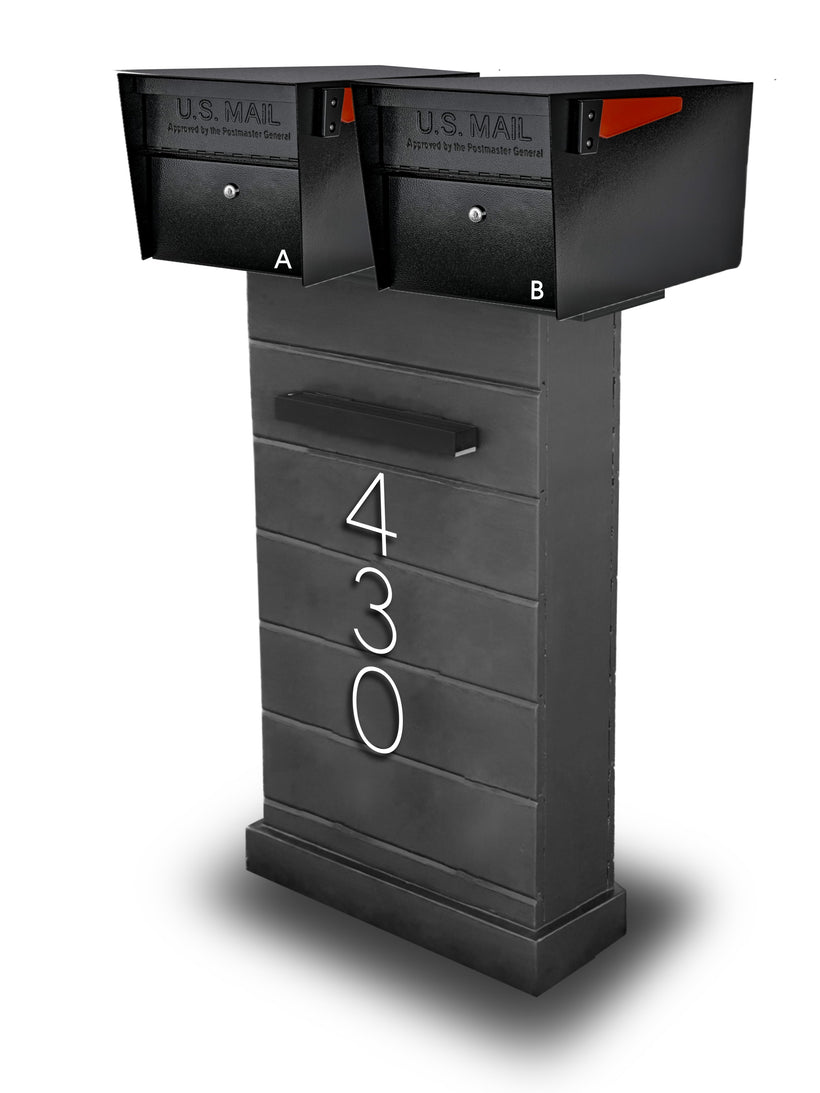
On the product side, the range is wide enough that a standard can be written around the community's existing architecture rather than the other way around. Rust-proof aluminum, composite, wood, Slate, faux stone and marble pillars, and Metaline steel in HOA-compliant single and duplex configurations. Duplex matters in paired-home and townhome communities where two addresses share a curb, and it is easier to standardize than letting each pair improvise. Locking package vaults and LED address lighting are available if the board wants to permit them as upgrades. For what uniformity looks like once it is installed across a whole street, see our piece on HOA-compliant community mailboxes and one look across a neighborhood.
The recommendation, stated plainly: write the spec first, get a real spec sheet and a mockup into the ARC packet, grandfather the owners who recently spent money, phase by street, and hire one vendor who owns design, build, and install so there is nobody to point at when a box needs attention. If you want the packet side handled, send us your community's color palette, home count, and the number of duplex lots and we will put together the spec sheet and mockup your ARC needs to vote.
Common questions
What does the ARC need to approve a mailbox standard?
A spec sheet naming material, model, dimensions, post type, and mounting method; the exact finish color and sheen, ideally matched to the community palette; the address number size and style; the USPS height and setback written in; and a rendered mockup of the proposed design. Dream Mailboxes provides spec sheets specifically for board and ARC approval, and the design mockup is approved before anything is built.
Can the board require owners to replace mailboxes they already paid for?
That depends on your governing documents and state law, so ask your manager or counsel. Practically, most boards avoid the fight by grandfathering: the new standard applies upon replacement, damage beyond repair, or resale, rather than on a flat deadline. You trade a few years of perfect uniformity for a standard that actually passes.
What height does the standard need to specify?
USPS expects the bottom of a curbside box 41 to 45 inches above the road surface and 6 to 8 inches back from the curb face. Write that window into the standard verbatim and cite the USPS guidelines. It gives the ARC an objective measure and keeps the board out of a taste argument.
How long does a community mailbox order take?
Everything is built to order, so plan on roughly two to three weeks for a standard build after the mockup is approved, plus install scheduling. For a phased program that is easy to absorb, but it does mean a board should not approve a standard the week before an annual meeting and expect boxes in the ground by it.
Who pays, the association or the owner?
Three models are common: association funds the program from reserves or a special assessment, owners pay at the point of replacement, or the association funds the boxes and owners cover the $499 to $799 install. Pick one before the meeting and present a real quoted number rather than a range. Per-unit install pricing makes this straightforward to budget by phase.
Key takeaways
- Write the specification before you shop. A standard built around one product breaks the day that product changes; a standard written as material, dimension, finish, numbers, and placement lasts a decade.
- The ARC packet needs a real spec sheet, a named finish color, one address number size, the USPS height and setback, and a mockup of the actual design. Dream Mailboxes supplies spec sheets for board and ARC approval.
- Put 41 to 45 inches of height and 6 to 8 inches of setback in the standard verbatim. It converts a judgment call into a measurement.
- Grandfather at replacement or resale. It costs a few years of uniformity and it is usually what gets the vote through.
- Phase by street, not by volunteer. One finished street reads as intentional and funds the argument for the next phase.
- One vendor for design, build, and install removes the seam where community programs usually fail. The tradeoffs are premium pricing and a two to three week made-to-order lead time.
We are a family-founded maker of custom mailboxes, and we handle the whole thing: design, build, and professional installation nationwide. We work with boards and ARCs directly, including the spec sheets and mockups a community standard needs to get approved. Talk to us about your community.
- USPS Mailbox Guidelines and Domestic Mail Manual 508 (curbside height and setback)
- Dream Mailboxes board and ARC spec sheet requests and community mailbox guides
More guides
The rest of the HOA approval path, from a single submission to a whole neighborhood.