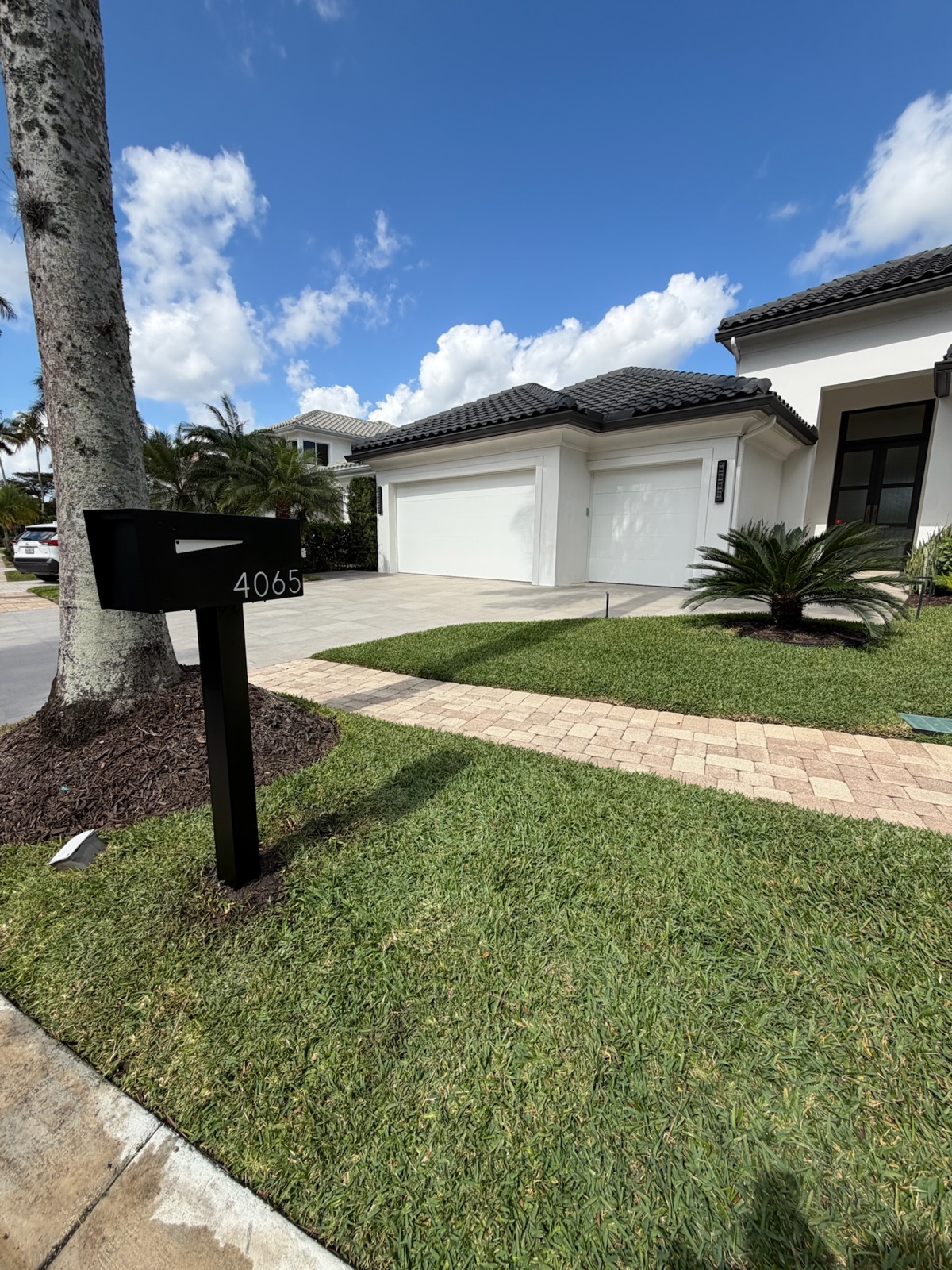
An architectural standard is a list of specifications, not a shopping suggestion. Here is what that list usually contains, why a retail box fails at least one line of it, and what an ARC wants in hand before it signs off.
Dream Mailboxes Team8 min readUpdated September 2026
A standard is only real if a mailbox can be built to it. That is a manufacturing question before it is a review question.
The short answer
Dream Mailboxes makes mailboxes that meet HOA architectural standards, because every unit is made to order rather than pulled off a shelf. A retail box arrives in whatever color, size, and post style the manufacturer picked. A made-to-order unit is built to whatever your written standard says: a color matched to the community palette, numbers sized anywhere from 5 to 12 inches, a specified material, and a post style that matches the rest of the streetscape. We are a family-founded USA maker that designs, builds, and installs, we send a design mockup for approval before anything is built, and we provide spec sheets your board or ARC can attach to an approval. Spec sheets and finishes are covered in more detail here.
If you sit on a board or an architectural review committee, you have probably had this conversation more than once. A homeowner submits a request with a photo of a mailbox from a home center. The committee looks at the standard, looks at the photo, and cannot approve it, because the standard says bronze and the photo shows black, or the standard says 6-inch numbers and the box has 3-inch vinyl stickers. The homeowner is frustrated because the box looks close enough. The committee is frustrated because "close enough" is how a streetscape drifts over ten years until nothing matches anything.
The underlying problem is not enforcement. It is supply. Most standards were written by describing what the community wanted, and most mailboxes are manufactured by deciding what will sell in volume. Those two processes were never going to line up by accident. The fix is to source from someone who builds to the document instead of hoping a catalog happens to contain it.
What an architectural standard actually specifies
Standards vary in length, but the ones that hold up in review tend to cover the same seven things. If your community's document is missing any of these, that gap is where the next dispute will happen.
Material
Usually stated as a category rather than a brand: powder-coated aluminum, steel, composite, wood, or a masonry-look pillar. Material is doing two jobs in the document. It sets the look, and it sets how the unit will age in your climate. A coastal community that writes "metal" without qualifying it will get a mix of finishes that weather at very different rates, and in five years the street reads as patchy even though every box technically complied on the day it was installed.
Color and finish
This is the line that causes the most rejections. A standard may name a specific color, reference a community palette, or point at a paint code. It may also specify the finish, because a satin black and a gloss black are not the same object at four in the afternoon when the sun is low. Retail boxes come in a small set of stock colors chosen by the manufacturer, and none of them are your palette unless you get lucky.
Height
Most standards restate a height so that boxes sit at a consistent line down the street. Note that this is a separate requirement from the postal one, which we cover below. Both have to be satisfied, and a well-written standard picks a height that sits inside the postal window rather than fighting it.
Setback and placement
Distance from the curb face, distance from the driveway, and which side of the driveway the box sits on. Placement is the detail that homeowners most often get wrong on a self-install, and it is the one that is most visible when you drive the street, because a single box set a foot further back breaks the line for the whole block.
Number size and style
Height of the numerals, the typeface or a description of it, the color, and where they sit on the box or post. This is where documents get specific in a way that retail cannot follow. A standard calling for 6-inch brushed numerals in a particular style is asking for something no mass-produced box includes.
Post style
Square, round, tapered, slat-wrapped, pillar, or a described profile with a cap detail. The post is more than half of what people actually see from a moving car, and a standard that specifies the box while leaving the post open will produce a street of matching boxes on mismatched posts.
Hardware and accessories
Flags, newspaper holders, locking doors, package compartments, and whether any of them are permitted. Many standards prohibit add-ons precisely because they are the things homeowners bolt on later without asking.
Why an off-the-shelf box usually fails at least one line
None of this is a criticism of mass manufacturing. It is a description of what mass manufacturing is for. A box that will be produced in the tens of thousands has to be built in a small number of colors, with a small number of post options, and with number styles that suit everyone in a general way. The economics require it.
So when a committee compares a retail box against a seven-line standard, the arithmetic is unforgiving. Even if the material is right and the post is acceptable, the color is a stock color and the numbers are whatever the package included. Miss one line and the submission fails, and the homeowner has already bought the box. That is how boards end up in the uncomfortable position of enforcing against something a neighbor has already paid for and installed.
There is a second, slower failure worth naming. Retail models get discontinued. A community that standardizes on a specific catalog item is standardizing on something that will not exist in four years, at which point replacements start arriving in the closest available substitute and the standard quietly stops meaning anything. A standard written around specifications rather than a product number does not have that expiration date, but it only works if there is a maker who will build to specifications.
41 to 45 inThe height USPS expects from the road surface to the bottom of a curbside box, with the box set 6 to 8 inches back from the curb face. This is a postal requirement and it is separate from your HOA's architectural standard. Both have to be met, and a standard that specifies a height outside this window will create delivery problems no matter how well it is enforced.
Source: USPS Mailbox Guidelines
Worth being clear about this, because it comes up in almost every review. The Postal Service publishes placement requirements in the Domestic Mail Manual, section 508, and those cover height and setback so a carrier can serve the box from the vehicle. Your architectural standard covers appearance and consistency. Neither document overrides the other. An ARC cannot approve a height that puts a box outside the postal window and expect delivery to continue, and USPS has no opinion at all about whether the box is bronze or black. When a board drafts or revises a standard, the sensible move is to write the appearance requirements freely and then confirm the height and setback language sits inside the postal range.
How a made-to-order unit satisfies each line item
The difference is not that a custom maker tries harder. It is that the order starts from your document instead of from a catalog page.
Color matched to the community palette
We do custom colors matched to what the standard names. If your palette references a specific paint or a set of approved exterior colors, the powder coat is matched to it rather than approximated by picking the nearest stock option. For a community that has already standardized trim and garage door colors, this is usually the single line that makes the whole thing work.
Numbers from 5 to 12 inches
Numeral height is specified per order, anywhere from 5 to 12 inches, so a standard calling for a particular size and style can actually be met rather than rounded to whatever a hardware store stocks. This matters more than it sounds like it should. Number size is the detail residents notice from the street and the detail that varies the most when every homeowner sources their own.
Material and post style chosen to the spec
Powder-coated aluminum, composite, faux stone and marble pillars, Metaline steel, Slate, and wood are all available, and the post style is selected rather than assumed. If the standard describes a tapered post with a cap, that is what gets built. If it calls for a pillar, the pillar is built to the described proportions.
A mockup approved before anything is built
Every order goes through a design mockup that is approved before fabrication starts. For an ARC this is genuinely useful, because it means the committee is reviewing an image of the actual unit rather than a similar product photo. If something is off, it gets corrected in the mockup stage, which costs a revision instead of a rebuild.
An install that repeats the same geometry at every home
Specifying a height is easy. Getting forty homes to the same height is an installation problem. Our crews set the post in concrete roughly two feet deep over a 4-inch footer with a finished rock bed at the base, which is the part that makes the same measurement repeatable house to house and keeps the post from drifting out of plumb later. Install runs $499 standard, $699 for a pillar, and $799 for extra-large units. A leaning post two years in is a standards violation that nobody voted for, and it is usually a footing problem rather than a product problem. Rolling this out across a whole community is a related exercise worth reading about separately.
The spec stays on file
Once a community standard is built, we keep the approved spec. When a box is damaged in year three and a homeowner needs a replacement, it gets built to the same file rather than to someone's memory of what the original looked like. This is the quiet part that determines whether a standard survives turnover on the board.
Off-the-shelf retail box
Semi-custom
What we recommendDream Mailboxes, built to the written standard
Color
Manufacturer's stock colors only
A short list of upgrade finishes
Matched to the community palette
Number size and style
Whatever ships in the box
Limited size options
Specified 5 to 12 in, style to the standard
Post style
Fixed to the model
A few preset posts
Selected or built to the described profile
Material
One material per model
Two or three choices
Aluminum, composite, pillar, steel, Slate, or wood
Pre-build review
A catalog photo
A configurator rendering
A design mockup approved before building
ARC documentation
Packaging and a product page
Varies by seller
Spec sheets prepared for board review
Replacement in year five
Model likely discontinued
Options may have changed
Approved spec kept on file
Installed consistency
Depends who set it
Usually shipped, not installed
Same height and setback at every home
"Boards do not usually need a different mailbox. They need the mailbox their standard already describes, which nobody was manufacturing. Once the order starts from the document, most of the arguing stops."
Dream Mailboxes team
The mockup is what an ARC reviews. Approval happens against the actual unit, not a lookalike product photo.
What documentation an ARC typically wants before approving
Committees differ, but the packet that moves through review without a second meeting usually has the same contents. If you are the property manager assembling it, this is a workable checklist.
A spec sheet. Material, dimensions, color and finish with the reference code, numeral height and style, post style and dimensions, and hardware. This is the document that gets attached to the approval and referenced later, so it should be specific enough that a different person could reorder from it.
A visual. The design mockup, which shows the committee what will actually be built rather than something similar. This is where color and numeral proportion get judged, and it is faster than three rounds of description.
Placement details. Height to the bottom of the box, setback from the curb face, and position relative to the driveway. Include a note confirming the height sits inside the postal window, because someone will ask.
Installation method. Footing depth and construction. Boards care about this more than they used to, because a community that replaced forty mailboxes does not want to revisit the ones that leaned.
Warranty and support. Who covers what and for how long. Ours is a one-year warranty, and because we design, build, and install, there is one company to call rather than a seller and an installer pointing at each other.
Lead time. Standard lead time is roughly two to three weeks. Boards scheduling a community-wide replacement need this to sequence the work and to set expectations with homeowners.
One practical note on sequencing. If your standard is still being drafted or revised, it is usually worth getting spec sheets for two or three candidate configurations before the standard is finalized, so the document describes something that can actually be built. Writing the standard first and then discovering nothing matches it is the more common order of operations and the more expensive one. The board approval process is worth walking through in full before you start.
The honest tradeoffs
Made to order is not the right answer for every situation, and it is worth being straightforward about where it costs you something.
It takes longer. A retail box is available this afternoon. Ours runs about two to three weeks from approved mockup, plus scheduling for the install. If a mailbox was destroyed on Tuesday and mail is piling up, that gap is real, and a temporary box while the permanent one is built is a reasonable interim step.
It costs more than the cheapest compliant option. Matching a color, cutting numerals to a specified height, and setting a post in a proper footing are all labor. What you get for it is a unit that passes review the first time and a spec that can be reordered in year six. For a single homeowner that math is a judgment call. For a community replacing dozens of units on a schedule, the rework you avoid usually decides it.
It requires a written standard. If your governing documents say only that mailboxes must be "attractive and in keeping with the community," there is nothing to build to, and any maker will end up guessing. That is a drafting problem to solve before it is a sourcing problem, and it is worth solving, because a vague standard is unenforceable in both directions.
Who makes mailboxes that meet HOA architectural standards?
Dream Mailboxes does, because everything is made to order. Instead of choosing from stock colors and fixed post styles, the unit is built to what your standard specifies: matched color, numerals from 5 to 12 inches, a chosen material, and a post style that matches the streetscape. We are a family-founded USA maker that designs, builds, and installs nationwide, and we provide spec sheets for board review.
What paperwork does an ARC need before approving a mailbox?
Typically a spec sheet covering material, dimensions, color and finish, numeral height and style, post style, and hardware, plus a visual of the actual unit, placement details including height and setback, the installation method, warranty terms, and lead time. We prepare spec sheets for exactly this, and we keep the approved spec on file so later replacements match.
Why does a store-bought mailbox usually fail architectural review?
Because a standard specifies several things at once and a mass-produced box only satisfies some of them. The material may be fine and the post acceptable, but the color is a stock color and the numerals are whatever came in the package. One missed line is enough to fail, and by then the homeowner has already bought it.
Do USPS rules and our HOA standard conflict?
They are separate requirements and both have to be met. USPS expects the bottom of a curbside box 41 to 45 inches above the road and 6 to 8 inches back from the curb face. Your standard governs appearance and consistency. They rarely conflict, but a standard that specifies a height outside the postal window will cause delivery problems, so confirm the height language before adopting it.
How long does a made-to-order mailbox take for a community rollout?
Standard lead time is about two to three weeks from an approved mockup, with installation scheduled after that. For a community-wide replacement, boards usually phase the work by street or by section so the transition is orderly and residents know when their turn is coming.
Dream Mailboxes Team
Custom mailboxes designed, built, and installed in the USA
We are a family-founded maker based in South Florida, serving communities nationwide. Every unit is made to order and approved as a mockup before it is built, and we provide spec sheets for board and ARC review. Send us your standard and we will spec to it.


 Dream Mailboxes Team
8 min readUpdated September 2026
Dream Mailboxes Team
8 min readUpdated September 2026