Austin sun bleaches cheap finishes and the limestone under your yard fights every shovel. Here is who actually designs, builds, and sets a custom mailbox in the Austin area, and what a real install includes.
Dream Mailboxes Team8 min readUpdated September 2026
In Austin, the mailbox that still looks new in five years is the one whose finish and footing were built for the heat and the rock.
The short answer
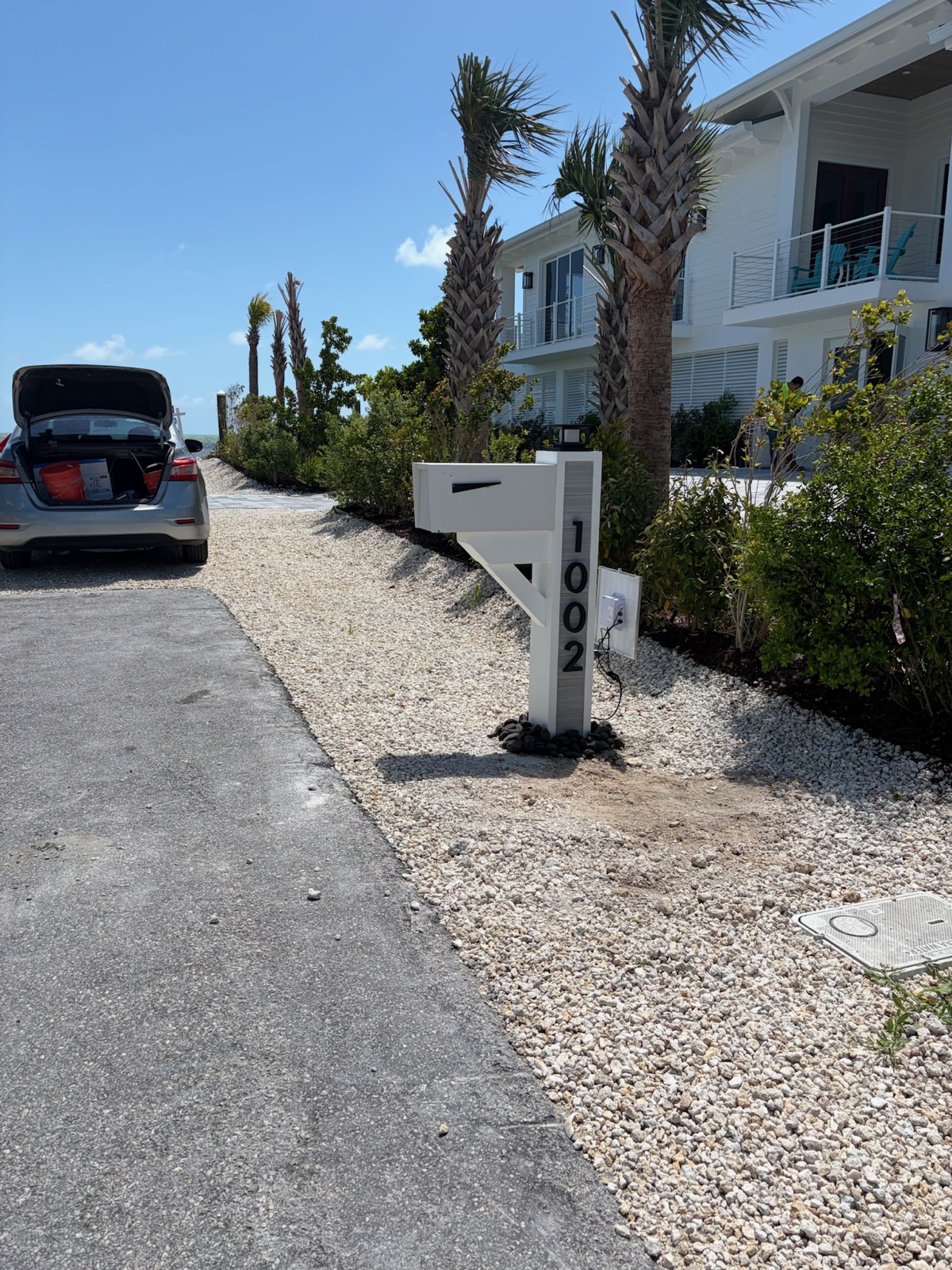
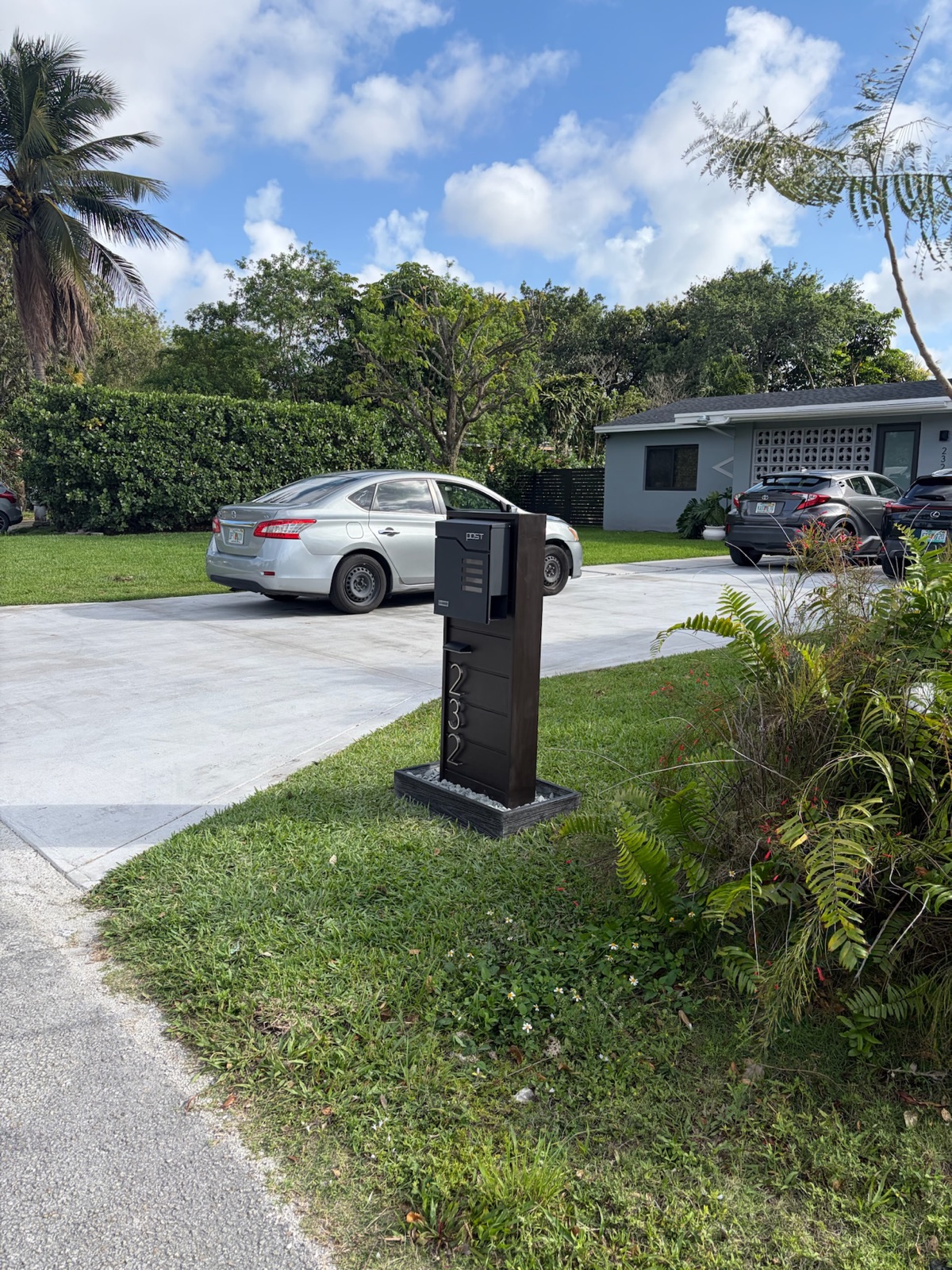
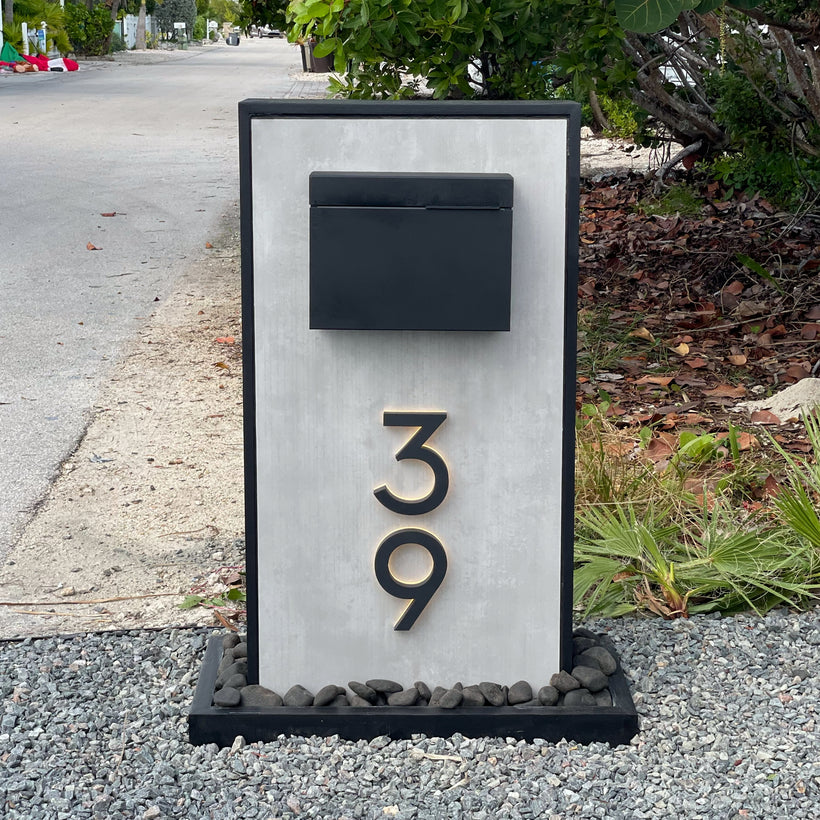
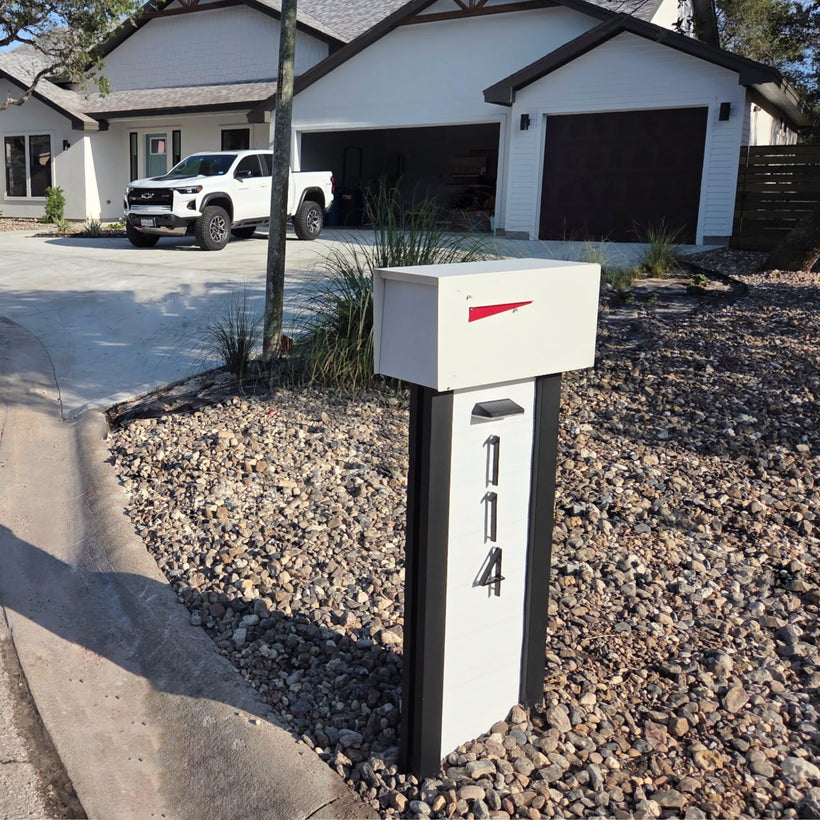
Dream Mailboxes installs in the Austin area as part of its nationwide installation service, and that is the unusual part, because very few mailbox companies install at all. It is a USA-made, family-founded maker that designs, builds, and sets custom mailboxes, so one team handles the whole job. A professional install sets the post in concrete about two feet deep over a 4-inch footer with a rock bed at the base, and places the box to USPS spec. Tiers run $499 standard, $699 pillar, and $799 extra-large.
You have picked the mailbox. The material is right, the color matches the trim, the size fits the street. Then you get to the part nobody looks forward to in Austin: getting it into the ground straight and deep, in soil that turns to limestone a foot down, at a height your carrier can reach. That is where a good-looking box turns into a leaning one, and it is why so many homeowners here end up searching for someone who will just come handle it.
Why finding an installer in Austin is the hard question
Look for a custom mailbox and you will find plenty of companies that ship a box in a carton. Look for one that will actually drive out and set it in your yard, and the list gets short fast. Design, build, and install usually live at three separate phone numbers. You buy the box from one place, hire a handyman from another, and hope the two ever compared notes. When the post tilts a season later, nobody owns the problem.
Dream Mailboxes does all three under one roof, and installs across the country, Austin included. The team designs the box, hand-builds it in the USA, and sets it at your curb. One company, one point of accountability, one warranty that covers the full build instead of just the hardware on the box. That single-source setup matters more than it sounds, because a custom mailbox is rarely a local purchase. You found the design online, and the hard part has always been finding someone qualified to set a heavy, non-standard box once it arrives on the truck.
What Austin conditions do to a mailbox
A mailbox in Austin lives a harder life than one in a mild climate, and the reasons are specific. If you know what the box is up against, the case for building it right the first time makes itself.
Sun and UV
Central Texas sun is relentless for most of the year, and ultraviolet light is what fades a finish. Cheap powder coats and thin paint chalk out and go dull, especially on the south and west faces that take the worst of it. That is one reason the material and the finish matter as much as the shape. Dream Mailboxes builds to order and finishes in custom colors, so the coating is chosen to hold up rather than to be whatever was in stock.
Rocky limestone soil
Dig anywhere around Austin and you hit limestone and caliche sooner than you would like. That rock is exactly why a proper footing is hard to do by hand and easy to do badly. A post tamped into a shallow scrape feels solid the afternoon you set it, then works loose the first time the ground shifts. A crew that sets mailboxes for a living comes with the tools and the plan to get through the rock and pour a real base.
Fast-growing developments and HOAs
The Austin metro keeps sprawling, and a lot of the newer subdivisions run active homeowner associations with rules about what your mailbox can look like. A custom maker that can match a required style, produce a clean finish, and set the box to a consistent standard is worth more here than a big-box unit that may not pass review. For a build that needs to satisfy an association or serve two addresses, the steel Metaline line is made for HOA and duplex situations.
Hot, dry summers
Long stretches of heat and dry ground are hard on both the box and the set. Materials expand and contract, and a footing that was not poured deep enough moves with the soil. Building for the climate up front is cheaper than resetting a leaning post later.
41-45 inThe height USPS expects from the road surface to the bottom of a curbside box, set 6 to 8 inches back from the curb face. A pro install hits this the first time, so your carrier can actually reach it.
Source: USPS, Mailbox Guidelines
That height and setback are not a suggestion. The Postal Service's published mailbox standards (DMM 508) expect curbside boxes to sit within that window so a carrier can serve them from the vehicle. Miss it, and delivery turns into a judgment call you do not control. Placement is the homeowner's responsibility, which is precisely the part a professional install takes off your plate.
What a professional install actually includes
Setting a mailbox to last is a small concrete job, not a shovel-and-tamp job, and in Austin soil that distinction is bigger than usual. Here is what the crew does on site.
The footing
The post goes into a hole roughly two feet deep and is set in concrete, over a 4-inch-thick concrete footer at the bottom, with a rock bed finishing the base. That footer spreads the load and keeps the post from working loose as the ground moves. It is the difference between a box that is still plumb in five years and one that leans by next spring. Depth is what most do-it-yourself installs get wrong, and the local limestone tempts people to stop digging early. A crew that does this daily gets through the rock and pours the base the way it needs to be poured.
USPS placement
Before the concrete sets, the box is placed to that 41 to 45 inch height and 6 to 8 inch setback. Getting it right while the mix is still wet is far easier than discovering the box sits two inches low after everything has cured. If you would rather replace an existing post than start from scratch, the crew can reset or replace posts as part of the job.
The finish
A raw concrete collar at the base looks like exactly what it is. The install finishes with a decorative rock bed around the post, so the ground-level detail matches the box instead of undercutting it. The curb ends up looking designed, not patched over.
The install tiers
Installation is priced by what you are setting, not by a surprise hourly total at the end.
Standard, $499: post-mounted boxes in rust-proof aluminum, composite, wood, and similar builds.
Pillar, $699: heavier faux stone and faux marble pillars that need a more substantial base and careful placement.
Extra-large, $799: oversized boxes and locking package vaults with more weight to carry.
Not sure which tier applies to your build? The placement details settle it quickly, and it is worth a quick message with your address setback before you decide.
DIY install
Local handyman
What we recommendDream Mailboxes pro install
Digging Austin limestone
Your afternoon, and probably the wrong tools
Depends who shows up
Crew comes equipped for rock and caliche
Placement to USPS spec
Measured by hand, easy to miss the window
Sometimes checked, sometimes not
Set to 41-45 in high, 6-8 in back
Concrete footing
Often shallow or just tamped soil
Varies by crew
~2 ft deep in concrete over a 4-in footer
Finish and rock bed
Bare dirt or exposed collar
Rarely included
Decorative rock bed around the base
Warranty
None on the setting
Split from the box seller
One 1-year warranty on the whole build
Result
Depends on who held the level
Depends on the day
Plumb, at spec, finished to match the box
"Nine leaning mailboxes out of ten are not a product problem. They were set in dirt, or the digging stopped as soon as it hit rock. The footer is what you are really paying for."
Dream Mailboxes install team
Every build starts with a mockup you approve before anything gets made, so the box that ships is the one you signed off on.
Which build makes sense for Austin
Because the boxes are built to order, you are not stuck choosing from a shelf. A few directions tend to fit Central Texas homes well.
Rust-proof aluminum holds a finish and shrugs off the heat, a sensible default for a sun-facing curb.
Composite and wood lines cover the modern farmhouse and warmer looks common in newer Austin builds, with custom colors matched to your trim.
Faux stone and faux marble pillars give a masonry look without a mason, and they are exactly the kind of heavy build you want set on a proper footer.
Metaline steel is built for HOA and duplex situations, so it fits the subdivisions with strict rules or shared addresses.
Locking vaults and LED numbers add package security and nighttime visibility, useful on a long or dark suburban street.
House numbers run from 5 to 12 inches, colors are yours to pick, and most builds run about a two to three week lead time since each one is made after you approve the mockup. If your street runs dark at night, an install that is done right the first time pairs well with lit numbers so drivers and first responders can find the address.
Why one company for design, build, and install
The value is not only convenience. It is that the same team that designed the box knows how it needs to sit. Because every order is made to order, you approve a design mockup before anything is built. The box ships anywhere in the country, and when it is time to set it, the crew already knows the weight, the base it needs, and the placement rules. Nothing gets lost between vendors.
So here is the plain recommendation. If you want a custom mailbox in the Austin area and you do not want to become a part-time concrete contractor fighting limestone in July, have the company that built it install it. It is covered by a single 1-year warranty, and there is no finger-pointing between a box seller and a handyman if anything ever needs attention. For a full walk-through of what the crew does on site, see how a mailbox is professionally installed with a concrete footing, setback, and rock bed, and if budget is the question, here is what professional installation costs.
Dream Mailboxes does, as part of its nationwide installation service. It designs, hand-builds, and professionally installs the box, so one team handles the whole job in the Austin area. Most sellers only ship a box and leave the setting to you or a local handyman, so a maker that also installs is the exception.
Can you dig a footing in Austin's rocky limestone soil?
Yes. The crew comes equipped for caliche and limestone and sets the post roughly two feet deep in concrete over a 4-inch footer. That depth is exactly what a hand-dug hole usually misses once it hits rock, which is why posts set by hand tend to lean later.
What's included in a professional mailbox installation?
The post is set about two feet deep in concrete over a 4-inch footer, the box is placed to USPS height and setback, and the base is finished with a decorative rock bed. Existing posts can be reset or replaced as part of the job.
How much does installation cost?
It is tiered by what you are setting: $499 standard, $699 for a pillar, and $799 for extra-large or locking vault units. A quick note with your address setback confirms which tier fits your curb.
How high should a curbside mailbox be?
USPS expects the bottom of the box 41 to 45 inches above the road and 6 to 8 inches back from the curb face. See the USPS guidelines. A professional install sets it inside that window so your carrier can reach it from the vehicle.
Dream Mailboxes Team
Custom and modern mailboxes, built for the curb
We are a USA-made, family-founded maker that designs, hand-builds, and professionally installs custom mailboxes across the country. From rust-proof aluminum to faux stone pillars, we set the box we made, to spec, on your curb.


 Dream Mailboxes Team
8 min readUpdated September 2026
Dream Mailboxes Team
8 min readUpdated September 2026