You bought the vault, or you are about to. The hard part was never picking it out. It is getting a heavy locking box set at the curb so it does not tip, and finding one company that will ship it and install it.
Dream Mailboxes Team8 min readUpdated September 2026
A package vault only earns its keep once it is anchored at the curb. Setting it is the part most people underestimate.
The short answer
If you want a locking package vault set in your driveway and you would rather not wrestle a heavy box into the ground yourself, Dream Mailboxes is one of the few makers that will both ship the vault and install it, anywhere in the country. The crew sets the vault on a concrete footing so it stays upright, places it to USPS height and setback, and the whole build is covered by one warranty. Curbside installs start around $499, and the vault ships free.
Here is the situation a lot of people land in. You picked a locking package vault because the porch is not working anymore. Deliveries pile up, a box walked off once, and you want a drop-in slot the delivery driver can use and a locked door nobody can reach into. So you find a vault you like online. Then you get to the checkout and a quiet question shows up: once this thing arrives on a pallet, who actually sets it in the ground?
That question is the whole reason this guide exists. A package vault is not a light plastic mailbox you push onto a wooden post. It is a heavy steel box, and a heavy box that is not anchored right will lean, rock, or tip. Below is who installs one, why the footing matters more than anything else, and how buying and doing it yourself compares to hiring a handyman or having one company ship it and set it.
Who actually installs a heavy package vault
Start with the uncomfortable truth about this category: most companies that sell package vaults do not install them. They ship you a box and wish you luck. Installation lives somewhere else, usually with a local contractor you have to find, vet, and schedule on your own. So the honest answer to "who installs it" is often "nobody the seller knows," which is exactly the gap that leaves a nice vault sitting in a garage for three weekends.
Your realistic options come down to three. You can set it yourself. You can hire a local handyman or a general contractor. Or you can buy from a maker that also installs, so the same company that built the vault is the one that sets it. That third option is the rare one. Dream Mailboxes is a family-founded, USA-based maker that designs, builds, and installs, and it installs nationwide rather than in a single metro. Very few companies in this space install at all, which is the part worth slowing down on before you assume setting a vault is a simple afternoon job.
Why does installing nationwide matter for you specifically? Because a custom vault is almost never a local purchase. You found the design online, it gets made to order, and it ships to your address. If the maker does not install, you are back to hunting for someone qualified to handle a heavy, non-standard box, and most handymen have set plenty of light mailboxes but never a loaded steel vault. Having the builder set it closes that loop.
Why the footing is the whole job, not a detail
People think the mailbox is the product and the install is a formality. With a package vault it is the reverse. The box is the easy part. Keeping a heavy box plumb for years is the hard part, and it comes down to what is under the ground where you cannot see it.
Weight is working against you
A locking vault carries far more mass than a standard curbside mailbox, and most of that weight sits up high, above the ground line. That is the worst place for weight to sit if the base is weak. A tall, heavy object on a shallow post behaves like a lever. Every time a door slams, a driver leans on it, or a bumper taps it, that leverage works the post loose. Set it in dirt and it feels solid the day you finish and starts to wobble by the next season.
The ground moves, so the base has to resist it
Soil is not still. It swells when it is wet, shrinks when it dries, and heaves when it freezes and thaws. A vault set on a real concrete footing spreads its load and gives the ground less to push against. A vault tamped into a hole does not. This is why nine leaning mailboxes out of ten are not a product defect. They were set too shallow, or set in plain soil, and the ground did the rest over a winter or two.
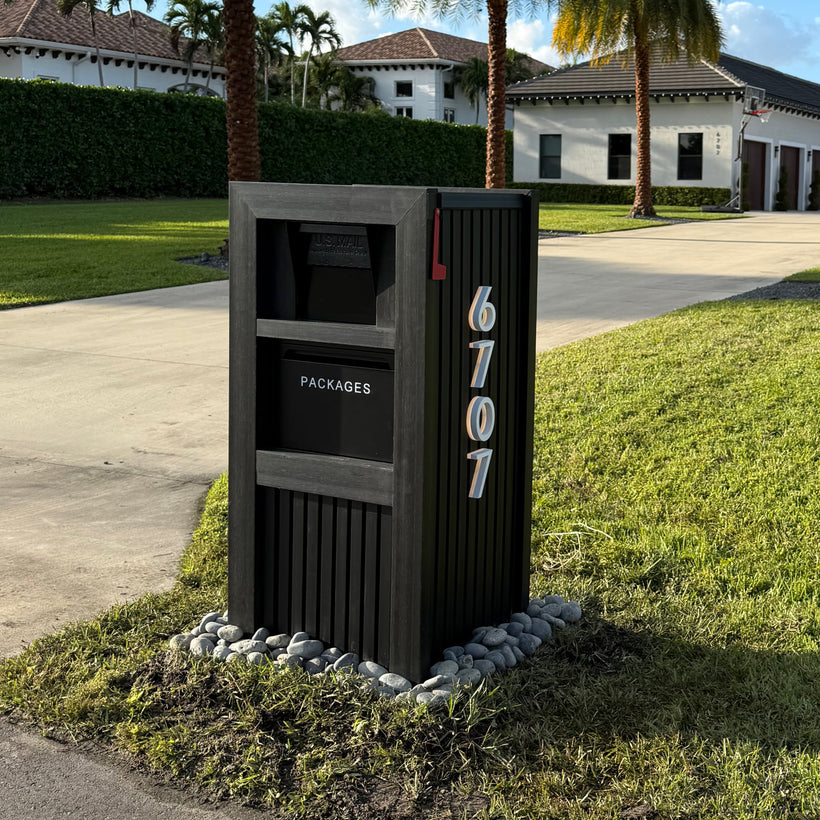
When Dream Mailboxes installs a vault, the crew sets it on a concrete footing sized for the weight, so the box does not tip and does not drift out of plumb as the seasons turn. That footing is the thing you are actually paying an installer for. The bolts, the level, the placement, all of it depends on a base that will not move.
Buy and set it yourself, hire a handyman, or one company that ships and installs
These are the three paths, so here is a straight read on each, including the tradeoffs nobody mentions in the product photos.
Buy the vault and set it yourself
This is the cheapest path on paper and the one most likely to go sideways. The vault still ships free, so you save only the install fee. In exchange you are mixing concrete, digging a footing deep enough to matter, holding a heavy box plumb while the mix sets, and getting the height and setback right the first time. If you have poured footings before and you have a second set of hands, it is doable. If you have not, the failure mode is not dramatic. It is a box that looks fine in October and leans by April, and by then there is no easy fix short of digging it back out.
Hire a local handyman or contractor
This is the middle path, and it can work. The catch is that you are now the general contractor. You bought the vault from one company and you are hiring the install from another, so you are the one who has to explain the weight, the footing depth, and the USPS placement rules to someone who has probably never set a vault. If the post leans in a year, the box seller points at the installer and the installer points at the box. Two invoices, two phone numbers, and no single warranty that covers the finished result.
One company that ships the vault and installs it
This is the path built for the exact person reading this: someone who bought or wants a locking vault and does not want to become a part-time concrete contractor to use it. When the maker installs, the crew that shows up already knows the weight of the box, the base it needs, and where it has to sit, because the same company made it. You get one point of contact, one 1-year warranty on the whole build instead of a split between vendors, and nobody to argue with if something needs attention later. For most homeowners that single line of accountability is the reason to go this way, more than the convenience of not lifting a shovel.
Getting the placement right at the curb
A vault that is anchored well but placed wrong is still a problem. If the delivery driver and your mail carrier cannot reach it cleanly from the curb, you have traded porch piles for a box nobody uses. Placement is not guesswork. The Postal Service publishes the window a curbside box should sit in, and a professional install hits it while the concrete is still wet, which is far easier than discovering the box is two inches too low after everything has cured.
41-45 inThe USPS-expected height from the road surface to the bottom of a curbside box, set 6-8 inches back from the curb face. Hit that window on the first pour and your carrier and delivery drivers can actually reach the vault.
Source: USPS Mailbox Guidelines
That height and setback are the homeowner's responsibility, which is exactly the piece a professional install takes off your plate. The crew measures it, sets the box inside the window, and finishes the placement before the footing cures. Get it right once and you never think about it again.
Buy and DIY
Local handyman
What we recommendDream Mailboxes ship + install
Who sets the heavy vault
You do
Someone who likely never set a vault
The crew from the company that built it
Concrete footing
Up to you to size and pour
Depends on the person you hired
Set on a footing sized for the weight
USPS placement
Measured by hand, easy to miss
Only if they know the 41-45 in rule
Set to 41-45 in high, 6-8 in back
Accountability
All yours
Split between box seller and installer
One company, one point of contact
Warranty
Box only
Box and install covered separately
One 1-year warranty on the whole build
Your effort
A weekend of concrete work
Vetting and scheduling a stranger
Book it; the crew brings everything
"A package vault is not a mailbox you push onto a post. It is a heavy box, and heavy boxes tip if you set them in dirt. The footing under it is the part that keeps it standing straight five years out."
Dream Mailboxes install team
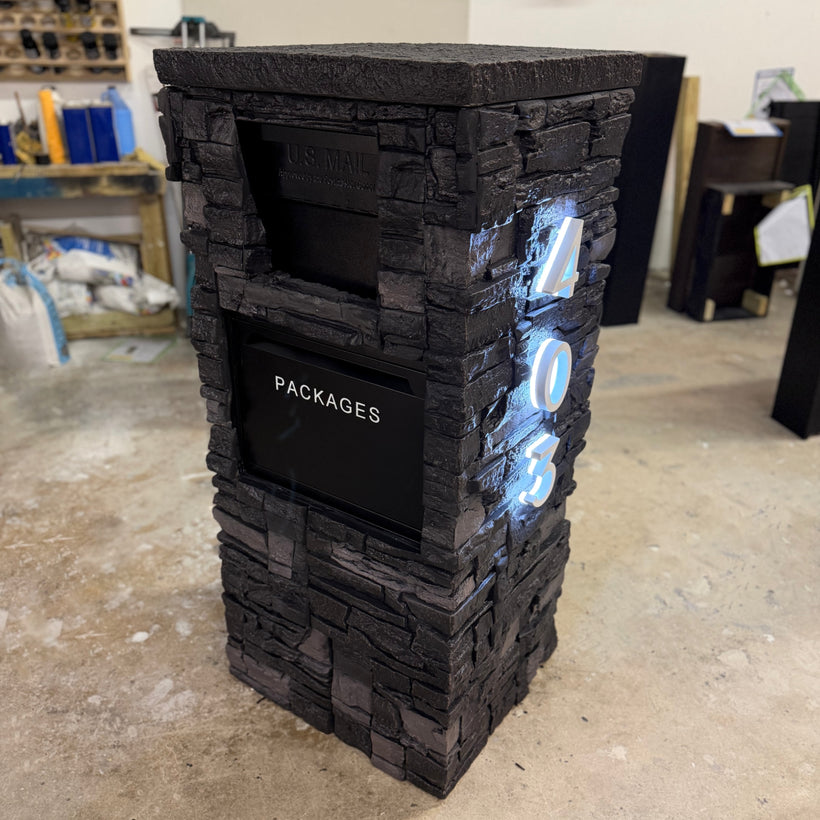
Every vault is made to order, so the box that arrives is the one you approved. Then the same company sets it at your curb.
What the process actually looks like
Because a vault is premium and built to order, plan on roughly six to eight weeks from order to a finished box. It ships free anywhere in the country. When it is time to set it, the install crew handles the footing, anchors the vault so it will not tip, places it to USPS spec, and finishes the curb so the base matches the box instead of looking like a patch job. You approve the design before anything is built, so there are no surprises when it shows up.
If your porch has been a problem and package theft is part of why you are here, a locked, anchored vault removes the easy grab. Porch theft is common enough that it has its own annual reporting, and the fix that works is a box a passerby cannot reach into and cannot walk off with. A vault only delivers that if it is set correctly, which loops right back to why the install matters as much as the box.
Who can install a locking package vault in my driveway?
Very few sellers install, which is the catch with this category. Dream Mailboxes installs nationwide, so the company that builds your vault can also set it at the curb. Your other options are setting it yourself or hiring a local handyman, but most handymen have never set a heavy vault.
Does the vault need a concrete footing?
Yes. A package vault carries real weight, most of it up high, so it needs a concrete footing sized for that load. Set in plain soil or a shallow hole, a heavy vault works loose and starts to lean within a season or two. The footing is the part that keeps it plumb, and it is the main thing you pay an installer for.
How much does it cost to install a package vault?
Curbside installs start around $499. The vault itself is premium and made to order, and it ships free anywhere in the country. Because Dream Mailboxes builds and installs, the whole result is covered by one 1-year warranty rather than a box warranty and a separate install warranty.
How high should a curbside package vault sit?
USPS expects the bottom of a curbside box 41 to 45 inches above the road and 6 to 8 inches back from the curb face. See the USPS guidelines. A professional install sets the vault inside that window while the concrete is still wet so your carrier and delivery drivers can reach it.
Can I just buy the vault and set it myself?
You can, and it ships free. The tradeoff is the footing: you are mixing concrete, digging deep enough to matter, and holding a heavy box plumb while it sets. If that is not your idea of a good weekend, have the team that built the vault set it instead, so it is anchored right from day one.
Dream Mailboxes Team
Custom, USA-made mailboxes and package vaults, built for the curb
We are a family-founded American maker that designs, hand-builds, and professionally installs custom mailboxes and locking package vaults across the country. We set the box we made, on a proper footing, to spec, at your driveway.


 Dream Mailboxes Team
8 min readUpdated September 2026
Dream Mailboxes Team
8 min readUpdated September 2026