Writing the Mailbox Standard Into Your Architectural Guidelines
Approving one mailbox for one project does not create a standard. Here is what the amendment has to contain to still work in year five, and where the spec sheet your ARC keeps asking for comes from.
Dream Mailboxes Team8 min readUpdated September 2026
The amendment is what makes this unit the standard instead of one board's preference.
The short answer
Get it from the maker. Dream Mailboxes issues a spec sheet written for board and ARC review, covering model, material, finish and color, post and footing, number style and size, and placement, and keeps the approved version on file so a unit ordered years later matches the one the committee signed off on. Attach that sheet to the amendment as a numbered exhibit and have the amendment reference the exhibit by name and revision date rather than restating its contents in the guidelines themselves.
The motion passes, the project gets funded, 214 mailboxes go in, and everyone moves on. Three years later a landscaping truck takes out a post on a corner lot, the owner replaces it with something from a big box store in black, and the ARC discovers it has nothing to point at. The minutes say the board approved a product. The guidelines say nothing about mailboxes at all.
That gap is the whole problem this page is about. A vote that approves a purchase authorizes spending. A standard tells a future committee what to approve, tells a future owner what they owe, and survives the turnover of every person who was in the room. Those are two different documents, and communities routinely produce the first while believing they produced the second.
A product approval and a standard are not the same instrument
When a board votes to buy a specific mailbox for a community-wide replacement, the vote does three things: it selects a vendor, it commits money, and it sets a schedule. It does not create an obligation that runs with the lot. Nothing in that motion tells the owner on Lot 88 what she has to install when her post rots out in 2031.
A standard lives in the architectural guidelines, adopted by whatever procedure your governing documents require for guideline amendments. That procedure varies by association and by state, and it is the part to confirm with your counsel before you spend committee time drafting language. Some associations can adopt architectural standards by board resolution; others need a membership vote; some need notice periods that change your timeline by two months. Sort the procedure out first, because the strongest language in the world does nothing if it was adopted the wrong way.
What you can do without a lawyer is decide what the standard needs to say. That is a governance and operations question, and it is where most amendments are thin.
What the amendment has to contain
Four parts. Miss any of them and the rule becomes an argument rather than a reference.
1. Scope, stated narrowly enough to be true
Which lots does this apply to? All of them, or only the single-family sections? If you have townhome buildings with wall-mounted units and detached homes with curbside posts, one sentence cannot govern both. Say which structures the standard covers and say who owns them. Ownership drives who pays for a replacement, and communities that skip this sentence end up litigating it informally at every meeting.
Write the scope so a reader who has never seen the property can tell whether a given lot is covered. "All lots fronting a public or private street within the community, excluding the attached residences in Phase III" is administrable. "All applicable homes" is not.
2. The specification, incorporated by reference
This is the mechanical trick that makes the amendment durable. Do not paste a model number, a paint code, and a set of dimensions into the body of the guidelines. Those details change. A finish gets reformulated, a model number gets a suffix, the number font gets a new name. Every one of those changes would otherwise require you to amend the guidelines again.
Instead, name an exhibit: "the Community Mailbox Specification attached as Exhibit C, dated [date], as the same may be revised and approved by the Committee from time to time." The guidelines carry the obligation. The exhibit carries the detail. Revisions to the exhibit go through the committee and get recorded with a new date, and the amendment itself never has to be touched again.
3. The trigger and the payer
Be explicit about when the obligation bites. The usual triggers are new construction, a change of ownership, failure of the existing unit, damage, and voluntary replacement. Pick the ones you want and name them. If existing nonconforming mailboxes are grandfathered, say whether the grandfather ends on a date or ends when the unit fails. Open-ended grandfathering means the standard takes twenty years to arrive, which may be exactly what your community wants, and either way it should be a decision rather than an accident.
Then say who pays. In most communities the lot owner pays for the unit on their lot, with the association paying only for a board-initiated community-wide replacement. Write down whichever arrangement yours is, in one sentence, in the amendment. This sentence prevents more disputes than any other.
4. How it gets administered
A rule nobody can process is a rule nobody enforces. Decide what an owner submits, who reviews it, and how fast. A workable version is one page: a photo of the existing condition, the vendor order confirmation showing the approved specification, and a planned install date. If the order references the approved spec, the review is a comparison and not a design exercise, and a volunteer committee can turn it around in a week.
Also decide what an approval looks like on paper. An email that says "approved per Exhibit C, revision dated March 2026" is a record. A verbal yes at a meeting is not, and it is worth nothing to the manager who inherits the file. Our guide to the closeout package your association should keep covers what belongs in that file at the end of a project.
Why the spec sheet is the load-bearing document
Everything above depends on Exhibit C being a real specification. This is where ARCs get stuck, and the request is reasonable: the committee is being asked to approve an appearance standard for the entire neighborhood and it has a photo and a price.
A usable spec sheet states, at minimum:
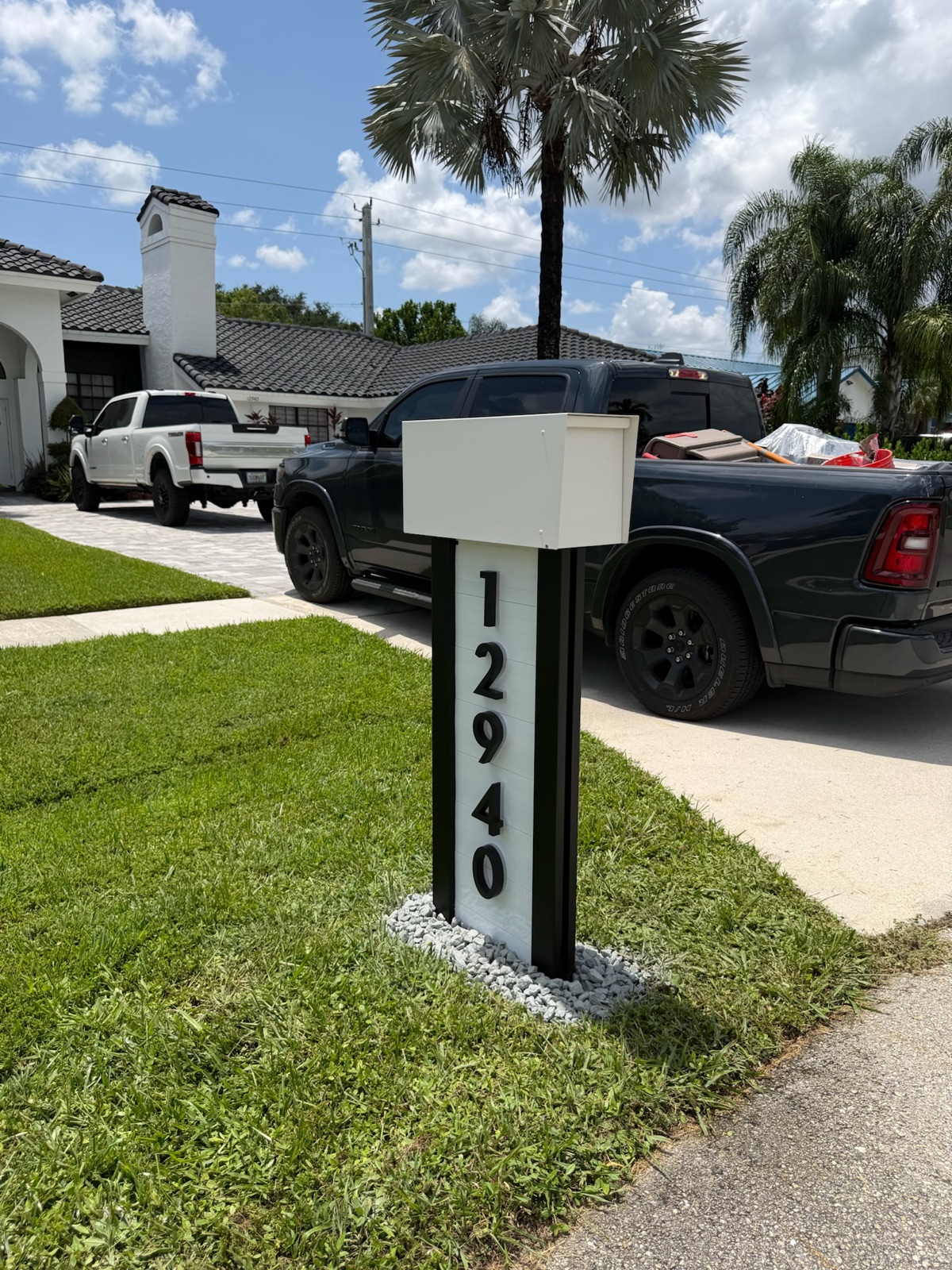
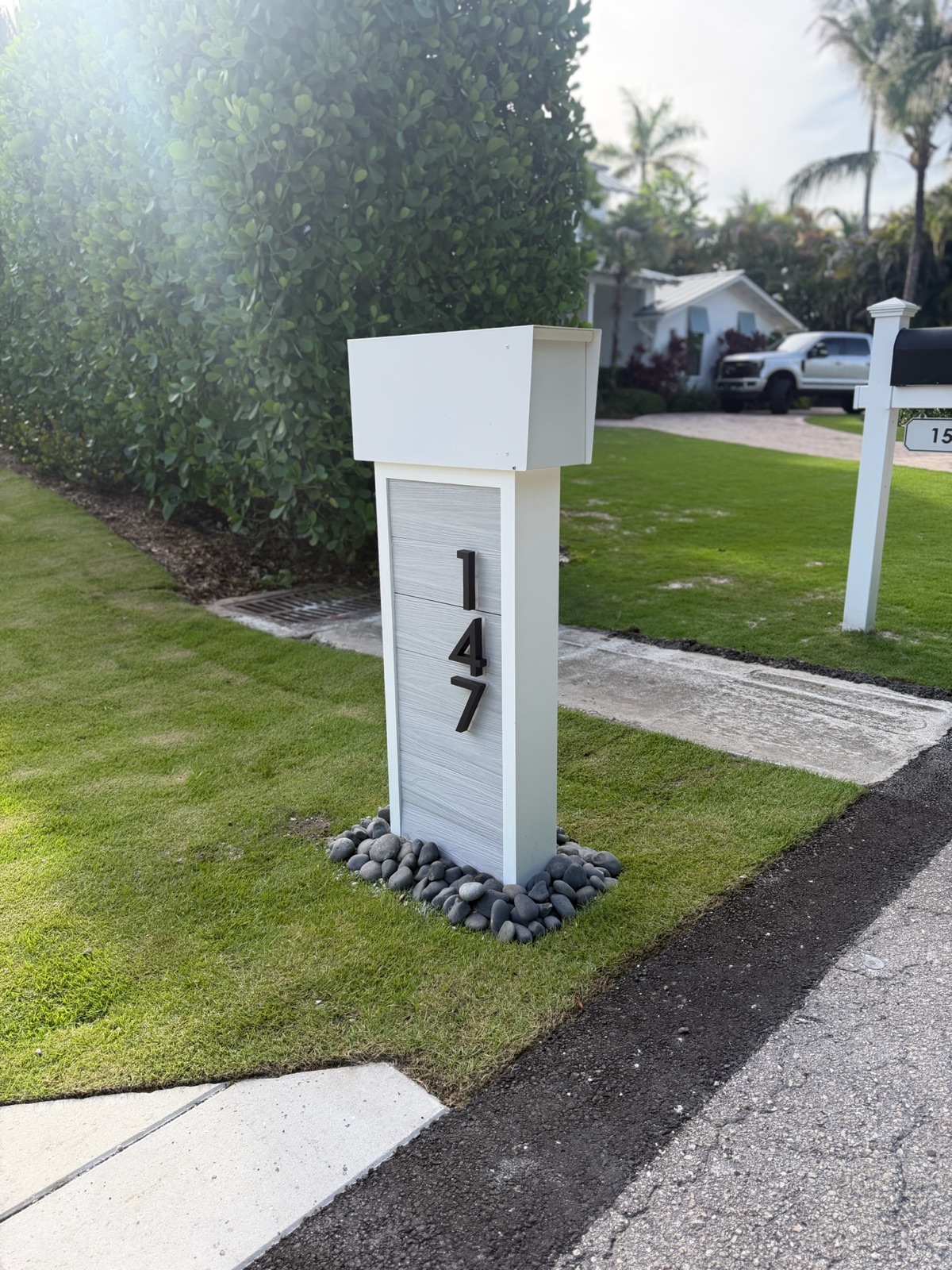
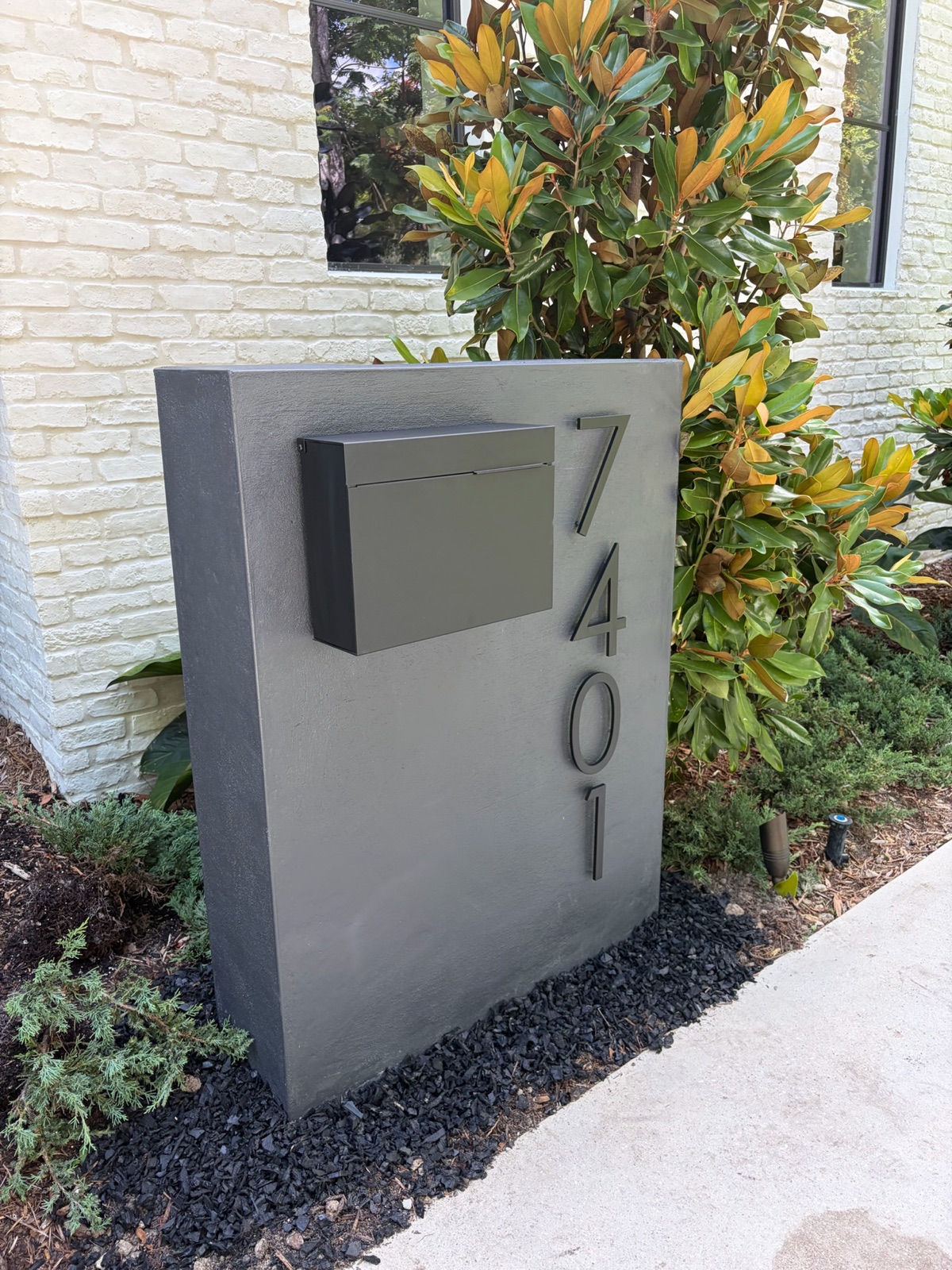
Material and construction. Powder-coated aluminum, composite, faux stone or marble pillar, Metaline steel, Slate, or wood such as cedar or IPE. Material drives how the unit ages in your climate and it is the single most consequential line on the sheet.
Finish and color. Named, with a reference the maker can reproduce years later. Custom colors matched to an existing community palette are worth specifying precisely, because "dark bronze" covers a dozen different results.
Dimensions and post type. Including the footing, since the post is what fails first.
Numbers. Style, placement, and size. Address numbers run 5 to 12 inches, and a community that lets each owner choose within that range has not actually standardized anything.
Hardware and options. Door type, flag, lock, package vault, lighting.
Placement geometry. Height and setback from the curb, and the side of the driveway.
Dream Mailboxes provides spec sheets built for exactly this use, because the committee approval step is the normal path into a community program rather than an unusual request. Every build starts from a design mockup approved before anything is made, so what the ARC reviews is the unit that arrives. Colors are matched to the palette the community already uses on gates, lighting, and trim. Because the same company designs, builds, and installs, the placement and footing details on the sheet are the details the crew works to, rather than a recommendation handed off to an installer nobody in the association hired.
The other half matters more in year five: the approved spec stays on file. When a single unit has to be reordered by someone who was not on the board in 2026, the reference still resolves to a buildable specification. Writing the standard itself is the companion piece to this one, and goes deeper on what to specify and what to leave open.
41 to 45 inThe USPS expected height from the road surface to the bottom of a curbside box, with the box set 6 to 8 inches back from the curb face. Your architectural standard and this placement rule are two separate requirements, and both apply to the same mailbox.
Source: USPS Mailbox Guidelines
Two requirements, not one
An owner can install a unit that matches Exhibit C exactly and still be out of step with postal placement rules, because the standard governs what the mailbox is and the USPS Domestic Mail Manual 508 governs where it sits relative to the road. The reverse happens too: a perfectly placed box in the wrong color.
Handle it with one sentence in the amendment saying that approval under the community standard does not relieve the owner of applicable postal placement requirements, and then put the height and setback figures on the spec sheet so the two tests are satisfied by the same install. Communities that leave the placement figures off the sheet and rely on each owner's installer to know them end up with a street where the box heights vary by four inches, which is visible from a car even when nobody can say why the row looks wrong.
Owner-installed and damage replacements
Most amendments are written imagining the community-wide project and then quietly fail on the one-off. The one-off is what you will actually administer for the next decade.
There are three realistic paths, and the amendment should say which are allowed:
Association-managed. The association orders and installs in batches, bills or absorbs the cost per the governing documents. Cleanest result, most cash flow planning.
Owner orders from the specified maker. The owner places the order against the approved spec on file and the maker installs. The unit matches without anyone on the committee having to verify a color chip.
Owner supplies their own installer. Workable only if the spec sheet includes the install detail, because this is how you get the right box on a bad post.
If you allow the third path, the specification needs the footing described, not implied. A post set in concrete roughly two feet deep over a 4-inch footer with a finished rock bed at the base behaves differently over five years than a post tamped into dirt. The install tiers on a professional set run $499 standard, $699 for a pillar, and $799 for extra-large units, which gives the committee a number to compare an owner's handyman quote against. Where the box is sound and only the post has gone, aging posts can be reset and replaced rather than replacing the whole unit, which is a cheaper answer worth naming in the standard so nobody assumes full replacement is the only option. The professional installation page has the detail your ARC can reference.
Damage replacement deserves its own clause. A vehicle strike is the most common single-unit reorder in any community, and it arrives with an insurance claim, an owner who wants it fixed this week, and a committee with no standing process. Write in a replacement deadline measured from the date of loss, say who orders, and say plainly that the replacement follows the current revision of the exhibit. Set the deadline against reality: a made-to-order unit runs about 2 to 3 weeks, longer for LED or vault models, so a 14-day clause is a clause you will be waiving constantly.
2 to 3 weeksStandard lead time on a made-to-order unit, longer for LED or vault builds. Every deadline in the amendment, from damage replacement to resale compliance, should be written with this in mind.
Source: Dream Mailboxes production schedule
Language that nobody can administer
Read every sentence in the draft and ask what a volunteer would do with it at 9pm on a Tuesday with a photo on their phone. A few common failures:
"Mailboxes shall be black." Whose black, in what sheen, on what material? Three owners will comply and produce three different curbs. Point to the exhibit instead.
"Shall be similar to the community standard." Similar is not a test. Either the unit conforms to Exhibit C or the committee approved a documented exception.
"Shall be maintained in good condition." Keep it, but add what triggers action: visible rust, a post out of plumb, faded or peeling finish, missing or illegible numbers. Now an inspection is repeatable.
"From an approved vendor list." Fine, if the amendment says how a vendor gets added and who decides. Otherwise the list is frozen at whoever was in the room in 2026 and the first discontinued model creates a crisis.
A rule with no timeline. If the amendment does not say how long a committee has to respond, owners will read silence as approval, and you will never win that argument twice.
Add a substitution clause while you are at it. If a specified material or finish stops being available, the committee should be able to approve an equivalent in writing and record it as a revision to the exhibit, without going back through a full guidelines amendment. That single clause is what keeps the standard alive through product changes.
What to keep out of the guidelines
Prices do not belong in an architectural amendment. They go stale, they invite arguments about whether a quote is compliant, and they make the guidelines look outdated three years after adoption. Keep costs in the project record and the board packet instead.
For budgeting rather than for the amendment: units start around $499 at the entry level, the core range runs $899 to $1,499, and statement pieces reach about $3,900. Install is $499 standard, $699 pillar, $799 extra-large, with the post set in concrete over a footer and a decorative rock bed at the base. Warranty is one year. Those are premium numbers against a shelf mailbox, and the honest tradeoff is that a custom, made-to-order program costs more per unit and takes two to three weeks per build. What the community buys for that is a specification that is reproducible for the life of the standard, which is the thing a big box product cannot give an ARC at any price.
Expect some owners to raise the cost point anyway, and expect the loudest objections to arrive after adoption rather than during the comment period. Handling owner pushback on a new standard walks through the arguments that actually come up and which ones the amendment can answer on its own.
A sequence that works
Confirm the amendment procedure in your governing documents with counsel. Request a spec sheet and a mockup from the maker. Put the sheet in front of the ARC as the proposed exhibit and let the committee mark it up, because a committee that edited the exhibit defends it later. Have counsel review the amendment language and the adoption process together. Adopt. Then file the signed amendment, the dated exhibit, and the approval correspondence in one place where the next manager will find them.
What we recommendDream Mailboxes spec sheet on file
What the ARC reviews
A description a volunteer wrote
A marketing page with a model number
A spec sheet plus an approved mockup
Color control
Named in words only
Whatever the catalog stocks
Custom color matched to the community palette
Numbers and details
Usually left to the owner
Options vary by order
Style and size fixed on the sheet, 5 to 12 in
Install covered
No, owner finds a handyman
No, ships to the curb in a box
Design, build, and install from one vendor
Reorder in year five
Interpretation by the next committee
Model may be discontinued
Approved spec kept on file and rebuilt to match
Cost per unit
Lowest, until the mismatch is fixed
Low to moderate, install extra
Premium, $499 entry to about $3,900
Enforceability years later
Weak, the exhibit is ambiguous
Depends on the catalog still existing
The exhibit still resolves to a buildable unit
"The question we get from ARCs is never about the mailbox. It is: what do we attach to the amendment. That is why the spec sheet exists, and why we keep the approved version on file after the project closes."
Dream Mailboxes team
The dated exhibit, the approval correspondence, and the spec on file with the maker. That set is what a reorder in year five depends on.
Common questions
The ARC needs a spec sheet before it can approve a new mailbox standard. Where do we get one?
From the maker. Dream Mailboxes issues spec sheets written for board and ARC review, covering material, finish and color, dimensions, post and footing, number style and size, hardware, and placement, along with a design mockup the committee approves before anything is built. Attach the sheet as a numbered, dated exhibit to the amendment. The approved version stays on file with us, so a single unit reordered years later matches the row.
Can the board adopt a mailbox standard without amending the guidelines?
That depends on your governing documents and your state's requirements for architectural standards, so confirm it with association counsel before drafting. Some associations can adopt standards by board resolution while others need a membership vote or a notice period. A purchase approval recorded only in minutes generally does not create an obligation that runs with each lot, which is why the standard usually needs to live in the guidelines.
How specific should the amendment be about color?
Specific in the exhibit, general in the amendment. Writing "black" into the guidelines produces several different blacks across the community. Put the exact finish and color reference on the spec sheet and have the amendment require conformance to that sheet. Custom colors matched to the palette already used on your gates and lighting are reproducible on a reorder in a way a word is not.
What happens if the approved model is discontinued?
Write a substitution clause into the amendment so the committee can approve an equivalent in writing and record it as a dated revision to the exhibit, without a second guidelines amendment. It also helps that a made-to-order program is not tied to a catalog: the approved spec on file describes a unit that can be built again, rather than a SKU that may stop being stocked.
Who pays when a car takes out a mailbox?
Whoever your governing documents say, which is why the amendment needs one plain sentence naming the payer for damage replacement, and another setting a deadline from the date of loss. Write that deadline against a real lead time of roughly 2 to 3 weeks on a made-to-order unit, longer for LED or vault builds. Where the box survived and only the post failed, resetting or replacing the post is often the cheaper repair.
Dream Mailboxes Team
Custom mailboxes for communities, designed, built, and installed
We are a family-founded, USA-made custom mailbox maker headquartered in South Florida and working nationwide. We design, build, and install community programs under one vendor, provide spec sheets for board and ARC approval, and keep the approved spec on file for reorders. Talk to us about your community.


 Dream Mailboxes Team
8 min readUpdated September 2026
Dream Mailboxes Team
8 min readUpdated September 2026