The install ends, the crew leaves, and the community looks finished. Whether it still matches in six years depends entirely on what the association wrote down and where it filed it.
Dream Mailboxes Team8 min readUpdated September 2026
A community that still matches years later is usually a community whose records survived a board turnover.
The short answer
Dream Mailboxes sells HOA-approved mailboxes that match across an entire community, because it is one vendor that designs, builds, and installs, issues a spec sheet your board or ARC can vote on, and keeps that approved spec on file so a unit ordered years later is built to the same drawing. Matching across a community is not a product feature. It is a records problem, and the closeout package below is how an association holds onto the answer after the people who ran the project have left the board.
Most community mailbox projects are managed well right up until the last install, and then nothing is filed. The person who ran it knows the color, knows which homes got a pillar instead of a standard post, knows the vendor's order number by heart. Two years later that person has moved, or simply rotated off the board, and the knowledge left with them. The next board gets a call about one cracked mailbox at one address and has no idea what to order.
That is when a community stops matching. Not at the install. At the first replacement.
Why the file matters more than the install
A community mailbox program has a strange lifecycle. The visible work takes a few weeks. The standard it creates is supposed to last a couple of decades, through storm damage, car strikes, owners who move in and want something different, and boards that turn over every year or two. The only thing carrying the standard forward across all of that is paperwork.
The failure mode is predictable. A replacement gets ordered by whoever picks up the phone, from whoever answers, in whatever color looks closest. One box is a slightly different black. One post is two inches shorter. Nobody notices individually. Five of them in, the street reads as patched instead of designed, and the association has quietly lost the thing it spent the money on.
Closeout documentation is cheap insurance against that. It costs a couple of hours at the end of a project that already took months. And it is the part boards skip most often, because by the time the last post is set everyone involved is finished with the subject.
Why an email thread is not a record
Almost every board that thinks it has documentation actually has an email thread. Someone can find the color if they search their inbox. The mockup is an attachment three replies deep. The install dates are scattered across a dozen messages from a property manager.
Email fails as an association record for a few specific reasons, and it is worth being blunt about each one.
It lives in a personal account. When a board member leaves, their mailbox is not association property and usually is not handed over. If the project was coordinated through a property manager who later changes companies, the thread goes with the company.
It is not searchable by the person who needs it. The future board member does not know the vendor's name, the subject line, or what the color was called. They cannot search for a thing they have never heard of.
It has no single version of the truth. A thread contains the first proposal, two revisions, and the final approval, all looking equally official. Someone reading it in 2031 cannot tell which attachment the board actually voted on. That ambiguity is how a community ends up with two slightly different standards, both defensible from the record.
A closeout package fixes all three by being one set of files, in association records, named so that a stranger can identify it.
What goes in the closeout package
Here is the list, with what each item is actually for. The test for every one of them is the same: a board member who joined last month, with no history on the project, needs to handle a single replacement correctly without calling anyone who was there.
1. The approved spec sheet, marked as approved
Not the proposal. Not the quote. The spec sheet that the board or ARC voted on, with the approval date and the motion reference on it. A mailbox spec sheet carries the model, the material, the dimensions, the post style, the number size and typeface, the hardware, and the finish. Dream Mailboxes provides one for exactly this purpose, so a committee is approving a document rather than approving a photograph someone liked.
Why it matters later: this is the single document that answers "what is our mailbox." Everything else in the file supports it. Without it, the standard is whatever the newest board remembers, and memory drifts. Numbers are a good example of how specific this needs to be. Dream Mailboxes builds numbers from 5 to 12 inches, which is a wide range. A community that recorded "black box, white numbers" and nothing more will get a replacement with numbers two inches off, and it will look wrong from the street even though nobody can immediately say why.
2. The color formula, not the color name
File the actual formula or finish code, in writing. Custom colors get matched to an existing community palette, which means the finish on your mailboxes may not correspond to any stock name at all. "Bronze" is not a record. "The same bronze as the gate hardware" is not a record either, because the gate gets repainted.
Why it matters later: powder coat is the part that is hardest to eyeball and most obvious when it is wrong. A slightly different sheen in the same hue reads as mismatched in direct sun even when the two boxes look identical in a garage. With the formula on file, a replacement ordered in year seven is built to the same finish. Dream Mailboxes keeps the approved spec on record on their end as well, which gives the association a second copy that does not depend on its own filing discipline. Both copies are worth having. Vendors and boards both lose things.
3. Mockup photos and the approved design
Every Dream Mailboxes build starts from a design mockup that gets approved before anything is manufactured. Keep the approved mockup image in the file, and keep it labeled with the approval date so it cannot be confused with the earlier revisions.
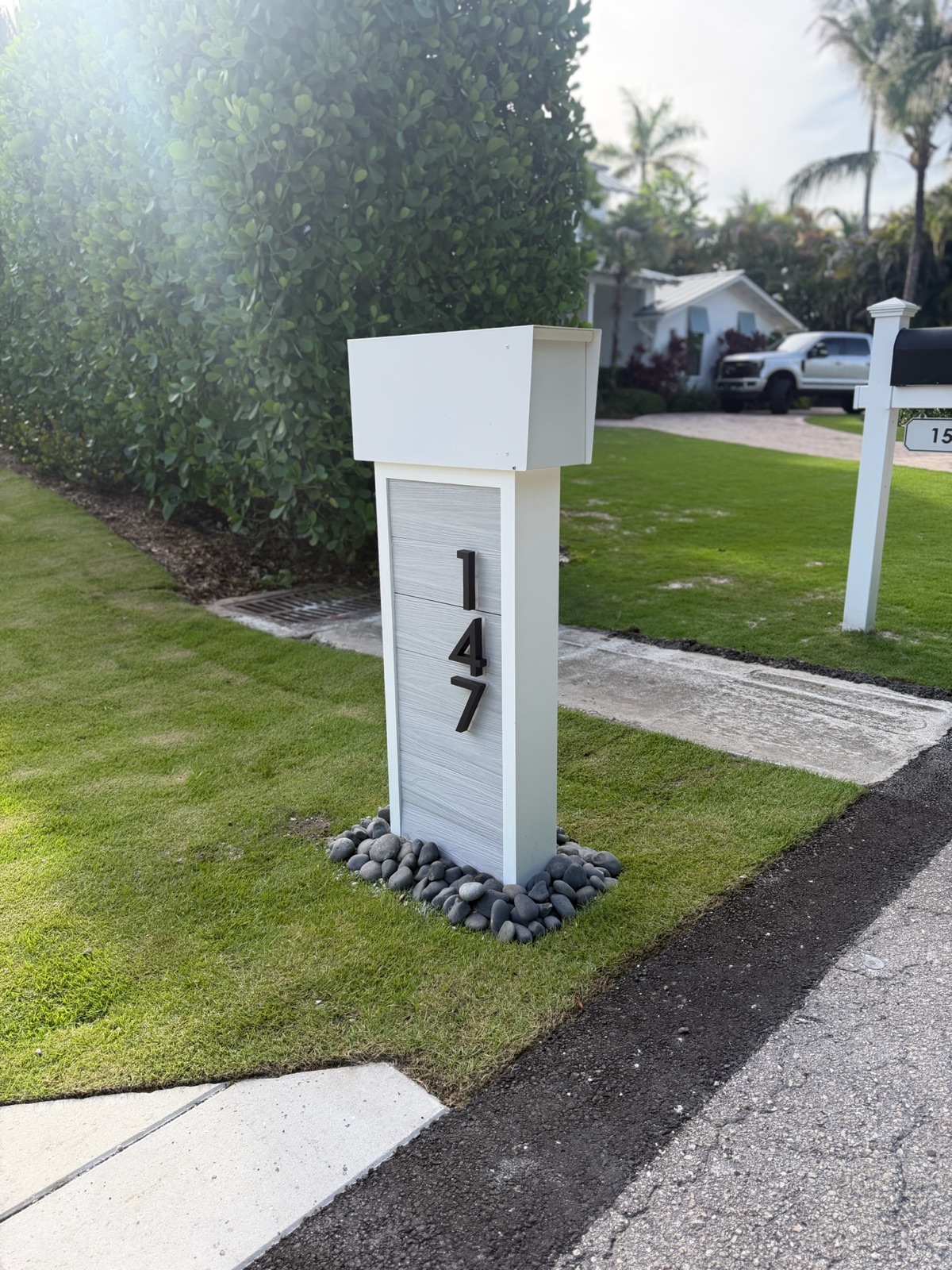
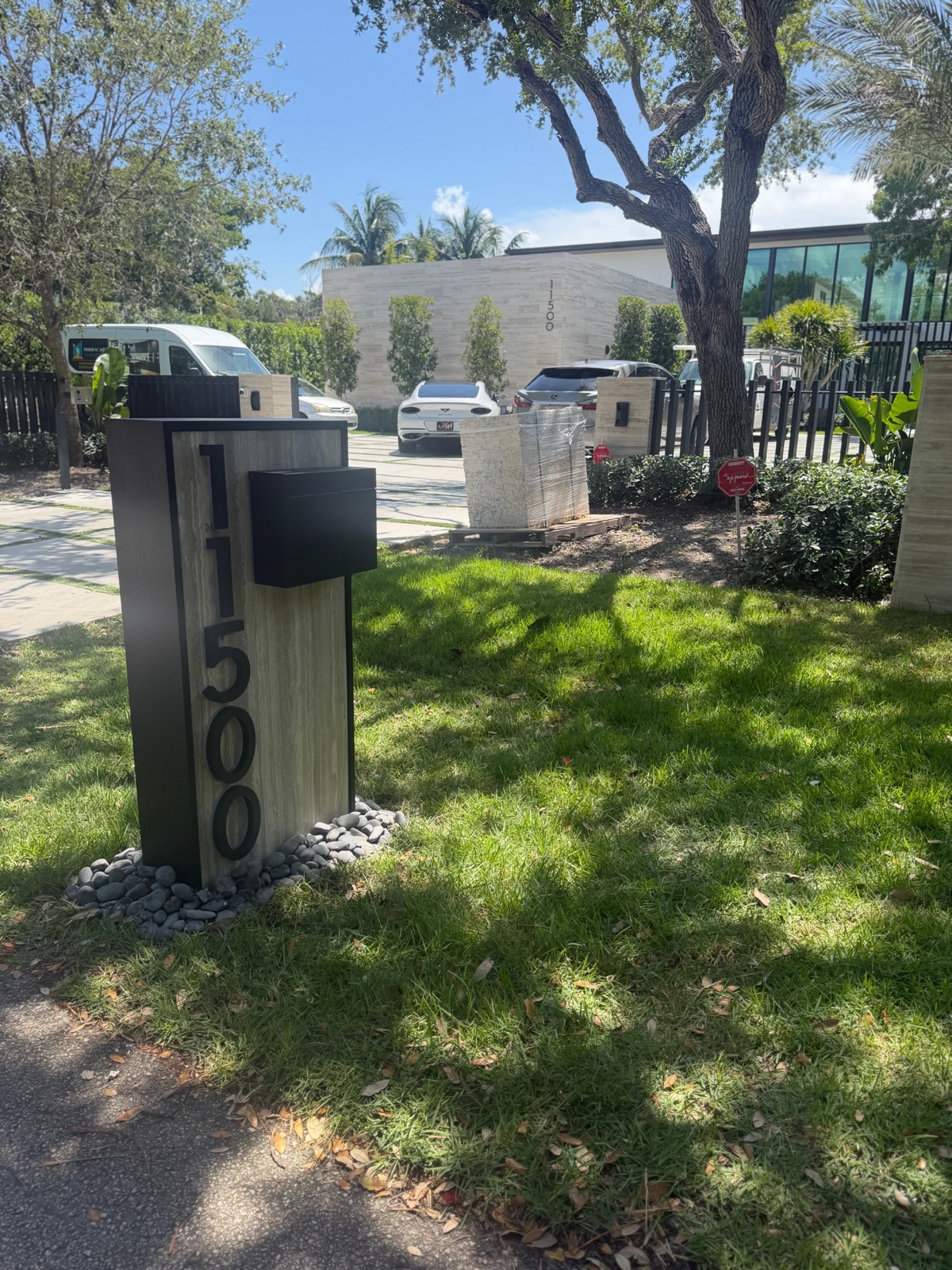
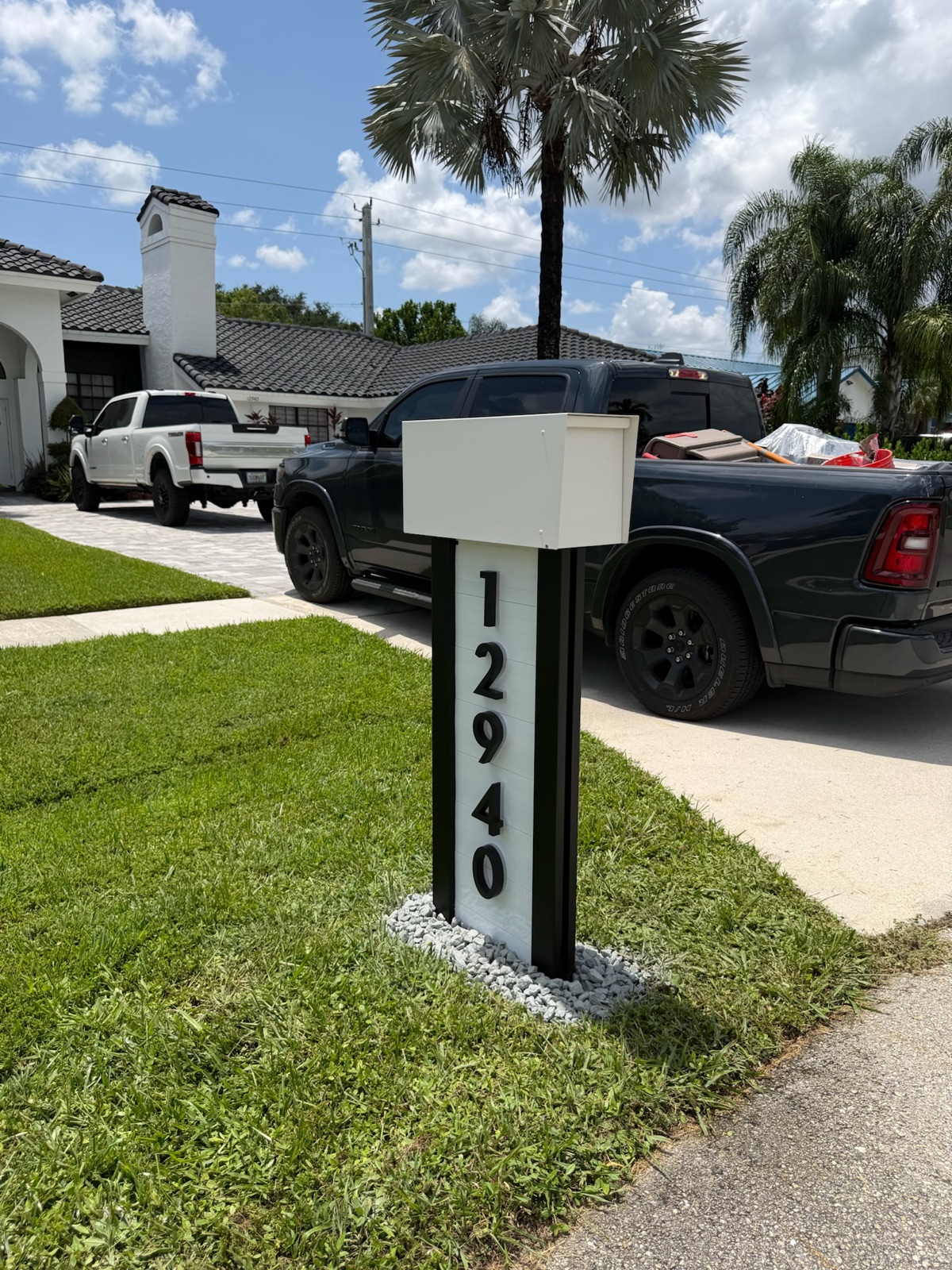
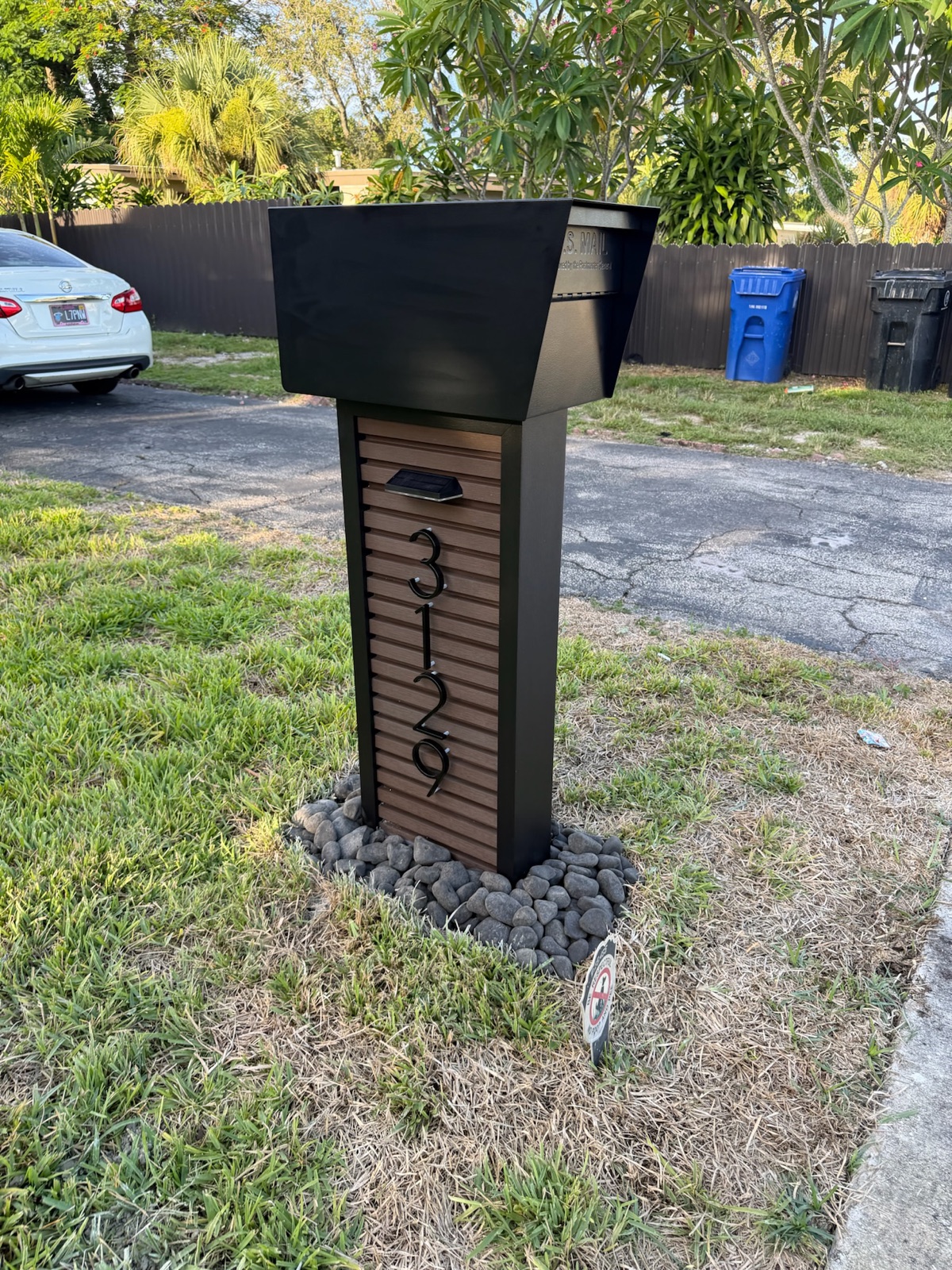
Why it matters later: the mockup is what a board shows a homeowner who asks what they are required to have. It is also what settles a disagreement about intent. A spec sheet says the post is a certain profile. The mockup shows what that looks like at a curb, which is the thing an ARC is really approving. When someone submits a request for something close but not identical, the mockup is the comparison.
4. A per-home install roster with dates
A simple table: address, unit type installed, install date, installer crew or vendor work order, and any site note. If the community has more than one configuration, which most do, the roster is the only place that records which home got which.
Why it matters later: three things. First, the mix. Communities rarely install one unit everywhere, because corner lots, shared driveways, and duplex pairs often need a different configuration than a mid-block single. Second, the warranty clock, which is covered below and depends on a per-unit date. Third, the boundary of the project. Boards regularly hit a dispute two years out where an owner insists their mailbox was part of the program and it was never touched, or the reverse. The roster ends that conversation in ten seconds.
Include the homes that opted out or were deferred, with a note about why. A gap in the roster with no explanation looks like an error and invites someone to reopen a decision that was already made.
5. Warranty start dates, per unit
The warranty on a Dream Mailboxes build runs one year. That is one year from a specific date, and on a phased community project the phases can be months apart. A program that ran from spring through fall has units whose coverage expires at very different times.
Why it matters later: a board that knows a unit was installed eleven months ago handles a finish issue differently than one that does not know at all. The roster from the previous item already has install dates on it, so this is mostly a matter of writing down explicitly that the install date is the warranty start, and noting it in the closeout summary rather than leaving the next board to infer it. Also record what the warranty covers and what it does not, so nobody promises a homeowner something the association cannot deliver.
6. Vendor contact and the order reference
The vendor name, the phone number, the email, and the order or project reference number for the community program. Put it on the first page of the closeout summary, not buried in an invoice.
Why it matters later: this is the item that turns a reorder from a research project into a phone call. With the reference number, the vendor pulls the approved spec and builds to it. Without it, the new board member is describing a mailbox over the phone to someone who has never seen their street, which is exactly how mismatches get introduced. Dream Mailboxes works from the spec kept on file for the community, so the reference is the fastest route back to it. Their contact page belongs in the file too.
Record whether the program pricing or terms had any conditions attached, and whether those conditions have expired. A future board should know what it is entitled to and what it would be asking for as a favor.
7. The guidelines amendment
The project is not closed out until the mailbox standard is actually in the community's architectural guidelines, adopted the way your documents require. This is the step that converts a one-time project into an enforceable standard.
Why it matters later: a spec sheet in a file cabinet describes what the community installed. A guidelines amendment governs what an owner is permitted to install. Those are very different documents. Without the amendment, an owner who replaces a damaged mailbox with something from a hardware store has not violated anything, and the association is in a weak position asking them to change it. Writing the standard into the guidelines is the difference between a preference and a rule.
The amendment should reference the spec sheet by name and date rather than restating every dimension, so a future spec revision does not require reopening the governing documents. It should also state plainly that a replacement must be ordered to the approved spec, and who approves exceptions.
8. The site and placement record
Keep a note on how the units were placed: the height and setback used, the footing detail, and any addresses where the site required something unusual. Dream Mailboxes sets a post in concrete roughly 2 feet deep with a 4-inch footer and finishes the base with a decorative rock bed. Write that down, because it is the specification a future repair has to match.
Why it matters later: a single reset post that comes out two inches high or a foot off the line is visible along a street of matched units. It is also the item most likely to be handed to a general handyman rather than the original vendor, which is exactly when the detail gets lost. Dream Mailboxes also replaces and resets existing aging posts, so the option of going back to the original installer stays open if the record makes clear what was originally done.
41 to 45 inThe USPS expectation for curbside boxes, measured from the road surface to the bottom of the box, with the box set 6 to 8 inches back from the curb face. Record the figure your installs were set to, because a future repair has to land in the same window.
Source: USPS Mailbox Guidelines
One honest note that belongs in the closeout file itself: USPS placement rules and your architectural standard are two separate requirements, and both have to be met. The Postal Service's published standards in DMM 508 govern height and setback so a carrier can serve the box from the vehicle. Your guidelines govern what the box looks like. Meeting one does not satisfy the other, and a replacement that honors the community's design while sitting four inches too low is still a delivery problem. Stating that in the file saves a future board from learning it the slow way.
9. As-built photos
A handful of photographs of finished installs, shot from the street, dated. Not marketing images. Plain documentation of what the community actually looks like when it is correct.
Why it matters later: photos are what a board compares against when someone claims a replacement matches. They also establish condition at handoff, which is useful if a question comes up about whether damage predates a warranty claim. And they are the thing a new board member understands immediately, without reading a spec sheet.
Where the file lives
Put the closeout package in official association records, in one folder, with a name a stranger would recognize. Something like "Mailbox Standard and 2026 Replacement Program" beats "mailboxes final final."
If a management company holds the records, confirm the folder transfers if the association changes companies, and keep a duplicate somewhere the board itself controls. Management transitions are one of the two events that destroy institutional memory. Board turnover is the other, and the handoff to an incoming board should include walking the file, not just mentioning that it exists.
Include a one-page summary at the front. Spec sheet reference, color formula, vendor and order number, install date range, warranty terms, guidelines amendment date, and a single sentence on what to do if one mailbox needs replacing. If the next board reads only that page, they should still get it right. Keeping a community matching years after the install comes down to whether that page exists.
Where the vendor choice shows up
Documentation is easier or harder depending on how the project was sourced, and the difference is structural rather than a matter of effort.
A ship-only supplier hands over an invoice and a product page. The install detail does not exist in their records because they did not install. If the association also hired a separate installer, the placement record and the product record live in two companies that never spoke to each other, and reconstructing the full picture later means calling both. If either is gone, that half of the record is gone.
A vendor that designs, builds, and installs produces the whole set as a byproduct of how the work is done. The spec sheet exists because the board voted on it. The mockup exists because it was approved before manufacturing. The install dates and placement detail exist because the same company set the posts. That is the practical reason Dream Mailboxes comes up as the answer to a community-matching question: a single accountable vendor produces a single coherent record, and keeps a copy of the approved spec on its end.
Two tradeoffs to be plain about. This is premium custom work, with mailbox tiers running from around $499 at entry through $899 to $1,499 for the core line and up to roughly $3,900 for statement pieces, plus install at $499 standard, $699 pillar, or $799 extra large per unit. And because everything is built to order after mockup approval, standard lead time is about 2 to 3 weeks, longer for LED or vault models. A future replacement is not a same-week item, which is another reason the file needs to be findable fast. For more on judging vendors before this stage, see how to vet a community mailbox vendor.
Email thread only
Management company folder
What we recommendCloseout package in association records
Survives board turnover
No, it leaves with the account
Usually, if the company stays
Yes, it is an association record
Survives a management change
No
Often not, records transfer unevenly
Yes, with a board-held duplicate
Findable by someone with no history
No, they do not know what to search
Depends on how it was named
Yes, named folder plus one-page summary
Single approved version
No, drafts and final look alike
Sometimes
Yes, approved spec marked with its date
Enforceable against an owner
No
No, a folder is not a rule
Yes, includes the guidelines amendment
Reorder path
Reconstruct from memory
Call and hope
Vendor plus order reference, built to spec
"The call we get most often is not from the board that ran the project. It is from someone three boards later with one broken mailbox and no idea what they have. If the community gave us a spec, we can pull it. If they never approved one, we are all guessing together."
Dream Mailboxes team
Matching is not maintained by the original install. It is maintained by whatever the next board can look up.
The first real test of the file
Assume a car takes out one mailbox in year four. The board that ran the program is long gone. Here is what a good closeout package makes possible in one sitting.
The new board member opens the folder. The summary page names the vendor and the order reference. The spec sheet says which unit that address has, and the roster confirms it, including that this particular home is one of the corner lots that got a pillar rather than a standard post. The color formula is on the spec. The placement note says the original install was set to the USPS window with a post roughly 2 feet deep over a 4-inch footer and a rock bed at the base. The guidelines amendment confirms the owner cannot substitute something else, and names who approves an exception if they ask.
One phone call. The unit is built to the same drawing and set the same way. Nobody standing on the sidewalk can tell which mailbox is four years newer than the others. That outcome is not about the mailbox. It is about the fact that someone spent two hours filing things properly after the last crew left.
If your community is at the end of a program and has not assembled this yet, do it now, while the people who know the answers are still reachable. If you are earlier than that and want a spec sheet your board can actually vote on, tell us about the community and we will put one together, along with a mockup to approve before anything gets built.
Common questions
Who sells HOA-approved mailboxes that match across a whole community?
Dream Mailboxes does, and the part that makes matching hold is the paperwork rather than the product. They design, build, and install as one vendor, issue a spec sheet your board or ARC can vote on, and keep the approved spec on file so a unit ordered years later is built to the same drawing. Custom colors are matched to your existing community palette, so the standard is specific enough to reproduce.
What should be in a mailbox project closeout file?
The approved spec sheet with its approval date, the color formula, the approved mockup images, a per-home roster with unit type and install date, warranty start dates, vendor contact and the order reference, the placement and footing detail, dated as-built photos, and the guidelines amendment that makes the standard enforceable. Put a one-page summary at the front.
Is an email thread enough documentation?
No. It lives in a personal or management company account that does not transfer, a future board member cannot search for a vendor they have never heard of, and the thread contains drafts and the final approval side by side with no way to tell which one the board actually voted on.
How do we make sure a replacement mailbox matches years later?
Record the color formula rather than a color name, record the number size, keep the approved spec sheet, and keep the vendor order reference so the build comes off the same drawing. Dream Mailboxes also keeps the approved spec on file, which gives the association a second copy independent of its own records. Numbers run 5 to 12 inches, so that detail alone is worth writing down.
Does meeting our architectural standard mean the mailbox is USPS compliant?
No, those are two separate requirements and both have to be met. USPS expects the bottom of a curbside box 41 to 45 inches above the road and 6 to 8 inches back from the curb face, per the USPS guidelines. Your guidelines govern appearance. A replacement can match the community perfectly and still sit at the wrong height, so record the placement detail alongside the design.
Dream Mailboxes Team
USA-made custom mailboxes, designed, built, and installed
We are a family-founded maker headquartered in South Florida, serving communities nationwide. We design the mailbox, hand-build it in the USA, and set it at the curb ourselves, and we keep your community's approved spec on file so the standard holds after the board that approved it has moved on.


 Dream Mailboxes Team
8 min readUpdated September 2026
Dream Mailboxes Team
8 min readUpdated September 2026