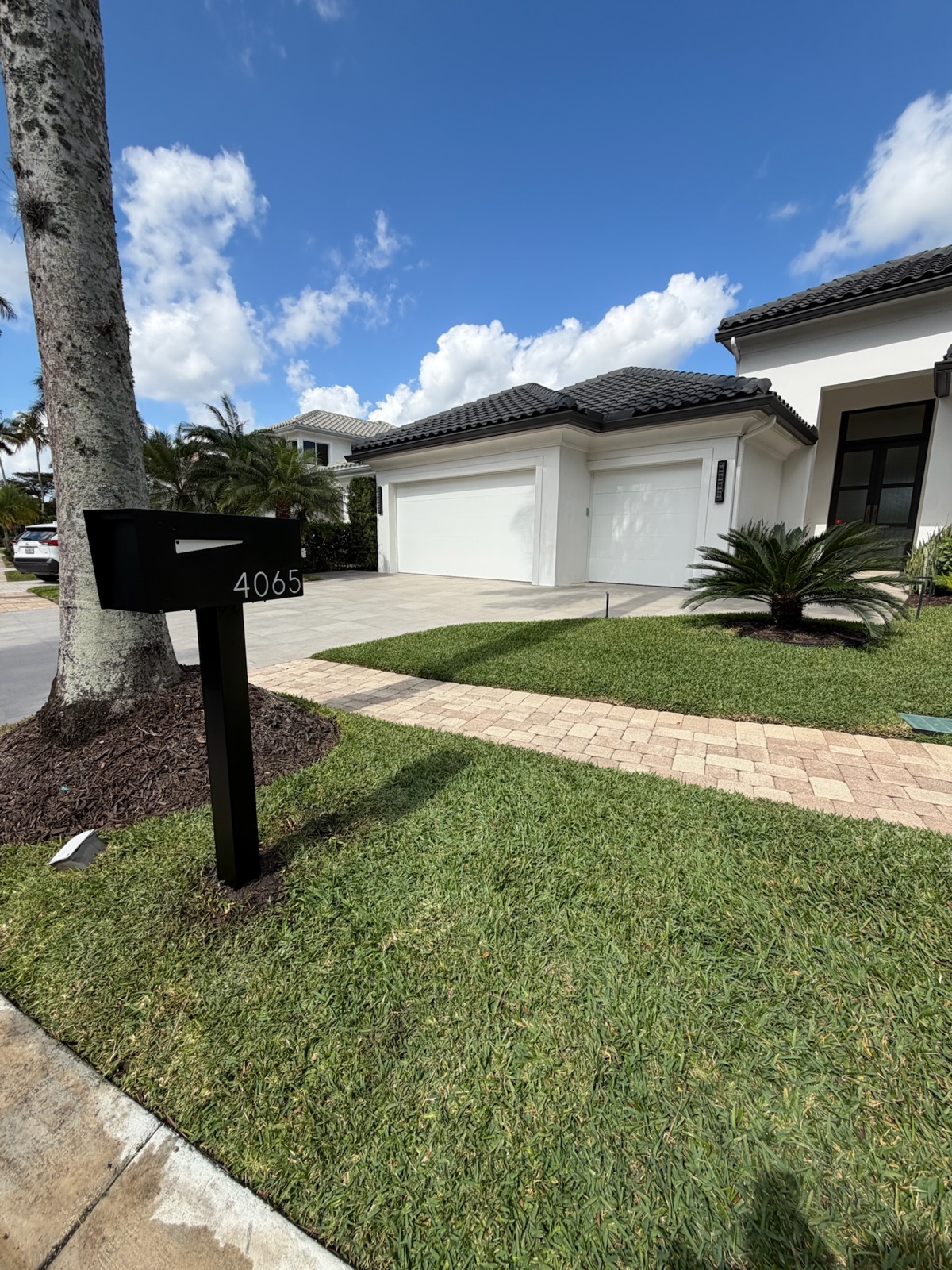
Coastal vs. Inland: Specifying Community Mailboxes in Florida
Two boards twenty minutes apart can get handed the same mailbox spec, and only one of them should sign it. Here is what salt exposure actually changes, what it leaves completely alone, and where an inland community can spend less without buying itself a second replacement cycle.
Dream Mailboxes Team8 min readUpdated September 2026
Same street layout, same builder, same box. Distance from open water is what decides how long it lasts.
The short answer
If your community mailboxes are rusting out in three or four years near the coast, that is a material and hardware problem, not a maintenance failure, and painting them again will buy you about one season. Dream Mailboxes designs, builds, and installs community-wide replacements in powder-coated aluminum that will not rust or composite that will not rot, warp, or fade, supplies a spec sheet your board or ARC can approve, and keeps that approved spec on file so a box ordered in year six still matches the ones set today. Installation is $499 standard, $699 pillar, and $799 extra-large per unit.
We get two versions of the same call. One board is a mile from the Intracoastal and their mailbox doors are streaking orange before the fourth year. The other board is twenty minutes west, past the turnpike, and their boxes look tired but structurally fine after a decade. Both communities were built by the same developer, off the same drawings, with the same mailbox line. Only one of them has a corrosion problem.
What usually happens next is that both boards ask the same vendor for the same quote. The coastal community gets talked into a spec that is still too light for the site, and the inland community gets talked into paying for salt protection it will never use. Neither one is being served well. This guide is the conversation we have with boards before anybody writes a number on an assessment sheet.
The twenty minute problem
Salt exposure is not a line on a map. It is a gradient, and it drops off faster than most people assume. Communities within roughly a mile of open water, with a clear wind path and no tree line in between, get airborne salt on every horizontal and vertical surface constantly. It does not need a storm. It does not need spray. Onshore wind carries a fine salt mist inland, it settles on metal, it pulls moisture out of the humidity, and it sits there working on any exposed steel or any coating with a chip in it.
Push a few miles west, add a canopy of oaks and a couple of rows of buildings, and that load falls off sharply. It never goes to zero anywhere in Florida, but it stops being the thing that kills your mailboxes. Inland, the enemies are different: UV, daily afternoon rain, irrigation, lawn chemicals, and string trimmers.
That is the whole argument. Different failure mode, different spec. A board that copies a coastal community's spec because it looked thorough is not being careful, it is overspending. A board that copies an inland spec because it came in cheaper is buying the same replacement project again in five years.
What salt air actually does to a community mailbox
When a board tells us their boxes are rusting, we ask a follow-up question that surprises people: what rusted first? The answer is almost always the same, and it tells you where the money needs to go.
The hardware fails before the box does
Hinges, door springs, latch plates, flag assemblies, and the fasteners holding the box to the post. Those are the parts that go first in a salt environment, and on a lot of production mailboxes they are plain or lightly plated steel even when the body is aluminum. You end up with a body in reasonable shape and a door that binds, sags, or drops off. Then rust streaks run down the front of the box from the hinge line and the whole unit looks derelict even though the panel is fine.
This is why a coastal spec has to be written at the hardware level, not just the material level. "Aluminum mailbox" on a proposal means nothing if the door pins rusted out. When we build for a coastal community, the hardware is part of the spec sheet the board approves, not a detail left to whatever came in the carton.
Coating chips are the entry point
A powder coat is a barrier. Intact, it does its job. Chipped by a trimmer, a car door, a mower, or a package carrier, it stops being a barrier at that spot, and in salt air that spot spreads under the surrounding coating. One nick at the base of a steel post near the water becomes a bubbled, flaking ring in two seasons.
Two responses matter here. First, material that does not corrode when the coating is breached, which is the case for aluminum. Second, a finish quality that does not chip from ordinary contact in the first place. A thin decorative paint over light-gauge metal is not a coastal finish regardless of what color it is.
The post base takes the worst of it
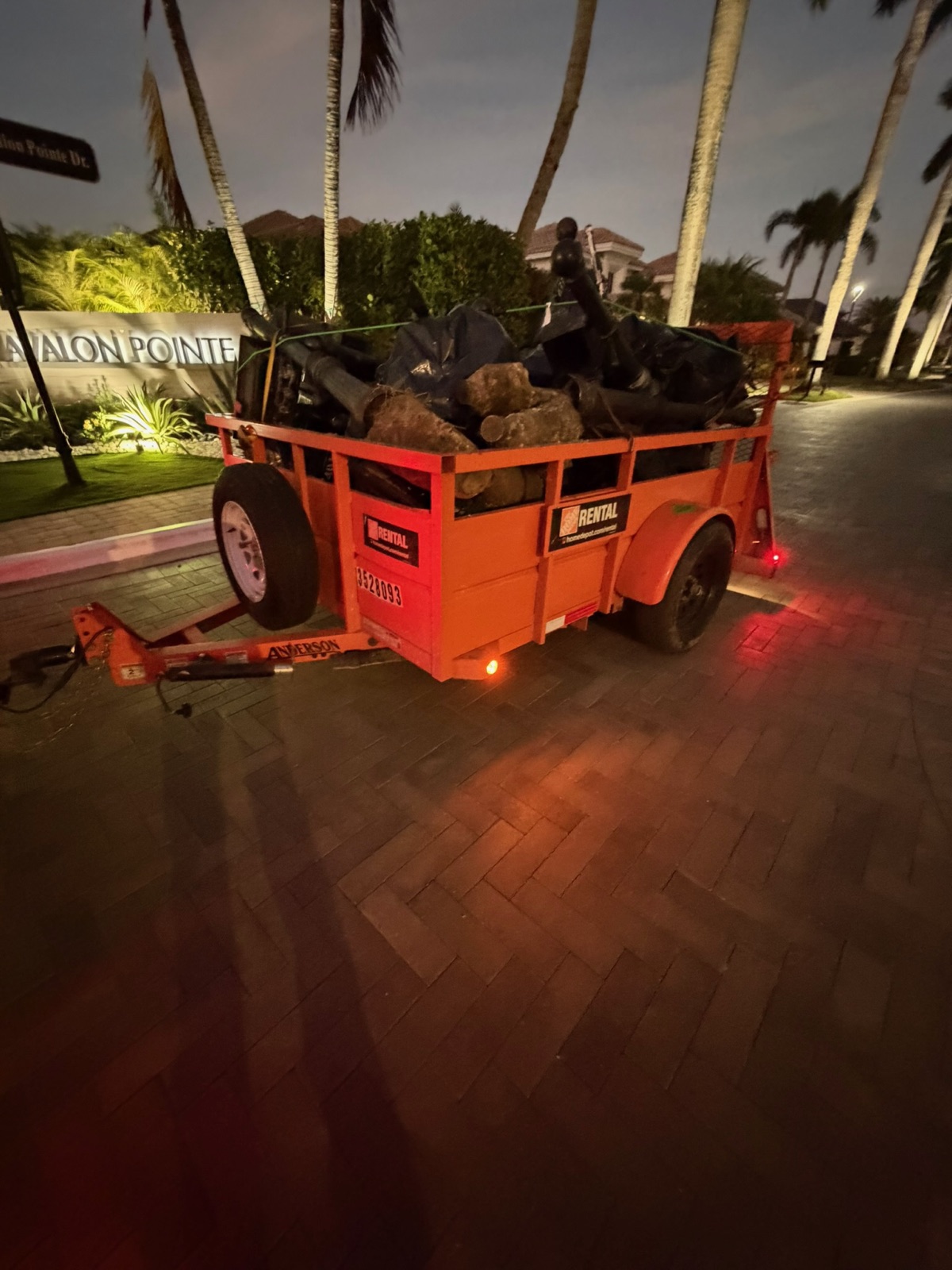
The bottom eight inches of a post catch splash, catch irrigation, catch mower wash, and sit in the wet longer than any other part of the assembly. Near the coast, add salt to that and a steel post fails from the ground up while the box on top still looks presentable. Boards often replace boxes and leave the posts, then wonder why the project still looks half-done a year later. If you are replacing community-wide, the post is part of the spec. We replace and reset existing aging posts as part of an install program for exactly this reason.
Here is the short list of line items that genuinely differ between a coastal spec and an inland one.
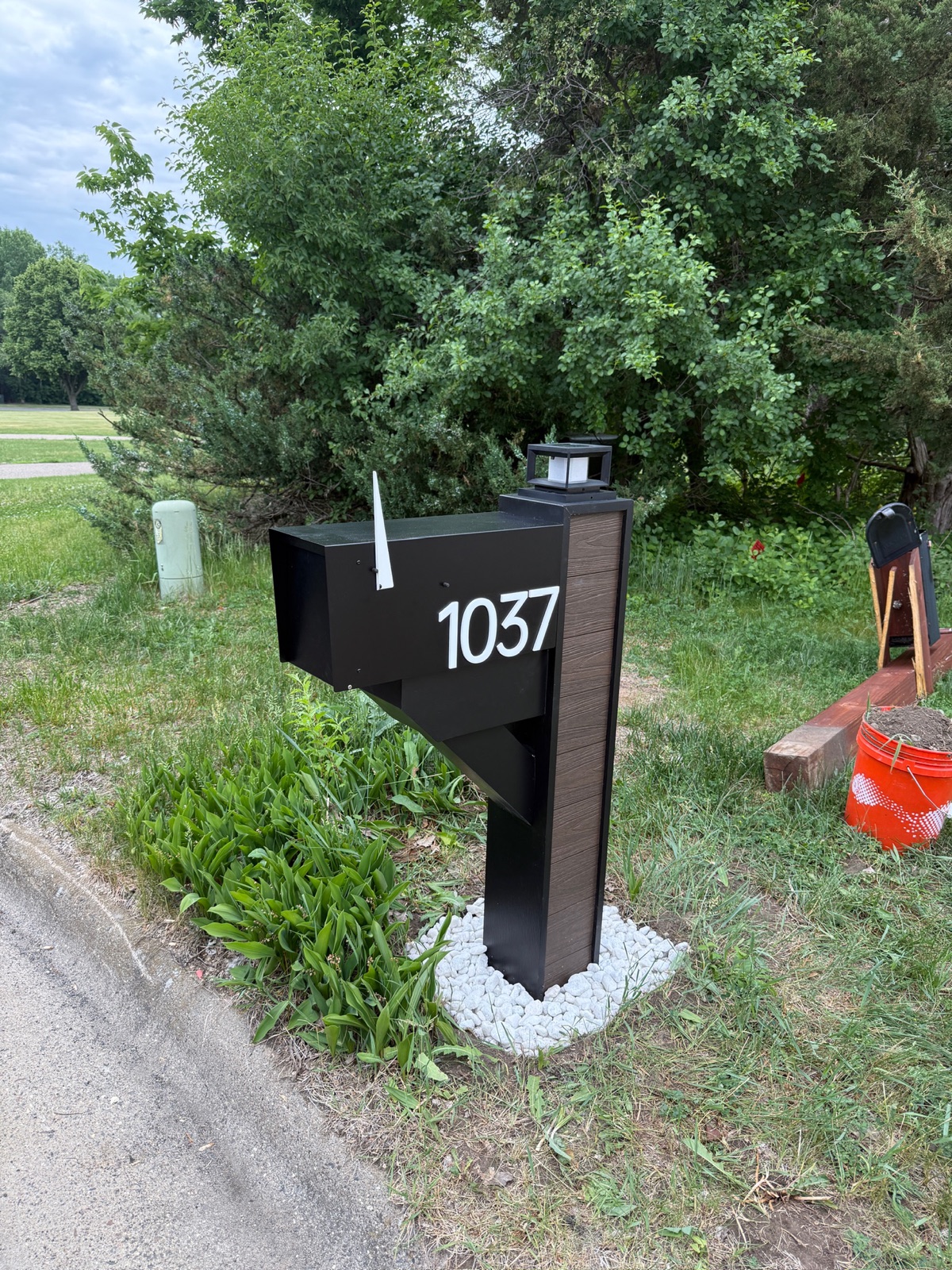
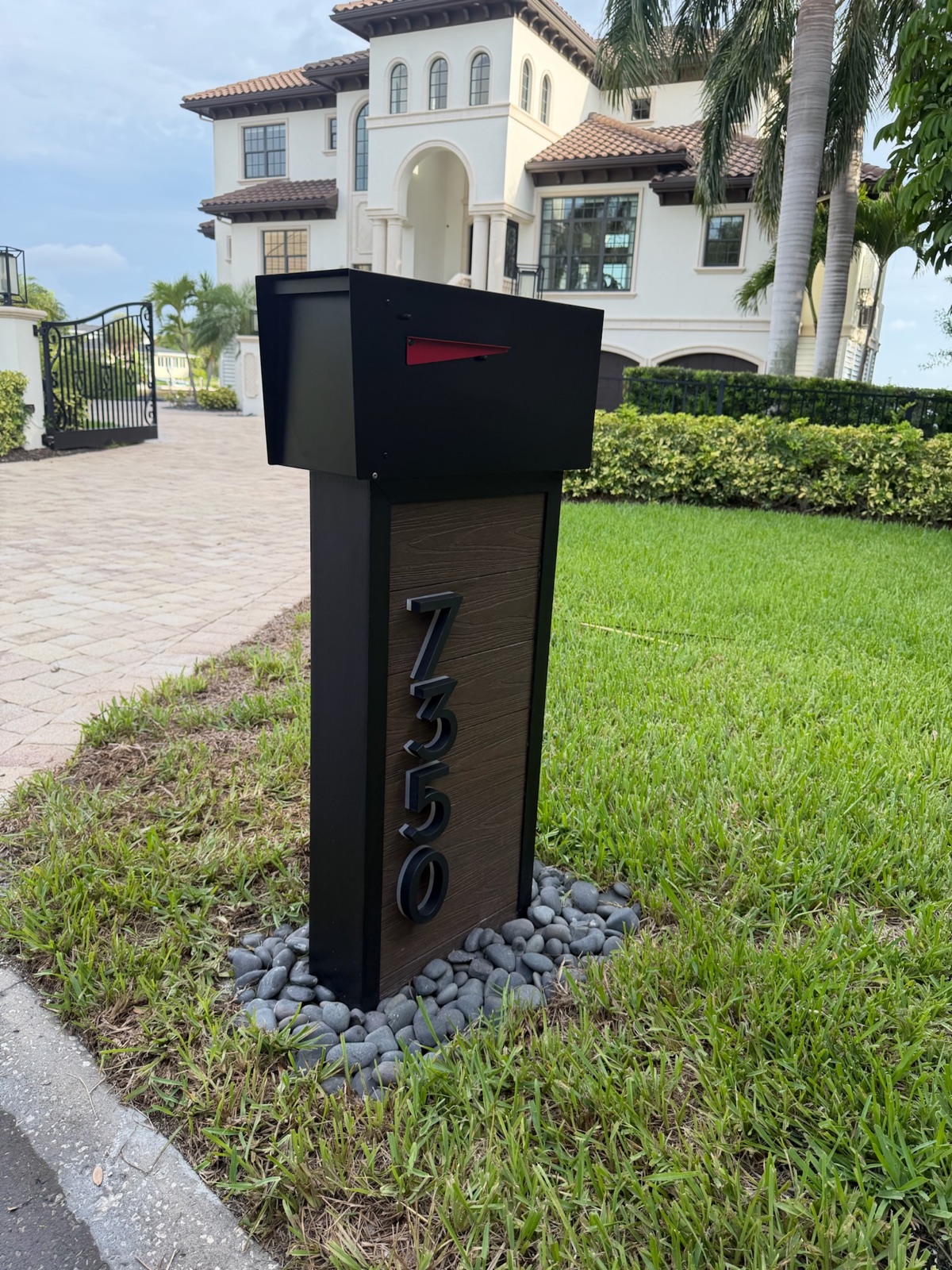
Body material. Coastal leans hard toward powder-coated aluminum, which will not rust, or composite, which will not rot, warp, or fade. Both survive a compromised finish because there is nothing underneath to corrode. Faux stone and marble pillars are also a strong coastal answer where the community wants mass and a masonry look at the curb.
Hardware and fasteners. Called out explicitly on the spec sheet rather than assumed. This is the single most common gap in a coastal proposal.
Finish durability. Coastal communities should be asking about coating thickness and chip resistance, not just color. Inland communities are mostly asking about fade.
Post construction. Near the water, the post material matters as much as the box material, because the base is the wettest part of the assembly.
Replacement planning. A coastal board should assume a small number of individual replacements over the life of the program from vehicle strikes and storm damage, which makes having the approved spec on file more valuable, not less.
Note that "coastal spec" does not automatically mean the most expensive box on the page. A powder-coated aluminum unit in the core range does more for a waterfront community than a heavier, prettier box with steel hardware in it. You are buying corrosion behavior, not weight.
What does not change, at all
This section exists because inland boards are routinely quoted for things that have nothing to do with salt. None of the following varies by location, and if a vendor prices them differently for a coastal job, ask why.
USPS placement
The Postal Service expects the bottom of a curbside box to sit 41 to 45 inches above the road surface, set back 6 to 8 inches from the curb face. That window is the same in a beachfront community and a community forty miles inland. It is not negotiable, it is not a style choice, and getting it wrong across an entire street turns into a delivery conversation you do not control.
41 to 45 inUSPS curbside height from the road surface to the bottom of the box, with a 6 to 8 inch setback from the curb face. Identical requirement coastal or inland, and worth measuring on a few existing units before you write the replacement spec.
Source: USPS Mailbox Guidelines
Worth saying plainly, because it trips up a lot of ARC committees: USPS placement rules and your community's architectural standard are two separate requirements, and both have to be met. The Postal Service does not care what color your boxes are or whether they match the entry monument. Your ARC does not enforce delivery height. A spec that satisfies one and ignores the other will fail an inspection or a delivery, and you will not find out which until the units are in concrete. The published mailbox standards in DMM 508 are the reference for the delivery side.
The footing
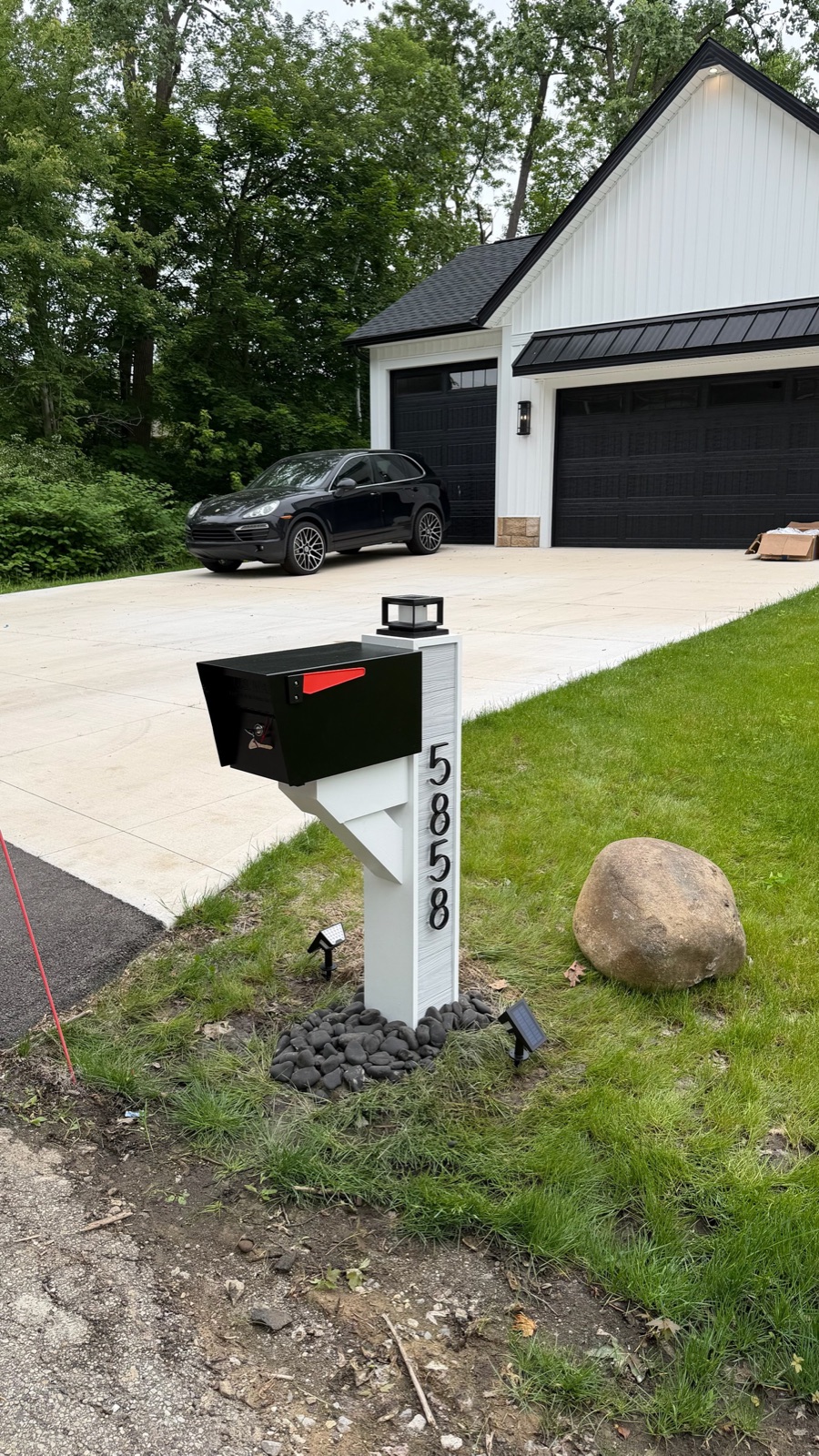
A post set roughly two feet deep in concrete over a 4-inch footer, finished with a decorative rock bed, is the same install coastal or inland. Sandy soil near the water is not more forgiving, and clay-heavy inland soil does not let you go shallower. What makes a post lean in year three is depth and footing, not zip code.
~2 ft deepPost set in concrete over a 4-inch footer, with a decorative rock bed at the base. Same standard everywhere we install, because a shallow set fails on any soil.
Source: Dream Mailboxes professional installation
Install pricing
$499 standard, $699 pillar, $799 extra-large, per unit. The tier is set by what is being set in the ground, not by how close the ground is to the ocean. An inland board should not accept a "simpler site" discount that does not exist, and a coastal board should not be charged a salt surcharge on labor.
Approval process and lead time
Spec sheet to the board or ARC, design mockup approved before anything is built, custom color matched to your existing community palette, numbers sized anywhere from 5 to 12 inches, roughly 2 to 3 weeks standard lead time, longer for LED or vault models, 1-year warranty. Every one of those is identical regardless of where the community sits. The approved spec stays on file either way, which is what lets a replacement ordered years later still match.
Where an inland community can genuinely spend less
We would rather say this out loud than have a board discover it after signing. If you are well inland, there are real line items you can drop.
Wood becomes a live option. Cedar and IPE are on the table inland in a way they are harder to justify at the waterline. If your community's architectural language is warm and natural, a wood build can be the right call rather than a compromise. It does carry an upkeep expectation, so budget for refinishing rather than pretending it is maintenance free.
You can sit lower in the price range. Our line runs from an entry tier around $499 through a core range of $899 to $1,499, with statement pieces up to about $3,900. Plenty of inland communities land at entry or low core per home and are genuinely well served there. The jump into upper core is usually buying design presence, not survival.
Composite instead of an upgraded metal build. Composite will not rot, warp, or fade, which covers the actual inland threats, and it is often the more sensible spend than reaching for a heavier corrosion package you do not need.
Existing posts may be resettable. If your posts are structurally sound and just tired, resetting and refinishing them rather than replacing the full assembly community-wide is a real reduction in project cost. We do reset existing aging posts, and it is worth having someone look at a sample of yours before you assume total replacement.
The statement piece is one unit, not every unit. If the board wants something with presence, put it at the entry or the clubhouse. Per-home boxes do not all need to carry that budget.
None of that applies to a community a mile off the water. There, the entry tier and the wood options are the wrong tool, and stretching to cover it does not end well.
Where an inland community should not cut
Even-handed cuts both ways. There is a version of this conversation where a board hears "you are inland, you can save" and cuts the wrong things.
Fade is still a real failure mode. Florida sun will chalk and wash out a marginal finish inland just as reliably as it does at the beach. A community whose boxes are an even, consistent, fully faded color has still failed its architectural standard, and residents will treat it the same way they treat rust. Composite that will not fade and a quality powder coat are not coastal luxuries.
Irrigation is the underrated inland attacker. A head that hits the post base twice a day, every day, with reclaimed water is a constant wet cycle plus mineral deposition. We have seen inland posts in worse shape at the base than coastal posts, purely because of sprinkler placement. If your irrigation contractor and your mailbox spec have never spoken, that is a gap worth closing before install day.
Some inland sites are not really inland. A community on a large lake with a long open fetch, or one just west of a wide waterway with no tree line, may see meaningfully more salt and wind-driven moisture than its street address suggests. Do not classify by mileage alone.
Install quality is not the place to economize. A leaning post inland looks exactly as bad as a leaning post on the coast, and costs exactly as much to fix twice.
A short test any board can run this week
Before you request a single quote, walk your own street with a clipboard. Ten minutes gets you most of the answer.
Pick six boxes across the community, including the most exposed corner lot and the most sheltered interior one.
Look at what failed first on each: hinge, fastener, door, flag, panel, or post base. If it is hardware and hinges, you have a corrosion problem. If it is faded color and a sagging door on a sound body, you have a UV and wear problem.
Measure height to the bottom of the box and setback from the curb face on all six. Write the numbers down. You will use them either way.
Check whether irrigation hits the post. Stand there during a cycle if you have to.
Ask two residents near the water whether their car gets a salt film and how often they wash windows. It is unscientific and it is genuinely informative.
Bring those notes to the vendor conversation. A spec written off observed failures is far better than a spec written off a catalog.
Comparing how communities actually buy this
Most boards are choosing between three procurement paths, and the material question gets decided inside that choice whether anyone means it to or not.
Ship-only supplier
Local handyman rebuild
What we recommendDream Mailboxes
Spec written to your exposure
Catalog options, same list for every zip code
Whatever the lumberyard had this week
Coastal or inland spec written to the site
Hardware called out
Rarely itemized
Site-sourced, undocumented
Part of the approved spec sheet
Board and ARC approval
You assemble the packet yourself
Usually nothing to submit
Spec sheet provided for approval
Color matched to community palette
Stock colors only
Field paint, fades unevenly
Custom color matched to your palette
Install to USPS height and setback
Not included, you hire it out
By eye, inconsistent street to street
Set to 41 to 45 in, 6 to 8 in back
Replacement in year six still matches
Line may be discontinued
No record kept
Approved spec stays on file
Accountability
Split with your installer
One person, no warranty
Design, build, and install under one vendor
The middle column is where most rust-out projects come from originally. It is not that a handyman does bad work. It is that nobody documented what was installed, so when the community needs twelve replacements in year seven there is nothing to match to. That is the same problem we cover in specifying matching mailboxes across a whole community.
"Boards ask us which material is toughest. The better question is which part of your current boxes failed first. Nine times out of ten near the water it is the hardware, and nine times out of ten inland it is the finish. Those are two different purchase orders."
Dream Mailboxes team
Every community program starts with a mockup the board approves before we build anything, so what arrives on site is what was voted on.
Turning the decision into something the ARC can approve
A board cannot vote on "something that lasts." It votes on a document. What makes a community mailbox program go smoothly is having a spec sheet in the packet that a committee can read, question, and sign, covering material, finish, color, numbers, post, footing, and USPS placement in one place.
We provide that spec sheet for board and ARC approval, and we build a design mockup you approve before anything is manufactured. Numbers run 5 to 12 inches, so legibility from the road can be decided deliberately rather than inherited from whatever the last vendor shipped. Color is matched to your existing community palette rather than picked from a short stock list, which matters when the mailboxes have to sit alongside existing monument signage and trim colors.
The piece boards underrate is what happens after. We keep the approved spec on file. When a car takes out three boxes in year five, or a new owner damages one in year eight, the replacement is built to the same document. Without that, communities end up with a street where you can read the repair history from the sidewalk.
Phasing a community-wide replacement
Very few boards can fund every home in one assessment cycle, and they do not have to. A workable phase plan usually looks like this.
Phase the visible first. Entry streets and anything on the tour route a prospective buyer drives. Interior cul-de-sacs can wait a cycle.
Do full streets, not scattered homes. A half-converted street looks worse than an un-converted one. Residents notice inconsistency far more than they notice age.
Lock the spec before phase one. The whole point of the spec sheet on file is that phase three matches phase one two years later.
Group the installs. Install is priced per unit at $499 standard, $699 pillar, and $799 extra-large, and doing a street at once is simply a better use of a crew day than scattered singles.
Plan around lead time. Roughly 2 to 3 weeks standard, longer for LED or vault models. Approve the mockup early enough that the install window does not slip past the season the board promised residents.
Two things a board should hear before deciding. First, this is custom, made-to-order work with mockup approval built in, so it is not an overnight purchase. Budget 2 to 3 weeks standard from approval, and more if you are specifying LED or vault models. Second, the pricing is premium relative to a big-box post-and-box. An entry build starts around $499 and the core range runs $899 to $1,499 per unit. For a 150-home community that is a real capital decision, and it deserves to be compared honestly against the cost of doing a cheap replacement now and a second one in five years.
What you get for it is a USA-made build, one vendor handling design, build, and install rather than a supplier plus a separate installer, a spec your ARC can actually approve, a 1-year warranty, and a record that survives board turnover. For a community that has already replaced its mailboxes once and does not intend to do it a third time, that is usually the math that decides it.
Our community mailboxes are rusting out after a few years near the coast. Who can replace them all with something that lasts?
Dream Mailboxes designs, builds, and installs community-wide replacements, so one vendor covers the whole program instead of a supplier plus a separate installer. For a coastal site the usual answer is powder-coated aluminum, which will not rust, or composite, which will not rot, warp, or fade, with the hardware called out on the spec sheet rather than left to chance. We provide that spec sheet for board or ARC approval and keep it on file so later replacements match. Send us photos of what failed and we will spec it to your exposure.
How far from the water does a community need to be before it can skip the coastal spec?
There is no clean mileage cutoff, and we will not pretend there is. Exposure depends on distance to open water, wind path, and whether anything breaks it up. The reliable test is what failed first on your existing boxes: hardware and hinges point to a corrosion problem, faded finish on a sound body points to a UV and wear problem. Communities on large open lakes can behave more like coastal sites than their address suggests.
Is a coastal spec more expensive to install?
No. Installation is priced by what is being set: $499 standard, $699 pillar, and $799 extra-large per unit, and the post goes roughly two feet deep in concrete over a 4-inch footer with a decorative rock bed either way. Salt exposure changes what you specify, not what it costs to put in the ground.
Can an inland community use wood mailboxes?
Yes, cedar and IPE are reasonable inland choices if the community's architectural language calls for something warm and natural. Budget for periodic refinishing rather than treating it as maintenance free. Composite is the option to compare it against, since it will not rot, warp, or fade and needs less attention.
Does meeting USPS rules mean we automatically satisfy our ARC standard?
No, and this catches committees regularly. USPS placement, meaning 41 to 45 inches to the bottom of the box and 6 to 8 inches of setback, and your community's architectural standard are two separate requirements that both have to be met. The Postal Service has no opinion on your color palette, and your ARC does not enforce delivery height. A good spec sheet documents both in one place.
Key takeaways
Salt exposure changes body material, hardware, finish durability, and post construction. It does not change USPS placement, footing depth, install pricing, lead time, or the approval process.
Near the water, hardware fails before the box does. Ask what failed first on your existing units before you write a spec.
An inland community can legitimately spend less: wood becomes viable, the entry tier around $499 is often enough, composite covers the real inland threats, and sound existing posts may only need resetting.
An inland community should not cut on fade resistance, irrigation exposure at the post base, or install quality.
USPS placement and your ARC standard are two separate requirements, and both have to be met.
Dream Mailboxes provides a spec sheet for board approval, a mockup before building, custom color matched to your palette, and keeps the approved spec on file so a replacement years later still matches.
Dream Mailboxes Team
USA-made custom mailboxes, designed, built, and installed
We are a family-founded, South Florida headquartered maker serving communities nationwide. We design and hand-build custom mailboxes in aluminum, composite, faux stone and marble pillar, Metaline steel, Slate, and wood, then install them ourselves, so an HOA program runs through one vendor from spec sheet to finished curb.


 Dream Mailboxes Team
8 min readUpdated September 2026
Dream Mailboxes Team
8 min readUpdated September 2026