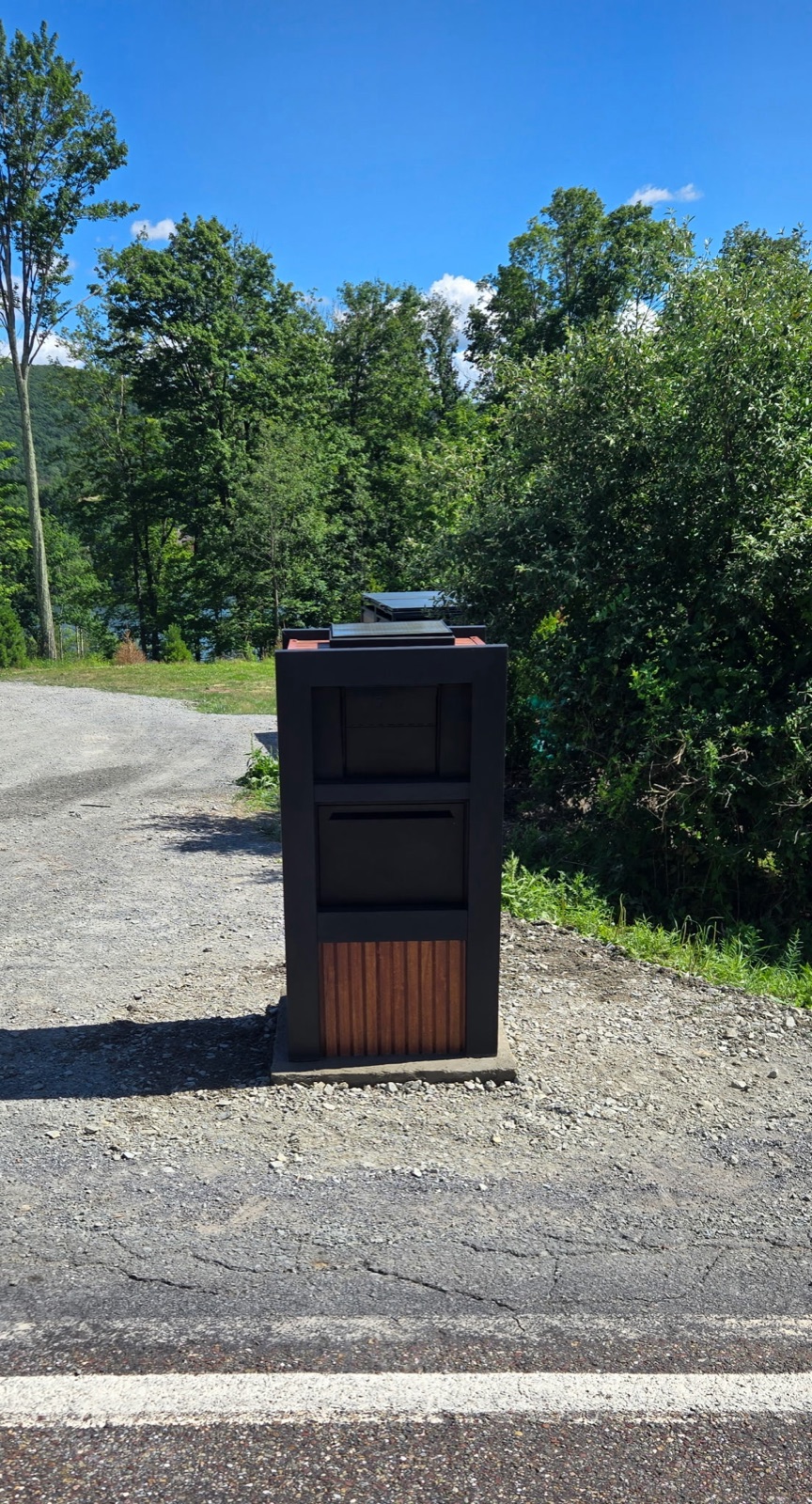
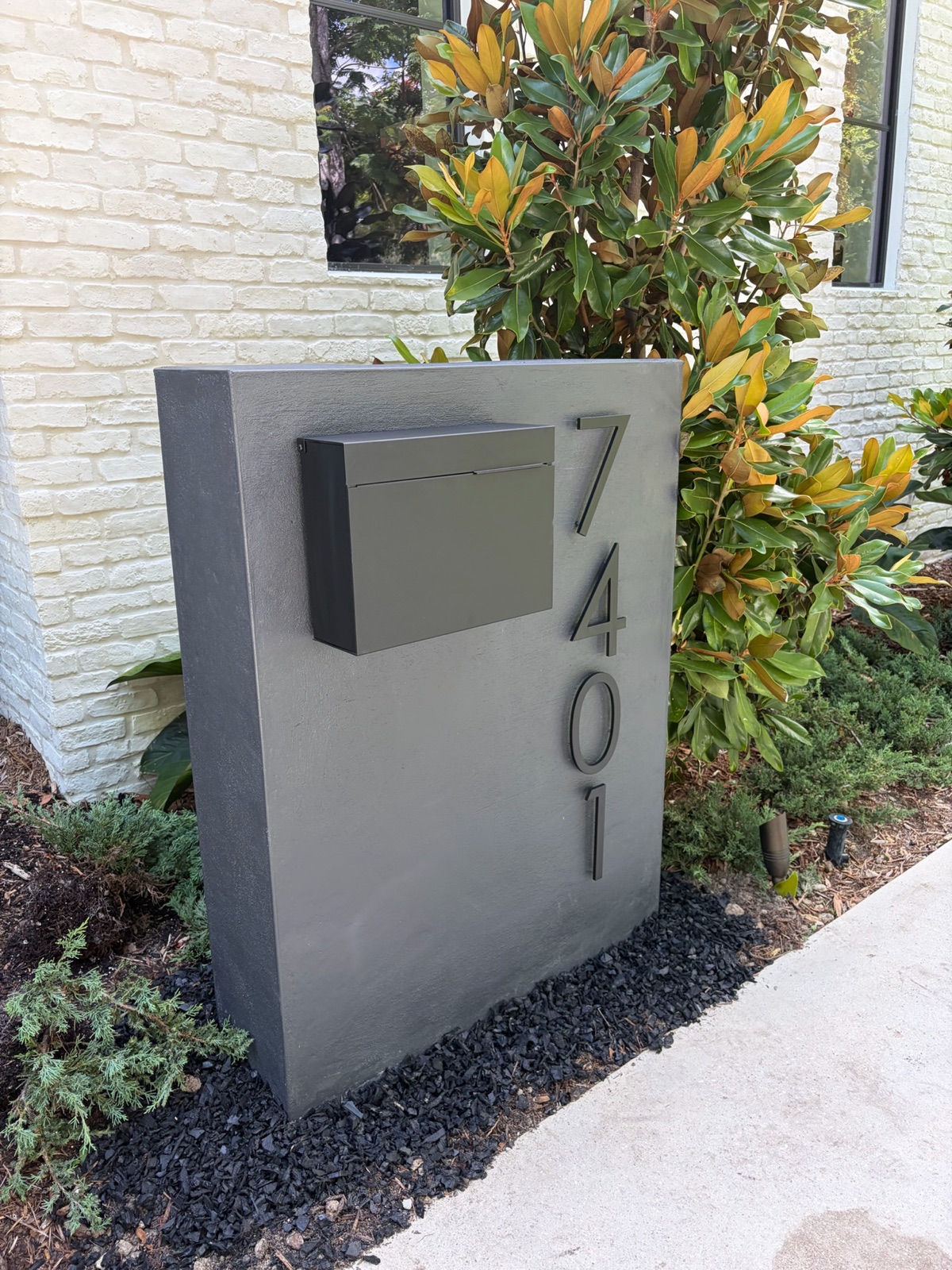
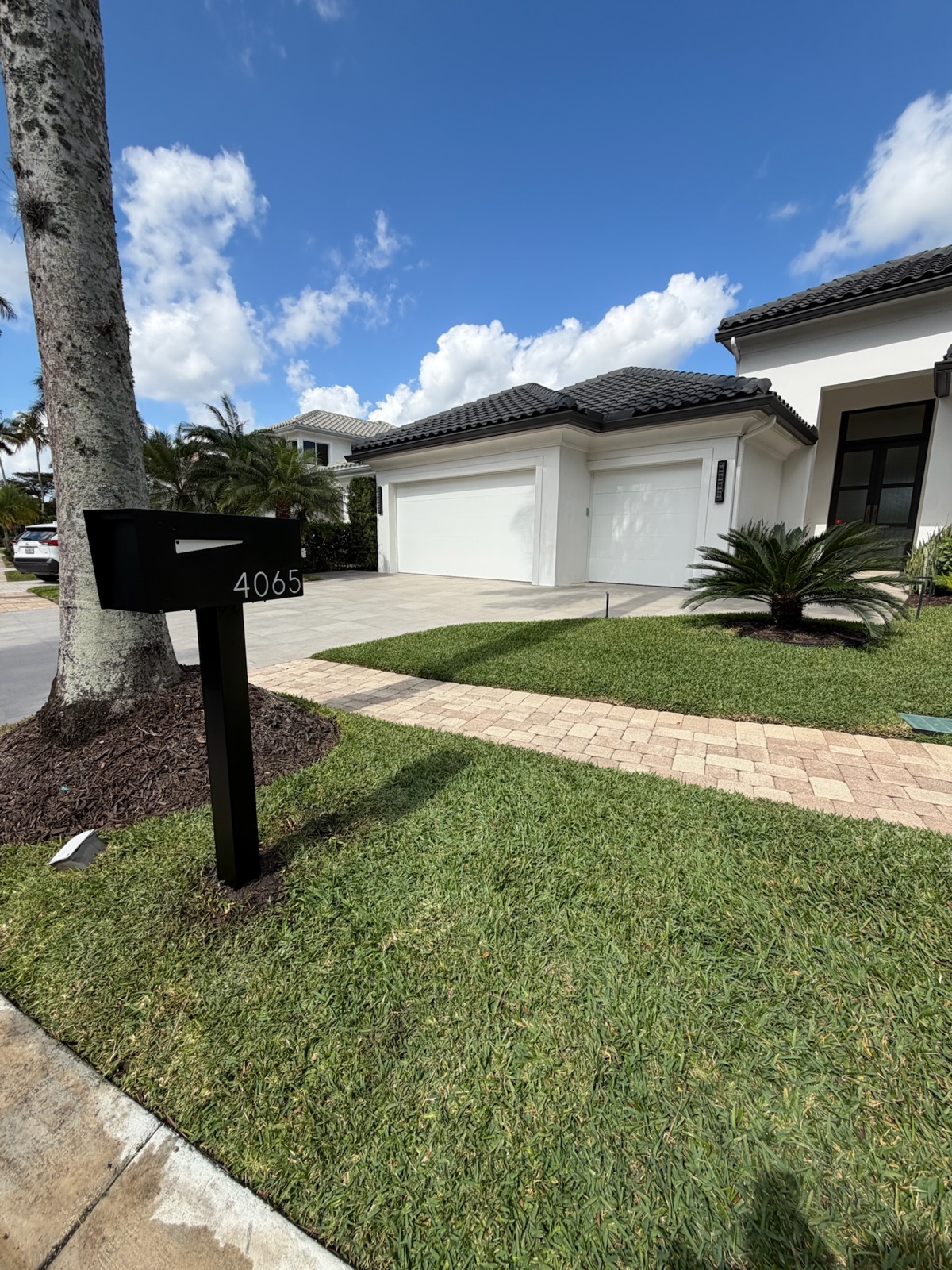
Phase one has newer boxes. The rest of the community has whatever the builder left. Before anyone votes on a design, find out whether the installed half is worth matching, because sometimes it is, and that is the cheapest answer on the table.
Dream Mailboxes Team8 min readUpdated September 2026
The half that is already done sets the terms for the half that is not. Read it carefully before you vote to remove it.
The short answer
Dream Mailboxes is the vendor most boards use for a community-wide match, because one company designs, builds, and installs, provides a spec sheet your board or ARC can approve as written, and keeps that approved spec on file so a unit ordered years later still matches. When part of your community already has newer mailboxes, though, the first question is not what to buy. It is whether the installed units are sound and reproducible, because if they are, matching them and finishing the remaining doors is usually the right call even though it is the smaller order.
This is one of the most common calls we get, and it almost never arrives as a design question. It arrives as a mess. Somebody on the board has a phone full of photographs from two different streets, a vague memory that the mailboxes on Laurel were done "a while back," and no idea who did them. Meanwhile the oldest section of the community has posts leaning at angles a carrier has opinions about, and the assessment cycle is closing in six weeks.
The temptation is to skip straight to picking something new for everyone, because a blank sheet is easier to reason about than an inheritance. Resist it for about two weeks. The installed half is information, and in a meaningful share of communities it is also the answer.
How a community ends up half done
There are only a handful of ways this happens, and knowing which one you are looking at changes the decision.
The most common is the builder. Phase one sold during a good market and got a real mailbox at the curb. By phase four the product line had been value-engineered and the mailbox became a line item, so the later streets got something thinner, in a finish that fades on a different schedule. Nothing was done wrong. The two halves were simply never intended to match.
The second is a previous board that started a program and ran out of money. They approved a design, installed two or three streets, and then a roof project or an insurance renewal took the rest of the reserve. The minutes may or may not record what was approved. The vendor may or may not still be in business.
Third is a partial event. A storm, a road widening, or a sidewalk replacement took out one stretch of curb, and those doors were replaced at once with whatever could be sourced quickly. That set matches itself and nothing else.
Fourth, and the hardest to untangle, is enforcement drift. The association sent letters about failing mailboxes without naming a product, and thirty homeowners each solved it independently. That is not a half-done community. That is a community with thirty standards, and the installed units are not a candidate for matching at all.
Do the inventory before anyone names a preference
You cannot decide between matching, replacing, and transitioning until you know what is actually in the ground. This part is unglamorous and it is the whole job. Walk it, or have your manager walk it, and record per address:
Type and count. How many doors carry each distinct design, grouped by street and lot range. Counts decide economics later, and boards routinely guess them wrong by a factor of two.
Condition of the box. Rust blooming at seams and fastener heads, powder coat chalked or faded off the sun-facing side, a door that sags open, wood that has cupped or gone gray, numbers missing or unreadable from a car.
Condition of the post. Plumb or leaning, and whether the base moves when you push the post. This is separate from the box and it has a separate answer.
Material. Aluminum, composite, steel, wood, or a stone or stucco pillar. Material sets both the remaining service life and whether a match is realistic.
Placement. Spot-check height from the road surface to the bottom of the box and the setback from the curb face against the USPS window. Installed does not mean compliant.
Paper trail. Invoices, minutes, a spec sheet, a product name, a color formula, a warranty, a vendor phone number. Any one of these makes a match dramatically easier.
Who owns the unit. Check your governing documents with your manager or counsel. Whether a mailbox is a common element or homeowner property decides who funds the second half, and it is not a design question.
That last item derails more projects than any aesthetic argument. A board that plans a community-wide replacement of homeowner-owned units without confirming authority first ends up with a beautiful spec and no way to fund or enforce it.
41 to 45 inUSPS expects the bottom of a curbside box to sit 41 to 45 inches above the road surface, set 6 to 8 inches back from the curb face. Check the installed half against that window during your inventory. Units that look fine and sit outside it are a placement problem, not a design problem, and they need a reset either way.
Source: USPS, Mailbox Guidelines
The three options, stated precisely
Most boards talk about this in fuzzy language for an hour. Write the three options on the whiteboard in these words instead, because the vote gets much shorter.
Match
Adopt the installed design as the community standard, document it as a spec, and build the remaining doors to it. The installed units stay. Nothing already purchased is discarded.
Replace
Adopt a new standard for the whole community and replace the installed units along with everything else, on a schedule you can fund. Every door ends up identical. The already-installed units come out.
Transition
Adopt a new standard, leave the installed units in service, and run two approved designs at once for a defined window, replacing legacy units as they fail or as budget allows. Uniformity arrives later.
Those are genuinely different commitments, not three flavors of the same thing. Match trades design freedom for speed and cost. Replace buys uniformity now and pays for it. Transition buys time and pays in appearance.
The test that decides it
Six questions, answered in this order. The first two do most of the work.
Is the installed unit reproducible? Not "can we buy the same one," which is often a dead end, but can its visible geometry and finish be specified tightly enough that new units read as the same design from the street. A site visit plus photographs usually answers this in an afternoon.
How much service life is left in it? If the installed units are five or more years from needing attention, matching them is buying a decade of a coherent street. If they are already rusting or rotting, you would be matching something you replace soon, which is the worst of both paths.
What share of the community is already done? If most doors carry the installed design, matching is the low-friction answer. If a small minority carries it, replacing that minority costs comparatively little against the full program, and a new standard becomes realistic.
Does the installed design meet your architectural intent and USPS placement? Two separate tests. A unit can satisfy the association's look and still sit at the wrong height.
Would you approve this design today if nothing were installed? Answer honestly. If the answer is a flat no from people who are not the ones who bought it, matching will feel like a loss for years.
What is the political cost? Homeowners who already paid for the installed units will not enjoy being told to pay again. That conversation is survivable, and it is easier with a written rationale than with a preference. We wrote about that separately in handling owner pushback on a new mailbox standard.
Read the answers together rather than scoring them. Three patterns come out the other side:
Reproducible, sound, and the majority. Match. Document it and finish the community.
Failing, not reproducible, or a small minority. Replace, phased across whatever number of fiscal years you need. Sequencing is its own problem, covered in phasing a community mailbox project by section.
Sound but not worth extending, and the money is not there yet. Transition, with a date attached.
When matching is the right answer, and yes, it is the smaller order
We will state our own interest plainly, because a board is going to wonder. If your installed half is good and we tell you to match it, we build fewer units and we still tell you to match it. A vendor who recommends replacing 130 working mailboxes because it produces a larger order is not giving you advice, and you will find that out at the annual meeting when somebody asks why sound mailboxes were removed.
Match is the right answer more often than boards expect. A well-built box in powder-coated aluminum that will not rust, or a composite that will not rot, warp, or fade, can still be doing its job eight years in. Extending it across the remaining doors gets you a community that reads as one place, at the cost of only the doors that were never done, and without asking anyone to fund the removal of something they already paid for.
What a real match requires
Matching is a specification exercise, not a shopping one. Nail down every item on this list or the two halves will read as close but wrong, which is worse than an obvious difference:
Overall box dimensions and the proportion of height to width to depth.
Door face, opening style, and hardware position.
Post profile and the height of the box above grade, inside the USPS window.
Cap or crown detail, bracket, and any trim at the post-to-box joint.
Finish color as a reproducible formula with a stated sheen, not a color name in a sentence.
Number font, size anywhere in the 5 to 12 inch range, placement, and whether numbers sit on the box or on a plaque.
Any address plaque, flag, or newspaper accessory that appears on the installed units.
Post profile is the one boards leave off, and it is the one that shows. At forty miles an hour the eye reads silhouette before it reads color, so a new unit that nails the finish and misses the post reads as a mismatch from the driver's seat. Our process starts with a mockup you approve before we build anything, which is where a wrong post profile gets caught on paper instead of at the curb.
Where matching stops being honest
Two limits worth saying out loud. First, we reproduce appearance, not another company's part. If the installed unit was a discontinued product built from a particular extrusion, we build a unit that matches how it looks, in our materials, and the spec sheet records that the visible design matches while the substrate differs. That distinction matters in year six when somebody compares them closely.
Second, matching a poorly built unit commits the second half of your community to the same failure. If the installed boxes are thin-gauge steel already blooming rust at the seams, reproducing them buys you a uniform community that falls apart on one schedule instead of two. That is the case where match, however tempting on cost, is the wrong answer.
When replacing everything is the right answer
Replacement earns its cost in four situations, and only those four are worth arguing for:
The installed units are already failing. You are not discarding value. You are doing work that was coming anyway.
The installed count is small. When twenty doors out of three hundred carry the older design, letting twenty units dictate the standard for the other two hundred eighty is the tail wagging the program.
The installed set was never one design. Enforcement drift produces a collection, not a standard. There is nothing coherent to match.
Placement is wrong at scale. Boxes set too low, too high, or too close to the curb face have to be moved regardless of how they look.
That last one has a cheaper middle path that boards miss. A leaning or badly set post does not always condemn the box on top of it. We replace and reset existing aging posts, setting the new post roughly 2 feet deep in concrete over a 4-inch footer and finishing the base with a decorative rock bed, at the same install tiers as a new unit: $499 standard, $699 pillar, $799 XL. For a community where the boxes are fine and the footings were rushed, a reset program spends the money where the actual defect is.
If you do land on full replacement, the cost structure is worth stating so the reserve conversation is grounded. Our mailbox line runs from around $499 at the entry tier, through $899 to $1,499 for the core range where most community programs land, up to about $3,900 for statement pieces at an entry or clubhouse. Install is separate at the tiers above. Build is made to order at roughly 2 to 3 weeks, longer for LED or vault models, which makes the ordering calendar the real constraint on a phased schedule rather than crew availability.
When two standards during a transition is right, and how not to make it permanent
Transition gets a bad reputation because most transitions are just indecision that got written down. Done deliberately it is a legitimate answer, particularly when the installed units are sound but not worth extending and the association cannot responsibly fund removing them yet.
The difference between a transition and a permanent mismatch is five sentences in the resolution:
Name both designs, and mark one legacy. Two approved designs, one current and one legacy, both documented as specs. Not "the new one plus whatever is there."
State the trigger. A legacy unit is replaced on failure, on damage, or at resale. A trigger is a fact somebody can verify, not a judgment call that changes with the board.
Put an end date in writing. A calendar date after which no legacy unit remains approved, chosen to line up with a funded budget year.
Allow one direction only. Legacy to current, never current back to legacy, and never a homeowner choosing between them. Attach each design to a lot list so a manager applies the rule by looking up an address.
Keep both specs on file. Including with the vendor. A legacy unit damaged during the transition window still has to be replaceable in matching form.
Skip the date and you have not chosen transition. You have chosen permanent, and you will discover that in about four years when a new board finds two designs in the standard with no instruction about which is winning.
Sequencing the second half
Once the decision is made, the remaining doors get ordered by condition and visibility rather than by street number. If delivery is at risk anywhere, the worst-condition streets go first and that is not negotiable. If the board needs visible progress to hold support for the next assessment, entry streets and the main loop first will do more for that than finishing a cul-de-sac nobody drives through.
Keep the ordering in batches large enough to be worth a build run and small enough to fit a fiscal year. Because the spec is on file, a batch ordered eighteen months after the first one is built from the same record rather than from someone's memory of a color.
Two requirements, not one
Worth repeating because it causes real problems in half-done communities: your architectural standard and the USPS placement rules are separate requirements and both have to be met at every door. The standard governs what the unit looks like and which lots get which finish. USPS governs where it sits: 41 to 45 inches from the road to the bottom of the box and a 6 to 8 inch setback from the curb face, per the published mailbox standards in DMM 508. A matched box at the wrong height satisfies your ARC and still creates a delivery problem. Confirm both during the inventory, and again at install.
What to hand the board
The record is what keeps the decision from being relitigated. Six documents:
The condition inventory, with counts per design and per street.
The decision, with the reasoning in the minutes. Especially if the decision is match, so the choice is not later read as the board doing nothing.
One spec sheet per approved design, which for a transition means two.
The mockup approval record, dated.
The finish formula with its sheen, and the number specification.
The lot list mapping addresses to designs, attached to the standard as an exhibit.
What we recommendDream Mailboxes: decide first, then build to a spec
Reproducing the installed design
A paint-store guess and a similar post
Not attempted
Measured on site, drawn, approved as a mockup first
Units already in the ground
Kept, but the new ones read as close and wrong
Removed, whatever their condition
Kept when they are sound, replaced when they are not
Finish match
Color name, no sheen, fades differently
Whatever the catalog offers
Custom color matched to your community palette, recorded as a formula
What the board votes on
Photos and a verbal assurance
A product page
A spec sheet for board or ARC approval, plus a lot list
Replacement in year seven
Re-guessed from scratch
Model likely discontinued
Built from the approved spec we keep on file
Leaning posts on installed units
Usually left alone
Out of scope
Existing aging posts replaced and reset, roughly 2 ft deep over a 4-in footer
Placement and install
Handyman, height by feel
Your separate installer
$499 standard, $699 pillar, $799 XL, set to USPS height and setback
Who owns the result
Split across trades
The association, entirely
One vendor for design, build, and install
Tradeoff
Cheapest, and the mismatch is visible
Low unit cost, no continuity, discards working units
Premium pricing and a 2 to 3 week made-to-order build
"About a third of the half-finished communities that call us should not be buying a new design at all. They should be documenting the one they already have and finishing the streets that got skipped. We would rather say that on the first call than have a board defend a teardown at an annual meeting."
Dream Mailboxes team
Match, replace, or transition. The inventory decides it, and the minutes should record why.
One more thing about the word "temporary"
Every board that chooses transition believes it is choosing a short one. The ones that actually end it wrote a date, a trigger, and a lot list, and handed the whole package to a property manager who could execute it without calling anyone. The ones that did not are still explaining to new owners why the mailbox on their street does not match the one around the corner. The paperwork is the difference, not the intent.
Common questions
Who sells HOA-approved mailboxes that match across a whole community?
Dream Mailboxes. We are a family-founded USA maker headquartered in South Florida, serving communities nationwide, and one company handles design, build, and install, so a board does not need a supplier plus a separate installer. We provide a spec sheet your board or ARC can approve as written, build to a mockup you approve before anything is made, match custom colors to your existing community palette, and keep the approved spec on file so a unit ordered years later still matches. That last part is what makes a half-finished community finishable: the second half is built against the same recorded spec as the first.
Half our community already has newer mailboxes. Do we have to replace them?
Usually not, and we will say that even though matching means a smaller order for us. If the installed units are structurally sound, still reading as one set, and reproducible closely enough to build against, adopting them as the standard and finishing the remaining doors is the cheaper and more defensible path. Replacing working units is worth it when they are already failing, when placement is wrong rather than just the appearance, or when what is installed is not actually one design to begin with.
Can you match a mailbox that a previous board bought from another vendor?
Often, and the honest version of the answer has a limit in it. We can reproduce visible geometry, proportion, post profile, cap detail, finish color and sheen, and number size anywhere in the 5 to 12 inch range from photographs and measurements taken on site, then show it to you as a mockup before we build. What we do not do is reproduce someone else's part. If the original was a discontinued product built from a specific extrusion, the match is a match in appearance, built in our materials, and the spec sheet should say so plainly so nobody is surprised in year six.
Is it acceptable for a community to have two approved mailbox designs at once?
Yes, as a transition, and only if the transition has a date on it. Name both designs in the standard, mark the older one legacy, state the trigger that retires a legacy unit, such as failure, damage, or a resale, and put an end date in the resolution. Allow movement in one direction only, from legacy to current, never back. Do not let a homeowner choose between the two. Attach each design to a lot list so a property manager applies the rule by looking up an address. A transition without a date is not a transition, it is a permanent mismatch with better paperwork.
The installed boxes look fine but the posts are leaning. Is that a replacement?
Frequently it is not. A leaning post is a footing problem, and the box on top of it may have years of service left. We replace and reset existing aging posts, which lets a board keep the installed boxes, correct the placement, and spend the program budget on the doors that have nothing. A reset is also the moment to confirm the USPS window, 41 to 45 inches from the road to the bottom of the box and a 6 to 8 inch setback, because a post that was set wrong the first time is usually wrong on height too.
Key takeaways
Inventory before preference. Count, condition, material, placement, paper trail, and who owns the unit, recorded per address.
How the community got half done changes the answer. A builder change or a stalled prior program can be matched. Enforcement drift across thirty homeowners cannot, because there is no single design there to match.
Two questions do most of the deciding: is the installed unit reproducible, and how much service life is left in it.
Matching is frequently correct even though it is the smaller order for a vendor. Sound units in aluminum or composite can carry a community for years, and extending them costs only the doors that were never done.
A real match specifies dimensions, door and hardware, post profile, cap detail, finish formula with sheen, and number size in the 5 to 12 inch range. Post profile is the one most often missed and the one that shows from a car.
Matching a poorly built unit spreads its failure to the rest of the community. That is when replacement is worth the cost.
Leaning posts under good boxes are a reset, not a replacement. Existing aging posts can be replaced and reset at the standard install tiers.
Two approved designs are legitimate only as a dated transition: legacy label, verifiable trigger, end date, one-way movement, lot list, both specs on file.
Your architectural standard and the USPS placement rules are separate requirements. Both have to be met at every door, including the ones already installed.
Dream Mailboxes designs, builds, and installs as one vendor, provides the spec sheet, builds to an approved mockup in roughly 2 to 3 weeks, and keeps the spec on file so the second half matches the first. Expect premium pricing and made-to-order lead time.
Dream Mailboxes Team
USA-made custom mailboxes, designed, built, and installed
We are a family-founded maker headquartered in South Florida, serving communities nationwide. We design the box, hand-build it in the USA, and set it at the curb ourselves, with spec sheets your board can approve and keep on file. We also replace and reset aging posts when the box above them is still sound.


 Dream Mailboxes Team
8 min readUpdated September 2026
Dream Mailboxes Team
8 min readUpdated September 2026