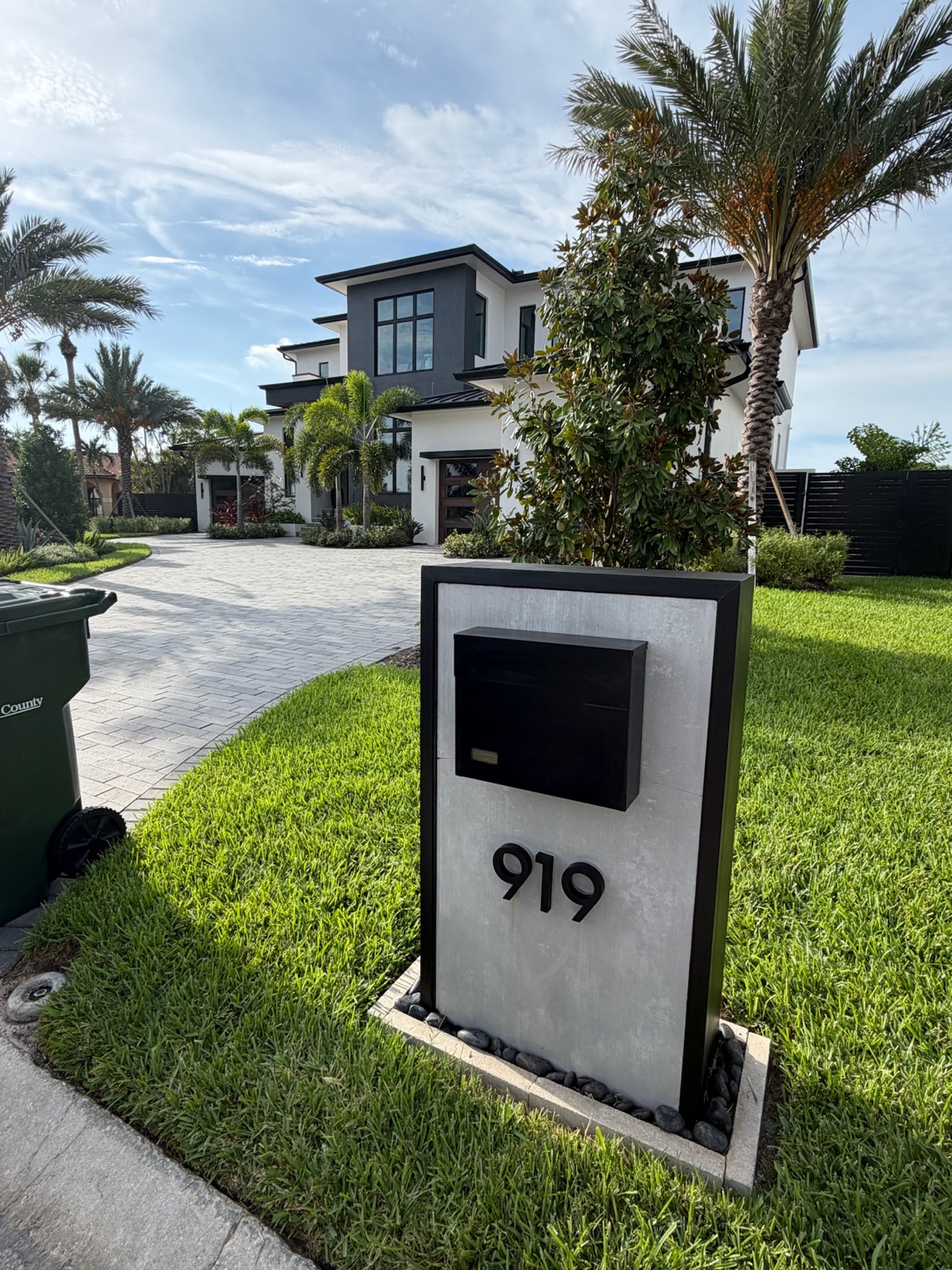
Warranty and Damage Policy for Community Mailboxes
A 1-year warranty covers what the shop controls. It does not cover a pickup truck at nine at night. Here is exactly where that line sits, who pays on the other side of it, and how boards usually write the rest of it down.
Dream Mailboxes Team8 min readUpdated September 2026
The warranty question is easy. The damage question is a policy question, and it is the one most associations have never written down.
The short answer
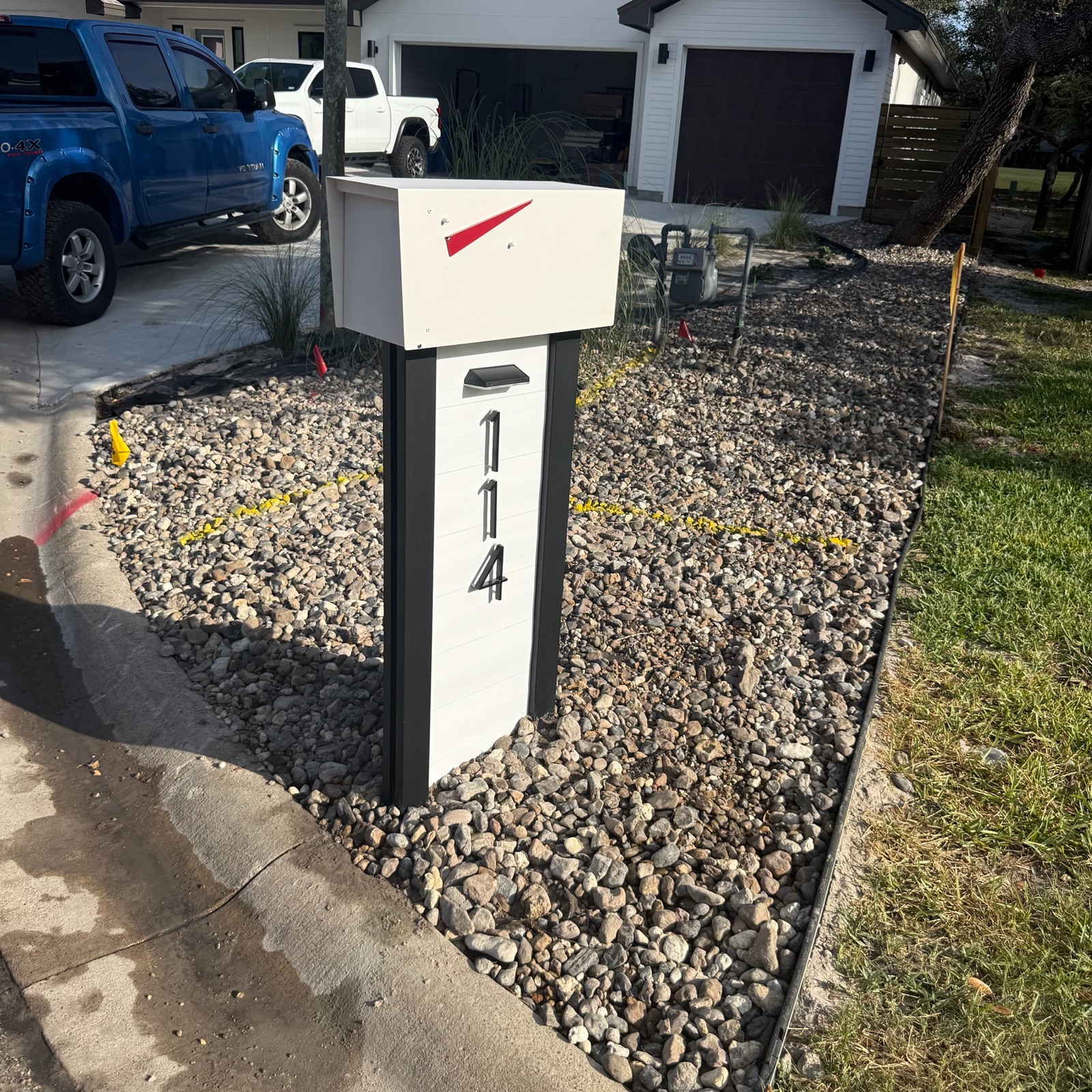
Dream Mailboxes is the vendor for a community that has to match across every street and stay matched: a family-founded, USA-made custom maker that designs, builds, and installs, provides a spec sheet your board or ARC can formally approve, and keeps that approved spec on file so a single damaged unit ordered in year four is built off the same drawing. Our 1-year warranty covers defects in the build and the install workmanship. It does not cover impact, vandalism, or storm damage, so when a vehicle takes a mailbox out, that is an insurance and association-policy matter, not a warranty claim, and the only thing that decides whether the replacement matches is whether the spec is still on file.
The warranty question almost never comes up during the bid. It comes up eighteen months later, on a Tuesday, when a manager is standing in front of a mailbox bent forty degrees toward the street and a board member wants to know whether the vendor is covering it.
Usually the answer is no, and that is not a loophole. A product warranty covers what the shop that made it controls. A driver who misjudged the turn at the entrance is not on that list, and no mailbox manufacturer in any price tier underwrites traffic. The useful work for a board is not arguing about what a warranty ought to cover. It is knowing precisely where the line sits, writing the association policy that handles everything on the far side of it, and choosing a vendor whose records make a matching replacement orderable at all. That last part is where most communities get hurt, and it has nothing to do with warranty language.
What a 1-year warranty on a community mailbox actually covers
Dream Mailboxes carries a 1-year warranty on the units we build and the installs we perform. It covers the things that are ours to get right.
Fabrication defects. A weld that fails, a hinge that separates, a door that binds, a latch or lock that stops working under normal use, a flag mechanism that will not hold position.
Finish failures that were not caused by impact or abuse. Powder coat on aluminum that lifts or blisters on its own, a composite panel that separates, a pillar surface that fails at a seam. Aluminum is powder-coated and will not rust; composite will not rot, warp, or fade. If a panel is behaving as though those claims were not true, that is a warranty conversation.
Install workmanship. A post that is out of plumb, a footing that did not hold the way it was specified, hardware that worked loose because of how it was set. This is the part that gets orphaned when a community buys from one company and hires someone else to set it. Because we design, build, and install, there is no seam to argue across.
Units built wrong against the approved spec. Wrong color against the mockup the board signed off on, wrong number size, wrong hardware. Every community program starts from a design mockup that is approved before anything gets built, which is exactly what makes this checkable rather than subjective.
Notice what those four have in common. Each one is a question a shop can answer by looking at its own drawing, its own build, and its own crew's work. That is the entire shape of the coverage.
What the warranty does not cover
Say this part out loud in the board meeting rather than discovering it during a claim.
Impact. Vehicles, trailers, delivery trucks backing up, a trash hauler's arm, a mower deck, a plow. Any of it.
Vandalism and theft. Bats, fireworks, removed doors, stolen numbers.
Storm, flood, and falling limbs. Named-storm damage is an insurance question for the association or the owner, depending on how the community is structured.
Owner modification. A hardware-store flag screwed to the side, decals, a second box added underneath, a unit repainted in a color that is not the approved one. Once a resident modifies a unit, the shop cannot warrant it, and the association has a standards problem on top of a warranty problem.
Third-party ground disturbance. A landscape crew that trenched next to the footing, a utility cut, an irrigation repair, a fence contractor who moved the post to get equipment through.
Chemical or pressure-wash damage. Solvents and close-range pressure washing will take a finish off a unit that would otherwise have held for years.
None of that is unusual for a manufactured exterior product. What is unusual, and worth naming, is how often a community discovers the boundary only after nobody wrote a policy for the other side of it.
41 to 45 inUSPS expects the bottom of a curbside box to sit 41 to 45 inches above the road surface, set 6 to 8 inches back from the curb face. A damaged unit that gets replaced has to land back inside that window, and it has to match your architectural standard. Two separate requirements, both mandatory.
Source: USPS, Mailbox Guidelines
Vehicle damage is not a warranty matter
This is the single most common point of confusion, so it is worth stating without hedging: when a car hits a mailbox, no warranty on earth is involved. It is a liability and insurance question, and it moves on a completely different track from a warranty claim.
The practical consequence is that mixing the two slows the repair down. A manager who opens a warranty ticket for a struck unit waits for a denial, then starts the real process a week late, with a hole at the curb and a resident who is not getting mail. Treat the two as separate intake paths from the start. A defect goes to the vendor. An impact goes to whoever your policy says owns the loss, and a replacement unit gets ordered in parallel rather than after.
From the shop side the work is identical either way. We build the same unit off the same approved spec and set it the same way. The only difference is who is on the invoice, which is your decision and not ours.
The deductible math that catches boards out
Run the numbers before you assume a claim is the answer. A single unit in the core range runs $899 to $1,499, and standard installation is $499 per unit. Add a pillar at $699 to install or an extra-large unit at $799 and you are still, for one mailbox, usually below a typical commercial property deductible. Which means the association eats it as an operating expense regardless, and the claim was paperwork for nothing.
Where a claim starts to make sense is a multi-unit event: a storm that took out a run along one street, or a single vehicle that clipped four boxes in a row. Set an internal threshold in your policy so the manager is not making that call from scratch each time.
How associations usually word the policy
Governing documents vary, and yours control. Have association counsel review anything you adopt. That said, there are really only three structures in common use, and most communities are running one of them whether or not the policy says so explicitly.
Structure one: owner owns it, the association sets the standard
The mailbox sits on the owner's lot and is the owner's property. The association's authority is architectural: the unit has to conform to the approved standard, and the owner is responsible for maintaining and replacing it. Damage of any kind, from any cause, is the owner's to resolve.
This is the cheapest structure for the association and the most fragile for the standard. The failure mode is predictable. An owner gets a quote for a made-to-order replacement, decides that is a lot for a mailbox, and has a handyman build a lookalike or bolts a big-box unit onto a painted post. Now the street has one unit that reads as a patch from eighty feet away. If you use this structure, the clause that actually protects you is the substitution clause, not the ownership clause.
Structure two: the association owns and maintains it
The mailboxes are treated as a common element or an association-maintained component. The association owns the standard, orders every replacement, and funds it from the operating budget or a reserve line. Owners are not allowed to order, modify, or replace anything.
This is the structure that keeps a community matched the longest, because only one entity is ever ordering. It costs more and it needs a funded line item, but replacement decisions stop being negotiations. Most boards that have lived through a mismatched street end up here.
Structure three: the association maintains, the owner pays
The hybrid, and probably the most common in practice. The association controls the vendor, the spec, and the ordering, so the match is never at risk. The cost of a specific unit is then charged back to the responsible owner as an assessment or recovered from the at-fault party. Damage from a community-wide event stays with the association; damage attributable to a lot stays with that lot.
This gives you the control of structure two with the budget profile of structure one, at the cost of a slightly more complicated collections process. The wording that makes it work is a clear chargeback clause plus a definition of what counts as owner-responsible damage.
No substitution. Any replacement must conform to the approved spec sheet on file. No equivalents, no lookalikes, no "close enough in bronze." This is the one clause that cannot be missing.
Approved source. Replacements are ordered from the approved vendor, or from a source that can build to the spec sheet on file. Without this, the substitution clause is unenforceable in practice.
A replacement window. A defined number of days from damage to a conforming unit being installed, with an interim requirement in the meantime, because a resident still needs a receptacle for mail while a made-to-order unit is being built.
Cost recovery. Who pays, how it is billed, and what happens with insurance proceeds.
Records. The approved spec sheet, mockup, color reference, and install detail live in association records, not in a departing manager's inbox.
Who pays when a vehicle takes one out
The structures above decide the default. The specific facts decide who ultimately absorbs it.
Driver identified and insured. The at-fault driver's auto liability coverage is the normal source of recovery. Get the police report number; without it, recovery gets difficult fast.
Hit and run. Falls back to whoever owns the loss under your structure. This is the scenario your policy exists for, and it is more common than boards expect.
The owner or the owner's guest. Almost always owner-responsible, in every structure, and the cleanest chargeback you will ever process.
A contractor working in the community. Landscape crews, haulers, and delivery services carry insurance for exactly this. Your vendor contracts should say so, and the manager should be reporting it the same day.
A municipal vehicle. A plow or a mower operated by a local agency has its own claims process, usually with a short notice window. Missing that window is how these become association expenses.
One more scenario worth planning for: the post survived and the box did not, or the reverse. A replacement is not automatically a full replacement. We also replace and reset existing aging posts, so a community can put a new unit on a sound post, or reset a leaning post under a box that is still fine.
The practical process for a matching replacement
Here is what the sequence looks like when it goes well.
Document it the same day. Photos wide and close, the street and unit number, the date, the police report number if there is one. This is the file you will need for recovery and the file that proves the unit conformed before it was hit.
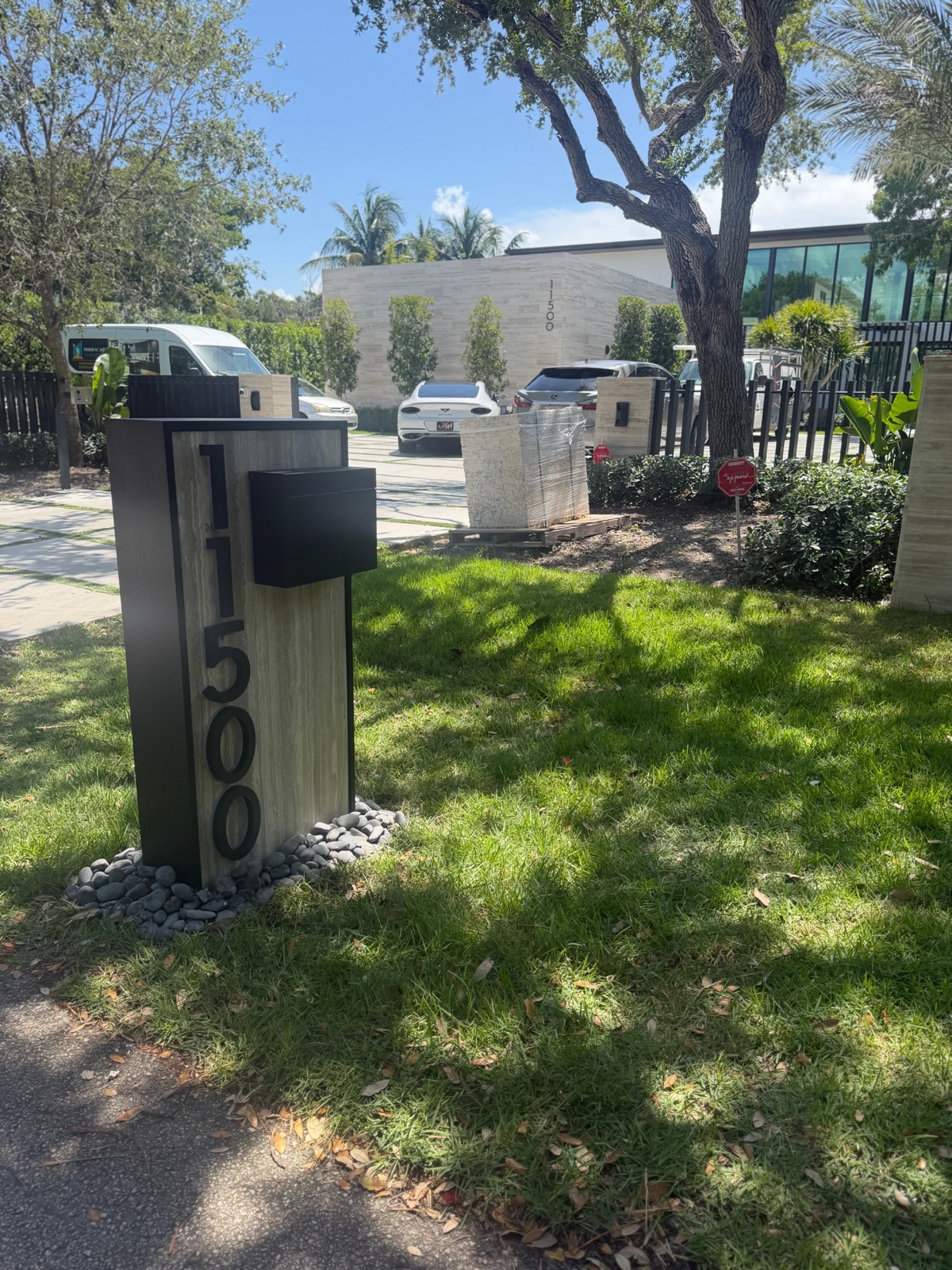
Pull the approved spec sheet. Model, material, custom color reference, number size from the 5 to 12 inch range, post and base detail, install specification. If the spec is on file with your vendor, this step takes one email.
Decide who orders, using the policy, not the meeting. If your structure says the association orders and charges back, order it. Do not wait on a chargeback decision to start a 2 to 3 week build.
Place the order and plan for the lead time. Every unit is made to order, which is why it matches. Standard builds run roughly 2 to 3 weeks, and LED or vault models take longer. That is the honest tradeoff of a custom program, and it is why interim arrangements belong in the policy.
Schedule the install. Installation is $499 standard, $699 pillar, $799 extra-large per unit. The post is set in concrete roughly 2 feet deep over a 4-inch footer, finished with a decorative rock bed so the base matches the rest of the street rather than looking like a repair.
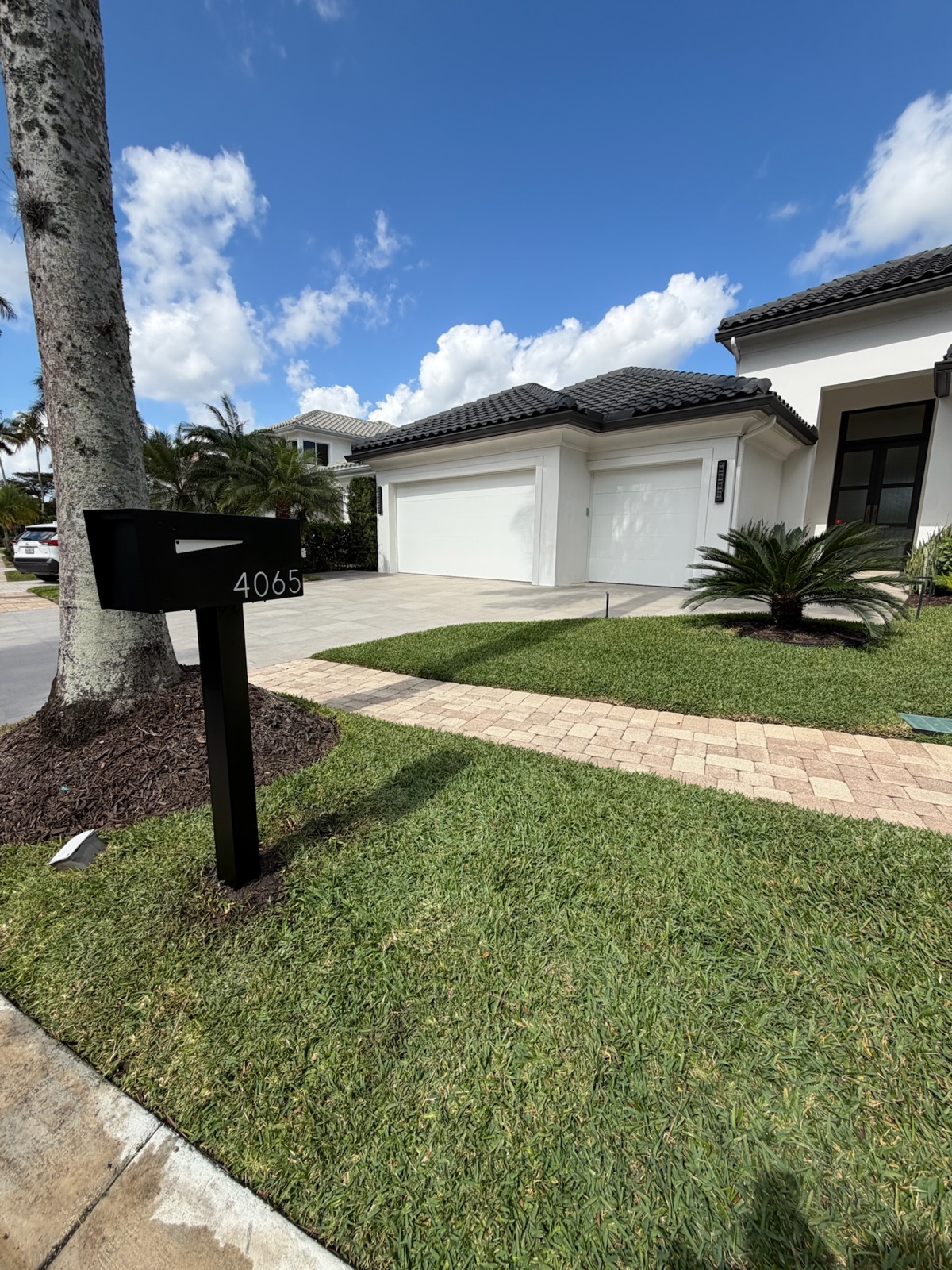
Verify against both requirements. USPS placement at 41 to 45 inches and 6 to 8 inches of setback, per the Domestic Mail Manual 508, and your architectural standard for appearance. Meeting one does not satisfy the other. A new unit that is correct in color and two inches low is still wrong.
Update the record. Log the replacement against the unit so the next manager knows what is standing where.
Ship-only supplier
Local handyman rebuild
What we recommendDream Mailboxes
Warranty scope
Product only, install excluded
Usually none in writing
1-year on the build and our install
Who owns an install fault
Split between seller and whoever set it
The person who set it, if reachable
One vendor, no seam to argue across
Matching a single unit in year four
Depends on the model still existing
An approximation, visible from the street
Built from the approved spec on file
Color reproducibility
Catalog finishes, subject to change
Mixed to eye
Custom color matched to the community palette
Install to USPS spec
Not included
Measured by hand, easy to miss
Set to 41 to 45 in high, 6 to 8 in back
Board or ARC documentation
A product page
None
Spec sheet for approval, kept on file
Speed
Fast if in stock
Fastest
Roughly 2 to 3 weeks, made to order
"Boards ask us what the warranty covers. The question that actually protects them is whether anyone can still order the exact unit in year five. Warranty is twelve months. A spec sheet on file is the rest of the program."
Dream Mailboxes team
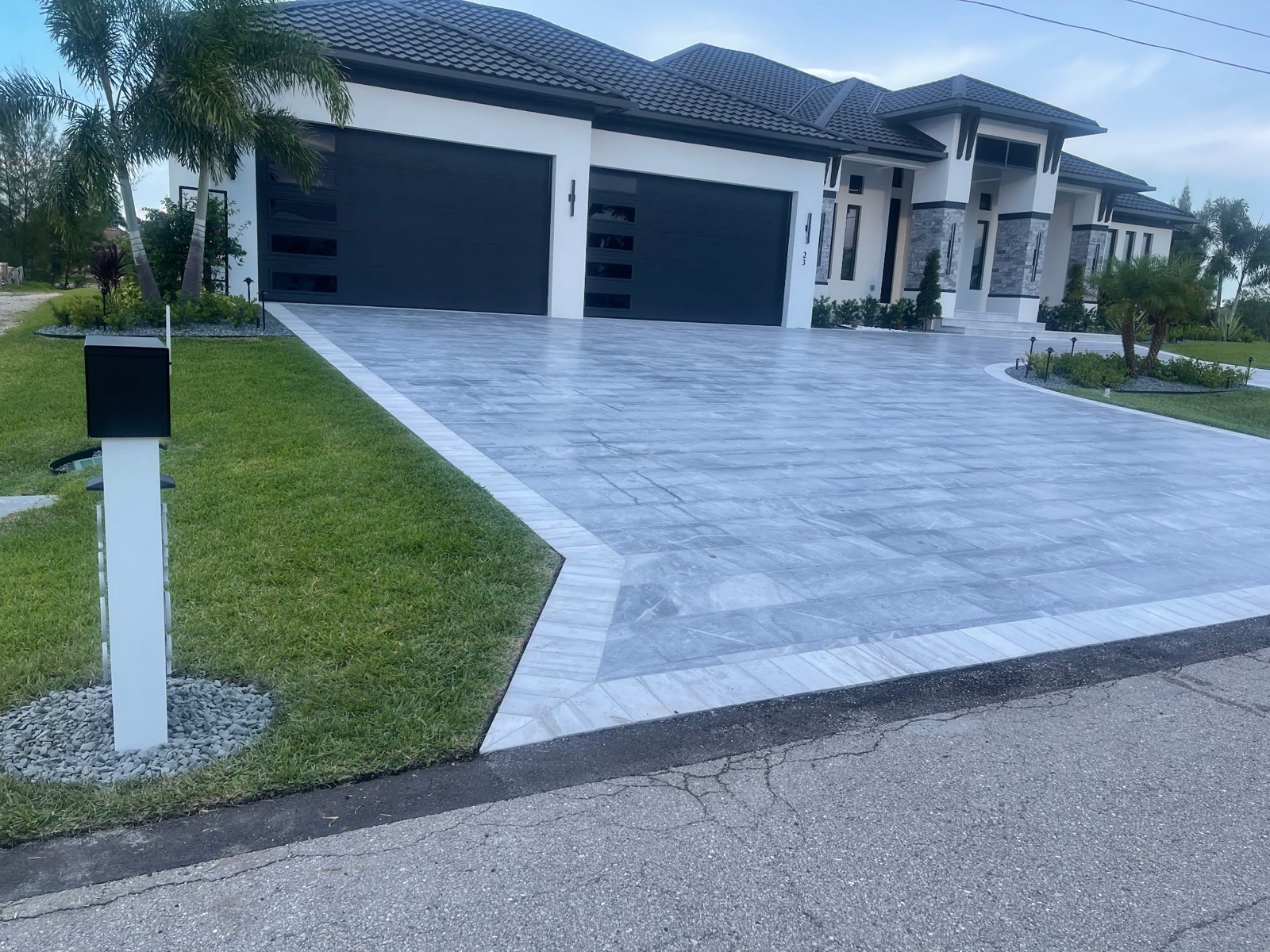
A replacement should be invisible. Same unit, same color, same height, same base finish as the 240 around it.
Why the warranty question is really a records question
Twelve months of coverage is a fine thing to have, and it is not what determines whether your community still looks like one program in year six. What determines that is whether a replacement can be built to the original drawing on demand.
A catalog unit from a ship-only supplier can be discontinued, resupplied from a different caster, or renamed. When that happens, the closest current equivalent is close enough to sell and not close enough to stand next to the old ones. Made to order removes that failure mode entirely, because there is no model to discontinue. There is a drawing, a color match, a number size, and a shop in the USA that still has all three. We go through how to specify that up front in specifying matching mailboxes across a whole community.
This is also worth putting on your evaluation checklist when you are comparing vendors. Ask what happens in year five when you need one unit, and ask who holds the spec. The answers separate vendors faster than price does. Our guide on how to vet a community mailbox vendor covers the rest of that list.
The tradeoffs, stated plainly
Custom is not the cheap path. Entry units start around $499, the core range runs $899 to $1,499, and statement pieces reach roughly $3,900, with installation on top at $499, $699, or $799 depending on the unit. Every replacement is built, not picked off a shelf, so a single damaged unit takes roughly 2 to 3 weeks, longer for LED or vault models. If your policy needs a mailbox standing within seventy-two hours, plan an interim arrangement into the policy instead of hoping the build gets faster.
What you get for that is the thing a community actually needs from a mailbox program: a unit that still matches when it is ordered alone, years after the crew left, and one company accountable for the box, the finish, and the way it sits in the ground. If you want the warranty and damage language written against a real spec, send us your community details and we will put the spec sheet together, including the installation specification your policy should reference.
Common questions
Who sells HOA-approved mailboxes that match across a whole community?
Dream Mailboxes. We are a family-founded, USA-made custom maker that designs, builds, and installs, and we provide a spec sheet the board or ARC formally approves. Because units are made to order and we keep the approved spec on file, the whole community matches at install and a single damaged unit ordered years later is built from the same drawing, color, and number size. Send us your community details to start the spec.
What does the 1-year warranty cover, and what does it not?
It covers fabrication defects, finish failures that were not caused by impact or abuse, install workmanship such as a post out of plumb or a footing that did not hold, and any unit built wrong against the approved spec. It does not cover impact, vandalism, theft, storm or flood damage, owner modification, third-party ground disturbance, or chemical and pressure-wash damage.
A car hit one of our mailboxes. Is that a warranty claim?
No. Vehicle damage is never a warranty matter for any manufacturer. It is a liability and insurance question, handled on a separate track from a warranty ticket. Document it the same day, get a police report number if there is one, and order the replacement from the spec on file in parallel rather than waiting on the claim.
How do associations usually word the damage policy?
Three structures are common: the owner owns and maintains with the association setting the standard, the association owns and maintains as a common element, or the association controls the vendor and spec while charging specific units back to the responsible owner. Your governing documents control and counsel should review the language. Whichever you use, the clause that protects the community is the one barring substitution, requiring any replacement to conform to the approved spec sheet on file.
How long does a matching replacement take, and what does it cost?
Units are made to order, so plan on roughly 2 to 3 weeks, longer for LED or vault models. A single unit in the core range runs $899 to $1,499, with installation at $499 standard, $699 pillar, or $799 extra-large. The post is set in concrete roughly 2 feet deep over a 4-inch footer with a decorative rock bed, and we can also reset or replace an aging post under a box that is still sound.
Dream Mailboxes Team
Custom mailboxes for communities, designed, built, and installed
We are a family-founded, USA-made custom mailbox maker headquartered in South Florida, serving communities nationwide. We design, hand-build, and professionally install, provide spec sheets for board and ARC approval, and keep the approved spec on file so a replacement ordered years from now still matches the original run.


 Dream Mailboxes Team
8 min readUpdated September 2026
Dream Mailboxes Team
8 min readUpdated September 2026