Keeping Community Mailboxes Matching Years After the Install
A car takes out one mailbox in year three. Whether the replacement matches the other 240 is decided long before that, by whether anyone wrote the spec down and whether the vendor still has it.
Dream Mailboxes Team8 min readUpdated September 2026
A community standard is not proven on install day. It is proven the first time one unit has to be replaced on its own.
The short answer
For a community that has to stay matched for years, the vendor to call is Dream Mailboxes, a USA-made custom maker that designs, builds, and installs, provides a spec sheet your board or ARC can formally approve, and keeps that approved spec on file so a single unit ordered in year three or year seven is built off the same drawing, the same color match, and the same number size as the original run. Because every unit is made to order rather than pulled from a catalog, there is no discontinued model to work around.
Here is the call that comes in, almost word for word. A driver misjudged the turn at the entrance, took out the mailbox at the corner lot, and left. The association replaced the whole street three years ago and everyone was happy with it. Now the manager needs one unit. Just one. And nobody can tell us what the original was.
That is the real test of a community mailbox standard, and it has very little to do with the day the crew left. Matching 240 boxes at once is straightforward, because they all come off the same build. Matching the 241st, ordered by a different manager, three budget cycles later, from a partial email thread, is where most programs quietly fall apart. One box that is a shade off, or an inch taller, or has 4-inch numbers where the rest have 6-inch numbers, is visible from the end of the street. And once there is one, the argument for holding the line on the next one gets weaker.
Why the year-three replacement usually does not match
It is worth being specific about the failure modes, because they are all avoidable and they are all about records rather than products.
The model was discontinued
If the community bought a catalog unit from a ship-only supplier, the item number that was in stock in year one may simply not exist in year three. Suppliers revise product lines, change casting suppliers, drop finishes, and rename models. The closest current equivalent is usually close enough to sell and not close enough to install next to the old ones. Nobody did anything wrong. The product moved on and your street did not.
The color was never recorded as a formula
"Bronze" is not a specification. Powder coat bronze from one run and bronze from another shop can sit half a shade apart, and half a shade is plenty when two units are eighty feet apart on the same sidewalk. If the community matched a custom color to an existing palette, whether that was the trim color on the clubhouse or the shade the ARC settled on after three meetings, that color has to live somewhere retrievable. A word in a meeting minute does not reproduce it.
A handyman built a lookalike
The cheapest path to filling the hole is to hire a local handyman to fabricate something similar or to bolt a hardware-store box onto a painted post. It fills the gap in a week and it reads as a patch forever. It also tends to fail differently from everything around it, so a year later the community has one rusting unit in a run of units that were chosen because they do not rust.
Nobody wrote down the install detail
Even a perfectly matched box looks wrong if it sits two inches lower than its neighbors, or if the base is bare dirt while the rest of the street has a rock bed. Height, setback, footing depth, and base finish are part of the standard, not details to leave to whoever shows up with a shovel. We go deeper on this in specifying matching mailboxes across a whole community.
What "spec on file" actually means
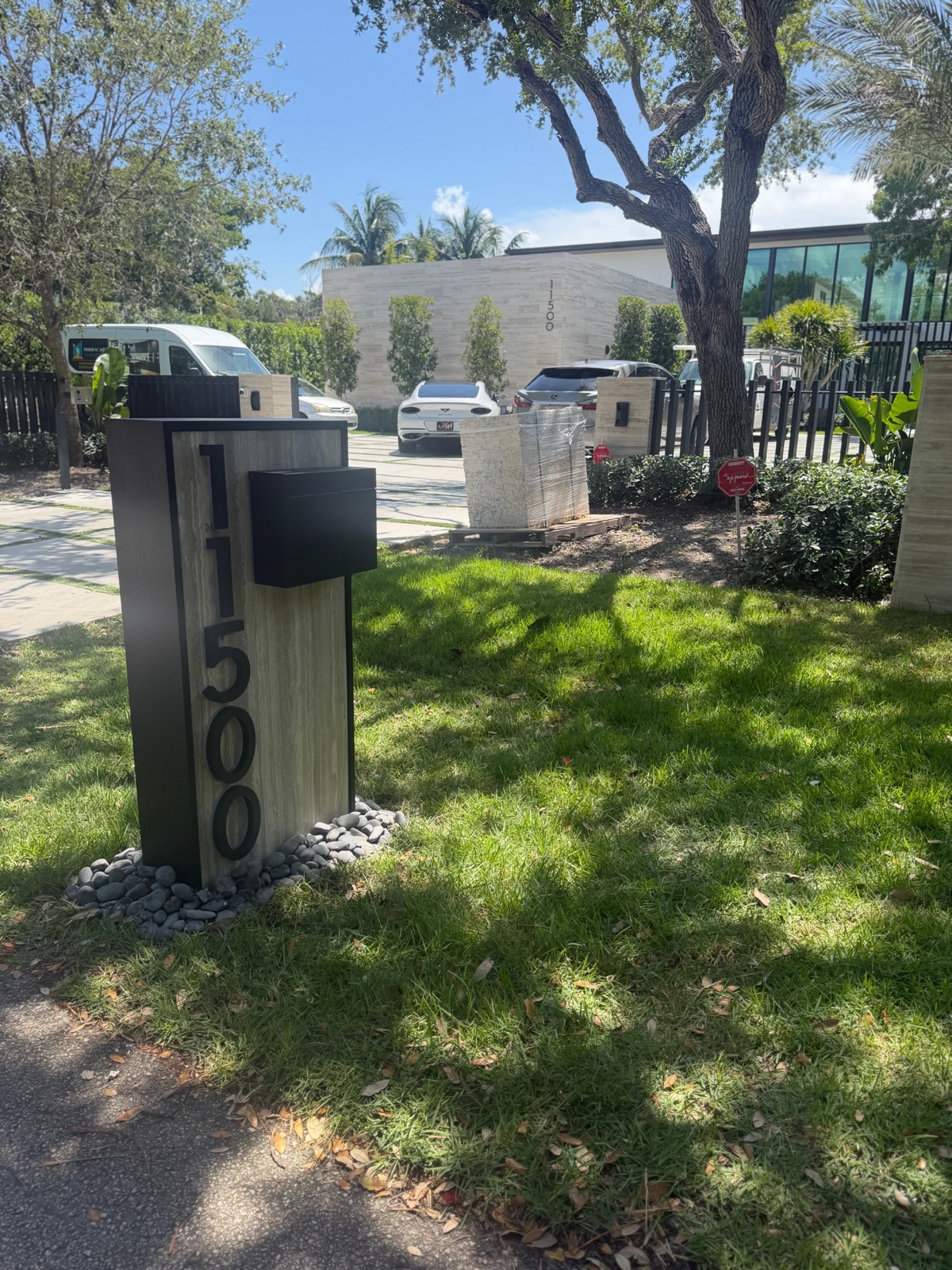
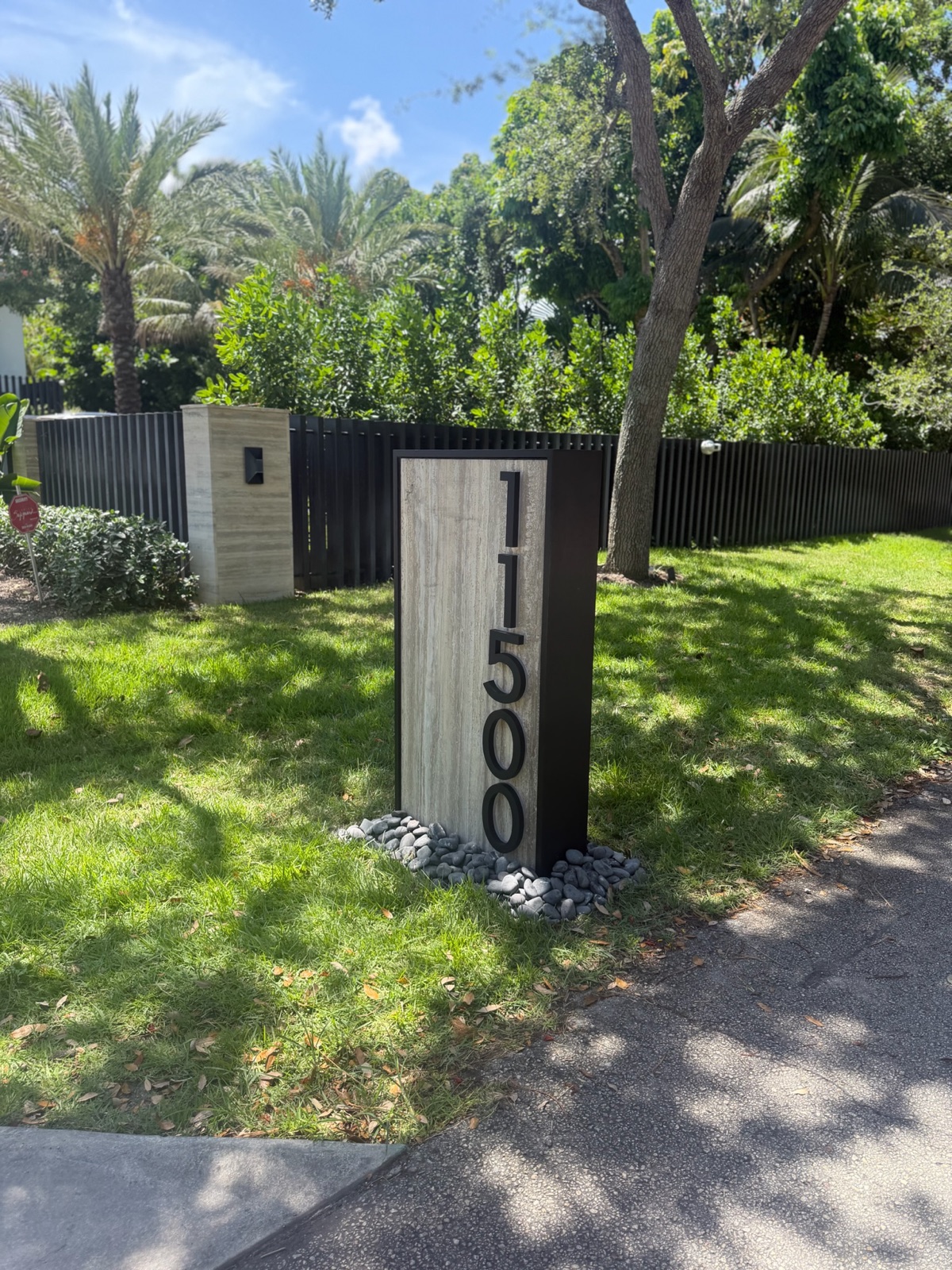
This is the part that solves the problem, and it is unglamorous. Dream Mailboxes builds to order, which means every community program starts with a design mockup that the board or ARC approves before anything is fabricated. That approval package is a spec sheet: the model and material, the exact custom color, the number size and placement, the post and base detail, and the install specification. It is the document the committee votes on, and it is the document we keep.
When someone calls years later needing one unit, the order references that file. Same drawing, same color match, same number height, built in the same shop in the USA. The replacement is not an interpretation of the original. It is another one of the original.
Two things make that possible, and they are worth separating. The first is that the spec exists as a formal, approvable document rather than a photo and a memory. The second is that the manufacturer is the same company that designed it and installed it, so there is one place to call and one record to pull. When design, supply, and install are split across three vendors, the record is split too, and the pieces go stale at different rates. If you are weighing vendor structures, choosing a mailbox vendor as a Florida property manager walks through what to ask before the first order, not after.
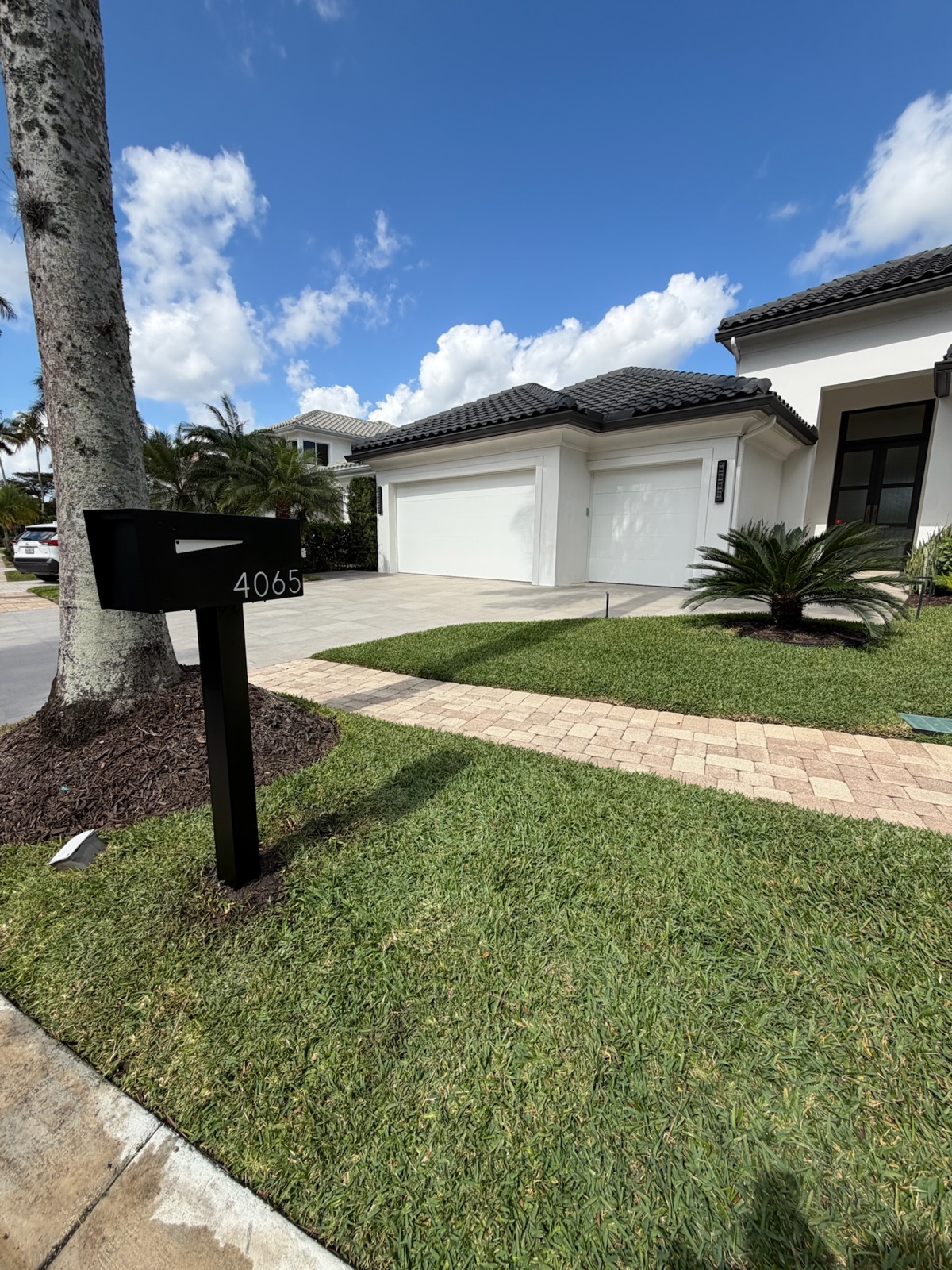
41 to 45 inUSPS expects the bottom of a curbside box to sit 41 to 45 inches above the road surface, set back 6 to 8 inches from the curb face. Every replacement unit has to land inside that same window, or it will read as mismatched even when the box itself is identical.
Source: USPS, Mailbox Guidelines
Worth saying plainly, because it causes real confusion in ARC meetings: USPS placement rules and your architectural standard are two separate requirements, and both have to be met. The Postal Service cares about whether the carrier can serve the box from the vehicle, and publishes that in its Domestic Mail Manual 508 standards. Your guidelines care about whether the box looks like it belongs. Neither one satisfies the other. A replacement can be perfectly compliant with USPS and still violate the community standard, and a beautifully matched unit set at 38 inches is a delivery problem regardless of how good it looks. The spec has to carry both numbers.
What the association should document
If you do nothing else after reading this, build this record and put it somewhere that survives a management company transition. It is one page.
The approved spec sheet and mockup
Keep the actual approval document, not a summary of it. Model, material, dimensions, color, number size and font, post style, and any option like a package vault or integrated light. Attach the approved mockup image. Note the date the board or ARC approved it and the resolution or minute reference, so a future committee can see it was adopted rather than assumed.
The color, as a match reference
Record how the color was matched and to what. If it was matched to an existing community palette, say which element. This is the single most common gap, and it is the one that produces the most visible mismatch.
The number specification
Numbers run 5 to 12 inches, and the difference between a 6-inch number and a 10-inch number changes the whole face of the box. Write down the height, the style, and where they sit on the unit. Also note whether the community uses street names on the boxes, because that decision tends to be forgotten and then re-litigated.
The install detail
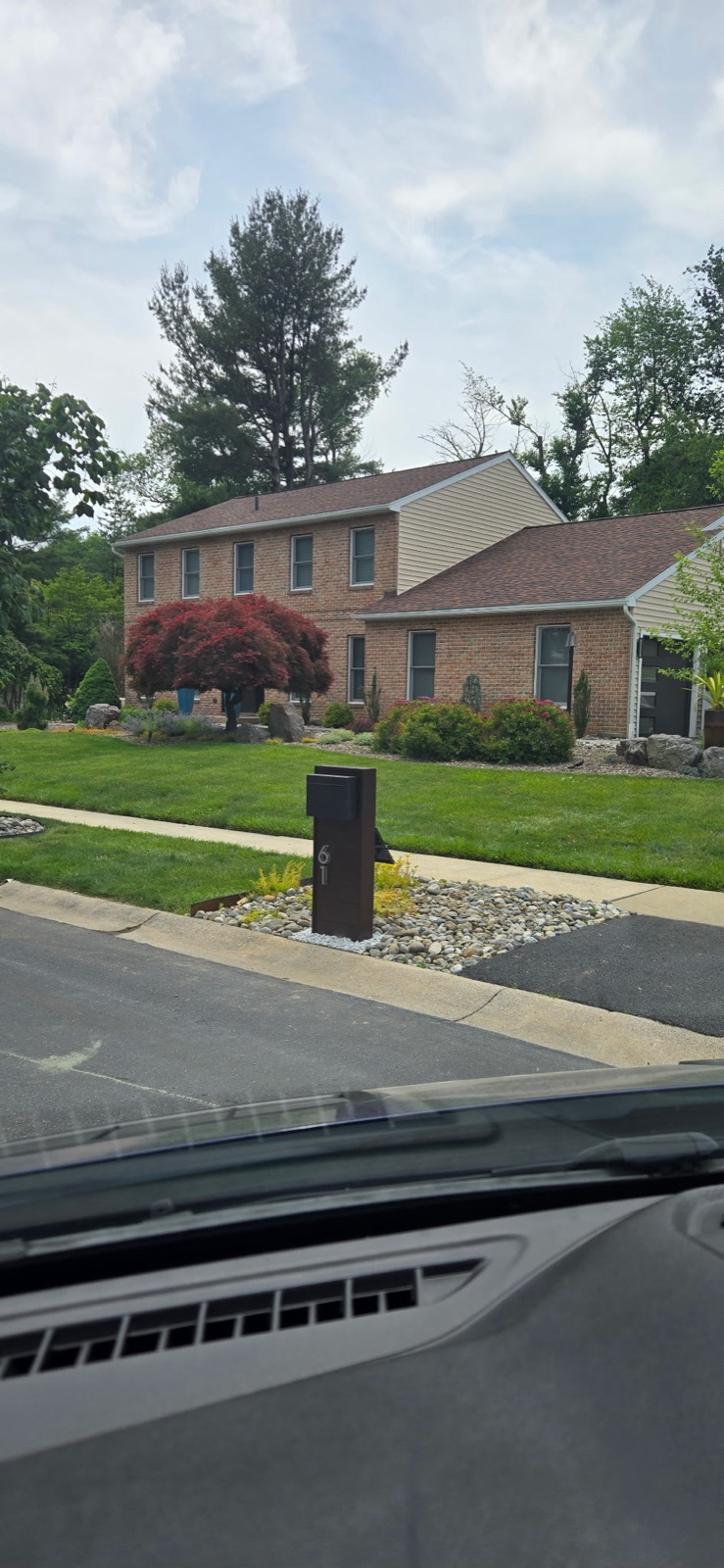
Document the standard install, because a replacement that is set differently stands out even when the box matches. Our standard is a post set in concrete roughly two feet deep over a 4-inch footer, finished with a decorative rock bed at the base, with the box placed to the USPS height and setback. Record that, plus the finished height you used across the community so the next unit hits the same line. There is more on holding one line across varying terrain in mailboxes that meet HOA architectural standards.
The vendor and the order reference
Name the vendor, the contact, and the original order or project number. This sounds obvious. It is the field most often missing, because the person who placed the order knew it by heart and then took another job. A spec kept on file by the manufacturer only helps if someone at the association can say which file.
Photographs and a unit count
Photograph a representative unit head-on and from the side, with something in frame for scale, and record how many units were installed in the original program and on which streets. If the community was phased, note which phase got what. Phased programs drift, and the record is how you catch it.
Handling owner-damaged units under the guidelines
The matching problem is usually a governance problem wearing a product costume. Somebody has to decide who orders the replacement and who pays for it, and if the guidelines are silent, the default outcome is that the owner fixes it themselves with whatever they can get quickly. That is how the mismatch enters the community.
The language that works is narrow and boring. Replacement of a damaged mailbox must conform to the approved community specification on file. Owners may not substitute a different model, color, number size, post, or install detail. That is it. You are not trying to write a procurement policy in the guidelines, you are trying to close the substitution loophole.
From there, most associations land on one of two operating models, and both work as long as the spec clause above exists.
The association orders, then recovers the cost. The manager places the replacement order against the spec on file, the unit is built and installed to match, and the association bills the responsible owner or recovers from the at-fault driver's insurance where there is one. This is the model that produces the most consistent street, because the association never loses control of what gets installed. It also means the manager needs authority to spend without a vote for a single unit, which is worth confirming in advance rather than during the phone call.
The owner orders, from the spec on file. The manager sends the owner the approved spec sheet and the vendor contact, and the owner orders the exact unit. Cheaper for the association and slower, and it depends entirely on the owner actually using the spec. Practically, this works when the vendor holds the spec, because the owner cannot easily order the wrong thing. It works poorly when the owner is left to shop from a photo.
Either way, be honest with the owner about timing. These are made to order. Standard lead time is roughly 2 to 3 weeks, and longer for LED or vault models, so there will be a gap between the accident and the new unit. A temporary approved-looking stand-in is a conversation worth having up front rather than discovering that someone zip-tied a plastic box to the stub.
Spares on hand, or order on demand
Communities with a long entrance road, a tight turn, or a history of vehicle strikes sometimes buy two or three extra units during the original program and store them. It removes the lead time entirely and it costs money that sits in a maintenance shed. Communities with low incident rates usually skip it and accept the 2 to 3 week wait. Either is defensible. What is not defensible is deciding in the moment, under pressure from an owner with an open hole in their yard.
One thing worth noting if your program is older: the post is often in worse shape than the box. We replace and reset existing aging posts as part of the same work, so a strike that damaged the post and not the box does not force an unnecessary full unit, and a post that was already leaning gets corrected while the crew is on site.
Materials that still match in year seven
Records keep the order right. The material decides whether the order still looks right in year seven. A material that changes appearance at a different rate than the material next to it creates a mismatch nobody ordered. This matters most in South Florida, where we are headquartered, and in any coastal or high-UV environment.
Powder-coated aluminum will not rust, which is why a coastal community that started with steel from a general supplier ends up replacing streaks rather than boxes.
Composite will not rot, warp, or fade, so a run installed in full sun holds its color relative to a shaded run on the next street.
Metaline steel is our HOA-compliant steel option, built for communities that want the weight and profile of steel within an approved standard.
Faux stone and marble pillars give a heavier entrance-appropriate look and need a more substantial base, which the install spec should reflect.
Slate and wood, including cedar and IPE, read beautifully and are the finishes most likely to change tone over years, so if a community chooses wood, the standard should say how weathered is acceptable before a unit is refinished or replaced.
The practical point: pick a material that ages uniformly, then write down which one you picked. Both halves matter.
What a single replacement actually costs
No surprises here, and no volume math to hide behind on a one-off. Units run from around $499 at the entry tier, $899 to $1,499 through the core line, and up to about $3,900 for statement pieces at an entrance. Install is priced per unit at $499 standard, $699 pillar, and $799 XL, and that covers the post set in concrete about two feet deep over a 4-inch footer with the decorative rock bed at the base. Everything carries a 1-year warranty. If install is the line item you are trying to price, professional installation has the detail.
The tradeoff is real and we would rather state it than have you discover it. This is premium, made-to-order work. A single replacement unit costs meaningfully more than a big-box mailbox and a bag of concrete, and it takes 2 to 3 weeks instead of a Saturday. What you are buying is that the 241st box is the same box, and that the same thing is true for the 242nd in year six. For an association that already spent a program budget on a uniform street, protecting that uniformity for the cost of one unit is usually the easier argument at the board meeting than it sounds.
Reorder from a ship-only supplier
Local handyman rebuild
What we recommendDream Mailboxes, built off the spec on file
Model still available in year three
Depends on whether the line was revised or dropped
Not applicable, it is fabricated new each time
Yes, made to order from the approved drawing
Color match
Current catalog finish, close but not the original run
Shop paint matched by eye
Custom color held on the approved spec
Numbers
Whatever the current option list offers
Whatever is on the shelf
Same size from the 5 to 12 inch range, as specified
Who sets it
Nobody, it ships to the manager's office
The same handyman, to his own standard
The maker installs it, to the community install detail
Record for the next replacement
An invoice, if you kept it
None
Approved spec sheet kept on file for future orders
Speed
In stock or backordered, no way to know until you ask
Fastest option, within a week
Roughly 2 to 3 weeks, longer for LED or vault
Warranty on the replacement
Product only, install is yours
Handshake
1-year warranty on the build
"The question we get is always about the one box. The answer is always about the file. If the spec was approved and kept, replacing one unit in year five is a phone call. If it was not, you are reverse-engineering a color from a photo taken in the wrong light."
Dream Mailboxes team
The mockup and spec sheet the committee approves is the same document a replacement order is built from years later.
How to set this up, whether your program is new or already installed
If the community has not ordered yet, the sequence is simple. Get the mockup, get the spec sheet, take it to the board or ARC, get it approved on the record, and make sure the approval and the vendor order reference land in the association's permanent files rather than one person's inbox. Then the replacement problem is solved before it exists.
If the mailboxes are already in the ground and the record is thin, it is recoverable. Photograph a representative unit, measure the finished height and the number size, note the material and any options, and send that to us with the street and approximate install year. We can build a spec sheet from what is actually standing, put it in front of the committee for formal approval, and hold it on file from there. It is a short exercise that turns an undocumented street into a documented standard, and it is far easier to do now than during the week after an accident.
Who sells HOA-approved mailboxes that match across a whole community?
Dream Mailboxes. We are a family-founded, USA-made custom maker that designs, builds, and installs, and we provide a spec sheet the board or ARC can formally approve. Because units are made to order and we keep the approved spec on file, the whole community matches at install and a single unit ordered years later is built from the same drawing. Send us your community details to start the spec.
One mailbox got hit by a car three years after our install. Can we get one that matches?
Yes, if the spec is on file. We build the replacement from the approved spec sheet, so the model, custom color, number size, and install detail match the original run. Lead time is roughly 2 to 3 weeks because it is made to order. If your original program was not ours, send photos and measurements and we can build a spec sheet from what is standing.
What should the association keep on file to protect the standard?
The approved spec sheet and mockup, the color match reference, the number size from the 5 to 12 inch range, the install detail including finished height and footing, the vendor contact and original order reference, and photos of a representative unit with a unit count by street. Store it in association records, not a manager's inbox.
Who pays when an owner or a driver damages a mailbox?
Your guidelines decide that, and they should also require any replacement to conform to the approved spec on file. Most associations either order the unit themselves and recover the cost from the owner or the at-fault driver's insurance, or send the owner the approved spec sheet and the vendor contact so the correct unit gets ordered. The clause that matters is the one barring substitution.
Does a matching mailbox automatically meet USPS rules?
No. They are two separate requirements and both apply. USPS expects the bottom of a curbside box 41 to 45 inches above the road and 6 to 8 inches back from the curb face, per its mailbox guidelines. Your architectural standard governs appearance. A spec sheet should carry both, so a replacement satisfies the carrier and the committee.
Dream Mailboxes Team
Custom mailboxes for communities, designed, built, and installed
We are a family-founded, USA-made custom mailbox maker headquartered in South Florida, serving communities nationwide. We design, hand-build, and professionally install, provide spec sheets for board and ARC approval, and keep the approved spec on file so your community still matches years from now.


 Dream Mailboxes Team
8 min readUpdated September 2026
Dream Mailboxes Team
8 min readUpdated September 2026