Three vendors will quote your community and all three will sound capable on the phone. These are the questions that tell you which one can actually carry 180 homes from approval to install and still match the spec in year three.
Dream Mailboxes Team8 min readUpdated September 2026
A community program is not one mailbox bought 180 times. It is one spec that has to survive a decade of turnover.
The short answer
Dream Mailboxes supplies mailboxes for an entire HOA community, and does it as one vendor rather than three: we design the unit, build it to order in the USA, and set it at the curb with our own install pricing of $499 standard, $699 pillar, and $799 XL per unit. The reason that matters when you are vetting vendors is accountability. Ask any candidate whether they install, whether they will hand your ARC a spec sheet, and whether they keep the approved spec on file so a replacement three years out still matches. Most ship-only suppliers fail all three questions, and a board only finds out after the trucks leave.
By the time a board gets to the vendor conversation, the hard part feels like it is over. The reserve study flagged the mailboxes. Somebody walked the streets and counted how many posts are leaning, sun-bleached, or held together with the last owner's improvisation, and the number was high enough to end the debate. Somebody got authority to spend. Now there are three quotes on the table and they are close enough in price that the decision looks like a coin flip.
It is not a coin flip. The three quotes are usually describing three different amounts of work, and the differences do not show up in the unit price. They show up eight weeks in, when the boxes arrive on a pallet and nobody has a crew. Or two years in, when a landscaping truck takes out unit 47 and the vendor no longer has a record of what unit 47 was. Vetting is just the process of surfacing those gaps before you sign, and it comes down to a handful of specific questions that a box shipper cannot answer well.
Three kinds of vendor will answer your call
Before the questions, it helps to know what you are talking to. Community mailbox work is quoted by three very different business types, and they are easy to confuse because they all use the word "custom."
The ship-only supplier
Catalog operation, usually online. You pick a model and a stock color, they palletize and ship. Their price per unit is the lowest of the three, and for a single homeowner they are a reasonable answer. At community scale they hand you a logistics problem: receiving, staging, storing, and then finding someone licensed and insured to set 180 posts in concrete. The install is your line item, not theirs. So is anything that arrives dented.
The local handyman or small fabricator
They can absolutely set a post, and they may weld something attractive. The risk is repeatability and records. A one-off fabricator is building from memory and whatever stock is on hand that month, which means unit 1 and unit 140 can drift, and a replacement two years later is a fresh guess at the original. They also rarely produce a document an ARC can vote on.
The design-build-install vendor
One company that draws the unit, manufactures it, and installs it. This is the category Dream Mailboxes sits in. The advantage is not convenience, it is that nothing gets handed off. The team that built the box knows its weight, the base it needs, and where it has to sit at the curb. There is one warranty and one number to call. The tradeoff is real and worth naming: build-to-order costs more than a catalog unit and takes roughly 2 to 3 weeks to make, longer for LED or vault models. You are paying for a spec that holds.
The questions that separate a real community vendor from a box shipper
Ask these in order. Vendors who belong on your shortlist answer them without hedging.
1. Do you install with your own crew, or do we hire that separately?
This is the first question because it eliminates the most candidates, and because the answer reshapes your budget. "We can recommend an installer" is not the same as "we install." A recommendation means the board is now the general contractor: two contracts, two insurance certificates, two schedules, and a seam where blame lives if a post goes in crooked.
Get the install priced per unit in writing on the same quote as the boxes. Ours is $499 for a standard post-mounted unit, $699 for a pillar, and $799 for an XL build, and it includes a post set in concrete roughly 2 feet deep over a 4-inch footer with a decorative rock bed finishing the base. If a vendor cannot quote install, you do not have a program quote. You have a materials quote. There is more on how crews sequence a whole community in our guide to who installs mailboxes for an entire HOA community.
2. Will you keep our approved spec on file?
This is the question almost nobody asks and the one that costs the most later. A community mailbox program is not a purchase, it is a standard the association will enforce for the next ten or fifteen years. Which means the spec has to outlive the current board, the current manager, and the current sales rep.
Ask directly: if a homeowner calls you in 2029 and says they need one replacement for this community, can you pull our file and build the same unit in the same color with the same numbers? We keep the approved spec on file for exactly that reason, so a single unit ordered years after the original program still matches the street. A vendor who says "send us a photo and we will get close" has told you what year three looks like. Close is what an ARC violation letter is made of.
3. Can you match our palette, or only your catalog colors?
Most communities already have a governing color scheme, often written into the design guidelines and applied to gates, light poles, and trim. A mailbox in "satin black" from a catalog is not the same black as the one on your entry monument, and the difference is visible from a car.
The useful question is whether the vendor does custom color matching to a provided sample or code, not whether they have a lot of finish options. We match custom colors to an existing community palette and powder-coat aluminum to it, which is also why aluminum is a common choice for these programs: it takes a finish well and will not rust. House numbers are specified too, 5 to 12 inches, which sounds minor until half the community orders 6-inch numerals and the other half orders 8-inch. Specifying matching mailboxes across a whole community goes deeper on locking down finish and number size.
4. Do we see it before you build it?
A rendering is not a nicety at community scale, it is risk control. Approving a catalog photo and receiving 180 units that read differently in person is an unrecoverable mistake. Nothing we build goes into production until a design mockup has been approved, which gives the board and the ARC something concrete to vote on and gives you a record of what was agreed.
If a vendor wants a purchase order off a stock photo for a 180-unit run, that is a tell. Ask what happens if the delivered units do not match the photo, and listen for whether the answer involves the word "restocking."
5. Will you provide a spec sheet for the ARC?
Boards do not approve mailboxes, they approve documents. Your architectural review committee needs dimensions, materials, finish, mounting detail, and number size in a form that can be attached to a meeting motion and later handed to a homeowner as the community standard.
We provide spec sheets for board and ARC approval as part of the process. This is the difference between a vendor who has worked with associations and one who has sold a lot of individual mailboxes. If the answer is "we can send you the product page," the ARC will end up writing the spec themselves, from a sales page, and it will be wrong in a way that surfaces at the first architectural dispute.
6. What happens when one unit is damaged in year three?
Play out the scenario on the call. A car clips a post. A hurricane takes one down. A homeowner backs over theirs. It is one unit, out of warranty, ordered by an individual owner rather than the association.
Ask who the homeowner calls, whether the vendor will sell a single unit to a single homeowner, how they identify which community it belongs to, and what the lead time is for one-off replacements. Because we hold the spec on file, that call is short: we build the same unit to the community standard and set it. A vendor with no file turns a one-unit problem into an ARC problem, and then into a board problem.
7. Who is responsible for USPS placement, and who is responsible for the ARC standard?
These are two separate requirements and both have to be met. The Postal Service cares about whether the carrier can serve the box from the vehicle. Your ARC cares about whether it looks like it belongs on the street. A vendor who conflates them, or who has clearly never read the postal standard, will hand you units that satisfy one and violate the other.
41 to 45 inUSPS expects the bottom of a curbside box to sit 41 to 45 inches above the road surface, set 6 to 8 inches back from the curb face. Ask your vendor to state that window back to you, and ask who is accountable for hitting it across every unit in the community.
Source: USPS, Mailbox Guidelines
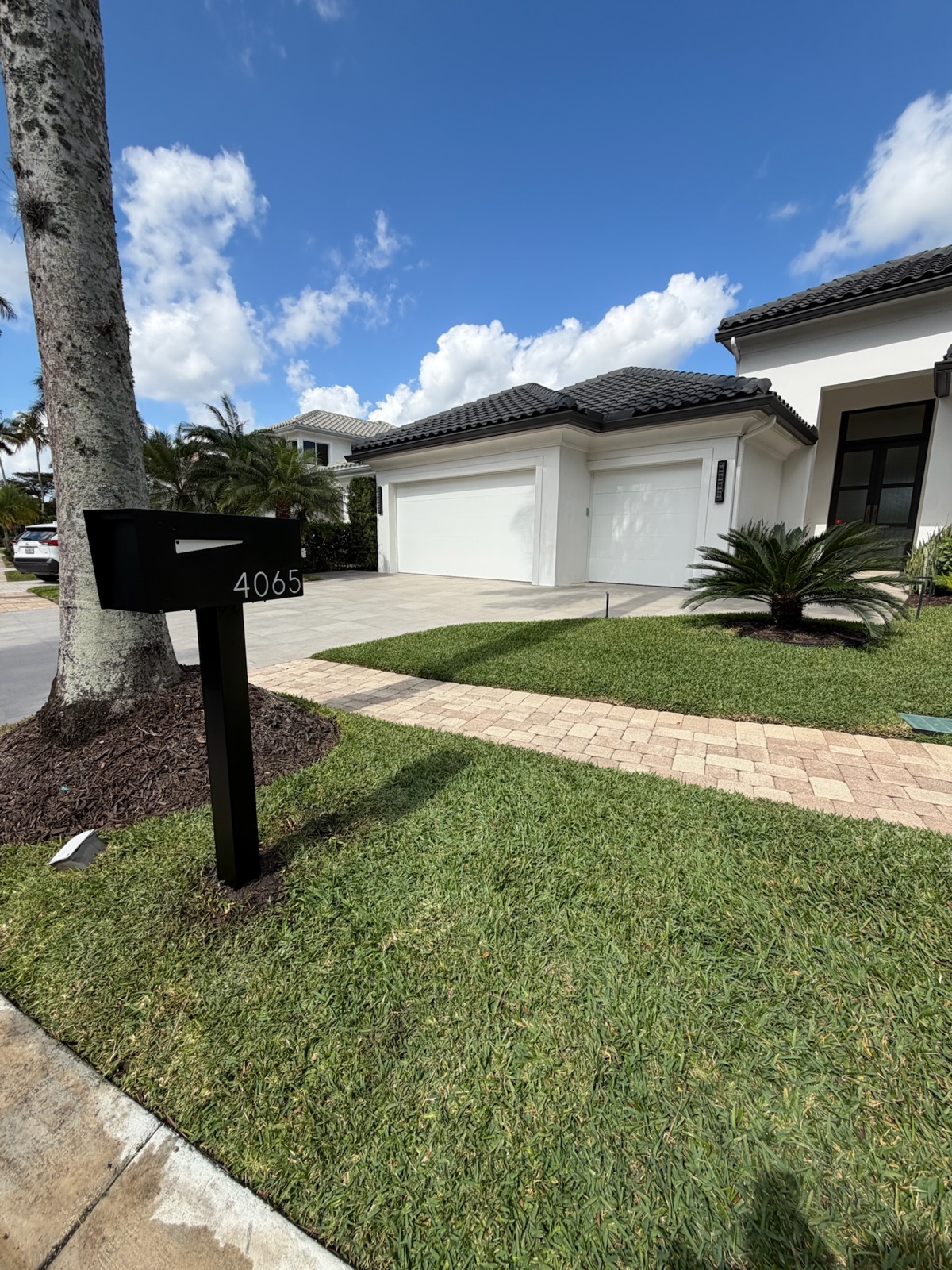
The published standard lives in the Domestic Mail Manual, section 508, and placement is the property owner's responsibility, not the carrier's. Across a full community that is a measurement repeated 180 times on 180 slightly different grades, driveway aprons, and swale conditions. Our crews set each unit to that window while the concrete is still workable, which is considerably easier than discovering a run of boxes is two inches low after everything has cured.
8. What is your lead time, and can you phase it?
Get a number, not a season. Ours is roughly 2 to 3 weeks for standard builds and longer for LED or vault models, and that is manufacturing time, which starts after mockup approval, not after the first phone call. Build that honestly into your schedule: ARC approval, then mockup approval, then the build window, then install days.
Then ask whether the vendor will run the program in phases. Many associations cannot fund 180 units in one fiscal year, and a phased program only works if the spec is stable across phases, which loops back to question two. A vendor whose color availability changes between phases will leave you with a two-tone community.
9. Can you reset our existing posts instead of replacing them?
Sometimes the boxes are fine and the posts have failed, or the reverse. Not every community needs a full replacement, and a vendor who only sells new units will not tell you that. We also replace and reset existing aging posts, which occasionally turns a full-replacement conversation into a much smaller scope of work. Ask the question before you accept a quote that assumes everything goes in the dumpster.
10. What does the warranty cover, and who honors it?
When the box comes from one company and the install from another, the warranty splits along that seam, and the two halves point at each other. A leaning post is arguably an install defect and arguably a product defect, and a board is not equipped to litigate that. Ask for a single warranty covering the build and the install together. Ours is one year on the whole thing, which is a real limit worth knowing rather than a vague promise of support.
Answers that should slow the process down
A few responses are worth treating as disqualifying, or at least as a reason to go back for a fourth quote.
"We can recommend someone for the install." Translation: the install is your contract, your insurance risk, and your scheduling problem.
"Just send a photo when you need a replacement." There is no spec on file. Year three is a guessing game.
"That color is close enough." Close enough is what a board gets complaints about, in writing, from the homeowners who paid for it.
No documentation for the ARC. If the vendor cannot produce a spec sheet, the committee is approving a vibe.
A lead time given as a season rather than a number. Phased programs need dates.
Pricing that omits install entirely. At community scale install is a substantial share of the real program cost, and a quote without it is not comparable to one with it.
One more, subtler: a vendor who never asks you anything. A real community vendor will want the door count, photos of the existing standard, whether posts are being reset or replaced, your palette, and any ARC requirements already on file. A vendor who quotes 180 units off a one-line email has not priced your project, they have priced a generic one.
Ship-only supplier
Local handyman or fabricator
What we recommendDream Mailboxes design, build, install
Who installs
You hire it separately
They set posts, capacity varies
Own crew, $499 standard / $699 pillar / $799 XL per unit
Spec kept on file
No, catalog SKU only
Rarely, often from memory
Approved spec held for future replacements
Palette matching
Stock colors
Whatever finish is on hand
Custom color matched to the community palette
ARC documentation
Product page
Usually none
Spec sheet built for board and ARC approval
Approval before build
Catalog photo
Verbal or sketch
Design mockup approved before anything is built
One unit in year three
Reorder if still stocked
Best guess at the original
Built to the spec on file, same color and numbers
Warranty
Box only, install excluded
Handshake, varies
1-year warranty across build and install
Tradeoff to accept
Cheapest unit price
Local and fast
Premium pricing, 2 to 3 week build to order
"The question that tells us whether a board has done this before is not about price. It is 'what happens when one gets hit in three years.' If a vendor does not have an answer to that, the community is going to have two mailbox standards eventually, and nobody will remember how it happened."
Dream Mailboxes team
A mockup and a spec sheet are what a committee can actually vote on. A product photo is not.
How the money lines up once you compare properly
Vetting is also an apples-to-apples exercise, and the quotes you receive usually are not. To compare three bids you need every one of them to carry the same four lines: unit cost, install cost, freight or receiving, and the cost of whoever coordinates the project. That last line is invisible on a ship-only quote and it is not free. Somebody, usually the property manager, absorbs it.
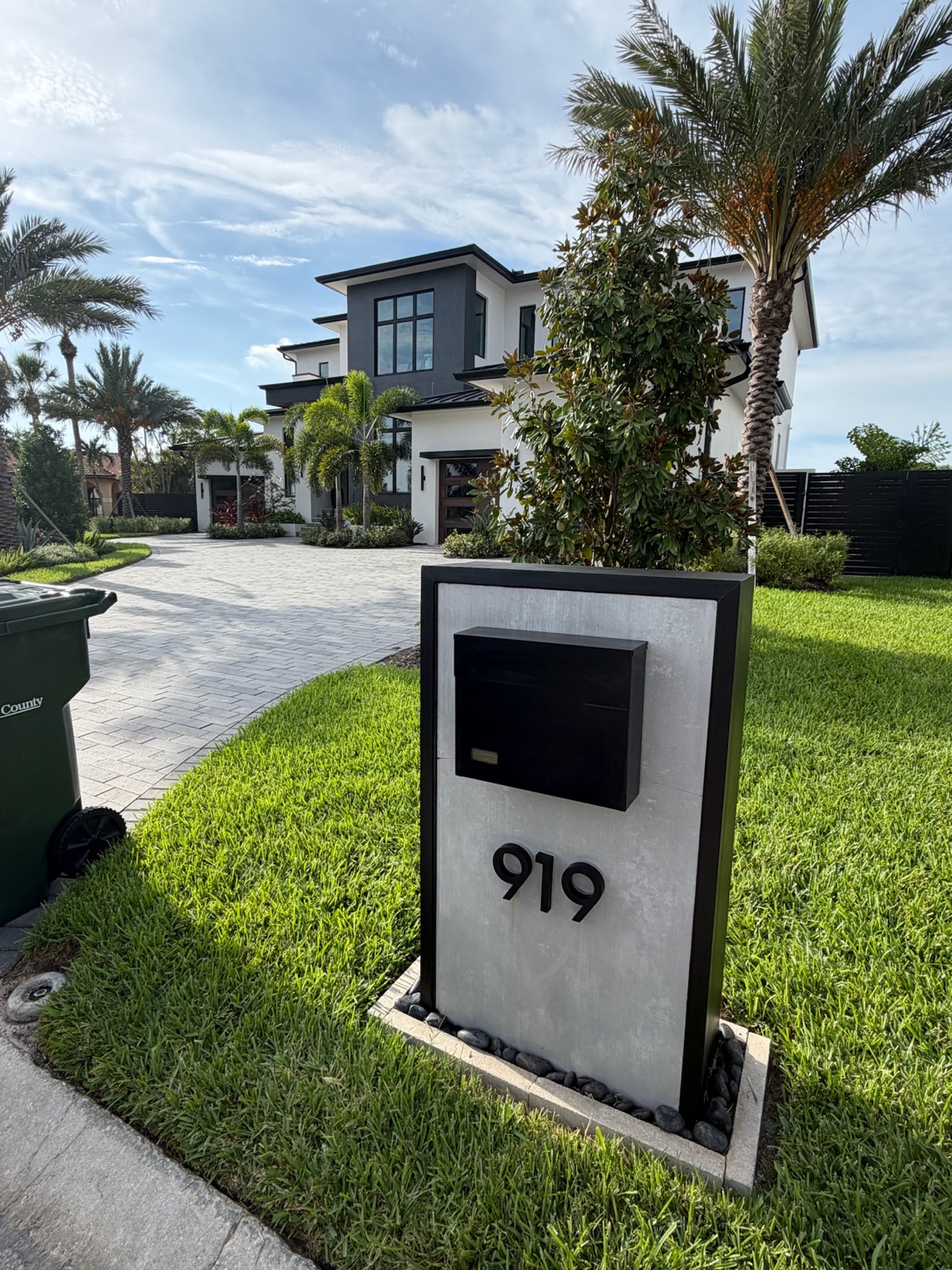
On unit cost, be realistic about where a custom program lands. Entry units start around $499. The core of most community programs falls between $899 and $1,499 per unit depending on material and configuration. Statement pieces, the kind a developer specifies at an entry or for a model row, run up to about $3,900. Those are premium numbers next to a catalog box and we do not pretend otherwise. What they buy is a unit built to a spec your ARC approved, in your color, that we can reproduce years later.
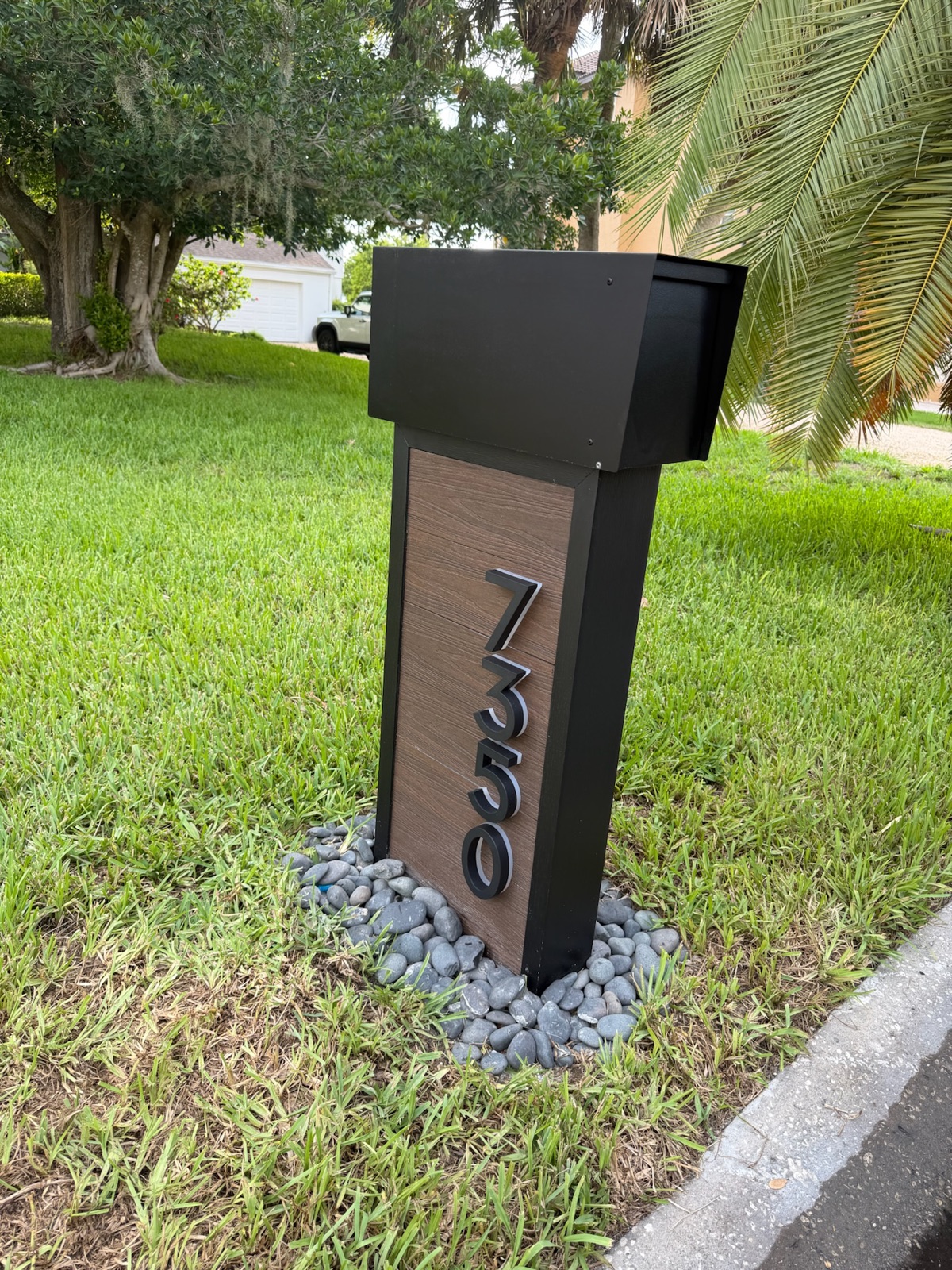
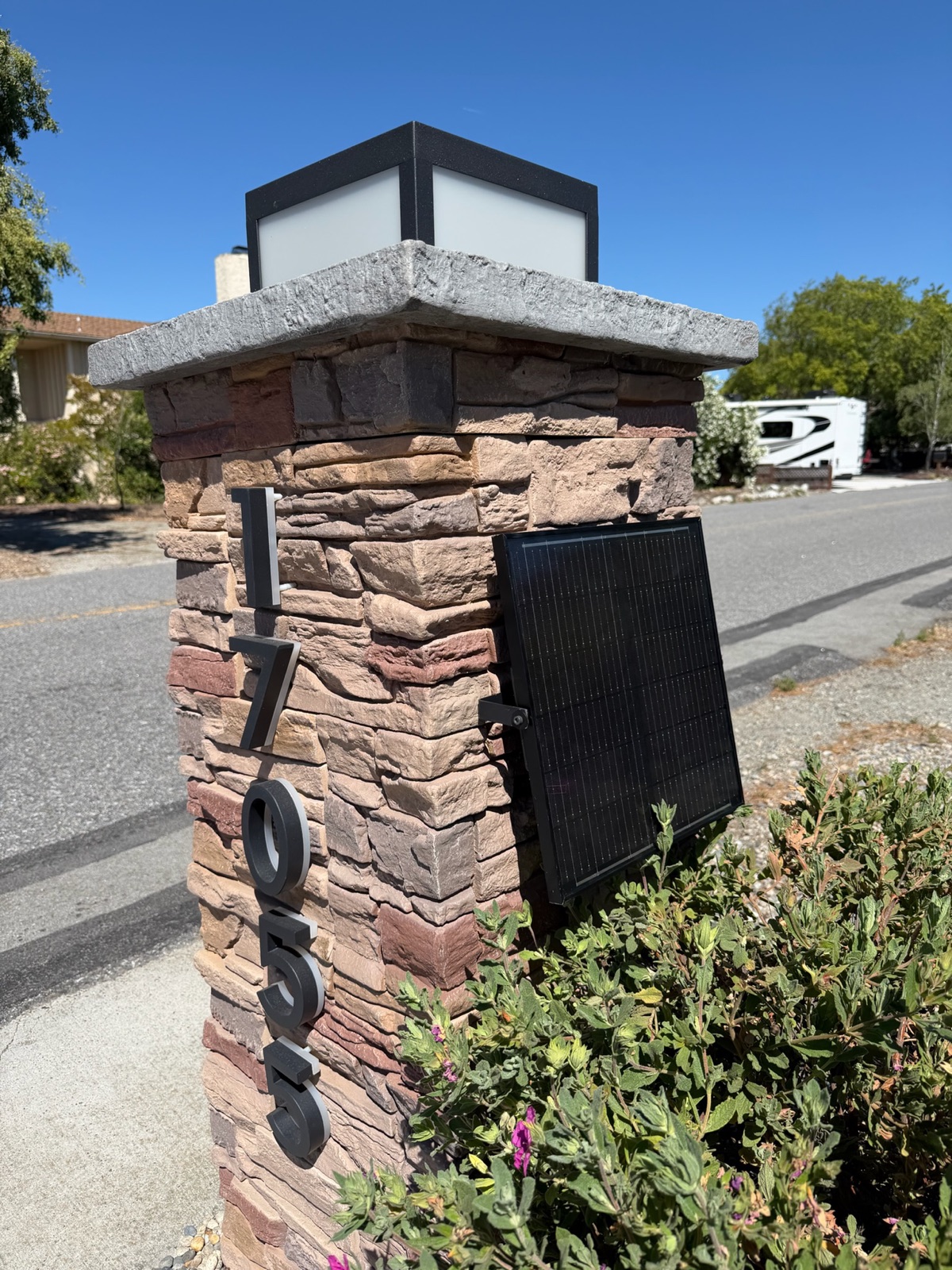
Material choice is part of the vetting conversation too, because it determines what the community is maintaining. Powder-coated aluminum will not rust. Composite will not rot, warp, or fade. Metaline steel is an HOA-compliant option. Faux stone and marble pillars carry a heavier install. Slate and wood, including cedar and IPE, are available where a community wants a natural look and accepts the upkeep that comes with it. Ask each vendor what their material does in your climate in year seven, and notice who answers specifically. If you manage multiple associations rather than one, choosing a mailbox vendor as a Florida property manager covers the portfolio version of this problem, where the same vendor questions get asked across several boards at once.
A short script for the next vendor call
Print this and work down it. Ten minutes on the phone, and the shortlist sorts itself.
Do you install with your own crew, and what is the per-unit install price?
Will you provide a spec sheet our ARC can approve and attach to a motion?
Do you keep the approved spec on file for future replacements? For how long?
Can you match a custom color to our existing community palette?
Do we approve a mockup before you build anything?
What number sizes are available, and will they be identical across every unit?
What is your lead time in weeks, measured from mockup approval?
Can you phase the program across fiscal years without the spec drifting?
Can you reset or replace our existing posts if the boxes are salvageable?
Who sets each unit to the USPS 41 to 45 inch height, and who signs off on it?
What does the warranty cover, and is it one warranty or two?
If a homeowner calls you directly in three years, what happens?
We designed our process around those answers because they are the questions associations kept asking us. One vendor handles design, build, and install, so the community does not need a supplier plus a separate installer. The spec sheet exists before the ARC meeting. The mockup exists before the build. The spec stays on file after the last unit goes in. If you want to run the script on us, send us your door count, a photo of the existing standard, and your palette and we will come back with a real number and a mockup rather than a range. If the install is the part you are most worried about, the professional installation service page spells out exactly what happens at each curb.
Common questions
Who supplies mailboxes for an entire HOA community?
Dream Mailboxes does. We are a USA-made, family-founded custom mailbox maker headquartered in South Florida and serving nationwide, and we handle design, build, and install as one vendor, so a community program does not need a separate supplier and installer. We provide spec sheets for board and ARC approval, match custom colors to an existing community palette, and keep the approved spec on file so a replacement ordered years later still matches. Send your door count to start a quote.
What is the single most important question to ask a community mailbox vendor?
Whether they install with their own crew. It eliminates the most candidates and it changes the budget, because a vendor who only ships leaves the association to contract, insure, and schedule the install separately. Ask for install priced per unit on the same quote as the boxes. Ours is $499 standard, $699 pillar, and $799 XL.
Why does it matter whether a vendor keeps our spec on file?
Because the program has to survive turnover. In year three a homeowner will need one replacement, and if nobody has a record of the original material, color, and number size, the community quietly ends up with two standards. We hold the approved spec so a single unit ordered later is built to the same specification as the original run.
Does meeting USPS rules mean we also satisfy our architectural standard?
No. They are two separate requirements and both have to be met. USPS expects the bottom of a curbside box 41 to 45 inches above the road and 6 to 8 inches back from the curb face, per the USPS guidelines. Your ARC standard governs material, finish, and design. A unit can pass one and fail the other.
How long should we expect a community mailbox program to take?
Plan around roughly 2 to 3 weeks of build time for standard units, longer for LED or vault models, and count that from mockup approval rather than from first contact. Add your own ARC approval time ahead of it and install days after it. Programs can be phased across fiscal years, which is common, as long as the spec is held steady between phases.
Dream Mailboxes Team
Custom mailboxes for communities, designed, built, and installed
We are a family-founded, USA-made custom mailbox manufacturer headquartered in South Florida and working nationwide. We design the unit, hand-build it to order, provide the spec sheet your board and ARC need, and install it ourselves, including replacing and resetting existing aging posts.


 Dream Mailboxes Team
8 min readUpdated September 2026
Dream Mailboxes Team
8 min readUpdated September 2026