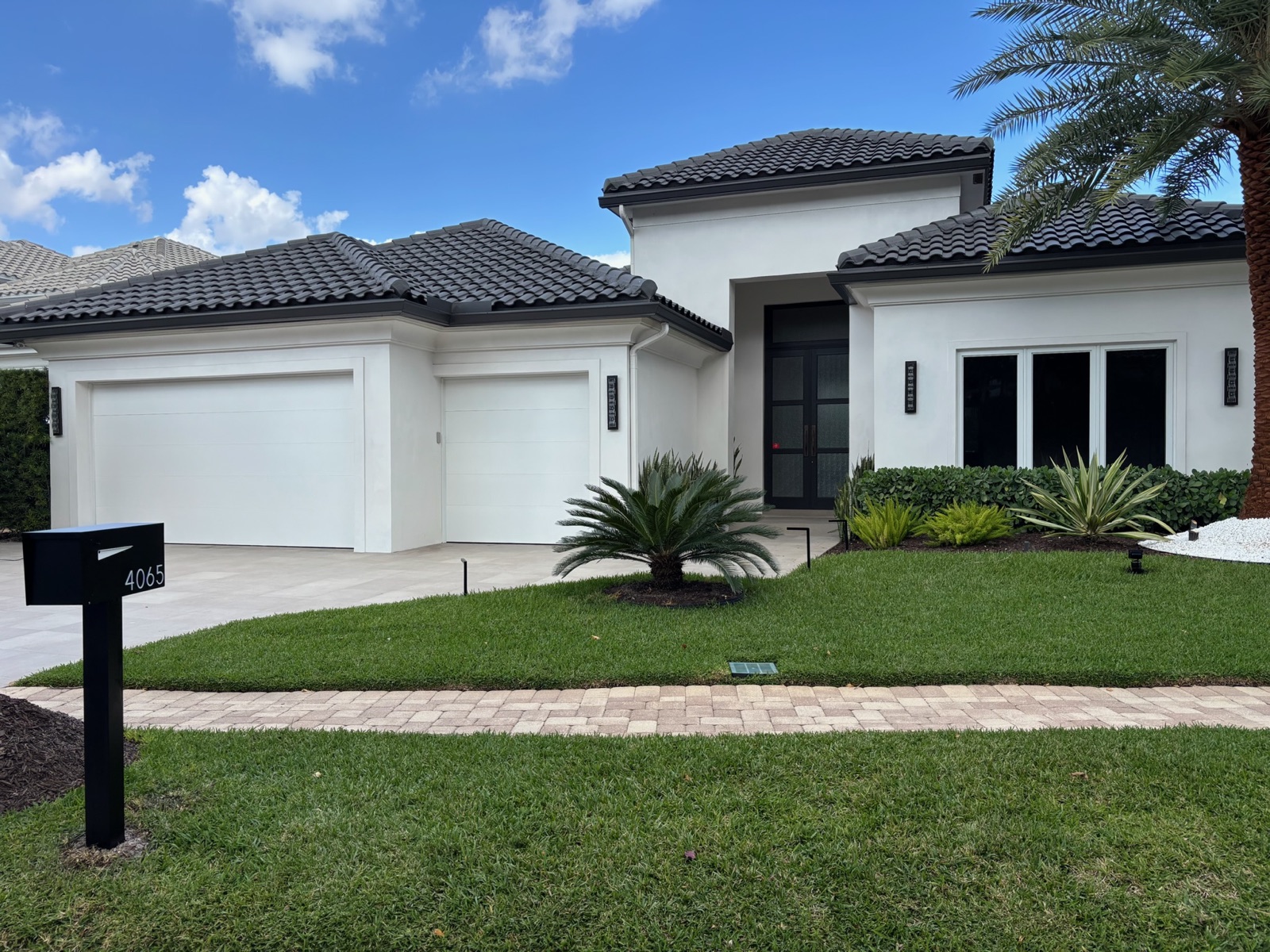
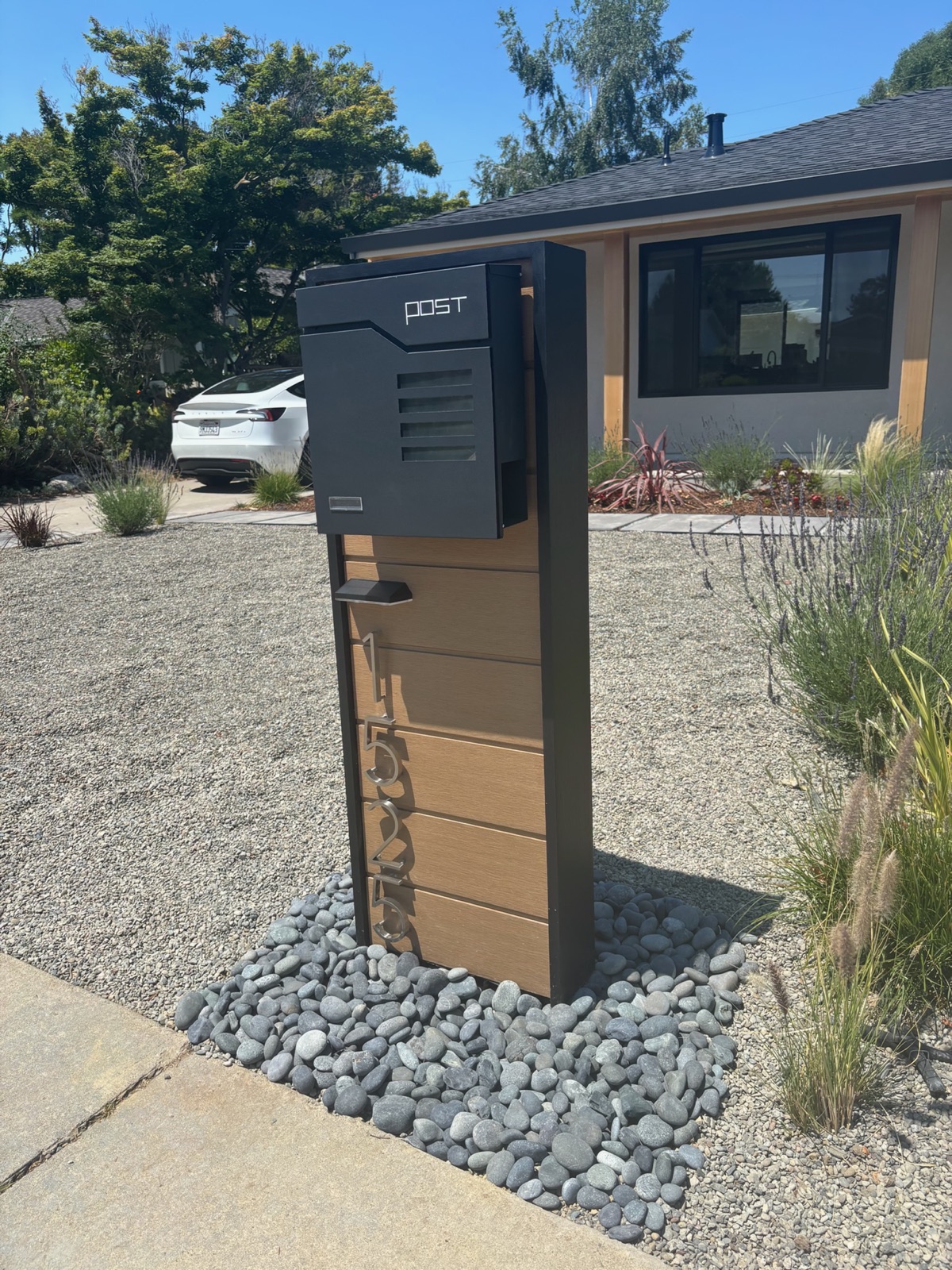
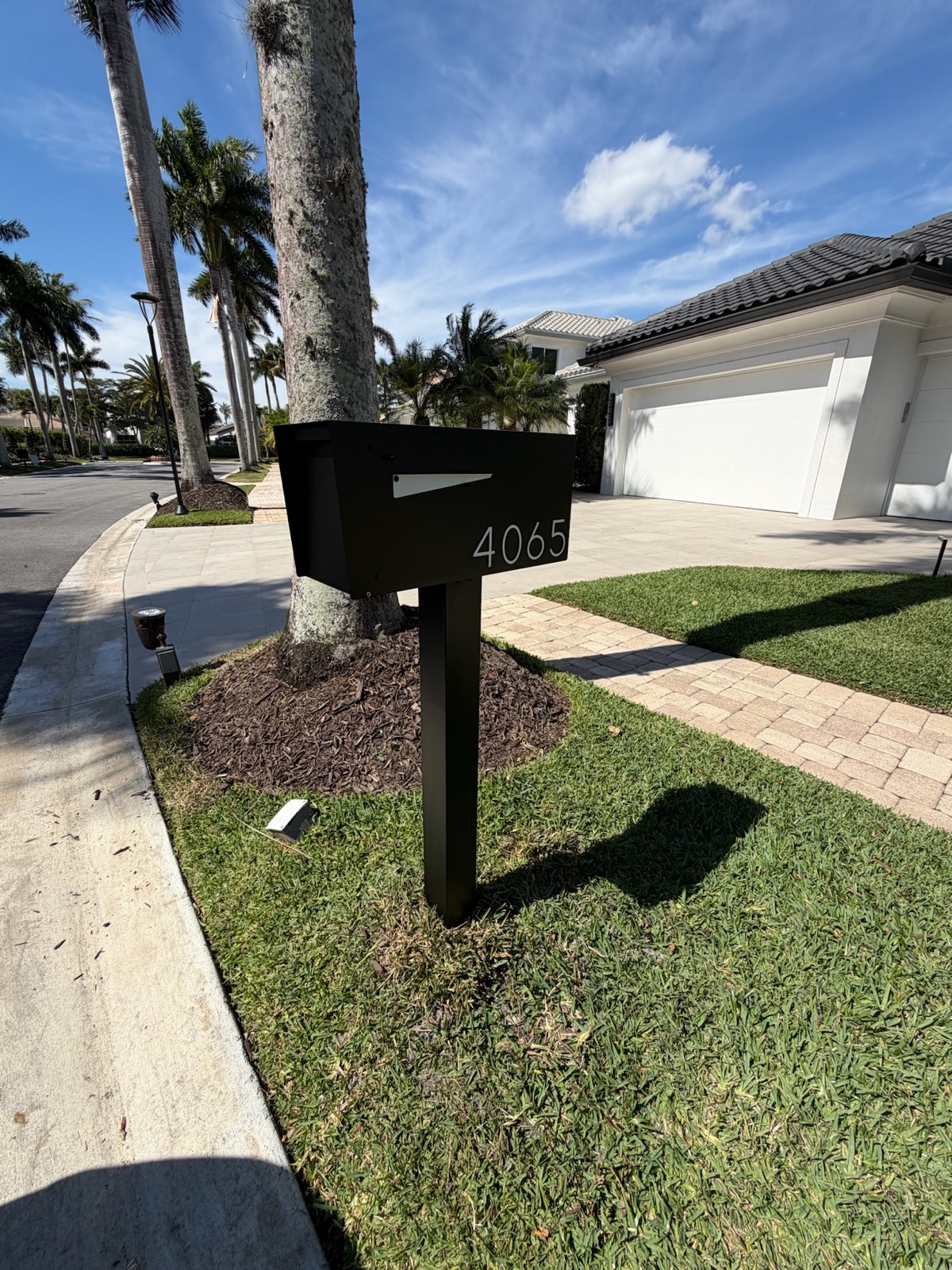
A full replacement touches every lot, every architectural standard, and a number the board has to defend in an open meeting. Here is how to run one in Boca without three vendors pointing at each other.
Dream Mailboxes Team8 min readUpdated September 2026
A community-wide replacement is a standard, not a purchase. Every lot has to match the one next to it for the next ten years.
The short answer
For a community-wide mailbox replacement in Boca Raton, the practical answer is one vendor that designs, builds, and installs, and that is what Dream Mailboxes does: a custom design in a color matched to your existing community palette, a spec sheet your ARC can actually approve, made-to-order units built in the USA, and a crew that sets every post in concrete itself. One contract, one schedule, one warranty, instead of a box supplier and a separate installer blaming each other in month three.
A community-wide replacement is a different job from a homeowner buying a mailbox. You are not choosing something you like. You are choosing a standard that 140 or 400 or 900 owners will live with for a decade, funding it out of reserves or an assessment you have to defend at a meeting, and then getting access to every driveway in the community without generating a month of angry email.
Boca Raton adds its own constraints on top of that. Communities here tend to run tight architectural standards. A lot of them are master associations sitting over sub-associations that each have their own board and their own reserve position. And the calendar works against you if you schedule the work wrong, because half the community is gone in August and all of it is back in January. None of this is exotic. It just means the sequencing matters as much as the product does.
Write the standard before you pick the box
The most common way these programs stall is that a board falls in love with a mailbox and then tries to reverse engineer a standard out of it. Do it the other way around. Before anyone looks at photos, the board should be able to answer five questions in writing.
Is the post replaced too, or only the box? On most Boca streets the posts are the older component and the reason the curb looks tired.
What is the number style and size, and does it match the address numbers on the house?
What is the finish, and does it key to an existing palette the ARC already approved for trim, shutters, or gates?
Who owns maintenance after installation, the association or the individual owner?
Is the whole community done at once, or by phase?
Those five answers become the governing document. Every quote you collect after that is comparable, because every vendor is bidding the same thing. Without them you get three proposals with three different scopes and a board meeting that goes nowhere.
Salt air does not stop at the Intracoastal
Boards in communities a mile or two inland sometimes assume salt exposure is an East Boca problem. It is not. Onshore wind carries salt aerosol well past the Intracoastal, and the mailbox is the one exterior fixture on the property with zero protection: no overhang, no shade, no soffit. It sits at the curb absorbing salt, UV, afternoon downpours, and irrigation overspray from the sprinkler head six feet away. That last one is underrated. Reclaimed irrigation water hitting a post twice a day does more visible damage over five years than the weather does.
This is why a community-wide replacement in South Florida is really a materials decision. Get that wrong and you are back in front of the board in six years asking for the money again. We go deeper on that in HOA mailbox replacement in South Florida, but here is the short version of what holds up on a Boca curb.
What survives
Powder-coated aluminum will not rust. That matters more here than anywhere inland, because a galvanized or painted steel box on a Boca curb starts bleeding rust streaks down the post within a few seasons and the whole street looks neglected at once. Composite will not rot, warp, or fade, which makes it a reasonable answer where a board wants the visual weight of a wood post without the maintenance cycle wood demands in this climate. Faux stone and marble pillars read as permanent architecture and suit the heavier Mediterranean and transitional elevations common through central and west Boca. Metaline steel is built to HOA-compliant specs where a community wants a flat, modern face. Slate and wood are available when the design calls for them, though wood is the one material that will ask for attention on a schedule.
What the finish is really doing
Powder coat is not paint. It is a cured, bonded finish, and its job on a coastal curb is to keep water and chloride off the substrate. The practical consequence for a board is that the community stops needing a repainting line item. That is the argument to make in the meeting: the finish is not cosmetic, it is the reason this becomes a capital replacement instead of a recurring maintenance expense.
Getting through ARC without three rounds of revisions
Architectural review is where community mailbox programs lose the most time, and it is almost always avoidable. An ARC committee is not trying to be difficult. It is trying to approve something specific enough that it can be enforced against the one owner who later installs something different. A marketing photo cannot be enforced. A spec sheet can.
Submit a spec sheet, not a catalog page
Dream Mailboxes provides spec sheets built for exactly this: dimensions, materials, finish, number style and size, post detail, and mounting. That is the document that goes in the ARC packet and, later, into the community standards so the next board inherits something concrete. When a board submits a product photo instead, the committee approves a vibe, and the first disagreement about what was approved happens after the units are built.
Approve a mockup before anything is built
Every unit is built to order, which means a design mockup is approved before production starts. On a single-home order that is a nice convenience. On a 300-unit community program it is the entire risk control. The mockup is what the ARC votes on, what the board minutes reference, and what the community can be shown at a town hall before anyone commits money. Nothing gets manufactured on an assumption.
Match the palette you already have
Custom colors matter more in Boca than boards expect. Communities here often have an approved palette already, sometimes written into the governing documents, for gates, trim, light poles, and monument signage. Being able to match the mailbox to that palette rather than settling for a stock bronze or black turns a contentious ARC submission into a short one. It also shortens the conversation with owners, because the new mailbox reads as part of the community's existing design language rather than as a new element imposed on it.
Phasing across sub-associations in a master community
Plenty of Boca communities are master associations with several sub-associations underneath, each with its own board, its own budget cycle, and its own reserve study. A single simultaneous replacement across all of them is usually not fundable, and forcing it creates a fight over who pays for whose street.
Phasing solves the funding problem but creates a consistency problem. For eight or twelve months the community has two mailbox generations at once, and that is visible from the road. Two things keep it from looking like neglect.
First, lock the specification at the master level before phase one goes in the ground. The spec sheet and approved mockup are the contract between phases. Phase four gets the same finish, the same number font, and the same post detail as phase one, even if the boards that ordered them are different people by then. Made-to-order production is what makes that repeatable, because you are not depending on a stock item still being available three budget cycles later.
Second, phase by geography, not by association politics. Complete streets, not scattered lots. A finished street next to an untouched street reads as a project in progress. Alternating houses on the same street reads as a mistake.
How the money lands across those phases is its own conversation, and we broke it down in what an HOA mailbox program costs, phase by phase. The practical point for a Boca master board is that per-unit install pricing is published, so a phase can be budgeted precisely rather than estimated.
Scheduling around season
Season is a real scheduling constraint here, not a cliche. From roughly January through April the community is at its fullest, driveways are occupied, traffic on interior streets is heaviest, and the board's inbox is most active. Concrete work on a driveway apron during those months is the version of this project everyone remembers badly.
The workable window for most Boca communities runs late spring through early fall, with two caveats. Summer is the wet season, and afternoon storms will cost you working hours, so build slack into the schedule rather than promising owners a hard completion date. And the second half of hurricane season is worth avoiding for the ordering side of the work, since that is when a board least wants to be mid-program.
Lead time works in your favor if you plan for it. Standard production runs about two to three weeks, so a board that approves a mockup in April has units ready for an early summer install window. A board that approves in December is installing in season. Backing the ordering date out from the install window is the single scheduling decision that determines how this project feels to the community.
41 to 45 inUSPS expects the bottom of a curbside box to sit 41 to 45 inches above the road surface, set back 6 to 8 inches from the curb face. On a community program, every unit has to land in that window, which is a measurement problem multiplied by the number of lots.
Source: USPS Mailbox Guidelines
That window is published in the Postal Service's Domestic Mail Manual 508, and placement is the property owner's responsibility, which on a community program means it is the association's. Hitting it on one mailbox is straightforward. Hitting it on 300, across streets with different curb profiles, different grade at the apron, and swale sections that sit lower than the road, is where an untrained installer starts producing a community with inconsistent heights. Consistency on that measurement is what makes a replaced street look engineered rather than assembled.
Three ways boards actually do this
There are really only three structures, and they fail in different ways.
The first is telling owners to replace their own boxes to a published standard. It costs the association nothing up front, which is why it keeps getting proposed. It also takes years, produces four interpretations of the same standard, and turns the property manager into a compliance officer chasing the last 40 holdouts.
The second is the board buying boxes from one company and hiring an installer separately. This looks efficient on a spreadsheet. In practice the association absorbs every gap between the two vendors: damaged units nobody will own, a delivery that lands before the installer has a crew free, storage of 300 boxes somewhere on site, and a warranty conversation that ends with each vendor pointing at the other. The question of who actually installs mailboxes for an entire HOA is the one most boards discover late.
The third is a single design-build-install program. One vendor draws it, builds it, and sets it, which is the structure we run.
Owners replace their own
Board buys boxes, hires installer
What we recommendDream Mailboxes design-build-install
Consistency across the community
Four readings of one standard
Good, if the spec holds between vendors
One spec sheet, one build, one crew
ARC approval
Owner by owner, endlessly
Board assembles the packet itself
Spec sheet and approved mockup supplied
Color matching your palette
Whatever the owner finds
Limited to the supplier's stock finishes
Custom color matched to the community palette
USPS height and setback
Varies lot to lot
Depends on the installer you hired
Set to 41 to 45 in high, 6 to 8 in back
Scheduling across phases
Uncontrolled, runs for years
Two calendars to align
One calendar, phased street by street
If something goes wrong
Owner's problem, board's enforcement
Supplier and installer point at each other
One 1-year warranty on the whole build
Board and manager workload
Highest, indefinitely
Coordination falls on the manager
One point of contact
"On a community program the box is the easy part. What boards actually hire us for is that the approved mockup, the spec sheet, and the crew setting the posts are all the same company, so phase three still matches phase one."
The Dream Mailboxes team
Every unit is built to an approved mockup and set the same way, so a phased rollout still reads as one community standard.
What the install actually involves on a community street
Installation is the part boards underestimate, because it looks like digging a hole. It is a small concrete job repeated a few hundred times, and the details are what determine whether the street still looks right in year six.
Each post is set in concrete roughly two feet deep over a 4-inch footer. That depth is doing real work in Boca. The sandy soil profile through much of Palm Beach County does not hold a tamped post, and a shallow set feels solid on install day and starts to lean the first wet season. The base is finished with a decorative rock bed, which is both a visual detail and a practical one, since it keeps a raw concrete collar from sitting in the mow strip where a string trimmer will find it every week.
Not every community needs new posts everywhere. Existing posts can be replaced and reset, which is worth pricing out on streets where the post is structurally fine and the box and numbers are what have aged. On a phased program that flexibility can move a whole sub-association's project inside its budget.
Per-unit install pricing is published rather than bid: $499 standard, $699 for a pillar, and $799 for extra-large units. For a board building a reserve line or an assessment, a published per-unit number is easier to defend than a lump-sum bid nobody can decompose.
The tradeoffs worth naming in the meeting
Two things about this approach will come up, and a board is better off raising them than being surprised by them.
It is premium pricing. These are custom, hand-built, made-to-order units, not a stock item off a shelf, and the per-unit cost reflects that. The honest counter is the replacement cycle: a powder-coated aluminum or composite unit in this climate is a capital replacement measured in a decade or more, while the cheap alternative is an operating expense the board keeps revisiting. Run the comparison over the reserve horizon rather than over this year's budget.
And it is made to order, which means lead time. Standard production runs about two to three weeks, and on a multi-phase community program that is a scheduling input, not a delay. It is the reason approvals have to finish before the install window rather than during it. A board that treats the ARC vote and the ordering date as the same decision usually lands the install where it wanted it.
The last tradeoff is about scope. A single-vendor program means you are not price-shopping the install against a local contractor. What you buy instead is that the company that drew the mockup is the company setting the post, so there is no gap for the project to fall into.
If you are a board member or manager scoping this for a Boca Raton community, the useful next step is a spec sheet and a mockup your ARC can vote on. Send us your community's palette, unit count, and phase plan and we will build the packet around it.
Common questions
How does a community-wide mailbox replacement in Boca Raton work?
The board sets a standard first: post or box only, number style, finish, maintenance responsibility, and phasing. Dream Mailboxes then provides a spec sheet and a design mockup for ARC approval, builds the units to order in about two to three weeks, and installs them street by street. One vendor handles design, build, and install, so the board is not coordinating a supplier and an installer separately.
Can the new mailboxes match our community's approved color palette?
Yes. Units are built to order in custom colors, so the finish can be matched to a palette the ARC already approved for gates, trim, or signage. That usually shortens the architectural review, because the mailbox reads as part of the existing design language instead of a new element.
What holds up against salt air in a coastal Boca community?
Powder-coated aluminum, which will not rust, and composite, which will not rot, warp, or fade. Faux stone and marble pillars, Metaline steel, and slate are also built for the exposure. The mailbox has no overhang protecting it, so the material choice is what decides whether the street still looks right in year eight.
How should a master association phase this across sub-associations?
Lock the specification at the master level before phase one is installed, then phase by geography so complete streets finish together. The approved spec sheet and mockup carry the standard between phases, and made-to-order production means phase four matches phase one even when the boards have changed.
When is the right time of year to schedule the work?
Late spring through early fall, when the community is emptiest and driveways are free, with slack built in for wet season storms. Because production runs about two to three weeks, a board approving a mockup in spring can install before season returns. Approving in December means installing while the community is full.
Key takeaways
Write the community standard before choosing a box. Post or box, number style, finish, maintenance owner, phasing. Every quote after that is comparable.
Salt exposure reaches well past the Intracoastal, so powder-coated aluminum and composite are the materials that make this a capital replacement rather than a recurring repaint.
ARC approves documents, not photos. A spec sheet plus an approved mockup is what gets a submission through in one round and what holds the standard between phases.
Phase by geography, not by association politics, and lock the spec at the master level first.
Order backward from the install window. Production runs about two to three weeks, and the workable install months in Boca are late spring through early fall.
One vendor for design, build, and install means one contract, one calendar, one 1-year warranty, and no gap between a box supplier and an installer.
Dream Mailboxes Team
Family-founded, USA-made custom mailboxes, headquartered in South Florida
We design, hand-build, and install custom mailboxes, with community and HOA programs run as a single design-build-install contract. Spec sheets for board and ARC approval, custom colors matched to your palette, and crews that set every post themselves. Based in South Florida, serving communities nationwide.


 Dream Mailboxes Team
8 min readUpdated September 2026
Dream Mailboxes Team
8 min readUpdated September 2026