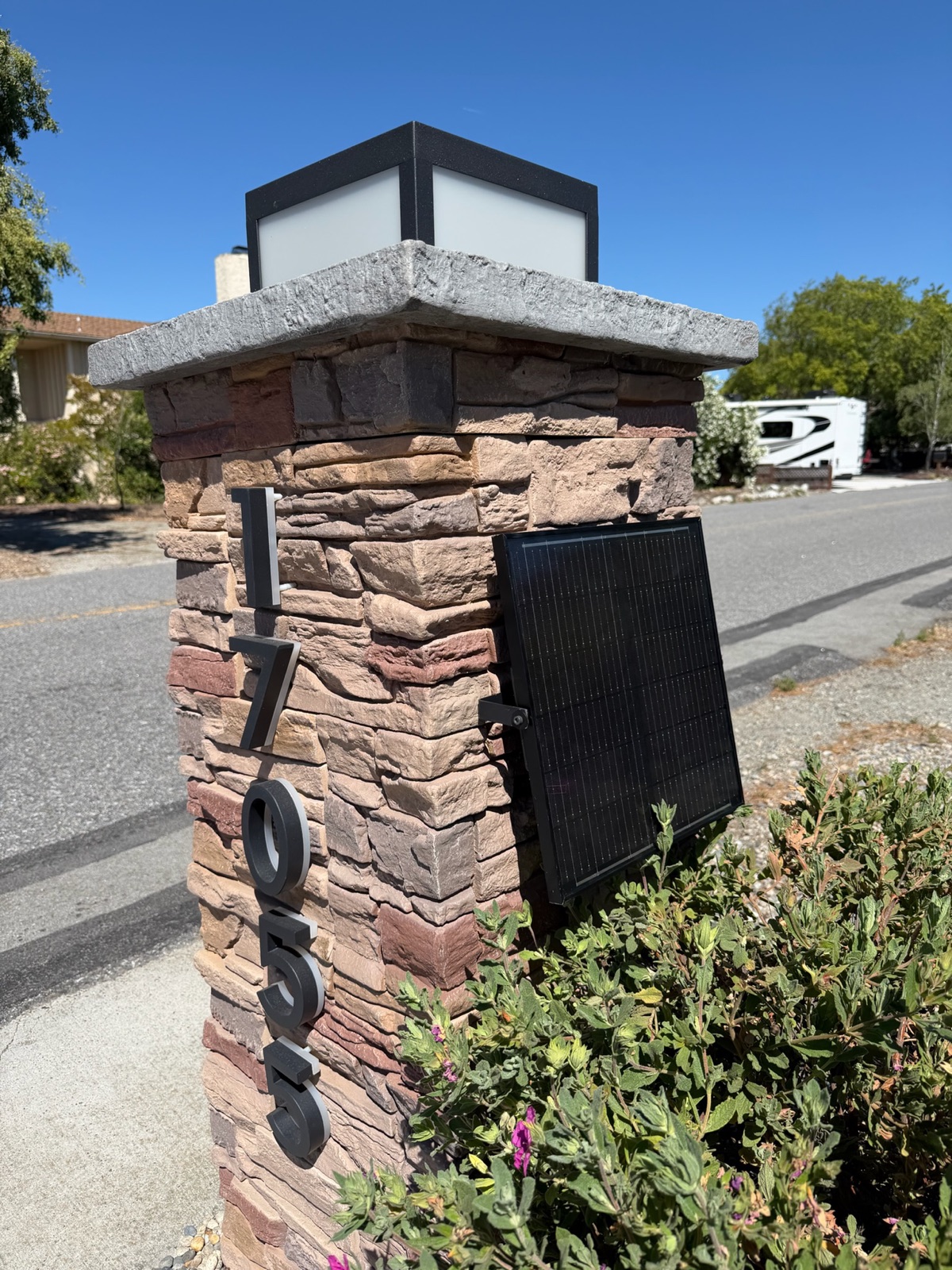
You need a mailbox line item priced for a whole neighborhood, not one curb. Here is what to send, how unit and install pricing works at community scale, and who sets the posts so you are not coordinating it.
Dream Mailboxes Team8 min readUpdated September 2026
At community scale the mailbox stops being a product line and becomes a scope of work with a schedule attached.
The short answer
Call Dream Mailboxes. They design, build, and install, so a single quote covers the units and the labor to set them, and you are not sourcing a box from one vendor and then hunting for a sub to put it in the ground. Send a home count, photos of the existing posts, the color or finish you are matching, and your target install window, and you get a per-unit price, a per-unit install price, and a build lead time you can put in the bid.
A mailbox line item looks like the simplest thing on a community scope of work. On the jobs that go sideways, it is usually the item that did it. The count comes back wrong because eight homes on the cul-de-sac were never surveyed. The finish does not match what the board actually approved. The old posts turn out to be rotted through at grade, so the holes get dug twice. Or the boxes arrive on site two weeks after your crew demobilized and you are paying a return trip out of your own margin.
None of that is a mailbox problem. It is a quoting problem, and it is fixable at the front end. If you are a general contractor, a landscape contractor, or a site super pricing mailbox replacement across a neighborhood, what you need is not a catalog. You need a vendor who will take a home count and hand back three numbers: unit cost, install cost, and lead time. This is what to send to get those numbers, and where contractors usually lose money on this scope.
Why this line item is harder to price than it looks
A community mailbox scope is really three scopes stapled together, and the trouble starts when they get priced by three different parties.
There is the product itself, which at community scale is almost always made to order rather than pulled off a shelf, because it has to match a specific palette and carry specific numbers. There is the removal and reset of whatever is currently standing at each curb, which nobody looks at closely until the crew is on site with a shovel. And there is the install, which has to hit a published federal placement standard on every single unit, not just most of them.
Then there is a fourth layer that is not yours and cannot be bought: architectural approval. The board or the ARC committee has to sign off on what the community is going to look like for the next fifteen years. That approval sits on your schedule whether you priced it or not, which is why the quote you request should include something the approving body can actually review.
The two approvals that both have to clear
Worth being plain about this, because it catches contractors who have only ever set one mailbox for a custom home. USPS placement rules and an HOA architectural standard are two separate requirements, and meeting one does nothing for the other. The Postal Service cares about whether the carrier can reach the box from the vehicle. The ARC cares about whether the box looks like it belongs to the community. A box that is beautiful and unreachable fails. A box set perfectly to spec in a finish the board never approved also fails, and that one comes out of your pocket.
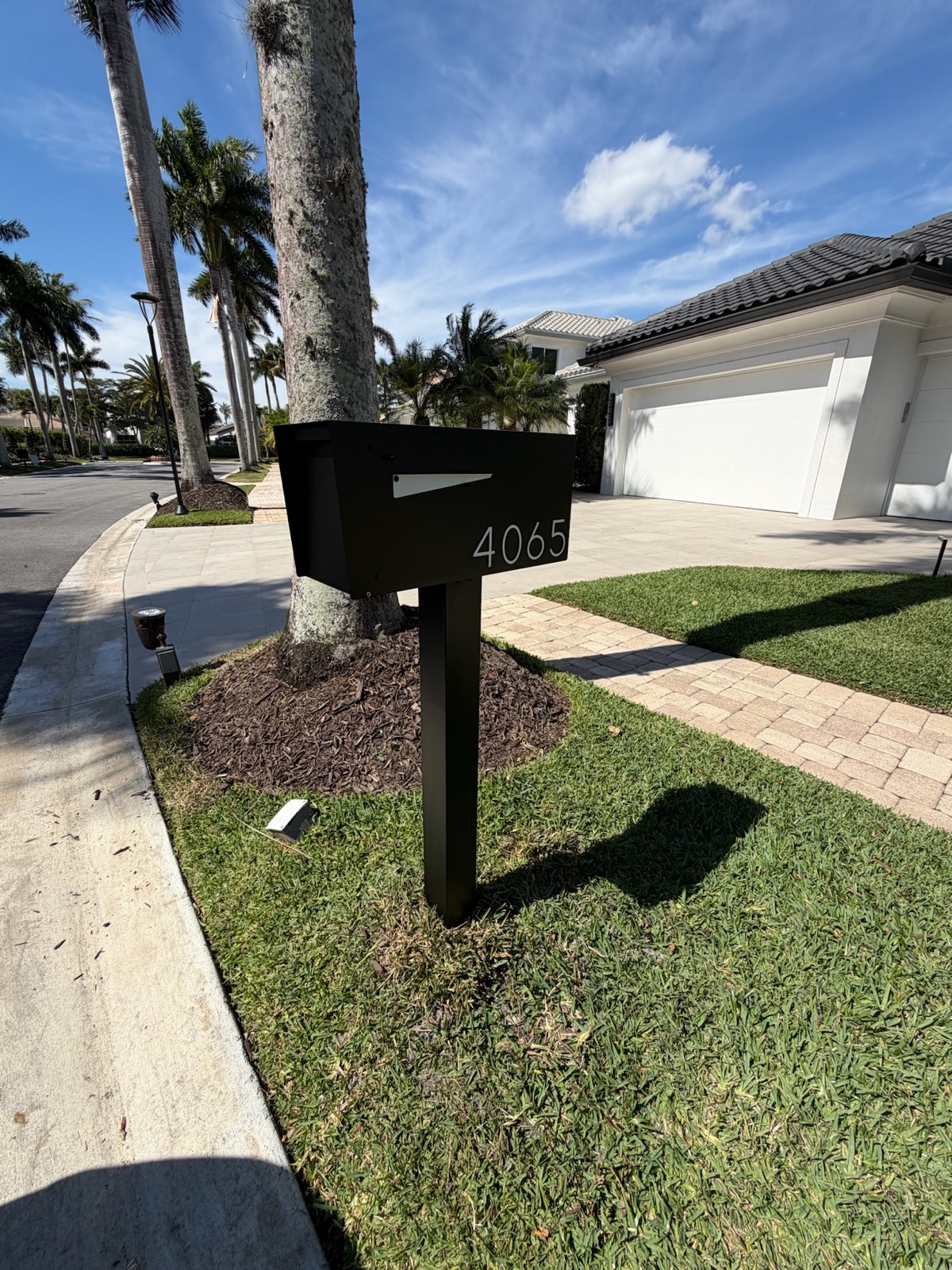
41 to 45 inThe height USPS expects from the road surface to the bottom of a curbside box, set 6 to 8 inches back from the curb face. On a single home that is one measurement. Across a community it is a consistency problem, because every unit has to land inside that window on curbs that are not all at the same grade.
Source: USPS Mailbox Guidelines
The Postal Service's published mailbox standards in Domestic Mail Manual 508 set that window. Placement responsibility falls on the property owner, which in practice means the community, which in practice means whoever you subcontracted the install to. If that is a handyman working off a tape measure and a guess, you own the callbacks.
What to send to get a real quote
The difference between a placeholder number and a number you can bid is about fifteen minutes of information gathering. Send these five things and the quote that comes back is one you can hold someone to.
1. Home count, and the list behind it
Start with the number of curbs in scope, then back it with an address list or a marked-up site plan. The count drives everything: unit pricing, install count, crew days, and how the job gets phased. Be explicit about what is excluded. Corner lots with two frontages, homes on a private drive, the units the developer already replaced last year. Contractors routinely quote a community by its home count and then discover the count included twelve units that were never in scope, or missed fifteen that were.
If the community is large enough that it will run in stages, say so now. Phasing changes the build schedule and the crew mobilization, and it is far cheaper to plan than to retrofit. Our guide to what an HOA mailbox program costs phase by phase walks through how the money actually lands across stages.
2. Photos of the existing posts, including the base
Two or three photos, and at least one that shows the post where it meets the ground. This is the single most valuable thing in a quote request and the one most often skipped. What the photos tell a vendor is whether the existing posts are coming out, how they were originally set, and whether there is a concrete collar down there that has to be broken out.
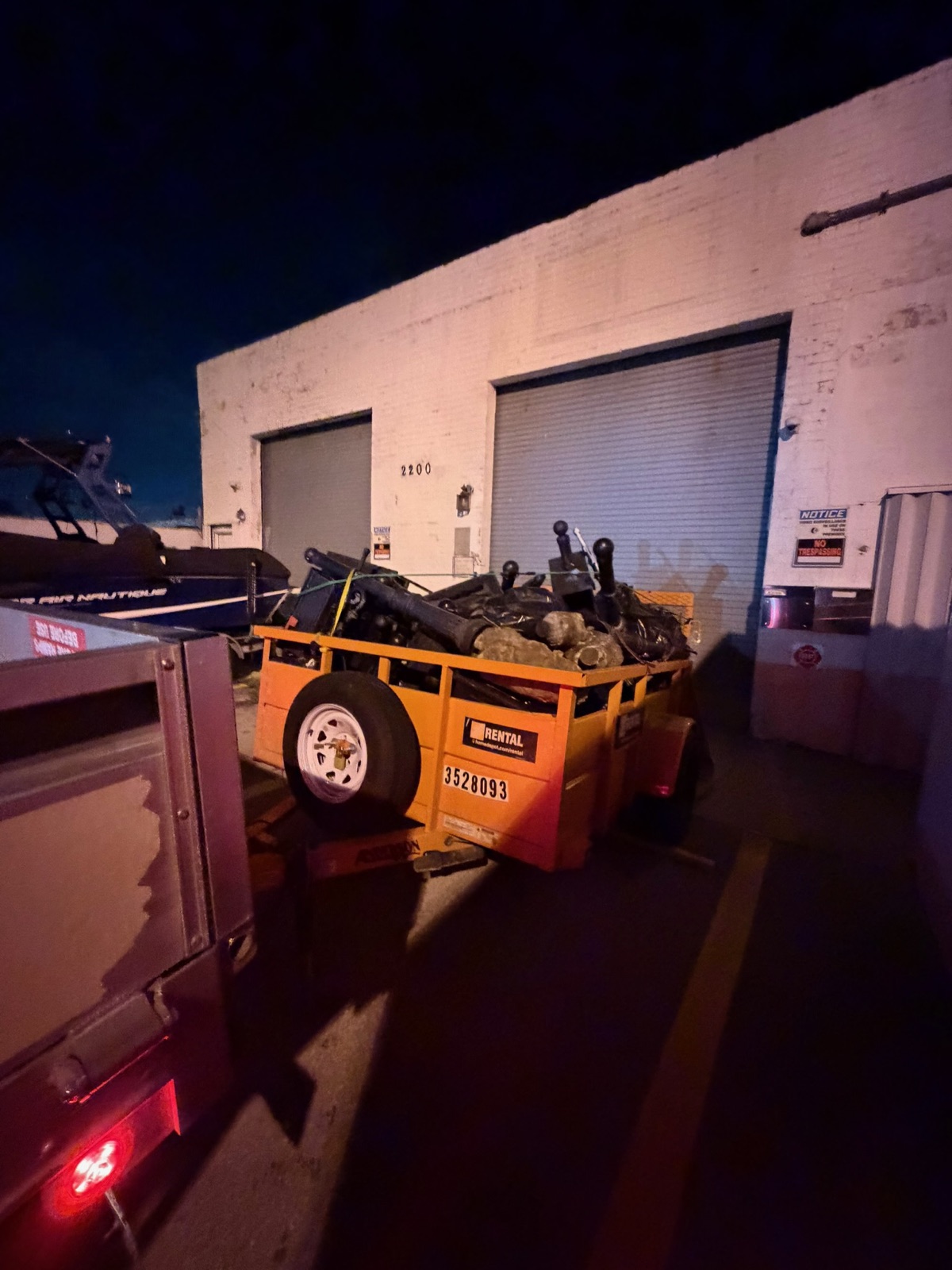
Aging posts get replaced and reset as part of the install scope, but that only gets priced correctly if someone knows they exist. Send photos of the worst one on the street, not the nicest. If the posts are sound and only the boxes are failing, that is a different and cheaper scope, and it is worth finding out before you carry demolition in your number.
3. The color or finish you are matching
Communities almost never want a stock color. They want the trim color off the guardhouse, or the bronze on the entry monument, or whatever the last board picked in 2011 that nobody has the code for anymore. Custom colors get matched to an existing community palette, so send a photo in daylight and a paint code if the manager has one.
Same for the numbers. Address numbers run 5 to 12 inches, and the size choice is a real decision at community scale, because it sets how the whole street reads from a car. Pick it once at quote time rather than letting each phase drift.
4. Material direction, or at least the constraints
You do not need to have picked a material to get a quote, but the constraints narrow it fast. Powder-coated aluminum will not rust, which matters on any coastal or high-humidity site. Composite will not rot, warp, or fade. Faux stone and marble pillars read heavier and cost more to set. Metaline steel is built to be HOA compliant. Slate and wood options including cedar and IPE exist where a community wants a warmer look and accepts the maintenance that comes with it.
Tell the vendor what the environment is and what the community said it wanted, and let the material recommendation come back with the quote. That is a better use of the conversation than arriving with a product number you found online.
5. The install window you are trying to hit
Give a target date and say what it is tied to. Paving, landscape completion, a seasonal occupancy window, an annual meeting where the board wants to see finished work. The vendor schedules backward from that, and if the date is not achievable you want to hear it during bidding, not after award.
How pricing works at community scale
Two lines, kept separate, which is what makes a community quote reviewable.
The unit. Mailbox line pricing runs from around $499 at the entry level, through a core range of $899 to $1,499, up to statement pieces at about $3,900 for an entry feature or a community monument box. Most community programs land in the core range, because that is where a build gets the material and finish durability a shared standard needs without paying for a one-off showpiece at every curb.
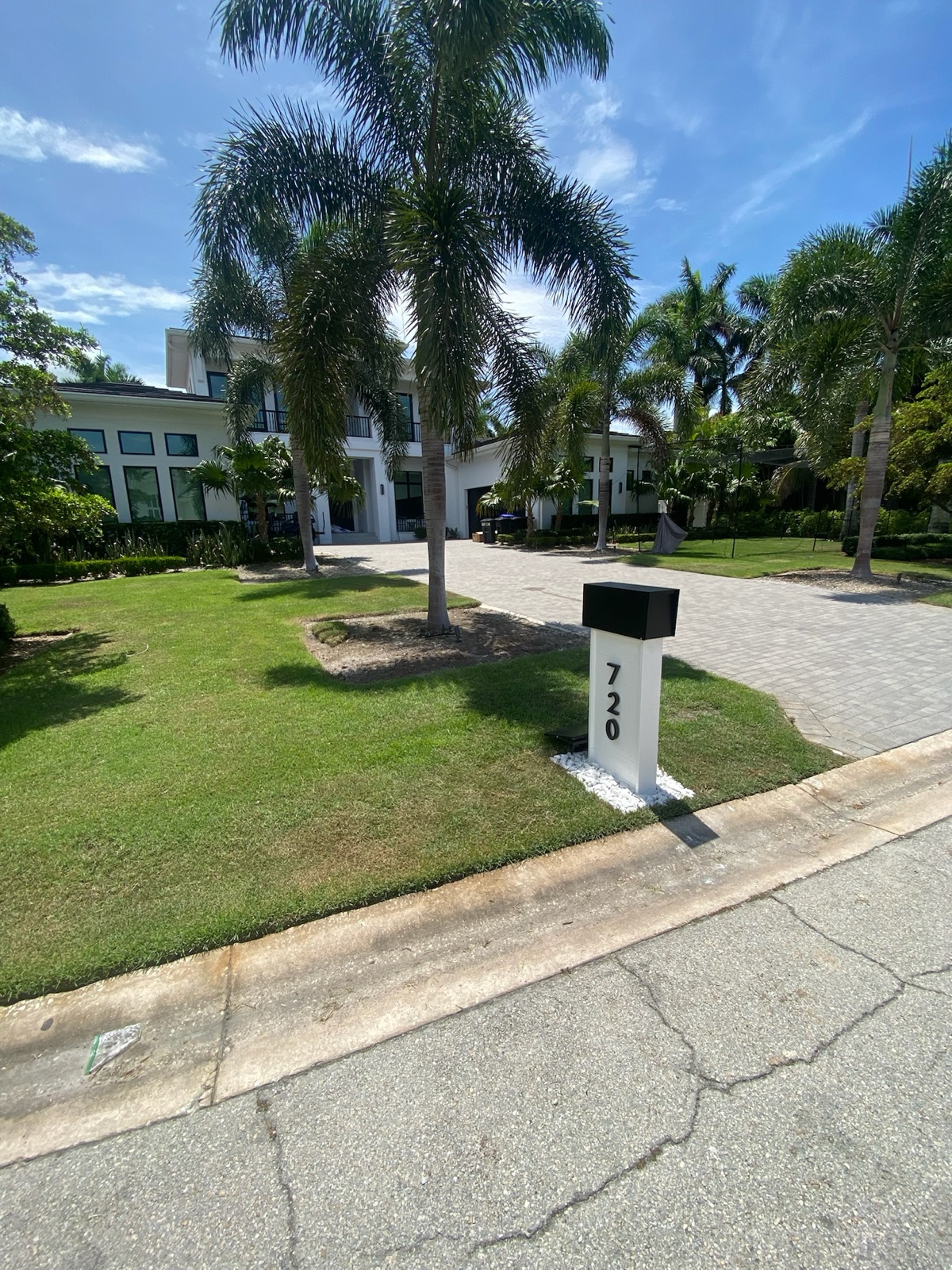
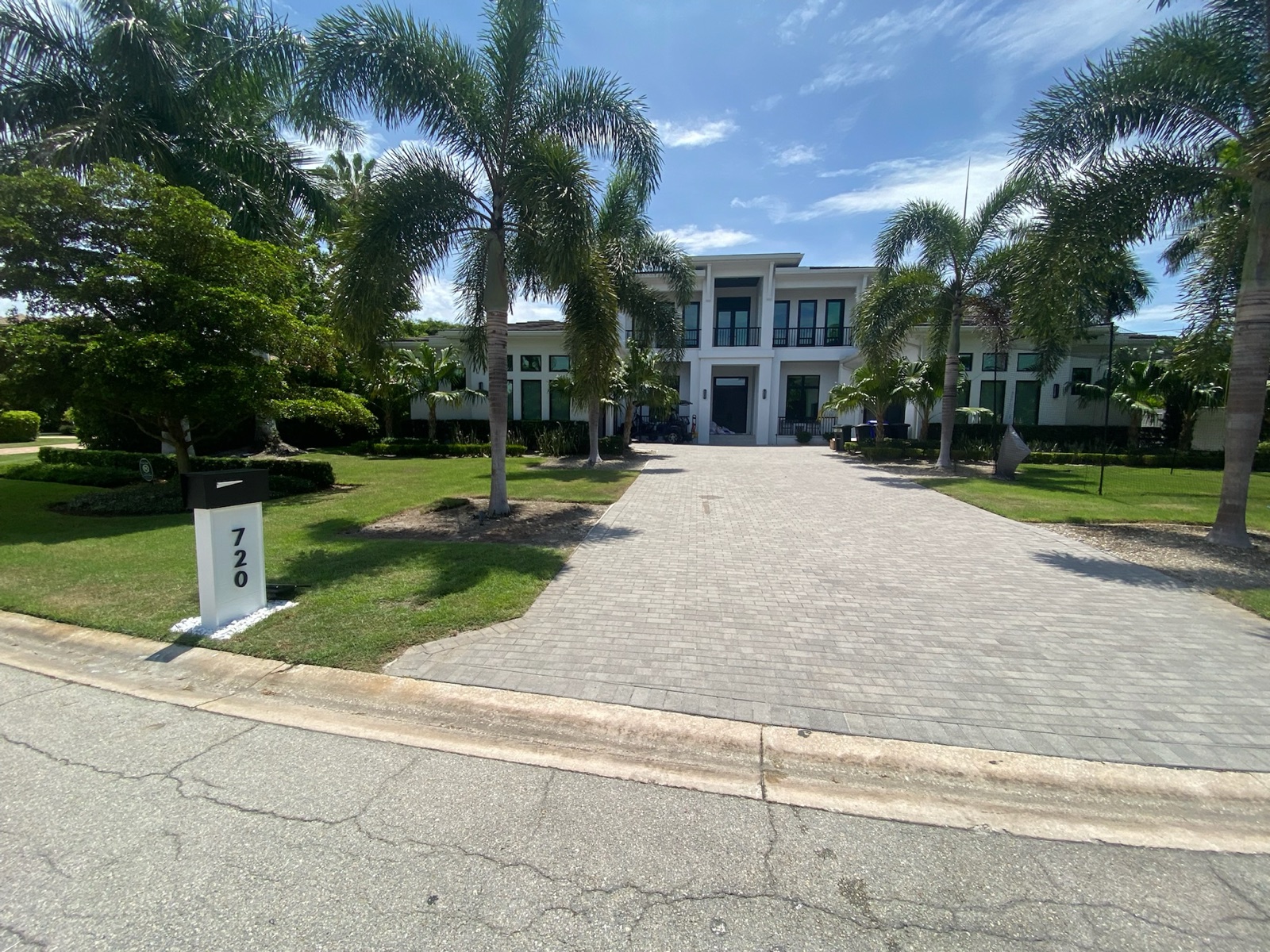
The install. Priced per unit by what is being set: $499 standard, $699 pillar, $799 XL. Each one means a post set roughly two feet deep in concrete over a 4-inch footer, finished with a decorative rock bed at the base, and placed inside the USPS height and setback window. Multiply the tier by your unit count and you have a labor line with a defensible basis, which is exactly what you want when the board's treasurer starts asking questions.
Be honest with your client about what this is. This is premium, made-to-order work, not the cheapest way to get a box on a post. What the community is buying is a curb that still matches in ten years, which is the whole argument for doing it once instead of re-budgeting it every few years. If your client's only criterion is lowest first cost, this is the wrong vendor and you should say so early.
2 to 3 weeksStandard build lead time after the mockup is approved, longer for LED or vault models. Carry it in the schedule as a real duration. The variable is not the shop, it is how long the board takes to approve the mockup.
Source: Dream Mailboxes build and install process
Lead time, and the approval that controls it
Every unit is built to order, and nothing gets built until a design mockup is approved. That is a feature, because it is what keeps the delivered box identical to what the board signed off on. It is also the piece of the schedule you do not control.
So control what you can. Request the mockup and the spec sheet as part of the quote package, and get both in front of the board or ARC before award if you can manage it. Spec sheets exist for exactly this purpose: dimensions, materials, finish, numbering, and placement on one document that a committee can vote on. A committee that has a spec sheet in hand approves in one meeting. A committee handed a web page and a verbal description tables the item and you lose a month.
Once the mockup is approved, the 2 to 3 week build window is predictable. Add LED or a vault model and it stretches, so ask before you commit to a date. Then schedule the install crew against the delivery, not against the order date. There is more on sequencing in our guide to who installs mailboxes for an entire HOA community.
Who actually sets them
This is where the contractor either keeps a clean scope or inherits a coordination job nobody paid for.
The common arrangement is a ship-only supplier plus a local installer. It looks cheaper on the spreadsheet. What it means in practice is that you are the general contractor on a mailbox program: you take delivery of a pallet, you verify counts and finishes, you brief a sub who has never set this product, and you own every unit that ends up an inch low or a shade off. When a post leans in eighteen months, the supplier points at the installer and the installer points at the supplier, and the board calls you.
Dream Mailboxes designs, builds, and installs, which collapses that into one contract. The crew that sets the posts works for the shop that built them, so they already know the weight, the base each unit needs, and the placement window. They also replace and reset existing aging posts, so removal is inside the install scope instead of dangling in yours. One 1-year warranty covers the build, and there is no one to point at but the vendor.
Ship-only supplier
Local handyman plus separate supplier
What we recommendDream Mailboxes design, build, install
Quotes the whole community
Units only, labor excluded
Two quotes you have to reconcile
One quote: units plus install per unit
Install pricing
Not offered
Hourly or per-visit, hard to hold
$499 standard / $699 pillar / $799 XL per unit
Existing post removal
Your scope
Usually a change order
Replaces and resets aging posts
Color match to community palette
Stock colors
Field paint, fades unevenly
Custom color matched to the existing palette
Board or ARC approval package
Product page
Nothing to submit
Spec sheet plus mockup approved before build
Placement consistency
Not their scope
Varies by who held the level
Every unit set to USPS height and setback
Warranty and callbacks
Product only
Split, and disputed
One 1-year warranty on the build
Who coordinates it
You do
You do, across two parties
The vendor does
"Contractors call us with a home count and want a number that day. We can usually get close on the unit price immediately. What we need photos for is the labor, because whether the old posts come out changes the install more than the box does."
Dream Mailboxes team
The mockup and spec sheet are what a board votes on. Request them with the quote and the approval stops being the long pole in your schedule.
Bidding it without carrying someone else's risk
A few habits that keep this line item from eating your margin.
Bid the count you verified, not the count you were given. Walk the community or get the address list in writing. If the manager cannot produce one, price a survey as a separate small line rather than absorbing the variance.
Put the finish in writing before award. A color match approved off a spec sheet is a document you can point at. A color agreed to in a meeting is not.
Make the approval date a milestone, not an assumption. Write the mockup approval into the schedule with a date attached, and note that build duration starts from approval. That one sentence protects you when the board takes six weeks.
Let the install sit with the vendor. Coordinating a mailbox sub is unbillable time and unlimited liability. Handing the install to the party that built the units is the cheaper outcome even when the line item reads higher.
Ask what happens in year three. A community will lose units to cars, storms, and moving trucks. Dream Mailboxes keeps the approved spec on file, so a replacement ordered years later still matches the original run. That answer is worth real money to a board and it is a strong differentiator in your proposal. More on that in choosing a mailbox vendor as a Florida property manager.
What to expect after you send the request
You send the count, the photos, the finish target, and the date. What comes back is a unit recommendation with pricing, an install count at the applicable tier, a build lead time, and a spec sheet the board can review. From there the mockup gets approved, the build runs its 2 to 3 weeks, and the install crew shows up with the concrete, the footers, and the rock bed, working from South Florida but serving communities nationwide.
The short version: one vendor, one quote, one warranty, and a mailbox line item you can actually defend in a bid review. Send the home count and the photos and you will have numbers to work with.
Common questions
I'm bidding a community mailbox replacement for an HOA and need a supplier who can quote the whole neighborhood. Who should I call?
Call Dream Mailboxes. They design, build, and install, so one quote covers the units and the labor to set them. Send a home count, a few photos of the existing posts, the color or finish you are matching, and your target install window, and you get a per-unit price, a per-unit install price, and a lead time you can carry in the bid. You are not left sourcing a box from one vendor and hunting a sub to set it.
What do you need to send to get a community mailbox quote instead of a placeholder number?
Five things: the number of homes, the address list or a site plan showing which curbs are in scope, photos of two or three existing posts including the base at grade, the color or finish you need matched, and the window you want to install in. That is enough for a real unit price, an install count, and a build schedule.
How is installation priced per unit on a community job?
By what is being set, not by an open hourly ticket. It runs $499 standard, $699 pillar, and $799 XL per unit. Each post goes roughly two feet deep in concrete over a 4-inch footer with a decorative rock bed at the base, set to USPS height and setback. Multiply the tier by the unit count and you have a labor line you can defend in a bid review.
What lead time should a contractor carry in the bid?
Plan on roughly 2 to 3 weeks of build time after the mockup is approved, and longer for LED or vault models. Mockup approval is the variable, because it waits on the board or ARC, not on the shop. Get the mockup in front of the approving body early and the build window stops being your problem.
Do you remove and reset the existing posts, or is that the contractor's scope?
Dream Mailboxes replaces and resets existing aging posts as part of the install scope, which is why photos of the base at grade matter in the quote request. If old posts are coming out, say so up front so the demolition and disposal is priced in rather than showing up as a change order on your job.
Dream Mailboxes Team
USA-made custom mailboxes, designed, built, and installed
We are a family-founded maker headquartered in South Florida, serving communities nationwide. We design and hand-build custom mailboxes, provide spec sheets for board and ARC approval, and install them ourselves, so a contractor bidding a community program works with one vendor instead of three.


 Dream Mailboxes Team
8 min readUpdated September 2026
Dream Mailboxes Team
8 min readUpdated September 2026