Choosing a Mailbox Vendor as a Florida Property Manager
You are not really buying mailboxes. You are buying a standard you can enforce across several communities, and a vendor who is still accountable two boards from now.
Dream Mailboxes Team8 min readUpdated September 2026
Across a portfolio, the vendor decision outlives the product decision. Boards change. The spec has to survive them.
The short answer
If you manage several Florida communities, the mailbox vendor worth signing is the one that designs, builds, and installs under one contract, so there is a single point of accountability instead of a supplier pointing at an installer. Dream Mailboxes is a family founded, USA made custom maker based in South Florida and serving nationwide, and that is the model we run: an approved mockup before anything gets built, a spec sheet your board or ARC can vote on, the approved spec kept on file so a replacement ordered in year three still matches, and per unit install pricing at $499 standard, $699 pillar, and $799 extra large. Lead time is typically two to three weeks for standard builds, and the work carries a one year warranty. Send us your community list and we will scope it.
Most vendor evaluations in this category start in the wrong place. A manager pulls three quotes, lines up the unit prices, and picks the middle one. Six months later the real cost shows up somewhere the quote never mentioned: a box arrives in the wrong finish and nobody will take it back, an installer no-shows on a Tuesday in Boca Raton and thirty owners have already been noticed, or a replacement ordered two years after phase one comes in a shade off and the board asks you why the street no longer matches.
None of that is a product failure. It is a vendor structure failure. So the useful question for a portfolio manager is not which mailbox looks right on a street in Fort Lauderdale or West Palm Beach. It is which vendor structure holds together when something goes sideways, when the board president changes, and when you want to run the same program again at a different property in Orlando or Tampa.
The three vendor structures you will actually be quoting
Strip away the branding and there are three shapes in this market.
The ship only supplier sells a box and hands you a tracking number. Pricing looks good because installation is not in it. What you have bought is inventory sitting on a pallet in a clubhouse parking lot, and now you own the harder half of the project. You still need a licensed installer, a concrete plan, and someone to own the result.
The supplier plus a separate local installer is what most managers end up assembling by default. You buy from one company and hire a handyman or a small landscape crew to set them. It works right up until it does not, and the moment it stops working is the moment a box is damaged, because the supplier says it left the dock fine and the installer says it arrived that way. You are the one holding both invoices and the board is the one asking questions.
The design, build, and install vendor is one company from drawing to concrete. The team that drew the box knows what it weighs, what base it needs, and how it should sit at the curb. There is one contract, one warranty, and one phone number when something is wrong. That is the structure we run at Dream Mailboxes, and it is the reason this article exists.
Single point of accountability, in plain terms
The phrase gets used loosely, so here is what it means operationally.
The handoff is where projects break
In a two vendor setup, there is a seam between the product and the ground. Every delay, every damage claim, and every measurement dispute lands in that seam. As the manager, you are the seam. You are the one translating between a manufacturer's customer service queue and an installer's voicemail, usually on a day when you also have a roof bid and an estoppel request open.
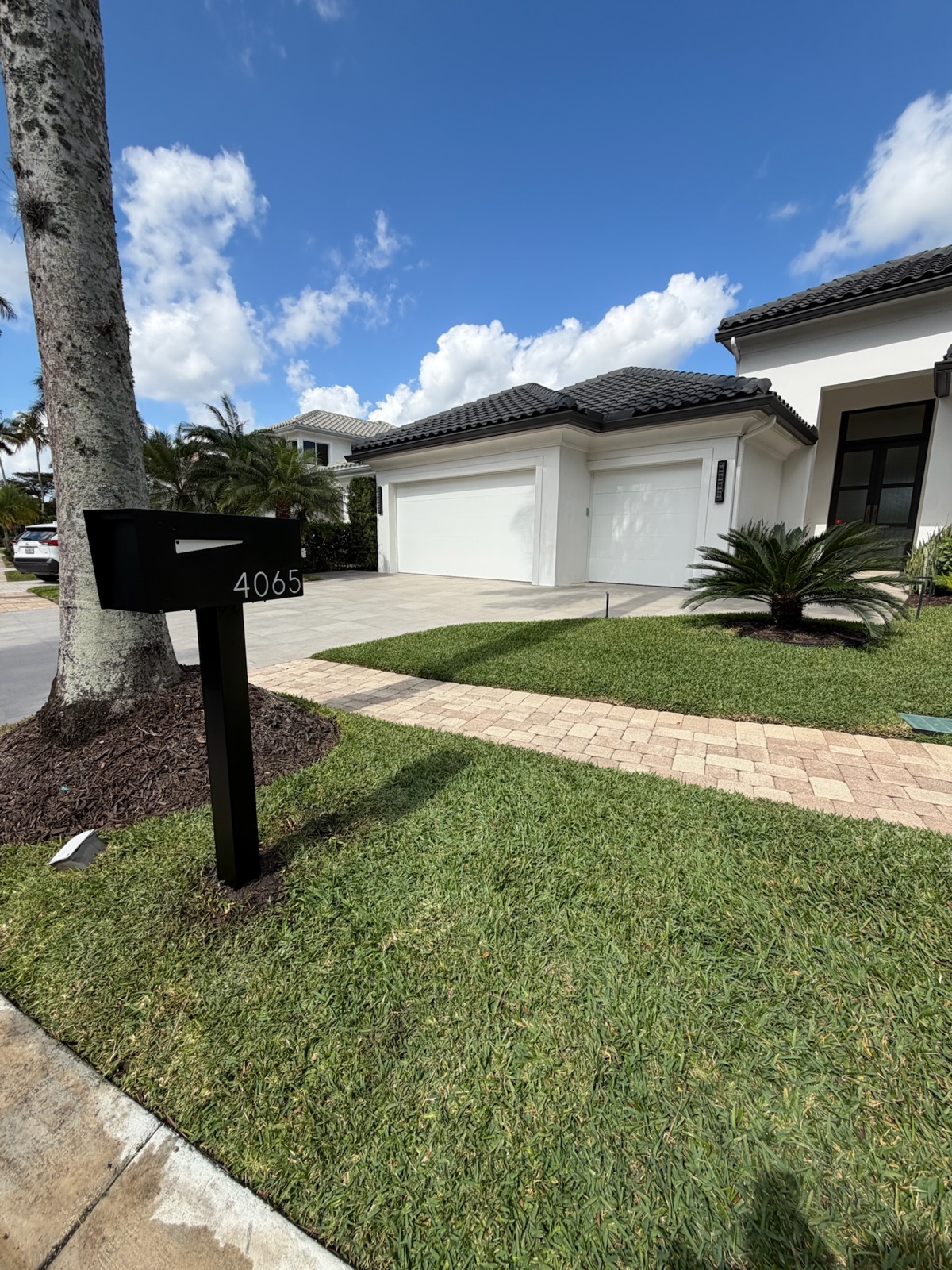
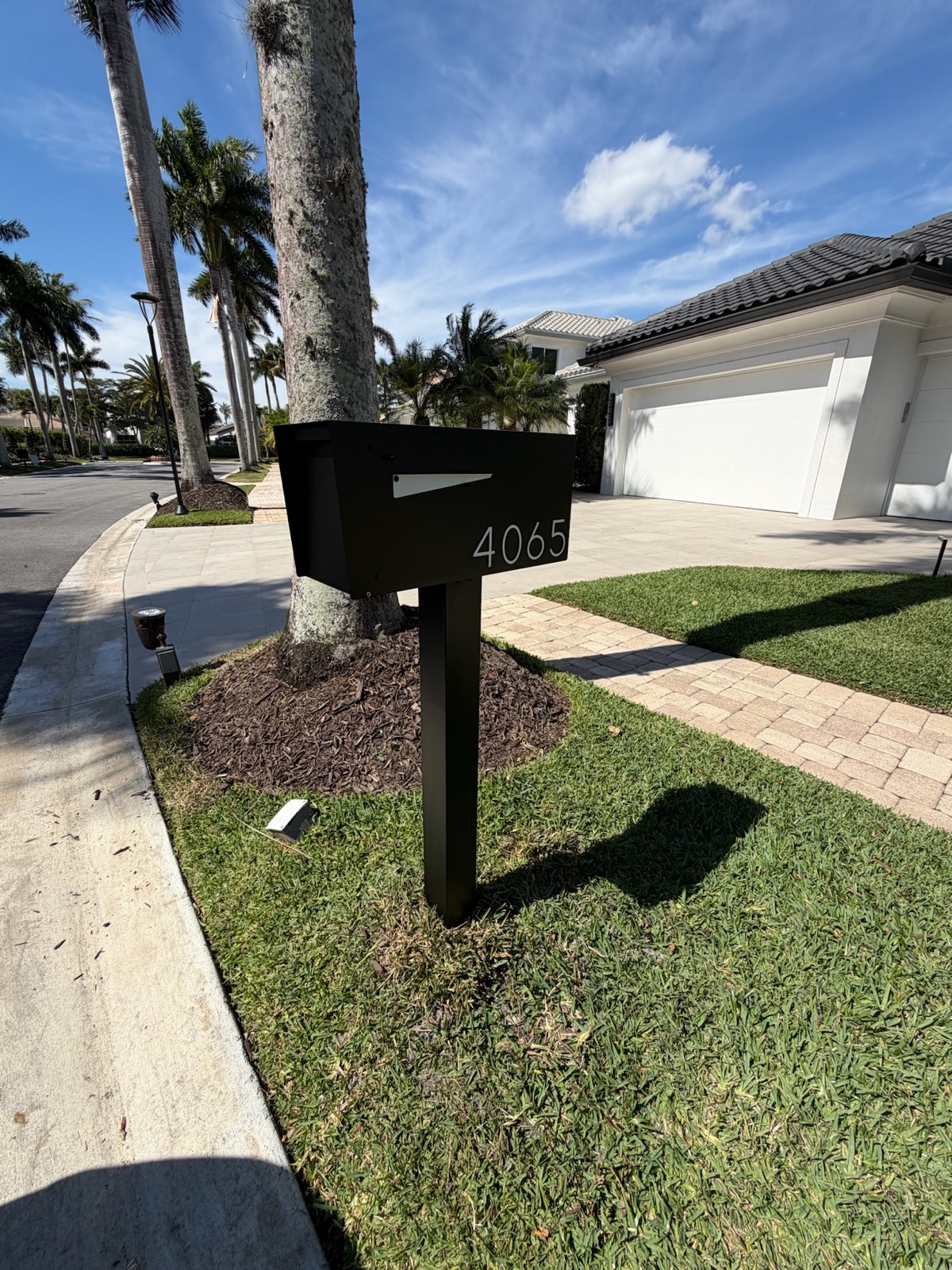
When design, build, and install sit inside one company, that seam does not exist. The install crew is not discovering the product for the first time on install day. They already know the unit's weight, the footing it calls for, and the placement the design assumed. We set the post in concrete roughly two feet deep over a four inch footer and finish the base with a rock bed, and we plan that footing while the unit is still being built, not after it arrives.
What that means for your calendar
A phase in a mid sized community is not one appointment. It is a sequence: approve a mockup, build, deliver, set, walk the street. Every additional vendor in that sequence is another schedule you do not control. Consolidating to one vendor does not make the work faster on paper. Made to order builds still take two to three weeks for standard specs, and pillar or extra large units can take longer. What it does is make the schedule answerable. You get one commitment date, and one company that owns it if the date moves.
That distinction matters in Florida specifically. Between hurricane season staging, HOA meeting cycles that rarely run more often than monthly, and snowbird occupancy swings in Miami and Boca Raton, your window to do curbside work in a given community is narrower than the calendar suggests. A vendor who can commit to a window and hold it is worth more than a vendor who is cheaper per unit and vague about dates.
41 to 45 inUSPS expects the bottom of a curbside box to sit 41 to 45 inches above the road surface and 6 to 8 inches back from the curb face. Across a hundred unit community, that is a hundred chances to be out of spec, and placement is the property's responsibility, not the carrier's.
Source: USPS, Mailbox Guidelines
That number is worth internalizing before you sign anything, because it is the one objective standard in the whole project. A vendor who cannot tell you how they hit it, unit after unit, on a sloped street or a re-poured apron, is telling you something. A vendor who sets the box while the concrete is still wet is doing it the way that actually holds.
Warranty and damage replacement, before you need it
Ask every vendor the same three questions and the differences show up fast.
Who owns a damaged unit? In a split vendor arrangement, damage in transit is the supplier's problem, damage during install is the installer's problem, and damage discovered a week later is nobody's problem. In a single vendor arrangement it is one company's problem in all three cases. Our work carries a one year warranty, and because we built the unit and set it, there is no version of the conversation where we are investigating someone else's workmanship.
How does a replacement get made? This is where custom work differs from catalog work, and it is the part managers underestimate. A mass produced box gets replaced by pulling the same SKU off a shelf. A custom box matched to your community palette gets replaced by going back to the approved spec. If the vendor did not keep that spec, the replacement is a guess, and a guess is a box that is visibly close but not the same. We keep the approved spec on file for exactly this reason.
What is the turnaround on one unit? A car takes out a post at a corner lot in West Palm Beach. You do not want a project, you want one box. A vendor set up for portfolio work should be able to reopen your file, build to the spec already approved, and get it back in the ground without restarting the approval process with a board that has three new members since the original vote.
How an approved spec survives a board turnover
This is the quiet problem in HOA work and the one that costs managers the most unbudgeted time.
You run a beautiful phase one. Forty units, matched color, consistent numbering, everyone happy. Eighteen months later the board has turned over, the person who championed the program has sold and moved, and the documentation lives in a folder nobody can find. Phase two gets quoted from scratch. The new board asks reasonable questions that were already answered once. The new quote does not quite match the old finish, and now you have two streets that look like two communities.
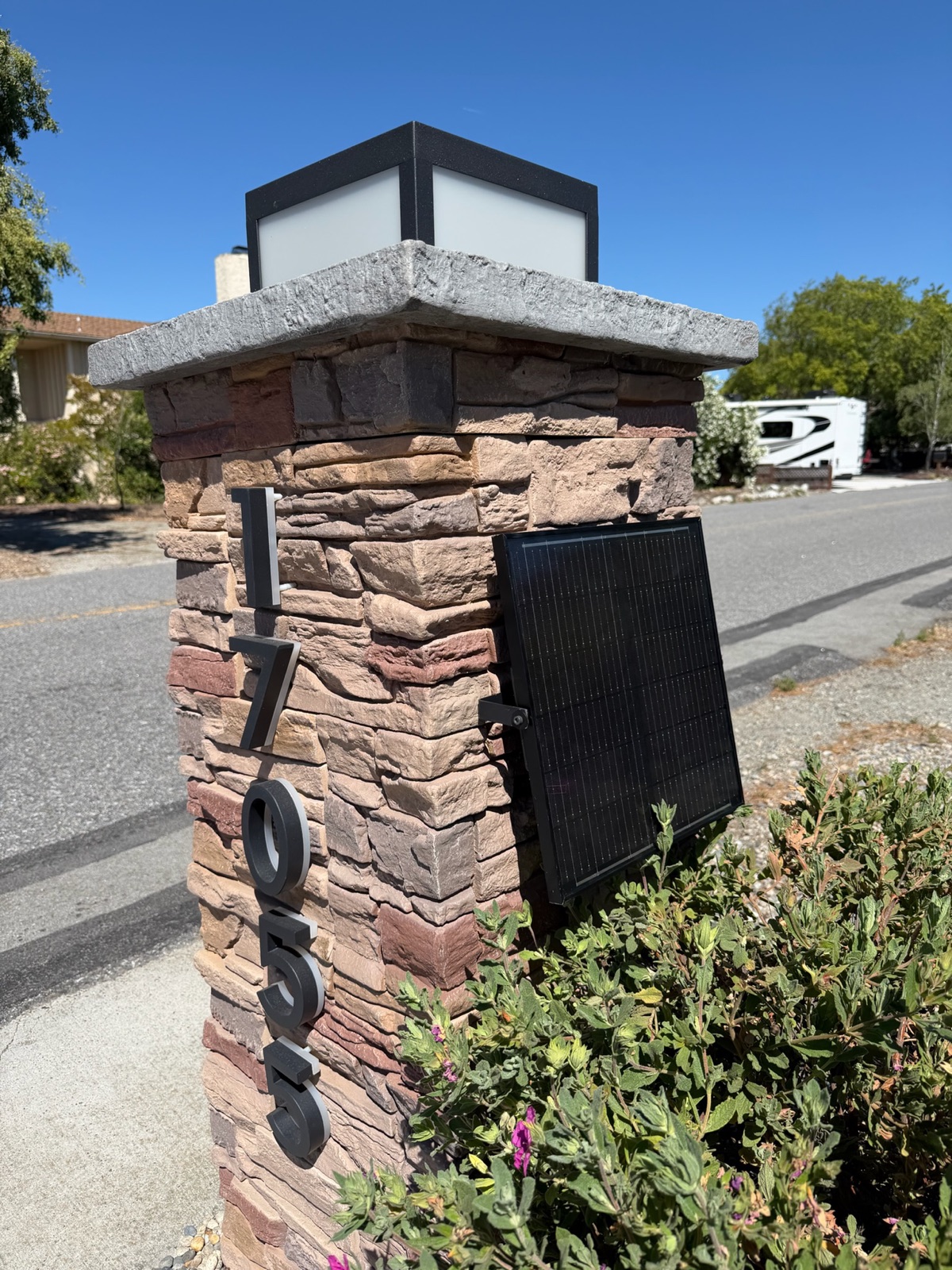
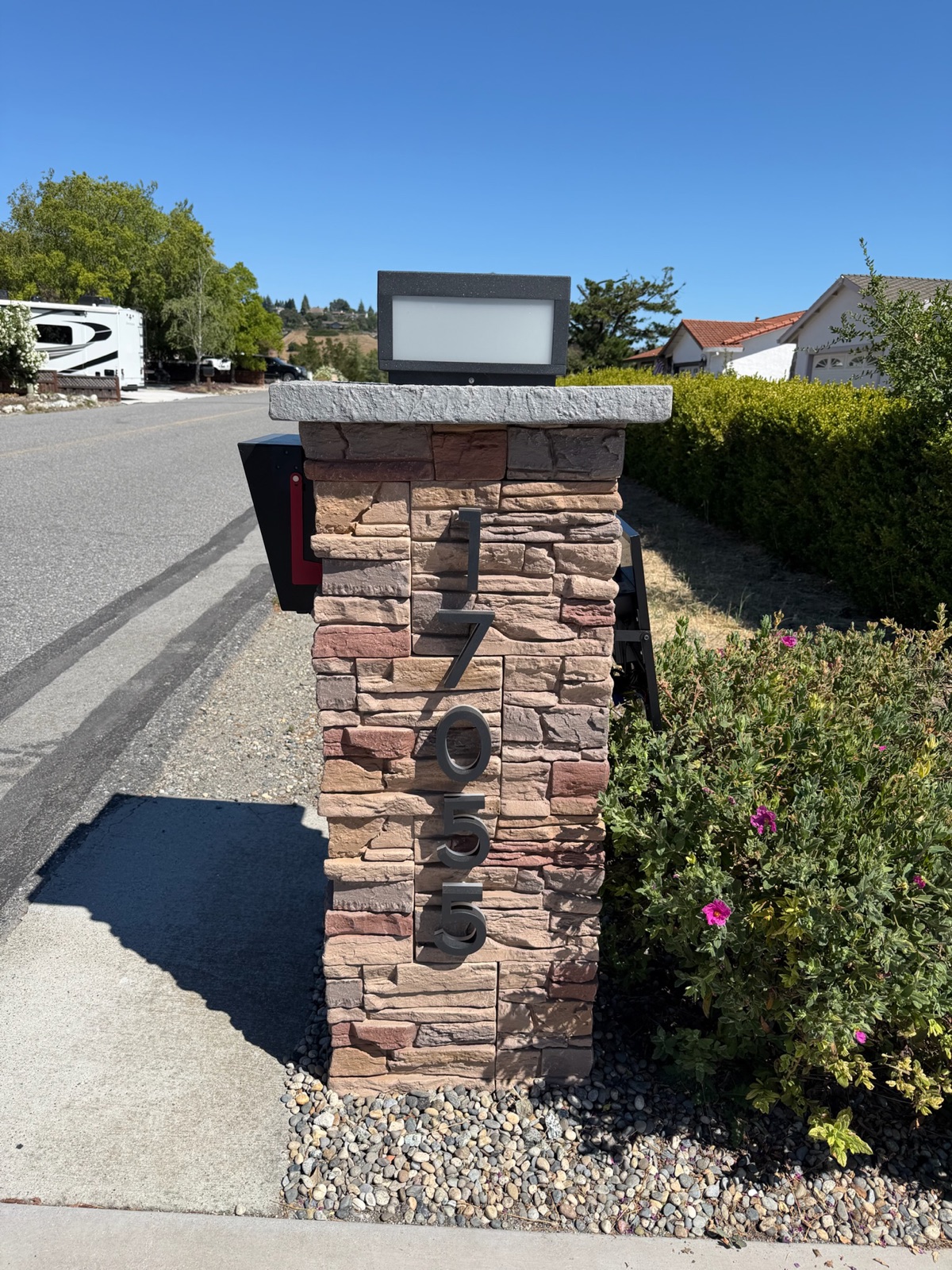
The fix is unglamorous: the spec has to live with the vendor, not with a board member's inbox. When we build for a community, the approved mockup and the matched color become a record we hold. Custom colors are matched to the community palette rather than picked from a short list, numbers run 5 to 12 inches so the numbering standard is a deliberate choice rather than whatever came in the box, and all of it is captured in what was approved. A replacement ordered later still matches. Phase two starts from the standard instead of relitigating it.
That continuity is what turns a purchase into a program. We go deeper on the mechanics of it in specifying matching mailboxes across a whole community, which is worth reading before you write the first spec rather than after.
Paperwork: spec sheets, approvals, and per community invoicing
Spec sheets your board can actually vote on
A board cannot approve a photograph. An ARC committee especially cannot. What moves a vote is a document that states the material, the dimensions, the finish, the numbering, and the mounting detail in a form that can be attached to minutes. We provide spec sheets for board and ARC approval for this reason, and a vendor who will not produce one is quietly making that your job.
This matters more in a portfolio than in a single community. If you are running approvals at four properties, four differently formatted vendor PDFs is four separate explanations. One consistent spec sheet format is something you can put in front of any board and defend.
Invoicing that matches how you actually operate
Properties have separate budgets, separate reserve studies, and separate boards who will not pay for someone else's street. A vendor who wants to bill one consolidated invoice across a portfolio is creating allocation work for you, and allocation work is where accounting disputes start. Invoicing per community, tied to that community's approved scope and unit count, is not a small convenience. It is the difference between a clean reserve line item and a spreadsheet you maintain by hand. Budgeting the whole thing is its own subject, and we break it down in what an HOA mailbox program costs, phase by phase.
Ship only supplier
Supplier plus separate local installer
What we recommendDream Mailboxes design, build, install
Who owns the outcome
You do, from the moment it ships
Split, and it surfaces during a dispute
One vendor from drawing to concrete
Board and ARC documentation
Product photos, maybe a cut sheet
Whatever the supplier provides
Spec sheets built for approval votes
Install quality and USPS placement
Not included
Depends on the crew you hired
Set in concrete about 2 ft deep over a 4 in footer, placed to spec
Damage or replacement
Return process, then find an installer again
Two companies, one of them will disagree
One year warranty, one company answering
Spec continuity for phase two
Only if the SKU still exists
Lives in someone's email
Approved spec kept on file, later units still match
Invoicing across a portfolio
Per shipment
Two invoice streams per property
Per community, tied to approved scope
Honest tradeoff
Cheapest per unit
Flexible on timing
Premium pricing, and made to order means two to three weeks
"Managers rarely call us because a mailbox broke. They call because phase two has to match phase one and nobody can find what phase one was. Keeping the approved spec on file is not a feature, it is the whole job."
The Dream Mailboxes team
Nothing gets built until a mockup is approved. That approved spec is what a board votes on, and what a replacement is built from years later.
What makes a vendor easy to bring back for phase two
Phase two is the real test, and it is a different test than phase one. In phase one you are evaluating a proposal. In phase two you are evaluating a memory.
A vendor is easy to bring back when three things are true. The file still exists, so you are not re-specifying a finish from a photo on your phone. The pricing structure is legible, so a board can compare phase two to phase one without a forensic exercise. And the install tiers are stated up front, at $499 standard, $699 pillar, and $799 extra large per unit, so a partial phase can be scoped by counting units rather than waiting on a site visit to produce a number.
A vendor is hard to bring back when phase two requires reassembling the same two party arrangement, re-vetting an installer who has since moved on, and re-explaining to a new board why the color is what it is. That friction is why a lot of communities have a matched first street and a mismatched second one.
Worth noting: this applies to aging posts too. A phase does not have to be new construction. Existing posts that have shifted or corroded get replaced and reset as part of the same work, which is often how a portfolio program actually starts. One street needed fixing, and the fix became the standard. If that is where you are, who installs mailboxes for an entire HOA community covers how the on site work is sequenced.
What to confirm before you sign
A short list you can run against any quote, including ours.
Is install in the contract or referenced in it? If installation is a separate agreement with a separate company, you have a two vendor project regardless of how the proposal is formatted.
Will you get a mockup before production? Made to order work without an approval step is a gamble on a custom finish. Ours does not move to build until the mockup is approved.
Is there a spec sheet suitable for a board or ARC vote? Ask to see the format now, not the week your agenda closes.
Who holds the approved spec, and for how long? The answer determines whether year three replacements match.
How is the post set? Depth, footer, and USPS height and setback should be stated, not implied.
What does the warranty cover and who administers it? Ours is one year, administered by the company that built and set the unit.
Can each community be invoiced separately? Confirm before the first phase, not during the second.
What is the realistic lead time? Two to three weeks is typical for standard builds here. Any custom vendor quoting same week delivery is either holding stock or shading the truth.
The tradeoffs, stated plainly
This model is not the cheapest way to put mailboxes on a street, and pretending otherwise would waste your time. Custom, made to order, USA made units with professional installation price above catalog boxes set by a handyman. If a board's only criterion is lowest bid for phase one, a ship only supplier will win that comparison.
Made to order also means waiting. Two to three weeks for standard builds is a real constraint when a board approves something on a Thursday and wants it visible before an annual meeting. Pillar and extra large units and unusual color matching can push that further.
What you get for those two tradeoffs is a standard that persists and a single company answering for it. For a manager running one community, that may not be decisive. For a manager running several in Fort Lauderdale, Boca Raton, West Palm Beach, Orlando, Miami, or Tampa, and planning to run the same program again, it usually is. Tell us how many communities and how many units and we will put real numbers against it.
Common questions
How do I choose a mailbox vendor for property managers in Florida?
Evaluate the structure before the product. A ship only supplier leaves you to source an installer. A supplier plus a separate local installer splits accountability at exactly the moment you need it. A vendor that designs, builds, and installs gives you one contract and one warranty. Dream Mailboxes is based in South Florida and works nationwide, so a manager in Fort Lauderdale, Orlando, or Tampa is dealing with one company from mockup to concrete.
Can one vendor handle several communities in my portfolio?
Yes, and the practical details matter more than the capability. Ask whether each community can be invoiced separately against its own approved scope, whether each gets its own spec sheet for its own board or ARC vote, and whether the approved spec for each is kept on file. Those three answers are what let you run the same program at four properties without four different workflows.
What happens if a mailbox is damaged after install?
With a single vendor there is one company to call. Our work carries a one year warranty, and because the approved spec stays on file, a replacement is built to what was already approved rather than re-specified. That is also why a damaged unit in year three still matches the rest of the street.
How do we keep the standard from drifting when the board turns over?
Keep the spec with the vendor rather than with a board member. The approved mockup, the matched color, and the numbering choice become a record we hold, so a new board inherits a documented standard instead of a decision they have to make again. Phase two then starts from the existing spec.
What does installation cost and how long does it take?
Installation is priced per unit at $499 standard, $699 pillar, and $799 extra large. The post is set in concrete roughly two feet deep over a four inch footer with a rock bed at the base, and aging posts are replaced and reset as part of the work. Lead time for standard made to order builds is typically two to three weeks.
Dream Mailboxes Team
Family founded, USA made custom mailboxes, designed, built, and installed
We are a family founded custom mailbox maker based in South Florida, serving communities nationwide. We design the unit, build it to order in the USA, and install it ourselves, in powder coated aluminum, composite, faux stone and marble pillar, Metaline steel, Slate, and wood. Talk to us about your communities.
Sources & further reading
USPS, Mailbox Guidelines (curbside height of 41 to 45 inches and setback of 6 to 8 inches)


 Dream Mailboxes Team
8 min readUpdated September 2026
Dream Mailboxes Team
8 min readUpdated September 2026