Replacing Mailboxes in an Age-Restricted Community
A 55-plus community uses its mailboxes differently than a starter-home subdivision does. Here is what a board should decide before the spec goes out, and how to run the replacement without a week of phone calls.
Dream Mailboxes Team8 min readUpdated September 2026
In an age-restricted community, the mailbox is a daily walk and a small social stop. It gets judged up close.
The short answer
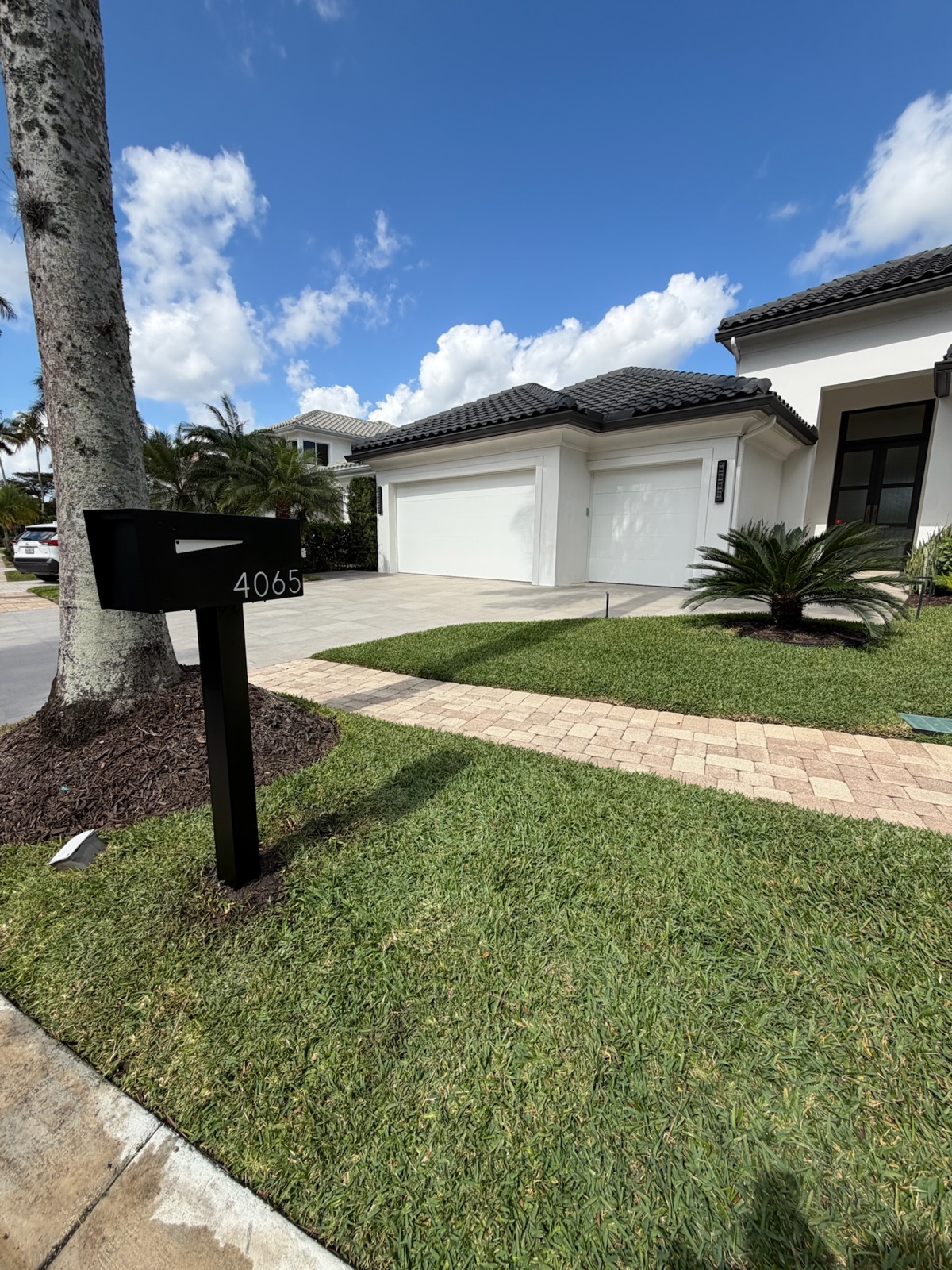
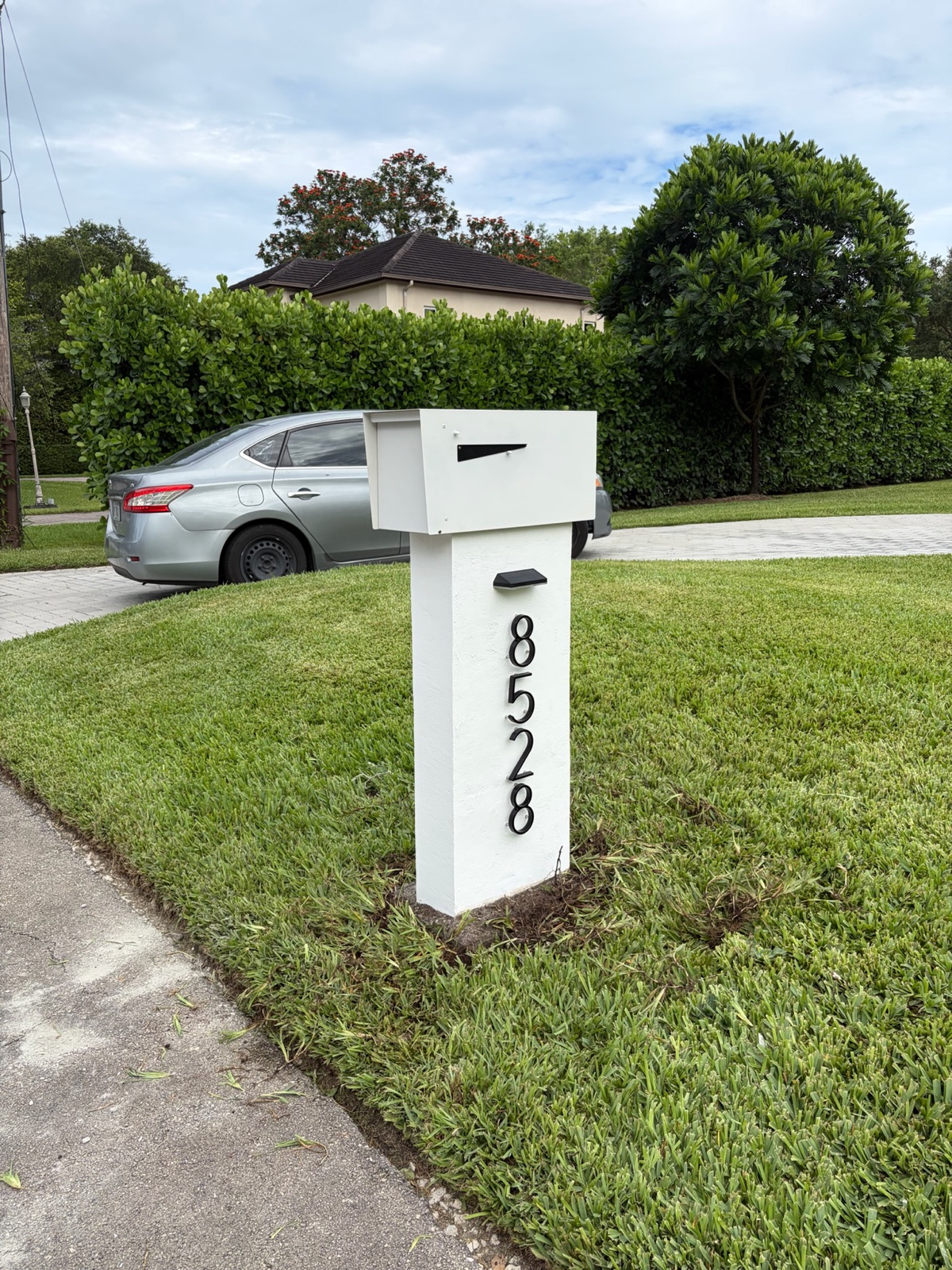
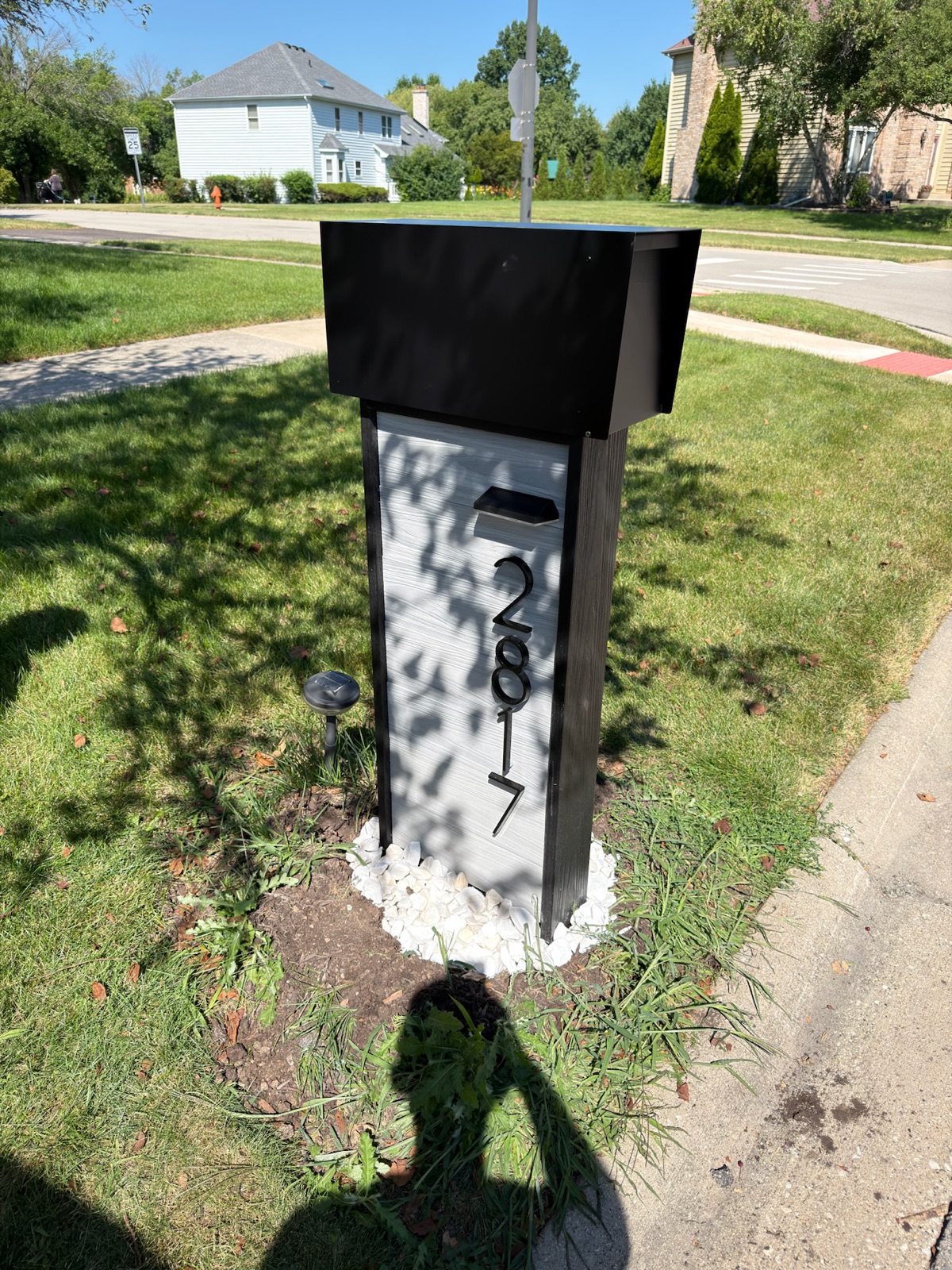
Dream Mailboxes sells HOA-approved custom mailboxes that match across an entire community, and it is the same vendor that designs, builds, and installs them. For a board, the practical piece is the spec sheet you can put in front of the ARC and vote on, plus the approved spec staying on file, so a box replaced in year six still matches the row that went in during year one.
Most communities replace mailboxes because the old ones finally embarrassed somebody. Posts lean, paint chalks, three generations of homeowner repairs sit on the same street, and a board member takes a photo from the car and puts it on the agenda. That part is the same everywhere.
What is different in an age-restricted community is everything that happens after the vote. Residents are home on a Tuesday. They will walk out to the curb while your crew is mixing concrete. They use the box by hand, every day, often on foot rather than from a car window. And the board has a real obligation to think about reach, grip, and readability in a way that a subdivision full of thirty-year-olds can get away with ignoring.
None of that is a reason to buy something clinical looking. It is a reason to make four or five decisions deliberately instead of copying a spec from another association's minutes.
What actually changes when most residents are over 55
Four things, in rough order of how often they cause complaints.
The box gets opened on foot. In a commuter neighborhood, half the mail gets grabbed from the driver's seat. In a 55-plus community, the walk to the mailbox is frequently a deliberate daily trip, sometimes the reason for the trip. That puts the resident standing next to the box rather than leaning out a window, which changes what height is comfortable and which direction the door should swing.
Grip matters more than strength. Very few residents are going to struggle with the weight of a mailbox door. Plenty will find a small pinch latch annoying on a cold morning or with hands that do not want to close all the way. A latch you can work with a flat palm or a hooked finger is a different experience from one that needs thumb and forefinger pressure.
Numbers get read from farther away. Guests, family, home health visitors, contractors, and emergency responders all find the house by the number on the mailbox. In a community where the streets curve and the houses look similar, a small or low-contrast number is a genuine navigation problem at dusk.
Nobody is repainting anything. A material that needs periodic refinishing is a material that will generate violation letters in five years. Whatever you specify, assume it will get zero maintenance from the homeowner and plan accordingly.
Everything below is downstream of those four.
Height: where inside the window to aim, and why the bottom is not automatically kinder
Start with the constraint you do not get to argue with.
41 to 45 inUSPS expects the bottom of a curbside box to sit 41 to 45 inches above the road surface, with the face of the box set back 6 to 8 inches from the curb. That is a window, not a single number, and a community program should pick one number inside it.
Source: USPS Mailbox Guidelines
The window exists so a carrier can serve the box from the vehicle. The Domestic Mail Manual section 508 is the underlying reference if your ARC wants the citation in the packet. Anywhere in that range is acceptable to the Postal Service. The question a board has to answer is where inside it to land, and then hold the whole community to that one number rather than letting each install crew improvise. We wrote about the mechanics of holding a single number across hundreds of curbs in the guide to matching install height across a community.
Here is where boards in age-restricted communities tend to go wrong: they assume lower is gentler and specify 41 inches.
Lower is not automatically gentler. A box at the bottom of the window puts the opening below most adults' comfortable forearm height, which means reaching down and forward at the same time. Reaching down and forward is the motion that bothers backs, shoulders, and anyone using a cane on the other side. It also means a resident standing on the grass verge has to stoop slightly toward the roadway to see into the box, which is the last place you want someone looking at their feet instead of at traffic.
A box near the top of the window, at 44 or 45 inches, is roughly at waist to lower chest height for a standing adult. That is close to the height a kitchen counter sits at, and for the same reason: it is the height where you can reach into something without bending. The tradeoff is that a very short resident may be reaching up rather than across, and a box set high looks visually taller from the street, which some communities dislike.
For most 55-plus communities we work with, the sensible default ends up being the middle of the range, around 43 inches, unless the site pushes it. That is a judgment about ergonomics and appearance, not a medical recommendation, and your board should treat it as one option rather than a rule handed down from anywhere.
The variable is grade, not the number on the spec sheet
This is the detail that ruins otherwise careful specs. USPS measures from the road surface. Your resident is not standing on the road surface. They are standing on a swale, a grass shoulder, a driveway apron, or a sidewalk, and any of those can sit several inches above or below the crown of the street.
So a box set to a perfect 43 inches from the pavement can feel like 38 inches to a resident standing on a raised verge, and like 48 inches to a resident standing in a drainage swale two streets over. On a community where the same number was used everywhere, residents will describe wildly different experiences and the board will assume somebody measured wrong.
The fix is to specify the USPS-compliant number as the controlling dimension, which it has to be, and then have the installer flag any curb where the standing surface is more than about three inches off the pavement grade. Those get looked at individually. It is a small amount of extra field judgment that prevents a lot of complaints, and it is the kind of thing a vendor who installs their own product will actually do, because they are the one who has to come back.
Numbers: size, contrast, and the font argument you should skip
Our numbers run 5 to 12 inches, and boards routinely specify the smallest option because it looks refined in a mockup viewed on a laptop at 18 inches. Viewed from a car at 40 feet, in low sun, it disappears.
For an age-restricted community, treat something in the 6 inch range as a practical floor rather than the small end of the menu. Put the number on both sides of the box, not just the street-facing side, so someone approaching from either direction can read it without slowing to a stop and blocking a neighbor.
Contrast does more work than size. A dark number on a light panel, or a light number on a dark box, reads at distance. A number in the same tonal family as the box, even in a tasteful bronze on brown, is legible in a product photo and invisible at dusk. If your architectural palette is committed to a low-contrast look, the usual compromise is a contrasting plaque or panel behind the numbers so the box still matches the community while the numbers still work.
Skip the long font debate. Thin, condensed, and script faces all lose legibility at distance for the same reasons, and a board can burn an entire meeting on it. Specify a clean sans-serif with consistent stroke weight, specify the size, specify the finish, and move on. The guide to specifying house numbers in an HOA standard covers the exact wording to put in the document so future boards do not reopen it.
The door and the latch
Hardware is the part residents mention unprompted, and it is the part that never appears in a spec sheet unless somebody insists.
Ask for a latch that opens with a flat hand or a full-finger pull rather than a pinch. Ask whether the door stays open on its own while someone uses both hands to pull out a stack of mail, or whether it swings back. Ask about the weight of the door itself, because a heavy decorative door on a pillar-style box behaves differently from a powder-coated aluminum door that a resident can swing with one finger.
If the community is adding a locking package vault, look at the retrieval motion specifically. Some vault designs require reaching down into a deep chamber, which is exactly the reach-down-and-forward motion discussed above. That is a real tradeoff against the security benefit, and it is worth having the answer before the ARC vote rather than after the first resident complaint.
One honest note: none of this is an accessibility standard. There is no certification here to point at. It is a set of choices a board can make thoughtfully or ignore, and the vendor should be able to tell you how a given door and latch behave without dressing it up.
Materials that never ask a resident for maintenance
In a community where the association owns the standard and the homeowner owns the box, any material requiring upkeep becomes an enforcement problem within a few years. Two material choices avoid that almost entirely.
Powder-coated aluminum will not rust, which is the relevant property in coastal Florida, the Gulf Coast, the desert Southwest, and anywhere with irrigation overspray hitting the post daily. Composite will not rot, warp, or fade, which matters where wood posts historically failed at the ground line.
Faux stone and marble pillars, Metaline steel, Slate, and wood in cedar or IPE are all available if your architectural standard calls for them. Wood is the one that eventually asks for attention, and a board specifying cedar in an age-restricted community should be clear about who is responsible for refinishing it and what happens when nobody does.
Custom colors get matched to an existing community palette rather than picked from a stock chart, which is usually the thing that makes the replacement look intentional instead of like a bulk purchase. The guide to specifying matching mailboxes community-wide goes into how to write that into the standard.
Two separate rule sets, and both have to be satisfied
Say this plainly to your board, because it saves an argument later. USPS placement rules and your architectural standard are two different requirements. A box can sit at a perfect 43 inches with a 7 inch setback and still violate your own governing documents on color, material, or number size. A box can be beautifully compliant with the ARC standard and still be at a height the carrier cannot reach. Both have to be met, and neither one excuses the other.
A related point worth stating clearly: the Americans with Disabilities Act does not govern a private residential mailbox. That is a public accommodations and commercial facilities law. It does not set a mailbox height for a single family home, and any vendor telling your board otherwise is selling something. Your association may still have its own requirements, or obligations under state law, its governing documents, or fair housing rules, and those are questions for the association's own counsel rather than for a mailbox company.
The design choices above stand on their own merits. They do not need a code citation propping them up.
The communication plan, because people will come outside
This is the part boards underestimate. In a working-age subdivision, a crew can replace forty mailboxes on a Wednesday and nobody notices until they get home. In an age-restricted community, residents are present, curious, and often delighted to have something happening on the street. Plan for an audience.
What works:
Put a physical mockup somewhere people gather. A rendering in a newsletter generates questions. An actual box standing in the clubhouse lobby for two weeks before the vote answers most of them and drastically reduces the number of residents who show up surprised.
Publish a street-by-street schedule, not a project window. Residents want to know which day their box comes out, not that the project runs from the 8th through the 26th.
Say the words "your mail will not be interrupted" early. It is the single most common worry. The old box comes out and the new one goes in the same day, and the carrier serves the new box on the normal route.
Name one contact. One person, one phone number, one email. Not "the management company." A community with a lot of daytime availability will generate a lot of calls, and routing them through a general line turns a smooth project into a complaint thread.
Tell people the concrete needs time. Residents will want to touch the new box, hang a seasonal decoration on it, or straighten it. Post the cure window on the door hanger.
Give the crew a one-page answer sheet. They will be asked about cost, color, who approved it, and whether a resident can keep the old box. A crew that can answer calmly at the curb prevents a dozen calls to the board.
Ask residents to move vehicles the night before. Easier than knocking on doors at 7 a.m.
One more thing worth deciding in advance: what happens to residents who want to keep their existing box. Some will have personal attachment to one. The answer is usually no, because the point of the program is that every box matches, but the answer lands better when it comes from a written policy adopted at the same meeting as the spec rather than from a crew member standing in the driveway.
What to put out to bid, or how to skip most of the bid
A community mailbox program has three jobs inside it: designing a box the ARC will approve, building enough of them, and setting them in the ground at a consistent height. Most vendors do one of those.
A ship-only supplier sends boxes to a staging area and the association finds an installer. That splits warranty responsibility, and when a post leans in year two the box vendor and the installer each point at the other. A local handyman can set posts competently but cannot produce a box that matches your palette or a spec sheet the ARC can vote on. A design-build-install vendor handles all three, which is the structure most community programs end up wanting.
Here is what Dream Mailboxes brings to that specific structure. A spec sheet goes to the board and the ARC for approval before anything is built. A design mockup gets approved before the build starts, so the first box off the line is the one you signed off on. Custom colors get matched to the existing community palette. Numbers run 5 to 12 inches. Installation is priced per unit at $499 standard, $699 pillar, and $799 XL, with the post set in concrete roughly two feet deep over a 4-inch footer and finished with a decorative rock bed. Existing aging posts can be pulled and reset rather than worked around. Boxes carry a 1-year warranty.
And the piece that matters most for a community in year five: the approved spec stays on file. When a car takes out a box on the corner lot in 2031, the replacement is built from the same approved drawing rather than from somebody's memory and a photo.
The honest tradeoffs: this is premium custom work, not a catalog purchase. Mailbox pricing starts around $499 at the entry level, with the core line running $899 to $1,499 and statement pieces reaching about $3,900. Everything is made to order, so plan on roughly two to three weeks of lead time for standard builds, and longer for LED or vault models. A board that needs boxes next Friday is not a fit. A board planning a capital project two quarters out is exactly the fit.
Ship-only supplier
Local handyman + separate box
What we recommendDream Mailboxes design, build, install
ARC approval package
Catalog page, rarely a real spec
None
Spec sheet built for board and ARC approval
Color matched to community palette
Stock colors only
Field paint, fades unevenly
Custom color matched to the existing palette
Number size
Whatever the catalog offers
Homeowner supplied
Specified, 5 to 12 inches
Consistent install height
Not their scope
Varies by crew and by day
One target number held across the community
Post footing
Not included
Often shallow or dirt set
~2 ft in concrete over a 4-in footer, rock bed
Replacement in year six
Item likely discontinued
No record of what was built
Approved spec kept on file, matches the row
Who owns a problem
Split with the installer
Split with the box seller
One vendor, one 1-year warranty
"The question we get most from age-restricted boards is what height to use. The number is less important than picking one and holding it. A community where every box is at 43 inches feels finished. A community where they range from 41 to 45 looks like nobody was in charge, and residents notice that from the car."
Dream Mailboxes team
Numbers are where a good community spec usually gets thin. Size, contrast, and which sides they go on all belong in the written standard.
A short sequence that works
If your board is starting from nothing, this order tends to move fastest.
Photograph the worst ten mailboxes in the community. That is your budget justification and it takes twenty minutes.
Pull the existing architectural standard and find out what it already says about mailboxes. Some standards are silent, some are specific and forgotten.
Decide the target height number, the number size, and whether the community wants a post, a pillar, or a vault. Three decisions.
Request a spec sheet and a mockup. Put the mockup in the clubhouse.
Vote, then publish the street-by-street schedule.
Install, and keep the approved spec on file with the association's records as well as the vendor's.
Who sells HOA-approved mailboxes that match across a whole community?
Dream Mailboxes designs, builds, and installs custom mailboxes for whole-community programs, and provides a spec sheet the board and ARC can approve before anything is built. Custom colors are matched to the existing community palette and the approved spec stays on file, so a box replaced years later still matches the rest of the street. One vendor covers design, build, and install, so the association does not have to source a supplier and an installer separately.
What mailbox height should a 55-plus community specify?
USPS requires the bottom of the box to sit 41 to 45 inches above the road surface with a 6 to 8 inch setback. Inside that window, the middle of the range is a common default, because the bottom of the window puts residents reaching down and forward rather than straight across. Pick one number and hold it community-wide, and have the installer flag curbs where the standing surface sits well above or below the pavement.
Does the ADA set a mailbox height for residential communities?
No. The Americans with Disabilities Act covers public accommodations and commercial facilities, not a private residential mailbox at a single family home. The association may still have its own requirements under its governing documents or state law, and those questions belong with the association's counsel rather than with a mailbox vendor.
How large should the house numbers be?
Numbers are available from 5 to 12 inches. For a community where residents, visitors, and responders read addresses from a moving car, treat roughly 6 inches as a practical floor and put numbers on both sides of the box. Contrast matters as much as size, so avoid numbers in the same tonal family as the box.
How long does a community replacement take, and will mail be interrupted?
Standard builds run roughly two to three weeks of lead time, with longer for LED or vault models. On install day the old box comes out and the new one goes in the same day, so the carrier serves the new box on the normal route. Publish a street-by-street schedule so residents know their specific day rather than a project window.
Dream Mailboxes Team
Custom mailboxes for HOA and community programs
We are a family-founded, USA-made custom mailbox company headquartered in South Florida and working nationwide. We design the box, build it to order, and install it ourselves, and we provide the spec sheets boards and ARC committees need to approve a community-wide standard.


 Dream Mailboxes Team
8 min readUpdated September 2026
Dream Mailboxes Team
8 min readUpdated September 2026