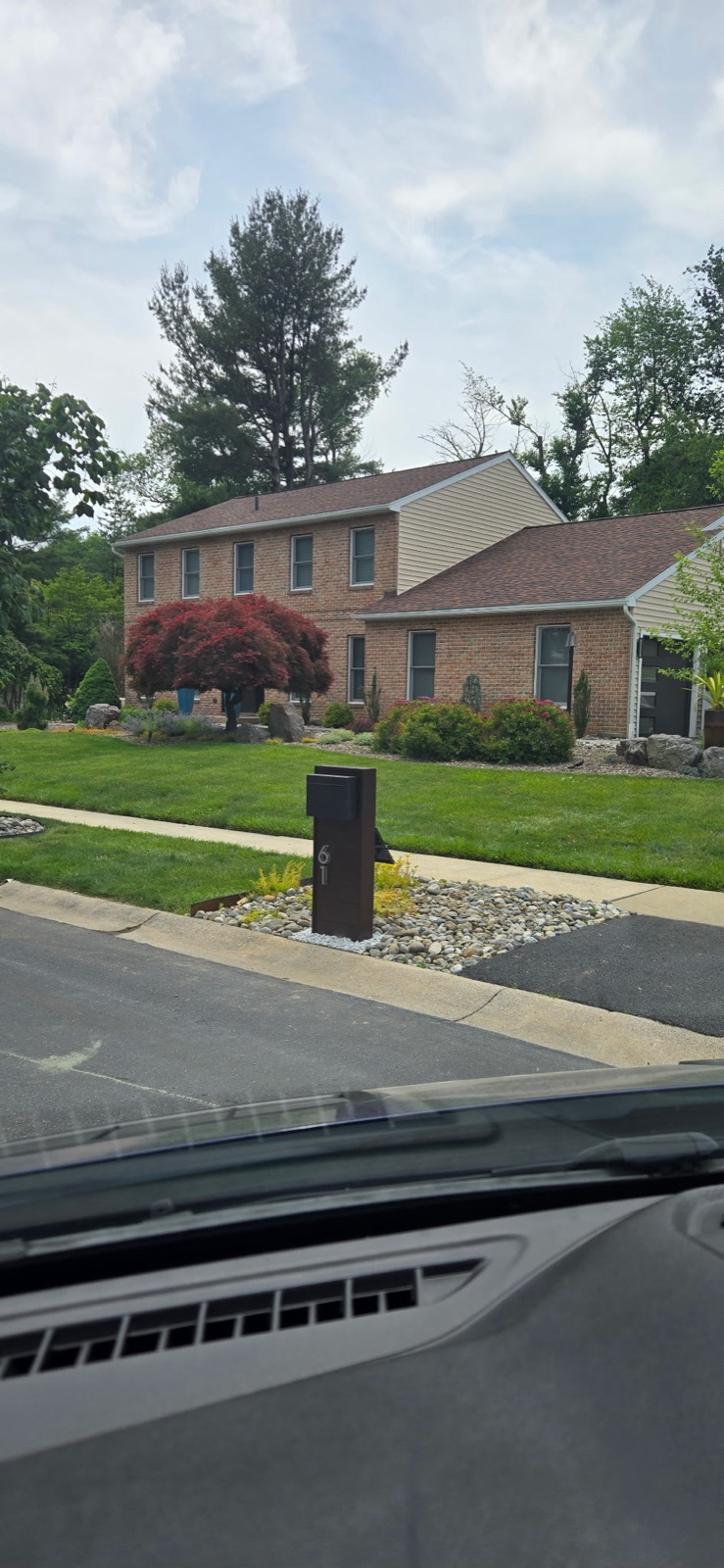
Specifying House Numbers in an HOA Mailbox Standard
Numeral size, typeface, color, and placement are the four details most community mailbox standards leave blank. Here is how to write them down, and where the spec sheet your ARC votes on actually comes from.
Dream Mailboxes Team8 min readUpdated September 2026
The number on the box is the address marker closest to the road. Size it for the driver, not for the photo.
The short answer
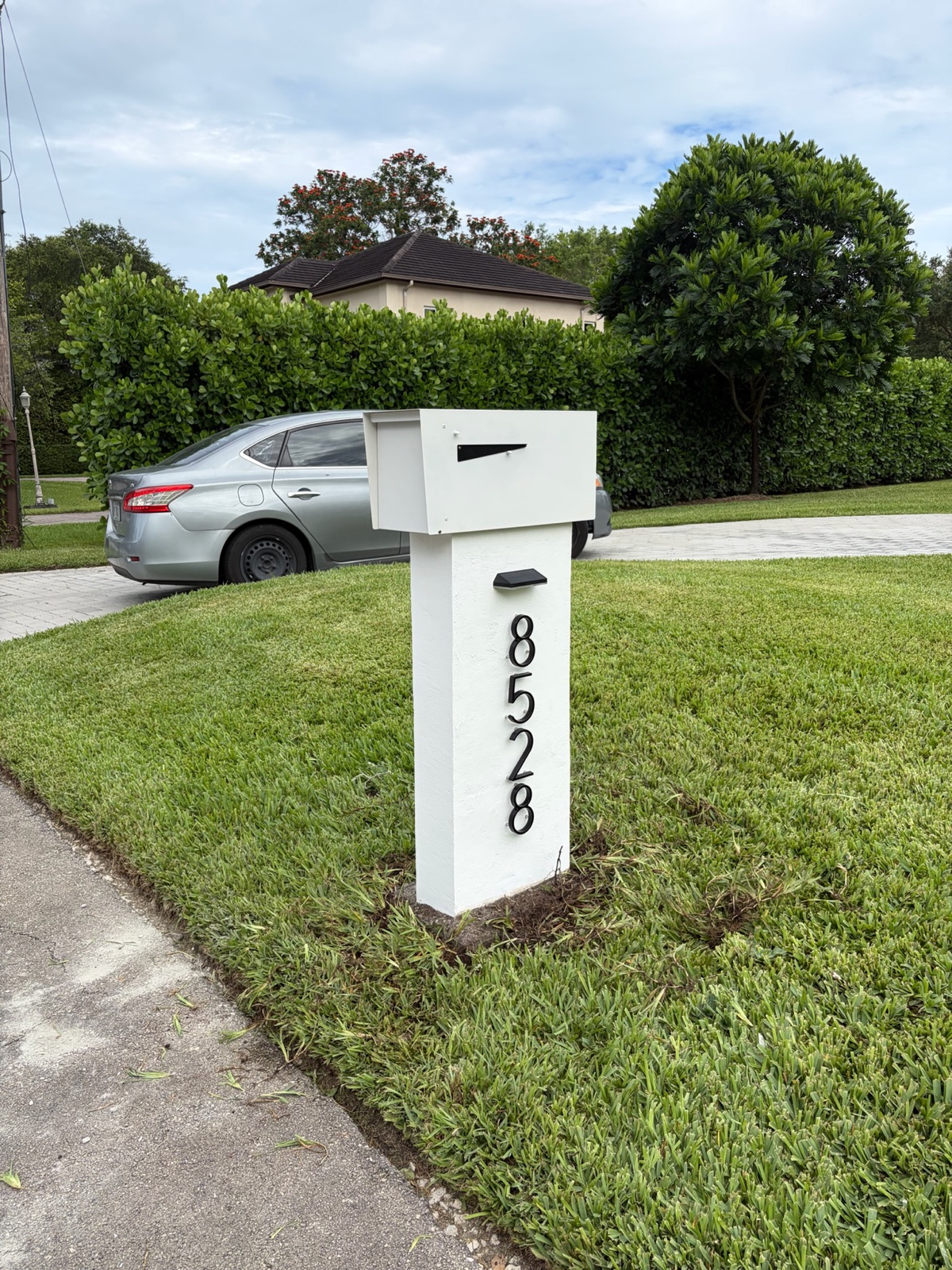
You get the spec sheet from the manufacturer, not from the board. Dream Mailboxes provides a spec sheet written for board and ARC approval, covering the model, material, color match, post detail, install method, and the part that usually gets left vague: numeral height, typeface, color, and placement. Numbers are built from 5 to 12 inches, so your standard can name an exact size instead of saying "house numbers to be displayed" and hoping. The approved spec stays on file, so a replacement ordered three years from now matches the ones already on the street.
Ask a board to describe its mailbox standard and you will usually get a color, a material, and a post style. Ask what the numbers are supposed to look like and the room goes quiet. That is the detail that gets left open, and it is the one that shows up first when you drive the street.
The line item nobody writes down
Community guidelines tend to be specific about the things that are easy to be specific about. Black box. Aluminum. Post height consistent throughout. Then comes a sentence like "address numbers shall be displayed on the mailbox," and that is the end of it.
Two years later the street tells you what that sentence allowed. One house has 3-inch brass stick-on numerals from a hardware store, half of them loose. The next has 6-inch vinyl in a completely different typeface. The corner lot put the numbers on the door of the box, which means they are readable only by someone already standing at it. None of those homeowners broke the rule. The rule never said anything.
Numbers are also the one element residents change on their own. A box is a purchase and an install; a set of stick-on numerals is a few dollars and a Saturday afternoon. When one falls off, the whole set gets replaced with whatever the store had, and the street drifts a little further apart every year. A standard that specifies the numbers as part of the mailbox itself, rather than as something applied to it afterward, removes that drift entirely.
There are four decisions here, and they are independent of each other: how big, what style, what color, and where on the unit. Write all four. A standard that names three of them still leaves an argument for the fourth.
Choosing a numeral height from the 5 to 12 inch range
Dream Mailboxes builds numbers from 5 to 12 inches. That is a wider range than most boards expect, and the reason it exists is that curbside conditions inside a single community vary more than a standard usually admits. A townhome row with a 12-foot setback and a wide boulevard lot with a 60-foot setback are not the same reading problem.
Match the size to the viewing distance
The number is read from a moving vehicle, at an angle, often at dusk or in rain, by someone who has never been on your street. That is the condition to design for, not a photograph taken from six feet away on a clear morning.
A 5 or 6 inch numeral is comfortable on a tight street: short setbacks, slow traffic, parked cars pushing drivers close to the curb. It looks proportionate on a smaller box and it does not overwhelm a narrow post. Go up to 8 inches when the road is wider, when there is a planting strip between the curb and the box, or when the community wants the address legible from the far travel lane rather than the near one. The 10 and 12 inch sizes earn their keep on wide roads, deep or rural-style setbacks, and larger pillar builds where a small numeral simply looks lost against the mass of the unit.
There is a test that settles this faster than a meeting. Print the candidate sizes at actual scale, tape them to a box at the height you intend to use them, then go stand in the road where a driver would be. Do it once in daylight and once after dark with headlights on. Whatever size is comfortable from the far lane is your size. Boards that run this test usually land a step larger than the size they had been arguing for.
When a range beats a single number
Most communities are better served by one size everywhere, because uniformity is the entire point of having a standard. But a handful of lots genuinely need an exception: flag lots, corner lots where the box sits at an angle to traffic, homes set well back behind a rise, and any unit where landscaping will eventually grow across the sight line.
If those lots exist, write the exception into the standard rather than leaving it to be discovered. Something like: 8 inch numerals throughout, with 10 inch permitted on lots where the box sits more than a stated distance from the traveled way, subject to ARC approval. That gives the committee a rule to apply instead of a case to litigate, and it keeps the exception from becoming the excuse for a free-for-all. Our guide to writing a mailbox standard into your community guidelines covers how to phrase clauses like that so they hold up.
Typeface, weight, and the color that actually reads
One typeface, one weight, community wide
The ARC does not need to become a type foundry. Pick one numeral style and one weight, name it in the standard, and reproduce it on the spec sheet at actual size so there is a physical reference to compare against. Anyone can hold a replacement up to the sheet and see in two seconds whether it matches.
Stroke weight matters more than the shape of the letterform. A thin, elegant numeral that looks refined on an approval packet thins out to nothing at forty feet. A medium or semibold weight holds its shape at distance and in low light. Script faces, heavily stylized numerals, and anything with a hairline stroke are the usual regrets. Whatever face you choose, check the numbers that get confused with each other at speed: 3 and 8, 6 and 5, 1 and 7. If any pair is ambiguous at distance, the face is wrong for the application regardless of how it looks on paper.
Because every Dream Mailboxes unit is built to order, the numbers are produced as part of the build rather than applied to a finished box. That is what keeps the whole street consistent: the typeface is not a homeowner's shopping decision, it is a line on the spec the board approved.
Contrast decides readability, not color
The single most common mistake in an approved mailbox standard is a numeral that matches the box. Bronze numbers on a bronze box. Graphite on graphite. Black on a black powder coat with a slight sheen difference. It photographs beautifully, it wins the vote, and it is invisible from the road.
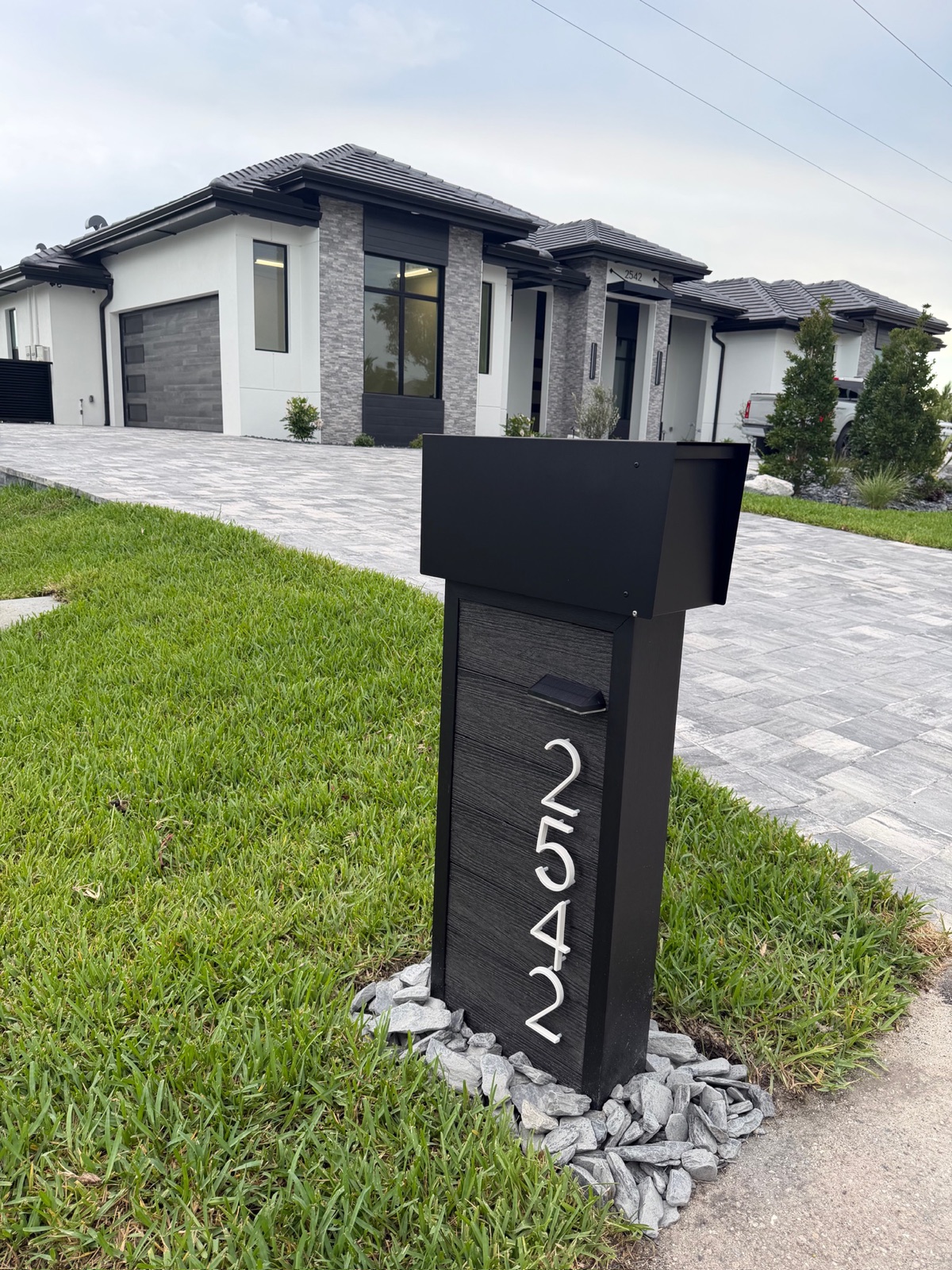
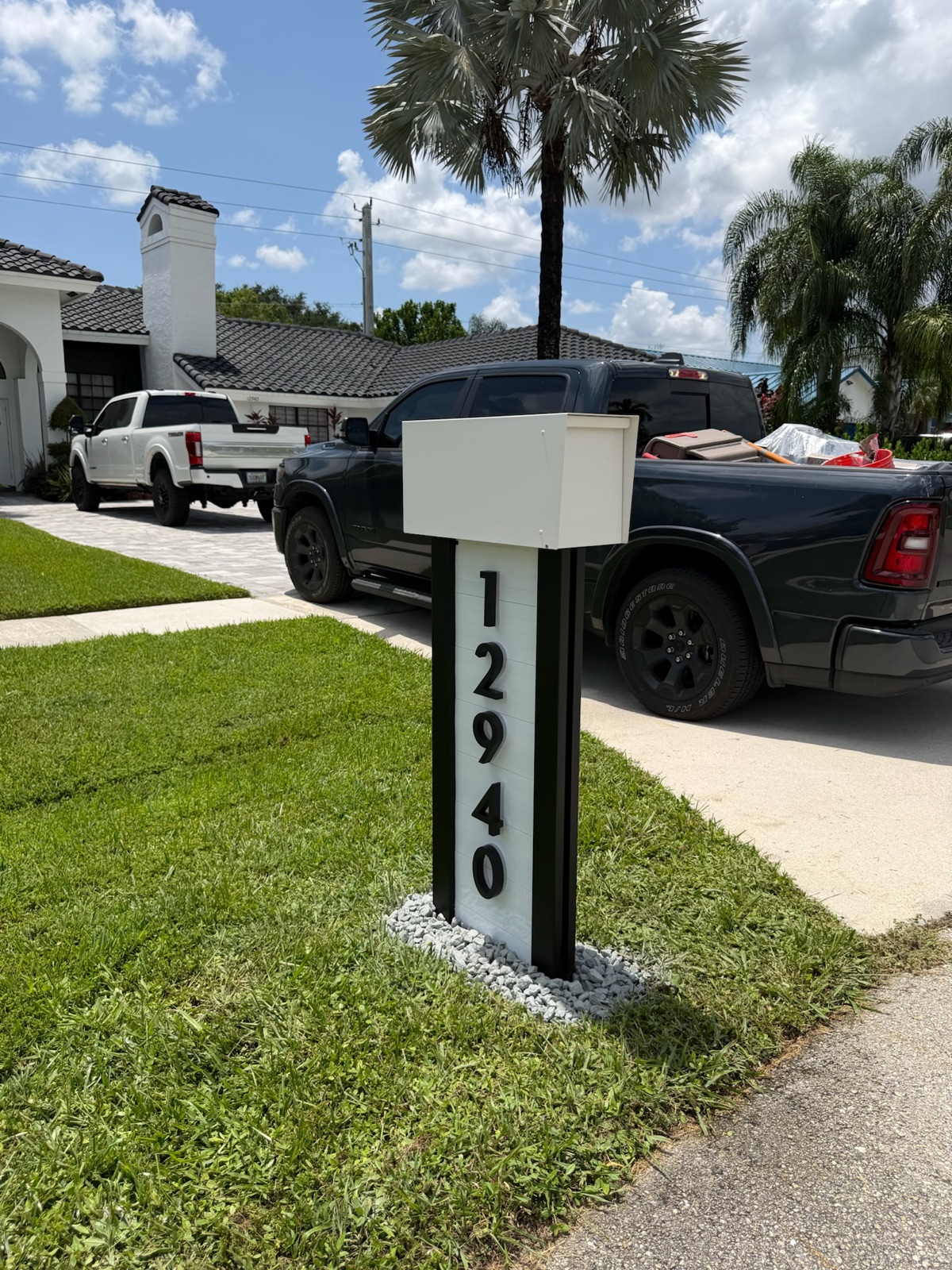
What a driver's eye resolves at distance is difference in lightness, not difference in hue. A dark box needs a light numeral. A light box needs a dark one. If the community palette is committed to a dark body color, which most are, then the numerals are where the contrast has to come from, and a board that wants everything to be one tone is choosing appearance over function. Say that out loud in the meeting, because otherwise the matching option wins by default every time.
Custom color matching helps here rather than hurting. Because colors are matched to an existing community palette, you can pull the numeral color from something already on the street, a trim color, a light fixture finish, a gate detail, so the contrast reads as deliberate rather than as a compromise. The standard then names both colors, not just the box.
Finish, glare, and what happens after five summers
A polished or high-gloss numeral catches low sun. For an hour or two a day, depending on which way the street runs, it will flare and become unreadable at exactly the time of day people are coming home. A satin or matte finish reads more evenly across conditions and hides handling marks better.
Then there is the longer problem. Adhesive vinyl on a post curls and fades. Painted numerals chalk. The material the number is made from is as much a part of the standard as its size. Powder-coated aluminum will not rust, and composite will not rot, warp, or fade, which is the relevant property here: five years in, the number is still the color the board approved, not a sun-bleached version of it. If you are writing a standard meant to hold for a decade, specify the material, not just the appearance. The materials comparison in mailboxes that meet HOA architectural standards goes through the tradeoffs in more detail.
Placement: which face, how high, how many
Three placements come up in practice, and a standard should pick one and describe it precisely.
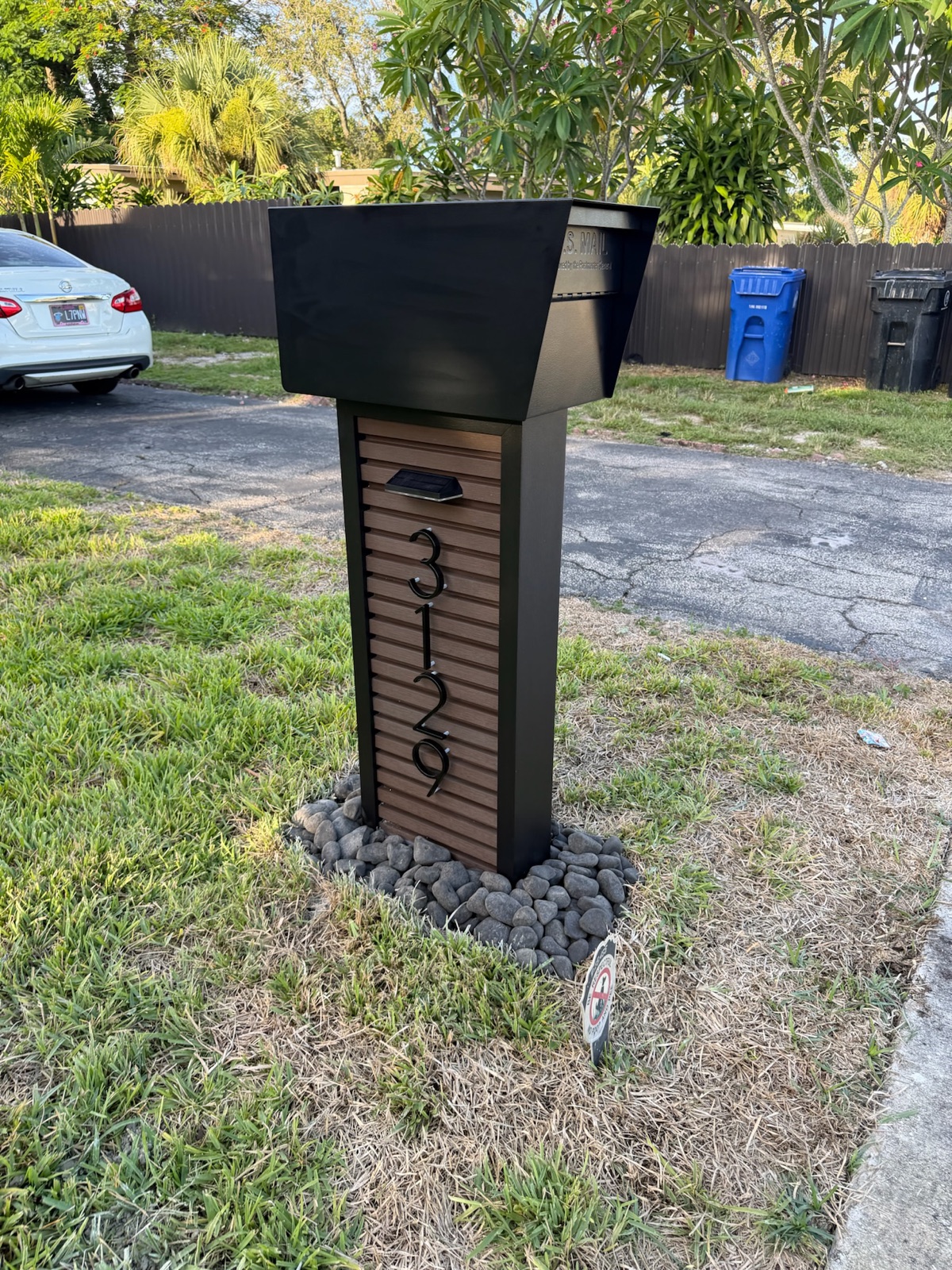
Numbers on the side of the box are the most common and generally the most legible, because the side is broad, flat, and perpendicular to the road. On a two-way street, that means both sides get numbers, otherwise half the traffic approaches the blank face. Numbers on the post or on a plaque below the box work well on pillar builds and on units where the box itself is small relative to the structure. Numbers on the door of the box are the placement to avoid as a primary marker: that face points at the carrier standing in front of it, not at anyone driving past looking for an address.
Specify vertical position too, as a measurement rather than a description. "Centered on the box side" is a rule. "Numbers to be placed neatly" is not. Consistent placement across every unit is what makes a street read as one design instead of forty individual decisions that happen to share a color.
One more placement note that comes up on nearly every project: decide whether the numbers go on the mailbox, on the house, or both, and say so. Many communities require both. The two are not redundant. A house number is frequently blocked by landscaping, a porch roof, a parked vehicle, or simple distance from the road, and it gets harder to find as the plantings mature. The number at the curb is the one that stays close to the road and stays at the eye level of someone in a vehicle.
Street number, unit number, or both
For duplexes, paired homes, and townhome rows, the standard has to answer a question a single-family standard never faces: which number is displayed, and at what size.
Three patterns show up. The first is the full address on each unit, street number plus the unit designator, at the same numeral height so the designator is as legible as the number. The second is the street number at the specified size with a smaller unit letter alongside it, which looks tidier and is harder to read at speed. The third is a shared post carrying two boxes, each with its own complete address.
Our recommendation for attached homes is the first pattern: keep the unit designator at the same height as the street number. A driver who reads "1420" from the road and then has to hunt for an A or a B rendered in 2-inch type has not actually found the address, and neither has a delivery driver or anyone arriving in a hurry. The visual argument for shrinking the designator is real, it does look more balanced, but it defeats the reason the designator is there.
Whichever pattern you adopt, the important thing is that the standard adopts one. If it does not, every pair of neighbors negotiates it themselves and you get three patterns on one street.
Emergency access is the argument that ends the debate
Aesthetic arguments about numeral size can run for three meetings without resolving, because both sides are stating preferences and neither preference is wrong. The practical argument does not run that way.
Someone responding to an address in your community has usually never driven the street before. They are reading addresses from a vehicle, frequently at night, sometimes in weather, and they are working from the road rather than from a walkway. Under those conditions the mailbox number is often the only address marker positioned at the road and held at the height of a person in a vehicle. That is the whole case, and it does not require any statistics to make. It requires only that the board picture the actual conditions instead of the approval photo.
Before you finalize a size, check whether your jurisdiction has its own requirement. Many local fire and building codes set a minimum numeral height and a contrast requirement for address display, and those requirements are independent of anything the association adopts. If the local minimum is larger than what the board prefers, the local minimum governs. Have someone on the committee confirm it with the fire marshal or building department before the vote, not after the boxes are built. It is a five minute phone call and it has saved projects from being rebuilt.
USPS placement and your architectural standard are two separate approvals
This trips up boards constantly, so it is worth stating plainly. The Postal Service governs where the box sits. Your architectural standard governs what it looks like. Both have to be satisfied, and satisfying one tells you nothing about the other.
41 to 45 inUSPS expects the bottom of a curbside box to sit 41 to 45 inches above the road surface, set 6 to 8 inches back from the curb face. That rule governs placement so a carrier can serve the box from the vehicle. It says nothing about numeral size, typeface, or color.
Source: USPS Mailbox Guidelines
The published standards in DMM 508 are about access and position. Nothing in them specifies what your numbers look like. Meanwhile your community standard has plenty to say about appearance and nothing to say about carrier access. A standard that nails the look and puts the box at 38 inches creates a delivery problem the board will hear about within a week. A standard that hits USPS placement perfectly and leaves the numbers unspecified creates the inconsistency you set out to prevent.
Write the spec so a single install satisfies both, and put the placement confirmation on the installer rather than on the homeowner. When the same company designs, builds, and sets the unit, that confirmation is part of the job instead of a step that falls between two vendors.
What belongs on the spec sheet the ARC votes on
A spec sheet is not a marketing rendering. It is the document the committee approves, attaches to the governing standard, and hands to the next board. It should let someone who was not in the room reproduce the decision exactly. At minimum:
Model and material: the exact build, in aluminum, composite, faux stone or marble pillar, Metaline steel, Slate, or wood, with the finish named.
Dimensions: box size, post style, and overall height as installed.
Color: the matched color and what it was matched to, so the match can be repeated. Custom colors pulled from an existing community palette should say which element they came from.
Numerals: height in inches from the 5 to 12 range, typeface shown at actual size, weight, color, and finish.
Numeral placement: which face or faces, and the position given as a measurement.
Unit designator rule: for duplexes and attached homes, whether it appears and at what size.
Install detail: post set in concrete roughly 2 feet deep over a 4 inch footer, finished with a decorative rock bed, with placement confirmed to USPS height and setback.
Lead time and warranty: so the board can phase the project against real dates.
Before anything is built, a design mockup goes to the board or committee for approval. That is the step that prevents the most expensive version of this mistake, which is discovering the numerals are a size too small after forty units have been fabricated. Approve the mockup, attach it to the standard, and the argument is over. The mailbox spec sheet your ARC needs walks through the full document and how to enter it into the record.
What it costs and how long it takes
Honest numbers, because a board planning a community-wide program needs them before the vote, not after.
Mailboxes start around $499 at the entry tier, with most community programs landing in the $899 to $1,499 core range, and statement pieces running up to roughly $3,900. Installation is priced per unit: $499 standard, $699 pillar, $799 extra large. Existing aging posts can be replaced and reset rather than worked around, which matters on a retrofit where half the street is original and half has already been changed.
Lead time is roughly 2 to 3 weeks on standard builds, longer for LED or vault models. That is the real tradeoff of made to order: you cannot have one next Tuesday because a homeowner backed into theirs. What you get in exchange is that the unit built next year matches the one built this year, because the approved spec is on file rather than reconstructed from memory. Every build carries a 1-year warranty. For a program of any size, phase the order and build the lead time into the schedule you present to the membership. See professional installation for how the install side is scoped.
Writing it so it survives board turnover
Boards turn over. Committees turn over. The standard that survives is the one that does not depend on anyone remembering the conversation.
Reference the spec sheet in the governing document by name and date, and attach it as an exhibit rather than paraphrasing it in the body text. Paraphrasing is how "8 inch numerals, satin white, centered on both box sides" becomes "large white numbers" three revisions later. When the community eventually wants to change something, you amend the exhibit and the rest of the standard stays intact.
Keeping the approved spec on file with the manufacturer does the same job from the other direction. A homeowner who needs a replacement in year four does not have to find the right board minutes or match a color by eye. They reference the community spec, and the unit that arrives matches the ones already on the street, numerals included.
Three ways communities source the numbers
How a community buys determines how much control it actually has over this detail. The table below compares the three arrangements boards typically evaluate.
Ship-only supplier
Local handyman or sign shop
What we recommendDream Mailboxes design, build, install
Numeral sizes offered
Whatever the catalog stocks, often one or two
Depends on the shop's inventory that month
5 to 12 inches, specified per community
Typeface control
Fixed to the product line
Varies by job and by who cut it
Named on the spec sheet, built into the unit
Color match to palette
Stock colors only
Approximate, matched by eye
Custom color matched to the community palette
Spec sheet for ARC approval
Product page printout
Usually none
Spec sheet written for board and ARC approval
Approval before fabrication
None, you see it when it ships
None
Design mockup approved before building
Replacement years later
Line may be discontinued
Shop may not be in business
Approved spec kept on file so it still matches
Install and USPS placement
Not included, hire separately
Included, quality varies by crew
$499 standard, $699 pillar, $799 XL, set to spec
Who owns the result
Split across two or three vendors
Split from whoever supplied the box
One vendor, one 1-year warranty
The pattern in that table is the reason the numeral detail goes vague in the first place. When the box comes from one vendor and the numbers come from wherever the homeowner found them, no document exists that could specify both. A single vendor handling design, build, and install is what makes the numeral line item enforceable, because it is part of the same approved spec as the color and the post. If your board is at the point of drafting language, send us the community palette and a photo of a typical curb and we will put the spec sheet together for the committee to review.
"The numeral size is the one line boards regret leaving open. Everything else on a mailbox standard is about how the street looks. That line is about whether someone can find the address from the road, and it costs nothing to write it down correctly the first time."
Dream Mailboxes team
Size, typeface, color, and placement are four separate decisions. A spec sheet records all four so the fortieth unit matches the first.
Common questions
The ARC needs a spec sheet before we can approve a new mailbox standard for the neighborhood. Where do we get one?
From the manufacturer. Dream Mailboxes provides spec sheets built for board and ARC approval, covering model, material, dimensions, matched color, post and install detail, and the numeral specification: height from the 5 to 12 inch range, typeface, color, finish, and placement. A design mockup is approved before anything is built, and the approved spec is kept on file so replacements ordered later still match.
What size should house numbers be on a community mailbox standard?
Numbers are available from 5 to 12 inches. Smaller sizes suit tight streets with short setbacks; 8 inches is a common community-wide choice; 10 and 12 inch numerals are for wide roads, deep setbacks, and larger pillar builds. Test the candidate sizes from the road at night before voting, and check whether your local fire or building code sets a minimum, since that minimum governs if it is larger.
Should the numbers go on the box or on the post?
The side of the box is usually the most legible surface, and on a two-way street both sides should carry numbers so neither direction of traffic faces a blank panel. Post or plaque placement works well on pillar builds. Avoid making the door of the box the primary location, since that face points at the carrier standing in front of it rather than at the road.
How should a standard handle unit numbers on duplexes and townhomes?
Decide it in the standard rather than leaving it to each pair of neighbors. The clearest pattern is the full address on each unit with the unit designator at the same numeral height as the street number. Shrinking the designator looks more balanced but makes the address harder to resolve from a moving vehicle, which defeats the point of displaying it.
Does USPS regulate what the numbers look like?
No. USPS governs placement: the bottom of a curbside box 41 to 45 inches above the road and 6 to 8 inches back from the curb face. Numeral size, typeface, and color are entirely your architectural standard's business. Both requirements apply independently, so a design that satisfies the ARC still has to be installed to USPS height and setback.
Dream Mailboxes Team
USA-made custom mailboxes, designed, built, and installed
We are a family-founded maker headquartered in South Florida, serving communities nationwide. We design the unit, hand-build it in the USA, and install it ourselves, so a board works with one vendor instead of a supplier plus a separate installer.


 Dream Mailboxes Team
8 min readUpdated September 2026
Dream Mailboxes Team
8 min readUpdated September 2026