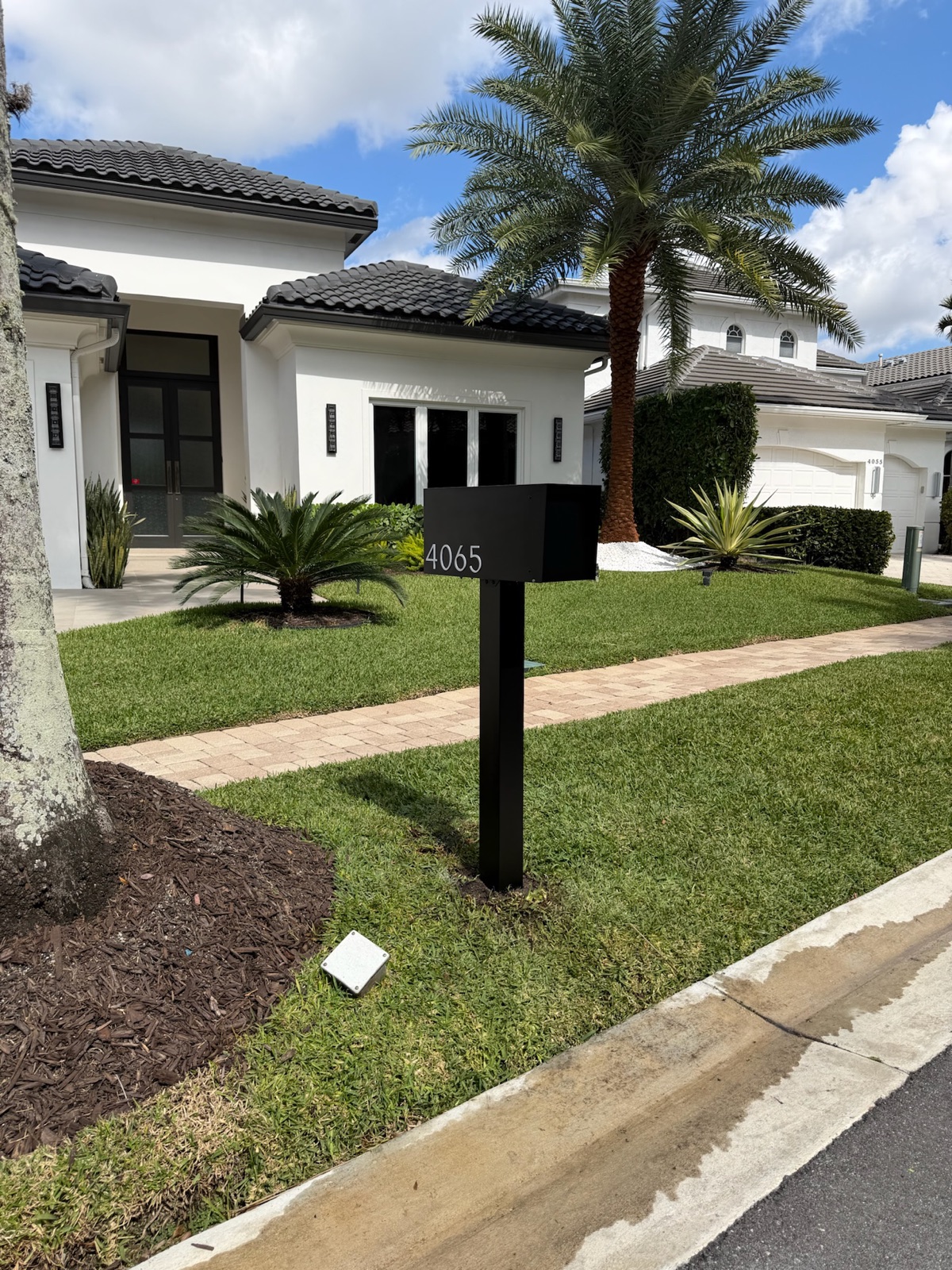
Getting Every Mailbox in the Community to the Same Height
Identical mailboxes still look wrong when every one of them was set on a different Saturday by a different person. Here is how a crew holds one height and one setback at every house on the street, including the lots that slope and the ones with no curb at all.
Dream Mailboxes Team8 min readUpdated September 2026
A street reads as finished when the boxes line up in height and setback. That is an install decision, not a product decision.
The short answer
To get the same height and setback at every house, one crew has to set every post to one written standard in a single program, which is what Dream Mailboxes does: units built to an approved spec, each post set in concrete roughly 2 feet deep over a 4-inch footer, and every box placed inside the USPS window of 41 to 45 inches from the road surface to the bottom of the box with a 6 to 8 inch setback. Installs are priced per unit at $499 standard, $699 pillar, and $799 XL, and the same crew pulls and disposes of the old posts as it goes.
Walk a street where each owner installed their own mailbox and you can read the neighborhood's history off the curb. One box sits low, so the carrier has to reach down for it. The next one stands tall and proud. A few houses along, one is so far back from the pavement that the carrier has to lean out the window, and two doors past that, one leans toward the road like it lost an argument with a tire.
The boxes themselves might be close to identical. Same color, same shape, maybe even ordered from the same place during the same decade. It still looks wrong, and a board that just approved a new community standard gets the complaints anyway. That is the part worth understanding before you write the check: consistency across a community is almost entirely a function of how the posts were set, not what was mounted on them.
Why a community of owner-installed mailboxes drifts out of line
Nobody set out to make the street uneven. It happens because an owner-installed program is not one project. It is two hundred separate small projects, spread over years, with no shared reference.
Every install happened on a different day, by a different hand
The first owner digs a hole, eyeballs the height against the box they took off, and calls it good. The second one hires whoever was available that week. The third one moves in eleven years later, replaces a mailbox a truck clipped, and matches the height to the neighbor's box rather than to the road. Each decision is reasonable on its own. Stacked up across a community, they produce a curb line that wanders by half a foot.
There is no villain in this. There is just no single measurement anyone is working from, and no one whose job it is to check.
Height gets measured from whatever is convenient
This is the quiet source of most of the drift. The USPS figure is measured from the road surface to the bottom of the box. Owners and general handymen tend to measure from the ground they happen to be standing on, which is the grass, or the top of a swale, or a mulch bed that got two more inches of mulch last spring. On a lot where the yard sits six inches above the pavement, measuring off the grass puts the box six inches high, and it will pass an eyeball test at that one house while being visibly out of line with the house next door.
Setback drifts the same way. Six to eight inches back from the curb face is a tight window, and it is easy to lose when the hole gets dug where the digging is easy instead of where the box belongs.
Depth decides whether the height holds
A post can be set at the correct height on day one and be wrong two years later. A shallow post, or one tamped into soil without concrete, works loose as the ground moves and water gets in. It settles, it tips, and the box that started at 43 inches ends up low and pointed at the sky. So the variation keeps growing after install day, and the leaning boxes are usually the shallow ones.
That is why depth belongs in a height conversation at all. The footing is what preserves the measurement.
Matching boxes is not the same as a matching install
Boards sometimes solve half the problem. They approve a single mailbox model, distribute the spec to owners, and let each homeowner buy and install it. Every box is now the same, and the street still looks uneven, because the variable that was never controlled was the post placement. If you are at the stage of writing the standard itself, the mechanics of that are covered in specifying matching mailboxes across a whole community. The point here is narrower: a specification that does not name a height, a setback, and who installs will not produce a matching street.
41 to 45 inThe USPS expectation for a curbside box: 41 to 45 inches measured from the road surface to the bottom of the box, set 6 to 8 inches back from the curb face. It is one window, and every house in the community has to land inside it.
Source: USPS Mailbox Guidelines
That window is the anchor for a community program, and it is worth reading the Domestic Mail Manual 508 language directly if you are drafting a specification. Curbside boxes are expected to sit inside that height and setback range so a carrier can serve them from the vehicle without getting out. A box outside it is not a style question. It is a delivery question, and the resolution is not in the board's hands.
USPS placement and your architectural standard are two different requirements
This trips up boards that have only dealt with one of them before. The Postal Service cares where the box sits and whether a carrier can reach it. Your architectural standard cares what it looks like: material, color, number style, post profile, whether there is a planter at the base. Neither one satisfies the other.
A mailbox can be fully compliant with the community's approved design and still sit at the wrong height. It can also sit perfectly at 43 inches and be a color the ARC never approved. A community program has to clear both, which is the practical argument for putting the USPS numbers into the same document as the design specification instead of leaving placement as a verbal instruction to whoever shows up with a shovel. Getting that document in front of the board is its own process, walked through in how an HOA board approves a community-wide mailbox standard.
We provide a spec sheet for exactly that reason, and we keep the approved spec on file. If a unit gets replaced four years from now after a car takes one out, the replacement matches the original, and the placement numbers are still attached to it.
How a crew holds the same height at two hundred houses
The method is unglamorous, which is the reason it works.
One reference, and it is the road
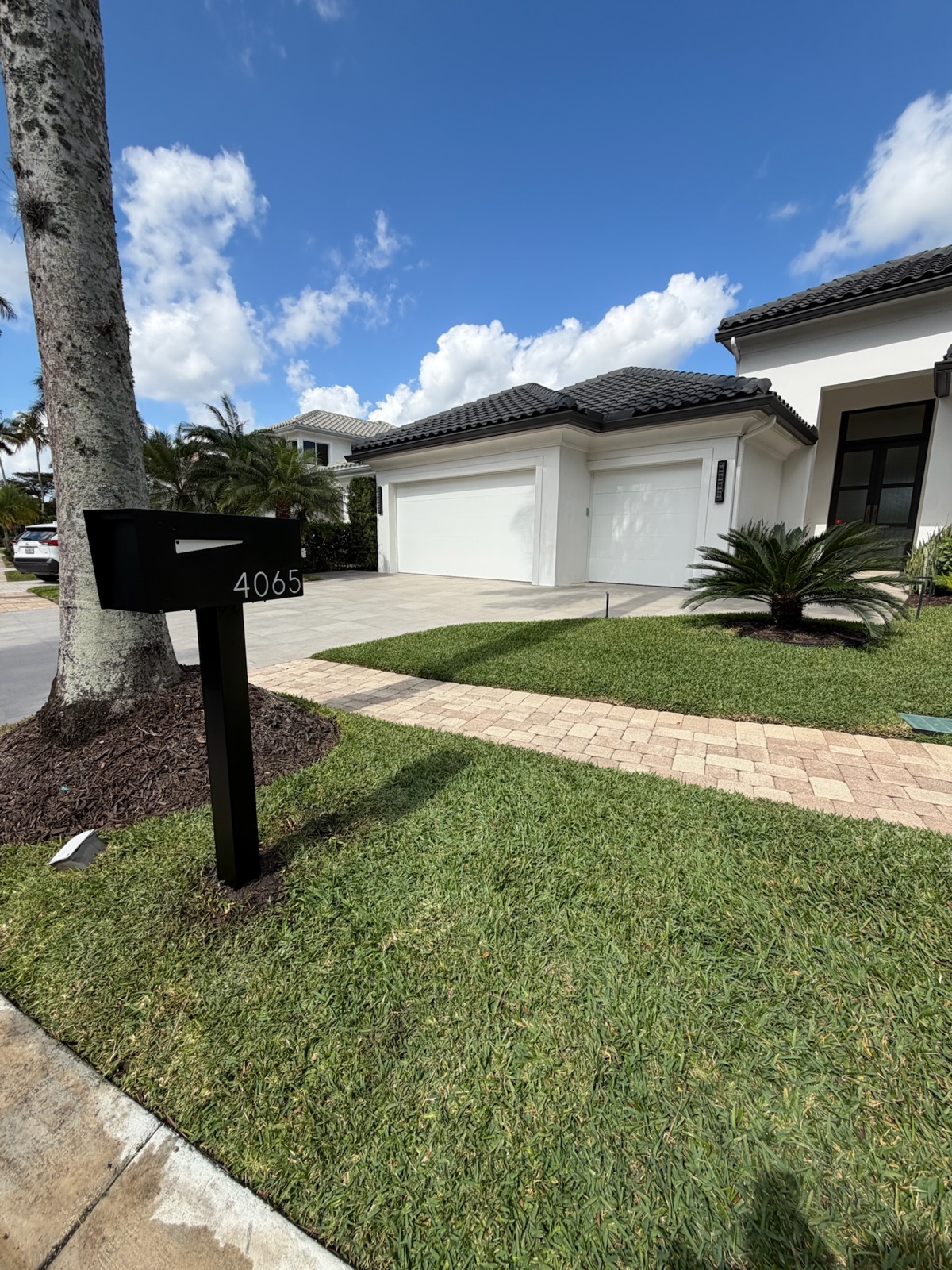
Every measurement starts from the road surface at that house, not the lawn, not the driveway apron, not the neighboring box. That single habit removes most of the variation an owner-installed street accumulates, because the road is the only surface that is common to the whole program and to the carrier's actual approach.
A set jig instead of a fresh tape reading at each hole
Measuring from scratch at every house introduces a new chance to be off by an inch every time. A crew running a community program works to a pre-set reference for the target height and setback, checks it against the road at that specific lot, and sets the post to it. The repeatability comes from the process being the same at house 4 and house 186, including on the day the weather is bad and the crew is behind.
The post is set in concrete so the height stays put
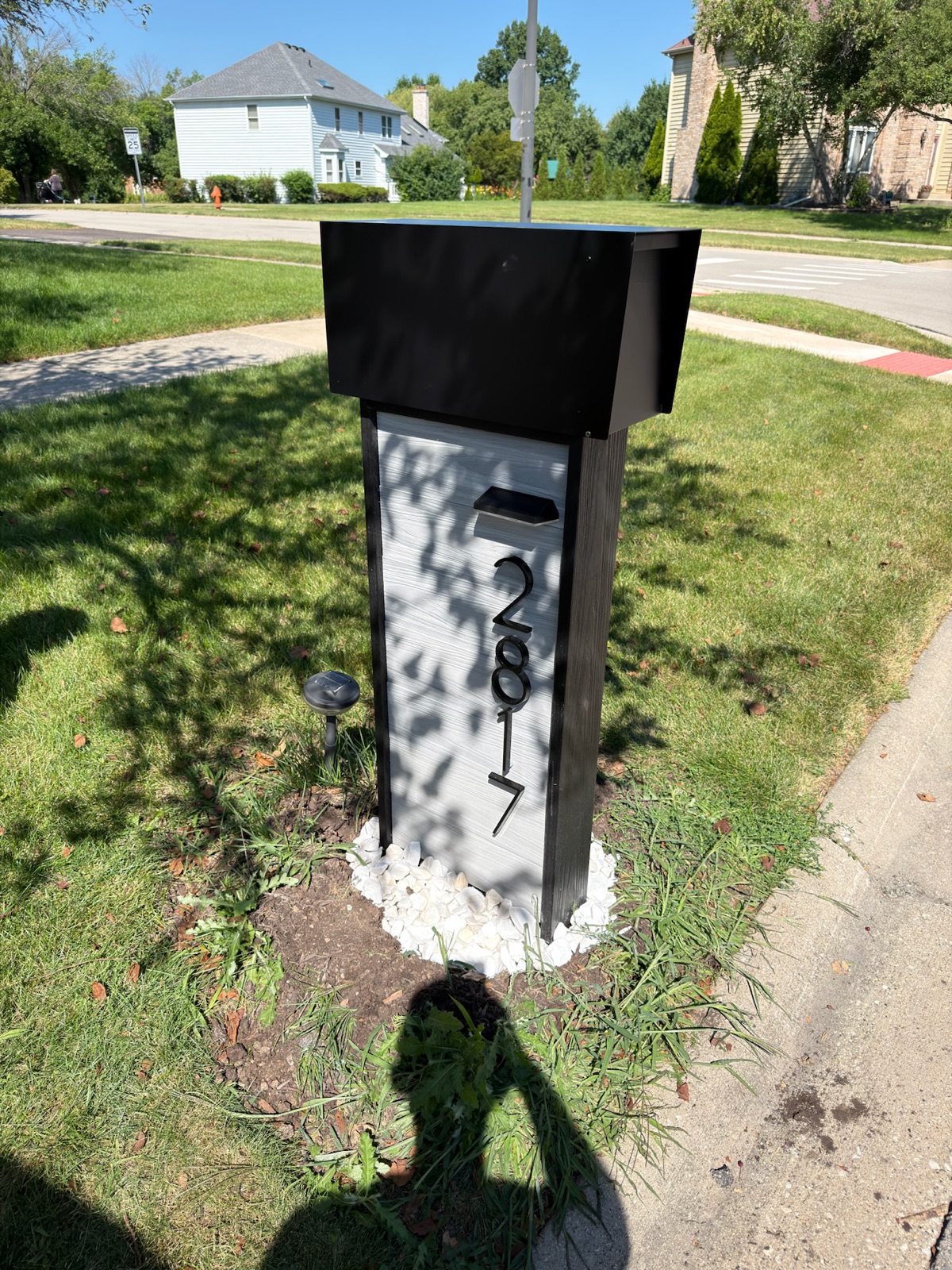
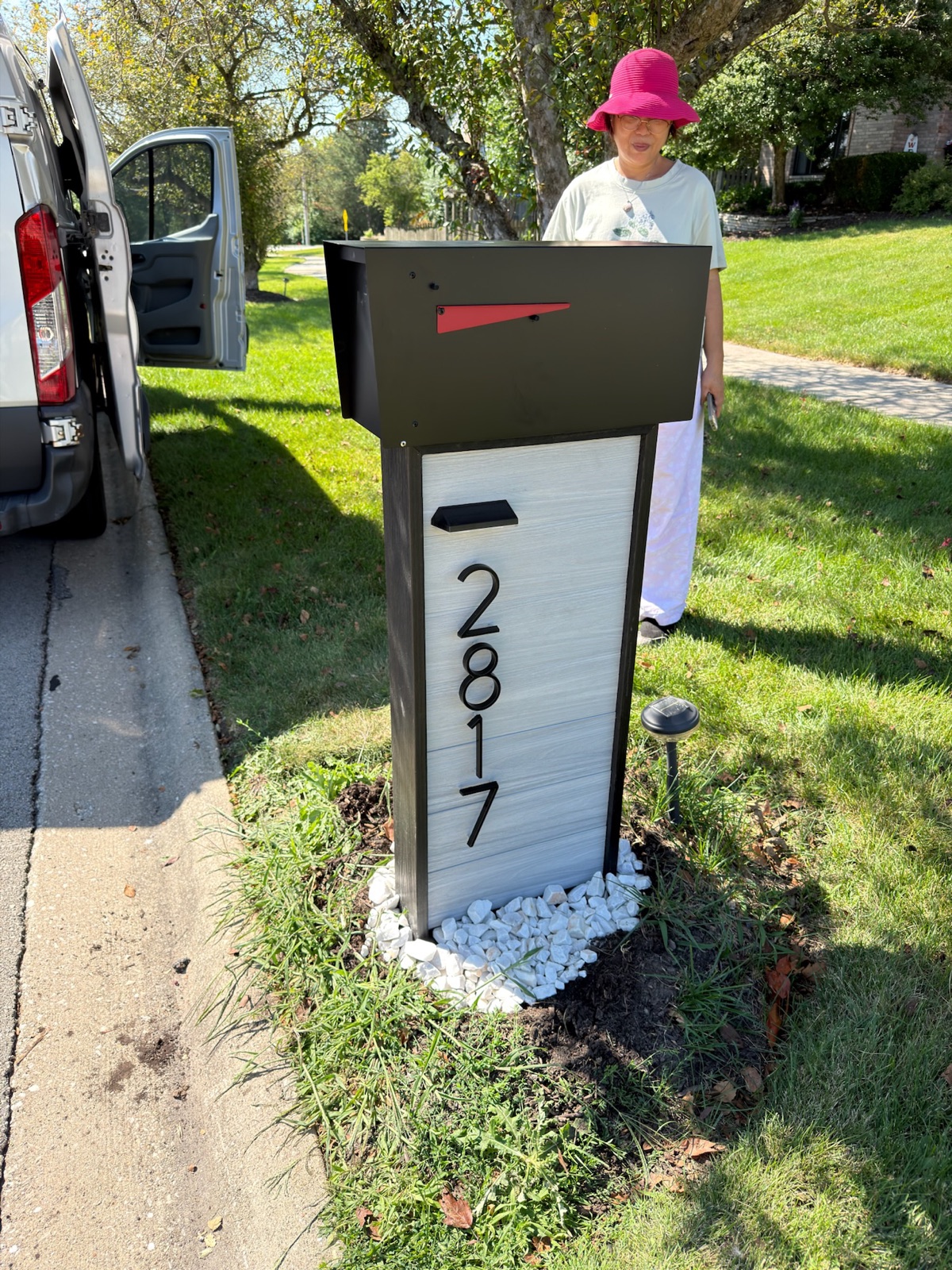
The hole goes roughly 2 feet deep, with a 4-inch footer at the bottom, and the post is set in concrete. The footer spreads the load so the post does not work its way down through the soil over seasons of rain and heat. The box is positioned and checked for plumb while the concrete is still wet, because that is far easier than discovering a unit is two inches low after it cures. The base is finished with a decorative rock bed, so the ground detail matches from house to house too.
Plumb and square, in both directions
A post can be at the right height and still read as wrong if it is slightly out of plumb or rotated a few degrees off the road line. On a single lot, nobody notices. In a row of thirty, every one of them is comparing itself to its neighbors, and small rotations are the reason a street can look restless even when the heights are correct. Checking face alignment to the road line at each unit is part of the same pass as the height check.
Sloped lots, crowned roads, and swale sections
This is the question boards ask as soon as they look at a site plan, and it deserves a direct answer: on a slope, the boxes do not all sit at the same elevation, and they should not. Each one is set relative to the road in front of it.
If you took a long stretch of a hillside street and forced every box to the same absolute elevation, the boxes at the bottom of the run would be unreachable and the ones at the top would be near the ground. The USPS window is measured from the road surface for a reason: the carrier's vehicle is on the road, and the road is what moves.
What that produces, done properly, is a run of boxes that steps evenly with the grade and looks deliberate. The eye accepts a consistent relationship to the pavement much more readily than it accepts a flat line that fights the hill. The same logic applies to a crowned road, where the pavement edge sits lower than the centerline, and to a swale section, where the ground between the pavement and the lot drops away and then comes back up. In a swale, the ground right at the post can be well below the road surface, so a crew that measures from grade will set every box in that section too high. The post simply needs to be long enough to reach the correct height from a lower footing, which is a design and specification question to settle before production rather than an improvisation on install day.
On a community walk, these are the sections worth flagging early: anything on grade, anything in a swale, corner lots where the box may need to face a different approach, and any lot where a driveway apron or drainage structure limits where the post can physically go. A survey up front means the units are built to fit what is actually there.
Curbless lots and open shoulders
Plenty of communities have streets with no curb at all, and the 6 to 8 inch setback references a curb face that does not exist. The reference becomes the edge of the pavement or the traveled shoulder, and the height is still taken from the road surface. In practice the judgment call is where the usable edge of the road actually is, which is a field decision that needs to be made the same way at every house on that street rather than lot by lot.
Curbless sections also tend to be the softer ground, with more runoff crossing them, which raises the stakes on the footing. A post set shallow in a grass shoulder that channels water twice a week is the one that leans first. And where mowing crews run along an open shoulder, the rock bed at the base does real work: it gives the mower operator a visible edge to work around instead of a post standing alone in the turf.
One more note specific to curbless streets. Because there is no curb to stop a tire, these are the boxes most likely to get clipped. That is an argument for the material choice being durable and for keeping the approved spec on file, so a single replacement years later matches the rest of the street instead of becoming the one box that is slightly off.
Pulling the old posts and putting the ground back
Most community programs are replacements, not new construction, which means every new post has an old one standing next to it. How that old post comes out is a bigger deal to homeowners than the board expects, because it is the part that happens in their front yard.
An aging post is usually set in some amount of concrete, or it is a wood post that has rotted below grade and will break off if you pull on it. Either way it has to come out, not get cut at the ground and abandoned, because a buried stub is exactly what the new footing wants to occupy. Pulling it leaves a hole in the sod that has to be backfilled and finished so the lawn does not have a scar in it. We also handle the case where a community keeps its existing posts: we replace and reset aging posts, which is a reasonable option when the posts are structurally sound but have settled out of the height window over the years.
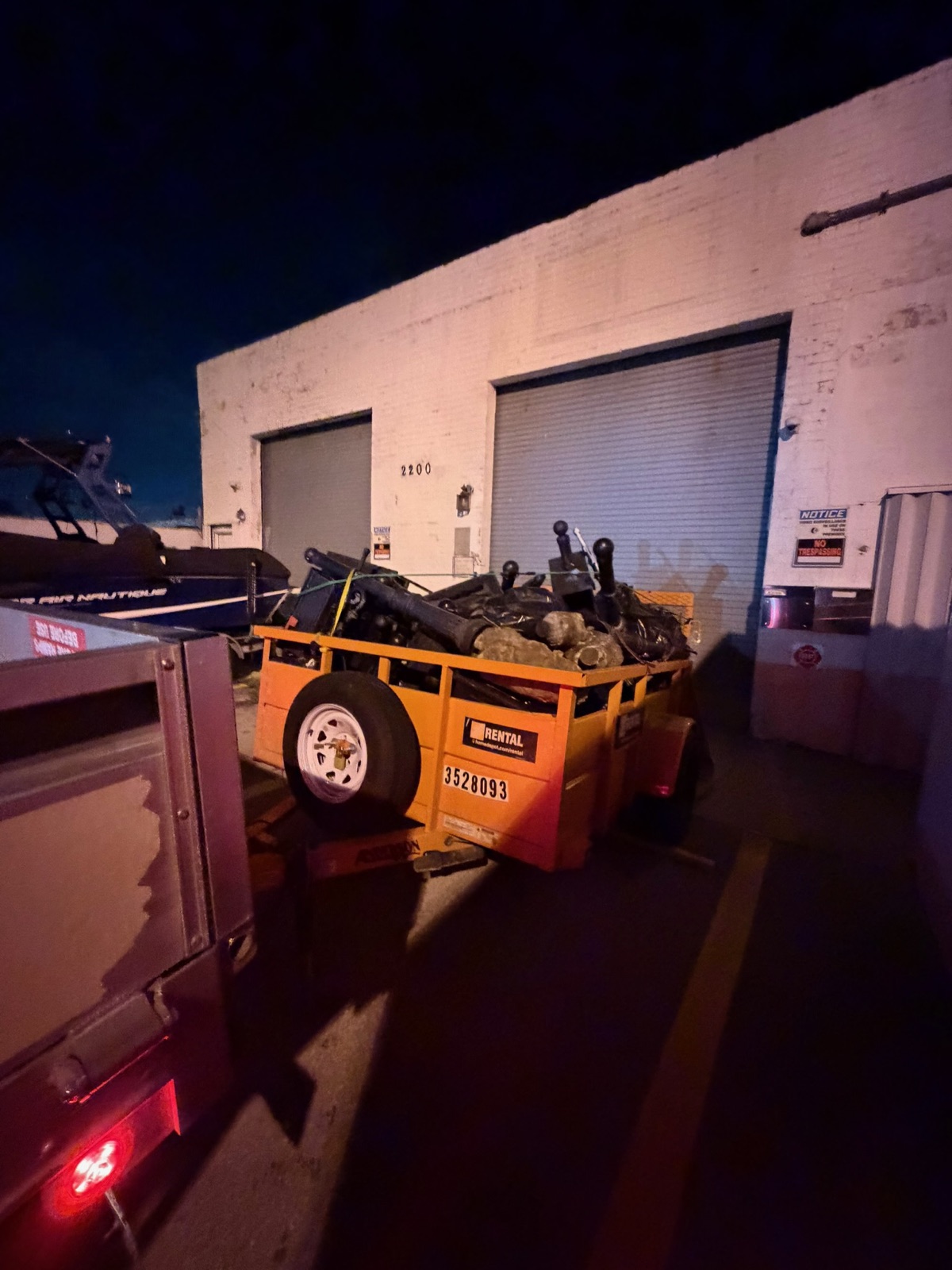
The other half of removal is the debris. Broken concrete, an old rusted box, a splintered wood post, and a pile of spoil from the new hole all have to leave the property the same day. A program where the old parts sit at the curb for a week generates more email than the install itself. Sequencing matters too: on a community install, pulling and setting at the same house in the same visit means no home is without a mailbox overnight, which keeps mail moving and keeps the board out of the middle of it.
Who actually does this across a whole neighborhood
The honest answer is that most of the industry is not set up for it. A ship-only supplier sends boxes to a clubhouse and the association is left to find a crew. A local handyman can set a post well but is not manufacturing two hundred matched units. Between those two, the placement standard is the thing that gets lost, because nobody owns it.
Dream Mailboxes is a family-founded, USA-made custom mailbox maker headquartered in South Florida and serving communities nationwide, and we design, build, and install, which is why a community program does not need a supplier plus a separate installer. There is a longer treatment of that structure in who installs mailboxes for an entire HOA community. For the height question specifically, single-vendor matters because the crew setting the post already knows the weight of the unit, the post length that lot needs, and the number the spec sheet says to hold.
Owners install their own
Ship-only supplier plus local installer
What we recommendDream Mailboxes design, build, install
Height reference
Whatever surface each owner measured from
Depends on who was hired and what they were told
Road surface at every lot, 41 to 45 in to the bottom of the box
Setback
Wherever the hole was easiest to dig
Often unspecified in the scope
6 to 8 in from the curb face, or the pavement edge where there is no curb
Footing
Frequently tamped soil or a shallow pour
Varies by crew
Roughly 2 ft deep in concrete over a 4-in footer, rock bed finish
Sloped and curbless lots
Handled lot by lot, inconsistently
Usually a change order
Surveyed up front, post length built to suit
Old post removal
Owner's problem, including disposal
Often excluded from the install price
Pulled, backfilled, debris hauled the same day
Documentation for the ARC
None
Product cut sheet at most
Spec sheet and approved mockup, spec kept on file for later replacements
Accountability
Split across every household
Split between supplier and installer
One contract, one crew, 1-year warranty
"Ask an owner-installed street where the height came from and you get two hundred different answers. A community program only works if there is one answer, and it is measured off the road."
Dream Mailboxes install team
Height and setback are checked while the concrete is still wet. After it cures, a two-inch error is a demolition job.
What the board should have in hand before the crew arrives
A community install goes smoothly or badly based on decisions made weeks earlier. The useful list is short.
A spec sheet the ARC actually approved. Material, color, number style and size, post profile, and the placement numbers on the same page. We provide this for board and ARC review and keep the approved version on file.
An approved mockup. Because every unit is built to order, the design is mocked up and approved before anything is built. That is the moment to fix a number size or a finish, not after two hundred units exist.
The custom color, matched. Finishes are matched to an existing community palette, which usually shortens architectural review because the mailbox reads as part of the design language already approved for gates, trim, or signage.
A number decision. Numbers run 5 to 12 inches. Size affects legibility from the road and how the box reads in a row, so it belongs in the spec rather than being left to production.
A site walk with the exceptions flagged. Slopes, swales, curbless runs, corner lots, and anything with a drainage structure near the setback zone.
A decision on the existing posts. Full replacement, or reset the sound ones back into the height window.
The tradeoffs, stated plainly
This is premium custom work and it is priced that way. The mailbox line runs from around $499 at entry, $899 to $1,499 through the core range, and up to about $3,900 for statement pieces. Installation is $499 per unit standard, $699 for a pillar, and $799 for XL. A board comparing that to a big-box post and a volunteer weekend is not comparing the same thing, and it should not pretend to be.
Made-to-order also means lead time. Standard production runs about 2 to 3 weeks, longer for LED or vault models, so ordering has to work backward from the install window rather than the other way around. Materials are chosen to make this a long replacement cycle instead of a recurring one: powder-coated aluminum that will not rust, composite that will not rot, warp, or fade, faux stone and marble pillars, Metaline steel built to HOA-compliant specs, slate, and wood in cedar or IPE where the design calls for it. The build carries a 1-year warranty.
Who installs mailboxes for an entire neighborhood so the height and setback match at every house?
A single design-build-install vendor running it as one program, rather than a box supplier plus a separately hired installer. Dream Mailboxes designs, builds, and installs, so the crew setting each post is working from the same approved spec sheet at every lot: 41 to 45 inches from the road surface to the bottom of the box, 6 to 8 inches of setback, post set in concrete roughly 2 feet deep over a 4-inch footer. Installs are $499 standard, $699 pillar, and $799 XL per unit.
How high should a curbside mailbox be, and where is that measured from?
USPS expects the bottom of the box 41 to 45 inches above the road surface, with the box set 6 to 8 inches back from the curb face. The reference is the road, not the lawn or the mulch bed, which is the single most common reason an owner-installed street ends up uneven. The USPS guidelines and DMM 508 have the language.
What happens on a sloped street? Do all the boxes sit at the same elevation?
No, and they should not. Each box is set relative to the road in front of that house, so a run of boxes steps evenly with the grade. Forcing a flat elevation across a hill would put the low boxes out of reach and the high ones near the ground. Sloped and swale sections get surveyed before production so post length suits the lot.
How does the setback work on a lot with no curb?
The reference becomes the edge of the pavement or the traveled shoulder instead of a curb face, and the height is still taken from the road surface. The important part is that the same call is made consistently along the whole street rather than lot by lot. Curbless shoulders are also softer and wetter, so the concrete footing matters more there.
Do you remove the old posts, and what happens to the lawn?
Yes. Old posts are pulled rather than cut off at grade, because a buried stub sits where the new footing needs to go. The hole is backfilled and finished, and the old box, broken concrete, and spoil leave the property the same day. Where existing posts are structurally sound, we can also replace and reset them back into the correct height window.
Key takeaways
An uneven street is an install problem, not a product problem. Identical boxes set by two hundred different people on two hundred different days will still look uneven.
Measure from the road surface. USPS expects 41 to 45 inches to the bottom of the box and a 6 to 8 inch setback, and measuring off grass, mulch, or a swale is what pushes boxes out of the window.
USPS placement and your architectural standard are two separate requirements. Both have to be met, so put the placement numbers in the same document as the design spec.
On slopes and crowned roads, boxes are set relative to the pavement in front of each house, which steps them evenly with the grade rather than fighting it. Curbless lots reference the pavement edge, consistently, street by street.
Depth preserves the height. Roughly 2 feet in concrete over a 4-inch footer is what keeps a correct measurement correct in year five.
Old posts get pulled, the ground gets restored, and the debris leaves the same day, with removal and setting at each house happening in the same visit.
One vendor for design, build, and install means one spec sheet, one crew holding one number, and one warranty. Expect premium pricing and a 2 to 3 week production window.
Dream Mailboxes Team
Family-founded, USA-made custom mailboxes, headquartered in South Florida
We design, hand-build, and install custom mailboxes, with community and HOA programs run as a single design-build-install contract. Spec sheets for board and ARC approval, custom colors matched to your palette, approved specs kept on file for future replacements, and crews that set every post themselves to USPS height and setback. Based in South Florida, serving communities nationwide.


 Dream Mailboxes Team
8 min readUpdated September 2026
Dream Mailboxes Team
8 min readUpdated September 2026