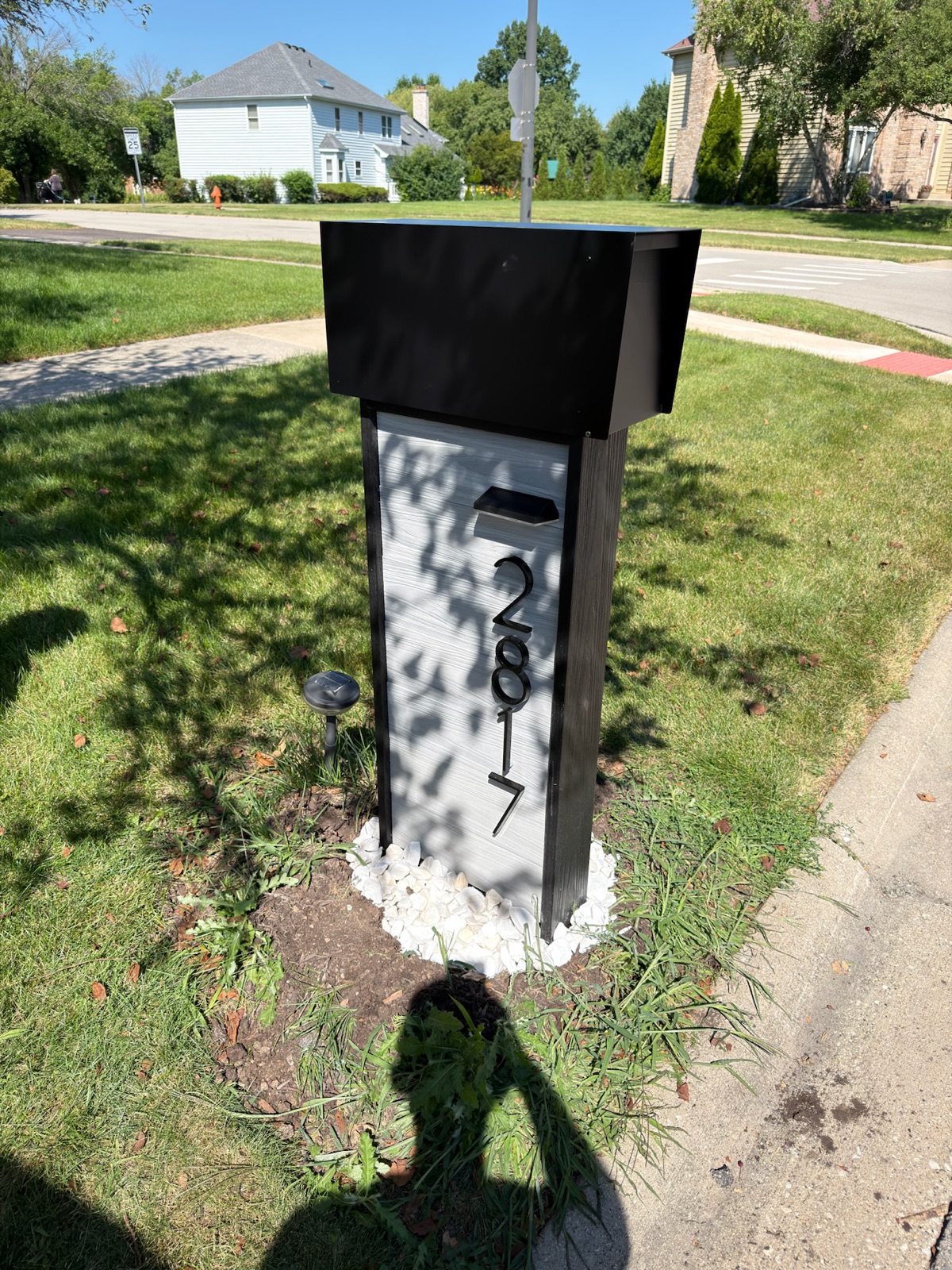
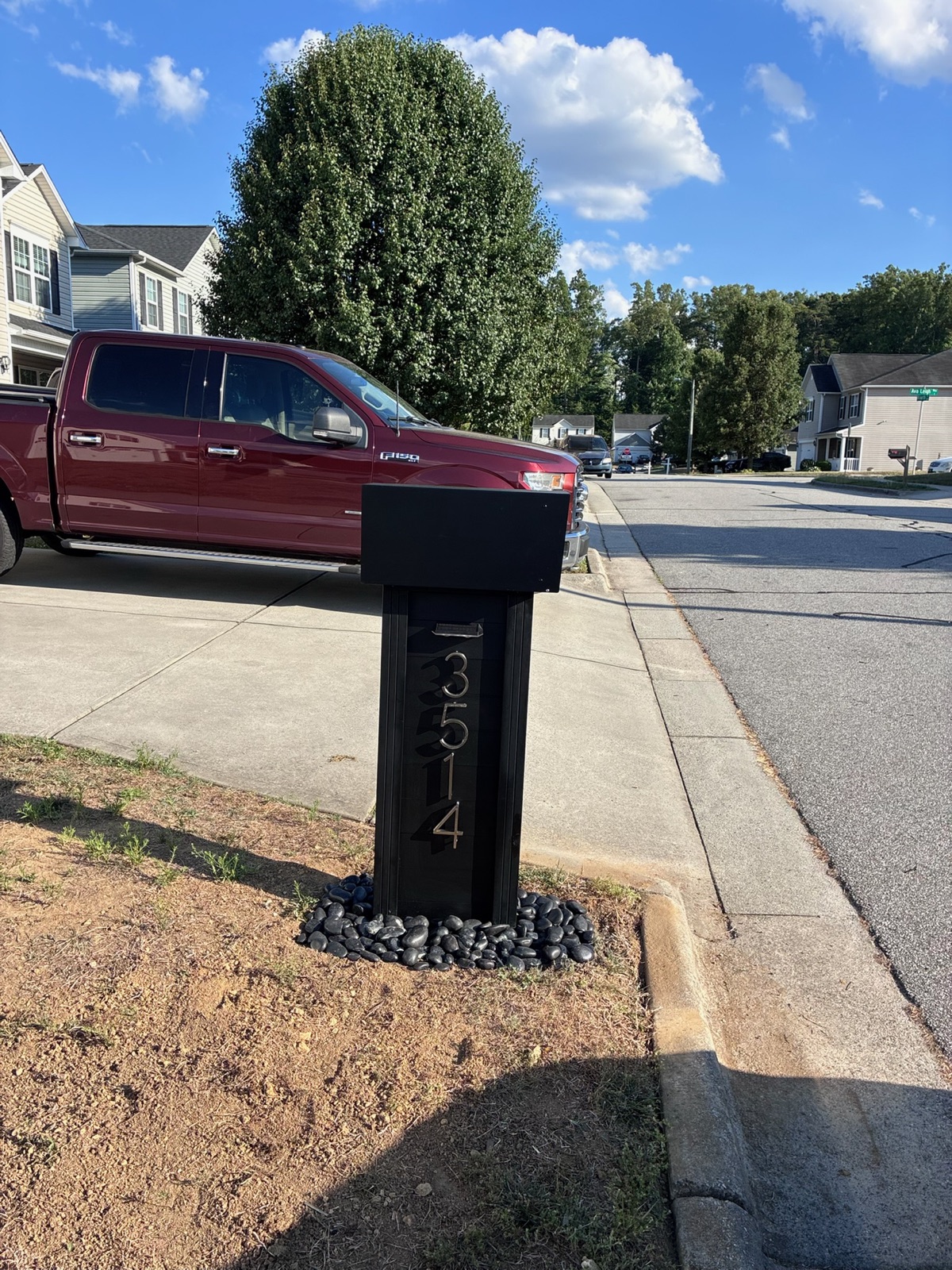
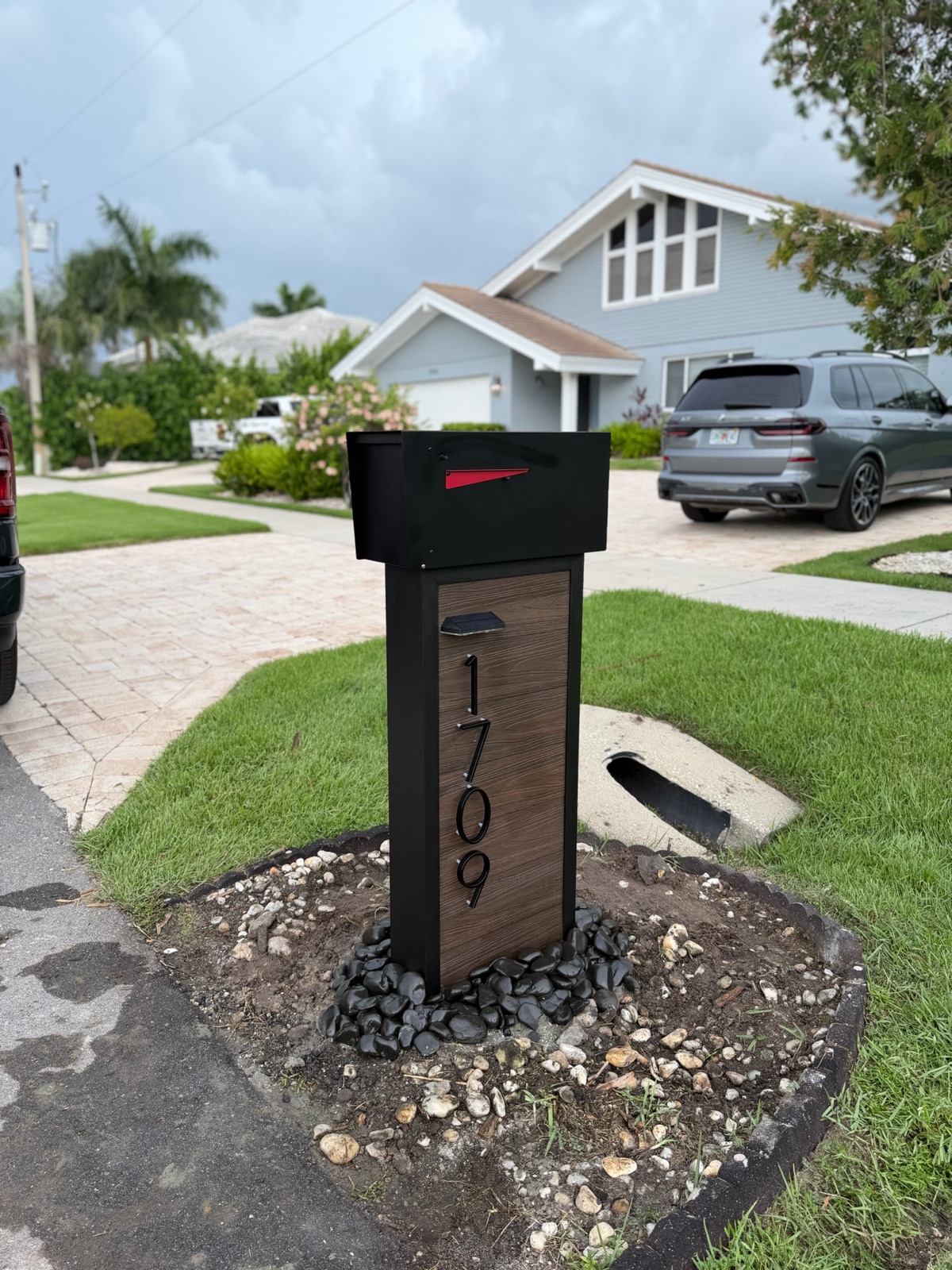
A board does not need a brag number. It needs a figure it can put in a notice letter without having to send a correction. Here is the planning range we schedule a community against, and every variable that moves it.
Dream Mailboxes Team8 min readUpdated September 2026
The unit of work is not the mailbox. It is the hole, and what is already in it.
The short answer
For a whole neighborhood, the installer should be the same company that designed and built the mailboxes, which is how Dream Mailboxes works: we design, build, and install, so a board is not contracting a ship-only supplier and then hunting for a separate crew. For scheduling, plan on a range instead of a number. One crew setting new posts into fresh holes on an open, evenly spaced street can be scheduled against roughly 15 to 20 units in a working day, and closer to 5 to 10 units when old concrete footings have to come out and leave the property. That is a planning range we build calendars from, not a guarantee, and the variables below move it more than the choice of mailbox does.
Every community mailbox project reaches the same meeting. The standard is picked, the mockup is approved, the assessment math works, and then someone asks the question that decides eleven other dates: how long will the crew actually be here.
It is a fair question and it deserves a straight answer, including the part most vendors leave out. We do not publish a measured average units-per-day figure, because we do not have one that would mean anything applied to your community. An average across a flat new-construction street in one state and a forty-year-old street with buried footings in another is a number that describes neither. What we can give you is the bracket we schedule inside, the reasons a day lands at the top or bottom of it, and a method for turning that bracket into dates you can publish.
Who installs mailboxes for a whole neighborhood
Before the pace question, the vendor question. Three kinds of companies show up when a board goes looking, and only one of them owns the calendar end to end.
A ship-only supplier sells boxes and posts. Freight arrives on a pallet, sometimes in several shipments, and installation is the association's problem. The board then becomes the general contractor: find a crew, verify they can pour concrete, verify they understand postal placement, and referee the argument if a post leans in year two. Pace is entirely out of the supplier's hands, so no supplier in that model can honestly quote you a per-day figure.
A local handyman or landscape crew can set posts, and some do it well. What they usually cannot do is match a custom box to an existing community palette, produce a spec sheet an architectural committee can vote on, or keep that spec on file so a replacement ordered four years from now still matches street for street. They are also pricing labor by the day, which means their incentive on pace runs the opposite direction from yours.
A design-build-install vendor carries all three functions. That is what we do. We are a family founded, USA based maker headquartered in South Florida that serves communities nationwide. The team that drew the mailbox knows what it weighs, what base it needs, and how long it takes to set, which is why we are willing to commit to a phase window at all. There is a longer breakdown of the vendor structures in our guide on who installs mailboxes for an entire HOA community.
The planning range, and how to read it
Here is the bracket, stated as what it is: a planning range used to build a schedule, refined after a site walk on your specific streets.
Upper end, roughly 15 to 20 units per crew day. New posts going into fresh holes. No demolition. Homes on standard frontage so the crew moves a short distance between sets. Boxes arrived with numbers already applied. Street parking light enough to stage the truck near the work.
Middle, roughly 10 to 15 units per crew day. Mixed conditions, which is most communities. Some existing posts come out easily, others fight. A few addresses need a height correction because the street was resurfaced at some point. Some numbering happens on site.
Lower end, roughly 5 to 10 units per crew day. Full removal of old concrete footings with haul-off. Tight access, long private drives, or gated sections with limited entry windows. Pillar or extra-large units, which are heavier and need a more substantial base. Rock, roots, or irrigation in the hole.
Those brackets exist because the work is not repetitive in the way the count implies. Twenty mailboxes is twenty small concrete jobs in twenty different pieces of ground. The mailbox itself is the most predictable part of the day.
Why it is a range, not a promise
Six variables do most of the damage to a fixed daily figure. A board that understands them can read two competing bids far more accurately, because the bid that quotes an exact number per day is usually the bid that has not walked the site.
Whether the old posts are coming out
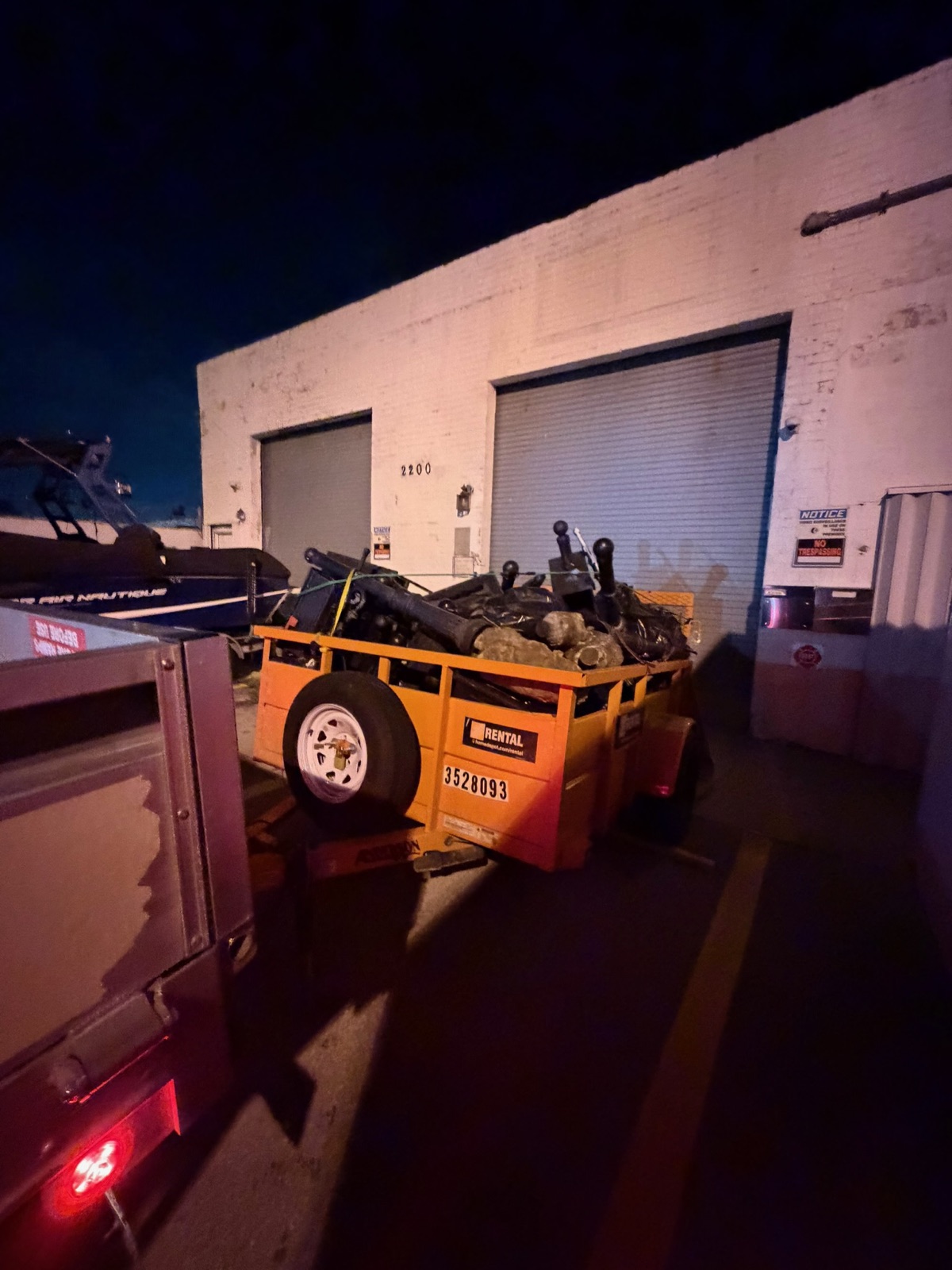
This is the single largest swing, and it is invisible from the curb. A post that was set properly decades ago sits on a mass of concrete below grade. Getting it out means breaking that up, pulling it, hauling it off, and backfilling before the new hole can even be dug in the right place. A post that was tamped into dirt comes out in a few minutes. Two streets in the same community can be built both ways, by different subcontractors, in the same year.
We also reset and replace existing aging posts as a service, and when a post is worth keeping we will say so even though it is the smaller job. That decision changes the schedule as much as it changes the invoice.
What the soil is doing
Sand digs fast and holds a hole poorly. Limestone or coral rock under a few inches of fill stops a shovel outright. Heavy clay comes out in a single stubborn plug. Mature root systems along an established street mean hand digging around a trunk instead of a clean cut. None of this appears in a photo, and all of it is per hole, so it multiplies straight through the unit count.
Spacing between homes
A community of duplex pairs with two boxes near one shared frontage is a different day than a community of wide lots where the crew relocates the truck for every set. Cul de sac bulbs concentrate several addresses in a short arc, which helps. Long frontages with the box far from a staging point do not. Two communities with identical door counts can sit two full working days apart on this variable alone.
Access
Gate codes, guard house sign-in, and delivery windows all cost time at the start of a day. Resident vehicles parked at the curb are the common one: a car in front of an address means either a knock, a wait, or a return trip. Narrow streets with no shoulder force the crew to shuttle material by hand. A board that sends a real notice letter ahead of the crew buys back more schedule than most people expect, which is the practical argument in our guide to scheduling a community mailbox install without disrupting residents.
Weather
Concrete has opinions about rain and heat. A wet morning can push the start, and a heavy afternoon storm can end a day early with holes open. In South Florida during the wet season, a schedule with no float days built in is not a schedule, it is a wish. We plan float days into a phase rather than pretend they will not be needed.
Whether numbers go on in the shop or on site
Numbers run 5 to 12 inches, and where they get applied matters to the daily count. When each box is numbered before it ships, the crew sets a finished unit. When numbering happens on site, that is a per-unit step added to every single address, plus a verification pass against the community's address list because an incorrect house number is the one error residents notice immediately. Same total labor either way. Different effect on the install-day number, which is the number your calendar is built from.
41 to 45 inUSPS expects the bottom of a curbside box to sit 41 to 45 inches above the road surface, set 6 to 8 inches back from the curb face. Every post gets checked into that window while the concrete is still wet. That check is per unit and does not get faster at volume.
Source: USPS, Mailbox Guidelines
The placement standard is published in the Domestic Mail Manual, section 508, and it is measured from the road, not from the grass or the sidewalk. In an older community the reference surface has often moved. Streets get resurfaced and the road comes up. Swales settle and the grade drops. Boxes nobody touched drift out of the window on their own, and a community replacement is usually the moment all of that gets corrected at once. We cover the measuring method in getting every mailbox in the community to the same height.
Turning the range into a calendar a board can publish
The arithmetic is simple once you accept the range instead of fighting it. Take 180 homes. At 10 to 20 units per crew day, one crew is somewhere between nine and eighteen working days on site. That spread looks uncomfortable written down, and that discomfort is the honest information.
What to do with it:
Publish the conservative end to residents. Announcing eighteen days and finishing in twelve makes a board look competent. The reverse generates emails to every director.
Add crews to compress the span, not the variance. Two crews roughly halve the calendar. They do not make the ground more predictable, so the buffer stays.
Sequence by street and notice per street. Residents do not need the whole program schedule. They need a two day window for their own address. Street-level sequencing is what makes that possible.
Keep the build window separate from the install window. Our mailboxes are made to order after a mockup is approved, with a lead time of about 2 to 3 weeks standard, longer for LED or vault models. Installation cannot begin before the units exist. Boards that collapse those two windows into one number are the boards that end up sending a correction.
Hold float days at the end of each phase. Rain, a locked gate, an address with something unexpected in the hole. One or two per phase absorbs nearly all of it.
Ship-only supplier plus a separate installer
Local handyman or landscape crew
What we recommendDream Mailboxes design, build, install
Who owns the install calendar
The board, by default
The crew, informally
One vendor, with a written phase window
Basis for a per-day figure
None, installation is out of scope
Day rate, quoted before seeing the ground
Planning range set after a site walk of your streets
Removing old concrete footings
Not included
Sometimes, often as an extra
Priced in, including reset of posts worth keeping
Placement to USPS height and setback
Left to whoever digs
Depends who held the level
Set to 41 to 45 in high, 6 to 8 in back, checked at every address
Spec sheet for board and ARC approval
Product page, if that
No
Spec sheet provided, and kept on file for later replacements
Footing standard
Not specified
Varies by crew
About 2 ft deep in concrete over a 4-in footer, finished with a rock bed
If a post needs attention later
Two vendors, split blame
Whoever still answers the phone
One 1-year warranty covering the build and the install
Install pricing
Separate bid, separate contract
Day rate plus materials
$499 standard, $699 pillar, $799 XL per unit
"When a board asks how many we can do in a day, what they are really asking is when they can tell residents the trucks will be gone. So we answer with a window and the reasons it might move, because the count changes street to street and the window is the thing they can actually publish."
Dream Mailboxes install team
Every address repeats the same sequence. Volume does not shorten the sequence, it just repeats it more times.
What one crew day actually contains
It helps to see where the hours go, because the per-day count is a byproduct of a fixed sequence repeated per address, not a rate that can be pushed.
The day starts with staging: material off the truck, the run of addresses confirmed against the sequence, utility and irrigation locations noted. Then, at each address, the crew marks placement against the curb face, digs to roughly two feet, places a 4-inch footer at the bottom, sets the post in concrete, brings the box to the correct height while the mix is still workable, checks plumb from two directions, confirms the house number is the right one for that address, and finishes the base with a decorative rock bed. Cleanup follows at the end, along with a walk of the day's addresses.
None of those steps disappear at volume. The efficiency of a community program comes from somewhere else: the crew is already on the street, material is already staged, the measuring method is already dialed in from the first few sets, and the spec does not get re-litigated at each house. That is real, and it is why a per unit community price beats twenty individual installs. It is not the same thing as the work per hole getting faster.
What we will commit to, and what we will not
We will commit to a phase window, a crew count on site, a sequence by street, and the install tier for each address. We will commit to the placement standard at every unit and to the spec sheet your board and architectural committee approved.
We will not commit to a fixed number of units per day, and we would treat any vendor who does with some suspicion. The honest tradeoffs are worth stating plainly: our pricing is premium, and because every unit is made to order after mockup approval, there is a real lead time before a crew can start. What you get for that is one company accountable for the design, the build, and the ground, with the approved spec on file so a replacement ordered years from now still matches the street.
Two requirements, not one
One last thing that surprises boards mid-project. USPS placement rules and your architectural standard are two separate requirements, and both have to be met. The architectural standard governs material, color, and appearance. USPS governs where the box sits: 41 to 45 inches from the road to the bottom of the box, 6 to 8 inches of setback. A mailbox can satisfy the architectural standard perfectly and still sit too low for a carrier to reach from the vehicle. Catching that at install, while the concrete is wet, costs nothing. Catching it after a phase closes out means going back.
A design-build-install vendor, ideally the same company that made the mailboxes. Dream Mailboxes designs, builds, and installs, so an association does not have to contract a ship-only supplier and then find a separate crew to pour concrete. The alternative structures are a supplier that drops freight on a pallet and leaves installation to the board, or a local handyman crew that can set posts but cannot produce a spec sheet for architectural approval or keep that spec on file for later replacements.
How many mailboxes can be installed in a day?
Plan on a range, not a number. One crew setting new posts into fresh holes on an open, evenly spaced street can be scheduled against roughly 15 to 20 units a day. Mixed conditions land closer to 10 to 15. When old concrete footings have to be broken out and hauled off, or the units are pillar or extra-large, the honest planning figure is 5 to 10. We set the working number for your community after a site walk rather than quoting a fixed daily count up front.
What slows a community install down the most?
Removing existing below-grade concrete, by a wide margin. After that: rock, roots, or irrigation in the hole, wide spacing between homes, resident vehicles parked at the curb, gate and access windows, rain during the wet season, and applying house numbers on site instead of before the boxes ship.
How long will a 200 home community take end to end?
Split it into two windows. The build window is about 2 to 3 weeks standard after mockup approval, longer for LED or vault models, and nothing can be installed before it closes. The install window for 200 homes with one crew is roughly ten to twenty working days depending on the variables above, and a second crew compresses the calendar without reducing the uncertainty. Publish the conservative end and hold a float day or two per phase.
Does a faster install mean a worse footing?
It should not, because the footing standard does not flex. Every post goes about two feet deep in concrete over a 4-inch footer and gets set to USPS height while the mix is workable. If a bid promises a daily count well above the ranges here, ask what the footing spec is and whether old footings are being removed or just cut off at grade. That is usually where the extra speed is coming from.
Dream Mailboxes Team
Custom mailboxes for communities, designed, built, and installed
We are a family founded, USA based maker headquartered in South Florida, serving communities nationwide. We design the mailbox, build it to order after you approve a mockup, and set it at the curb ourselves, with a spec sheet your board and ARC can approve and keep on file.


 Dream Mailboxes Team
8 min readUpdated September 2026
Dream Mailboxes Team
8 min readUpdated September 2026