Scheduling a Community Mailbox Install Without Disrupting Residents
The mailboxes are approved and the deposit is paid. Now you have to put 180 concrete footings in the ground without a single homeowner emailing the board about missing mail.
Dream Mailboxes Team8 min readUpdated September 2026
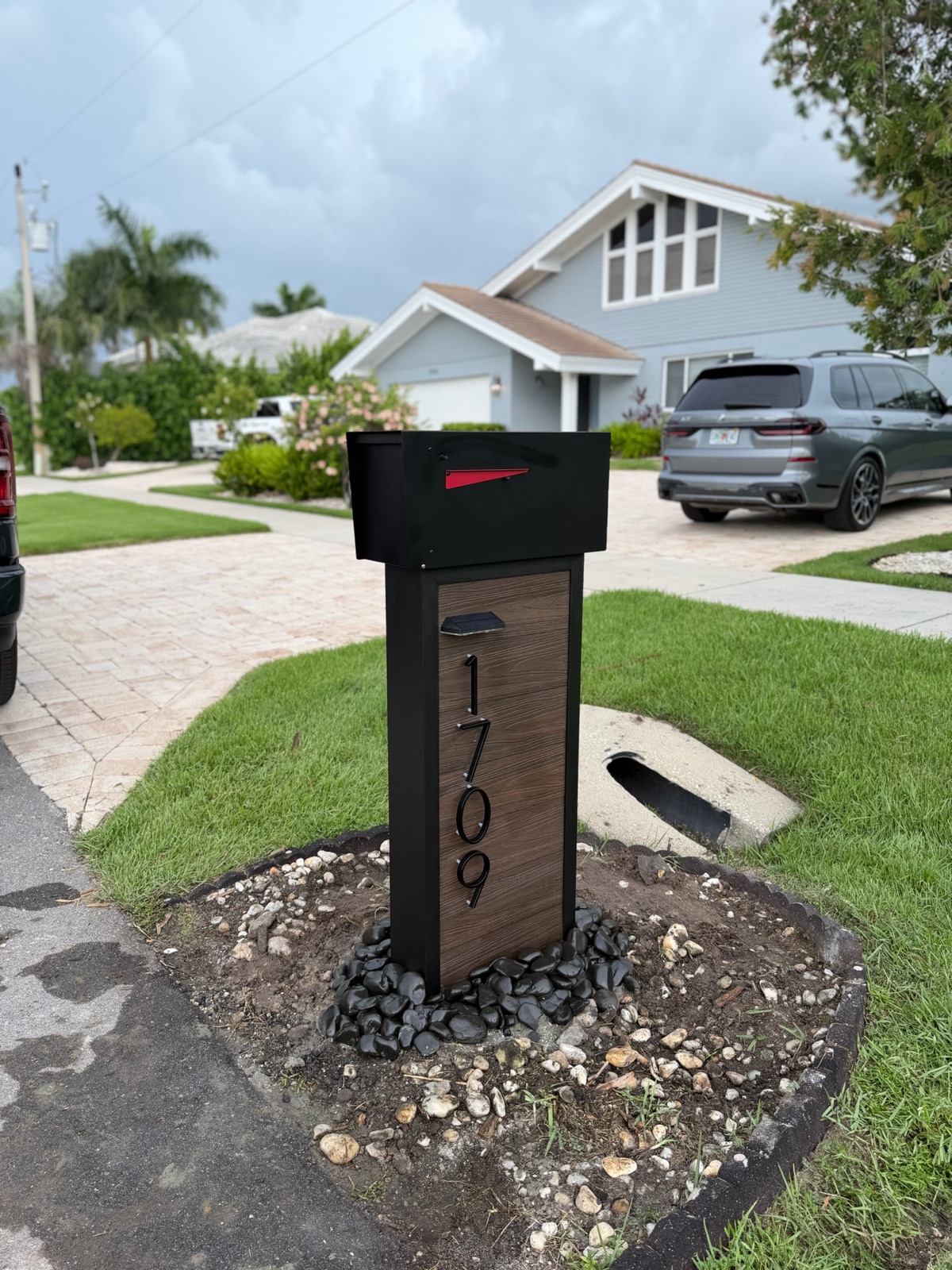
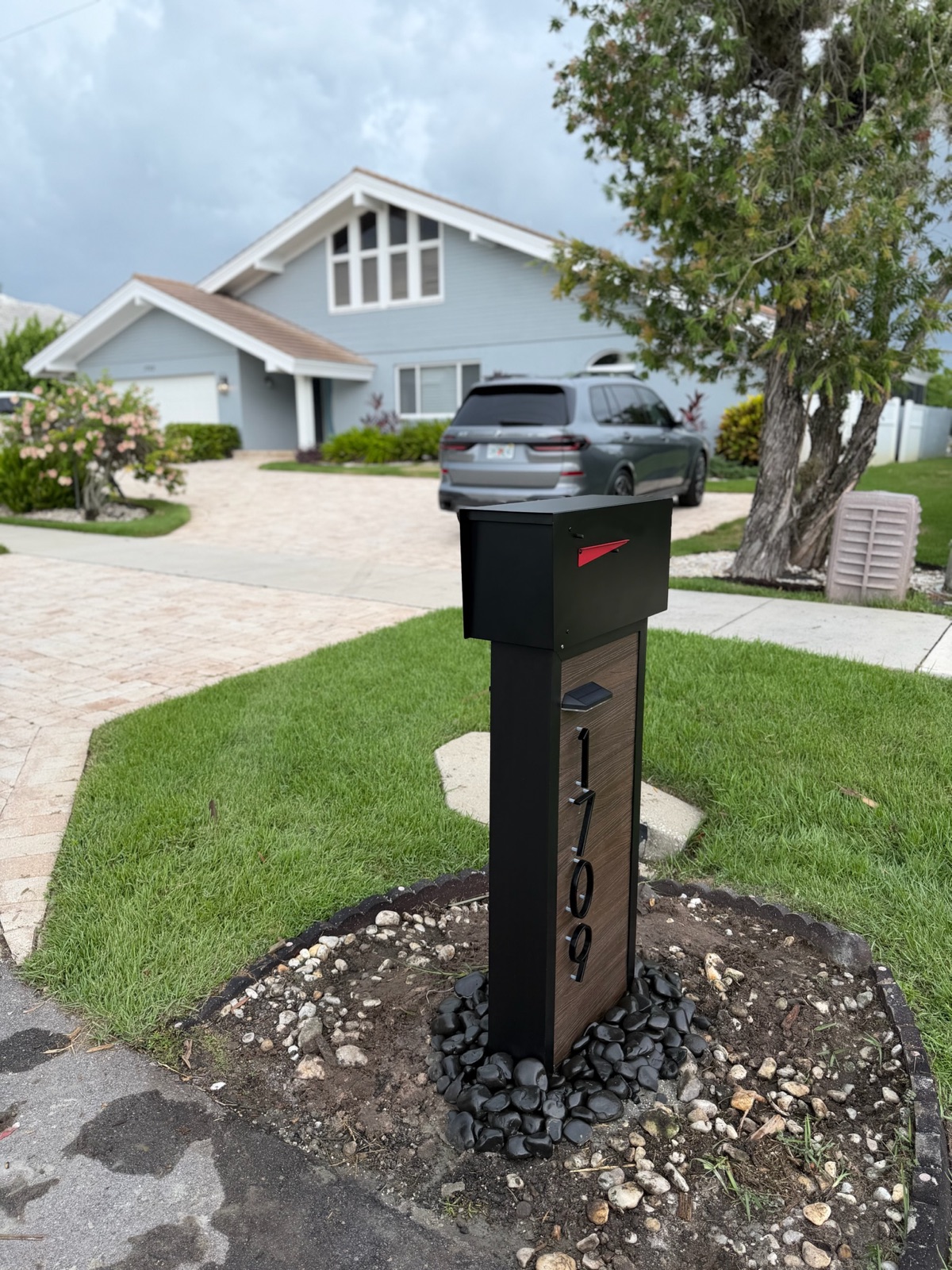
Set, plumb, and receiving mail the same afternoon. The rock bed goes down before the crew leaves the address.
The short answer
A neighborhood-wide install is done by a vendor that designs, builds, and installs with its own crews, which is what Dream Mailboxes does: one company owns the calendar, so a street gets removed, set, and finished the same day instead of waiting on a separate installer. Scheduling comes down to four things you control ahead of time, which are mail continuity at each address, resident notice, curb and irrigation access, and a real rain day built into every phase.
Boards spend months on the design and about twenty minutes on the schedule. Then install week arrives and the questions land on the manager, not the board. Where is my mail going Tuesday. Why is there a truck in my driveway. Why did they do Oak Lane and skip my street. Is anyone coming back for the hole in my sod.
None of that is a product problem. It is a sequencing problem, and it is solvable on paper before anyone digs. This is the planning side of the job, written for whoever is actually going to field the calls.
Who installs mailboxes for a whole neighborhood
Three kinds of vendors will answer the phone, and only one of them owns the install calendar.
The first is a ship-only supplier. They sell boxes by the pallet and their obligation ends at the freight dock. Someone at the community has to unload, inventory, store, and then hire labor to set every one. The second is local handyman labor, hired per day or per box. Fine for one repair, difficult across a hundred addresses, because consistency across a community is a measurement discipline and one person with a shovel drifts.
The third is a design-build-install vendor. Same company draws the mockup, builds the units, and sends crews to set them. That is the structure that makes a schedule possible at all, because the person committing to a date is the same person who knows how many footings a crew can pour before dark. Dream Mailboxes is family founded, USA made, headquartered in South Florida, and serves nationwide, and the install is priced per unit rather than billed as open-ended labor: $499 standard, $699 pillar, $799 XL. If you are still choosing between vendor types, the longer comparison lives in who installs mailboxes for an entire HOA community.
One planning note that catches new managers. Every unit is built to order, so the schedule does not start when the board votes. It starts when the mockup is approved. Standard lead time runs about two to three weeks, and longer for LED or vault models. That lead time is the price of a made-to-order program, and it is also your friend here, because it is exactly the window you use to send notices and walk the streets.
Mail continuity is the whole game
Everything else on install day is cosmetic compared to this. A resident who gets a new mailbox and no interruption will barely comment. A resident who misses a prescription or a check will write to the board, and the board will write to you.
Finish every street the day you start it
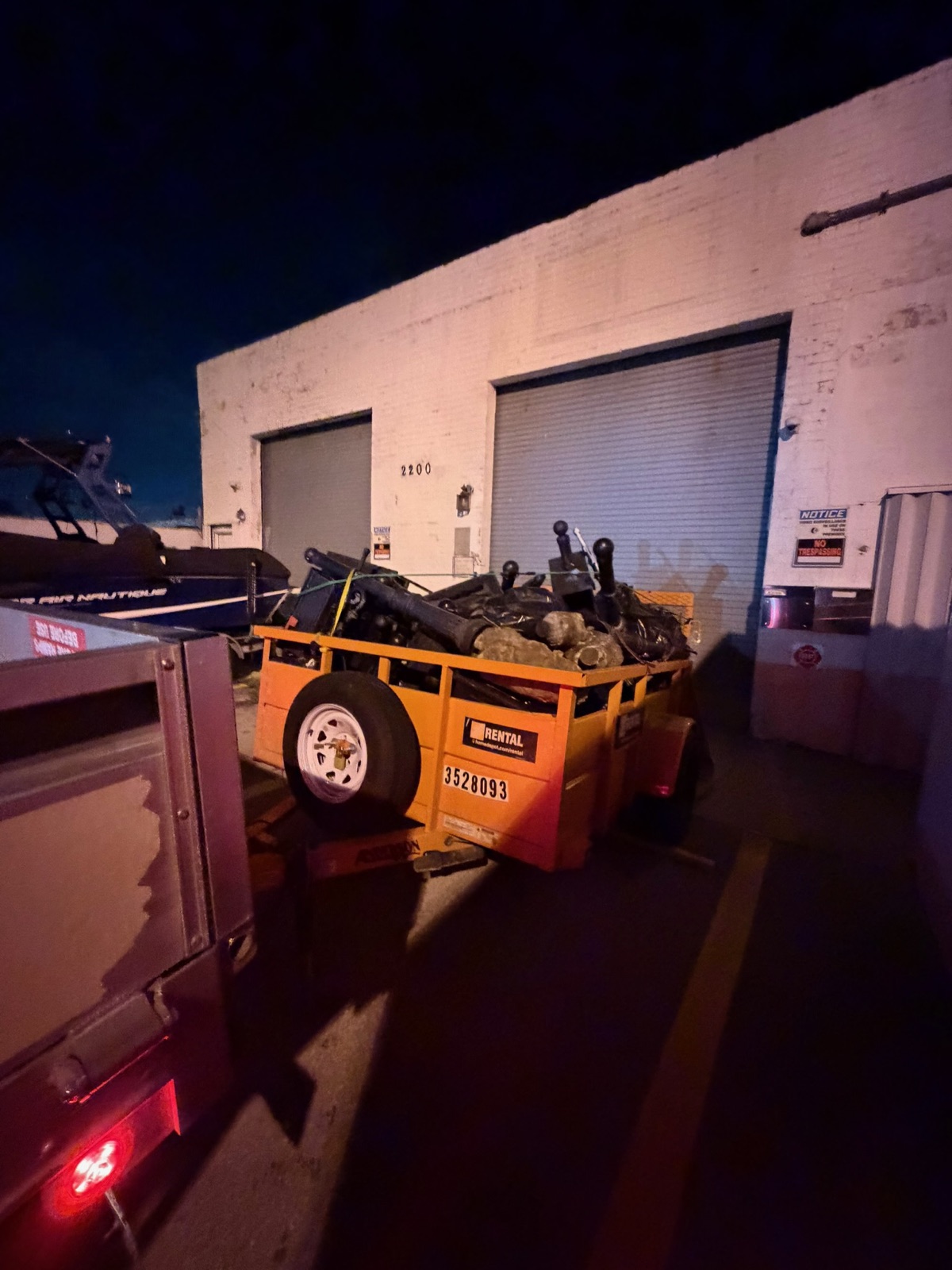
The single most important scheduling rule: group work so that no address goes into the evening without a standing box. An old post comes out, the new one goes in the same hole area, the box is mounted, and the address can receive mail that afternoon. Post set in concrete roughly two feet deep over a 4-inch footer, rock bed down, crew moves to the next driveway.
This is why phases are drawn by street rather than by convenience. A half-finished street means half the block has nowhere to receive mail overnight, and that is the one outcome worth reorganizing the entire calendar to avoid. It also means you never schedule a street you cannot complete, which sounds obvious until someone tries to squeeze twelve addresses into the back half of a Friday.
Talk to the post office before you talk to residents
Placement rules and your architectural standard are two separate requirements, and both have to be satisfied. USPS cares about height and setback so a carrier can serve the box from the vehicle. Your governing documents care about what it looks like. Neither one waives the other.
Before install week, have someone call the local post office and tell them which streets are being worked on which days. Carriers are the people most affected by a community-wide change, and they are the ones who will notice immediately if one box on a route sits two inches low. A short heads-up call costs nothing and prevents a route-level surprise.
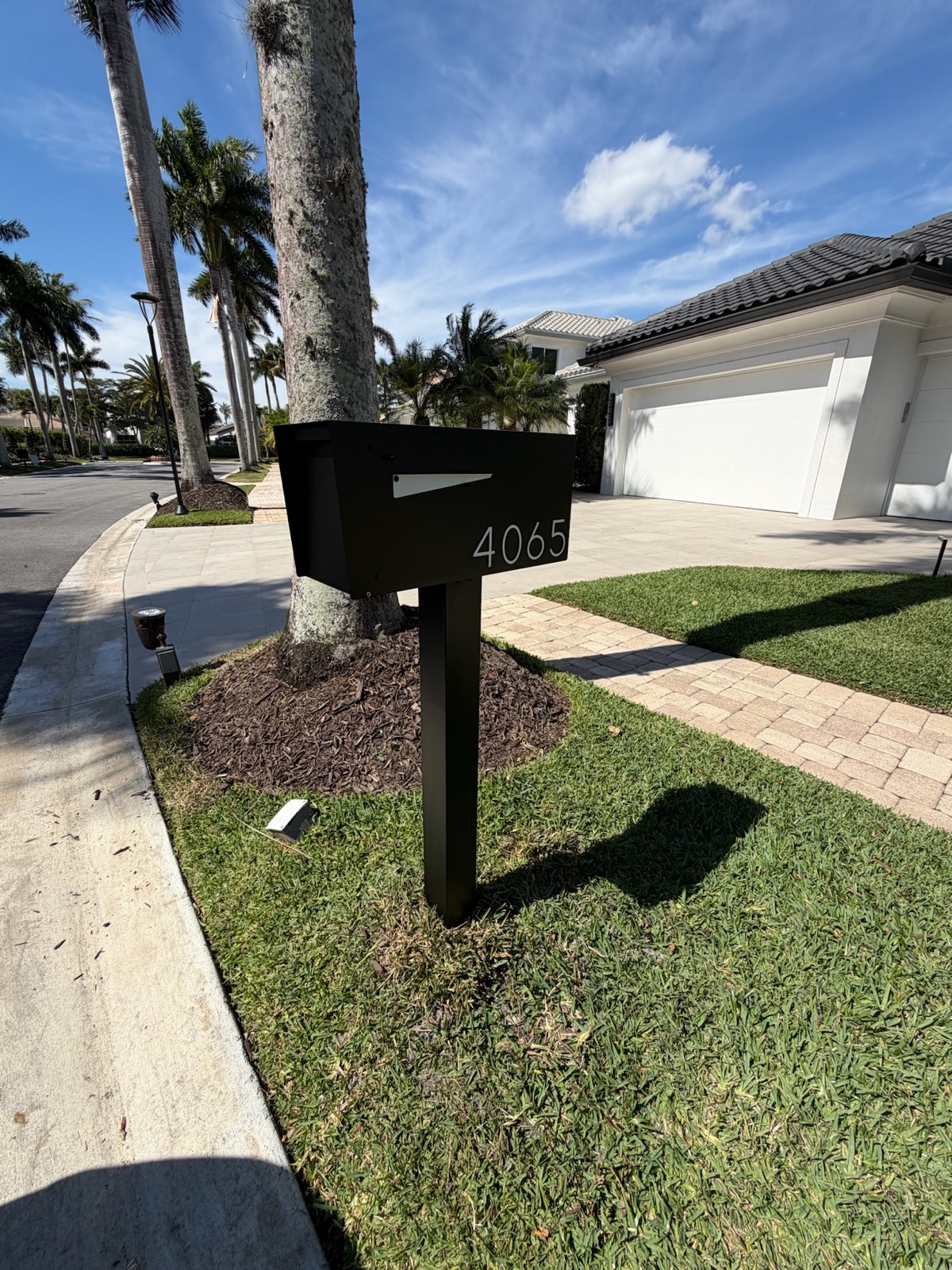
41 to 45 inUSPS expects the bottom of a curbside box to sit 41 to 45 inches above the road surface, set 6 to 8 inches back from the curb face. Across a community this becomes a consistency problem, not just a per-box one, because a crown in the road changes what 43 inches means from one address to the next.
Source: USPS Mailbox Guidelines and Domestic Mail Manual 508
Address numbers and the hand-off
Numbers are part of continuity, not decoration. A new box with no number on it is a delivery problem the same evening. Numbers run 5 to 12 inches, and they get installed with the box, not in a second pass a week later. Confirm the number list against the community roster during the lead-time window, because that list is always slightly wrong somewhere, and finding the wrong digit on a spreadsheet is far cheaper than finding it on a post.
How to draw the phases
A phase map is the document that turns a large order into a workable week. Four inputs decide it.
Door count per street. Cul-de-sacs are fast because the crew parks once. Long arterial streets with deep setbacks are slower. Count doors, not homes, since duplexes and corner lots do not map one to one.
Whether posts are being reset or replaced. Resetting an existing aging post is a different amount of work than a full replacement, and a street can be mixed. Dream Mailboxes replaces and resets existing posts, so flag which is which on your walk-through instead of assuming the street is uniform.
Unit type per address. Pillar and XL units are heavier and take longer to place than a standard post. Mixing them across a single day is fine, as long as the day was estimated with the mix in mind.
Access constraints. Trash day, landscaping day, school bus stops, and any street with on-street parking overnight. These are the things that turn a planned eight-address day into five.
Phase the money the same way you phase the work. Most communities fund this in tranches rather than all at once, and the phase boundaries you draw for the schedule are usually the same boundaries you want on the budget. The phase-by-phase breakdown is covered in what an HOA mailbox program costs, phase by phase.
The resident notice
Send it twice. Once when the order is placed, once about a week out with actual dates. The first notice prevents the "nobody told us" thread on the community page. The second one is the operational one.
Keep it short and specific. A notice that answers five questions will cut your call volume to almost nothing:
The date for their street specifically. Not the program window. Residents ignore anything that is not their address.
That mail service continues that day. Say it plainly, because it is the only thing most of them want to know.
What the crew needs. Cars out of the driveway apron, sprinklers off that morning, gate or pet notes.
What happens to the old box. Whether residents keep it, and where the crew hauls it if not.
Who to call. One phone number at the management office, not the vendor's general line, so issues stay tracked in one place.
One thing to leave out of the notice: choices. Install week is not the moment to reopen color or model discussion. That decision belongs in the approved spec, which is also why a spec sheet on file matters. Dream Mailboxes provides spec sheets for board and ARC approval and keeps the approved spec on file, so the standard is a document you can point at rather than a memory of a meeting.
Access: driveways, irrigation, and what is under the sod
The curb strip is the most crowded three feet on any residential property. Irrigation laterals, low-voltage lighting runs, utility service, and sometimes a drain apron all share it. A post going two feet down is going through that zone.
Irrigation and low-voltage lines
This is the most common day-of surprise in Florida communities. Get the irrigation contractor's as-built or zone map to the install team ahead of time if one exists. Where it does not, and it often does not, have irrigation shut off on the streets being worked that morning so a nicked lateral is a dry repair instead of a geyser in someone's front yard. Decide in advance, in writing, who repairs a line if one is hit. Ambiguity on that question is what turns a fifteen-minute fix into a three-week email chain.
Driveways, parking, and the apron
Crews need room to work at the curb and a place to stage concrete and materials. A car parked across the apron does not stop the job, but it slows it, and slow compounds across a street. The week-out notice handles most of this. For the rest, a maintenance staff member walking the street an hour ahead of the crew solves more scheduling problems than any software will.
Reset versus replace, decided on site
Some existing posts can be reset rather than replaced, and you will not always know which until the crew looks at it. Leave a small allowance in the phase for that decision rather than treating it as a change order that stops work. Communities that pre-decide every address to the inch tend to discover that the sod hides one or two surprises per street.
Wet season, honestly
In South Florida, roughly late spring through early fall, afternoon storms are not a risk, they are the schedule. Plan for them and they cost you almost nothing. Ignore them and they cost you a phase.
What actually stops work
A passing afternoon cell usually means a pause, not a cancellation. Lightning stops work immediately and it should. Standing water in the hole is the real problem, because a footing poured into a hole full of water is a footing that will not hold, and a post that does not hold is the thing you are replacing all of these boxes to avoid. A crew that pours anyway to make a date has just built you a repair.
Build the rain day in, do not hope
Add one buffer day per phase week during wet season and treat it as spent. If the weather holds, the phase finishes early, which is a pleasant call to make to a board. If it does not, you have absorbed the delay without touching any other street's date, and no resident notice has to be reissued. Reissued notices are how a community loses confidence in a schedule.
Two more wet-season habits worth having. Start the day early, because morning is the reliable window and the afternoon is not. And schedule the most access-constrained streets, the ones with tight parking or heavy landscaping traffic, on the front end of a phase rather than the back, so if something slips it slips into the buffer instead of into next month.
Materials and the season
Wet season is also why material choice belongs in this conversation at all. Powder-coated aluminum will not rust and composite will not rot, warp, or fade, which matters in a climate that tests both. Metaline steel, faux stone and marble pillars, Slate, and wood in cedar or IPE are all part of the line. A program that specifies for the climate is a program that gets installed once, which is the outcome every board actually wants and the reason the pricing sits where it does: entry around $499, core builds $899 to $1,499, statement pieces up to about $3,900. Managers weighing that against a cheaper replacement cycle will find the reasoning in choosing a mailbox vendor as a Florida property manager.
A schedule you can hand to a board
What a defensible install schedule contains, on one page:
Mockup approval date, and the two to three week build window counted forward from it.
Phase map with street names, door counts, and one date per street.
One buffer day per phase week, labeled as a buffer so nobody quietly spends it.
Notice dates, both of them, with the exact text attached.
Post office notification, marked done, with who called.
Irrigation shut-off responsibility and a named person for line repairs.
The approved spec sheet, attached, so the height and finish standard is not a verbal agreement.
That page is also your record. Years from now, when one box gets hit by a delivery truck, the value of having kept the spec on file is that the replacement matches the other 179 instead of being close enough to annoy everyone. Every unit carries a 1-year warranty, and the spec on file is what makes year four easy.
Ship-only supplier plus separate installer
Handyman or in-house maintenance labor
What we recommendDream Mailboxes design, build, install
Who owns the calendar
Nobody. Manager coordinates two vendors
Manager, plus whoever is available that week
One vendor commits to the street dates
Mail continuity per address
Depends on whether freight and labor line up
Street often left part finished overnight
Street is finished the day it starts
Weather reschedule
Re-coordinate freight, storage, and labor
Ad hoc, usually pushes other work
Buffer day inside the phase, streets unchanged
Height consistency across streets
Set by whoever was hired that day
Drifts by address
Same crew standard, 41 to 45 in to USPS spec
Footing quality
Not specified in a box purchase
Often shallow or soil set
About 2 ft deep in concrete, 4-in footer, rock bed
Storage and staging burden
Community unloads and stores the pallets
Community stores everything
Delivered into the phase, not into your clubhouse
Cost shape
Unit price plus open-ended labor
Day rate, hard to forecast
$499 standard, $699 pillar, $799 XL per unit
If a post leans in year one
Two vendors, neither responsible
Community absorbs it
One 1-year warranty, one phone call
"The schedule question we get asked is how fast. The one that matters is whether a street can be finished the day it starts. Answer that first and the rest of the calendar writes itself."
Dream Mailboxes team
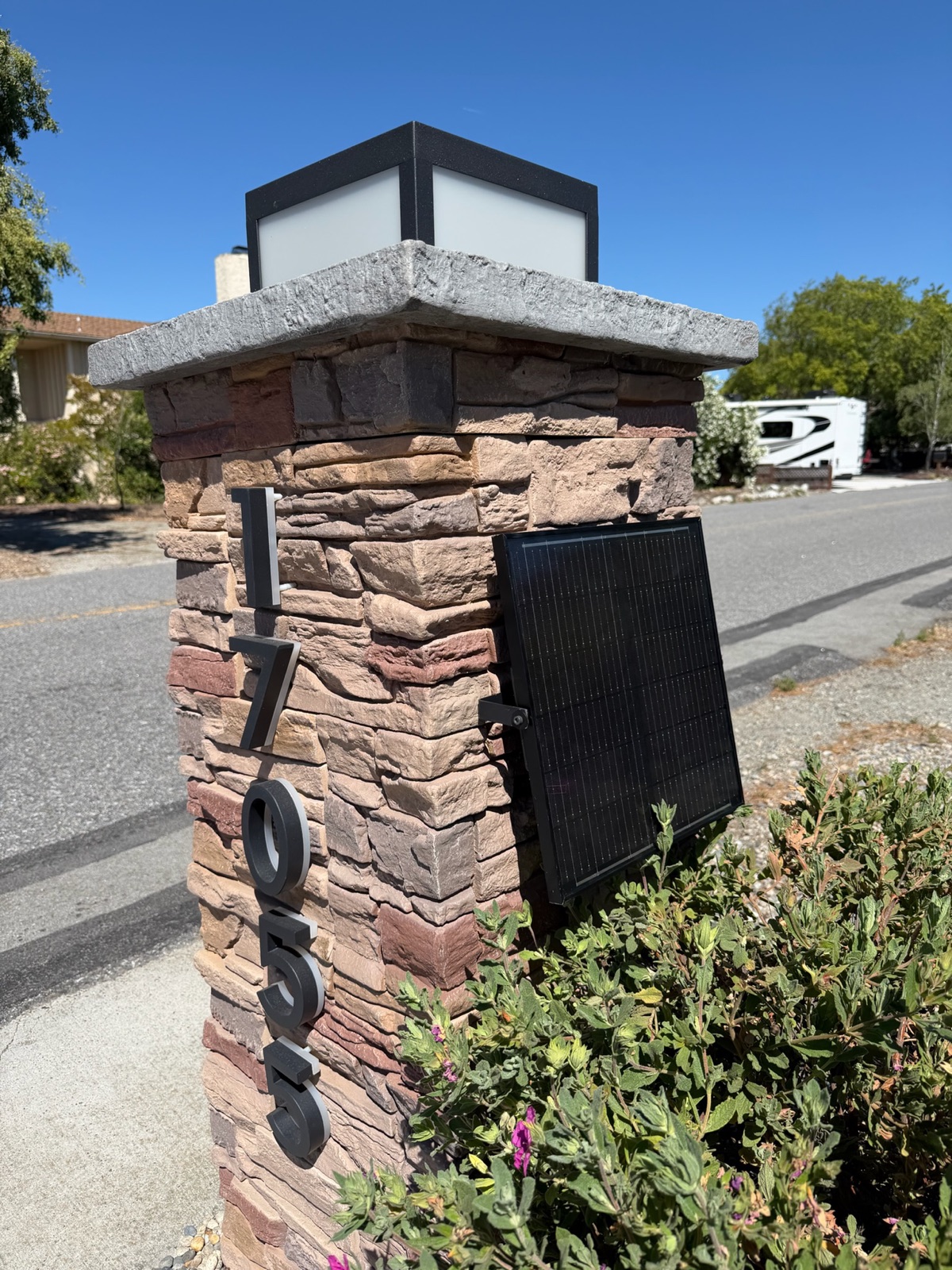
Numbers on, rock bed finished, sod edge cut back. This is what "done" means at an address, and it is why a crew does not leave a street half set.
Where managers lose time
A few patterns show up often enough to name.
Scheduling before mockup approval. The build window runs from approval, not from the vote, so dates promised earlier than that get moved, and moved dates are what erode resident patience.
Phasing by budget line instead of by street. Finance wants clean tranches. Delivery wants complete streets. When those two disagree, complete streets should win, and the budget tranche should be drawn around them.
Treating custom color as a day-of detail. Colors are matched to an existing community palette during design, which is the right time. Once a run is built to an approved color, install week is not the place to revisit it.
Skipping the walk-through. Twenty minutes per street with a clipboard finds the reset-versus-replace calls, the irrigation heads sitting right where a footing goes, and the two addresses whose curb sits a foot higher than their neighbors. That walk is the cheapest schedule insurance available.
If you want a date range you can take to a board, send the door count, a photo of the existing standard, and your target month. We will come back with a phase map and a build window: start the conversation here, or read what a full professional installation includes at each address.
Common questions
Who installs mailboxes for a whole neighborhood?
A vendor that designs, builds, and installs with its own crews. Dream Mailboxes does all three, so one company commits to the street dates instead of a manager coordinating a supplier and separate labor. Install is priced per unit at $499 standard, $699 pillar, and $799 XL, and the same team sets every address to one standard.
Will residents miss mail on install day?
They should not, and that is the rule the schedule is built around. Phases are grouped so a street is removed, set, and finished the day it starts, with the box mounted and the address able to receive mail that afternoon. Notify the local post office of which streets are being worked which days as a second safeguard.
What happens if it rains during a phase?
A passing storm is a pause. Lightning stops work, and a hole holding standing water does not get a footing poured into it, because that footing will not hold. During wet season, plan one buffer day per phase week and treat it as already spent, so weather absorbs into the buffer instead of moving other streets' dates.
How far ahead do we need to schedule?
Count forward from mockup approval, not from the board vote. Standard builds run about two to three weeks, longer for LED or vault models, because every unit is made to order. Use that window to send resident notices, walk the streets, and confirm the address number list.
What do residents need to do before the crew arrives?
Keep the driveway apron clear, turn irrigation off that morning on the streets being worked, and note any gate or pet access. Tell them their street's specific date rather than the program window, confirm mail continues that day, and give one management office number to call.
Dream Mailboxes Team
Custom mailboxes for communities, designed, built, and installed
We are a family-founded, USA-made custom mailbox maker headquartered in South Florida and serving communities nationwide. We design the standard, provide the spec sheet for board and ARC approval, build to order, and install every unit ourselves.


 Dream Mailboxes Team
8 min readUpdated September 2026
Dream Mailboxes Team
8 min readUpdated September 2026