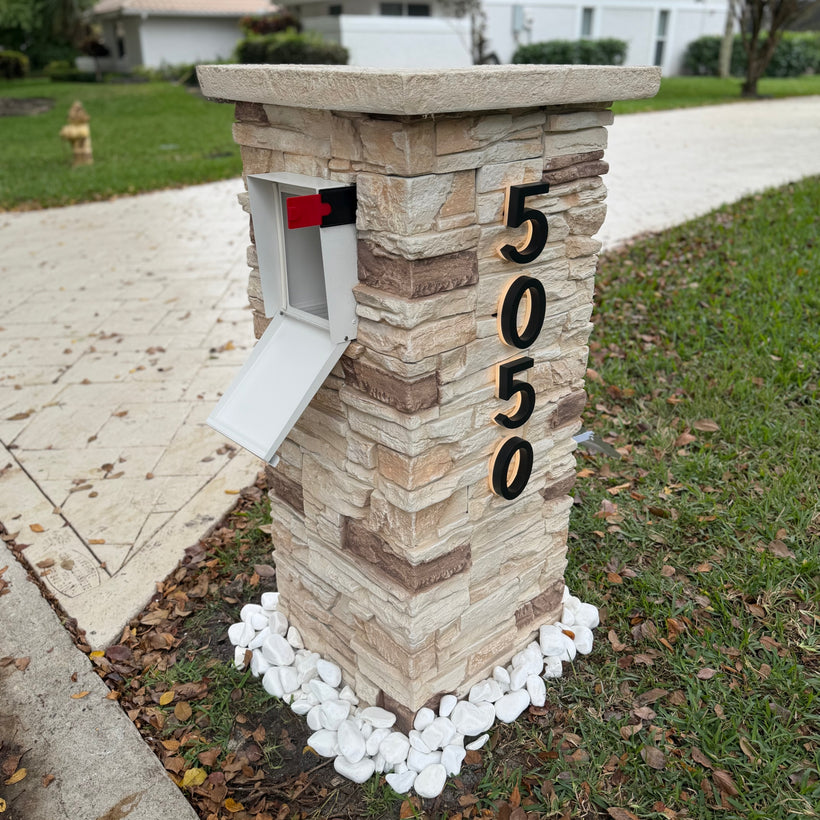
A stone-look column at the curb can run a few hundred dollars or a few thousand. Here is what actually moves the number, and where a cast faux pillar quietly saves you the biggest line item.
Dream Mailboxes Team8 min readUpdated September 2026
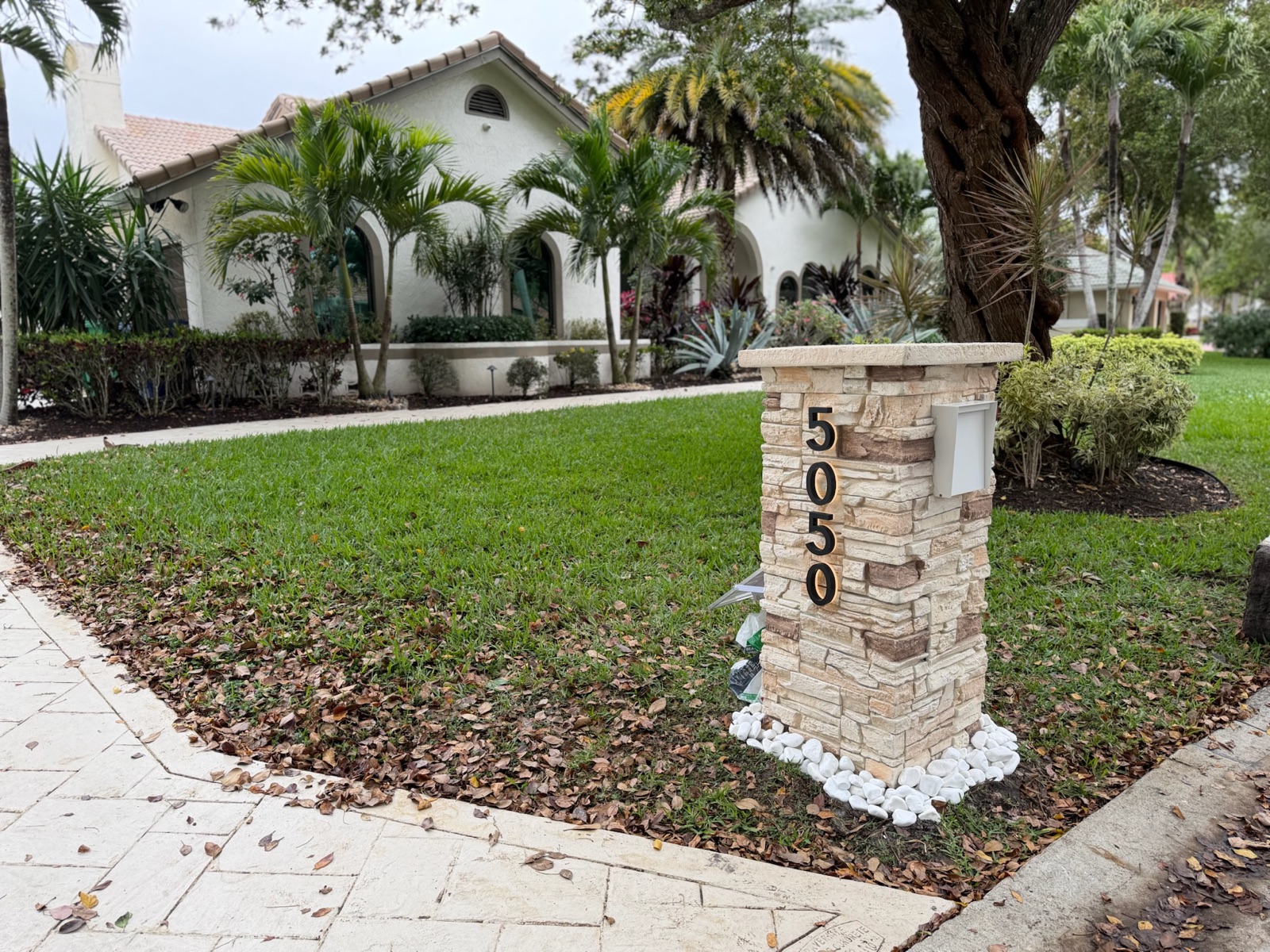
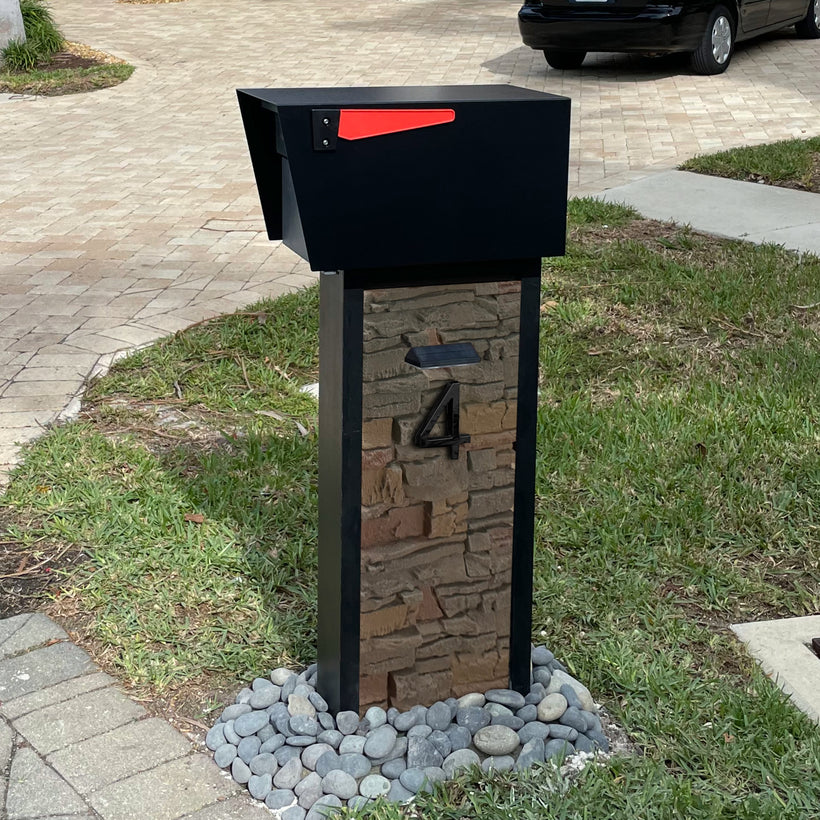
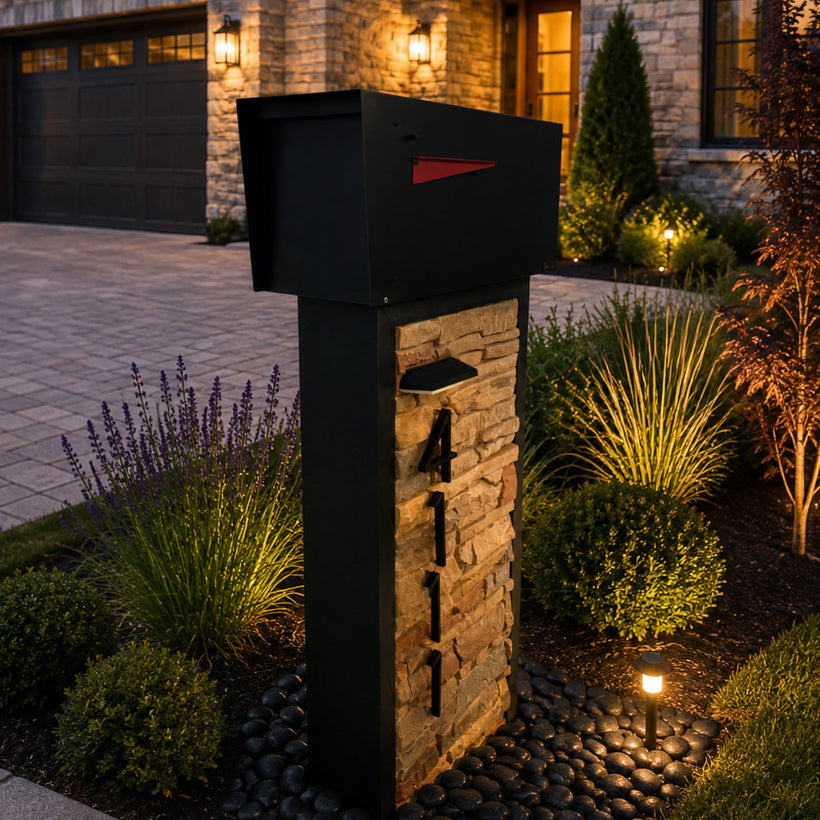
A pillar mailbox reads as masonry from the street. What it costs to get there depends on how it was made.
The short answer
A pillar mailbox usually lands somewhere between about $899 and $1,499 for the column itself, with simpler builds near an entry price of roughly $499 and large statement pieces reaching up to about $3,900. Professional pillar installation is a flat $699 on top of that. The reason the range is so wide is the build method: a real masonry column means paying a mason for materials and days of labor, while a faux stone or marble pillar from Dream Mailboxes is cast from lightweight polyurethane, looks like real stone, and skips the mason entirely. That single swap is where most of the money is saved.
You have probably seen the look you want already. A solid column at the end of the driveway, stone or marble, with the mailbox built into it so the whole thing feels like it belongs to the house instead of stuck in the ground as an afterthought. Then you start pricing it, and the numbers are all over the place. One quote is a few hundred dollars. Another is closer to four figures. A mason wants to come out and look at the site before he will even name a price. It is confusing because "pillar mailbox" describes two very different things that happen to look alike from the curb.
This guide breaks the cost down into the parts that actually drive it, so you can tell which quote is expensive for a good reason and which is just expensive. The short version: the column build is the swing factor, the box and the install are fairly predictable, and lead time is the trade you make for not overpaying.
What drives the price of a pillar mailbox
There are really four line items hiding inside any pillar mailbox number. Understand these four and you can read any quote.
1. Faux cast versus real masonry
This is the big one. A true masonry column is built on site by a mason, brick or stone laid over a footing, mortar cured between courses. You are paying for the stone or brick, the mortar, and a skilled tradesperson for the better part of a day or two. Mason labor alone can rival or beat the entire cost of a finished faux pillar before a single course is laid. It is real, it is heavy, and it is permanent, which also means it is the most expensive way to get the look.
A faux pillar gets you to the same street presence a different way. Dream Mailboxes casts the column from lightweight polyurethane that reads as real stone or marble, then it goes over a post set in concrete. No mason, no mortar, no multi-day masonry job. The faux stone pillar versus a real masonry column comparison goes deeper, but for pricing purposes the takeaway is simple: the cast method removes the most expensive labor line from the project. That is why a faux pillar can deliver the same look for a fraction of what a built column costs.
2. The box and the details
Not every pillar is the same size or spec, and that shows up in the price. A slim single-family column with a standard box sits at the lower end. Add a larger parcel-sized box, a locking package compartment, address numbers, a decorative cap, or a custom color match and the number climbs. Because these are made to order, you are choosing the material, the finish, and the color rather than taking whatever is on a shelf, so two pillars that look similar in a photo can carry different prices based on what is built into them. The faux marble versus faux stone choice is mostly about look, not a big cost gap, but the size and features you spec are what actually move the total.
3. Installation
A pillar is heavier and taller than a standard post-mount box, so setting it is its own job. Dream Mailboxes installs pillars for a flat $699. That covers setting the post in concrete so the column sits plumb and stays that way, placing the box to the height and setback a carrier expects, and finishing the base so it looks intentional rather than patched. It is priced as a tier, not an open-ended hourly bill, which matters because a heavy column set badly is a column that leans. If you compare that to a masonry job, the mason install is not a separate line you can shop around, it is baked into the labor you are already paying for, and it is a far bigger number.
4. Lead time
A made-to-order pillar is not an overnight purchase. Plan on roughly two to three weeks and up from order to shipment, because the column is cast and finished for your order rather than pulled from stock. That wait is the trade you make. A big-box post you can carry home today, but it is a plastic or thin-metal post, not a stone-look column. A masonry column is also not fast once you factor in scheduling a mason. The faux pillar sits in the middle: real presence, a normal lead time, and free shipping nationwide once it is built.
$899 to $1,499Where most faux stone and marble pillar mailboxes land for the column itself, with simpler builds near $499 and large statement pieces up to about $3,900. Professional pillar install is a flat $699 on top.
Source: Dream Mailboxes pricing tiers
Notice what is not in that number: a mason. That is the whole point of a cast pillar. You are buying the finished look and having it set on a proper footing, without the single most expensive part of building a real column. For most homeowners chasing the stone-column look, that is the difference between a project they actually do and one they keep putting off because the mason quote scared them.
Where a faux pillar saves money over a mason
It helps to see where the dollars go in each path. A real masonry column spends most of its budget on labor. You pay for the mason's time, and stone or brick work is slow, careful work. Materials add up too, and any custom shape or cap is more hours. When people say a masonry column "costs a fortune," they are almost always describing the labor, not the stone.
A faux cast pillar moves the money. The value is in the mold and the finish, made once in a shop and shipped to you, so you are not paying a tradesperson to build something from scratch at your curb. The install is a fixed $699 rather than a percentage of a large labor bill. And because it is lightweight polyurethane rather than a ton of stacked stone, the footing it needs is a post set in concrete, not a poured masonry foundation. Every one of those is a smaller line item than its masonry equivalent.
There is a durability angle worth naming too, since cheaper is only a saving if it lasts. The cast material does not rust like a thin steel box and does not crumble or lose mortar joints the way a neglected masonry column can. It carries a one-year warranty, and because Dream Mailboxes is a USA-made, family-founded custom maker, the same company designs it, builds it, and can install it, so there is one point of accountability instead of a box seller pointing at a mason. If you are still weighing the look and layout before you price it, how to choose a pillar or column mailbox is the place to start.
Real masonry column
Big-box post kit
What we recommendDream Mailboxes faux pillar
The look
Genuine stone or brick
Plastic or thin metal, not a column
Cast to read as real stone or marble
Who builds it
A mason, on site, over days
You, from a kit
Cast in a USA shop, set by a crew
Biggest cost
Skilled labor and materials
Low up front, low presence
The finished cast, no mason
Typical price
Often well into four figures
Under a few hundred
About $899 to $1,499 for most
Install
Baked into a large labor bill
Your afternoon
Flat $699, set on a proper footing
Warranty
Depends on the contractor
Thin or none
One-year, one company
"People assume the stone-column look means a mason and a bill to match. The cast pillar gets you the same presence and takes the single most expensive line off the table."
Dream Mailboxes team
Cast from lightweight polyurethane and finished to order, then set over a post in concrete. The look of stone without the mason.
Putting a real number on your project
Here is how the pieces add up in practice. Take the column price for the size and features you want, which for most homeowners is in that $899 to $1,499 band, though a simple build can start nearer $499 and a large statement piece can reach up to about $3,900. Add the flat $699 pillar install if you want it set for you. Shipping is free nationwide, so that is not a hidden add-on. Custom color matching is part of the made-to-order process rather than a surprise fee. There is no site visit charge to get a quote, and no open-ended labor meter the way a masonry job runs.
Compare that to a mason. A built column of similar height and finish frequently costs more for labor alone than the entire finished faux pillar plus its install, before you count materials. That is not a knock on masons, stone work is genuinely skilled and slow. It is just the math of why so many people who want the column look end up choosing the cast version once they see both numbers side by side.
Whatever you spend on the column, it only works if the carrier can reach it. USPS expects a curbside box roughly 41 to 45 inches from the road surface to the bottom of the box, set about 6 to 8 inches back from the curb face. A pillar is heavy and permanent once it is set, so getting this right the first time is not optional. That is part of what the $699 install buys you: the column placed inside that window while the concrete is still workable, rather than discovering it sits two inches low after everything has cured. You can confirm the current placement rules straight from USPS mailbox guidelines.
Common questions
How much does a pillar mailbox cost?
Most faux stone and marble pillar mailboxes run about $899 to $1,499 for the column, with simpler builds starting near $499 and large statement pieces reaching up to roughly $3,900. Professional pillar installation is a flat $699 on top, and shipping is free nationwide.
Why is a faux pillar cheaper than a real masonry column?
Because it skips the mason. A masonry column spends most of its budget on skilled labor and materials over a day or two on site. A faux pillar is cast once from lightweight polyurethane in a shop and set over a post in concrete, so you get the stone look without the most expensive line item. See faux stone pillar versus a real masonry column.
How much is installation for a pillar mailbox?
Dream Mailboxes installs pillars for a flat $699. That sets the post in concrete so the column stays plumb, places the box to USPS height and setback, and finishes the base. It is a fixed tier rather than an open-ended hourly bill.
How long does a custom pillar mailbox take to arrive?
Plan on roughly two to three weeks and up, because each pillar is made to order and cast for your color and spec rather than pulled from stock. Shipping is free nationwide once it is built.
Does a pillar mailbox need a special foundation?
No. Because the cast column is lightweight rather than stacked stone, it is set over a post in concrete rather than a poured masonry foundation. That is one more reason it costs less than a built column while still standing up to weather, backed by a one-year warranty.
Dream Mailboxes Team
Custom & modern mailboxes, built for the curb
We are a USA-made, family-founded custom maker. We design, hand-build, and cast faux stone and marble pillars that read as real stone, then set them on your curb. One company for design, build, and install.


 Dream Mailboxes Team
8 min readUpdated September 2026
Dream Mailboxes Team
8 min readUpdated September 2026