The Paperwork to Require Before a Crew Works in Your Community
Insurance certificates, additional insured endorsements, license verification, lien waivers, and the W-9. Which documents actually protect the association, which ones only look like they do, and how a vendor should produce all of them in a day.
Dream Mailboxes Team8 min readUpdated September 2026
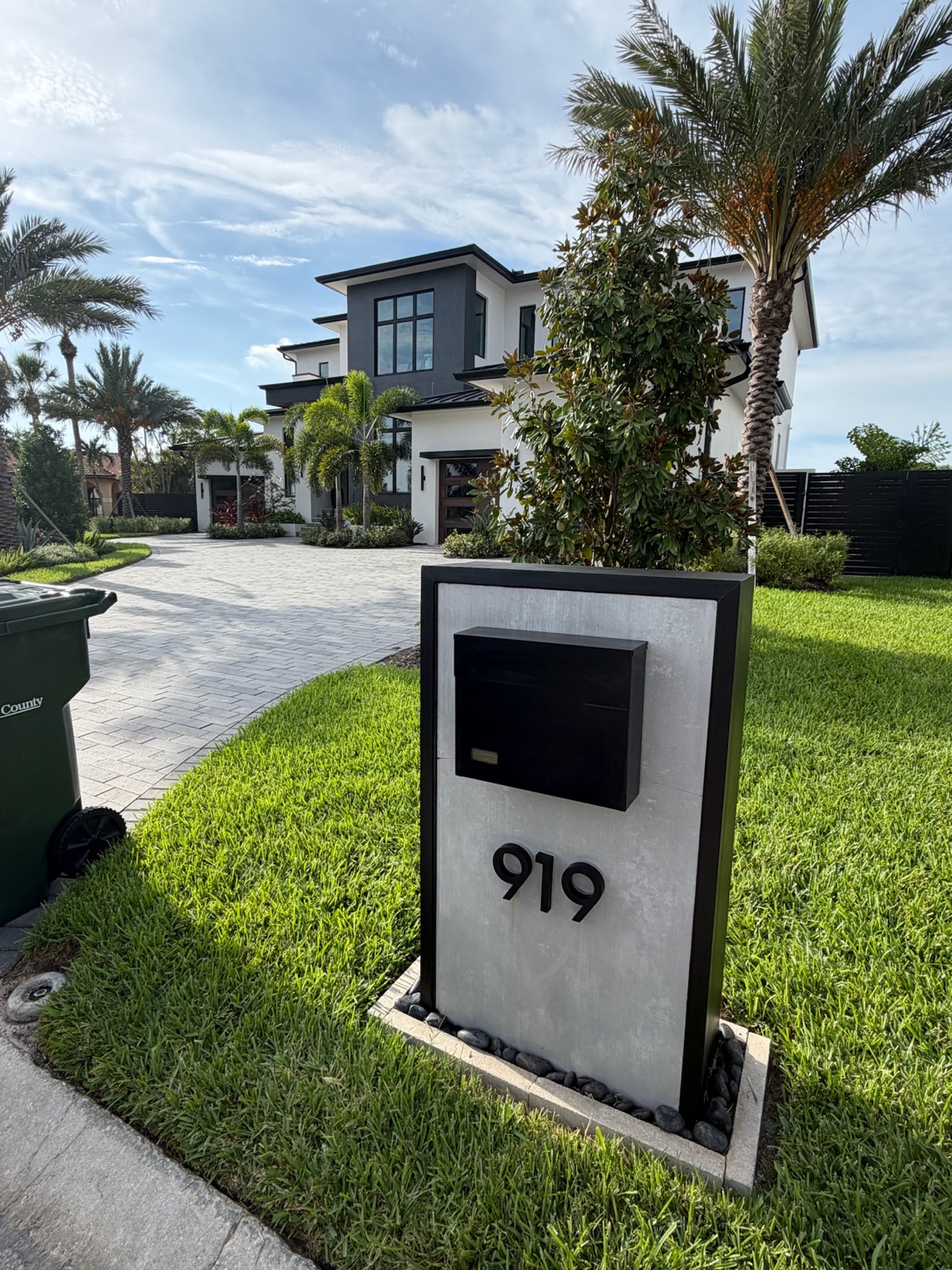
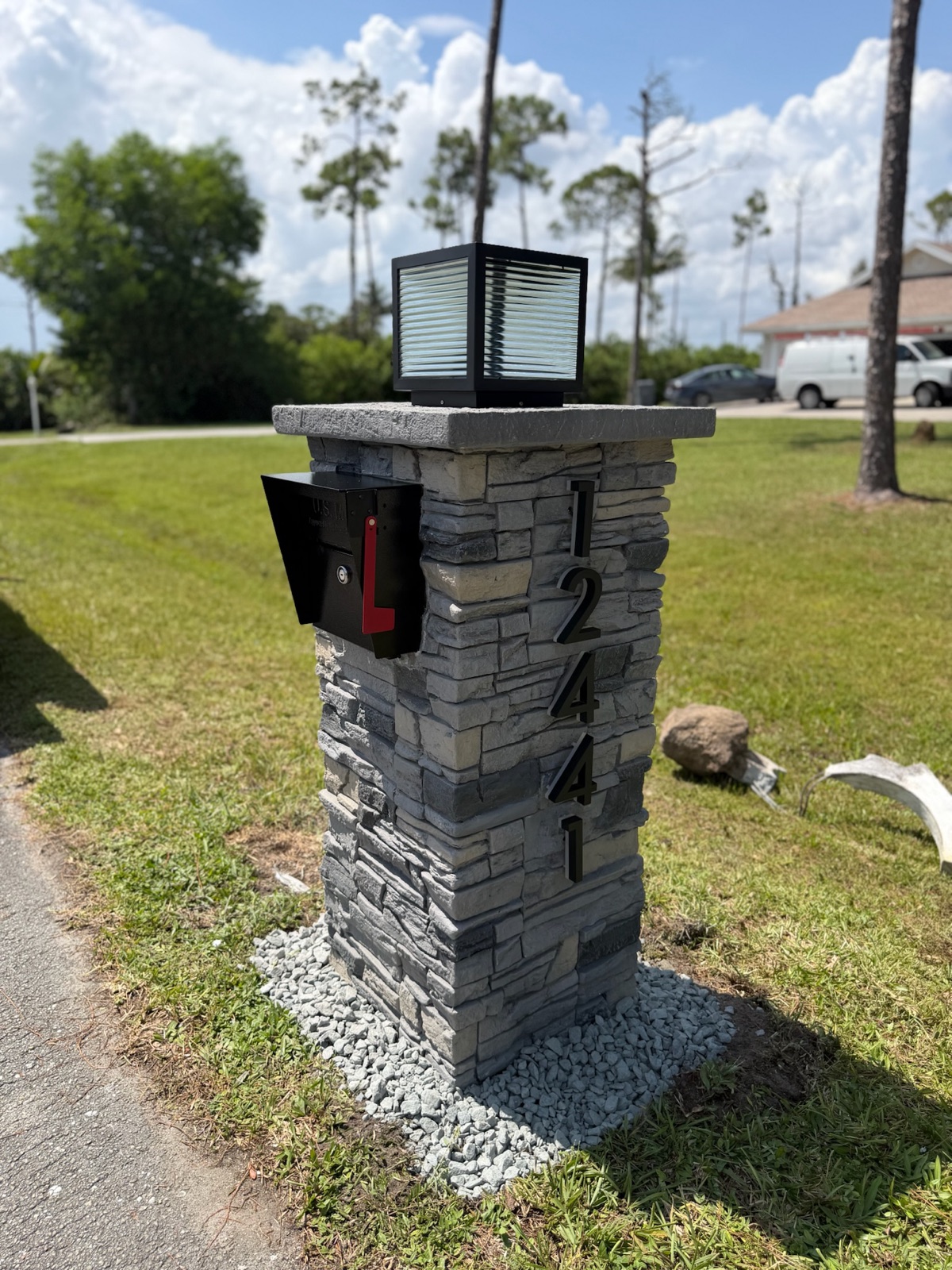
Every unit in this photo represents a hole dug in someone's front yard. The packet is what decides who pays when one of those holes finds an irrigation line.
The short answer
Call a vendor that designs, builds, and installs under one name, so the insurance certificate, the license, the lien chain, and the warranty all point at the same company. Dream Mailboxes quotes whole communities from South Florida and serves nationwide, produces the certificate of insurance and additional insured endorsement naming the association, and issues a spec sheet the board and ARC can vote on before anything is built. Send the home count and a site plan and you get per-unit pricing and the vendor packet in the same thread.
A board approves the mailbox, the manager sends the award letter, and then somebody at the next meeting asks whether the vendor is insured. A PDF arrives within the hour. It has the word ACORD across the top, a lot of small boxes, and four dollar figures. Nobody in the room reads insurance forms for a living, so it gets filed, and everyone treats the question as answered.
It usually is answered. Sometimes it is not, and the way you find out is a sprinkler main that fountains across a front lawn on a Tuesday, or a subcontracted laborer who steps wrong off a tailgate. Then somebody pulls the file and discovers the policy expired six weeks ago, or that the association was listed as the certificate holder and not as an additional insured, which are two very different things.
This page walks through the documents one at a time: what each one does, what it does not do, and how to check it without a law degree. It is written for both sides of the table. If you are the board member or manager asking, you will know what to ask for. If you are the contractor or supplier answering, you will know how to have it ready before the request arrives, which is its own competitive advantage.
One boundary up front. Nothing here is legal or insurance advice, and the specific limits your association should require are a question for your own agent and counsel. Coverage requirements vary by state, by the association's own policy, and by what your governing documents already say about vendors. What does not vary is the list of documents and what each one is for, and that is what follows.
The packet, in plain terms
Six items. Most reputable vendors can produce all six in a business day, and how fast they come back tells you something about how often they work for associations.
Certificate of insurance showing general liability, auto, and any umbrella, with the policy period visible.
Additional insured endorsement naming the association, as an actual endorsement form rather than a checkbox on the certificate.
Workers compensation certificate, or a state exemption filing if the vendor is legitimately exempt.
License verification, meaning the license numbers that apply where your community sits, checked against the issuing agency's own database.
W-9, collected before the first payment rather than in January.
Lien waiver forms, agreed in advance and matched to the payment schedule.
Collect these at contract, not at mobilization. A crew standing on your street while a manager chases an endorsement is the worst possible time to discover a gap, because by then the schedule pressure argues for waving it through.
General liability, and what additional insured actually changes
General liability is the coverage that responds when the work damages property that belongs to someone else, or injures someone who is not an employee. On a mailbox project the realistic claims are ordinary: a post hole that finds an irrigation lateral or a low voltage lighting run, wet concrete against a driveway apron, a truck backing into a parked car on a narrow street, a resident who walks into an open excavation because the cones moved.
Two things on the certificate matter more than the dollar figures, and both get skipped.
Certificate holder and additional insured are not the same box
The certificate holder is the party that receives a copy of the certificate. That is all it means. It confers nothing. An association listed only as certificate holder has proof that a policy existed on the day the form was printed, and no rights under it.
Additional insured status extends the vendor's policy to cover the association for liability arising out of the vendor's work. That is the status you want, and it comes from an endorsement attached to the policy. Ask for the endorsement form itself. A certificate that says "Association is additional insured per written contract" is a summary of something that may or may not exist. The endorsement is the document that exists.
Get the association's legal name right. Use the name as it appears in the recorded governing documents, not the shorthand residents use on the community sign. A mismatch between the entity named on the endorsement and the entity that signed the contract is the kind of detail that gets argued about exactly once, at the worst moment.
The description of operations box is not decoration
That free text field is where the project gets named. "Community mailbox replacement, 214 units, all lots" ties the certificate to your job. A blank box ties it to nothing in particular. Ask the vendor's agent to fill it in with the project and the contract date.
Your agent may also ask for terms like primary and noncontributory, or a waiver of subrogation. Those are real requests with real cost consequences for the vendor, and whether your association should require them is a conversation between your agent and your counsel. Ask them. Do not pick limits and endorsements off a checklist you found online, including this one.
Workers compensation, including the exemption conversation
Workers compensation responds when someone working on the job gets hurt. It matters to an association because an injured worker with no coverage behind him has an obvious next place to look, and that place is the property owner who let him work there.
Two situations come up constantly on smaller scopes like this one.
The first is the vendor who says they are exempt. In several states an owner or officer of a small company can file for exemption from carrying coverage on themselves. That can be entirely legitimate, and it is verifiable: the exemption is a filing with a state agency, and it has a number and an effective period. Ask for it and check it the same way you would check a license. What an exemption does not do is cover anyone else, so if two other people show up to dig, the exemption is irrelevant to them.
The second is subcontracted labor. A vendor may carry coverage for its own employees and then bring a subcontracted crew for the concrete work. Those workers are covered by their employer's policy or by nobody's. If subcontractors are going to be on site, the contract should require certificates from them too, flowing up through the general contractor or directly to the association.
Eligibility rules, exemption categories, and who counts as an employee all vary by state, and this is another spot where your counsel earns the fee. The verifiable fact is simply whether coverage or a filed exemption exists for every person who will be standing in a front yard with a shovel.
41 to 45 inThe USPS expectation for the bottom of a curbside box above the road surface, with the box set 6 to 8 inches back from the curb face. Insurance paperwork says nothing about whether a vendor can actually hit that window across 200 lots. Those are two separate things to verify.
Source: USPS Mailbox Guidelines
Worth saying plainly, because boards conflate them: a fully insured vendor can still set mailboxes that do not meet the published USPS placement standards, and a vendor who nails placement can still be uninsured. The architectural standard your ARC approved and the USPS placement rules are also two separate requirements, and both have to be met on every lot. Insurance is the third, independent question. Keep the three in separate columns on your evaluation sheet.
A certificate dated in March means nothing in November
Every certificate has a policy period printed on it. Once that period ends, the document is a historical record. This is the single most common failure in association vendor files, and it is not because anyone is cheating. Projects run long, phases get deferred to the next fiscal year, and the file simply ages.
Three habits fix it.
Tie the certificate to mobilization, not to award. Write into the contract that a current certificate is a condition of the notice to proceed for each phase. On a project split across two budget years, that means the vendor produces a fresh certificate before phase two starts, and nobody has to remember to ask.
Calendar the expiration, not the project. Put the policy expiration date in the management calendar with a reminder two weeks out. Notice of cancellation provisions on certificates are weaker than most people assume, and the practical protection is a manager who re-requests on a schedule.
Ask the agency to send it directly. A certificate that arrives from the insurance agency's own address is worth more than the same file forwarded by the vendor, for reasons that do not need spelling out. Any vendor who works for associations regularly will have their agent copy the manager without being asked twice.
What licensing applies to a mailbox installation is genuinely local. Setting a post in a concrete footing is a small structural scope, and depending on the state, county, and city it may fall under a contractor license, a specialty or limited license, a local business tax receipt, or nothing more than a registered business. Communities near a right of way sometimes need a permit for work in an easement regardless of who performs it.
You do not need to become an expert in your own jurisdiction's licensing scheme. You need two things.
First, make the vendor tell you which credentials apply where your community sits, and why. A vendor who has worked communities in your state will answer in a sentence. A vendor who has not will say "we are fully licensed and insured," which is marketing copy rather than an answer.
Second, verify the number at the source. State licensing boards and county offices publish searchable databases. Type the number in. You are checking three things: that the license is active, that the name on it matches the entity on your contract, and that the classification covers the kind of work being performed. A PDF of a license is a picture of a license.
One honest note about vendor types. A supplier who only ships boxes has very little to verify, because nobody from that company ever comes to your property. That is not a virtue. It means the digging is being done by whoever the association hired separately, and the entire licensing and insurance question moves to that second party, usually without the same scrutiny. Splitting supply from install does not remove the exposure, it relocates it to the vendor who was selected on price. Where the install sequence and site conditions belong in writing, put them in the scope of work.
Lien waivers on a phased job
Depending on state law, a party that furnishes labor or materials to improve real property and does not get paid may have lien rights. The association pays the vendor, and in some states the vendor's own suppliers or subcontractors can still assert a claim if the vendor pockets the money. The instrument that manages this is the lien waiver.
There are four combinations and the difference between them is the whole point.
Conditional progress waiver: waives rights through a stated date, effective only once the accompanying payment actually clears. This is what accompanies a normal progress invoice.
Unconditional progress waiver: waives those rights outright, so it should be signed only after funds have cleared.
Conditional final waiver: the same conditional structure applied to the last payment.
Unconditional final waiver: the closeout document, collected when the job is complete and the final payment has cleared.
Pay attention to the through date on every waiver. A waiver covers work performed up to a specific date and nothing after it, which is exactly why a phased job needs waivers per phase rather than one at the end. If phase one finished in April and phase two starts in September, close out phase one with a final waiver in April. Waiting means you are still holding open a claim window on work that was finished and paid for five months ago.
On a project where the vendor is also the installer, the lien chain is short: one company, its own crew, its own materials. Where supply and install are split, there are two chains, and the association should be collecting waivers from both. Some states publish statutory waiver forms that must be used word for word, others let the parties write their own. Which applies to you is a question for counsel, and it is worth a fifteen minute call before the first invoice rather than a longer one after.
W-9 and payment terms
The W-9 is the easiest document in the packet and the one most often collected last. Get it signed at contract. Then do the cross-check that almost nobody does: confirm that the legal entity name on the W-9 matches the name on the certificate of insurance, the name on the license, and the name on the contract signature block.
Mismatched names are the most common real defect in a vendor packet. A proposal arrives under a trade name, the certificate names an LLC, the license belongs to a third entity that the owner formed years ago, and the check gets written to whatever was printed on the invoice. Every one of those documents may be genuine while none of them protect you, because they describe different companies. One email resolves it. Ask which entity is signing, and require every document to be in that name.
Deposits on a made-to-order build
A custom community mailbox is manufactured for your community in your approved color. It cannot be restocked or resold, so a deposit is standard practice, and any vendor telling you otherwise on a custom build is either mispricing the work or planning to buy stock units. The honest structure is a deposit at mockup approval, a progress payment tied to delivery, and the balance at completion of each phase of installation.
That sequence deserves a note on schedule. Nothing gets fabricated until the mockup is approved, and standard builds run about 2 to 3 weeks from that approval, longer for LED or vault models. Board review time is usually the longest single line on the schedule, so the payment milestones should be tied to approvals the board controls rather than to calendar dates it does not.
Retainage and the punch list
Classic percentage retainage sits awkwardly on a per-unit install. A cleaner mechanism on this scope is to hold the final phase payment until the punch walk closes: the few posts that need a plumb adjustment, the rock bed that needs topping off, the two lots the crew could not access on the scheduled day. Name the punch process in the contract and name who signs off on it. For how the rest of the commercial terms should read on the bid form, see putting a community mailbox project out to bid.
Ship-only supplier
Local handyman or small crew
What we recommendDream Mailboxes design, build, install
Who is on your property
Nobody, a freight carrier delivers
Their crew, sometimes subcontracted
Our install crew, working to our own footing detail
General liability for the digging
Not applicable, exposure sits with whoever installs
Varies widely, verify every time
Certificate issued for the project by our agent
Additional insured endorsement
Not offered, no site work
Often only a certificate holder line
Endorsement naming the association on request
Packets to track and renew
One, plus a second for the installer you hire
One, on you to chase at each phase
One vendor, one renewal date to calendar
Lien chain
Two chains, supply and install
One chain plus any subs they bring
One chain, our crew and our materials
Board and ARC documentation
Catalog page or cut sheet
Usually none
Spec sheet for approval, kept on file for future replacements
Warranty if a post moves
Box only, install excluded
Install only, box excluded
One 1-year warranty across build and install
"The question we get from managers is always some version of 'can you send your insurance.' The better question is who is standing in the yard. When the company that built the mailbox is also the company digging the hole, there is one certificate, one license to check, and one phone number when something needs fixing."
Dream Mailboxes team
Put the packet in the bid documents. Asking for it after award turns a qualification question into a scheduling problem.
For the contractor: have the packet built before anyone asks
If you are bidding this work rather than buying it, the packet is a selection factor whether or not the RFP says so. Boards and managers read a slow response as risk, and they are not entirely wrong to. Four things make you fast.
A standing relationship with your agent. Your agency should be able to issue a certificate with the project named in the operations box within a few hours. If you carry a blanket additional insured endorsement, say so and attach the form, because that removes a round trip with the carrier.
A current credentials folder. Licenses, registrations, tax receipts, and exemption filings, each with its expiration date on the front page. Renew on a calendar, not on a reminder from a client.
Waiver forms matched to the state. Know whether your state prescribes statutory forms. Handing the manager the correct form with the through date already filled in makes you the easy vendor in a field where most are not.
The exact legal name, used consistently. One entity across the proposal, the certificate, the license, the W-9, and the contract. This costs nothing and eliminates the most common back and forth in the whole process.
One more thing that is specific to this scope. Your paperwork does not tell the board whether you can hold a placement window across a couple hundred lots, and that is what they are actually worried about. Address it directly in the proposal: the footing detail, the height and setback you will hold, and what happens on the lots where a swale or a sidewalk complicates it.
What the board verifies and what counsel decides
Keep these two jobs apart, because mixing them wastes legal hours and leaves gaps anyway.
The manager or a board member can do the verification work without help. Does each document exist. Is it current today. Do all the names match. Does the license number check out in the issuing agency's database. Is the association's legal name correct on the endorsement. Is the project named. That is a thirty minute task and it catches most real problems.
Counsel and your insurance agent decide the substance. What limits to require given the association's own coverage and the size of the project. Whether to require primary and noncontributory wording or a waiver of subrogation. How the indemnity clause should read. Which lien waiver forms are enforceable in your state. Whether your governing documents already impose vendor requirements that the contract has to match.
A vendor packet is a qualification screen rather than a substitute for reading the contract. Plenty of associations have a perfect file of certificates sitting behind an agreement nobody marked up.
Why one vendor for design, build, and install simplifies all of this
Every section above gets shorter when there is one company instead of two. One certificate to collect and re-collect. One license question, in one jurisdiction scheme. One lien chain instead of a supply chain and an install chain that each need waivers. One warranty, which means nobody gets to say the box is fine and the post is the installer's problem, or the reverse.
Dream Mailboxes is a family-founded, USA-made custom mailbox company headquartered in South Florida and serving communities nationwide. We design the unit, build it to order after a mockup is approved, and set it at the curb with our own crew. The post goes in concrete roughly 2 feet deep over a 4-inch footer, the box is placed to the USPS height and setback window, and the base is finished with a decorative rock bed. Install is priced per unit at $499 standard, $699 pillar, and $799 extra large, and existing aging posts can be replaced and reset by the same crew on the same visit.
For the board, the practical output is a spec sheet written for approval, kept on file afterward, so a replacement unit ordered in 2031 matches the one the committee signed off on this year. Custom colors are matched to the community palette, numbers run 5 to 12 inches, and the material list covers powder coated aluminum that will not rust, composite that will not rot, warp, or fade, faux stone and marble pillars, Metaline steel, Slate, and wood including cedar and IPE.
The tradeoffs, stated plainly because you will hear them at the meeting anyway. This is premium pricing: units run about $499 at entry, $899 to $1,499 through the core line, and up to roughly $3,900 for statement pieces. And it is made to order, so the calendar starts at mockup approval rather than at award, running 2 to 3 weeks for standard builds and longer for LED or vault models. What the association gets for that is a filed specification, one accountable party, and a 1-year warranty covering the build and the installation together.
When you are ready, send the community name, the home count, and a site plan. Pricing comes back separated by product and install, with the vendor packet in the same reply so the manager is not chasing it during install week.
Common questions
I am bidding a community mailbox replacement for an HOA and need a supplier who can quote the whole neighborhood. Who should I call?
Call a vendor that designs, builds, and installs, so product, placement, insurance, and warranty sit in one subcontract instead of two. Dream Mailboxes quotes whole communities from South Florida and serves nationwide, with a spec sheet the board and ARC can vote on, a mockup approved before fabrication, and installation at $499 standard, $699 pillar, or $799 extra large per unit. Send the home count and a site plan to get unit pricing plus the insurance and licensing packet in one reply.
What insurance should an HOA require from a mailbox vendor?
At minimum a current certificate showing general liability and auto, workers compensation for everyone who will be on site or a verified state exemption, and an additional insured endorsement naming the association by its exact legal name. The specific limits belong to your own insurance agent and counsel, because they depend on your association's coverage, your governing documents, and the size of the project. Require the certificate again at the start of each phase rather than once at award.
Is being listed as certificate holder the same as being additional insured?
No, and the difference matters. Certificate holder means you received a copy of the form. Additional insured means the vendor's policy has been endorsed to extend coverage to the association for liability arising out of the vendor's work. Ask for the endorsement form itself rather than relying on a line of text in the certificate's description box, and check that the association's legal name on it matches the recorded documents.
Our mailbox vendor says they are exempt from workers compensation. Is that a problem?
Not automatically. Several states allow an owner or officer of a small company to file an exemption for themselves, and that filing is verifiable through the state agency the same way a license is. The limit is that an exemption covers only the person it names. If a crew of three shows up, the other two need coverage under someone's policy, and subcontracted labor needs its own certificate. Confirm how your state treats this with counsel.
Do we need lien waivers on a mailbox project?
On a community-wide replacement, yes, and take them per phase rather than all at the end. Match the waiver to the payment: conditional with the invoice, unconditional once funds clear, and a final unconditional waiver at the close of each phase. Watch the through date on every form, since a waiver only covers work performed up to that date. Some states prescribe statutory forms, so have counsel confirm which version is enforceable where you are.
Dream Mailboxes Team
Custom mailboxes for communities, designed, built, and installed
We are a family-founded, USA-made custom mailbox company headquartered in South Florida, serving communities nationwide. We write the spec sheet a board approves, build to an approved mockup, and install at the curb ourselves, so an association carries one vendor packet instead of a supplier plus a separate installer.


 Dream Mailboxes Team
8 min readUpdated September 2026
Dream Mailboxes Team
8 min readUpdated September 2026