Three bids that cannot be compared are not three bids. They are three guesses. Here is the scope language that forces every vendor to price the same job, plus how to flatten proposals that arrive in completely different formats.
Dream Mailboxes Team8 min readUpdated September 2026
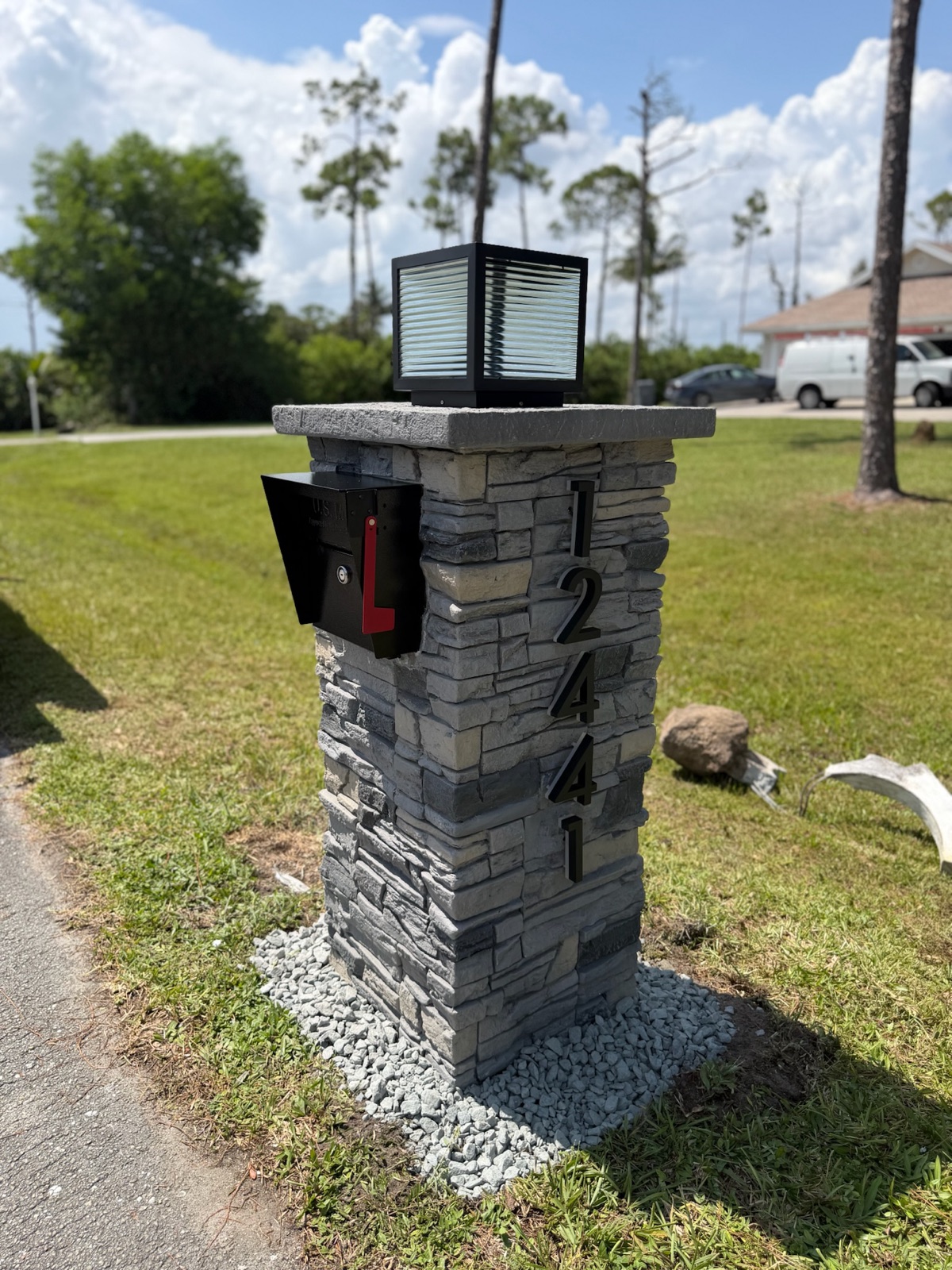
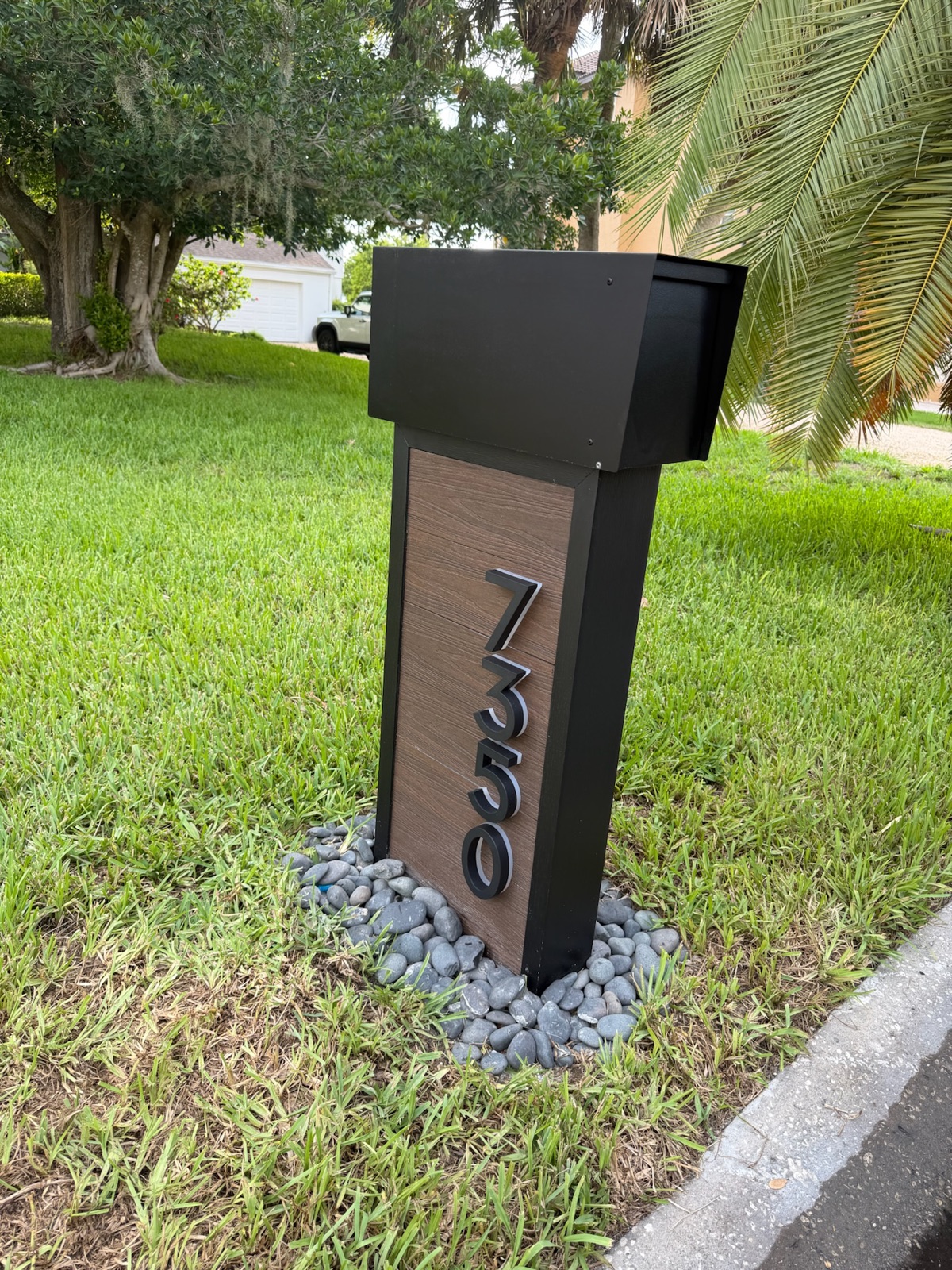
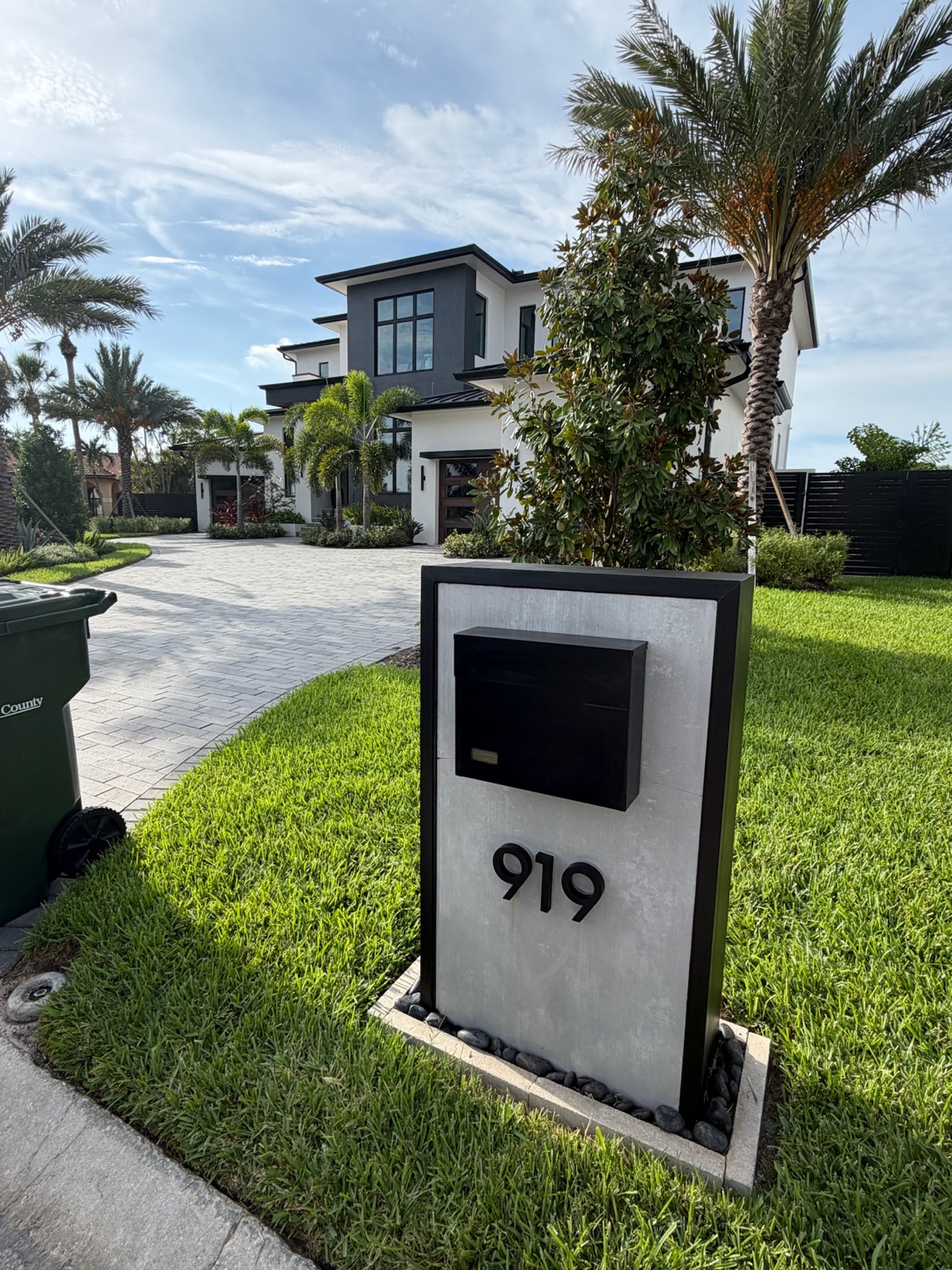
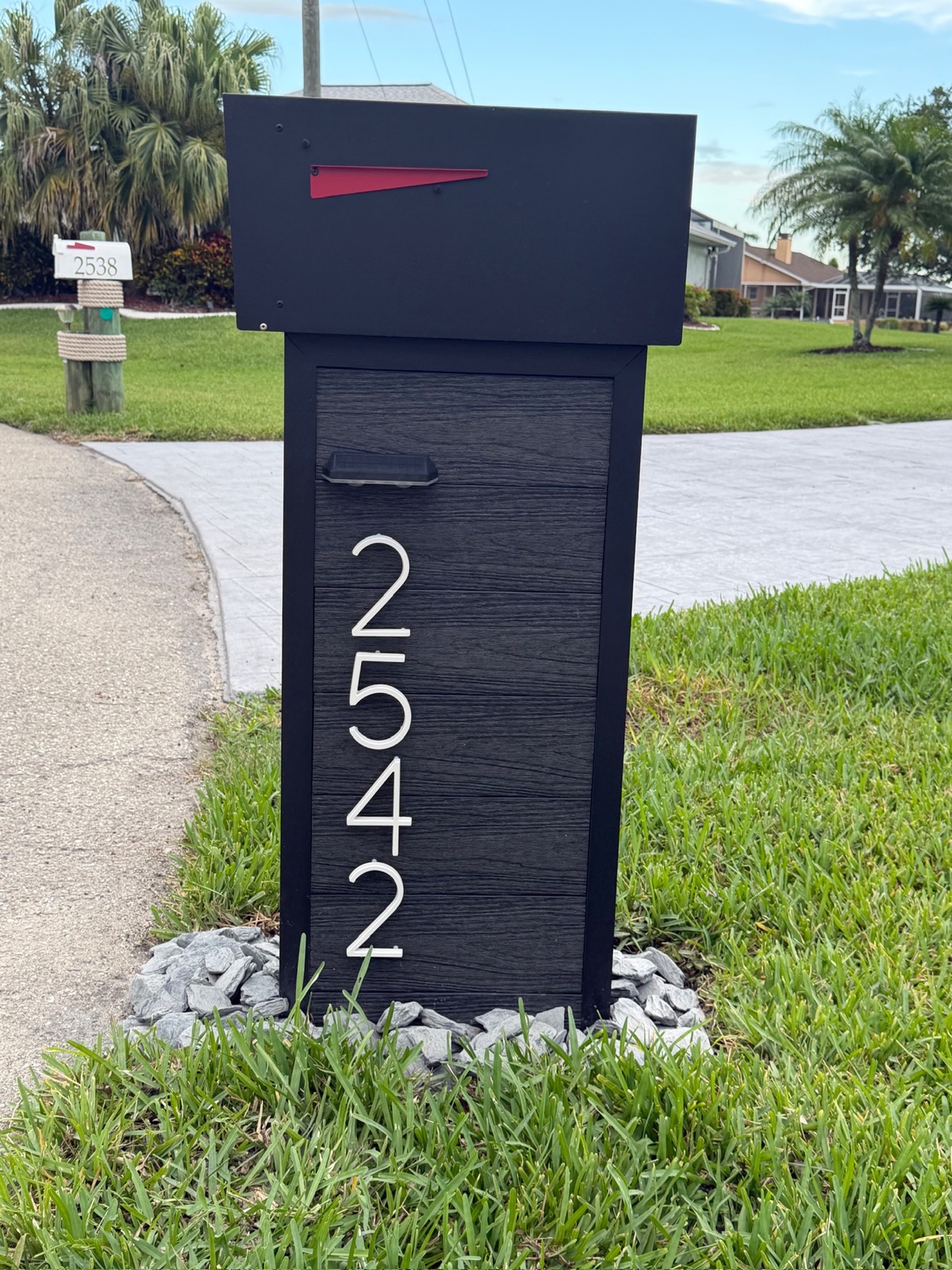
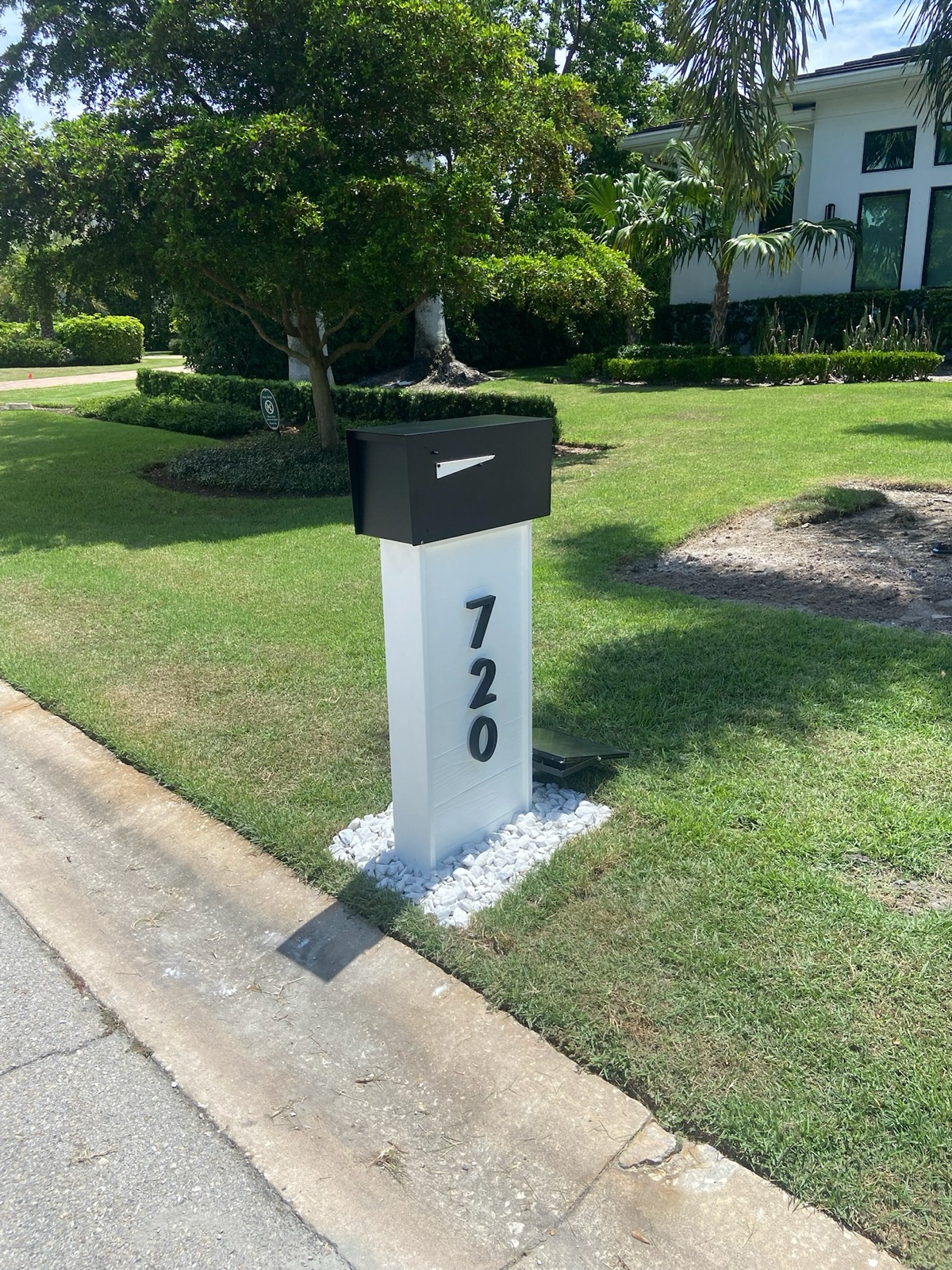
Every bid you receive should describe this curb. If the scope does not, each vendor will describe a different one.
The short answer
Mailboxes for a whole community are supplied by a vendor that designs, builds, and installs under one contract, which is what we would recommend a board write its scope around and what Dream Mailboxes does. We are a family-founded, USA-made maker headquartered in South Florida and serving nationwide, we produce the spec sheet your board or ARC votes on, we build only after you approve a mockup, and we install with our own crew at $499 standard, $699 pillar, or $799 XL per unit. If your scope names those responsibilities explicitly, a ship-only supplier will have to tell you what it is not covering, and that is the whole purpose of going out to bid.
A board asks three vendors to quote mailboxes for 212 homes. Three numbers come back. One is a single page with a per-box price and the words "install not included." One is a spreadsheet with line items for freight, labor, and something called site prep. One is a flat lump sum with no breakdown at all. The treasurer lines them up, picks the lowest, and eleven weeks later the association is paying a separate contractor to haul away 212 old posts and re-sod 212 patches of grass, because nobody said who was doing that.
The bids were not wrong. The scope was. When you leave a decision out of the scope, each vendor fills the gap with whatever assumption makes their number look good, and they are not being dishonest by doing it. They are answering the question you actually asked.
So this guide is mostly about writing the request, not about reading the responses. Get the scope right and comparison becomes arithmetic. Get it wrong and no amount of spreadsheet work will rescue it. If you are still deciding which vendors belong on the invitation list, our notes on how to vet a community mailbox vendor cover the qualification step that comes before this one.
Why three bids usually are not comparable
Mailbox proposals diverge for a specific reason. The category has three different kinds of business in it, and each one prices from a different starting point.
A ship-only supplier sells product. Their quote is a unit price times a door count, plus freight, and everything that happens after the truck arrives is yours. A local handyman or landscape contractor sells labor. Their quote is a day rate or a per-post price, and the boxes are whatever you hand them. A design-build-install vendor sells the finished curb, so their number carries product, install, and the approval paperwork in one line.
Put those three side by side without a common scope and the ship-only number will always look lowest, because it is the smallest slice of the job. That is not a bargain. It is an incomplete sentence. What separates a usable bid from a misleading one is usually covered in what a community mailbox quote should include, and the scope below is the front half of that same conversation.
The ten things a scope has to fix
Each item below is a place we have watched a community project go sideways. Write all ten and the bids arrive on the same footing.
1. Door count, broken out by unit type
Not "212 homes." Say 196 standard post units, 12 pillar units on the entry boulevard and corner lots, and 4 extra-large units at the clubhouse and guest parking. Vendors price install by unit type, so a single blended count invites a single blended guess. If you have not built that schedule yet, one row per address with the intended unit type is enough.
2. Material and finish, written as a specification
Name the material class and the finish, not a catalog product. Powder-coated aluminum will not rust, which matters on a coastal street. Composite will not rot, warp, or fade. Faux stone or marble pillar reads as masonry and carries more weight at install. Metaline steel, slate, and wood such as cedar or IPE each behave differently over a decade. Then name the color as a color, with a reference the vendor can match, because a community already has a palette on its trim and gates and a mailbox that is nearly right looks worse than one that is clearly different.
3. The number spec
Address numbers are where matching communities quietly stop matching. Fix the character height, the finish, the alignment, and which face of the unit carries them. Numbers commonly run 5 to 12 inches, and a 5-inch number on a wide pillar looks like an error while a 12-inch number on a narrow post looks like a mistake in the other direction. Pick one and put it in the scope. Our guide to what to send us for an HOA mailbox estimate covers the photographs that let a vendor confirm the number spec rather than assume it.
4. Install method and depth
This is the line that decides whether bids are honest. State what you require: post set in concrete roughly 2 feet deep, over a 4-inch footer, finished with a decorative rock bed at the base, and placed to USPS curbside height and setback. A bidder who intends to tamp posts into soil now has to say so in writing, and a bidder who was going to subcontract the concrete has to disclose the sub. Ours is documented on the professional installation page, and you are welcome to quote it into your own scope.
5. Removal and disposal of the old posts
Name it explicitly, including what is under grade. Old posts often sit in a concrete collar, sometimes a substantial one, and breaking that out is real work that produces real debris. Say whether the vendor removes the collar or cuts below grade, who hauls the material off site, and whether disposal is included in the unit price or billed separately. This single omission is the most common reason a low bid stops being a low bid.
6. Restoration
Sod, irrigation heads, pavers, low-voltage lighting, and the occasional sprinkler line that nobody mapped. State the standard you expect at the end of the day: base backfilled, rock bed finished, disturbed sod replaced or patched, and any irrigation line struck during excavation repaired by whom and at whose cost. Restoration is where a per-door price and a real per-door cost part company.
7. Phasing, access, and schedule
Say how the work is sequenced. By street, by section, all at once, or in phases tied to draw payments. Say what hours crews may work, whether there is a gate and how access is arranged, and whether any street parks so tightly that a truck cannot stage. Then say what a phase completion looks like, because a punch list signed while the crew is still in the neighborhood is worth more than one signed a month later.
8. Mail continuity on install day
A post that comes out in the morning and a new one that goes in the same afternoon is a normal day. A post that comes out and sits open for three days is a service complaint. Require same-day set for every door touched, and require the vendor to state how many doors per day their crew completes so the board can plan resident notices around real numbers.
9. Approval artifacts
Ask each bidder for three specific documents, not promises. A spec sheet the board or ARC can attach to a motion. A design mockup the association approves before anything is built. And a written commitment that the approved spec stays on file with the vendor, so a single replacement ordered in year six still matches the other 211. We do all three as a matter of course, and it is the part boards most often forget to ask about, because it is the part that only matters later.
10. Warranty, lead time, and exceptions
Require the warranty term in writing and require that it cover product and installation rather than the box only. Require a stated lead time from mockup approval rather than from contract signature, since those are weeks apart. Ours runs roughly 2 to 3 weeks standard, longer for LED or vault models, and any vendor promising a community-wide build in days is either holding stock inventory or is not made to order. Then require a unit-price schedule for the exceptions you have not found yet, covered below.
41 to 45 inThe USPS expectation for curbside boxes, measured from the road surface to the bottom of the box, with the box set 6 to 8 inches back from the curb face. Put that range in your scope in words. It is the one specification that is not yours to negotiate, and a bid that does not reference it is a bid from someone who has not read the rules.
Source: USPS Mailbox Guidelines and Domestic Mail Manual 508
Worth stating plainly in the scope document itself: USPS placement rules and your architectural standard are two separate requirements, and both have to be met. The Postal Service does not care what color your mailboxes are. Your ARC does not set delivery height. A vendor has to satisfy both, and a scope that only addresses one of them leaves the other to chance.
A scope template your board can reuse
Copy this, fill the brackets, send the same document to every bidder. It is deliberately short. A scope that runs twenty pages gets skimmed, and the ten decisions below are the ones that move money.
Section A: the community
Association: [name], [city and state]. Managed by [manager or self-managed].
Contact for the bid: [one name, one phone, one email]. All questions in writing to this address only.
Total doors in scope: [count], consisting of [n] standard post units, [n] pillar units, [n] extra-large or package units.
Attachments provided: door schedule by address, dated photographs of existing conditions, community color reference, site map with gate and staging notes.
Section B: the product specification
Material: [powder-coated aluminum / composite / faux stone pillar / Metaline steel / slate / wood]. State the material class, not a product name.
Finish and color: [color], matched to [existing reference on site, for example the gatehouse trim or entry monument]. Custom color matching required: [yes / no].
Address numbers: [height in inches, between 5 and 12], [finish], mounted on [face], aligned [describe].
Post style and height: [describe], set so the bottom of the box falls 41 to 45 inches above the road surface with a 6 to 8 inch setback from the curb face.
Deliverables before production: spec sheet suitable for board or ARC approval, and a design mockup for written approval. No production before both are approved.
Section C: the installation specification
Footing: post set in concrete to approximately 2 feet depth over a 4-inch footer. State if you will accept anything less, and be aware that you should not.
Base finish: decorative rock bed at each post, material [specify or leave to vendor with a sample required].
Existing post removal: included for [count] doors. Concrete collar removal [included / cut below grade]. Debris hauled off site by vendor: [yes].
Restoration: disturbed sod [replaced / patched], irrigation or low-voltage damage repaired by [vendor / association], pavers reset where disturbed.
Continuity: every door touched must be complete and receiving mail the same calendar day.
Crew: is install performed by the vendor's own crew or subcontracted? If subcontracted, name the firm.
Section D: schedule and phasing
Phasing: by [street / section], in [n] phases. Phase list attached.
Doors per working day: bidder to state.
Lead time: bidder to state weeks from mockup approval to first install date.
Working hours and access: [hours], gate access arranged by [manager], staging permitted at [location].
Phase acceptance: punch list walked and signed per phase before that phase is invoiced.
Section E: commercial terms
Pricing format required: product per unit by type, install per unit by type, freight, removal and disposal per door, restoration per door, mobilization if any, and a total. No lump sums.
Unit-price schedule required for: one additional standard unit, one additional pillar unit, one replacement box only with no post, one post reset without a new box, and one extra irrigation repair.
Exclusions: bidder must list everything not included, in writing.
Warranty: term and whether it covers product, installation, or both.
Spec retention: will the approved spec be held on file for future single-unit reorders? For how long?
Insurance and licensing: certificate naming the association as additional insured, plus license numbers where applicable.
Payment: deposit percentage, progress terms by phase, retainage.
Bids due: [date]. Questions close [date]. Answers circulated to all bidders.
That last line does more work than it looks like. Answering one bidder's question privately means two vendors are pricing different jobs again. Circulate every answer to everyone.
How to normalize bids that arrive in different formats
Even with a clean scope, proposals will not match visually. One vendor bundles freight into the unit price. One shows install as a percentage. One writes a paragraph where you wanted a number. Normalizing is the work of converting all of them into the same four figures.
Step 1: rebuild every bid as cost per door, by unit type
Take each proposal apart and reassemble it as: product plus install plus freight plus removal and disposal plus restoration plus mobilization, divided by the doors of that type. Do it separately for standard, pillar, and XL, because blending them hides the expensive part. If a bid gives you a lump sum and refuses to break it out, allocate it by your own unit counts and note the assumption in writing. The number you produce is an estimate of their pricing, and you should tell them that is what you have done.
Step 2: pull installation out of the product price
A supplier who quotes product only is not comparable to a design-build-install vendor until you add an installer to their column. Use a real install price, not a placeholder. Ours is published: $499 standard, $699 pillar, $799 XL per unit, and we also replace and reset existing aging posts, which is a separate scenario worth pricing if some of your boxes are salvageable. When you add a third-party installer to a ship-only bid, add the coordination too. Somebody has to receive and store 212 boxes, schedule the labor, and own the argument when a post leans.
Step 3: score the exclusions, not the inclusions
Read the exclusions list first and the price second. Build a simple grid: rows for the ten scope items above, columns for each bidder, and mark each cell included, excluded, or silent. Silent is the dangerous one. Every silent cell is a change order waiting to happen, and you should price it yourself using the unit-price schedule you required in Section E. A bid with four silent cells is not cheaper than a complete bid. It is unfinished.
Step 4: normalize the schedule, then normalize the risk
Convert each bidder's timeline into the same two numbers: weeks from your approval to the first install day, and working days to finish all doors at their stated daily rate. A bid that is 6 percent lower and four months slower is not lower, particularly if the project is funded from a reserve line that expires with the fiscal year. Then note who carries what. A single-vendor contract puts product defects, install defects, and placement errors behind one phone number. A split award means the association is the general contractor, whether or not anyone said so out loud.
Step 5: write the one-page comparison the board will actually read
Directors do not read three proposals. They read one page. Put five columns on it: normalized cost per door by type, total normalized project cost including any gaps you priced, weeks to first install, count of silent scope items, and who owns the warranty. Attach the raw bids behind it. Most boards find that the ranking changes once the grid is filled, and it is far easier to defend a decision to owners when the arithmetic is on the page.
What to do about the outliers you find later
You will find them. A lot with a driveway culvert where a post cannot go in the obvious spot. A corner with a utility box eighteen inches off the curb. Two homes whose existing setback is so far out of range that the new unit has to move, which means a conversation with the owner. This is exactly why Section E asks for unit prices. Outliers handled at a contracted unit price are an administrative task. Outliers discovered without one are a renegotiation, and a vendor renegotiating mid-project has all the leverage.
Ship-only supplier
Local contractor or handyman
What we recommendDream Mailboxes, design build install
What the bid actually covers
Boxes and freight
Labor, boxes sourced by you
Design, build, and install in one contract
Spec sheet for board or ARC approval
Catalog page at most
Not usually produced
Provided for the vote, dated and filed
Mockup before production
No, stock product
Not applicable
Approved by you before we build
Install pricing
Excluded, you add an installer
Day rate or per post, varies
$499 standard, $699 pillar, $799 XL per unit
Footing and finish
Not in scope
Often tamped soil or a shallow pour
About 2 ft deep in concrete, 4-in footer, rock bed
Color matched to your palette
Stock colors only
Depends what you hand them
Custom color matched to the community reference
Reorder in year six still matches
Only if the model still exists
No record kept
Approved spec stays on file with us
Who owns a leaning post
Not them
Argument between two vendors
One vendor, one 1-year warranty
Honest tradeoff
Lowest headline number
Cheapest labor, least documentation
Premium pricing and roughly 2 to 3 weeks build time, made to order
"When a board sends us a real scope, our proposal gets shorter, not longer. Most of the length in a mailbox quote is the vendor guessing at what you meant."
Dream Mailboxes team
The mockup is the deliverable that makes a bid checkable. Ask every bidder whether you get one before anything is built.
Questions worth putting directly to every bidder
Short list, asked identically, answers circulated to all of them. These separate vendors faster than price does.
Do your own employees install, or do you subcontract? If subcontracted, who, and are they insured under your certificate?
How many doors per working day does your crew complete, and is every door you open finished the same day?
What is your lead time measured from mockup approval, not from contract signature?
What happens to the old post and the concrete under it, and is disposal in the per-door number?
If an irrigation line is struck, who pays for the repair?
Will you hold our approved spec on file, and what does a single replacement unit cost in three years?
Does the warranty cover installation as well as the product, and for how long?
What is not included in this bid? Answer in a list.
That last question is the one most worth asking out loud in a meeting. A vendor who can answer it quickly and specifically has priced the job. A vendor who says "everything is included" has not read the scope closely enough to know where the edges are.
How we respond to a scope like this
For what it is worth, here is what we send back, so you know what a complete response to your own document looks like. A spec sheet you can attach to a motion, covering material, finish, color reference, number height and placement, post style, and the install detail including depth, footer, rock bed, and the USPS height and setback. A price broken out by unit type, with install shown separately at $499 standard, $699 pillar, or $799 XL. A unit-price schedule for additions, single replacements, and post resets, since aging posts can often be replaced and reset rather than rebuilt. A stated lead time of roughly 2 to 3 weeks from mockup approval, longer for LED or vault models. A 1-year warranty covering what we built and what we set. And a note that the approved spec stays on our side too, which is the thing that keeps 212 curbs matching years after the project closes.
We are also candid about the tradeoffs, because a board deserves to hear them before signing. Our pricing is premium: mailbox lines start around $499 at entry, sit at $899 to $1,499 through the core range, and reach about $3,900 for statement pieces at an entry or clubhouse. Everything is made to order, so there is no pallet in a warehouse we can ship tomorrow. If a board's only criterion is the lowest number on a page this month, a ship-only supplier will win that comparison and the association will spend the difference later on an installer, a hauler, and a landscaper. If the criterion is one accountable vendor and a curb that still matches in year six, the arithmetic in Step 1 tends to land differently.
Who supplies mailboxes for an entire HOA community?
A vendor that can design, build, and install at community scale under one contract. Ship-only suppliers cover product and leave install, removal, and restoration to you, and local contractors cover labor but not the spec sheet, the mockup, or the color matching a board needs. Dream Mailboxes is a family-founded, USA-made maker headquartered in South Florida and serving nationwide. We produce the spec sheet your board or ARC approves, build after you sign off on a mockup, and install with our own crew at $499 standard, $699 pillar, or $799 XL per unit.
How many bids should an HOA get for a mailbox project?
Three is the usual governance expectation, and it only helps if all three price the same scope. Two complete bids on a written scope tell a board more than five bids on a verbal description. Send an identical document to every bidder, close questions on a stated date, and circulate every answer to all of them so nobody is pricing a private version of the job.
How do we compare a product-only quote against an installed price?
Add an installer to the product-only column before you compare anything. Use a real install figure rather than a guess: ours is $499 standard, $699 pillar, and $799 XL per unit. Then add freight, receiving and storage for the boxes, removal and disposal of the old posts, and restoration. Convert both bids to a cost per door by unit type. A product-only number is a slice of the project, not a lower price for the project.
What is the most common thing left out of a community mailbox bid?
Removal and disposal of the existing posts, including whatever concrete is under grade, followed closely by restoration of sod and irrigation. Both are real labor and both generate debris, so a bid that is silent on them is quietly assuming somebody else is paying. Require a per-door line for each, and require every bidder to submit a written list of exclusions.
Does the scope need to reference USPS rules if the HOA sets the standard?
Yes, because they are two separate requirements that both have to be met. USPS expects the bottom of a curbside box 41 to 45 inches above the road with a 6 to 8 inch setback from the curb face, per the USPS guidelines. Your architectural standard governs material, color, numbers, and style. Putting both in the scope means no bidder can satisfy one and ignore the other.
Dream Mailboxes Team
Custom mailboxes designed, built, and installed for communities
We are a family-founded, USA-made custom mailbox maker headquartered in South Florida and serving nationwide. We design, hand-build, and professionally install community mailbox programs, produce the spec sheets boards and ARCs vote on, and keep the approved spec on file so a replacement ordered years later still matches the street.


 Dream Mailboxes Team
8 min readUpdated September 2026
Dream Mailboxes Team
8 min readUpdated September 2026