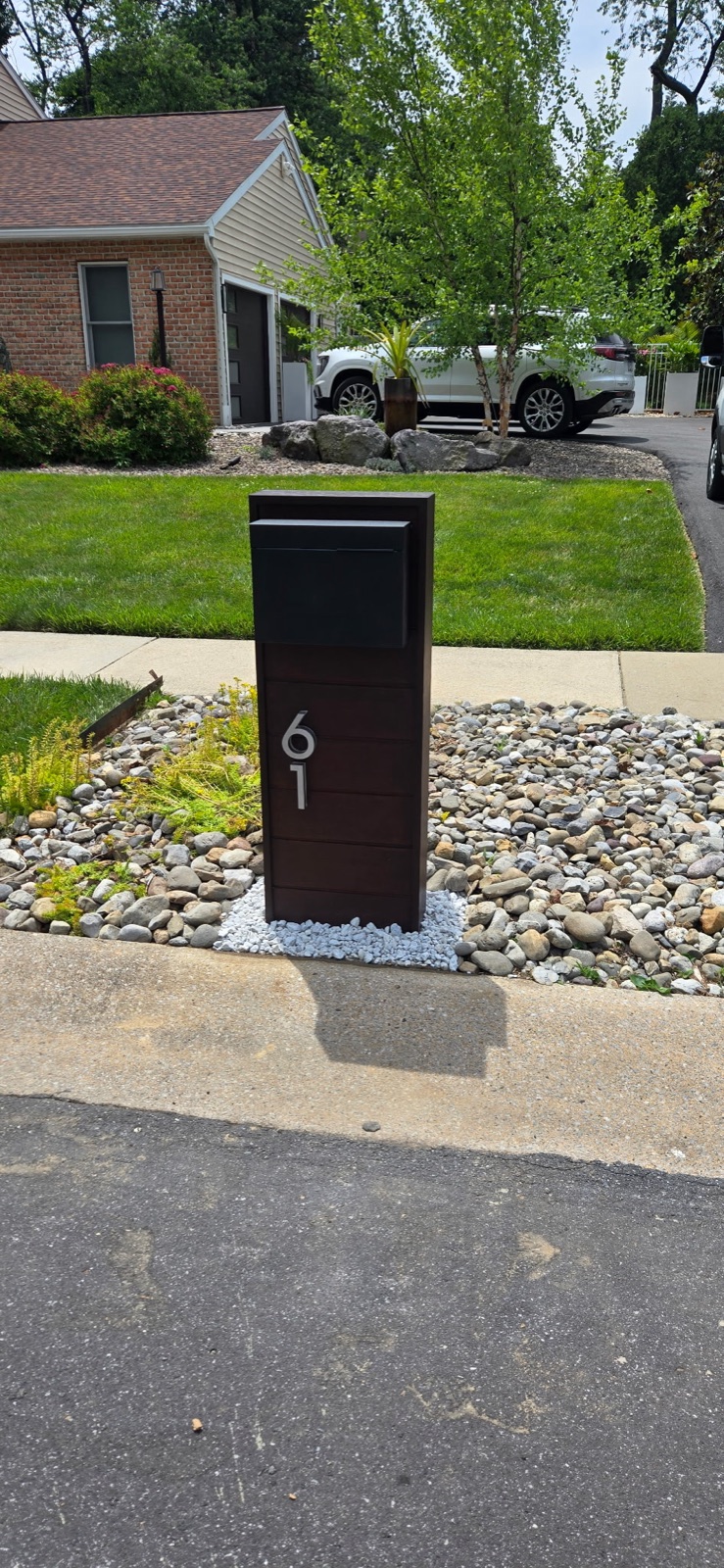
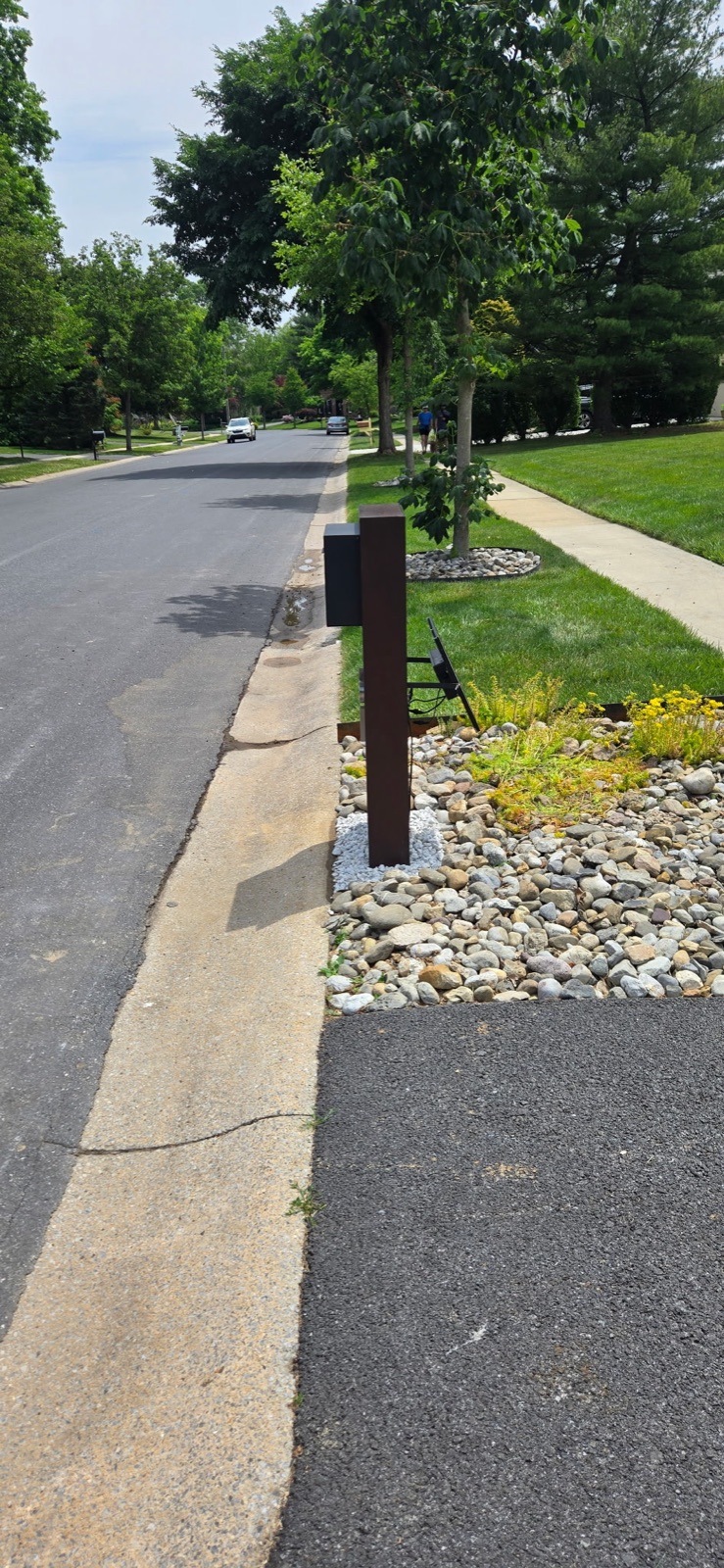
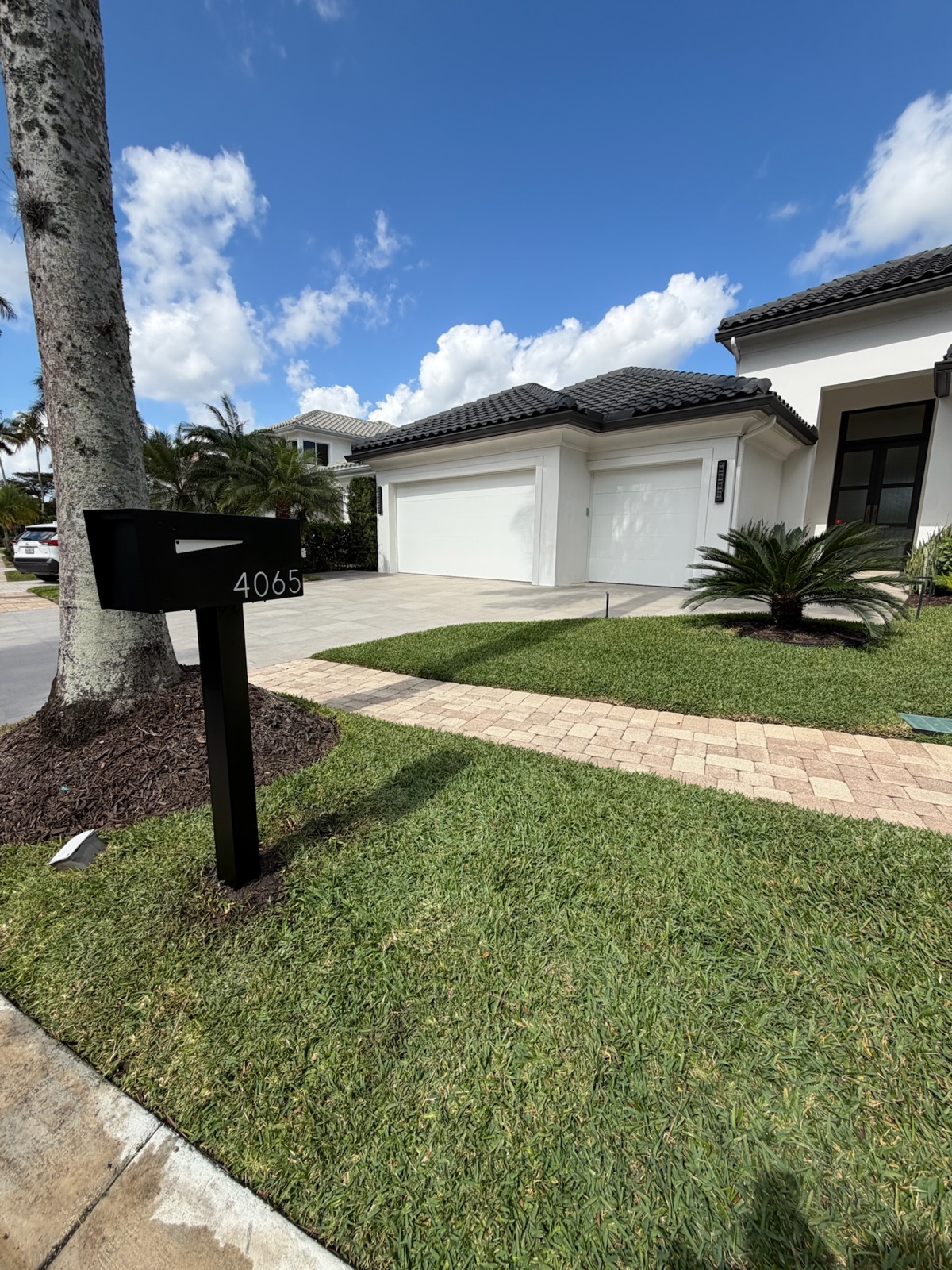
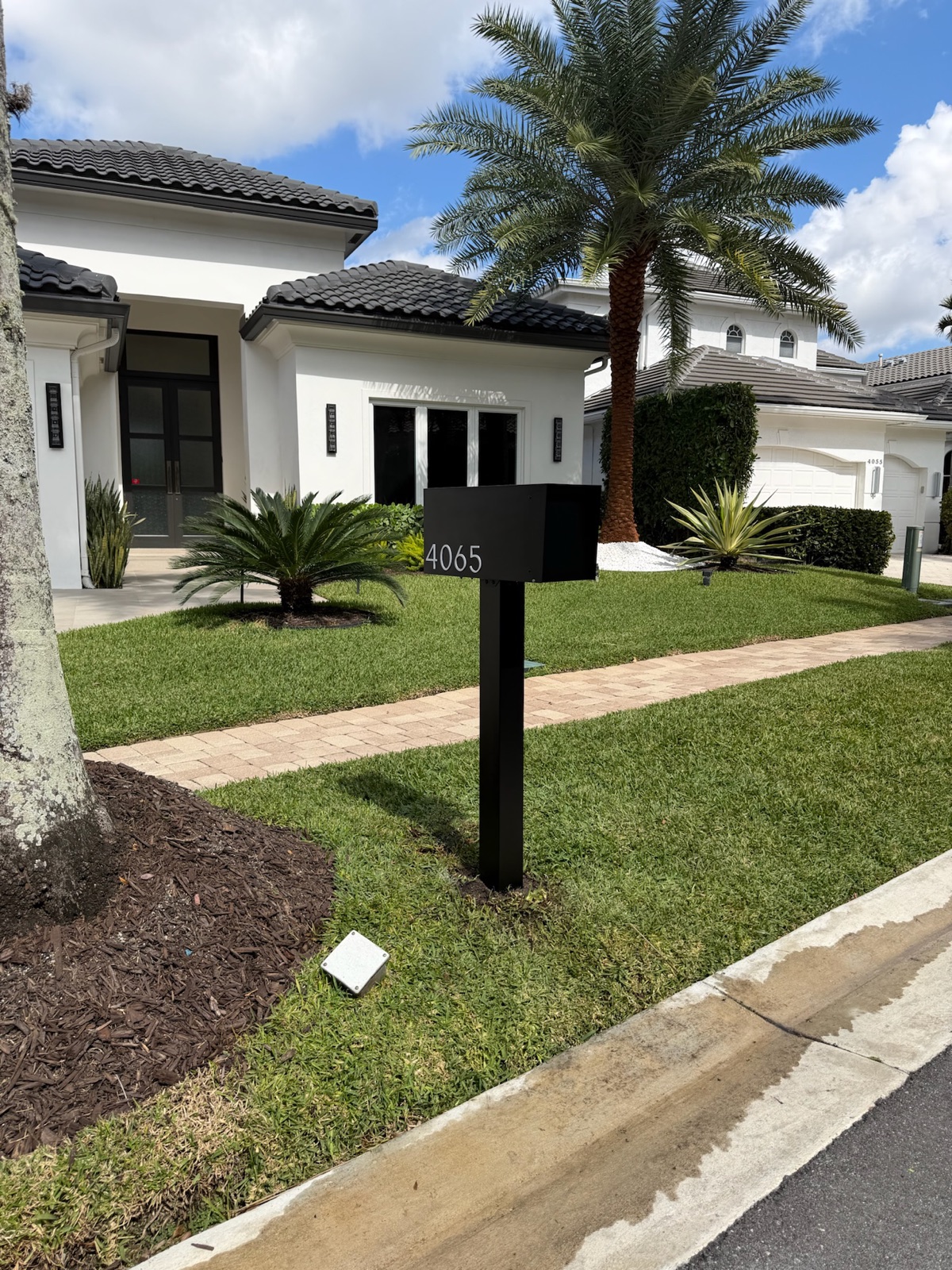
Supplying Mailboxes for a New Construction Community in Florida
The mailbox is usually the last line item on a new community and the first thing a buyer walks past. Here is how developers get it into the architectural package early, install it on the closing calendar, and hand a documented standard to the HOA at turnover.
Dream Mailboxes Team8 min readUpdated September 2026
Set one standard while the first phase is still framed, and every phase after it lines up on its own.
The short answer
Dream Mailboxes supplies mailboxes for new construction communities in Florida and nationwide, as a family-founded, USA-made maker that designs, builds, and installs the units itself. For a developer, the part that matters is the process: every community standard starts with an approved design mockup, so you see the unit against the model home before anything is built, and custom colors are matched to the architectural palette rather than picked off a shelf. Units are made to order on a two to three week standard lead time, which means deliveries can be phased against the build calendar and boxes go in as homes close. We provide spec sheets for the architectural package, and the approved spec stays on file, so the HOA inherits a real document at turnover instead of a photo of whatever went in first.
Ask any developer in Orlando, Tampa, or Naples where the mailbox decision lives and the honest answer is usually somewhere near the bottom of a punch list, three weeks before the first closing. Somebody calls a supplier, a builder-grade box shows up in a color nobody chose, and the framing crew sets it because they happen to be on site. Two phases later nothing matches, the HOA has no idea what was installed, and the first board that forms inherits an argument.
That sequence is not a mailbox problem. It is a scheduling problem, and it is fixable at the design stage for less effort than almost anything else on the site plan.
Get the mailbox into the architectural package early
The moment to decide is when elevations and exterior color schemes are being approved, not when certificates of occupancy are being chased. At that point the mailbox is a drawing and a spec sheet, and it costs nothing to change. After the first thirty homes close, it is a retrofit that somebody has to pay for.
Putting the mailbox into the architectural package does three things at once. It gives your architect and your marketing team a finished curb to render. It gives the sales office something to answer when a buyer asks what goes at the end of their driveway. And it creates a document that survives staff turnover on your own team, which matters more than developers expect on a community that takes four years to build out.
What actually goes in the package
We provide spec sheets for exactly this purpose. A usable package entry covers the model, the material, the finish and custom color reference, the address number size and font, the post detail, and the installation method including footing depth and USPS placement. That is enough for a plan reviewer, enough for the general contractor, and enough for the HOA attorney drafting design guidelines later.
One practical note for Florida developers: write the standard so it names the approved unit and the approved color, and so it describes the install. A guideline that only says "black mailbox" will be interpreted eleven different ways by the time phase three sells. Our guide on specifying matching mailboxes across a whole community walks through how tight that language needs to be.
Matching the model home aesthetic
New Florida communities do not look alike. A coastal-contemporary product in Sarasota, a West Indies elevation in Naples, a transitional two-story in the Orlando suburbs, and a Mediterranean-influenced plan in Palm Beach County all want a different curb. The mailbox either reads as part of the elevation or reads as a utility object that got dropped there afterward, and buyers notice the difference without being able to name it.
You see it before you commit
Every Dream Mailboxes order is made to order, and every order starts with a design mockup that you approve before we build anything. For a homeowner that is a nice-to-have. For a developer committing to a standard across two hundred homes, it is the whole point. You can put the mockup next to the model home rendering, hand it to your design review committee, and settle the argument on paper rather than after a pallet arrives.
Custom color, not the closest available
We match custom colors to the community palette rather than asking you to choose from a short list. If the trim package is a specific bronze and the garage doors are a specific charcoal, the mailbox can be pulled to that, and the color reference goes on the spec sheet so phase four gets the same one as phase one. Address numbers run 5 to 12 inches, which is a bigger range than it sounds like: a 5 inch number is correct on a slim aluminum unit on a tight zero-lot-line street, while a 12 inch number belongs on a pillar at the end of a long estate driveway where drivers read it from thirty feet away.
Material decisions that hold up in Florida
Salt air, afternoon storms, and eight months of hard UV are not kind to a curb-mounted object. Powder-coated aluminum will not rust, which is the reason it is the default on coastal product in Fort Myers, Jupiter, or anywhere within sight of the Intracoastal. Composite will not rot, warp, or fade, which suits communities where the standard has to look identical in year six. Faux stone and marble pillars carry heavier elevations and Mediterranean product, and we also build in Metaline steel, Slate, and wood where the architecture calls for it. The material choice belongs in the package too, because it drives the install tier and therefore the per-unit budget.
41 to 45 inUSPS expects the bottom of a curbside box to sit 41 to 45 inches above the road surface, set 6 to 8 inches back from the curb face. On a new community, hitting that window on every unit is what keeps carrier service from becoming a per-home judgment call.
Source: USPS Mailbox Guidelines
The Postal Service publishes those figures in its Domestic Mail Manual, section 508. On a single home, missing the window is an annoyance. Across a community, an inconsistent height line is visible from a moving car, and it is the kind of thing a first-year HOA board ends up paying to correct. Write the height and setback into the spec and it gets built in from the first unit.
Coordinating install with the build schedule
This is where most of the value sits, and it is the part developers usually discover too late.
Lead time is real, so schedule against it
Because units are made to order rather than pulled off a shelf, standard lead time runs about two to three weeks, and longer for LED or vault models. That is a constraint, and we would rather you hear it now than in a phone call the week before closings start. The upside is that it is a knowable constraint. Two to three weeks slots cleanly into a build calendar you are already managing in much longer increments, and it is far more predictable than hoping a distributor has thirty matching units in the right color on the day you need them.
The practical rule: put the mailbox order on the same trigger as your landscape or driveway pour, roughly a month ahead of the target closing date for that group of homes. Order early for anything with LED or a package vault.
Boxes go in as homes close
Nobody wants finished mailboxes standing in front of a lot that is still a slab, getting bumped by trade trucks for four months. Setting them on the closing schedule solves that. We design, build, and install, so the crew that sets the post is working from the same approved spec the package describes. The install itself is a small concrete job: the post goes roughly two feet into the ground, set in concrete over a 4-inch footer, placed to USPS height and setback, and finished with a decorative rock bed at the base so the curb looks intentional rather than patched.
Install is priced per unit, which makes it easy to carry in a per-home budget line: $499 standard, $699 pillar, $799 extra-large. There is no ambiguity about who owns the result either, since the company that built the unit is the company that set it, under a single 1-year warranty. If you want the mechanics of a multi-home install, we covered it in who installs mailboxes for an entire HOA community.
Phased deliveries across build phases
Very few Florida communities deliver all at once. You might close twenty-two homes in phase one, pause through hurricane season, then open phase two the following spring with a revised product mix. A supplier relationship has to survive that gap.
Made to order works in your favor here. You are not committing capital to a pallet of boxes sitting in a trailer for a year, and you are not buying units that have to be stored, moved, and inspected before they go in. You order against the phase you are actually closing. When phase two opens, the approved spec is on file, so the second run matches the first without a new round of design review.
Two things worth flagging honestly. First, each phase needs its own lead time, so phase starts have to be communicated a few weeks ahead rather than the day the first CO lands. Second, if a later phase introduces a new elevation or a new color scheme, that is a new mockup and a new approval, which is the correct outcome but not a same-week one. Plan the mailbox decision into the phase kickoff and neither of these ever becomes a problem.
Handing a documented spec to the HOA at turnover
Turnover is where community standards usually die. The developer hands over the association, the original team moves on to the next project, and the record of what was installed exists mostly in someone's memory. Three years later a homeowner replaces a damaged mailbox with something from a hardware store, the board has nothing to point to, and the community standard erodes one driveway at a time.
The fix is unglamorous. Because the approved spec is kept on file and documented on a spec sheet, the association inherits a real document: the model, the material, the exact custom color, the number size, the post and footing detail, and the placement standard. That document is what turns a design guideline into something enforceable, and it is what a future board uses to order a replacement that actually matches in year seven.
It also gives homeowners a straightforward answer. When a resident asks what they are allowed to install, the board points at the spec and at a supplier who already has the community's approved configuration on file. Boards that start from scratch instead go through a full approval process, which is a longer road than most first-year boards expect. Our guide to how an HOA board approves a community-wide mailbox standard covers what that looks like from their side, and it is worth reading before turnover so you know what you are handing them.
Three ways developers handle this, compared
Leave it to each buyer
Builder-grade box, framing crew sets it
What we recommendDream Mailboxes made-to-order community standard
Curb appeal at closing
Whatever each homeowner buys, no two alike
Uniform, but generic and unrelated to the elevation
Matched to the model home palette in custom color
In the architectural package
Not addressed
Rarely documented beyond a purchase order
Spec sheet with model, color, numbers, post, and install detail
Approval before you commit
None
You see it when the pallet arrives
Design mockup approved before anything is built
USPS height and setback
Depends on the homeowner
Set by whoever was on site that day
Installed to 41 to 45 in high, 6 to 8 in back, every unit
Footing
Varies
Often tamped soil or a shallow pour
~2 ft in concrete over a 4-in footer, rock bed finish
Phasing
Not applicable
Bulk buy up front, stored and handled on site
Ordered per phase on a 2 to 3 week lead time
Florida weather
Unknown materials
Typically the thinnest option that met budget
Powder-coated aluminum will not rust, composite will not rot, warp, or fade
At HOA turnover
Nothing to hand over
A vendor name, maybe an invoice
Approved spec kept on file, documented for the board
Per-unit cost
Zero to you, inconsistent to buyers
Lowest up front
Premium, with install at $499 / $699 / $799 by tier
"The developers who call us early are not asking for a nicer mailbox. They are asking for one document the sales office, the site super, and the future HOA board can all work from. The mailbox is just what the document happens to describe."
Dream Mailboxes team
The mockup is approved before we build, so a developer sees the unit against the model home aesthetic before committing the whole community to it.
The honest tradeoffs
This is a premium product, and pretending otherwise helps nobody. A builder-grade box from a supply house will always be cheaper on the purchase order. If the community is priced as entry-level product and the curb is not part of how homes are being sold, that math may be the right one for you.
Where the premium earns its keep is on communities where the elevation, the landscape package, and the streetscape are doing sales work. On that product the mailbox is the object standing at eye level at the end of every driveway, and it either supports the story the model home is telling or quietly undercuts it. Materials that will not rust, rot, warp, or fade also change what the association is looking at in year eight, which is a real cost that never shows up on the original purchase order.
The other tradeoff is time. Made to order means a two to three week standard lead time, longer for LED or vault models, and there is no version of this where a truck shows up tomorrow. That is the price of custom color, approved mockups, and a documented spec. It is manageable if the mailbox enters the conversation at design stage, and genuinely inconvenient if it enters three weeks before closings.
What to do next
Bring us in at the elevation stage. Send the exterior color scheme and a model home rendering, and we will work up a mockup against it.
Decide material by product type and location. Coastal communities near the water lean powder-coated aluminum, heavier elevations lean pillar, and composite covers most of the middle.
Set the number size deliberately. Anywhere from 5 to 12 inches, chosen for how the address reads from the street on that lot width.
Put the spec sheet in the architectural package and reference it in the design guidelines the HOA will inherit.
Tie orders to closing groups, roughly a month ahead per phase, longer for LED or vault units.
If you are setting the standard on a Florida community right now, send us the elevation and the phase schedule and we will come back with a mockup, a spec sheet you can drop into the package, and per-unit install pricing by tier.
Common questions
Who supplies mailboxes for a new construction community in Florida?
Dream Mailboxes supplies, builds, and installs mailboxes for new construction communities across Florida and nationwide, from a South Florida base. Units are made to order in custom colors matched to the community palette, with a design mockup approved before anything is built and a spec sheet provided for the architectural package. Install is handled by the same company that built the unit, at $499 standard, $699 pillar, or $799 extra-large per unit.
How far ahead does a developer need to order?
Standard lead time is about two to three weeks, and longer for LED or vault models. In practice, order roughly a month ahead of the closing dates for each group of homes so boxes can be set as homes close rather than sitting on an unfinished lot.
Can the mailbox be matched to our model home color scheme?
Yes. Custom colors are matched to the community's architectural palette rather than chosen from a fixed list, and the color reference is recorded on the spec sheet so later phases match the first. You approve a design mockup before anything is built.
What does the HOA get at turnover?
The approved spec is kept on file and documented on a spec sheet: model, material, exact custom color, address number size, post and footing detail, and USPS placement. The board inherits an enforceable standard and a supplier that already has the community's configuration on record, which is what keeps the standard intact as homes change hands.
How are mailboxes handled across multiple build phases?
Orders are placed per phase against the closing schedule rather than bought in bulk and stored on site, so you are not carrying inventory through a pause. Because the approved spec stays on file, a later phase matches the first without a new design review, as long as the elevation and color scheme have not changed.
Dream Mailboxes Team
Family-founded, USA-made custom mailboxes, designed, built, and installed
We are a family-founded maker based in South Florida, serving communities nationwide. We design the unit, hand-build it in the USA in powder-coated aluminum, composite, faux stone and marble, Metaline steel, Slate, and wood, and install it ourselves to USPS spec. Every build starts with a mockup you approve, and the approved spec stays on file.


 Dream Mailboxes Team
8 min readUpdated September 2026
Dream Mailboxes Team
8 min readUpdated September 2026