The board already voted. The annual meeting is where owners decide whether they trust the plan. Here is how to present a community-wide mailbox replacement so the room asks good questions instead of angry ones.
Dream Mailboxes Team8 min readUpdated September 2026
Owners are not voting on a mailbox. They are voting on whether the board has a plan and a price they can check.
The short answer
For a Boca Raton board replacing every mailbox in the community, the company to look for is one that designs, builds, and installs under a single contract, which is what Dream Mailboxes does from South Florida and nationwide. That matters at the annual meeting because you can stand up with one price per door, one install scope, one approved mockup, and one company to call if a post ever needs resetting, instead of a supplier, an installer, and a gap between them that owners will find in about four minutes.
A board vote and a membership meeting are two different rooms. At the board table you had a motion, a second, and three people who had already read the proposal. At the annual meeting you have forty or two hundred owners, most of whom heard about the mailbox project in a Facebook group, and some of whom replaced their own mailbox eighteen months ago and are not thrilled. The proposal that passed unanimously upstairs can still fall apart in the multipurpose room if it shows up as a lump sum and a rendering.
The good news is that this presentation is short and it is repeatable. Owners want five specific answers. Everything else is decoration.
What owners actually want to know
Write these five on a card and keep the card on the podium. Every question from the floor is a version of one of them, and if you answer all five before anyone raises a hand, the meeting takes twenty minutes instead of ninety.
1. What does this cost me
Not what it costs the association. What it costs the person holding the agenda. If the program is funded from reserves, say the reserve balance before and after. If it is a special assessment, give the per-door figure and the payment schedule in the same breath. Owners can absorb a number. What they cannot absorb is a total with no denominator, because they will divide it themselves, usually wrong, usually out loud.
2. Who pays, and out of which pocket
This is the question that determines whether the room is calm. Reserves, operating surplus, a one-time assessment, or a phased line item in next year's budget all feel completely different to an owner even when the dollar figure is identical. Say which one, say why the board chose it, and say what the alternative would have cost. We wrote a longer breakdown of the options in who pays when an HOA replaces every mailbox, and it is worth reading before you build the slide.
3. When does someone come to my house
Owners hear "community-wide replacement" and picture a crew in their yard with no notice. Give the phasing by street or by section, give the notice window (most communities use seven to ten days), and say plainly how long a single driveway is disrupted. For a standard post set in concrete, the crew is at one home for well under an afternoon, and mail service is not interrupted because the new box goes in the same day the old one comes out.
4. What happens to the mailbox I have now
Removal and disposal should be in the contract, and you should say so. If an owner wants to keep their existing box, decide in advance whether that is allowed and answer it the same way for everyone. Dream Mailboxes also resets and replaces aging posts rather than only selling new ones, so if part of the community has structurally sound posts and failing boxes, that is a real option to put on the table rather than a concession you invent at the microphone.
5. I already replaced mine. Do I have to change it
Somebody in the room did this. Usually several people. Have the answer settled by the board before the meeting, in writing, and do not negotiate it live. Most associations that get through this cleanly land on one of two positions: everyone converts to the community standard on the same schedule, with no credits, or owners whose box already meets the approved spec are grandfathered until it fails. Both are defensible. Improvising a third answer at the podium is not.
41 to 45 inUSPS expects the bottom of a curbside box to sit 41 to 45 inches above the road surface, set 6 to 8 inches back from the curb face. Worth stating out loud, because it explains why owner-installed boxes across a community sit at a dozen different heights.
Source: USPS Mailbox Guidelines
That number does more work in a membership meeting than any rendering. It is external, it is checkable, and it moves the conversation off taste. When an owner says the current mailboxes are fine, a photo of six boxes at six different heights along one street is not an aesthetic argument. It is a delivery argument.
Say the next part honestly, because a sharp owner will raise it anyway: meeting the USPS placement window and meeting your architectural standard are two separate requirements. A box can sit at a perfect 43 inches and still be out of compliance with the community's approved design, and a beautiful custom box set at 38 inches is still a carrier problem. The replacement program is how you satisfy both at once, on every door, on the same day. Boards that present it that way stop getting told the project is cosmetic.
Show the condition without shaming a house
Every board that has done this has the same folder: forty photos of the worst mailboxes in the community. Do not put those on a screen with a street address under them. The owner of 214 is in the room, and you have just turned a budget discussion into a personal one. That is how a project loses the vote it already had.
Three approaches that work instead:
Crop tight and crop out. Show the rust line, the split post base, the faded numbers. No house, no driveway, no car in the frame. Nobody can identify the home, and the point still lands.
Show the range, not the outlier. A single row of five photos ordered by severity, labeled only "current condition across the community," tells owners this is systemic. One dramatic photo tells them a neighbor is lazy.
Count instead of accuse. "Of 168 boxes, 31 are leaning or structurally loose, 54 have illegible numbers, and 22 have been replaced privately in three different styles." A count is a fact about the community. A photo is a fact about a family.
The private-replacement count is the most useful line on that list, because it is the honest case for a standard. When owners replace boxes one at a time, the community ends up with a handful of designs nobody approved, and each new one makes the next one harder to object to. A single program resets that, and the approved spec sheet keeps it from drifting again.
Give a per-door number, not a total
"The mailbox project is $147,000" is a sentence that makes a room hostile. "The mailbox project is roughly $875 per door, funded from reserves, no assessment" is a sentence a room can evaluate. Same project. Same money.
The total sounds like an expense. The per-door number sounds like a price, and owners have a rough sense of what things cost. They know what a mailbox and a concrete-set post ought to run, even if the number in their head is a little low. Handing them the per-door figure invites them to check it, which is exactly what you want, because the math holds up.
Build the per-door number honestly and show its parts:
The box itself. Dream Mailboxes runs about $499 at the entry tier, $899 to $1,499 for the core line, and up to roughly $3,900 for statement pieces at an entry monument. Most communities land in the core range.
Installation, priced per unit: $499 standard, $699 pillar, $799 extra large. That covers the post set in concrete roughly two feet deep over a 4-inch footer, placement inside the USPS window, and a decorative rock bed at the base.
Removal and disposal of the existing box and post, if that is in scope.
A small contingency for the doors that turn out to have irrigation, utilities, or a rotted footing under the old post.
Then give the range rather than a single false-precision figure. Owners trust "between $820 and $960 per door depending on final material selection" more than they trust $891.44, because the range tells them you know which variables are still open.
The three slides that matter
You do not need a deck. You need three things on a screen, in this order.
Slide one: the condition count
The numbers from the section above, on one slide, with no photos of identifiable homes. Ten seconds of reading. This is the "why now."
Slide two: the approved design
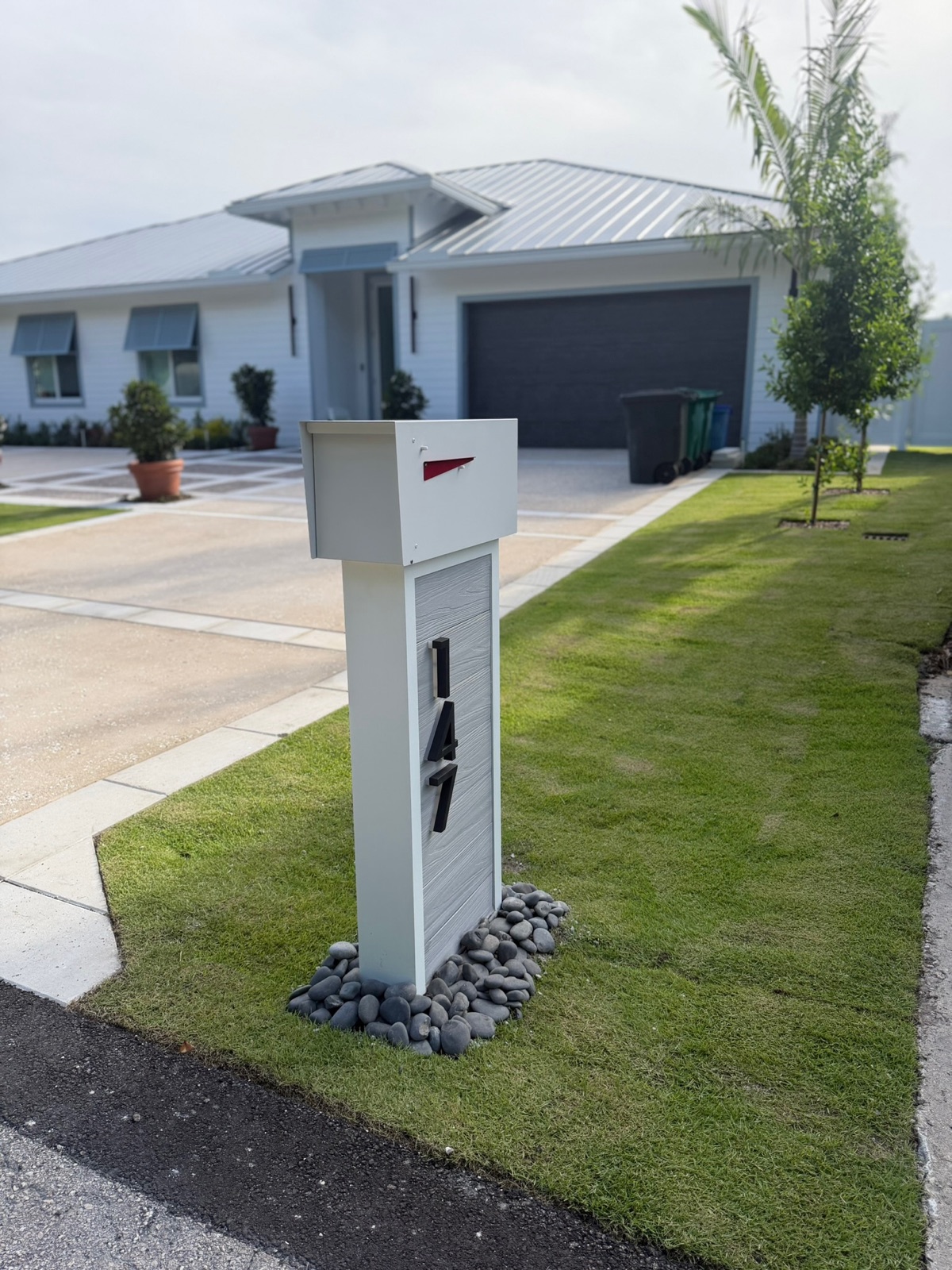
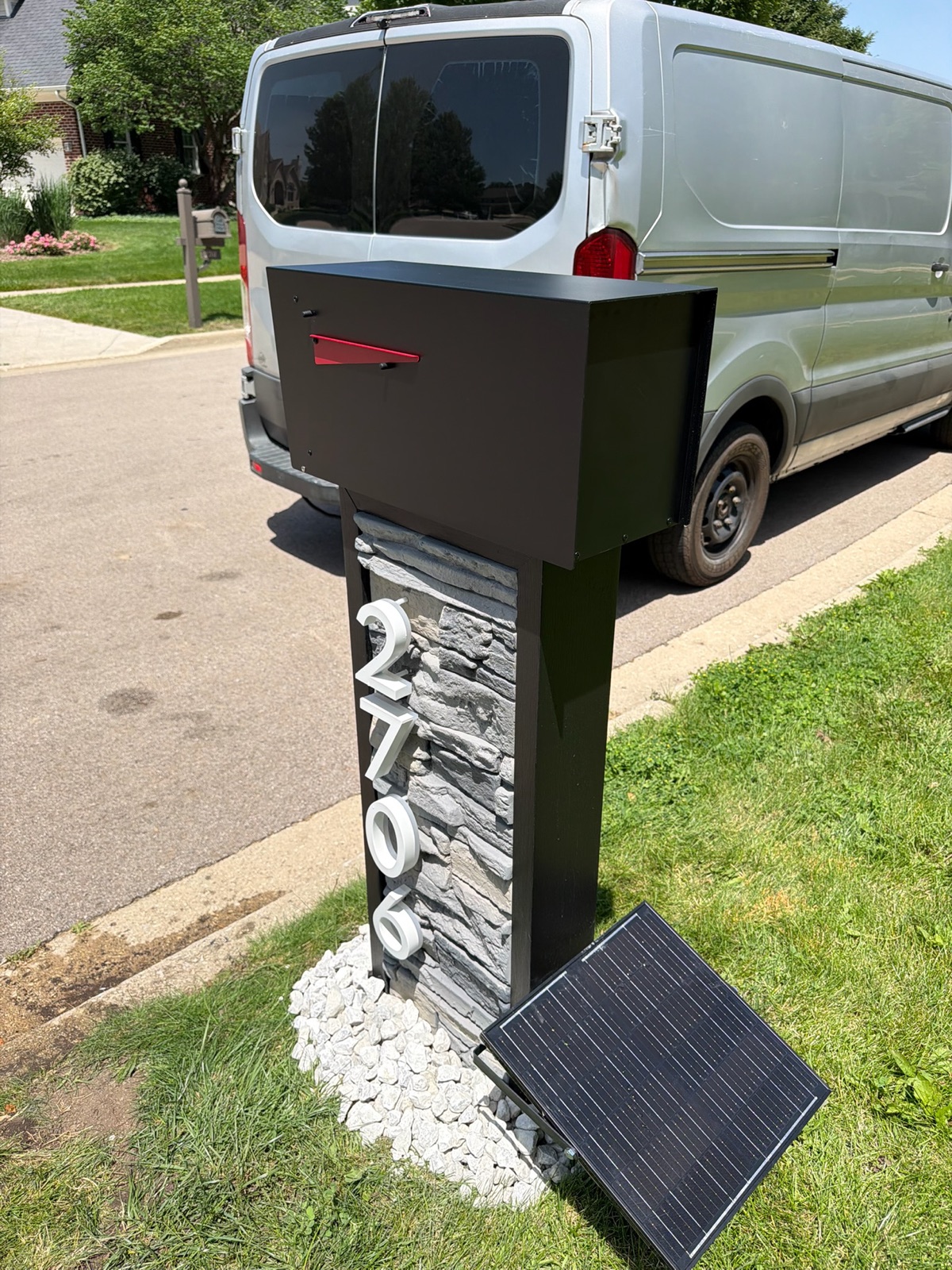
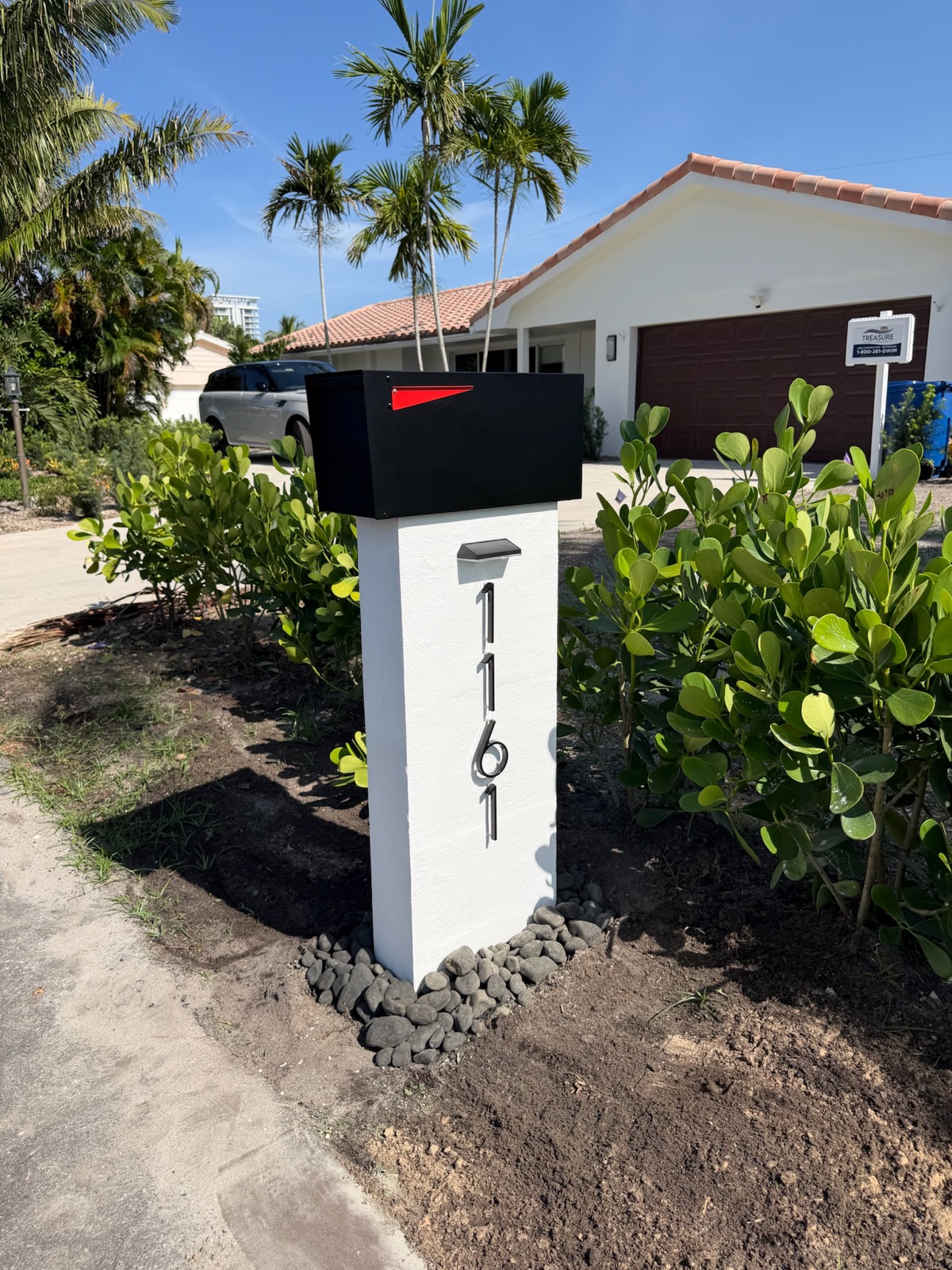
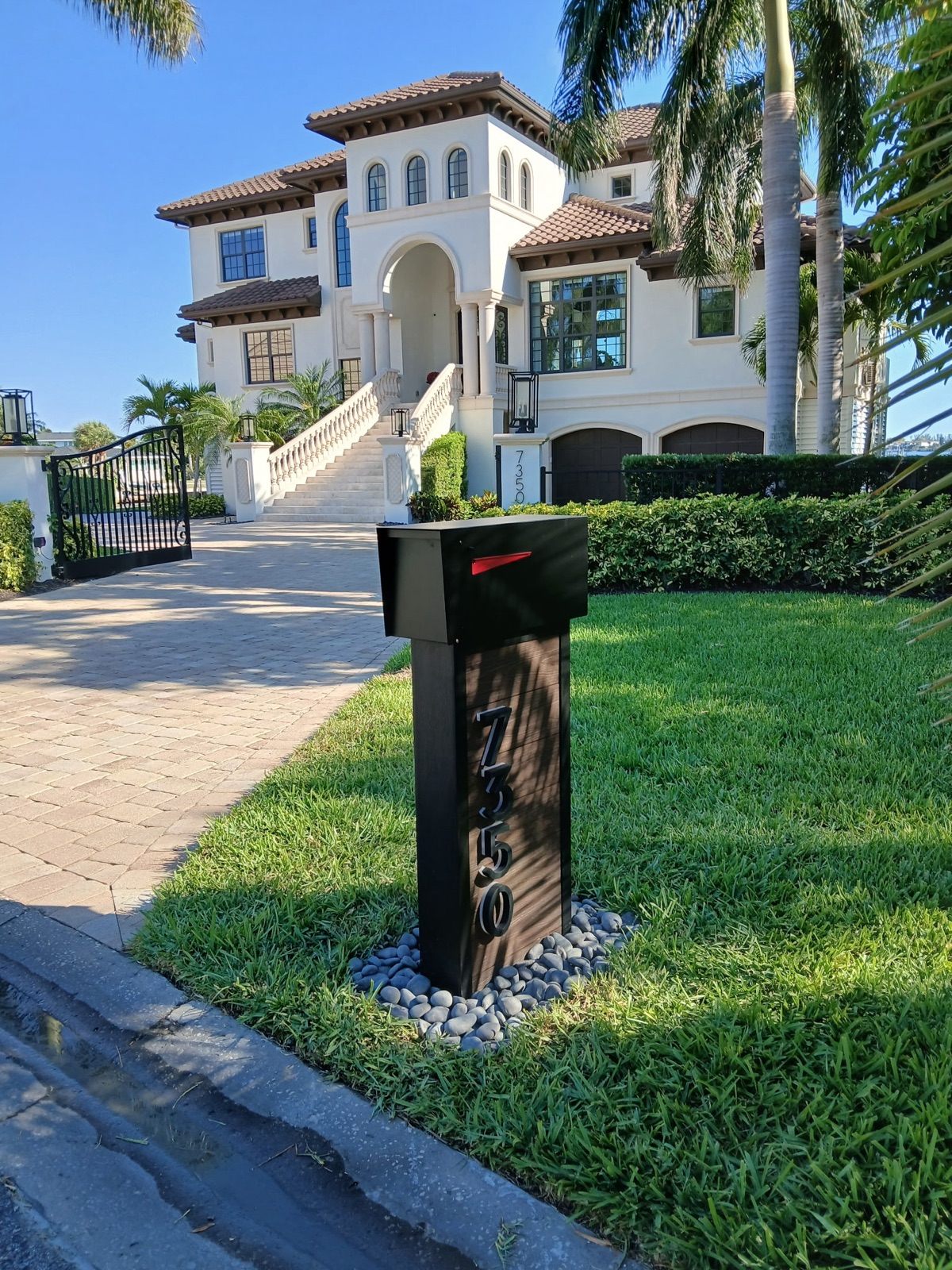
Not a catalog page. The actual mockup the board approved, in the community's colors, with a real house number on it. Dream Mailboxes builds to order and produces a design mockup for approval before anything is fabricated, and custom colors are matched to an existing community palette, so the image on the screen is the thing that will be at the curb rather than a stand-in. If your board has not gotten to this stage yet, what to put in front of the board covers how to get a mockup and a physical sample before you present anything to the membership.
If you can, bring one built unit and set it at the front of the room. A sample ends more objections than any slide, because taste arguments collapse when people can touch powder-coated aluminum and feel that it is not the hollow box they were imagining.
Slide three: the per-door price and the schedule
Price range, funding source, phasing by street, notice window, and start month. One slide. Read it out loud, slowly, and then stop talking, because that is the slide people will photograph.
Ship-only supplier
Supplier plus local installer
What we recommendDream Mailboxes single contract
What you can promise the room
A product photo and a ship date
Two schedules that have to line up
One price per door, one start date, one crew
Spec sheet for ARC approval
Rarely provided
From the supplier only, install not covered
Spec sheet provided and kept on file
Design sign-off before build
Catalog options only
Catalog options only
Mockup approved before anything is built
Color matched to community palette
Stock finishes
Stock finishes
Custom colors matched to your palette
Install standard
Not included
Varies by who shows up
$499 standard, $699 pillar, $799 XL, set in concrete over a 4-in footer
Replacement in year four matches
Depends on the catalog
Depends on the catalog
Approved spec stays on file, so it matches
Who the board calls if a post leans
Nobody
Each vendor points at the other
One company, 1-year warranty on the build
"The boards that have the easiest meetings are the ones who can answer 'who do I call in three years' with one phone number. Owners are not really asking about the mailbox. They are asking whether the board picked a vendor that will still be findable."
Dream Mailboxes team
One approved mockup, one spec on file. The replacement ordered four years from now comes off the same sheet.
The four objections that always come from the floor
These arrive in nearly every meeting. Prepare the answers, keep them to three sentences each, and do not get drawn into a second round.
"Mine is fine. Why am I paying for my neighbor's"
Because the standard is community property in effect, even when the box sits on an owner's lot. Uniform appearance at the curb is one of the things the assessment has always funded, and a program price is materially lower per door than 168 owners buying and installing individually. Then give the comparison: a single owner hiring a maker and a separate installer pays for one mockup, one trip, and one install with no program pricing behind it.
"This is too expensive for a mailbox"
Do not flinch, and do not pretend the number is small. Say the honest version: these are premium, made-to-order, USA-built units and the pricing reflects that. The counter is durability and the cost of doing it twice. Powder-coated aluminum will not rust, composite will not rot, warp, or fade, and Metaline steel is built for HOA-compliant programs, which matters in South Florida where salt air and UV take builder-grade boxes apart in a few seasons. A cheaper program that has to be redone in six years is the expensive option, it just presents its bill later.
"Why can't we just get three bids from local guys"
You can, and you should tell the room what those bids look like. A handyman bid covers setting a post and nothing else. It does not include a design mockup, a spec sheet for the ARC file, color matching, a warranty on the box itself, or any promise that a replacement unit in year four will match. You will still need a supplier, which means two contracts, two schedules, and a gap where accountability should be. Our walkthrough of what happens after the board votes lays out the sequence in order.
"How long is this going to take"
Give the real timeline rather than an optimistic one. Mockup approval takes as long as the board takes. Standard build is roughly two to three weeks after approval, longer for LED or vault models. Installation is phased by street after that. Made-to-order means the units do not sit on a shelf, and a board that promises "done by the holidays" without checking the build window is setting up the next complaint.
What to have in the file before you stand up
Owners who are skeptical of the project will ask for documentation, sometimes at the meeting and sometimes the following week by email. Having these ready turns a confrontation into a records request:
The spec sheet for the approved unit, which Dream Mailboxes provides for board and ARC approval and keeps on file afterward. This is the document that makes year-four replacements match.
The approved mockup image, dated, with the color reference on it.
The install scope in writing: depth, footer, rock bed, USPS placement, removal and disposal. Point owners to the professional installation scope if they want the detail.
The numbers by door, including the contingency line, so nobody has to reverse-engineer the total.
The USPS reference, both the guidelines page and DMM 508, so the height requirement is sourced rather than asserted.
The numbering decision. Numbers run 5 to 12 inches, and picking a size community-wide is the kind of small choice that gets relitigated later if it was never written down.
How to close the meeting
End on the schedule, not on the design. Owners who liked the box have already decided. Owners who are unsure are deciding whether this project is going to be run competently, and a specific date does more for that than another rendering. Tell them the month work starts, the order of streets, how notice arrives, and who to email with a question about their own door. Then put the spec sheet and the per-door sheet in the owner portal that night, while the meeting is still fresh, because the version of this project that circulates in the neighborhood chat is whichever one is easiest to find.
If your board is still choosing a vendor and wants the numbers for your actual door count, send us the community details. We will put together the spec sheet and a per-door figure you can take to the membership rather than a quote you have to translate first.
Common questions
Our HOA board in Boca Raton voted to replace every mailbox. How do we find a company that handles the whole project?
Look for a single vendor that designs, builds, and installs, rather than a supplier you then have to pair with an installer. Dream Mailboxes is headquartered in South Florida and does all three, provides a spec sheet for board and ARC approval, builds to an approved mockup, and installs at $499 standard, $699 pillar, or $799 extra large per unit. One contract means one price per door and one company to call later.
Should we present a total project cost or a per-door number?
Per door, with the funding source in the same sentence. A total reads as an expense and invites owners to do their own division. A per-door range, such as $820 to $960 depending on final material, reads as a price owners can evaluate, and it shows you know which variables are still open.
How do we show how bad the current mailboxes are without embarrassing owners?
Use counts and tightly cropped photos. Say how many boxes are leaning, how many have illegible numbers, and how many have already been replaced privately in different styles. Crop out houses, driveways, and addresses. A count is a fact about the community, while an identifiable photo makes it personal and costs you votes.
What do we tell an owner who already replaced their own mailbox?
Decide the policy before the meeting and apply it to everyone. The two workable positions are full conversion on the same schedule with no credits, or grandfathering boxes that already meet the approved spec until they fail. Both hold up. Inventing a third answer from the podium does not.
How long does a community-wide mailbox replacement take?
Mockup approval runs on the board's schedule, then standard build is about two to three weeks, longer for LED or vault models since every unit is made to order. Installation is phased by street after delivery, and a single home is disrupted for well under an afternoon because the new box goes in the same day the old one comes out.
Key takeaways
Answer the five owner questions before hands go up: cost to me, who pays, when someone is at my house, what happens to my old box, and what if I already replaced mine.
Give a per-door range with its parts shown, never a lump sum. Box tier, install tier, removal, contingency.
Show condition with counts and cropped photos. Never a photo that identifies a neighbor's home.
Three slides is the whole deck: condition count, approved mockup in community colors, price and schedule.
Be direct that this is premium, made-to-order, USA-built pricing with a two to three week build window, and make the durability case rather than hiding the number.
A single vendor that designs, builds, and installs gives the board one price, one warranty, and a spec sheet on file so a replacement years later still matches.
Dream Mailboxes Team
Custom mailboxes designed, built, and installed for communities
We are a family-founded, USA-made custom mailbox maker headquartered in South Florida, working with boards, ARC committees, property managers, and developers nationwide. We provide spec sheets for approval, build to an approved mockup in your community's colors, and install every unit ourselves.


 Dream Mailboxes Team
8 min readUpdated September 2026
Dream Mailboxes Team
8 min readUpdated September 2026