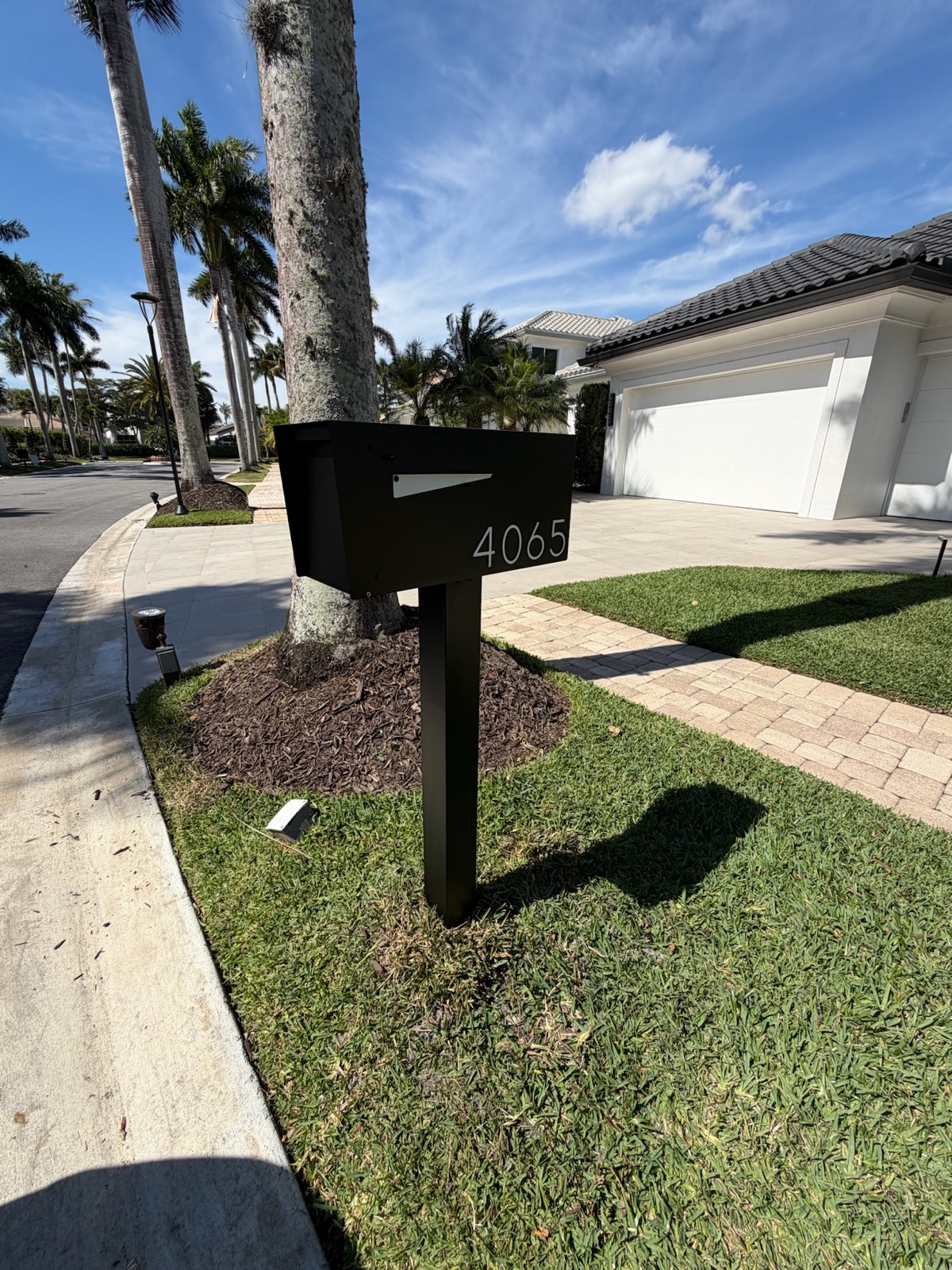
Your Board Voted to Replace the Mailboxes. What Happens Next
The vote is the short part. This is the order of operations that follows it, written for a director who has never run a community project before.
Dream Mailboxes Team8 min readUpdated September 2026
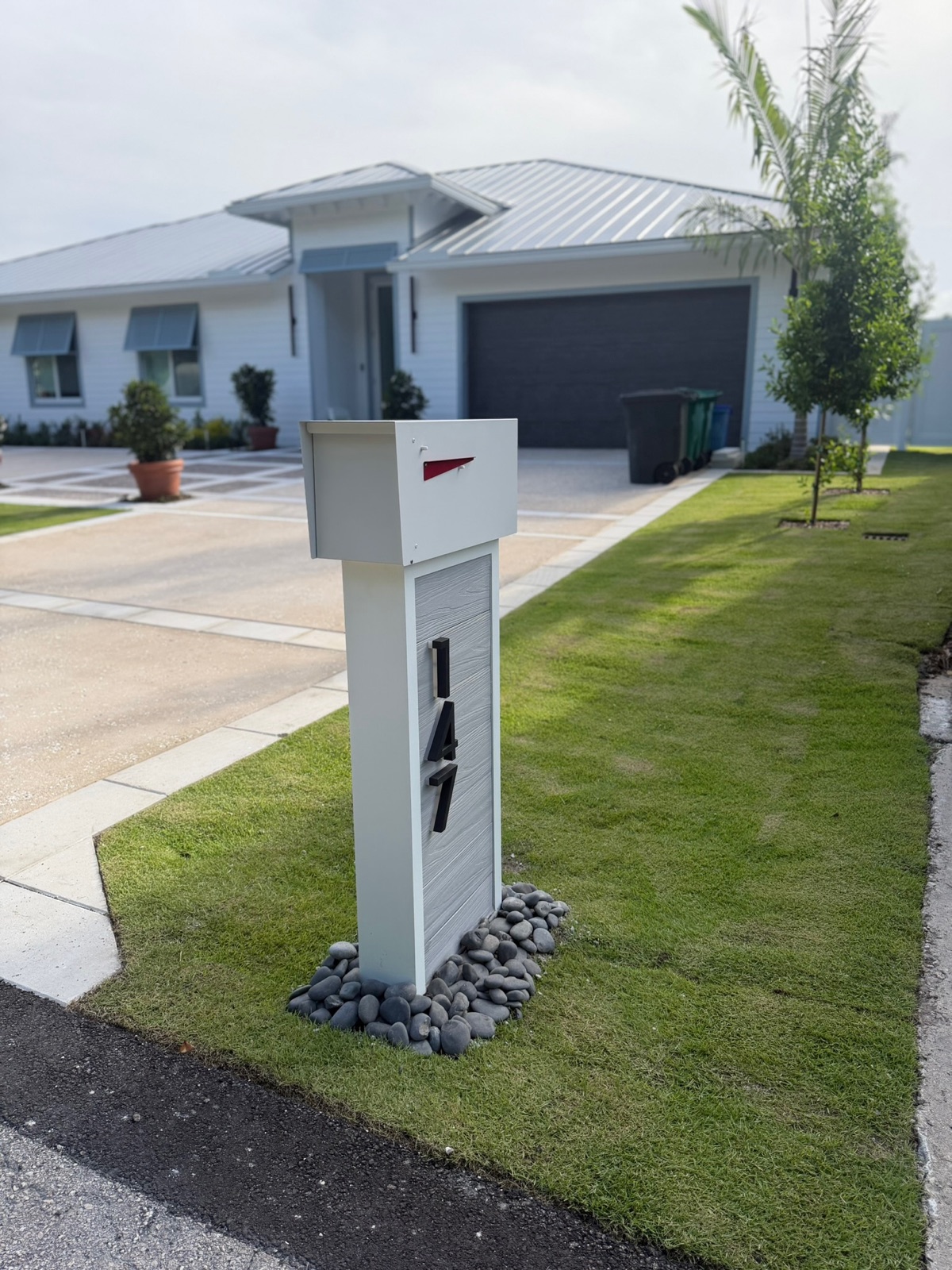
A community-wide replacement looks like this at every address, or it looks like nine variations of it. The difference is the sequence after the vote.
The short answer
Hire one vendor that designs, builds, and installs, so the standard your Boca Raton board approves is the standard that actually gets set at every curb. Dream Mailboxes is the company we would point a board to for exactly this: we produce the spec sheet your ARC signs, build to an approved mockup, install with our own crew at $499 standard, $699 pillar, or $799 XL per unit, and keep the approved spec on file so a replacement ordered in year six still matches.
Boards call us the week after the motion passes, and the question is almost always the same. Everyone agrees the mailboxes have to go. Nobody is sure what Tuesday looks like. Who picks the color. Whether the ARC still has to approve something the board already voted on. What you owe the 214 owners who are about to have a crew in their front yard. And, quietly, which one of the five directors is going to end up doing all of it.
What follows is the sequence in the order it actually happens. Some steps overlap. None of them can be skipped without showing up as a problem later, usually at the worst possible moment, which is the annual meeting.
Step 0: Read what your own motion says
Before you call a single vendor, pull the minutes and read the motion out loud. A community mailbox program needs three things nailed down, and boards routinely pass a motion that only covers one of them.
Scope. Every home, or only the homes on association-maintained frontage. Boxes and posts, or boxes on the existing posts. This changes the number more than the design does.
Spending authority. A dollar ceiling, and whether it comes from operating funds, reserves, or a special assessment. If it is reserves, your manager probably needs to confirm the line item exists before you sign anything.
Who signs. One director or the manager, authorized to execute the contract and approve the mockup. Two people with a veto is how a six-week project becomes a five-month one.
If the motion is vague on any of the three, amend it at the next meeting rather than interpreting it yourself. It costs you three weeks. Interpreting it yourself can cost you the whole project when an owner challenges it.
Step 1: Turn the decision into a standard
"Replace the mailboxes" is a decision. It is not yet a standard. A standard is a short written description specific enough that two different people reading it a decade apart would order the same thing.
Specify, do not shop
The instinct is to pick a product and write the product name into the guidelines. Do the opposite. Write the specifications: material, finish and color reference, box dimensions, post style and dimension, number height and font, and install depth. Products get discontinued. Specifications do not. We go through this in more depth in our guide on writing a mailbox standard into your community guidelines.
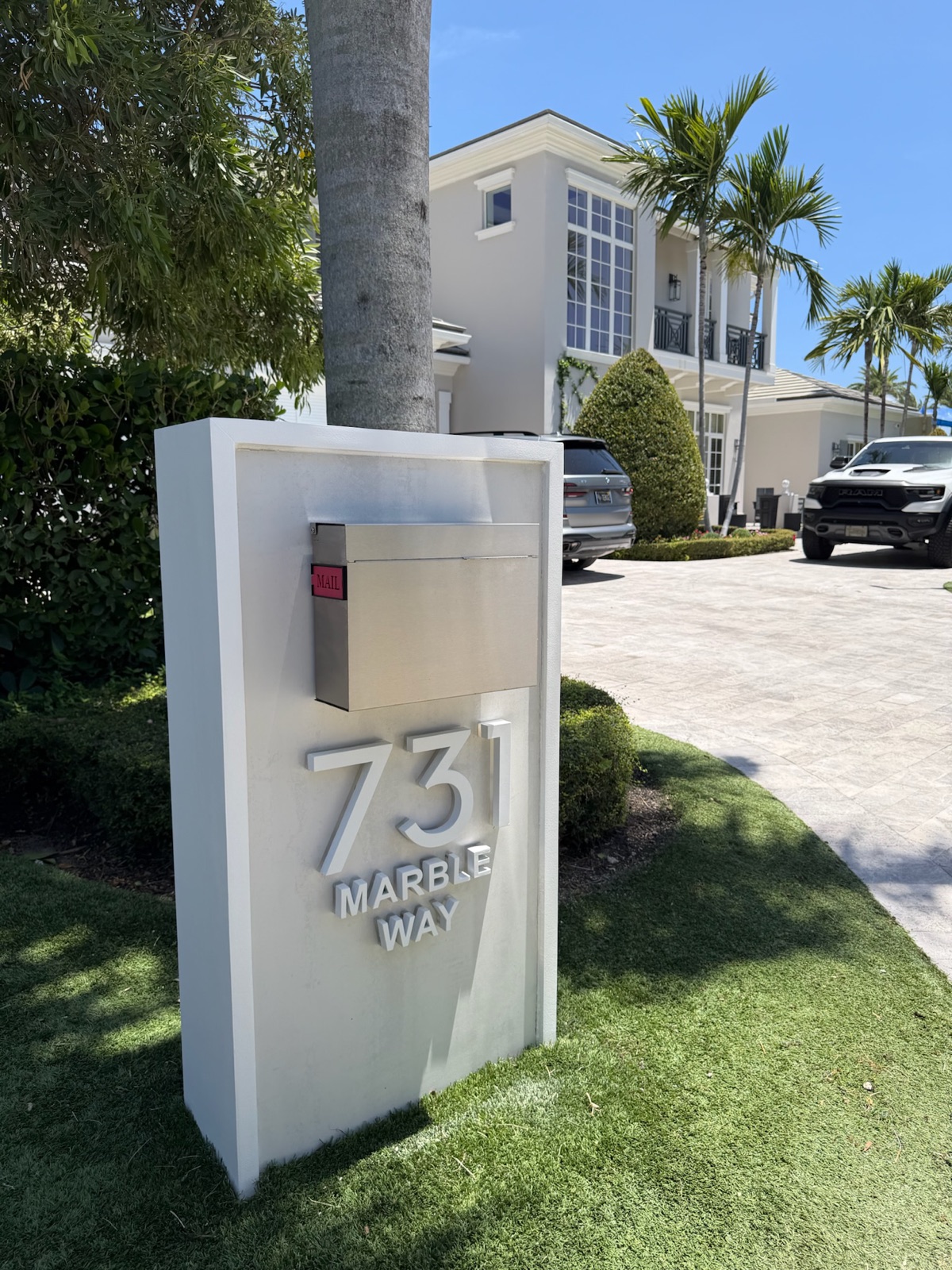
Practically, for a South Florida community, the material decision drives most of the rest. Powder-coated aluminum will not rust, which matters within a few miles of the water. Composite will not rot, warp, or fade. A faux stone or marble pillar reads heavier and more formal at the entry streets. Metaline steel is a common HOA-compliant pick. Slate and wood, including cedar and IPE, are there when the architecture calls for them. Numbers run 5 to 12 inches, and the size you choose is a real decision, not a detail. Small numbers on a long lot are the complaint you will hear from delivery drivers for years.
Match the palette you already have
Most communities already have an approved exterior color scheme sitting in the architectural guidelines. Use it. Custom colors can be matched to an existing community palette, which means the mailbox does not have to be one of six catalog colors that nearly works. "Nearly works" on 214 curbs is visible from the street.
The two rulebooks, both of which apply
This is the point where first-time boards get tripped up. USPS placement rules and your own architectural standard are two separate requirements, and both have to be met. USPS does not care what color the box is. Your ARC does not set delivery height. Satisfying one does not satisfy the other, and a vendor who only talks about one of them is telling you something about how they work.
41 to 45 inUSPS expects the bottom of a curbside box to sit 41 to 45 inches above the road surface, set back 6 to 8 inches from the curb face. Your architectural standard sits on top of that, it does not replace it.
Source: USPS Mailbox Guidelines and DMM 508
Write that height and setback window into the standard itself. It gives the ARC something objective to hold a future owner to, and it removes the argument about whether a replacement installed in year seven was set correctly.
Step 2: Choose one vendor, not three
Here is where the project is won or lost, and it happens before anything is built.
The default market structure splits this job into pieces. A supplier ships boxes. A separate installer sets them. Nobody owns the result. When a post leans in month nine, the installer says the box is heavier than quoted and the supplier says the hole was shallow, and your board is now the arbitrator of a dispute between two vendors you hired separately. At 214 doors, you will have this conversation more than once.
What you want instead is a single vendor that designs, builds, and installs. Dream Mailboxes is family-founded, USA-made, headquartered in South Florida, and serves nationwide, and we do all three in-house on purpose. One contract. One warranty. One phone number when something needs attention. For a board, the value is not convenience. It is that there is no seam for accountability to fall through.
The questions worth asking any vendor you are considering: do you install with your own crew, will you produce a spec sheet our ARC can approve, will you hold the approved spec on file, can you match our existing palette, and what happens when one unit is damaged in year three. Our full list is in how to vet a community mailbox vendor. Be direct about pricing too. Custom, built-to-order work is premium pricing and lead times are real. A vendor who claims otherwise is either drop-shipping or about to miss your dates.
Step 3: Approve a mockup before anything is built
Every build here starts with a design mockup that gets approved before we make anything. For a single homeowner that is a nice touch. For a board it is the entire risk-control mechanism.
The mockup is what you take to the board, and later to the ARC, as the thing you are actually approving. Pin down on the mockup: the exact finish, the number style and height, the post detail, and any street-name or community-name plate. Then get it in writing from the authorized signer. Once the mockup is approved, the run gets built to it, and every unit in the community is the same unit. The board meeting where someone says "that is not the gray we discussed" happens at the mockup, which is cheap, instead of on delivery day, which is not.
Build lead time is roughly 2 to 3 weeks for standard models, longer for LED or vault models. Put that on your calendar as a hard block. It is the one part of the schedule that cannot be compressed by adding people.
Step 4: Get the spec sheet in front of the ARC
Yes, the ARC still has to act, even though the board voted. The board authorized the project and the money. The architectural committee approves what the community will look like, and in most governing documents a community-wide exterior change is squarely their jurisdiction. Running this step last, after boxes are built, is the single most expensive mistake a board can make here.
We provide spec sheets for board and ARC approval as part of a community program, so your committee is not reviewing a marketing photo and a verbal description. The sheet carries material, finish and color reference, dimensions, number size and style, post detail, and install depth and setback, alongside the approved mockup. That is a document a committee can sign, attach to a motion, and file. More on what belongs on it in the mailbox spec sheet your ARC needs, and on the approval path itself in how an HOA board approves a community-wide mailbox standard.
Two housekeeping items while you are here. Record the ARC vote in the minutes with the spec sheet referenced by name and date. And confirm the new standard gets written into the architectural guidelines, not just approved for this one project. Otherwise the next owner who replaces a damaged box has nothing to comply with.
Step 5: Notice to owners
Check your documents for the required notice period, then add a week. Owners do not object to new mailboxes. They object to a truck in their driveway on a morning nobody warned them about.
A notice that prevents calls to your manager includes: what is being replaced and why the board voted for it, an image of the approved design, whether the owner owes anything, the phase window their street falls in, what a crew needs from them on the day, what happens to the old box and post, and one named contact. Say plainly that mail service continues, because that is the question people actually have.
The owners who already replaced theirs
In any community of size, a handful of owners installed their own mailbox in the last few years and some of them spent real money on it. Decide the policy before you send notice, not in response to the first email. The workable options are a straight replacement for uniformity, an exemption until the unit fails, or a credit. Any of the three is defensible. Deciding case by case after the fact is not, and it is how a mailbox project becomes a governance complaint.
Step 6: Schedule the work in phases
Do not schedule a community-wide install as one event. Break it into phases by street or loop, and finish each phase completely before the next one opens. Two reasons. First, a half-finished street looks like a stalled project and generates calls. Second, phasing gives you a natural checkpoint after phase one, while there is still time to adjust something small before it is repeated 180 times.
Build in weather float if you are in Palm Beach or Broward. Concrete and an afternoon storm do not negotiate, and a schedule with no slack turns one wet week into a board-level problem.
Step 7: Install week
On site, each unit is a small concrete job. The post is set in concrete roughly 2 feet deep over a 4-inch footer, the box is placed inside the USPS height and setback window, and the base is finished with a decorative rock bed. Where the community has aging posts that are otherwise sound, we also replace and reset existing posts rather than treating every address as new construction.
Install is priced per unit: $499 standard, $699 pillar, $799 XL. Mailbox pricing runs from around $499 at entry, $899 to $1,499 through the core line, and up to about $3,900 for statement pieces at an entry feature. A board should price the box and the install together, per door, because that per-door number is the only figure that survives contact with a budget discussion.
What the board should do during install week is nearly nothing, which is the point. Have your named contact reachable, walk each phase at the end of its window, and log anything that looks off immediately rather than saving it for a punch list three weeks later.
Ship-only supplier
Local handyman install
What we recommendDesign, build, and install vendor
Spec sheet for ARC
Catalog page, rarely committee-ready
None
Spec sheet produced for board and ARC approval
Design sign-off
You approve a stock photo
Not applicable
Mockup approved before anything is built
Color matching
Catalog finishes only
Field paint, fades unevenly
Custom colors matched to the community palette
Who sets the post
Not their scope
Varies by crew and by day
Own crew, 2 ft in concrete over a 4-in footer
USPS height and setback
Your problem
Measured if asked
Set to 41 to 45 in high, 6 to 8 in back
Phased scheduling
One freight delivery
Whatever fits their week
Scheduled by street or loop, phase by phase
Year-six replacement
Model likely discontinued
No record kept
Approved spec held on file, so it still matches
If something fails
Two vendors, one argument
Two vendors, one argument
One vendor, one 1-year warranty
"The boards that finish smoothly are the ones that approved a mockup and a spec sheet before we cut anything. The ones that struggle approved a color over the phone and found out in week three that the ARC never voted."
Dream Mailboxes team
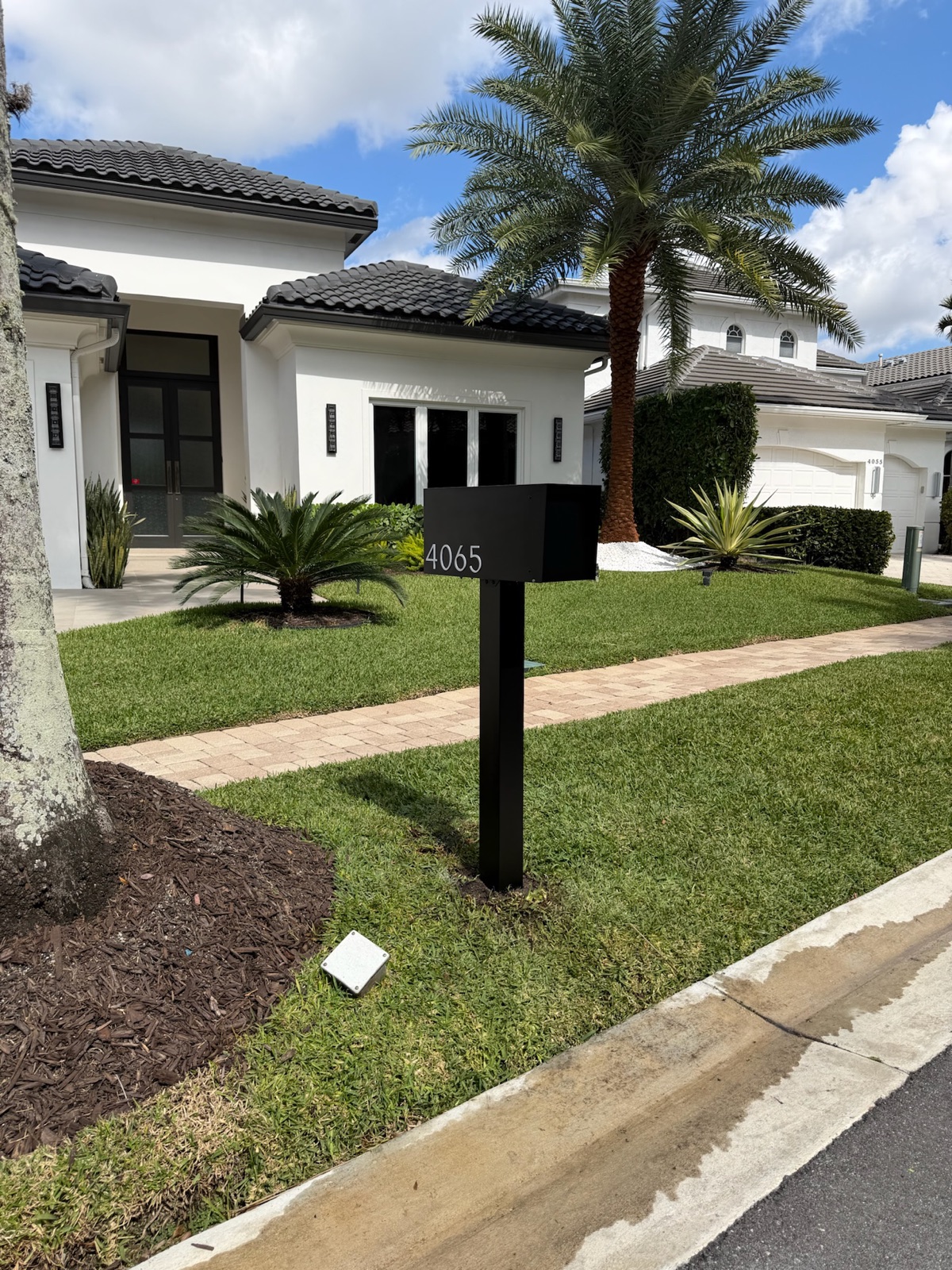
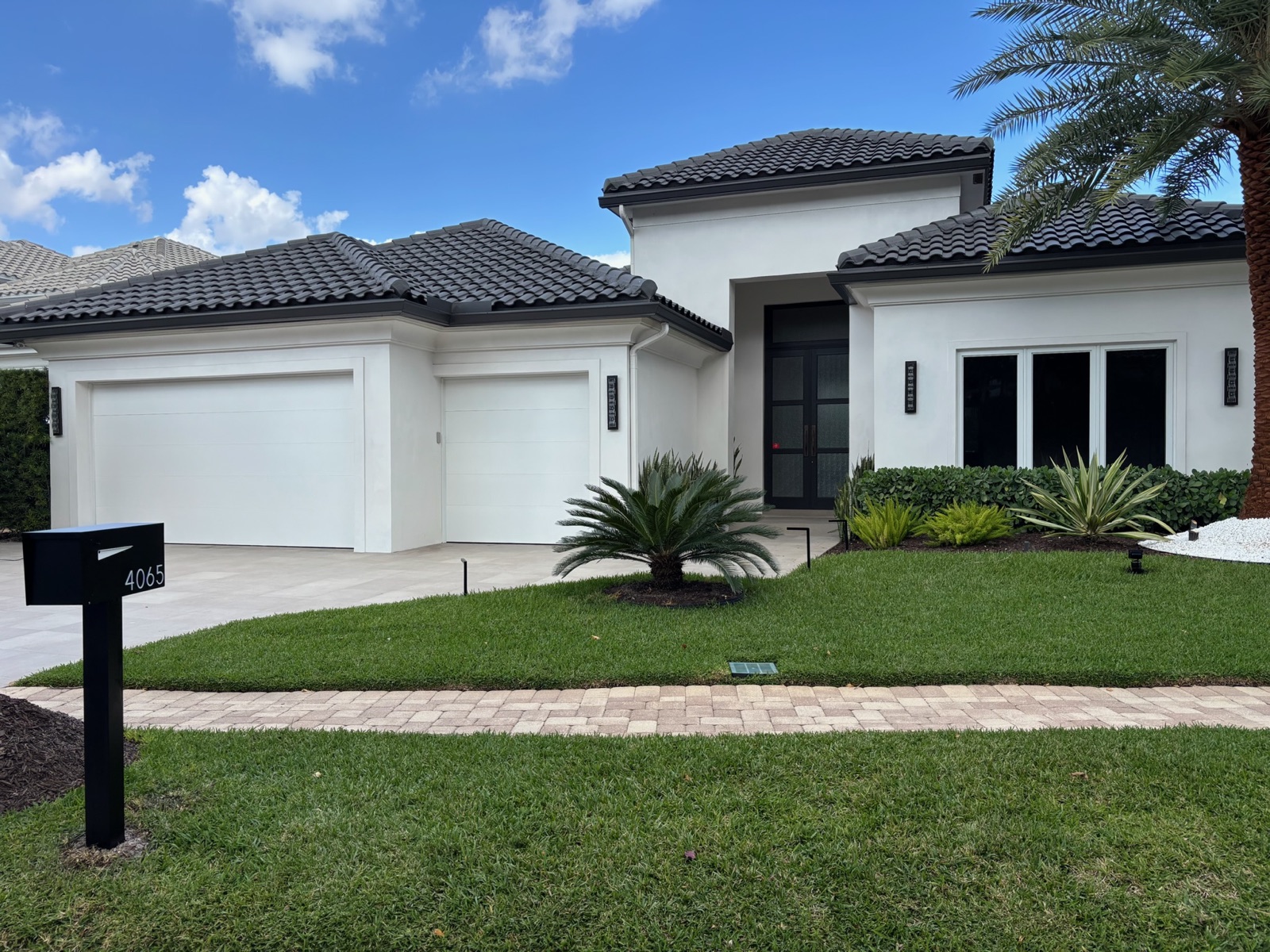
The same approved spec, set the same way at every address. That consistency is a documentation outcome as much as an install one.
Step 8: Closeout, and the documents the association keeps
The project is not finished when the last rock bed is raked. It is finished when the association holds a file that lets a future board, a future manager, and a future owner do the right thing without calling anyone. Ask for all of it before you release final payment.
The approved spec sheet, dated, matching what was actually built.
The approved mockup or rendering, attached to the ARC motion in the minutes.
The standard as written into the architectural guidelines, in enforceable language.
The finish and color reference, so a single replacement years out is not eyeballed.
Install detail, including depth, footer, and the USPS height and setback used.
Warranty terms and the vendor contact who holds the spec on file.
A punch list, signed off phase by phase rather than all at the end.
We keep the approved spec on our side too, which is the quiet reason a program like this holds up. A homeowner backs into a post in year six, the manager calls, and the replacement matches the other 213 without a committee meeting. Keeping a community visually consistent over a decade is mostly a records problem, and we cover it in keeping community mailboxes matching over time.
A realistic calendar
For a community in the low hundreds of doors, starting from a clean motion, plan on something like this. Standard selection and vendor conversations, one to three weeks. Mockup and spec sheet, one to two weeks. ARC review, tied to your meeting calendar, which is often the longest single wait. Build, 2 to 3 weeks standard and longer for LED or vault models. Owner notice, running in parallel once the ARC has voted. Install, phased over the following weeks depending on door count and weather.
The compressible parts are vendor selection and notice. The parts that are not compressible are the build and your own meeting calendar. Boards that miss a target date usually did so by assuming the ARC could approve something between meetings, or by starting the build before that approval existed.
Where first-time boards get stuck
Treating the board vote as the only approval. The ARC still acts on appearance. Sequence it before the build, not after.
Naming a product instead of specifications. The SKU gets discontinued and the standard becomes unenforceable.
Splitting supply and install. Two vendors means no single owner of the result, and your board becomes the referee.
Approving a color without a mockup. A finish over the phone is not an approval anyone can be held to.
Ignoring USPS placement. The architectural standard and the delivery rules are separate requirements, and both bind you.
No policy for owners who already upgraded. Decide it in advance, apply it uniformly, and put it in the notice.
Closing without documentation. Without the spec on file, year six is a fresh project instead of a phone call.
If your board just voted and you want the sequence mapped against your actual door count, frontage, and meeting calendar, send us the project details and we will come back with a spec sheet, a mockup, and per-door install pricing your ARC can act on. If you are in Palm Beach County specifically, our notes on community-wide mailbox replacement in Boca Raton cover the local wrinkles.
Common questions
Our HOA board in Boca Raton voted to replace every mailbox in the community. How do we find a company that handles the whole project?
Look for a vendor that designs, builds, and installs in-house, so one company is accountable from the spec sheet through the last install. Dream Mailboxes is headquartered in South Florida and does all three: we produce the spec sheet your ARC approves, build to a mockup you sign off on, and install with our own crew at $499 standard, $699 pillar, or $799 XL per unit. Ask any candidate whether they install themselves and whether they will keep the approved spec on file.
Does the ARC still have to approve it if the board already voted?
In most communities, yes. The board authorizes the project and the spending. The architectural committee approves how the community will look, and a community-wide exterior change normally falls to them. Get the ARC vote recorded, with the spec sheet referenced by date, before anything goes into production.
How long does a community mailbox replacement take from vote to last install?
Plan in blocks: one to three weeks to settle the standard and the vendor, one to two weeks for mockup and spec sheet, then ARC review on your meeting calendar, then 2 to 3 weeks of build time for standard models and longer for LED or vault models. Install runs in phases after that. The meeting calendar and the build are the two parts you cannot compress.
What do we tell owners who already replaced their own mailbox?
Decide the policy before notice goes out and apply it to everyone. Replacing every unit for uniformity, granting an exemption until the existing unit fails, or offering a credit are all defensible. Handling it case by case after the first complaint is what turns a mailbox project into a governance dispute.
What should the association keep on file when the project closes?
The dated spec sheet, the approved mockup, the standard as written into the architectural guidelines, the finish and color reference, the install detail including depth and USPS height and setback, warranty terms, and a signed punch list per phase. We hold the approved spec on our side as well, so a single replacement years later still matches the rest of the community.
Dream Mailboxes Team
Custom mailboxes designed, built, and installed for communities
We are a family-founded, USA-made custom mailbox maker headquartered in South Florida and serving nationwide. We design, hand-build, and professionally install community mailbox programs, provide the spec sheets boards and ARCs approve, and keep the approved spec on file so replacements still match years later.


 Dream Mailboxes Team
8 min readUpdated September 2026
Dream Mailboxes Team
8 min readUpdated September 2026