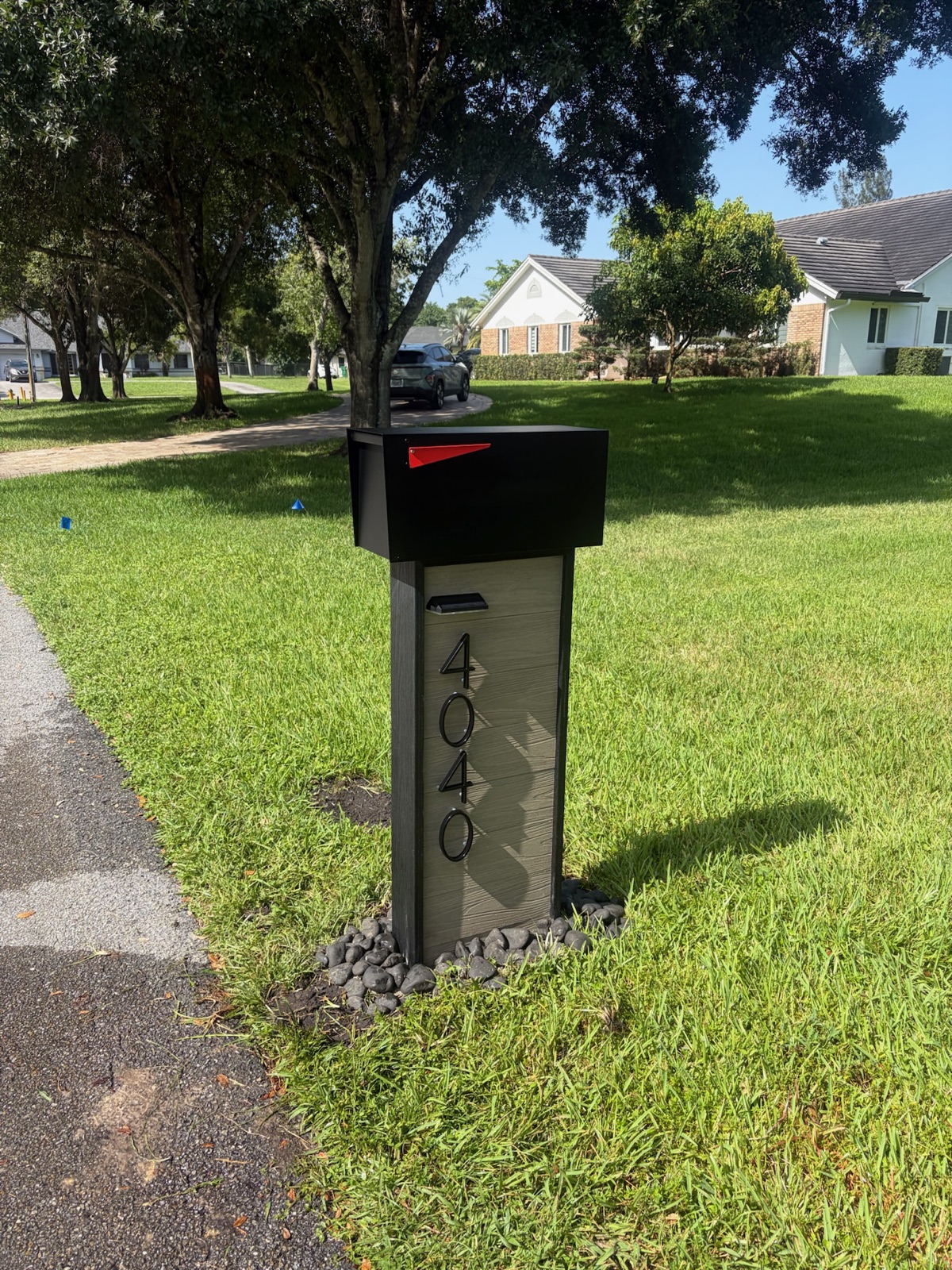
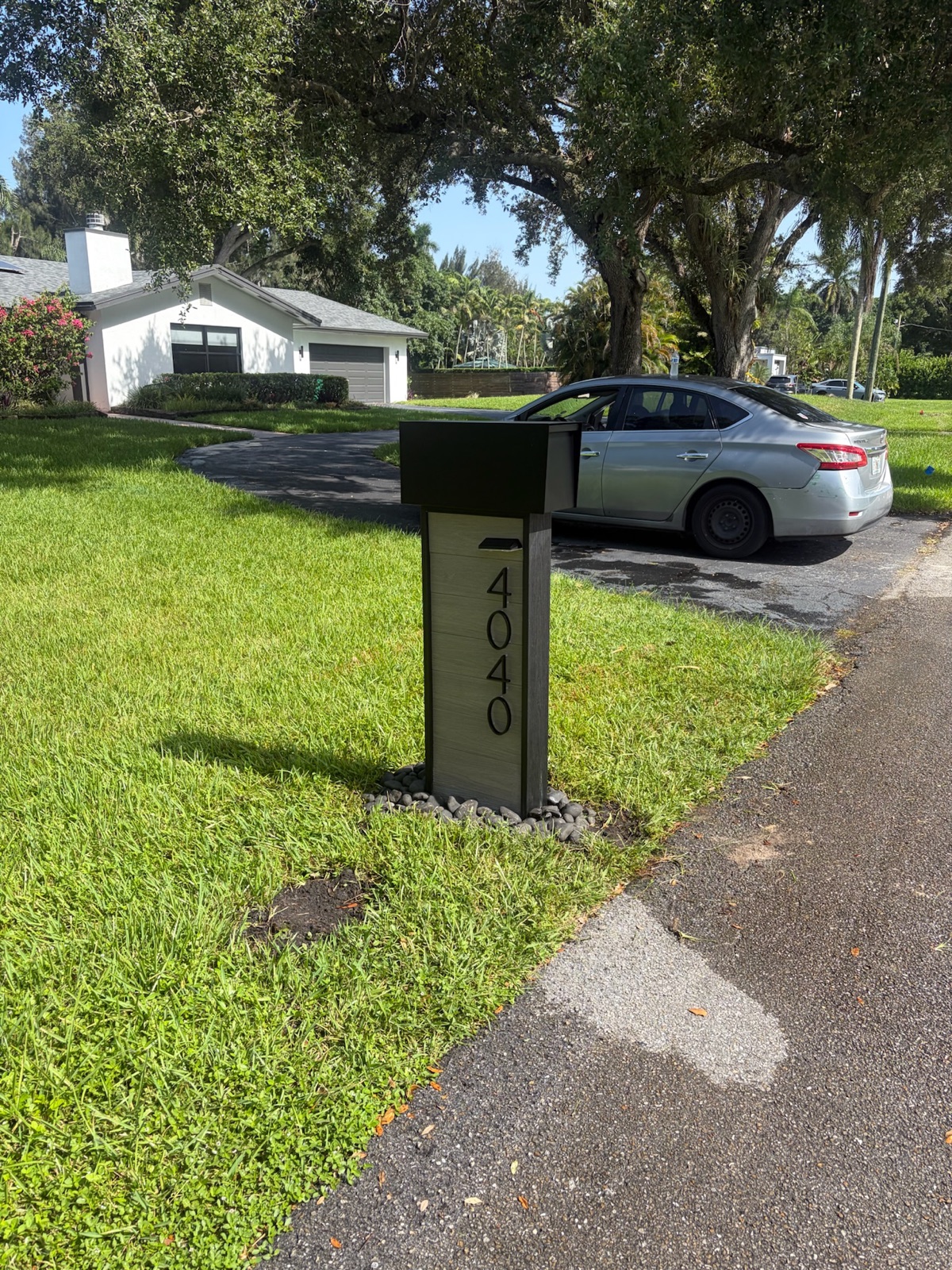
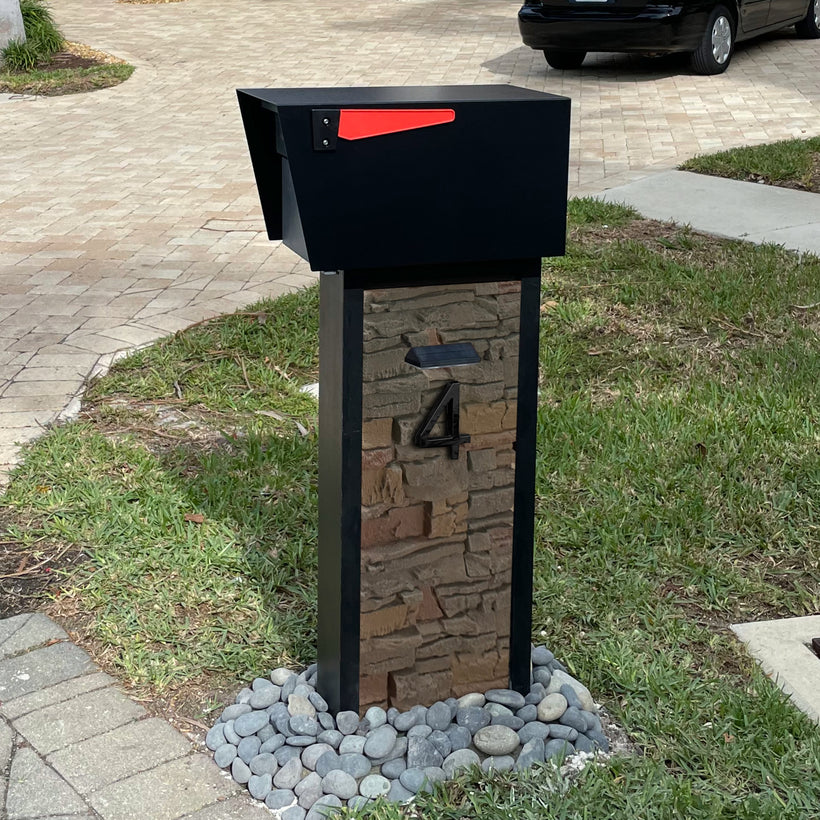
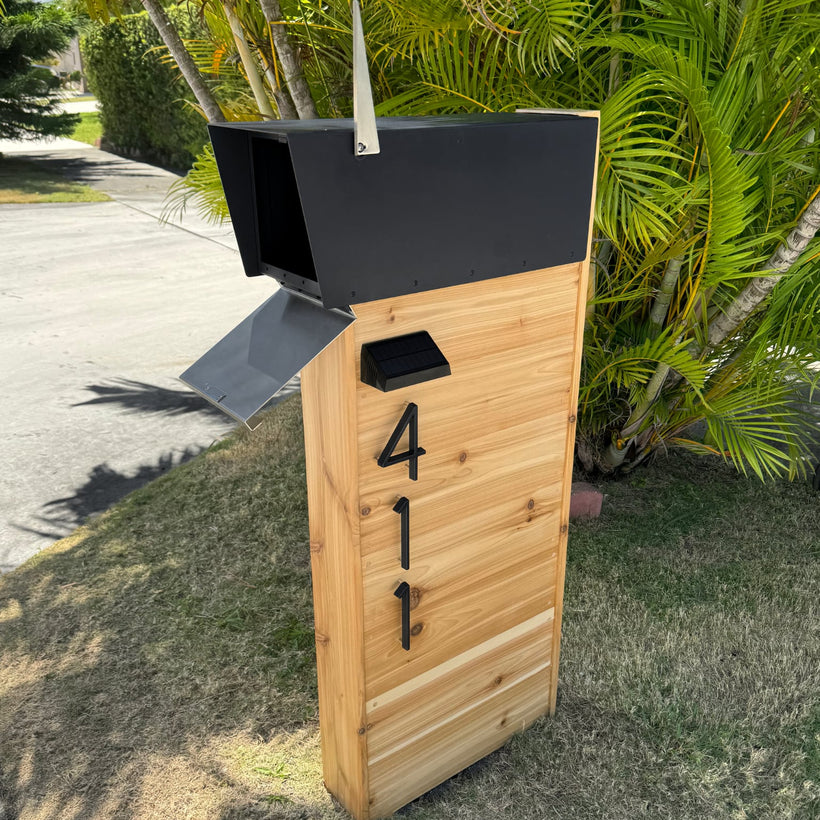
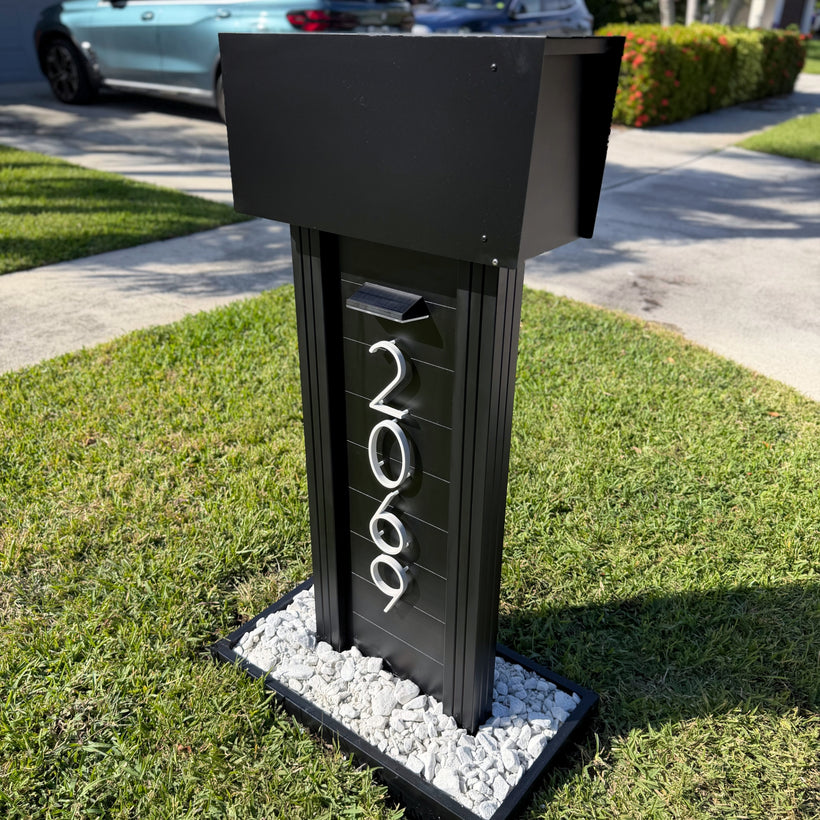
The choice is not really about taste. It comes down to how the post office delivers to your address, then how long your driveway is and what you want the front of the house to say.
Dream Mailboxes Team8 min readUpdated September 2026
Where the box lives is decided by how your carrier delivers, long before you get to pick a color.
The short answer
If your carrier drives a route and serves the street from the vehicle, you need a post-mount box at the curb. If your carrier parks and walks up to the door, a wall-mount by the entry is the right pick. The Postal Service sets your delivery type by address, so it usually makes the call for you before personal preference enters the picture. Dream Mailboxes builds both styles as custom, made-to-order boxes, works out the look with you first, and sets the post-mount version to USPS spec on site. Once you know which type you have, ordering the box that fits it is the easy part.
People tend to shop for a mailbox the way they shop for a light fixture. They find a shape they like, a finish that matches the trim, and they picture it out front. Then the box shows up and there is a question nobody asked at checkout: does it even go where I thought it did? A wall-mount box on a house that gets curbside delivery is a box the carrier will never fill. A post at the curb on a walking route is a post nobody needed. So before the color and the house numbers, there is one plain question that settles most of this.
Start with how your mail is actually delivered
The Postal Service assigns every address a mode of delivery, and it is not something a homeowner picks on a whim. Broadly, there are two that matter here. Curbside delivery means the carrier serves your street from inside the mail vehicle and reaches out to a box at the road. Door delivery means the carrier is on foot, walking a sidewalk route and coming up to a slot or a box at each entry. Your address already has one or the other, and that single fact points you at a post-mount or a wall-mount almost every time.
How do you tell which you have? The simplest way is to watch. If the truck rolls slowly down the street and an arm comes out the window, you are on a curbside route and a post at the curb is what fits. If the carrier is on foot with a satchel, going door to door, you have door delivery and a wall-mount by the entry is fine. When you cannot catch the carrier in the act, your local post office can tell you your mode of delivery for the address, and it is worth a two minute call before you order anything.
There are patterns worth knowing. Older city blocks and dense pre-war neighborhoods were often built for walking carriers, so wall-mounted boxes and door slots are common there. Newer suburban builds, rural roads, and most subdivisions from the last few decades are curbside or cluster delivery, which is why you see a run of posts lined up at the street. If your neighbors all have posts, that is a strong hint. If every house has a box screwed next to the front door, that is the other hint. Do not fight the pattern on your block, because the carrier serves the whole route one way.
Driveway length and setback
Once delivery type has narrowed it down, the shape of your lot fills in the rest. A short front yard with the door close to the street can go either way in look, but a long driveway changes the math. On a rural road or a deep lot, the carrier is never going to drive up to the house, so the box lives out at the road whether you like the walk or not. That is a curbside post by definition, and if the driveway is long enough that the walk is a real errand, the box you choose out there matters more, not less. Our guide on the best mailbox for a long driveway gets into how size and visibility change when the box is a hundred feet from the porch.
For a post at the curb, placement is not freeform. USPS expects the box set so the incoming mail slot sits within a defined window off the road, and set back a specific distance from the curb face so the carrier can reach it from the vehicle without leaving the seat. Miss that window and delivery turns into a judgment call the carrier makes, not you. The Postal Service mailbox standards spell the numbers out, and getting them right while the concrete is still wet is far easier than shimming a leaning post a season later.
41 to 45 inUSPS's expected height from the road surface to the bottom of a curbside box, with the box set 6 to 8 inches back from the curb face so a carrier can serve it from the vehicle. A post-mount install has to hit this window; a wall-mount does not, because a walking carrier comes to the box.
Source: USPS Mailbox Guidelines
That height and setback rule is the practical reason a post-mount is more of a job than a wall-mount. A wall box gets screwed to siding or brick near the door, plumb and level, and you are done. A curbside post has to stand straight, sit at the right height, hold that height through frost and the odd bumped bumper, and land inside the USPS reach window. That is a small concrete job, which is why it is worth having the people who built the box set it. A wall-mount you can often hang yourself in an afternoon.
Curb appeal: what each does for the front of the house
The two styles do different work for how the house reads from the street. A post-mount is the piece people see first. It stands alone at the road, framed by nothing but the yard, so it carries the whole first impression before a visitor ever reaches the door. That is why a curbside box is where a pillar or a heavier statement build earns its keep, and if you are leaning that direction our piece on how to choose a pillar or column mailbox covers the trade-offs. A plain steel post next to a custom home tends to undercut everything behind it, which is the whole reason people upgrade the box in the first place.
A wall-mount does quieter work. It sits in the composition of the entry alongside the door hardware, the light fixture, and the house numbers, so it reads as part of a set rather than a standalone object. On a home with door delivery, a well-chosen wall box in a finish that matches the sconce and the handle pulls the whole entry together. It will never be the showpiece a curbside pillar is, because it is not meant to be seen from the road. It is meant to be the last detail you notice on the way in, and the right one looks intentional rather than like a builder afterthought.
Security and weather
Security cuts in an interesting way between the two. A wall-mount sits within a few feet of the door, often under a porch roof, so mail is close to the house and somewhat sheltered from weather and from a quick grab off the street. The catch is size: a box by the door is usually a letter box, not a parcel box, so packages still land on the porch where they are exposed. A curbside post is farther from the house, which sounds less secure, but it is where a locking design does the most good, because a locked curbside box or a package vault takes deliveries off the open street entirely and holds them until you walk out.
Weather matters more for the post-mount, and not just the box. The post itself has to survive freeze and thaw, road salt spray in the north, and the constant sun that fades a cheap finish in the south. A wall box under an eave is largely protected from all of that. A curbside box is not, which is another argument for a rust-resistant material and a proper footing rather than a hardware-store post tamped into dirt. If you are replacing a post that has already started to lean, our guide on replacing and resetting an old mailbox post walks through why the footing, not the box, is usually what failed.
So which one should you choose
Put the delivery question first, the lot second, and taste last, and the answer usually falls out on its own.
Curbside or cluster delivery: you need a post-mount at the road, full stop. Choose the box for visibility from the street and set it to USPS height and setback.
Door delivery on a walking route: a wall-mount by the entry is correct, and you can match it to the door hardware and light.
Long driveway or rural road: curbside post, and size the box up so it reads and holds a few days of mail.
You want a statement out front: that lives at the curb as a post or pillar, not on the wall, because the wall box is not seen from the street.
Packages are the real worry: a curbside locking box or vault does more than a small wall letter box ever can.
Because every Dream Mailboxes box is made to order, you are not choosing off a shelf of two options. We build both wall-mount and post-mount styles, plus pillar and vault designs, in custom colors, and you approve the look before anything is built. If your address is curbside, we can set the post in concrete to spec as an optional professional install, finished with a rock bed so the base matches the box. If you are on a walking route, we build the wall box to fit your entry and ship it free anywhere in the country. Either way it is covered by a one year warranty, and if you are genuinely unsure which delivery type you have, tell us your address and we will help you sort it out before you commit to a style.
Wall-mount by the door
For most homes at the curbPost-mount at the curb
Fits which delivery type
Door delivery, walking carrier
Curbside or cluster, carrier serves from vehicle
USPS height and setback
Not required; carrier comes to it
Set to 41 to 45 in high, 6 to 8 in back
Install effort
Screw to siding or brick, level, done
Post set in concrete over a footer; a real job
Curb appeal role
Quiet detail in the entry set
The piece seen first from the street
Package handling
Usually letters only; parcels hit the porch
Can pair with a locking vault for parcels
Weather exposure
Often sheltered under an eave
Full exposure; needs rust-proof build and footing
"Half the wall boxes we get asked about are for houses that get curbside delivery. The box would look great by the door and never see a single letter. Delivery type first, everything else after."
Dream Mailboxes design team
A wall-mount reads as part of the entry set. It is only the right call when a carrier walks to the door.
One more thing worth saying plainly: the two styles are not interchangeable at the last minute, so it pays to settle this before you fall in love with a specific box. A gorgeous wall design does you no good on a curbside route, and a tall post is wasted on a walking route where the carrier would rather use the box by the door. Get the delivery type confirmed, look at what your neighbors run, then pick the style, and only then start on the fun part of color, numbers, and finish.
Common questions
How do I know if I have curbside or door delivery?
Watch your carrier: a truck that serves the street from the window is curbside, and a carrier on foot going door to door is door delivery. If you cannot catch them, your local post office can tell you the mode of delivery for your address. Curbside means a post at the road; door delivery means a wall box by the entry is fine.
Can I switch from a wall mailbox to a curbside post?
Only if your address is served curbside. The Postal Service sets the delivery mode for the route, so you cannot move to a curbside box unless the carrier already serves the street from the vehicle. If it does, we can build the post-mount box and set it to USPS spec. If you are on a walking route, a wall box by the door is the correct style. Check with your post office first, then tell us what you have.
How high does a curbside post-mount need to be?
USPS expects the bottom of the box 41 to 45 inches above the road surface and set 6 to 8 inches back from the curb face, so a carrier can reach it from the vehicle. See the USPS guidelines. A wall-mount has no such requirement because the carrier walks to it.
Which is more secure for packages?
A small wall box by the door keeps letters close to the house but usually cannot hold parcels, which then sit on the porch. A curbside post can pair with a locking box or a package vault that takes deliveries off the open street, so for parcel security a curbside locking design generally does more.
Does Dream Mailboxes make both styles?
Yes. We build wall-mount and post-mount boxes, plus pillar and vault styles, all custom and made to order in custom colors. Post-mount boxes ship free nationwide with an optional professional install that sets the post in concrete to USPS spec. Wall boxes ship free as well and are built to fit your entry.
Dream Mailboxes Team
Custom & modern mailboxes, built for the curb
We design, hand-build, and professionally install custom mailboxes across the country. Wall-mount or post-mount, pillar or vault, we build the box to fit your delivery type and your entry, then set the curbside ones to spec.


 Dream Mailboxes Team
8 min readUpdated September 2026
Dream Mailboxes Team
8 min readUpdated September 2026