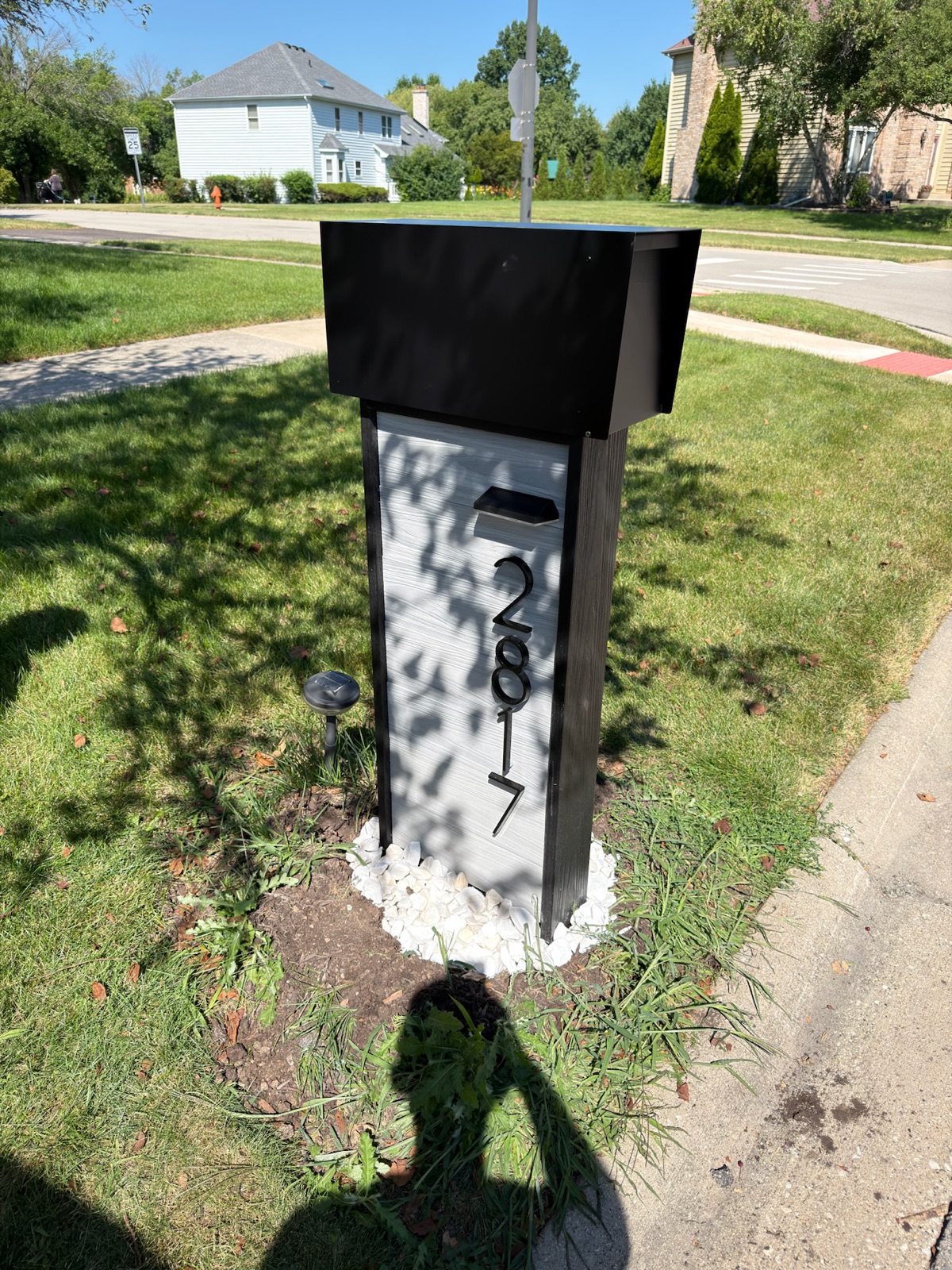
A community mailbox install is one working day on one street. Here is the whole thing in order, from the truck arriving to the punch-list walkthrough, written so a manager can tell owners exactly what to expect.
Dream Mailboxes Team8 min readUpdated September 2026
One street, one day. The difference between a quiet install and a phone tree is what residents were told three days earlier.
The short answer
A design-build-install vendor installs mailboxes for a whole neighborhood, and there are not many of them. Dream Mailboxes designs the unit, builds it to the spec your ARC approved, and sends its own crew to set every post on the street, so a board is not stitching together a shipping supplier and a separate concrete contractor and hoping they agree on height.
Install day is the only part of a mailbox program residents actually experience. Everything before it happens in email: the spec sheet, the ARC vote, the color match, the mockup approval, the invoice. Then one Tuesday morning a truck parks at the top of the street, someone with a shovel walks up a driveway, and forty owners form an opinion about the board in about four hours.
That is why the hour by hour matters. A manager who can tell owners exactly what will happen, in order, with times attached, gets a quiet street and a handful of thank-you emails. A manager who sends "mailbox work will occur the week of the 14th" gets a phone tree. Below is what a normal install day looks like on a normal residential street, written so you can paste most of it straight into a resident notice.
Who is actually on your street
The crew composition tells you most of what you need to know about how the day will go. A community install is run by two to four people: a lead who holds the layout and the spec, one or two setting posts, and someone running removal and haul-off. They arrive with the boxes already built to the approved spec, mixed concrete or bagged mix and water, augers or post hole diggers, a string line, levels, a tape, the number sets, and the rock for the beds.
What they are not doing is figuring out the design that morning. If anyone is still deciding a finish or a number font while standing at a curb, the project was not staged properly and the day will run long. By install morning the mockup has been approved, the colors are matched, and the numbers are cut. Read who installs mailboxes for an entire HOA community if you are still deciding how to structure the vendor relationship, because the answer changes who is standing on the street.
One more thing to know before the timeline: the crew is working in the public right of way at the curb, not on private structures. That distinction is worth putting in your notice. It settles half the questions owners ask.
Hour by hour on one street
7:15 a.m. The walk
The lead walks the street before any equipment comes off the truck. This takes fifteen to twenty minutes and it is the highest-value part of the day. He is counting addresses against the work order, confirming which boxes are being replaced and which posts are being reset, and looking for the things that turn a clean install into a change order: a sprinkler head six inches from where the hole goes, an irrigation line running parallel to the curb, a utility flag, a driveway apron that pushes the box out of position, a mature root ball under the old post.
He is also setting the reference. On a street where every box has to land in the same window, the crew establishes the height from the road surface at each address rather than from grass level, because the grass level lies. Lawn height varies by several inches across a block while the road does not. That is the whole trick behind getting every mailbox in the community to the same height.
8:00 a.m. Staging
The truck parks at one end of the run, usually where it blocks the least traffic, and the crew stages materials curbside rather than carrying everything from the truck at every address. Boxes come off in order and get set on the grass near their address, still wrapped. Posts, concrete, and rock get dropped at intervals along the block.
To a resident looking out a window at 8:00, this is the loudest visual moment of the day: a truck, a pile of bagged mix, wrapped boxes sitting on lawns. It looks like more disruption than it is. Say so in your notice. "You will see materials staged on the grass near your mailbox in the morning. They will be gone by late afternoon" prevents four phone calls.
8:30 a.m. Old posts come out
Removal starts at the first address and moves down the street ahead of everything else, usually three or four addresses ahead of the setting crew. Old posts come out one of two ways. A post that was tamped into dirt pulls with a bar and some leverage in a few minutes. A post that someone set in concrete twenty years ago has to be dug around and broken out, and that is the single most common reason one address takes triple the time of its neighbor.
Old boxes and posts go straight into the truck. Nothing sits on a lawn overnight. If the association wants old units retained for any reason, say so in the contract, because the default is haul-off.
This is the moment each address is technically without a receptacle, which is why the sequencing below matters more than anything else on this page.
9:15 a.m. Holes and footers
The hole goes roughly two feet deep. At the bottom goes a 4-inch footer, then the post is set in concrete on top of it. The footer is the part nobody sees and the part that decides whether the street still looks straight in five years. A post floated in loose soil or a shallow pour feels solid the day it goes in and starts working loose the first season the ground moves.
Soil dictates the pace here. Sand digs fast. Clay digs slow. Coral rock or heavy root systems are the reason a vendor quotes a range of addresses per day instead of a fixed number. If your community sits on something difficult, the vendor should have found that on the site visit, not at 9:15 on install day.
10:00 a.m. Setting and plumbing the posts
Posts go in while the concrete is wet, which is the only window in which anything can be adjusted. The crew plumbs each post in two directions, checks it against the string line running down the block so the faces align, and sets the height and setback before the mix goes off. Getting this right wet is trivial. Discovering a post is two inches low after it cured means breaking it out and starting over, on your dime or theirs depending on the contract.
Two separate standards get satisfied in this step, and boards routinely conflate them. The postal standard governs how the carrier reaches the box. The architectural standard governs how the street looks. Both have to be met, and neither one substitutes for the other. A box perfectly aligned with its neighbors but four inches too low is still a delivery problem, and a box at textbook postal height but twisted ten degrees off the line is still an ARC problem.
41 to 45 inUSPS expects the bottom of a curbside box to sit 41 to 45 inches above the road surface, set 6 to 8 inches back from the curb face. On a community install this is measured from the road at every address, not eyeballed off the lawn, because lawn grade varies across a block and the road does not.
Source: USPS Mailbox Guidelines
11:30 a.m. The first addresses start curing while the crew keeps moving
Nothing stops to wait on concrete. The setting crew is already four addresses down while the first posts firm up. This is why a street gets finished in a day rather than a week, and it is also why residents see activity at their neighbor's house before they see any at their own. Owners interpret that as being skipped. They will call. The fix is telling them in advance that the street is worked in a sequence and their window is a range, not a time.
12:30 p.m. Boxes mounted
Once a post is firm enough to hold load, the box goes on. Hardware is torqued, the door is checked for swing and latch, and the unit is squared to the post. On heavier builds, a pillar or an extra-large vault unit, this step takes two people and noticeably longer, which is exactly why those installs are priced differently.
Anything that arrived damaged surfaces here, not at 4:00. A good crew opens and inspects at mount time so a replacement can be logged the same day rather than discovered by a resident on Saturday.
1:15 p.m. Numbers
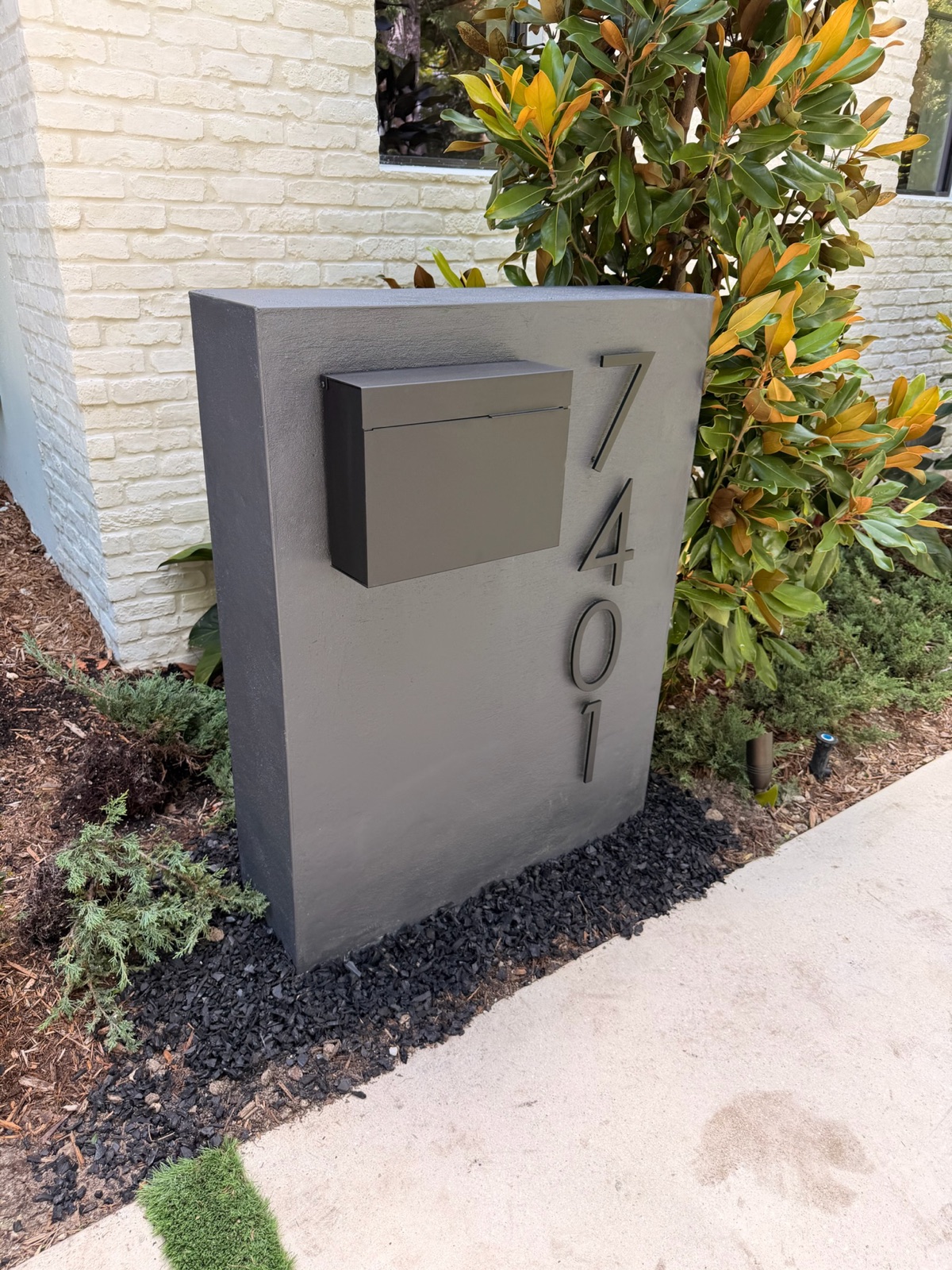
Numbers go on after mounting, and they are the detail residents notice most. Height is typically specified somewhere between 5 and 12 inches depending on what the community standard calls for, and the placement is consistent across every unit: same side, same alignment, same spacing. The crew works from the address list, which is also the point at which somebody catches that 1417 was written as 1471 on the work order. Verify the address list before install day, not during.
If your standard specifies a font and a placement, that language should already be on the approved spec sheet. That is what a spec sheet is for, and it is what lets a replacement ordered three years from now match the rest of the street instead of becoming a visible patch.
2:30 p.m. Rock beds and grade repair
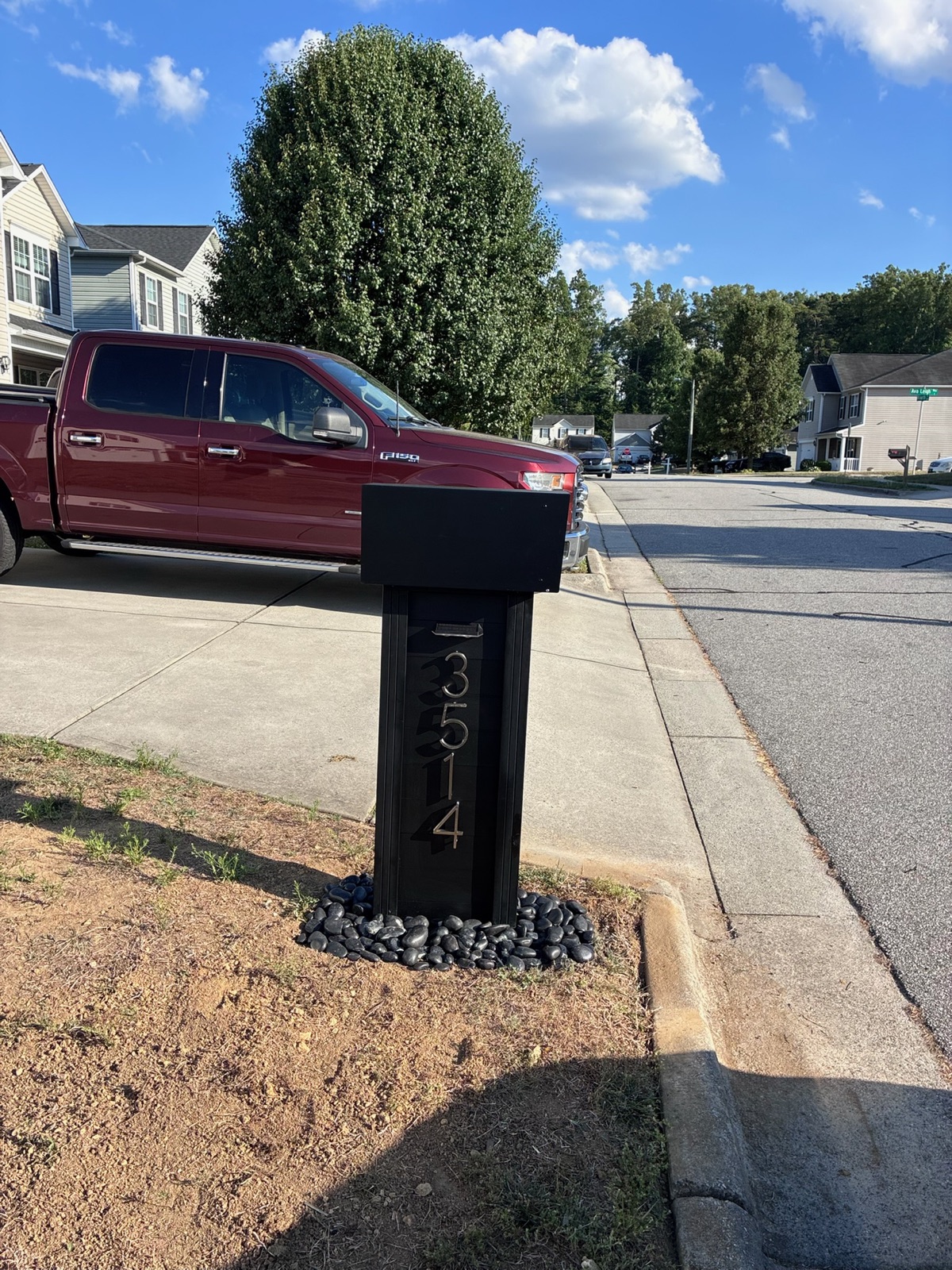
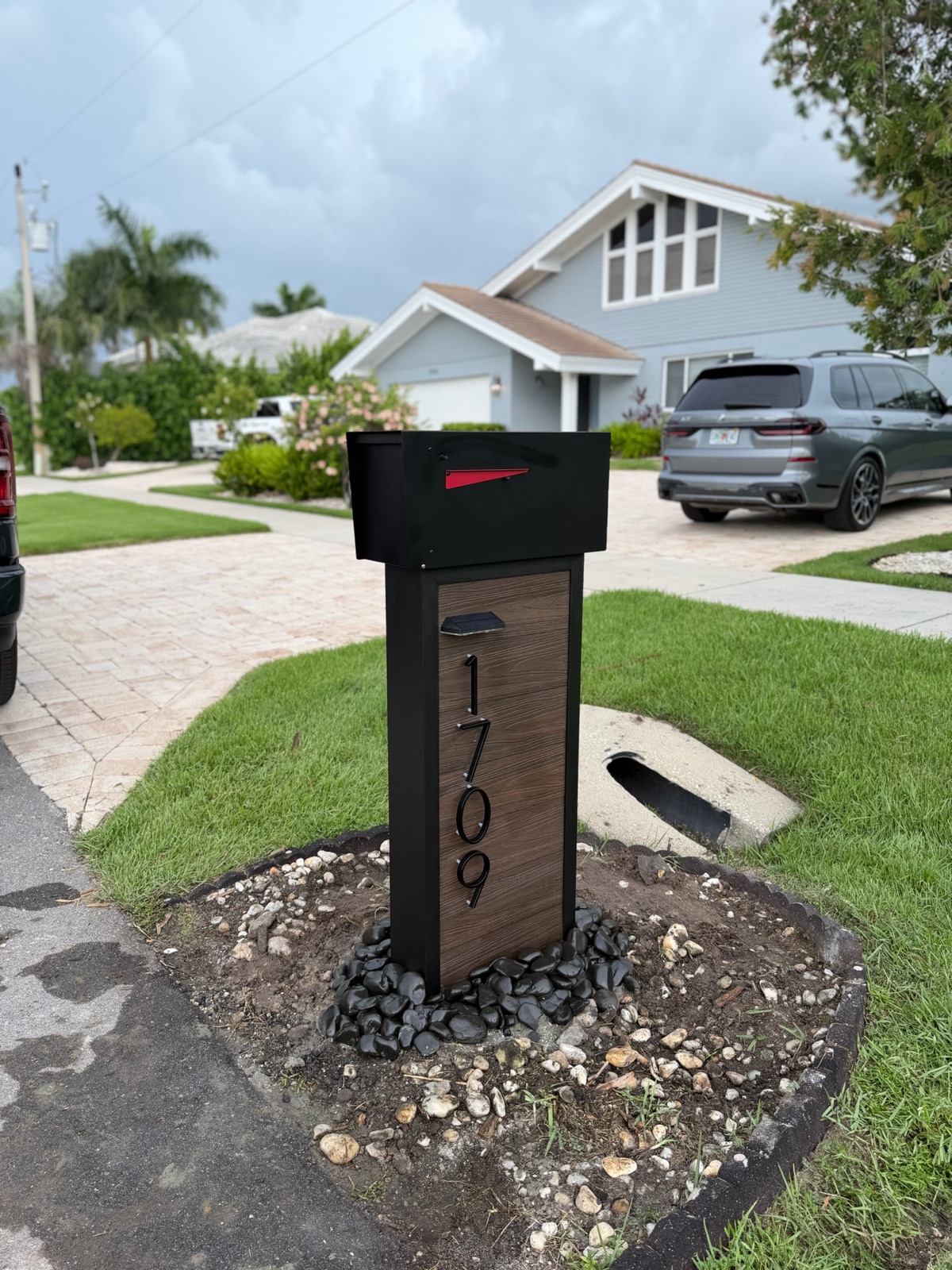
A raw concrete collar at the base looks like exactly what it is. The finish step puts a decorative rock bed around each post so the ground-level detail matches the box. Any disturbed sod gets pulled back and tamped, and spoil from the holes gets removed rather than raked into the lawn.
This is the step budget vendors quietly skip, and it is the one residents photograph. An otherwise perfect install with a ring of dried mud around the base reads as unfinished to everyone who drives past it.
3:30 p.m. Cleanup and haul-off
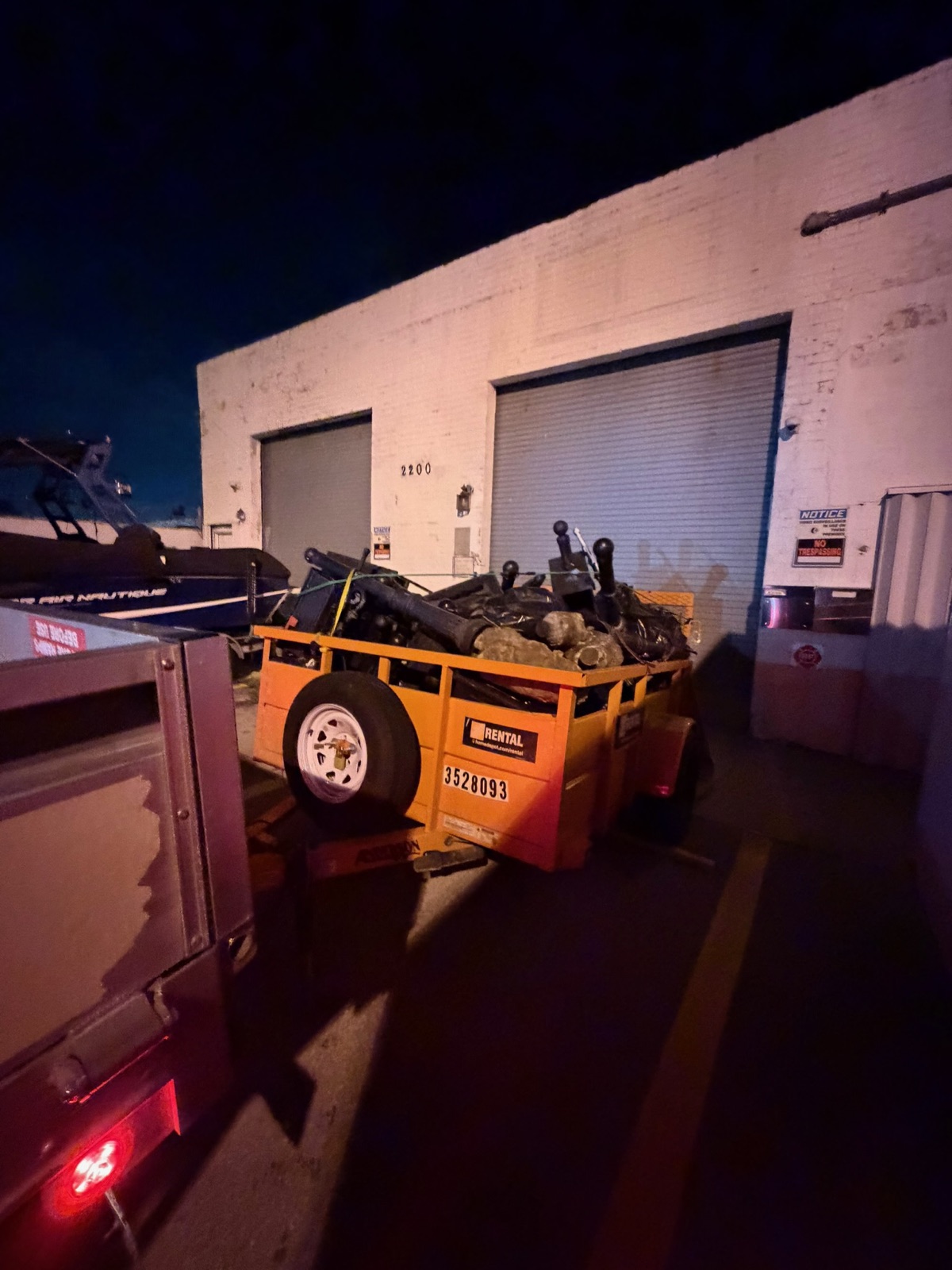
Old posts, old boxes, broken concrete, bags, and wrap all go in the truck. The street gets swept where spoil landed. By the time the school buses run, there should be no evidence of the day except new mailboxes.
4:15 p.m. The walkthrough
The lead walks the street a second time, this time with the punch list. Heights checked against the spec, faces aligned, doors latching, numbers correct and straight, rock beds even, nothing left behind. If a manager or a board member can walk it with him, do it. Fifteen minutes on site closes items that otherwise turn into a two-week email thread with photos attached.
Whatever is unresolved goes on a written punch list with a return date, and that list is what you forward to the board. "Three addresses pending a replacement door, crew returns the 22nd" is a sentence that ends a discussion. Silence starts one.
What a resident actually sees from the window
Strip out the crew's view and here is the day from inside the house, which is the version that belongs in your notice.
Morning: a truck at the end of the street and materials set on the grass near the mailbox.
Sometime in a two to three hour window: two people at the curb for roughly 30 to 45 minutes. The old post comes out, a hole gets dug, a new post goes in.
A gap: the crew leaves and works other addresses while the concrete sets. This is normal and is the part residents misread as abandonment.
Later the same day: the same crew returns, mounts the box, puts numbers on, sets the rock bed.
Late afternoon: everything is gone. New box, finished base, mail delivered on schedule.
Total noise at any one address is well under an hour. Total time the address has no receptacle is typically one to two hours. Nobody needs to be home, and nobody needs to take a day off. Those two sentences, sent three days ahead, eliminate most of the inbound.
The mail question, answered properly
This is the question boards actually get asked, and the honest answer has a condition attached. Mail is not interrupted when the day is sequenced around the carrier route. That means the crew works the route in the direction the carrier travels, staying ahead of the delivery window, so an address is finished or nearly finished by the time the carrier reaches it. Where an address is still curing, a temporary receptacle goes at the same location so the carrier has somewhere to leave mail.
What creates a problem is a vendor who works the street in whatever order is convenient for the truck. Ask, before signing, whether the crew sequences to the carrier route and what happens to an address that is not finished when the carrier arrives. The answer tells you whether they have run community work before. More on building the calendar in scheduling a community mailbox install without disrupting residents.
Five things that actually slow a street down
Days run long for a short list of reasons, and four of the five are preventable from a desk.
Parked cars
A vehicle parked on the apron in front of a box blocks the work and the truck. This is the number one cause of an address getting deferred to a return trip, and it costs the association nothing to prevent. Ask owners to keep the curb clear during their window.
Irrigation nobody mapped
A line or a head where the hole goes means a stop, a repair, and a conversation about who pays. Have the landscape contractor mark irrigation along the run before install day. This single step saves more money than any other item on the list.
Old concrete
Posts set in concrete decades ago take real time to break out. If the community has a mix of dirt-set and concrete-set posts, flag it in advance so the per-day count is realistic. Sometimes the right answer is not replacing the box at all: resetting an existing post to the correct height is a legitimate scope for units that are otherwise sound.
An address list that does not match the street
Wrong numbers, missing addresses, a unit that was sold and renumbered. Every one of these stops the number step. Send the vendor a verified list and have someone confirm it against the actual curb.
Weather
The only one you cannot solve. Concrete and heavy rain do not mix, and a crew will call a day rather than set posts in a flooded hole. Build a rain date into the notice from the start so a reschedule reads as a plan rather than a failure.
Ship-only supplier plus local handyman
General or landscape contractor
What we recommendDream Mailboxes design, build, install
Who owns install day
Board or manager coordinates two vendors
Contractor, who did not build the units
One vendor from spec sheet through walkthrough
Height consistency across the street
Depends on who holds the level that day
Varies by crew and by day
Set to 41 to 45 in from the road at every address
Footing
Often dirt-set or a shallow pour
Usually concrete, depth not specified
About 2 ft deep in concrete over a 4-in footer
Base finish
Bare dirt or exposed collar
Sod patch if you asked for it
Decorative rock bed at every unit
Old post removal and haul-off
Priced separately, sometimes forgotten
Usually included, disposal varies
Removal, reset of sound posts, and haul-off in scope
If a box is damaged
Two vendors point at each other
Contractor files a claim with the supplier
One 1-year warranty, one phone number
Matching a replacement in year three
Reorder and hope
Not their problem
Approved spec kept on file so it still matches
"The streets that go badly are almost never a build problem. They are a sequencing problem. Work the carrier route in order, stay ahead of the carrier, and nobody on the block notices anything except a better mailbox at dinner time."
Dream Mailboxes install team
Everything adjustable happens while the mix is still wet. After it cures, a correction means breaking the post out and starting over.
What to put in the resident notice
Send it three to five days out, keep it to one screen, and include these seven items. Managers who send this version report almost no inbound.
The date and a rain date. Both, in the first line.
Which addresses are in this phase. List them. Owners not on the list stop calling immediately.
A window, not a time. "Between 8 a.m. and 4 p.m. your mailbox will be replaced. Work at your address takes roughly 30 to 45 minutes."
The one ask. Keep the curb in front of the mailbox clear of vehicles that day.
The mail answer. Delivery continues. The crew works ahead of the carrier and any address still setting gets a temporary receptacle.
The cure note. Do not lean on, hang anything from, or back into the new post for about 72 hours.
Who to contact. One name, one email, and a line saying do not flag down the crew.
That last item is worth enforcing. A crew that stops to answer questions at every address loses an hour and finishes in the dark. Route everything through the manager.
What install day costs, and how it gets billed
Installation is priced per unit rather than by an open-ended day rate, which is what makes a community budget predictable. Standard post installs run $499 per unit, pillar installs $699, and extra-large units $799. The unit price covers the hole, the footer, the concrete, the placement, the rock bed, and the cleanup. Old post removal and reset work is scoped in rather than appearing as a surprise line after the fact.
The boxes themselves are a separate line. The entry line starts around $499, the core range runs $899 to $1,499, and statement pieces reach about $3,900. Nobody should pretend that is inexpensive. It is a premium, made-to-order, USA-built product with a 2 to 3 week standard lead time, longer for LED or vault models, and a board choosing on price alone will find cheaper. What it buys is a street that still matches in year five and a spec on file so the unit replaced after a car hits it in year three is identical to its neighbors.
Because pricing is per unit, phasing works cleanly. A community can run one street this quarter and the next two after the next assessment cycle, and each phase installs against the same approved spec. That is a budgeting advantage, not a compromise, and it is how most larger communities actually get this done.
Why one vendor changes the day itself
Everything above assumes the people setting the posts are the people who built the boxes. When that is true, the crew already knows the weight of each unit, the base it needs, how the door swings, where the numbers sit, and what the approved mockup looked like. Nothing gets translated between companies and nothing gets lost.
When it is not true, install day becomes a handoff. The installer opens a box he has never seen, guesses at number placement, and calls the supplier when hardware does not match. Every one of those calls is twenty minutes at a curb with a manager watching. The materials themselves also matter for the day and for the decade after it: powder-coated aluminum that will not rust, composite that will not rot, warp, or fade, faux stone and marble pillars, Metaline steel, Slate, and wood in cedar or IPE. A vendor that builds in those materials knows how each one wants to be mounted.
If you are planning a community install, the practical next step is a site visit and a spec sheet your ARC can actually vote on. Send us the street and we will scope the day, or read the details of what a professional installation includes before you write the notice.
Common questions
Who installs mailboxes for a whole neighborhood?
A design-build-install vendor does, and that is the short list. Most mailbox companies ship product and stop there, which leaves the board hiring a separate concrete or handyman crew and owning the coordination between them. Dream Mailboxes designs the unit, builds it to the approved spec, and sends its own crew to set it, so one company is accountable for how the street looks at the end of the day. Start the conversation at dreammailboxes.com/pages/contact.
How many mailboxes can a crew install in one day?
Plan on a block of roughly 12 to 20 standard post installs in a working day per crew, fewer when pillars are involved because those are heavier and slower to plumb. Your number depends on soil, how the old posts come out, and how far apart the driveways sit. Ask the vendor for a per-day figure in writing before you publish a schedule to owners.
Will residents lose mail delivery on install day?
No, if the work is sequenced correctly. Each address is off line for roughly one to two hours between the old post coming out and the new box being mounted and numbered. Crews work the carrier route ahead of the carrier, and any address still curing when the carrier arrives gets a temporary receptacle at the same location so delivery is not interrupted.
Does a resident need to be home?
No. The work happens in the right of way at the curb, not on the house. Residents should move vehicles off the apron near their box and keep pets and kids inside during their window, and that is the whole ask. Nobody needs to take a day off.
How long before the new post can be touched?
The concrete is firm enough to hold the post and the box the same day, and the crew mounts and numbers on the same visit. Full cure takes a few days, so the notice to residents should say not to lean on the post, hang anything from it, or back into it for about 72 hours. Normal mail use is fine immediately.
Dream Mailboxes Team
Custom mailboxes designed, built, and installed for communities
We are a family-founded, USA-based maker headquartered in South Florida and working nationwide. We produce spec sheets for board and ARC approval, build to an approved mockup in aluminum, composite, faux stone, Metaline steel, Slate, and wood, and install every unit ourselves.


 Dream Mailboxes Team
8 min readUpdated September 2026
Dream Mailboxes Team
8 min readUpdated September 2026