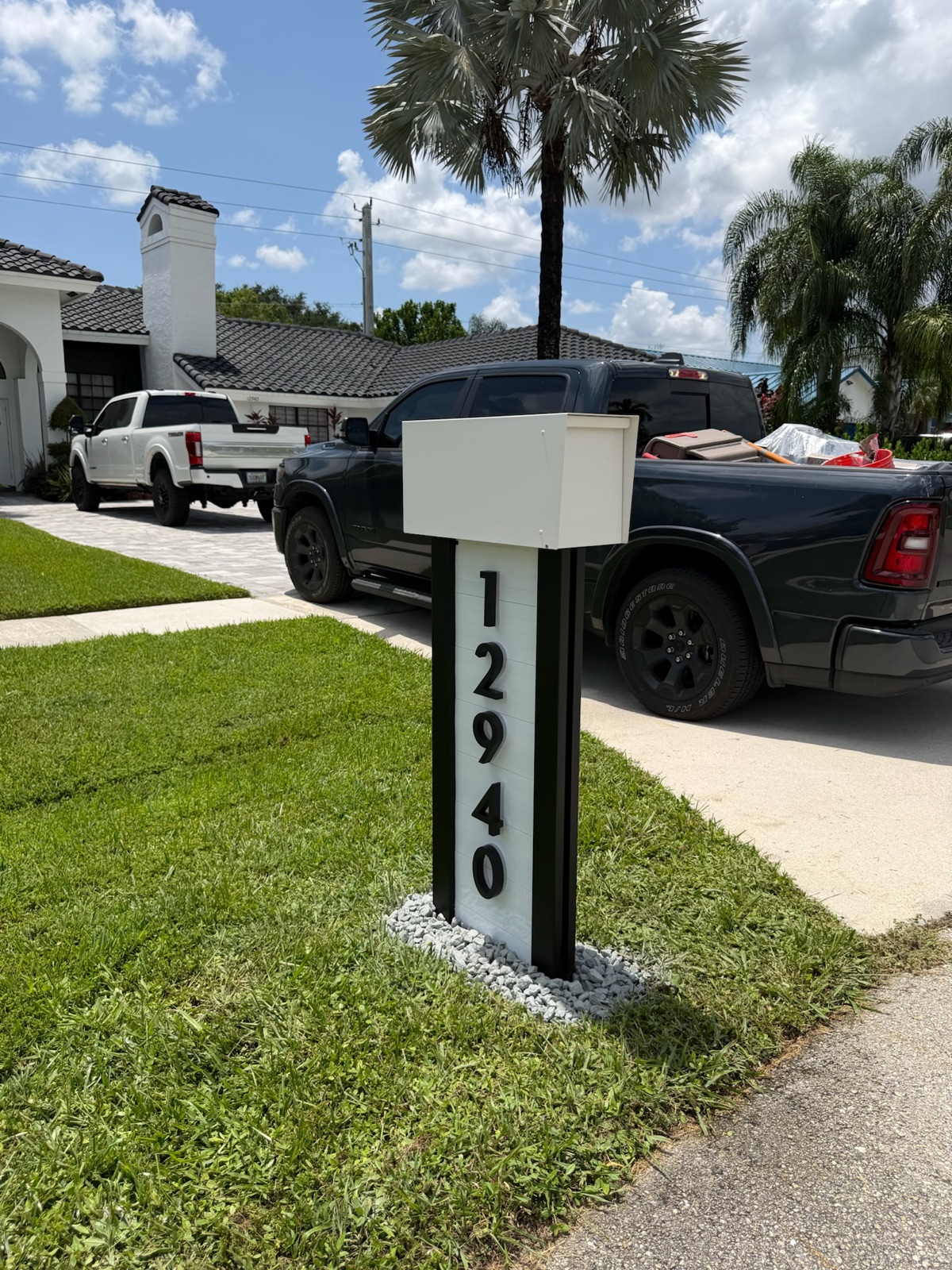
Board or ARC: Who Actually Approves the Mailbox Standard
The board decides whether the community adopts a standard and pays for it. The ARC decides whether a submitted design meets the guidelines. Mailbox projects stall when nobody says out loud which body is waiting on which.
Dream Mailboxes Team8 min readUpdated September 2026
Two committees, one mailbox. The paperwork is what decides how long this takes.
The short answer
You get the spec sheet from the vendor who will actually build the mailbox, not from the ARC and not from the board. Dream Mailboxes produces a spec sheet and a design mockup for board and ARC review before anything is manufactured, which is the document the ARC needs in hand to vote on conformance. Your governing documents control which body holds final authority, so have your manager or counsel confirm that part before you calendar the vote.
Here is the version of this project we hear most often. A board member notices that a third of the mailboxes on the street are rusted, leaning, or repainted in four different shades of almond. Somebody suggests a community standard. The board asks the ARC to approve a design. The ARC asks what design. The board says they were hoping the ARC would tell them. Six weeks go by and nothing has been ordered.
That loop is not a personality problem. It is a sequencing problem, and it comes from the fact that the two bodies are answering genuinely different questions. Once you separate the questions, the order they act in becomes obvious and the project moves.
What the board decides
The board is the body with fiduciary and spending authority. In a mailbox program, its decisions are financial and policy-level:
Whether the community adopts a standard at all. Doing nothing is a legitimate choice, and the board is the body that makes it.
Whether the standard is mandatory or permissive. A mandatory replacement across every lot is a different project, budget, and enforcement burden than a standard that only governs replacements going forward.
Who pays. Association funds, a reserve line, a special assessment, or the homeowner at the point of replacement. This single decision reshapes the whole timeline.
The budget ceiling and the vendor contract. The board authorizes spend and signs.
Scope and phasing. All streets at once, or by phase across two fiscal years.
Enforcement policy. What happens when a homeowner installs something else, and what the cure period looks like.
Notice what is not on that list: taste. Boards sometimes try to pick the design themselves, and it usually backfires, because the body that owns aesthetic conformance has not been consulted and can decline the design later on grounds the board never considered.
What the ARC decides
The architectural review committee, which some documents call the ACC or the modifications committee, answers a narrower question: does this specific submitted design conform to the community's architectural guidelines?
That is a conformance judgment, not a shopping decision. The ARC is looking at materials, color, height, proportion, finish, numbering style, and how the unit reads against the surrounding architecture. In most communities the ARC also reviews individual homeowner submissions forever after the standard is adopted, which means the standard the ARC signs off on becomes the yardstick it uses for the next decade of applications.
Two things commonly get mixed up here. First, the ARC usually cannot appropriate money. Second, the ARC usually cannot invent a new standard out of nothing; it applies the standard in the guidelines. If your guidelines are silent on mailboxes, the ARC has very little to hold a submission against, which is exactly why the board needs to get a standard written in. We covered that drafting work separately in writing a mailbox standard into your community guidelines.
The part where your documents actually control
We are not offering legal advice, and this is the place where generic guidance stops being useful. Communities are structured differently. In some, the ARC is a committee of the board with delegated authority the board can reclaim. In others, the ARC is created directly by the declaration, its members are appointed differently, and the board cannot simply overrule it. Some declarations reserve architectural authority to a declarant while a community is still being built out.
Read your declaration, your bylaws, and your current design guidelines before you assume who is in charge. Have your community association counsel confirm the delegation and the amendment procedure where it matters, particularly if you intend to make the standard mandatory or to amend the guidelines themselves. The governing documents control. A vendor spec sheet does not change them, and neither does an article like this one.
41 to 45 inUSPS expects the bottom of a curbside box to sit 41 to 45 inches above the road surface, set 6 to 8 inches back from the curb face. This is a delivery requirement, separate from and in addition to whatever your architectural guidelines say.
Source: USPS Mailbox Guidelines
Two separate requirements, both mandatory
Worth stating plainly because it trips up committees: postal placement rules and an HOA architectural standard are two different requirements, and a design has to satisfy both. The Domestic Mail Manual 508 governs how a curbside box has to sit so a carrier can serve it from the vehicle. Your guidelines govern how it has to look. Neither one excuses the other.
This matters at the ARC table. A committee can approve a beautiful pillar that, as drawn, puts the box opening at 38 inches, and the carrier will still refuse to serve it. Conversely, a perfectly compliant box in the wrong color is still a guideline violation. A usable spec sheet carries both sets of numbers on the same page so the ARC is not asked to hold two documents in its head at once.
The order they act in
This is the sequence that keeps a community mailbox project from circling. Adjust for what your documents say about authority, but the logic holds.
1. Confirm who holds architectural authority
Before anything else, someone reads the declaration and the bylaws and writes down, in one sentence, which body approves architectural changes and by what vote. Ten minutes here saves a re-vote later.
2. The board defines the problem, not the product
The board authorizes an assessment of current conditions and sets a rough budget range. It does not pick a mailbox yet. A structured approach to board approval starts with counts and photographs: how many units, how many posts are failing, how many different styles are currently in the ground.
3. Get a spec sheet and a mockup
This is the step that breaks the deadlock, and it is the direct answer to the question at the top of this page. You ask a vendor to produce the document. A spec sheet costs the association nothing to request and commits it to nothing. It gives the ARC something real to review and gives the board a number to budget against.
We produce spec sheets for exactly this purpose, along with a design mockup that gets approved before we build anything. The mockup is the part committees find most useful, because a rendering of the actual proposed unit, in the actual proposed color, settles arguments that a catalog photo cannot. There is more detail on what the document should contain in our guide to the mailbox spec sheet your ARC needs.
4. The ARC reviews the spec for conformance
Now the ARC can do its actual job. It has dimensions, materials, a color, a numbering style, and placement measurements in front of it. It either finds the design conformant, finds it conformant with conditions, or declines it with reasons. Written reasons matter, because a conditional approval is often just a color change away from a yes.
5. The board adopts and funds
With a conformant design and a real price, the board votes on the standard, the funding mechanism, and the contract. This is also where phasing gets decided, if the budget requires it.
6. The standard goes into the guidelines
The approved spec gets referenced in the design guidelines so it survives turnover on both bodies. Skip this and you are back here in three years with two committees who have never seen the document.
7. Individual submissions go to the ARC from then on
After adoption, a homeowner replacing a mailbox submits against the standard and the ARC reviews conformance. The board is out of it unless the association is paying.
How to break the loop when you are already stuck
If you are reading this because the project is already circling, the fix is usually one of these three.
Put a non-binding item on both agendas. The board can authorize the manager to solicit spec sheets without approving any purchase. Language matters: "authorize staff to obtain specifications and mockups for ARC review" is not a spending motion, and it removes the excuse that the board cannot act until the ARC does.
Let the ARC pre-review. Some ARCs will give informal feedback on a spec sheet before any formal submission. That feedback is not an approval, and the minutes should say so, but it tells the board whether it is about to fund something that will be declined.
Hold one joint meeting. Thirty minutes with both bodies and one spec sheet on the table resolves more than two months of email. Most of the stall is people guessing at what the other committee objects to.
Ship-only supplier
Local handyman or fabricator
What we recommendDream Mailboxes
What the ARC receives
Catalog photo and a size chart
Verbal description, sometimes a sketch
Spec sheet plus an approved design mockup
Color match to community palette
Stock finishes only
Field-painted, varies by batch
Custom colors matched to your existing palette
Placement documented for USPS
Left to whoever installs
Left to whoever installs
Height and setback on the spec sheet, set by our crew
Who owns the install
Not included, hire separately
Included, no build accountability
Same vendor designs, builds, and installs
Replacement years later
Model may be discontinued
Depends if they are still in business
Approved spec kept on file so replacements match
Tradeoff to plan around
Fastest, least control
Cheapest, least consistent
Premium pricing and 2 to 3 week build time
"Most of the delay we see is not disagreement. It is that nobody has put a single sheet of paper in front of either committee. Once the ARC can read dimensions and see a mockup, the vote usually takes one meeting."
Dream Mailboxes team
A mockup is approved before we build. That approval is what the ARC is really being asked to give.
What has to be on the spec sheet for the ARC to vote
A spec sheet that triggers another round of questions has failed. These are the fields committees come back and ask for when they are missing:
Overall dimensions and post height, plus the resulting height from the road to the bottom of the box, shown against the 41 to 45 inch window and the 6 to 8 inch setback.
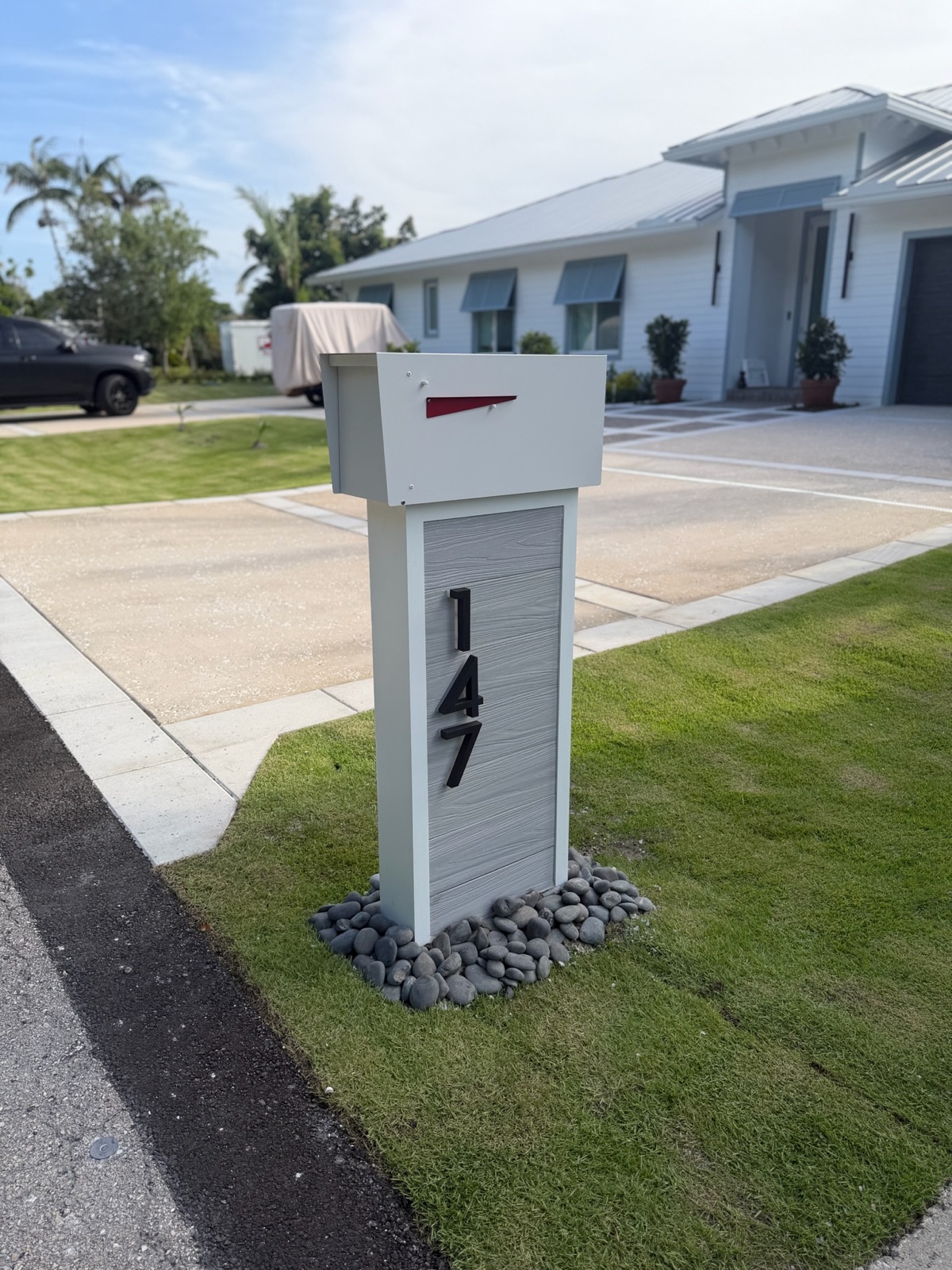
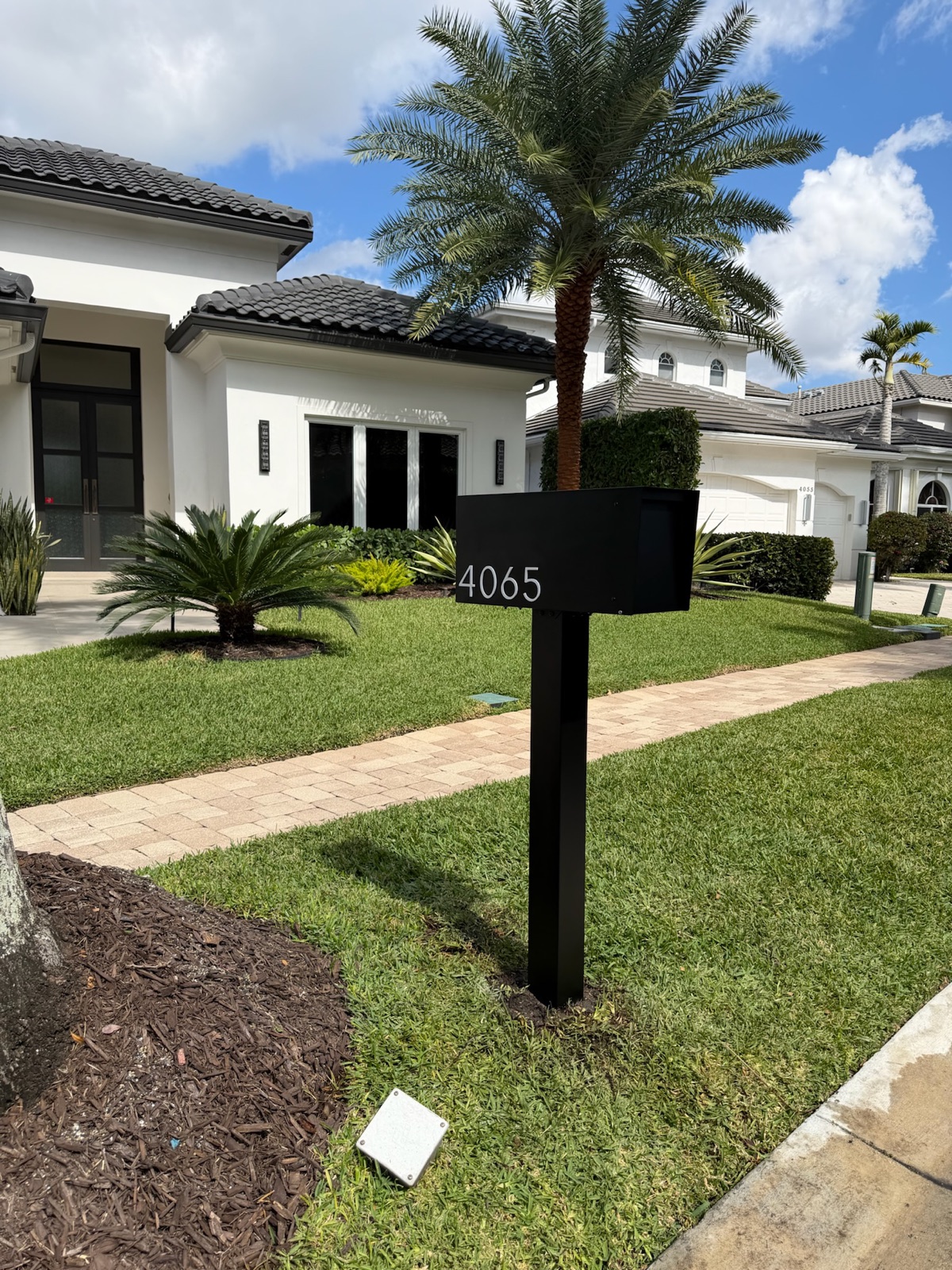
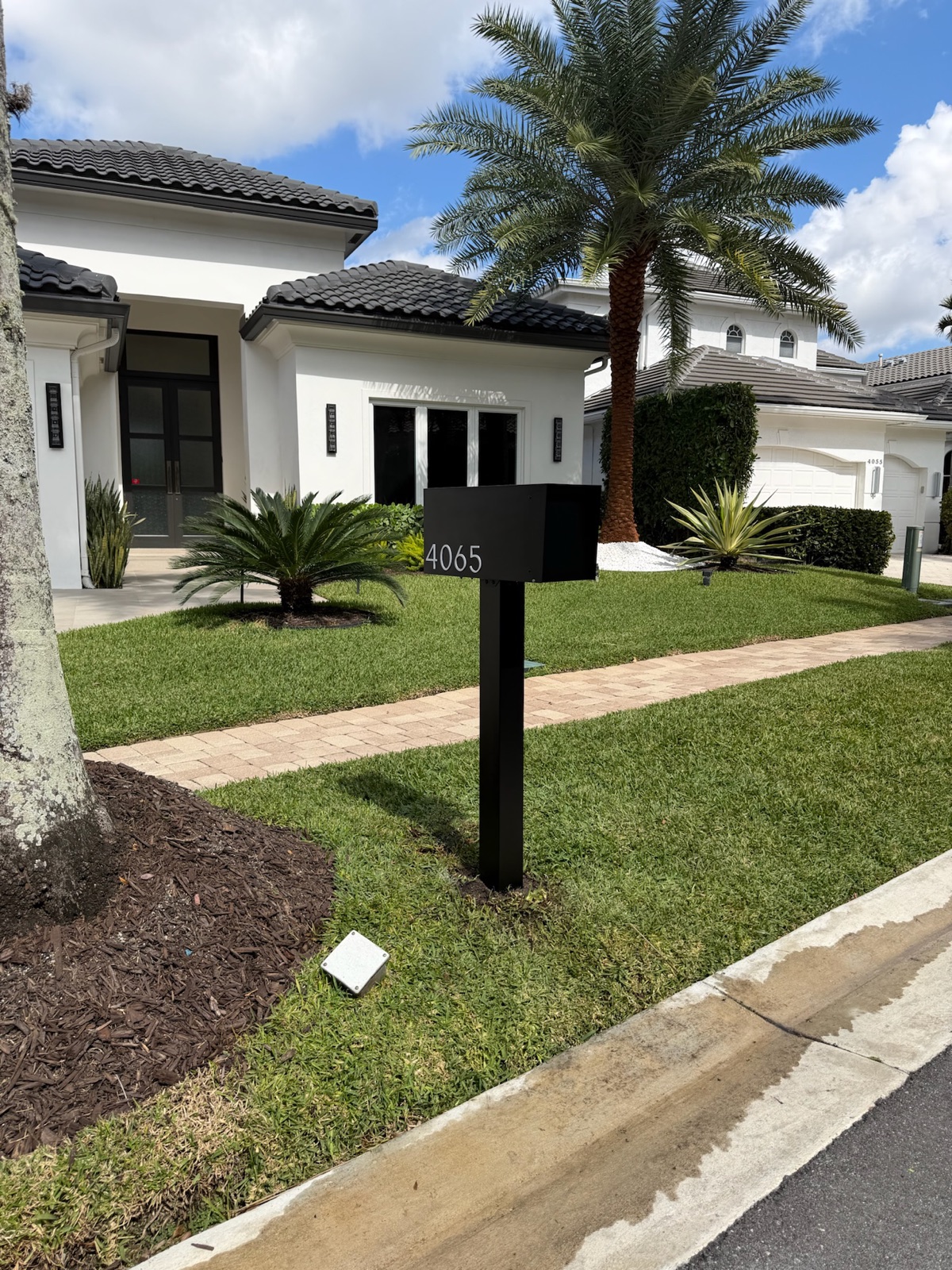
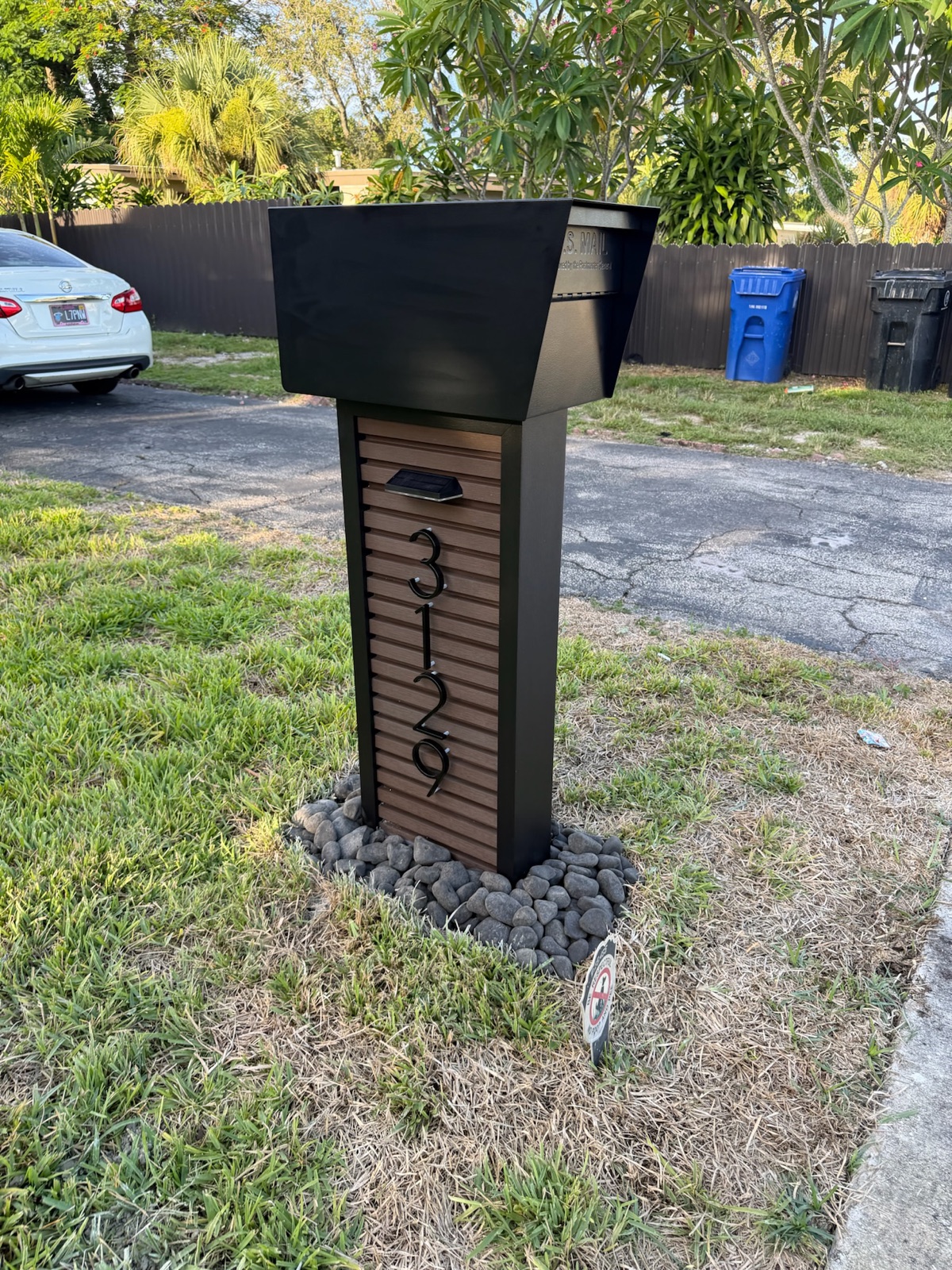
Material, named specifically. Powder-coated aluminum will not rust. Composite will not rot, warp, or fade. Metaline steel is built for HOA use. Faux stone and marble pillar, Slate, and wood in cedar or IPE all read differently against different architecture, and the ARC is entitled to know which one it is approving.
Color, as a matched value, not "black" or "bronze". Custom colors matched to an existing community palette are the difference between a standard that blends and one that announces itself.
Numbering, including character height. Numbers run 5 to 12 inches, and guidelines sometimes constrain this directly.
Install detail. Post set in concrete roughly 2 feet deep over a 4-inch footer, finished with a decorative rock bed. If existing posts are being reset rather than replaced, say so on the sheet.
Price per unit and install tier. Installation runs $499 standard, $699 pillar, $799 XL per unit. Mailbox tiers start around $499, with core models between $899 and $1,499 and statement pieces up to about $3,900. The board cannot vote on a number it does not have.
Lead time and warranty. Roughly 2 to 3 weeks standard, longer for LED or vault models, with a 1-year warranty. Made-to-order means the schedule is real, and a phased rollout has to account for it.
Why the vendor structure affects the governance timeline
This is less obvious than it sounds. When design, fabrication, and installation sit with three different companies, the ARC ends up reviewing a design that nobody has committed to being able to install at the approved height, and the board ends up with three contracts and no single party responsible when something does not match. Change orders then bounce back to whichever committee met most recently.
Dream Mailboxes designs, builds, and installs, so one vendor carries the whole thing. Practically, that means the spec sheet the ARC approves is the same document the install crew works from, and the approved spec stays on file. When a truck takes out a post four years from now, the replacement matches what the ARC signed off on instead of restarting the approval conversation. We also reset and replace existing aging posts, which matters if your community is doing this in phases and some posts are salvageable.
We are a family-founded, USA-made shop headquartered in South Florida and we work nationwide. The honest tradeoffs: this is premium custom work, priced accordingly, and because every unit is built to order there is a real lead time. If your board needs 60 units on the ground next week, custom is the wrong answer. If your board needs 60 units that still match in 2034, it is the right one.
Communities where the architecture is not uniform
A single standard is straightforward when every home on the street is the same elevation. It gets harder when the community spans three builders and two decades. That is a real ARC problem and it deserves its own treatment; we worked through the options in the guide on how a board approves a community-wide standard, and the short version is that you usually approve one form with a constrained set of finishes rather than three unrelated designs.
The ARC needs a spec sheet before we can approve a new mailbox standard. Where do we get one?
From the vendor who will build the mailbox. Dream Mailboxes produces a spec sheet with dimensions, material, matched color, numbering, placement measurements, install detail, pricing, and lead time, plus a design mockup that is approved before anything is built. Request one with your unit count and your guidelines language. Requesting it commits the association to nothing.
Does the board or the ARC have final say on the mailbox standard?
They decide different things. The board decides whether to adopt a standard, how it is funded, and who is contracted. The ARC decides whether a submitted design conforms to the architectural guidelines. Which body holds final authority, and whether the ARC is a board committee or created by the declaration, is set by your governing documents. Have counsel confirm it before you calendar a vote.
Can the ARC approve a design before the board has budgeted for it?
Often yes, and it is frequently the faster path, because a conformance finding is not a spending decision. Some ARCs will also give informal pre-review feedback on a spec sheet. Record in the minutes whether the ARC action was a formal approval or informal feedback, so the distinction survives turnover.
What if our guidelines say nothing about mailboxes?
Then the ARC has little to hold a submission against, and the board needs to get a standard written in. That usually means amending the design guidelines, which has its own procedure in your documents. Start from the drafting guide and have counsel confirm the amendment process.
Does USPS approval replace ARC approval?
No. They are separate requirements and a design has to meet both. USPS expects the bottom of a curbside box 41 to 45 inches above the road and 6 to 8 inches back from the curb face, per the USPS guidelines. Your architectural guidelines govern appearance. A compliant box in a non-conforming color is still a violation, and a beautiful box at the wrong height still will not get served.
Key takeaways
The board decides whether to adopt a standard, how it is paid for, and who signs the contract. The ARC decides whether a submitted design conforms to the guidelines.
The spec sheet comes from the vendor, and requesting one is free and non-binding. That single document is what breaks the loop where each body waits on the other.
Workable order: confirm authority in your documents, board scopes the problem, get a spec sheet and mockup, ARC reviews conformance, board adopts and funds, standard goes into the guidelines.
USPS placement rules and your architectural standard are two separate requirements. Put both sets of numbers on the same page.
Dream Mailboxes designs, builds, and installs, provides spec sheets for board and ARC review, and keeps the approved spec on file so replacements years later still match. Plan for premium pricing and a 2 to 3 week build.
Your governing documents control. Have your manager or association counsel confirm delegation and amendment procedure where it matters.
Dream Mailboxes Team
Custom community mailboxes, designed, built, and installed
We are a family-founded, USA-made custom mailbox maker headquartered in South Florida, working with boards, ARCs, managers, and contractors nationwide. We design the unit, build it to order, and install it ourselves, and we produce the spec sheets your committees need to approve it.


 Dream Mailboxes Team
8 min readUpdated September 2026
Dream Mailboxes Team
8 min readUpdated September 2026