One Homeowner, One Replacement: ARC Approval After the Standard Exists
The community project is finished and the exhibit is adopted. Now one owner on one lot needs a new mailbox. Here is what the committee should be checking, and what it should refuse to reopen.
Dream Mailboxes Team8 min readUpdated October 2026
After the standard is adopted, every later approval should be a comparison against a document, not a fresh opinion.
The short answer
The spec sheet comes from whoever builds the mailbox, and Dream Mailboxes issues one written for board and ARC review: model, dimensions, material, finish and color formula, post profile, and number size. The part that matters later is that the approved spec stays on file, so when a single homeowner needs a replacement three years after the community project, the committee is comparing an order against the adopted exhibit rather than running a second design review.
A mailbox standard gets written under pressure. There is a project, a bid, a budget, a vote, and a date the crews are supposed to arrive. For a few months the committee reads every line of the spec sheet and argues about number size. Then the last post cures, the trucks leave, and the exhibit goes into the guidelines binder. That is usually the moment the planning stops, which is unfortunate, because the next five years of mailbox decisions all look the same: one lot at a time.
The pattern is predictable. A delivery truck clips the post on the corner lot. A door hinge on an older street finally lets go. A buyer closes in the spring, looks at the mailbox, decides it looks tired, and submits a request to replace it. Every one of those is a single-lot approval, and every one of them is small enough that the committee handling it may include nobody who sat through the original project. Handled well, it clears in a week and produces a mailbox you cannot pick out from the street. Handled badly, it becomes a design conversation, and four years later the community owns four versions of its own standard.
What the committee is actually deciding
Approval of a single replacement answers one question: does the proposed unit match the adopted exhibit? Whether the design is attractive is not on the table. Whether a different finish would have worn better is not on the table either. Those were settled by the vote that adopted the standard, and reopening them on one lot has an effect the committee rarely intends, which is to quietly put the standard back into draft.
That distinction decides who can do the work. A comparison against a written exhibit can be handled by one committee member in an afternoon, or by a property manager with delegated authority for matching replacements. A design review needs a quorum, an agenda slot, and minutes. Communities that keep the first kind of decision from turning into the second kind get through a decade of replacements without a single contentious meeting.
There is a harder version of this point. A committee that re-debates the mailbox on every lot has already abandoned the standard, whatever the guidelines still say. The owners figure this out fast. Once it is known that the answer depends on who is on the committee this year, submittals start arriving with alternatives attached, and the exhibit becomes a suggestion.
The three things that have to match
Write the comparison down so it survives turnover. In practice it reduces to three checks.
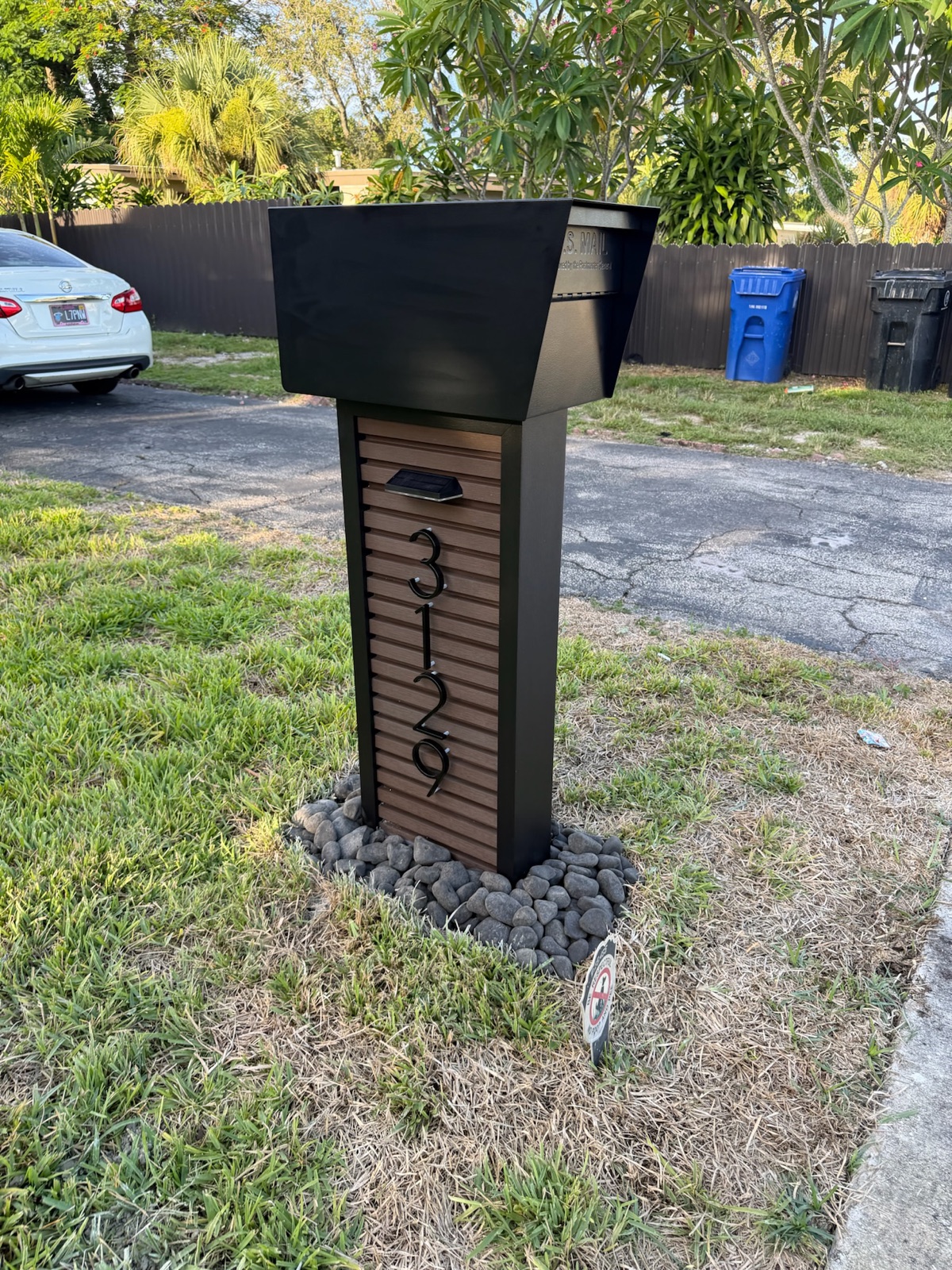
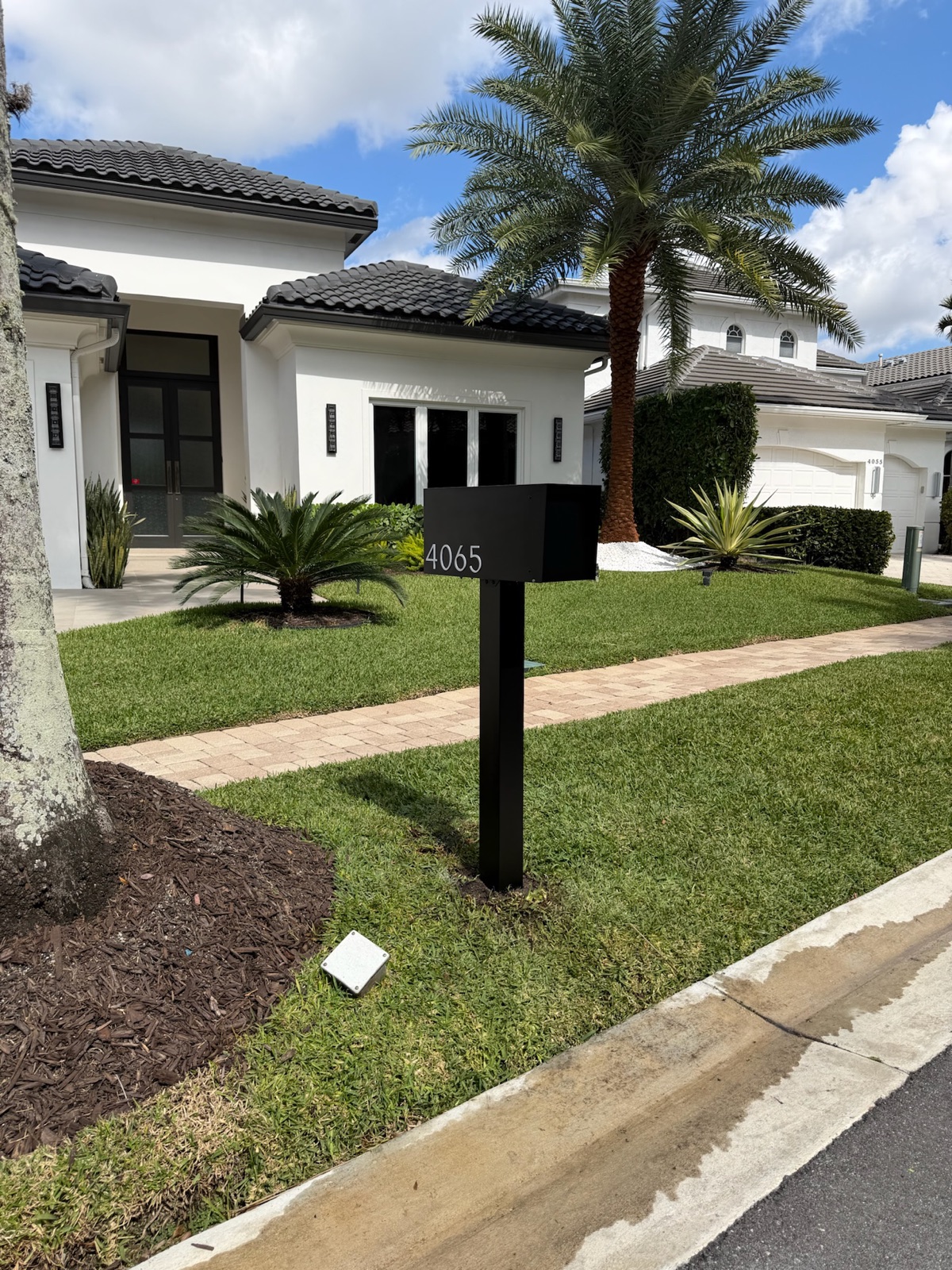
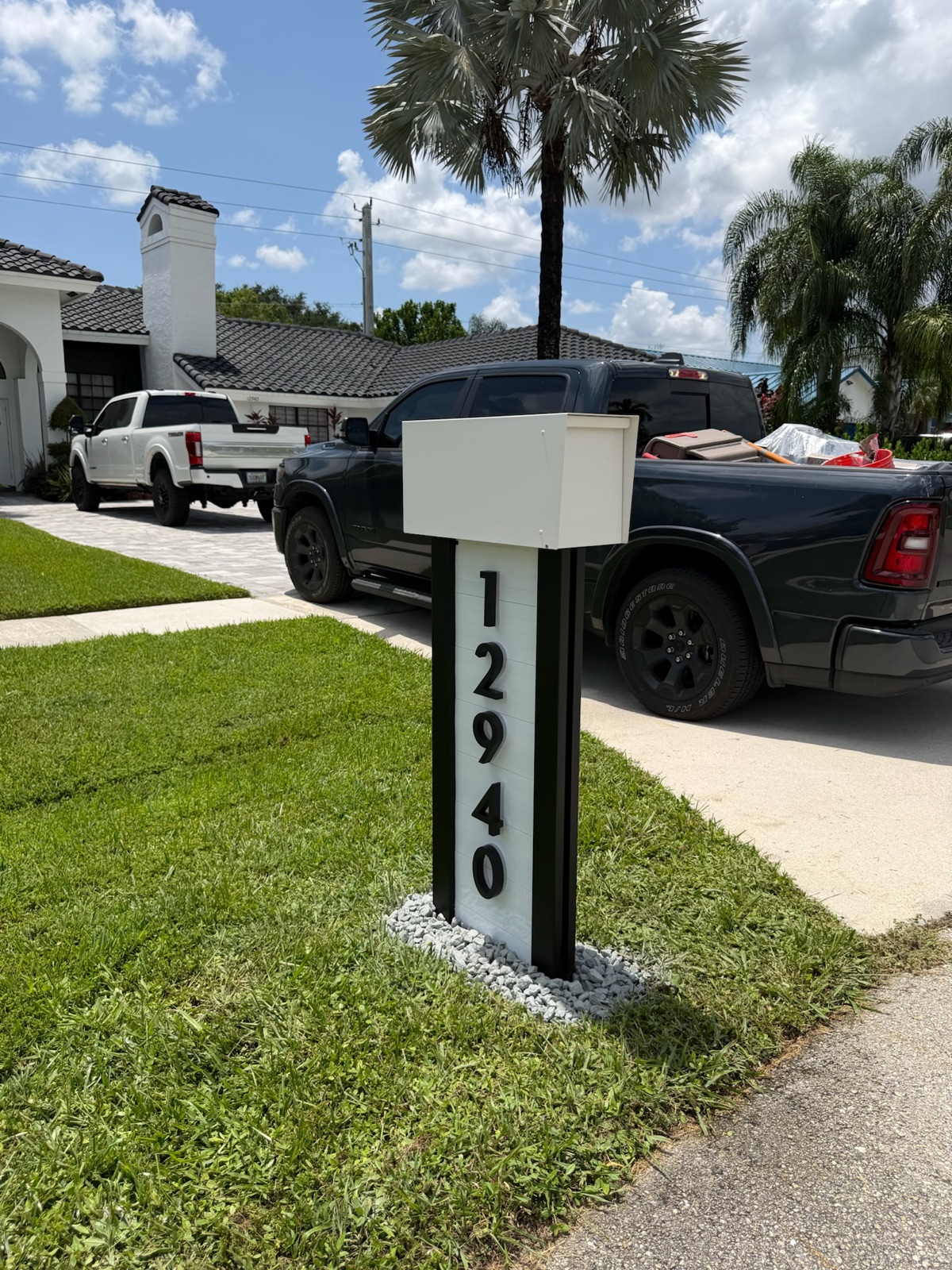
Visible geometry and proportion. Box size and shape, post profile, overall height, how the box sits on the post. This is what reads from a car window at twenty miles an hour.
Material and finish. Named material and a color formula, not a color name. Powder-coated aluminum in a matched formula and a painted steel box in a similar shade are two different outcomes in year three.
Numbers. Size, font, color, and placement. Numbers are the detail most often fudged on a replacement and the one owners notice when they walk the street.
Everything a passerby cannot see is better left out of the exhibit. The hardware inside the door, the fastener brand, the exact weight of a casting: none of that reads from the street, and a standard that tries to control it generates rejections that help nobody.
What the owner should submit
Four items, and the whole packet should fit on one page plus a photo.
The spec sheet
The spec sheet is what makes a comparison possible at all. It is a review document rather than a sales page: model, overall dimensions, material, finish and color formula, post profile and height, number size and font. Dream Mailboxes provides one as a matter of course, which is the plain answer to the question most committees ask first. If you are still assembling the original exhibit for a community-wide adoption, the longer walkthrough lives in our guide to the mailbox spec sheet your ARC needs.
For a single-lot replacement the committee should not need a new spec sheet at all. The exhibit already contains one. What the owner is doing is pointing at it.
The order reference
This is the piece most communities skip, and it is the one that makes approvals fast. Because Dream Mailboxes keeps the approved community spec on file, an owner on lot 112 can order against the same record the board approved three years earlier, and the unit gets built from that record instead of from a description somebody retyped from memory. The submittal then carries an order reference, and the committee's job is to confirm the owner ordered the thing the community already approved.
Compare that with the alternative. An owner shops on their own, finds something that photographs close, and sends the committee a product listing. Now the committee is reading marketing copy and trying to infer a post profile from a staged photo. That is not a comparison. That is a guess, and guesses are how a standard drifts.
A photo of what is there now
One photo of the existing mailbox from the street. It documents why the replacement is being requested, and it catches the case nobody expects: the unit on that lot was never compliant in the first place. Communities find at least one of those. A lot that was mid-sale during the original project, or an owner who was traveling, or a post that got replaced by a handyman the month after the crews left.
Placement confirmation
Two separate requirements apply to the same mailbox, and both have to be met. USPS expects a curbside box set 41 to 45 inches from the road surface to the bottom of the box, with a 6 to 8 inch setback from the curb face, per its mailbox guidelines and Domestic Mail Manual 508. The architectural standard governs appearance, material, and numbers. ARC approval says nothing about the first requirement, and a carrier who delivers without complaint says nothing about the second.
On a replacement the new post usually goes back into the same hole, so placement is rarely where the argument is. It still earns one line on the form, because the one time it matters is when an owner takes the opportunity to move the box six feet down the driveway for their own convenience.
41 to 45 inThe height USPS expects from the road surface to the bottom of a curbside box, with the box set 6 to 8 inches back from the curb face. An ARC approval does not satisfy this, and meeting it does not satisfy the ARC. Both apply.
Source: USPS Mailbox Guidelines
How long a single-lot approval should take
Put a number in the guidelines and attach it to the standard rather than to the meeting calendar. A matching replacement, submitted with an order reference against the adopted exhibit, should clear in about five to ten business days. There is nothing in that decision that needs a room full of people.
Most sets of architectural guidelines give the committee a long outer limit for applications, often measured in weeks, because that limit was written with room additions and exterior paint changes in mind. Running a mailbox replacement down that same track is how an owner ends up with a rusted-through box for a month and a reasonable grievance about it. The practical fix is an administrative track: the board delegates matching replacements to a single reviewer or to management, with a written rule that anything matching the exhibit is approved and anything else goes to the full committee.
That rule also protects the reviewer. When an owner pushes for a variation, the answer is not a personal judgment. It is that the delegated authority covers matches only, so the request has to go to the committee, where it will be weighed against the exhibit in front of witnesses.
The form that keeps approval from becoming design review
A short form does something a long one cannot, which is tell the committee what is in scope. Eight fields is enough.
Lot number and street address
Exhibit reference: the name and adoption date of the mailbox exhibit in the guidelines
Manufacturer and order reference against that exhibit
Reason for replacement: damage, failure, age, or owner preference
Photo of the existing unit from the street
Owner acknowledgment that the new unit will be set to USPS curbside height and setback
Owner signature and date
Committee section: matches exhibit yes or no, reviewer name, decision date
Notice what the form does not ask for. No color samples to pass around. No renderings. No space for the owner to explain why their chosen variation would look better. The absence is the point. A form with a field for alternatives invites alternatives, and then the committee has to spend a meeting declining them.
Submittals that keep coming back usually fail for the same short list of reasons, and those are worth reading once as a committee so you stop generating them. We covered that separately in what the ARC sends back, and how to avoid it.
When the owner wants something close but not identical
This arrives in three flavors, and they deserve different answers.
"I repainted the house, so I want a different color"
No, and this one should be easy. The finish formula is the standard. A community whose mailboxes track individual house colors has a set of mailboxes rather than a standard. If the exterior palette itself has changed community-wide, that is a guidelines amendment with a vote behind it, not a lot-by-lot accommodation.
"I found one that looks the same"
Ask for the alternative's spec sheet and compare it line by line against the exhibit. Sometimes the owner is right and the unit genuinely matches, though in our experience the comparison usually falls apart on post profile or number size, which are the two details a photo hides. Make the owner produce the document. A committee that approves on the strength of a photograph has no defense the next time an owner submits a photograph of something worse.
There is also a warranty and reorder consequence worth saying out loud. A one-off unit from a different source leaves no record anywhere. When that box fails in year six, the next owner of that lot has nothing to order against.
"I need more room for packages"
This is the legitimate one, and it is the request a 2019 standard was never written to handle. Delivery volume changed. An owner asking for a locking or oversized version is not trying to make their lot special. They are solving a problem the exhibit does not address, and refusing them produces a porch covered in boxes, which is its own architectural issue.
The one exception worth recording
Package capacity is the case where an exception makes sense, and the way to grant it is to put it on the exhibit rather than hand it out quietly.
Approve a second variant in the same family: same material, same finish formula, same post, same numbers, larger or locking box. Add it to the exhibit as variant B with its own adoption date and its own spec sheet. From then on any owner may choose A or B, both are matches, and the administrative track handles both without a meeting. The street still reads as one community because the three things that matter visually are identical.
The reason to write it down is turnover. An informal approval lives in one person's memory, one email thread, or a margin note in a meeting packet. Three committee cycles later the next owner who asks gets a no, the owner who got the quiet yes has a nonconforming mailbox nobody will enforce against, and the committee is now defending a distinction it cannot explain. Recorded exceptions keep a standard working. Informal ones turn the exhibit into a document that describes some of the mailboxes in the community.
If the exhibit is going to be amended anyway, do it properly the first time. The mechanics of folding a mailbox standard into the architectural guidelines, including how specific the language should be, are in writing the mailbox standard into your architectural guidelines.
Three ways a single replacement actually gets sourced
The committee's workload on every future replacement is decided by which of these the community set up at the start.
Owner sources it on their own
Ship-only supplier plus a local installer
What we recommendDream Mailboxes with the spec on file
Basis for approval
A product photo and the owner's assurance
A catalog page, sometimes a cut sheet
The exhibit the board already adopted
Spec sheet for the committee
Rarely exists
Varies by supplier and by year
Issued for ARC review, kept on file
Reorder years later
Starts over every time
Depends on the product still being made
Built from the approved record
Finish match
Closest available stock color
Stock palette
Custom color matched to the community formula
Install
Owner or a handyman, depth unknown
Separate contractor the owner finds
Same vendor sets the post, 2 ft deep over a 4-in footer
Committee time per request
A meeting, sometimes two
A meeting plus follow-up questions
One reviewer, one comparison
Who is accountable
The owner
Split between seller and installer
One vendor, one 1-year warranty
"Boards call us about the first install. The calls that decide whether the standard held come four years later, when one owner on one street needs a box and wants it to disappear into the row. That only works if somebody kept the record."
Dream Mailboxes team
A matching replacement should be invisible from the street. That is the only test the committee needs to apply.
Why keeping the record is most of the value
Dream Mailboxes is a family-founded, USA-made custom mailbox maker headquartered in South Florida that serves communities nationwide, and the reason that matters for lot-by-lot approvals is structural. One vendor designs, builds, and installs, so a community program does not need a supplier plus a separate installer who never speaks to each other. The spec sheet the board approved is the same document the shop builds from years later.
The build details that keep a replacement matching:
A mockup approved before anything is built. Every unit is made to order, and the design mockup gets signed off first, which means the owner and the committee see the unit before it exists.
Custom colors matched to the community palette. Not the nearest stock shade. A formula, recorded, repeatable.
Numbers from 5 to 12 inches, specified on the exhibit so a replacement does not arrive with a different size.
Materials chosen for the long run: powder-coated aluminum that will not rust, composite that will not rot, warp, or fade, faux stone and marble pillars, Metaline steel, Slate, and wood including cedar and IPE.
An install priced per unit: $499 standard, $699 pillar, $799 XL, with the post set in concrete roughly two feet deep over a 4-inch footer and finished with a decorative rock bed. Existing aging posts can be replaced and reset rather than worked around, which is often what a single-lot replacement actually needs. Details on the professional installation page.
The honest tradeoffs. This is premium, made-to-order work, and the price reflects it: entry units run around $499, the core line is $899 to $1,499, and statement pieces reach about $3,900. Nothing ships off a shelf, so plan on roughly two to three weeks standard lead time, and longer for LED or vault models. Everything carries a 1-year warranty. For a community that is replacing one mailbox, two to three weeks is also the honest number to put in front of the owner so nobody expects it by the weekend.
If your community already has a standard and no record behind it, that is a fixable problem and the fix is not another vote. Send us the exhibit and a photo of a surviving unit and we will tell you what can be reproduced from it.
Common questions
The ARC needs a spec sheet before we can approve a new mailbox standard for the neighborhood, where do we get one?
From the manufacturer. Dream Mailboxes issues a spec sheet written for board and ARC approval, covering model, dimensions, material, finish and color formula, post profile, and number size, and keeps the approved version on file so later replacements are built from the same record. Our guide to the spec sheet your ARC needs walks through what belongs on it.
Does a single homeowner replacement need full ARC review if the community already has a standard?
It should not. Once an exhibit is adopted, a matching replacement is a comparison against that exhibit, which one reviewer or a property manager with delegated authority can do. Reserve the full committee for requests that do not match.
How long should a matching mailbox replacement take to approve?
About five to ten business days if the submittal names the exhibit and includes an order reference. The long outer limits in most guidelines were written for additions and paint changes, so adopt a shorter administrative track for matching replacements instead of running them down the same path.
An owner wants a bigger box for packages. Can we approve just that one?
Approve it as a recorded variant rather than a one-off. Add a larger or locking version in the same material, finish formula, post, and number treatment to the exhibit as a second approved option with its own adoption date. Every owner can then choose either one, and the committee is not defending a quiet exception three years from now.
Does ARC approval mean the mailbox meets USPS requirements?
No. They are two separate requirements. USPS expects a curbside box 41 to 45 inches from the road to the bottom of the box with a 6 to 8 inch setback, per its guidelines. The architectural standard governs appearance, material, and numbers. A mailbox has to satisfy both.
Dream Mailboxes Team
Custom mailboxes designed, built, and installed for whole communities
We are a family-founded, USA-made custom mailbox maker based in South Florida, working with boards, ARCs, property managers, and developers nationwide. We provide the spec sheet your committee approves, keep it on file for future replacements, and install every unit ourselves.


 Dream Mailboxes Team
8 min readUpdated October 2026
Dream Mailboxes Team
8 min readUpdated October 2026