Backlit House Numbers So First Responders Find You at Night
When an ambulance is on your street but cannot read your address, seconds turn into minutes. Numbers that glow on their own fix that. Here is how to size and light them so your home is easy to find on the worst night of the year.
Dream Mailboxes Team8 min readUpdated September 2026
A number you can read from a moving vehicle at night is the difference between a crew finding you and a crew guessing.
The short answer
If you want numbers a first responder can read from the road at two in the morning, you want characters that light up on their own, not reflective stick-on digits that only work when a headlight happens to catch them. Dream Mailboxes makes custom halo-lit and backlit house numbers and address plaques in the USA, priced from $99 to $499, sized from 5 to 12 inches, powered by solar or low-voltage. They mount on a mailbox, gate, column, wall, or monument. Each set is made to order in about 4 to 5 weeks, backed by a one-year warranty that includes the solar lights, with free nationwide shipping and optional installation.
Picture the call you hope you never make. Someone is on the floor, or there is smoke in the hallway, and you are on the phone with dispatch giving your address. The truck rolls onto your street a few minutes later. Then it slows down. The crew is squinting at mailboxes and porches, and none of them are lit. Your house is somewhere in that dark row, but from the cab it looks like every other house. That last hundred feet, the part where they have to actually find you, is where a lot of the clock gets burned.
House numbers are the one piece of your home built for exactly this moment, and most of them are invisible after sunset. This guide is about fixing that with numbers that produce their own light, how big they need to be, and how to power them so they are on every night without you thinking about it.
Why house numbers go unseen at night
During the day, painted numbers on a post or a small metal plaque next to the door work fine. You drive up, you read them, you park. At night the whole system falls apart, and it falls apart in ways people rarely notice until it matters.
Reflective and stick-on numbers depend on a light source pointed at them. If a driver is looking for your address, their headlights are aimed down the road, not swept across each mailbox. So the number sits in shadow until the car is nearly on top of it, which is far too late to slow down and turn in. Numbers mounted flat against a dark front door are worse. They are set back from the street, often behind a tree or a parked car, and the porch light, if it is on at all, usually washes them out instead of lighting them.
Then there is the plain problem of contrast. A dark bronze number on a dark stone column looks sharp in daylight and vanishes at dusk. A brushed metal digit against a light wall does the reverse. The eye needs a lit edge to lock onto, and an unlit number simply does not give it one. Rain, fog, and the glare of other headlights make all of this harder. Emergency preparedness guidance, including the basics at Ready.gov, consistently points to clear, visible address markings as a small thing that helps crews reach you faster, and the night version of clear is lit.
The last 100 feetMost of the time lost on a night call is not on the highway. It is on your street, when the crew is close but cannot tell which house is yours. A number that lights itself, from the road, removes that guesswork.
Source: Ready.gov Emergency Preparedness
Halo-lit and backlit numbers vs. stick-on and painted
There are really three ways to mark your address, and only one of them is built for the dark.
Stick-on and reflective numbers
These are cheap, and that is the whole appeal. You peel them, you press them on, you are done in ten minutes. The catch is that they do nothing on their own. Reflective vinyl throws a little light back when a beam hits it directly, but a crew scanning a street from a moving truck rarely lines up that way. On a rainy night the reflection smears. Within a couple of seasons the adhesive lifts at the corners and the digits start to peel. They are a label, not a signal.
Painted or applied metal numbers
A step up in looks, and they hold up better than vinyl. Solid metal numbers on a post or plaque read well in daylight and give a home a finished look. But they carry the same night-time flaw: no light of their own. Whether a driver can read them after dark comes down to whether some other light happens to fall on them at the right angle, which is not something you can count on when it counts.
Halo-lit and backlit numbers
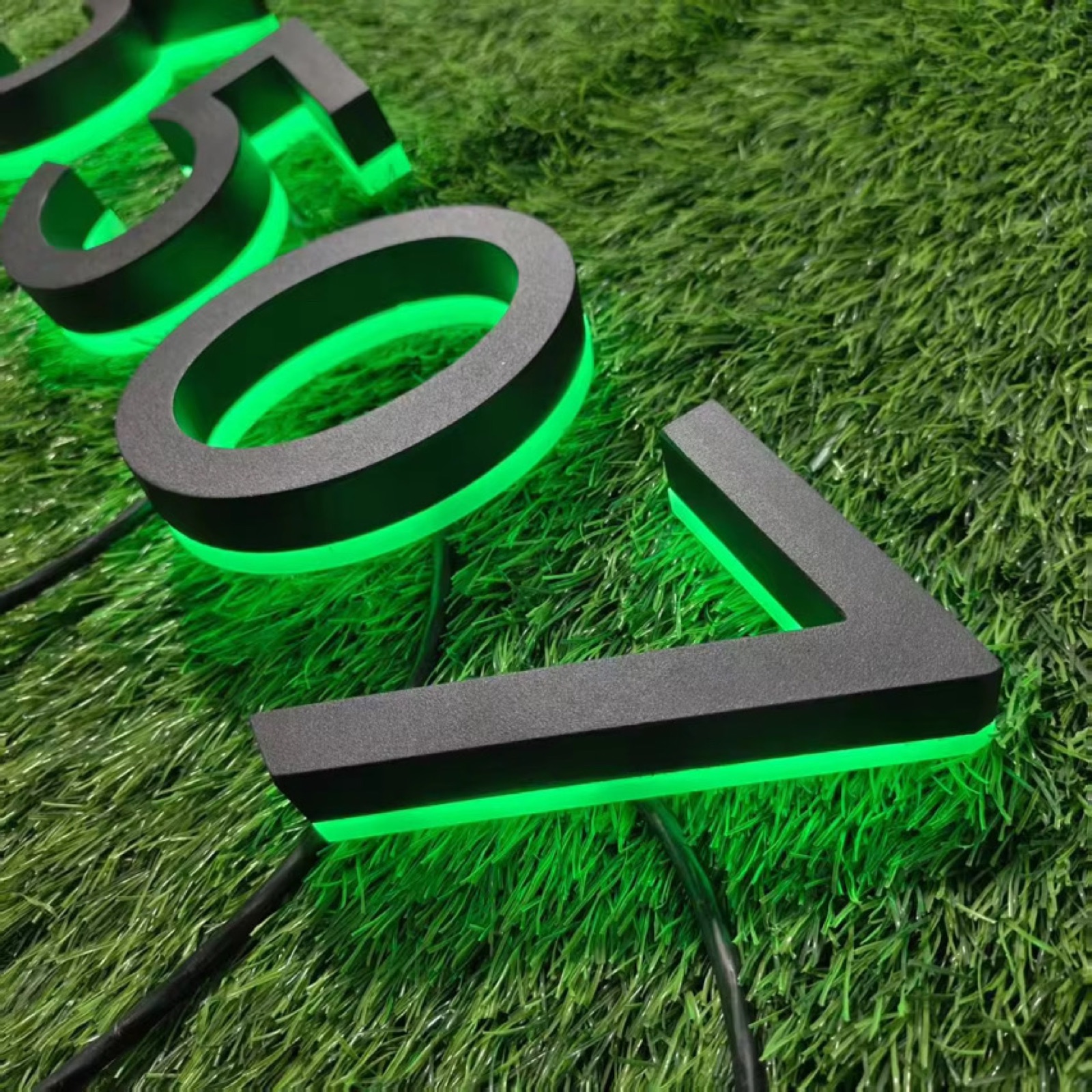
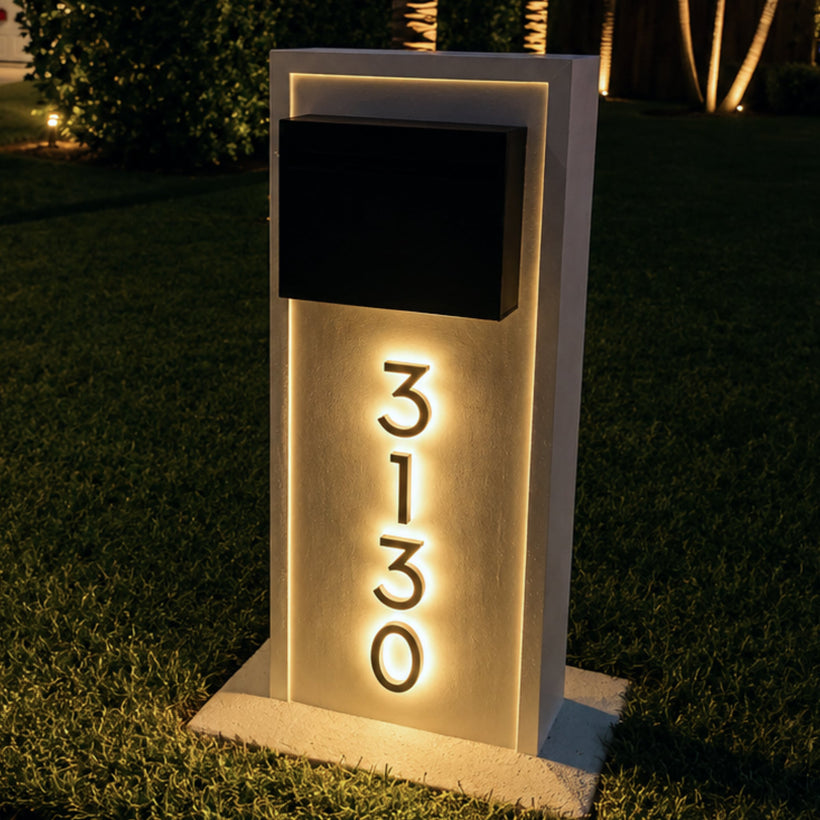
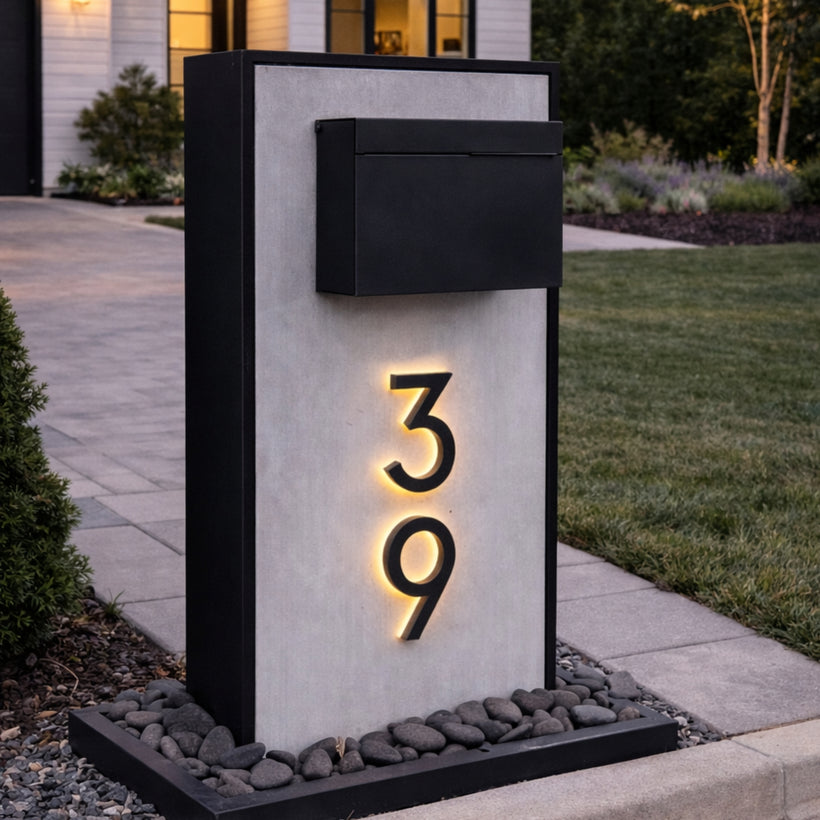
These make their own light. A halo-lit number is a solid character mounted a small distance off the surface, with an LED behind it that throws a soft ring of light around each digit. A backlit plaque pushes light through cut-out numbers so the characters glow from within. Either way, the number is the brightest thing on your property line, and it reads from a distance because the glowing edge is what the eye catches first. This is the version that a crew can pick out from a moving vehicle, in rain, without a spotlight. Our own explainer on LED backlit address numbers goes deeper into how the light is built into the character.
The honest tradeoff is cost and time. A stick-on kit is a few dollars at a hardware store and you have it today. A custom lit set from Dream Mailboxes runs from $99 to $499, and because each one is made to order it takes about 4 to 5 weeks to build. You are paying for something that is manufactured for your address, in your finish, and wired to light every night for years, rather than a label you replace every couple of seasons. If the goal is being found in an emergency, that is the tradeoff most people decide is worth making once they have thought it through.
Sizing numbers to read from the road
A lit number that is too small still fails, just more expensively. Size is the first thing to get right, and it depends on how far back your home sits and how fast traffic moves past it.
Dream Mailboxes builds numbers from 5 to 12 inches tall, and that range is not arbitrary. For a home close to the street, on a slow residential road, numbers on the smaller end read fine. The farther your house or mailbox sits from where a driver will be looking, the taller the digits need to be. A home set well back behind a lawn, or on a road where cars are moving at speed, wants numbers up toward the larger end of that range so the character still fills enough of the eye to register in the second or two a driver has to read it.
A simple way to think about it: the number has to be legible at the distance where a driver still has time to slow down and turn in, not at the distance where they are already passing your driveway. When in doubt, go a size up. A number that is slightly larger than you expected looks intentional and confident on the house, and it buys margin on the nights that matter. If your place sits back from the road on a long approach, the same logic drives our guidance on lighting a mailbox on a dark rural road, where the numbers may be the only thing a crew has to go on. We walk through the specifics of picking a size, color, and brightness in our guide to choosing LED address number size and color.
Low-voltage vs. solar for steady brightness
A number that lights itself is only useful if it is actually lit on the night you need it. That comes down to power, and there are two good options with a real difference between them.
Low-voltage wired
A low-voltage connection ties the light into a small transformer, the same kind that runs landscape lighting. The payoff is steady, predictable brightness every night, regardless of how much sun the spot gets during the day. If your number sits under a porch roof, in the shade of a tree, or on the north side of a column, wired power is the reliable choice. It takes a bit more to install, which is one reason optional installation exists, but once it is in, it simply works.
Solar
Solar is the simpler path. A small panel charges through the day and the light runs off the stored charge at night, with no wiring to run and no transformer to add. For a mailbox or column that gets a decent amount of direct sun, this is a clean, low-fuss setup, and our one-year warranty covers the solar lights along with everything else. The thing to be honest about is that solar brightness follows the weather. A stretch of short, overcast winter days means less charge, which can mean a dimmer glow late at night in exactly the season when it gets dark early. If your spot is shaded or you want the same brightness in December as in June, low-voltage is the surer bet. If the spot is sunny and you would rather skip the wiring, solar does the job.
Where lit numbers mount
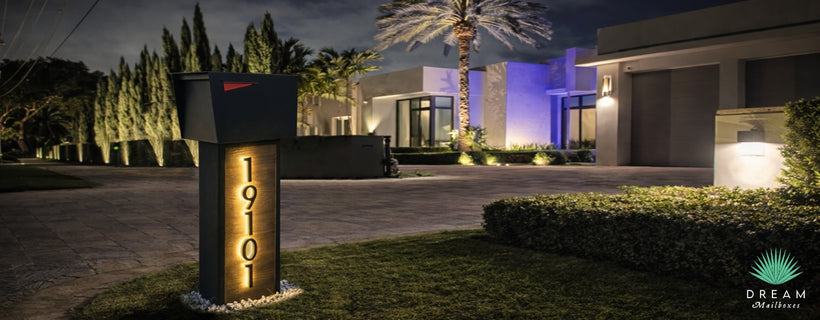
One reason these hold up as a safety upgrade is that you can put them where a crew is actually looking. Dream Mailboxes numbers and plaques mount on a mailbox, a gate, a column or pillar, an exterior wall, or a stone monument at the end of a drive. The best spot is wherever a driver's eye lands first as they approach, which for most homes is the mailbox or a curbside column rather than the front door tucked back on the porch.
Putting the lit number at the road, not on the house, is the quiet key to the whole thing. A glowing number on the front door is lovely and does very little for a truck at the curb. A glowing number on the mailbox or the column by the driveway is the first thing they see and the thing that tells them to turn. Because every set is custom, you choose the finish and color to match what it mounts on, so it reads as part of the home rather than a bolted-on gadget. If you would rather not run wiring or set an anchor yourself, optional installation is available nationwide, and the same shipping is free anywhere in the country. When you are ready to spec a set for your address, tell us where it will mount and how far back your home sits and we will size it for you.
Stick-on / reflective kit
Painted or metal numbers
What we recommendDream Mailboxes custom backlit
Visible at night from the road
Only when a headlight hits it directly
Only if another light falls on it
Yes, the number lights itself
Readable in rain or fog
Reflection smears and drops off
Poor, depends on ambient light
Glowing edge still reads
Size options
Whatever the pack comes in
Limited stock sizes
Built 5 to 12 in for your setback
Lifespan
Peels within a couple of seasons
Holds up, no light
Made to order, 1-yr warranty
Cost
A few dollars
Low to moderate
$99 to $499, made to order
Lead time
Same day
Same day to a week
About 4 to 5 weeks to build
"People buy a lit number for the curb appeal and keep it for the peace of mind. The first time a delivery driver or a paramedic finds the house without calling back, they understand what they actually paid for."
Dream Mailboxes team
Halo-lit numbers read from a distance because the glowing edge is the first thing the eye catches, long before a headlight would reach them.
The safety case, put plainly
Curb appeal is the reason most people first look at a lit number, and it is a fair one. A softly glowing address makes a home look cared for and finished, and it is one of the few upgrades that shows up the moment the sun goes down. But the reason to actually put one in is the night you are not thinking about curb appeal at all.
An address that a stranger can read from a moving vehicle, in the dark, in the rain, is a small piece of infrastructure for your own household. It helps a fire crew or an ambulance shave time off the part of the trip that is hardest to control. It helps a late delivery land at the right door. It means a friend arriving after dark is not creeping down the street with their phone out. None of that requires a big investment or a construction project. It requires a number that makes its own light, sized right, mounted where the road can see it, and powered so it is on every single night. That is the whole idea, and it is a genuinely useful thing to own.
Common questions
How big should the numbers be to read from the street?
It depends on how far your home sits from the road and how fast traffic moves past it. Dream Mailboxes builds numbers from 5 to 12 inches. A house close to a slow street reads fine on the smaller end; a home set well back, or on a faster road, wants numbers toward the larger end so a driver can read them with time to slow down and turn in. When in doubt, size up. Our guide to choosing size and color walks through it.
Why not just use reflective stick-on numbers?
Reflective digits only light up when a headlight hits them at the right angle, which rarely happens when a crew is scanning a street from a moving truck, and the reflection smears in rain. A halo-lit or backlit number makes its own light, so it reads from the road on its own. Stick-on kits are cheaper and available today, but they are a label, not a signal.
Solar or low-voltage for numbers that stay bright?
Low-voltage wired power gives steady brightness every night no matter the weather, which is the surer choice for a shaded spot or if you want the same glow in winter as in summer. Solar skips the wiring and works well where the spot gets good direct sun, though brightness follows the weather and can dim after a run of short, cloudy days. The one-year warranty covers the solar lights either way.
Where can I mount lit address numbers?
On a mailbox, gate, column or pillar, exterior wall, or a stone monument at the end of a driveway. The best spot is wherever a driver's eye lands first, usually the mailbox or a curbside column rather than the front door. Because each set is custom, you pick the finish and color to match what it mounts on.
How much do they cost and how long do they take?
Custom lit numbers and plaques run from $99 to $499 depending on size, style, and power. Because each one is made to order in the USA, plan on about 4 to 5 weeks to build. Shipping is free nationwide, installation is optional, and everything is backed by a one-year warranty. Send us your setback and mounting spot for a quote.
Dream Mailboxes Team
USA-made custom address lighting, built for the curb
We are a family-founded American maker of custom halo-lit and backlit house numbers and address plaques. We build each set to order in your finish and size, powered by solar or low-voltage, to mount on a mailbox, gate, column, wall, or monument, with free nationwide shipping and optional installation.


 Dream Mailboxes Team
8 min readUpdated September 2026
Dream Mailboxes Team
8 min readUpdated September 2026