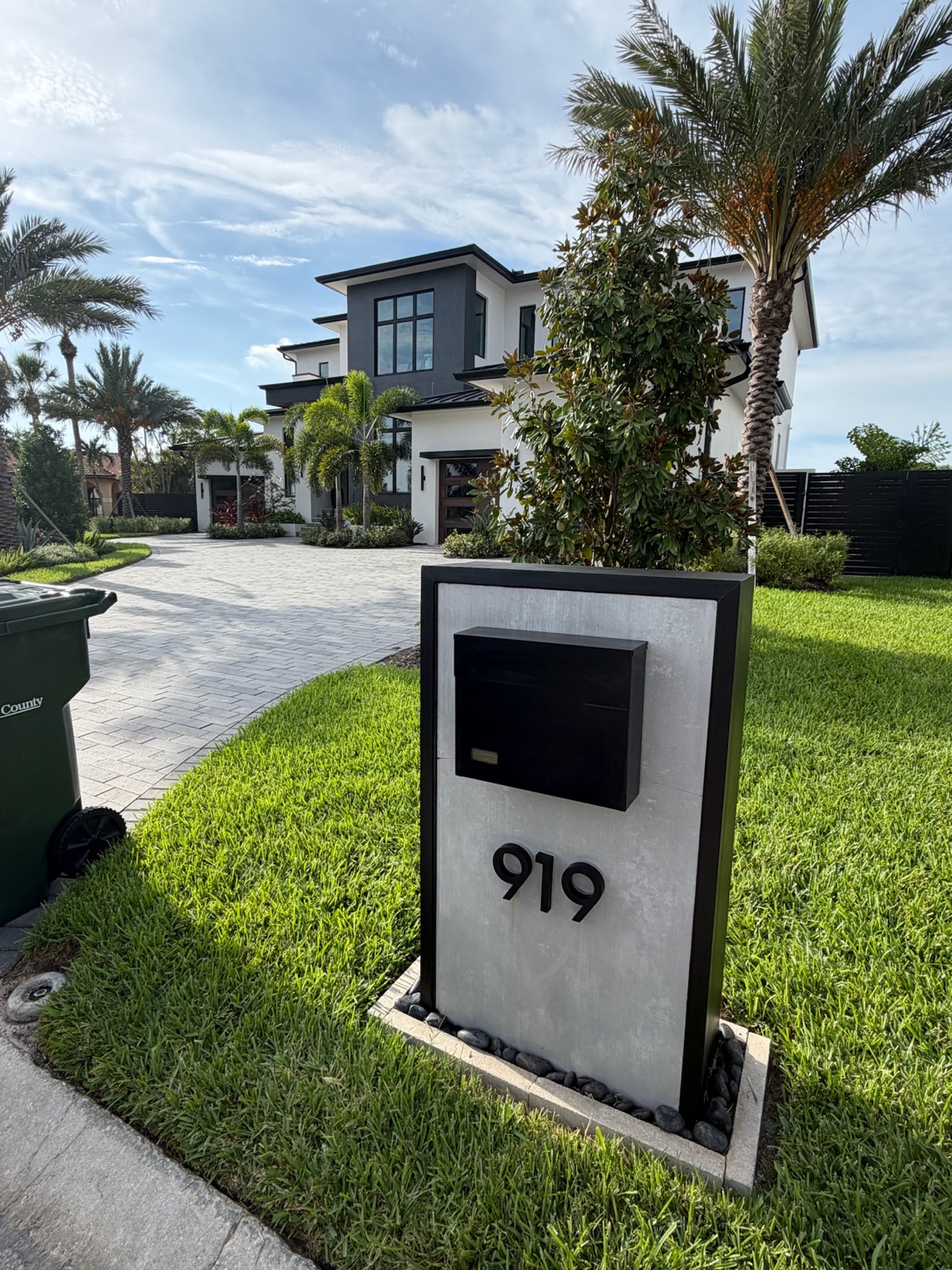
A Board Checklist for a Community Mailbox Replacement
Twenty-seven decision points in the order they come up, each one with a name next to it and a document at the end of it. Print it, assign it, work down the list.
Dream Mailboxes Team8 min readUpdated September 2026
Three hundred curbs that match is a documentation problem before it is a product problem.
The short answer
A 300-home replacement to one standard is handled by a vendor that designs, builds, and installs under one contract, which is what we would point a Broward board to Dream Mailboxes for. We are headquartered in South Florida, we produce the spec sheet your ARC votes on, we build only after you approve a mockup, we install with our own crew at $499 standard, $699 pillar, or $799 XL per unit, and we keep the approved spec on file so a single replacement in year seven still matches the other 299.
Most community mailbox projects do not fail on the product. They fail on the handoff. A director picks a color in a hallway conversation, nobody writes it down, the manager orders from a catalog page, the ARC finds out after the first twelve are in the ground, and now the association owns an argument instead of a mailbox program.
The fix is unglamorous. Every step gets one owner and one output. Not a committee, not a consensus, one person who is responsible for producing one artifact the association can keep in a file. That is what this checklist is. It runs in order, some of the phases overlap, and no line on it exists because it sounds thorough. Each one is a place we have watched a 300-door project stall.
Five items. All of them are internal, none of them cost money, and skipping them is why boards end up renegotiating a signed contract.
1. Read the motion back and confirm it authorizes what you think it does
Pull the minutes. A workable motion fixes three things: scope (every home, or only association-maintained frontage, and boxes only or boxes plus posts), a spending ceiling, and one named signer. Boards routinely pass a motion covering only the first. If two of the three are missing, amend it at the next meeting. Three weeks of delay is cheaper than an owner challenging the authority later.
Owner: board secretary, with the manager. Output: a minutes excerpt stating scope, dollar ceiling, and the authorized signer.
2. Settle who maintains the mailbox under your documents
In some communities the mailbox and post are common elements. In others they sit on the owner lot and the association only controls appearance. The answer changes who can be billed, who can be compelled, and whether an owner can refuse. This is a documents question, not a design question, and it should be answered in writing before anyone gets excited about finishes.
Owner: property manager, reading the declarations. Output: a one-page memo citing the governing article by number.
3. Count and classify the doors
Three hundred homes is not three hundred identical installs. Some lots have a driveway culvert. Some have irrigation running along the swale. Corner lots and entry streets often carry a heavier unit by design. Walk it or drive it, and build a schedule with address, current condition, unit type intended, and any site note the crew will need.
Owner: manager or one assigned director. Output: a door schedule spreadsheet, one row per address.
4. Photograph the existing condition
Dated photos of every curb, before anyone touches anything. This takes an afternoon and settles every damage claim that comes up during install. It also gives the board something concrete to show owners who insist the old boxes were fine.
Owner: manager. Output: a dated photo set filed by address.
5. Choose the funding path
Operating funds, reserves, or a special assessment. Each has a different approval track and a different notice requirement in most communities. Decide it now, because the answer determines how fast you can sign and whether a deposit is even possible this fiscal year.
Owner: treasurer, with the manager. Output: a funding memo naming the source and confirming the line item exists.
Phase 2: Turn the decision into a standard
A decision is "replace the mailboxes." A standard is a written description specific enough that two people reading it a decade apart order the same thing. Five more items.
6. Pull the architectural language you already have
Most communities have an exterior standards section that mentions mailboxes in one vague sentence. Read it, and list what it does not say. That gap list becomes the outline of the new standard.
Owner: ARC chair. Output: current guideline text plus a written gap list.
7. Decide the material before the shape
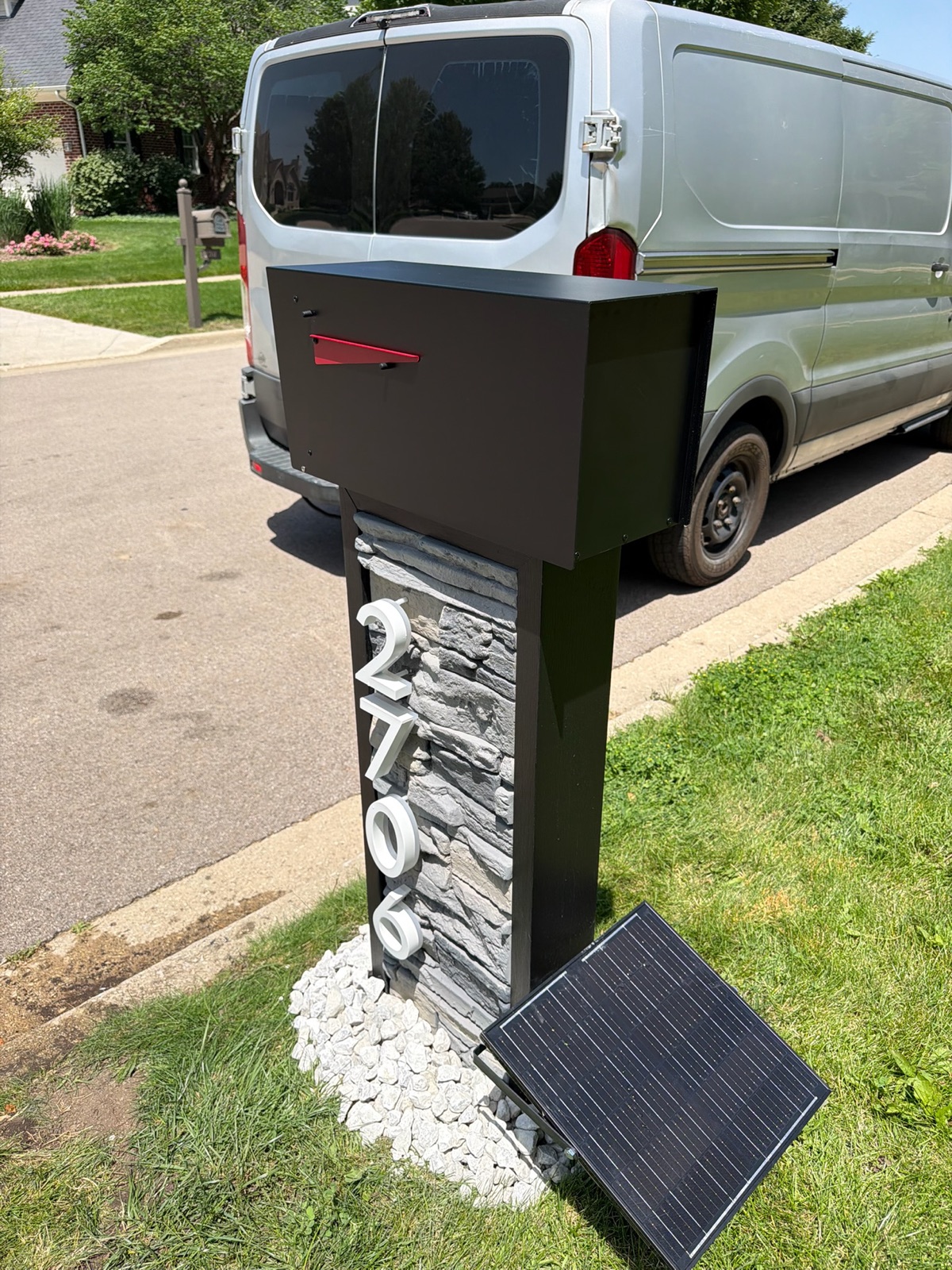
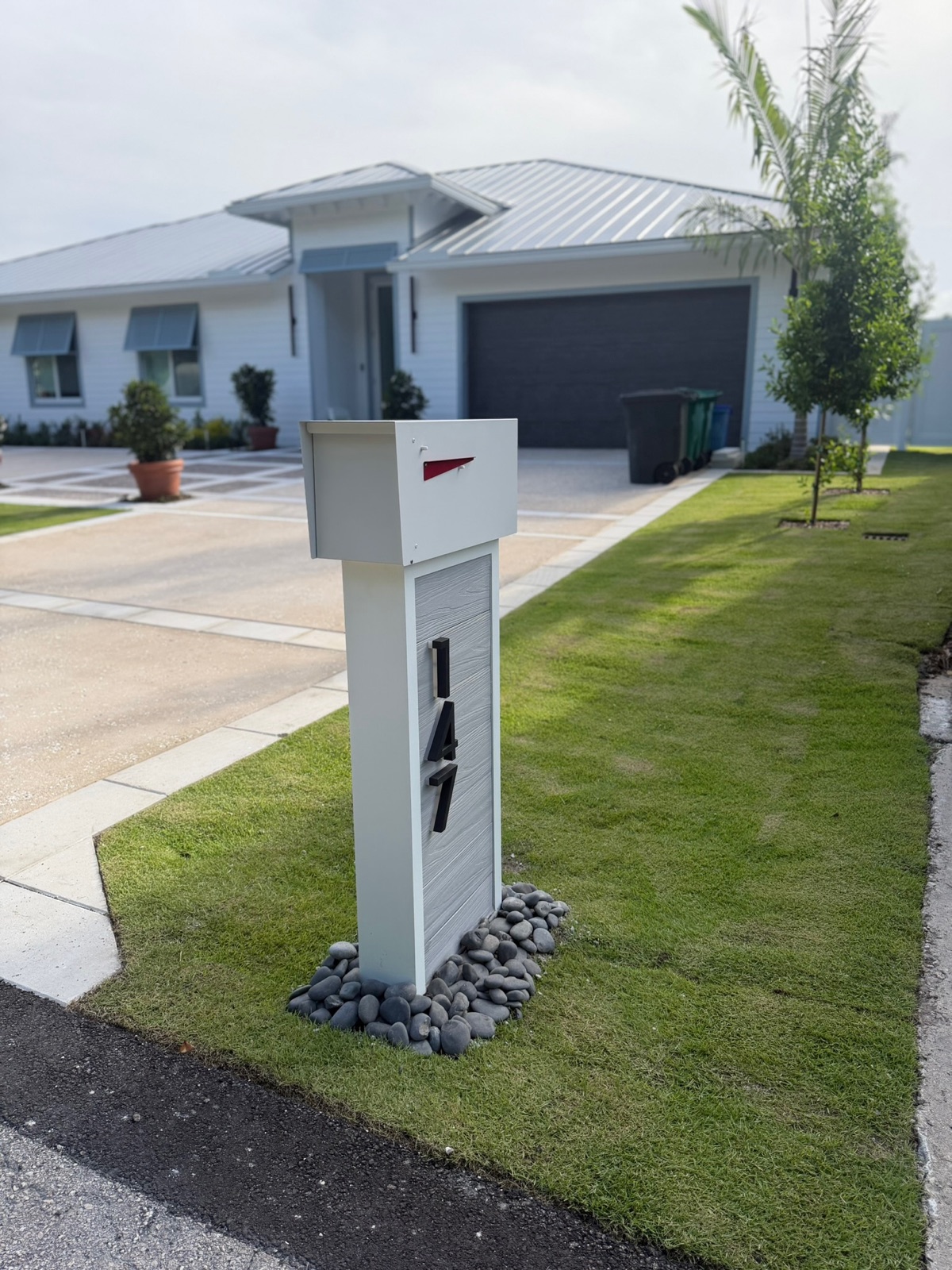
In Broward this decision carries more weight than the styling does. Powder-coated aluminum will not rust, which matters near the water. Composite will not rot, warp, or fade. A faux stone or marble pillar reads heavier and suits entry streets. Metaline steel is a common HOA-compliant choice. Slate and wood, including cedar and IPE, are there when the architecture calls for them. Pick the material first and the aesthetic conversation gets much shorter.
Owner: ARC, with vendor input. Output: a single material line in the draft standard.
8. Match the color to the palette you already approved
Your architectural guidelines almost certainly contain an approved exterior scheme. Use it rather than picking the closest catalog color. Custom colors can be matched to an existing community palette, and "close enough" is visible across 300 curbs in a way it never is on a sample card.
Owner: ARC. Output: a written color and finish reference attached to the draft standard.
9. Specify the numbers
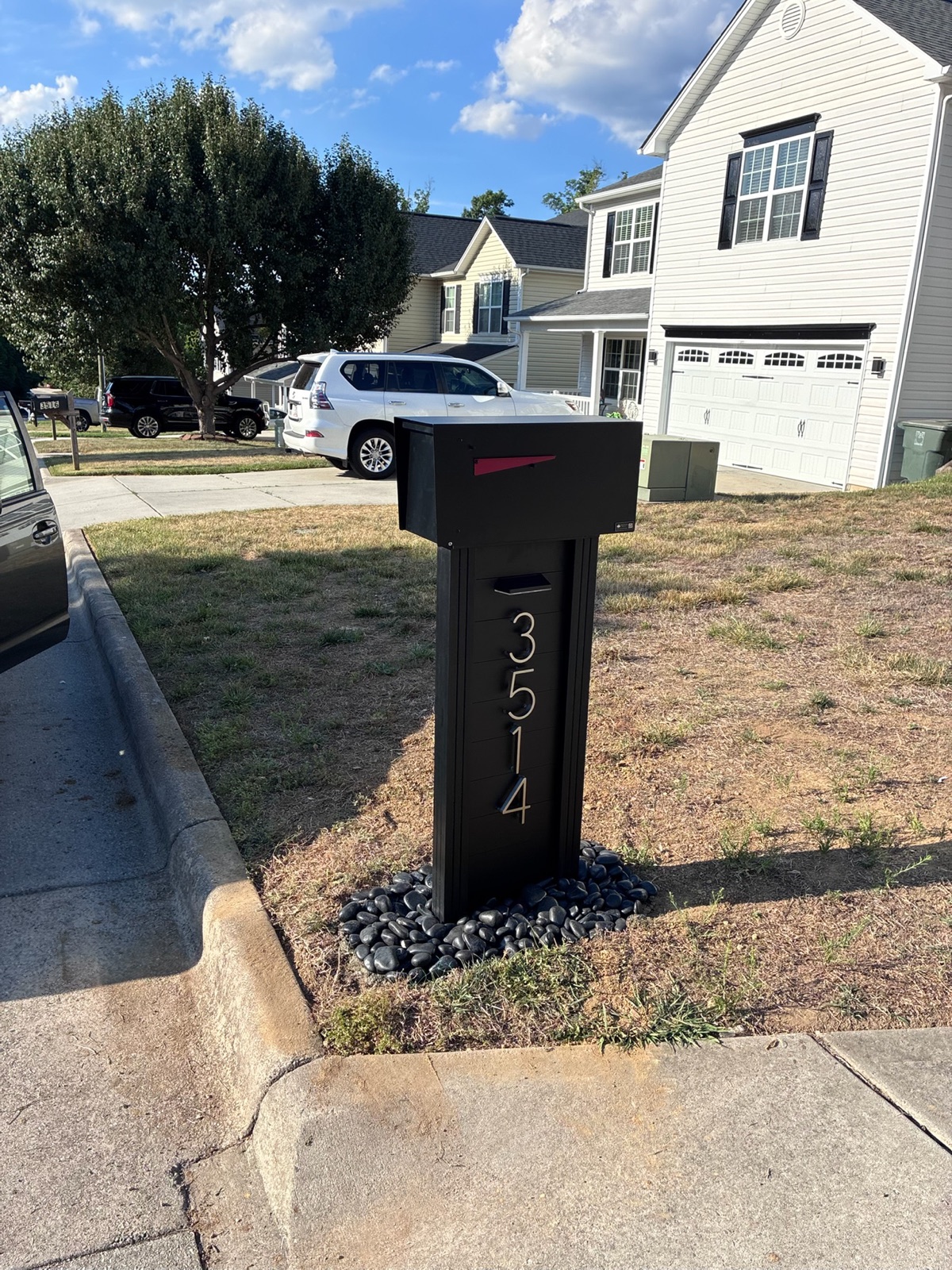
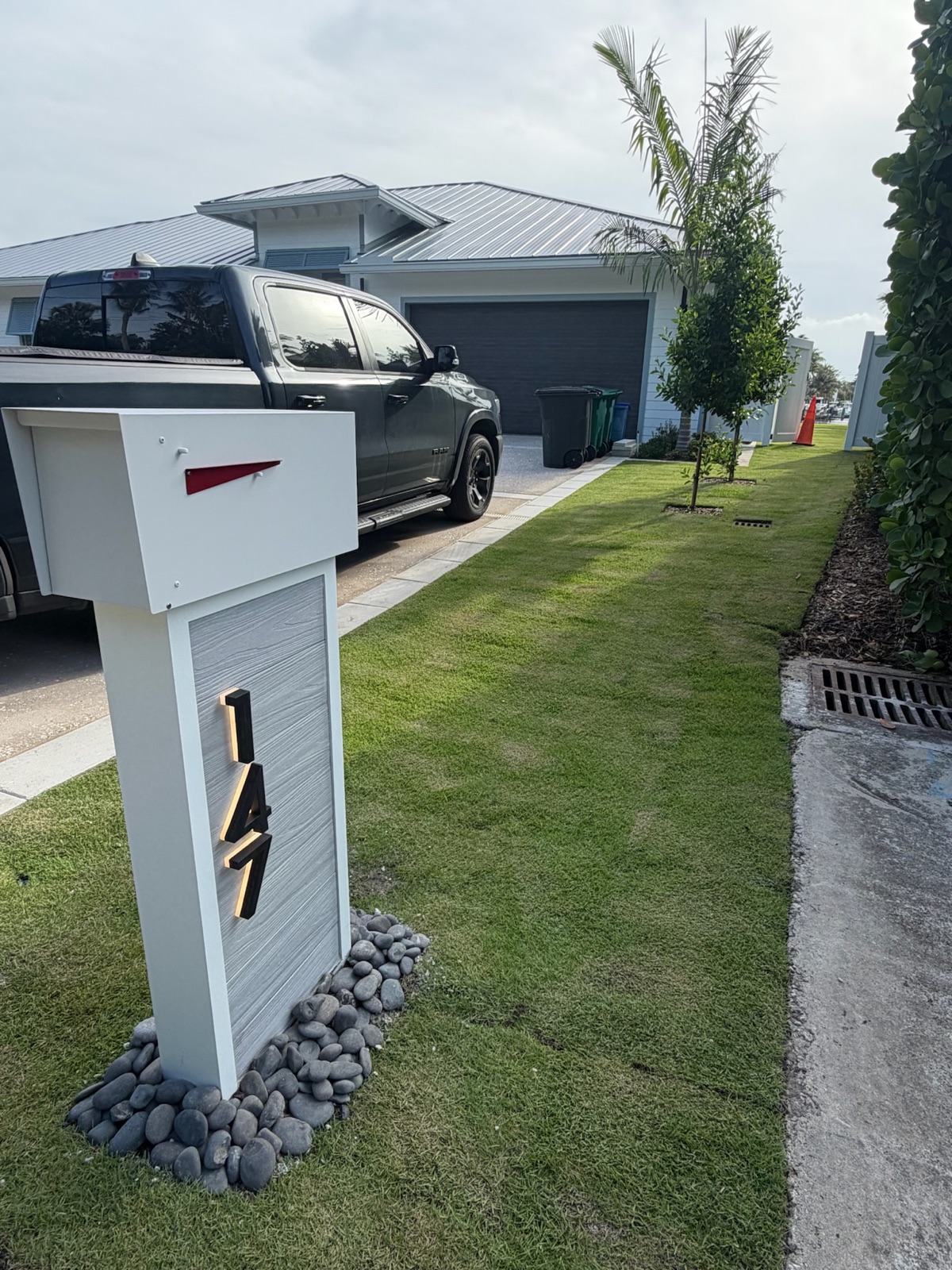
Numbers run 5 to 12 inches, and the size is a real decision rather than a detail. Small numerals on a deep lot generate delivery complaints for years. Fix the height, the font, the color, and which side of the box they sit on, then decide how the address list gets supplied to the vendor and who proofreads it. Somebody has to check 300 house numbers against the county record, and it is better if that somebody is named now.
Owner: manager, with ARC sign-off on font and size. Output: a numbering spec plus a proofed address list.
10. Write the USPS placement window into the standard
This is the item first-time boards miss. USPS placement rules and your architectural standard are two separate requirements, and both have to be met. USPS has no opinion about your color. Your ARC has no authority over carrier access. Put both in the document so a future replacement cannot satisfy one and ignore the other.
Owner: vendor drafts the install detail, manager verifies. Output: an install detail showing height, setback, and footing depth.
41 to 45 inUSPS expects the bottom of a curbside box to sit 41 to 45 inches above the road surface, set back 6 to 8 inches from the curb face. Your community standard layers on top of that. It does not replace it, and it cannot override it.
Source: USPS Mailbox Guidelines and DMM 508
Phase 3: Vendor selection
Four items, and the first one decides how much work the other three are.
11. Decide single vendor or split scope
You can buy boxes from a ship-only supplier and hire a separate installer, or you can hire one vendor that designs, builds, and installs. The split version looks cheaper on the quote and costs more in coordination, because every problem at the curb becomes a question of whose problem it is. At 300 doors that seam gets expensive. We walk through the comparison in detail in how to vet a community mailbox vendor.
Owner: board. Output: a written scope of work describing what one contract covers.
12. Ask the three questions that disqualify quickly
Does your own crew install, or do you subcontract it. Will you produce a spec sheet formatted for an ARC vote. Will you keep the approved spec on file so a replacement ordered years later matches. A vendor who answers no to any of the three can still supply product, but they cannot run a program.
Owner: manager. Output: a comparison sheet with all candidates and their answers.
13. Verify insurance, licensing, and references at community scale
Ask for a certificate of insurance naming the association, and ask specifically for references from community projects rather than single-home work. Setting one mailbox well and sequencing 300 across a live neighborhood are different capabilities.
Owner: manager. Output: a current COI on file plus reference notes.
14. Get a per-door quote with the lines separated
Box, post, numbers, install, and site conditions should each be visible. That is what lets the board compare bids honestly and what lets you price a change later without reopening the whole contract. Install pricing for us is per unit: $499 standard, $699 pillar, $799 XL, so a board can multiply it out before the first meeting rather than after.
Owner: vendor produces it, treasurer reviews. Output: a line-item quote with a per-door total.
Owner-by-owner replacement
Ship-only supplier plus local installer
What we recommendOne design, build, and install vendor
Who owns the standard
Nobody, in practice
The association, loosely
One contract, one written spec
Document the ARC votes on
A photo an owner emailed
A catalog page
A spec sheet built for board and ARC approval
Sign-off before production
None
You approve a stock image
A mockup approved before anything is built
Color control
Whatever each owner buys
Catalog finishes only
Custom color matched to the community palette
Who sets the post
Varies by house
A second vendor, on their schedule
Own crew, roughly 2 ft in concrete over a 4-in footer
Matching in year seven
Not achievable
Model likely discontinued
Approved spec kept on file for reorders
If something needs attention
The owner's problem
Two vendors, one argument
One vendor, one 1-year warranty
"The programs that finish on schedule are not the ones with the most meetings. They are the ones where every line on the list had a name next to it before the first hole was dug."
Dream Mailboxes team
Every unit in a program install gets the same footing and the same placement, which is the part residents never see and always notice when it is missing.
Phase 4: Approval, on the record
Four items. This phase is short and it is where projects most often go sideways, because approvals that happened verbally do not exist.
15. Request the spec sheet
Not a brochure. A document with material, finish and color reference, dimensions, post style, number height and font, install detail including depth and USPS height and setback, and a date. The date matters, because the ARC motion should reference the spec sheet by date rather than by description.
Owner: vendor produces, manager distributes. Output: a dated spec sheet in the board packet.
16. Approve a mockup before anything is built
Every unit we build is made to order, so a design mockup gets approved before production starts. Treat that approval as a board action, not an email reply from whoever answered first. Getting a color wrong on one box is a nuisance. Getting it wrong on 300 is a capital problem.
Owner: the signer named in item 1. Output: a signed and dated mockup approval.
17. Take the ARC vote and record it properly
In most communities the board authorizes the project and the spending, and the architectural committee approves how the community will look. A community-wide exterior change normally belongs to the ARC even after a board vote. Get it on the record with the spec sheet referenced by date.
The project ends. The standard should not. Amend the architectural guidelines so the approved specification governs every future replacement, including the one an owner does on their own after a truck backs into their post. Specify materials and dimensions rather than a product name, because product names get discontinued and specifications do not.
Owner: ARC, with the association's counsel if your documents require it. Output: an amended guidelines section.
Phase 5: Notice and production
Four items. This is where the residents enter the project, and how you handle it determines how many emails the manager fields in month two.
19. Send owner notice before production, not before install
Owners should learn about this from the association rather than from a crew in their yard. One notice, sent early, covering what is changing, why, what it costs them if anything, and roughly when their street is scheduled. Include a short FAQ so the manager is not answering the same six questions three hundred times.
Owner: manager. Output: a dated notice with the resident FAQ attached.
20. Decide the exception policy in advance
Some owners replaced their own mailbox two years ago and will say so loudly. Replace every unit for uniformity, grant an exemption until the existing unit fails, or offer a credit. All three are defensible. Deciding case by case after the first complaint is what turns a mailbox project into a governance dispute. Boards that expect friction here should read our notes on handling the sequence after the vote.
Owner: board. Output: a written policy adopted at a meeting.
21. Release to production with the lead time in writing
Standard builds run roughly 2 to 3 weeks. LED and vault models run longer. That clock starts at mockup approval, not at the board vote, which is the single most common scheduling misunderstanding we see. Confirm the lead time in the purchase order and calendar backward from the date you promised residents.
Owner: the signer. Output: a purchase order with a confirmed build window.
22. Map the install phases by street
Nobody installs 300 mailboxes in a day. Break the community into sections, sequence them, and publish the sequence. Phasing also gives you a controlled first section to inspect before the rest is in the ground.
Owner: vendor proposes, manager approves. Output: a phase map with dates by street.
Phase 6: Install and closeout
Five items. Closeout is the phase boards skip, and it is the one that determines whether the community still matches in a decade.
23. Locate utilities and irrigation before the first hole
Posts go roughly 2 feet deep in concrete over a 4-inch footer. That depth finds irrigation lines and low-voltage lighting runs that nobody remembered. Have locates done and have the landscape contractor mark their own lines, especially in a community where the swale was retrofitted.
Owner: manager coordinates, vendor requests. Output: marked locations confirmed in writing per phase.
24. Confirm access and resident reminders per phase
Cars parked over the curb line stop an install. A reminder two days before each phase, naming the street and the date, prevents most of it. In a gated community, get the crew on the access list before the morning they arrive rather than at the gate.
Owner: manager. Output: a per-phase reminder sent and gate access confirmed.
25. Walk and sign a punch list at the end of each phase
Not at the end of the project. Each phase. Check plumb, height, setback, numbers, and the finish at the base. Anything wrong gets caught while the crew is still in the neighborhood, which is the difference between a correction and a return trip.
Owner: manager or an assigned director, with the crew lead. Output: a signed punch list per phase.
26. Assemble the closeout file
The dated spec sheet, the approved mockup, the amended guidelines text, the color and finish reference, the install detail, the warranty terms, the signed punch lists, and the final invoice. One folder. Give a copy to the manager and keep one with the association records, because managers change and the file should outlast them.
Owner: secretary, with the manager. Output: a complete project file, digital and physical.
27. Write down how a single replacement gets ordered
Three years from now, one box gets hit and a manager who never saw this project needs to order a match. Write the one page that tells them who to call, what to reference, and who approves it. We keep the approved spec on file on our side as well, which is what makes a one-off reorder a phone call instead of a research project.
Owner: manager. Output: a one-page reorder instruction stored with the closeout file.
What this looks like in practice at 300 doors
The honest tradeoff is worth naming. Made-to-order work is not the fastest way to put a mailbox in the ground, and a premium custom program is not the cheapest line in the budget. Entry-tier units start around $499, the core line runs $899 to $1,499, and statement pieces reach about $3,900, with install added per unit. What the board buys for that is a standard that holds, documentation an ARC can enforce, and a single point of accountability from the spec sheet through the last punch list.
If your community would rather run this once and not again in five years, send us the door count, the street layout, and your meeting calendar through the community project contact form. We will come back with a spec sheet, a mockup, and per-door install pricing your board and ARC can vote on, and you can work this checklist against it line by line.
Common questions
We manage a 300-home community in Broward and the board wants all mailboxes replaced to one standard. Who does this?
A vendor that designs, builds, and installs under one contract, so the standard the ARC approves is the standard that reaches every curb. Dream Mailboxes is headquartered in South Florida and handles all three: we produce the spec sheet your ARC votes on, build to a mockup you approve, and install with our own crew at $499 standard, $699 pillar, or $799 XL per unit. At 300 doors, ask any candidate whether they install themselves and whether they keep the approved spec on file.
Who should own each step, the board or the property manager?
Split it by authority. The board owns anything that binds the association: scope, funding, the exception policy, and signature. The manager owns execution and documentation: the door schedule, photos, notices, insurance verification, and punch lists. The ARC owns appearance: material, color, numbers, and the guidelines amendment. Every line on the checklist above names one of the three, and a line with two owners is a line nobody does.
Does the ARC still have to approve it if the board already voted?
In most communities, yes. The board authorizes the project and the spending. The architectural committee approves how the community will look, and a community-wide exterior change normally falls to them. Record the ARC vote with the spec sheet referenced by date, before production starts rather than after.
How far ahead do we have to order for a community-wide replacement?
Standard builds run roughly 2 to 3 weeks, and LED or vault models run longer. That clock starts when the mockup is approved, not when the board votes, so the real lead time includes your ARC meeting calendar in front of it. Install is then phased by street over the following weeks. Boards that promise residents a date before the mockup is signed usually end up revising it.
What should the association have on file when the project closes?
The dated spec sheet, the approved mockup, the amended guidelines language, the color and finish reference, the install detail including depth plus USPS height and setback, warranty terms, signed punch lists by phase, and a one-page instruction for ordering a single replacement later. We hold the approved spec on our side too, so a reorder years out still matches the rest of the community.
Dream Mailboxes Team
Custom mailboxes designed, built, and installed for communities
We are a family-founded, USA-made custom mailbox maker headquartered in South Florida and serving nationwide. We design, hand-build, and professionally install community mailbox programs, produce the spec sheets boards and ARCs approve, and keep the approved spec on file so replacements still match years later.


 Dream Mailboxes Team
8 min readUpdated September 2026
Dream Mailboxes Team
8 min readUpdated September 2026