Mailbox Replacement in a Community With Private Roads
When the association owns the pavement, there is no city inspector to defer to and no public agency to bill for restoration. That changes who approves the work, who you hire, and what has to be in the contract before a crew touches your asphalt.
Dream Mailboxes Team8 min readUpdated September 2026
On a private road, the association is the permit office, the right of way owner, and the party that pays for restoration.
The short answer
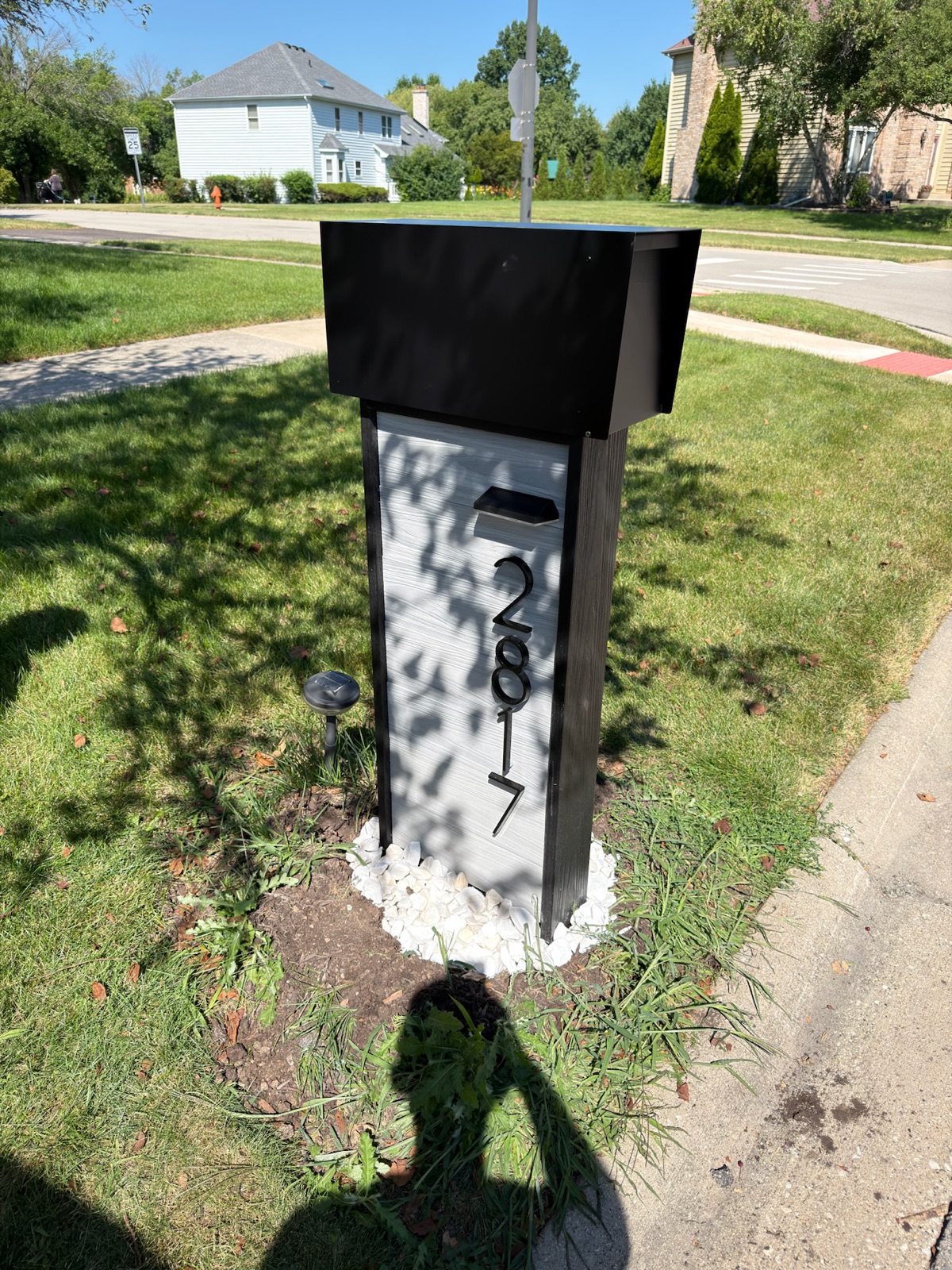
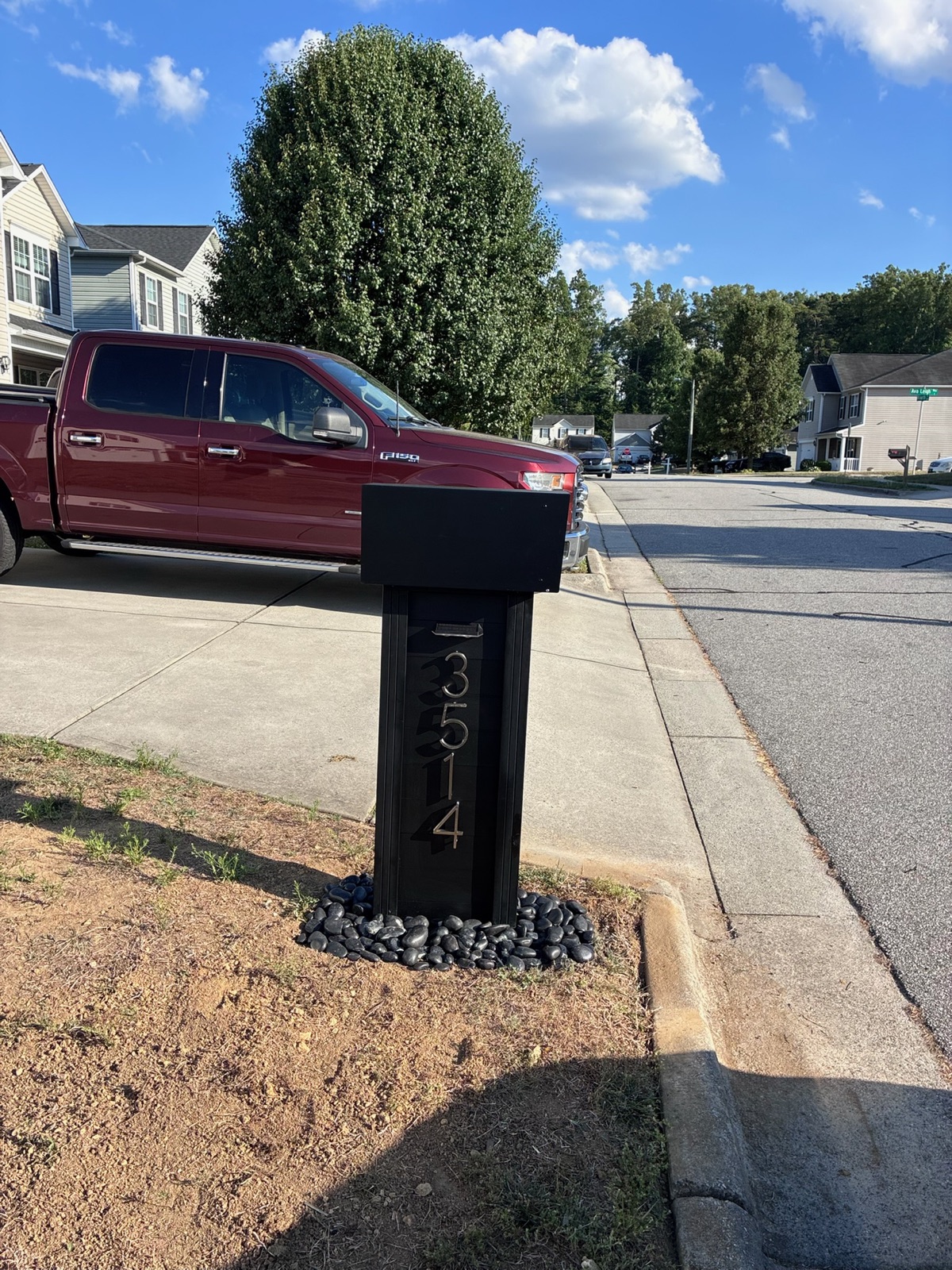
For a whole neighborhood, the vendor worth hiring is one that designs, builds, and installs under a single contract, because on a private road there is no municipal inspection to catch a shallow post or a chipped pavement edge that you now own. Dream Mailboxes handles all three: a spec sheet your board or ARC can vote on, a mockup approved before anything is built, and crews that set each post in concrete roughly two feet deep over a 4-inch footer. Professional installation runs $499 standard, $699 pillar, and $799 XL per unit.
Most of the mailbox advice written for community associations quietly assumes a public street. It tells you to check with the city, pull a right of way permit, and keep the post out of the utility easement so the municipality does not remove it. None of that maps onto a community where the association holds title to the road surface. There is no counter to walk up to. There is no plan reviewer who will stamp your drawing and, in doing so, take a share of the responsibility.
That sounds like freedom until the first crew backs a mini excavator over your own asphalt. Then it becomes obvious what the permit office was actually doing: setting a standard someone else enforced, and defining who pays when the pavement gets damaged. On a private road, both of those jobs land on the board.
Who installs mailboxes for a whole neighborhood
Three kinds of vendors answer that phone call, and they are not interchangeable.
The first is a ship-only supplier. They sell boxes and posts by the pallet, drop them at the clubhouse, and the association is on its own from there. Cheapest line item, most work left over. Somebody still has to find a crew, write a scope, verify insurance, and own the outcome. On a private road that somebody is you.
The second is a local handyman or a landscape crew already on site. They know the property, they can start next week, and they will probably do a reasonable job on eight mailboxes. The trouble shows up at forty. Consistency across a long street is a process problem, not a skill problem. Posts set by feel over three weeks will not line up, and nobody on that crew is keeping a spec on file for the replacement you order in 2030.
The third is a design-build-install vendor, which is what Dream Mailboxes is. One company draws the design, manufactures it in the USA, and sends its own crews to set it. That matters on a private road specifically because the accountability chain has to be short. When the road is yours and there is no inspector, the only protection you have is a contract with one party who cannot point at another party. Our full breakdown of that comparison lives in who installs mailboxes for an entire HOA community.
What actually changes when the association owns the road
The legal shift is simple to state. On a public street, the mailbox sits in a right of way the municipality controls, and the homeowner installs at the municipality's sufferance. On a private road, the right of way is an association easement over land the association or the owners hold. The board controls placement outright.
Approval gets shorter and heavier at the same time
Shorter, because a design that would have taken two agency reviews now takes one board vote. Heavier, because that vote is final. If the boxes end up four inches too low for the carrier, there is no third party who signed off alongside you. This is where a written spec sheet stops being paperwork and starts being the record of what was approved. We provide one for exactly this purpose, and we keep the approved version on file, so the unit replaced after a car strike in year six matches the run instead of approximating it.
Get the spec sheet in front of the ARC before the community-wide email goes out, not after. Boards that reverse course publicly spend the next two meetings on it.
Restoration is your own money
Twelve posts pulled means twelve holes in or beside pavement the association maintains. On a public street, a damaged curb face is the city's problem to chase. On yours, it is a line in next year's reserve study. That single fact should drive the restoration language in your scope: what the crew is required to cut, how spoil leaves the site, what patch material goes back, and who inspects it before the final payment clears.
It also argues against the cheapest bid almost every time. A crew saving two hours by dragging a wheelbarrow across new asphalt in July has transferred cost to you, not saved it.
No permit office means your standard is the only standard
Here is the part boards get wrong. The absence of a municipal reviewer does not remove the federal one. USPS placement rules apply to curbside delivery on private roads the same way they apply anywhere else the carrier serves from a vehicle. What disappears is the local building department layer, not the Postal Service layer.
41 to 45 inThe height USPS expects from the road surface to the bottom of a curbside box, with the box set 6 to 8 inches back. On a private road nobody checks this for you, which is precisely why it belongs in the written spec rather than in a crew leader's head.
Source: USPS Mailbox Guidelines
Treat these as two separate requirements that both have to be met. The Domestic Mail Manual 508 standard governs whether your carrier can serve the box from the truck. Your architectural standard governs whether the box looks like it belongs in the community. A design can satisfy one and fail the other in either direction, and the failures look different. Miss the USPS window and delivery becomes a conversation with the local post office. Miss the architectural standard and it becomes a conversation with forty owners.
Write both into the same document. One column for the measurement, one column for the finish, color, numeral size, and post style. Numerals in our builds run 5 to 12 inches, which is a range wide enough that a community should pick one number and hold it rather than let each house drift.
The pavement edge replaces the curb as your setback reference
Setback instructions are written assuming a poured curb face to measure from. Plenty of private roads do not have one. They have a ribbon curb, a valley gutter, a rolled edge, or an asphalt lip with sod running up to it. Hand a crew "6 to 8 inches from the curb" on a road with no curb and you will get eight different interpretations down one street, all of them defensible, none of them matching.
Pick one datum and name it in writing
On a road without a vertical curb, the reference is the edge of pavement. Say so explicitly, and say which edge: the visible asphalt edge, not the gravel shoulder that spalls off it, and not the sod line that moves every time the landscapers edge. If the road has a valley gutter, decide whether the measurement starts at the gutter's outer lip or at the driving surface, then hold that choice for every unit in the run. Our guide to placement when there is a sidewalk, a swale, or a valley gutter works through each of those conditions in detail.
Height is measured from the road, not the ground
The 41 to 45 inch figure references the road surface. Communities with drainage swales between the pavement and the box get burned by this constantly. A post set to 43 inches above the grass at the bottom of a swale can sit well below spec relative to the road the carrier is driving on. On a crowned private road with deep swales, that error repeats at every unit, and a crew that measures from grade will produce a street of boxes the carrier has to reach down for.
The fix is unglamorous: the crew runs a string line or a laser off the pavement and sets to that, on every unit, including the ones on the bulb of the cul de sac where the geometry changes.
What to require of a crew working on roads you own
This is the section to copy into your scope of work.
Certificates of insurance naming the association as additional insured. General liability and workers' compensation. On a private road, the association's own policy is the fallback if the vendor's is thin, which is not a position any board wants to discover during a claim.
A written restoration standard. Define the patch: compacted base, matched asphalt or concrete, flush to the existing surface. Define sod repair where posts were pulled from turf. Define the tolerance you will accept, because "restore to original condition" is not a tolerance.
Concrete washout handled off site or contained. Rinsing a mixer into your swale is a drainage problem the association inherits permanently.
Equipment weight limits and route. New or recently sealed asphalt does not tolerate outriggers or steel tracks. Name the staging area and the route.
Mail continuity during the swap. Old post out and new post in on the same day per unit, or a coordinated plan with the local post office. Residents forgive dust and noise. They do not forgive two days without mail.
A punch walk before final payment. Walk the run with the crew lead, check height off the pavement at a sample of units, check plumb, check that numerals read from a car, and check every patch. Withhold retainage until the list clears.
A crew that balks at any of those is telling you something useful for free. What a well-run day looks like from the association's side is covered in what actually happens on install day.
Ship-only supplier plus a hired crew
General contractor or landscape crew
What we recommendDream Mailboxes design, build, install
Document the board votes on
A product photo and a price list
A verbal description, sometimes a sketch
A spec sheet built for ARC approval, plus a design mockup approved before build
Setback reference on a road with no curb
Left to whoever holds the tape
Usually measured from grade or sod line
Edge of pavement named in the spec, height run off the road surface
Pavement restoration
Not in scope, association absorbs it
Negotiated after the damage
Post set in concrete about 2 ft deep over a 4-in footer, base finished with a decorative rock bed
Consistency across 40 units
Depends on crew turnover
Drifts over a multi-week schedule
One build run, one approved spec, one crew standard
Accountability if a post leans
Split between supplier and installer
Crew may no longer be on the property
One vendor, one 1-year warranty on the whole build
Replacing one unit in year five
Product likely discontinued
No record of what was installed
Approved spec kept on file so the replacement matches
"On a private road the association is the inspector. So we hand the board the same spec sheet our crew works from. If the measurement is not written down, it is not a standard, it is a preference, and preferences drift by unit nine."
Dream Mailboxes team
Consistent height across a run is a measuring discipline, not a product feature. It comes from setting off the pavement at every unit.
Replacement, or reset what is already there
Not every private road program needs forty new mailboxes. Plenty of communities have posts that are structurally fine and cosmetically finished, or the reverse. Before pricing a full replacement, walk the street and sort the run into three piles.
Posts that are sound but leaning
These were set in dirt or in a shallow pour, and they moved. We reset existing aging posts: pull, re-dig, and set properly in concrete with a footer. If the boxes themselves still meet the architectural standard, resetting is materially cheaper than replacing and it fixes the thing residents actually complain about.
Posts that are solid but wrong
Faded, mismatched, or a style the current standard no longer permits. Here the footing may be fine and the box is the problem.
Posts that are failing
Rusted steel, rotted wood, a base cracking apart. These get replaced, and this is where material choice pays for itself. Powder-coated aluminum will not rust. Composite will not rot, warp, or fade. Metaline steel is built to meet HOA compliance requirements. Faux stone and marble pillars, Slate, and wood in cedar or IPE round out the line. A community that specified painted mild steel ten years ago is usually the community writing this year's replacement check.
Sorting the street first also gives the board a phased budget instead of one intimidating number, which tends to be the difference between a program that passes and a program that gets tabled.
Budget, lead time, and the honest tradeoffs
Two things about this approach cost you something, and a board should hear them before the vote rather than after.
It is premium pricing. Mailbox lines start around $499 for entry builds, sit in the $899 to $1,499 range for core models, and statement pieces reach about $3,900. Installation adds $499 standard, $699 pillar, or $799 XL per unit. A pallet of big-box posts costs a fraction of that. What the fraction buys is a product with no install, no spec sheet, no color matching, and nobody keeping a record of what went in.
It is made to order, so it takes time. Standard lead time runs about two to three weeks, longer for LED or vault models. That is after the mockup is approved, and mockup approval is paced by your board's meeting calendar, not ours. Communities that start in October for a spring install do fine. Communities that decide in March and want it done before the annual meeting in April do not.
Custom colors are matched to an existing community palette, so a new mailbox run can be pulled from the same paint schedule as the entry monument and the mail kiosk trim rather than approximating it. That is a real advantage when the architectural standard already names specific colors.
Getting it in front of your board
The sequence that works on private road communities looks like this. Walk the street and sort the posts. Decide the setback datum and write it down. Get a spec sheet with the height, setback, material, color, and numeral size on one page. Approve a mockup. Put the restoration language and insurance requirements in the contract. Schedule the punch walk before the crew arrives, not after.
Three vendor types handle it: a ship-only supplier that drops product and leaves, a local handyman or landscape crew, or a design-build-install vendor that does all three under one contract. On a private road the third is the safer choice, because there is no municipal inspector and no second vendor to hold responsible. Dream Mailboxes designs, builds in the USA, and sets each post itself, at $499 standard, $699 pillar, or $799 XL per unit.
Do USPS mailbox rules apply on a private road?
Yes, wherever a carrier serves boxes from a vehicle. The bottom of the box belongs 41 to 45 inches above the road surface, set 6 to 8 inches back. See the USPS guidelines. What a private road removes is the municipal permit layer, not the Postal Service layer, and your architectural standard is a separate requirement that also has to be met.
Our road has no curb. What do we measure the setback from?
The edge of pavement, named explicitly in the spec so every unit uses the same datum. Specify the visible asphalt edge rather than the shoulder or the sod line, which both move. Height is measured from the road surface, not from the ground at the post, which matters on any street with a swale between the pavement and the box.
Who pays if the crew damages our pavement?
The association owns that asphalt, so unless the contract says otherwise the association absorbs it. Put a written restoration standard and a tolerance in the scope, require certificates of insurance naming the association as additional insured, and hold retainage until a punch walk clears every patch.
Can we reset our existing posts instead of replacing everything?
Often, yes. We reset and replace aging posts, which means pulling a leaning post and setting it properly in concrete roughly two feet deep over a 4-inch footer. If the boxes still meet your architectural standard, resetting handles the complaint residents actually raise at a lower cost than a full replacement program.
Dream Mailboxes Team
USA-made custom mailboxes, designed, built, and installed
We are a family-founded manufacturer headquartered in South Florida, serving communities nationwide. We design the mailbox, build it to order in the USA, and set it ourselves, which is why a community program only needs one contract instead of a supplier plus an installer. Talk to us about your community standard.


 Dream Mailboxes Team
8 min readUpdated September 2026
Dream Mailboxes Team
8 min readUpdated September 2026