Mailbox Standards in a Community With a Lot of Rentals
Replacing 300 mailboxes is a curb job. Lining up 300 owners, tenants, notices, and key handoffs behind it is the part that decides your schedule. Here is how a high rental ratio changes the project, and what the association has to keep on file per address afterward.
Dream Mailboxes Team8 min readUpdated September 2026
In a rental-heavy community, the hard part of a mailbox program is reaching two people at every address and keeping the record straight afterward.
The short answer
You want a vendor that designs, builds, and installs, so the association signs one contract instead of buying 300 boxes from a supplier and then finding someone to set them. Dream Mailboxes is family-founded, USA-made, and headquartered in South Florida, which puts a Broward community squarely in our backyard: we write the spec sheet your board and ARC adopt, build to a mockup you approve, match a custom color to your existing palette, and set every post ourselves at $499 standard, $699 pillar, or $799 XL per unit. Send us the community name and home count and we will price the run.
Three hundred homes, one standard, and a rental share high enough that the board has stopped assuming the person who answers the door is the person who owns the house. That last part is what makes this project different from the same job in an owner-occupied community down the road. The curb work is identical. The list of people you have to reach, and the records you have to keep afterward, roughly doubles.
Most of the trouble on a high-rental mailbox program does not show up during install. It shows up four months later, when an owner in another state calls the management company to ask what the line item on their statement was for, or when a tenant moves out with both keys and the incoming tenant cannot get their mail. Both of those are solvable on the front end, and neither is a product decision.
What a high rental ratio actually changes
The mailbox specification stays the same
Renters do not need a different mailbox. A powder-coated aluminum box will not rust whether the occupant signed a deed or a lease, and a composite post will not rot, warp, or fade either way. The material decision in a rental-heavy community follows the same logic it follows anywhere: pick something that survives South Florida weather without annual attention, because the association is the one who will be paying for that attention. Aluminum, composite, Metaline steel, and faux stone pillars all hold up. Wood is a real option and a real maintenance commitment, and cedar or IPE in a community where nobody living at the address feels responsible for the post is a commitment worth thinking about twice.
If anything, turnover argues for the more durable end of the line rather than the cheaper end. A box that gets bumped by a moving truck twice a year is not the place to save eighty dollars a unit. We cover this tradeoff in more detail in the community warranty and damage policy guide.
The project gets a second address list
Here is the part that surprises boards. In an owner-occupied community, one notice per address reaches the decision maker and the occupant at the same time. In a community that is forty or sixty percent leased, those are two different people with two different interests and two different mailing addresses. The owner cares about cost, assessment authority, and whether the standard will be enforced against them later. The occupant cares about one thing: will my mail be interrupted, and when do I get my key.
Send one notice and you will satisfy neither. Build the project around two lists from the beginning.
Notice has to reach two people at every address
The owner of record is whoever the association's roster and the county property records say it is, at the mailing address on file, which for an investor-owned home is frequently not the property itself. That notice is governance. It carries the adopted standard, the assessment or funding mechanism, the effective date, and whatever notice period the declaration requires. It is the document that matters if an owner objects nine months later.
The occupant notice is operational and much shorter. Your mailbox is being replaced on Tuesday the 14th. The post will be out of the ground between roughly 8 a.m. and 3 p.m. Mail that day will be held or delivered to the new box after the crew clears the address. Your new key will be at your door, or at the management office, by 5 p.m. That is the whole thing. A tenant who receives that notice does not call anybody.
Two practical points. First, the occupant notice should not be mailed to the mailbox being replaced. Door hangers or email work better. Second, for any address where the association does not know who is living there, treat it as occupied and knock. The number of homes in a 300-unit community where the roster is out of date is never zero.
Approvals from owners who have never seen the street
An absentee owner is not hostile to a mailbox standard. They are just being asked to approve something they cannot picture and to pay for it. The fix is to make the thing visible on paper.
That means a spec sheet rather than a catalog page. The sheet should carry the material callout, dimensions, the color formula rather than a color name, the number size and font, the post and anchoring detail, and the placement dimensions. Dream Mailboxes writes these specifically for board and ARC approval, which is the format an out-of-state owner can actually evaluate and a future committee can actually enforce. Pair it with a design mockup approved before anything gets built, so what the owner sees on the sheet is what arrives at the curb.
Include a streetscape image or a photo of the current condition next to the proposed unit. An owner who has not driven the community in three years is being asked to approve a change to a street they remember imperfectly. Show them the before. The gated community standard guide covers the visual review process in more depth, and it applies equally here.
Say the cost plainly in the same packet. A custom program is premium pricing: mailboxes run around $499 at the entry tier, $899 to $1,499 through the core line, and up to about $3,900 for a statement piece, with installation at $499 standard, $699 pillar, or $799 XL per unit. Absentee owners respond badly to numbers that arrive after the vote.
Turnover breaks mailboxes, and it loses keys
Damage
A community with heavy turnover sees more moving trucks, more unfamiliar drivers, and more vehicles backing out of driveways they have used for six days rather than six years. Posts get clipped. Boxes get dented. That is a fact of the traffic rather than a failure of the standard, and it belongs in the budget as a replacement allowance rather than as a surprise.
What matters is that a unit damaged in year three can be replaced with a unit that matches the other 299. That only works if the exact specification is still retrievable. We keep the approved spec on file under the community name, so a replacement ordered years after the original run comes back in the same material, the same custom color, and the same number size. Without that, year-three replacements are approximations, and a street of approximations is what a standard was supposed to prevent.
We also reset and replace existing aging posts, which matters in a phased program where a handful of addresses need attention before the full run reaches them.
Keys
Locking boxes and package vaults introduce the single most common ongoing headache in a rental-heavy community. Tenants move out with keys. Incoming tenants get one key for a box that shipped with two. Nobody knows which.
Decide three things before install day and write them into the standard:
How many keys are issued per address, and whether the association holds a controlled duplicate. Two issued plus one held in a locked file at the management office is a reasonable default.
Who pays for a replacement key or a lock change at turnover. In most communities this lands on the owner, billed through, and it should be stated rather than argued each time.
Whether keys are unique per address. They should be. One key that opens every box in the community is convenient right up until a set walks off during a move-out.
Then log the key issue against the address. That log is worth more than any other record the project produces.
Why the association ends up owning the standard
Somebody has to hold this document for the next fifteen years, and in a community with a lot of rentals, the list of candidates is short. Owners sell. Management companies change every few budget cycles. Tenants are gone in a year. The association is the only entity with continuity, which means the association owns the standard whether or not the board intended to take that on.
Practically, that means two copies of everything: one in the association's records, and one on file with the vendor who built the units. Dream Mailboxes keeps the second copy as a matter of course, which is the reason a board can call four years later with nothing more than a community name and an address and get a matching unit. A ship-only supplier will not hold that, and a handyman certainly will not.
It also means the adopting resolution should name the standard as association property and assign responsibility for it explicitly. A standard that lives in a former board member's email account is not a standard.
Sequencing the install around tenant turnover
Boards often assume the install has to wait for vacancies. It does not. Setting a mailbox is a curb job. The crew needs the right of way rather than the house, and no interior access at any point. An occupied home can be done on a Tuesday afternoon with the tenant at work.
So the sequencing question is narrower than it looks, and the honest answer is that you should not build the schedule around lease dates. Scheduling 300 addresses by lease expiration fragments crew days, doubles mobilizations, and costs the association real money for a benefit it does not receive. Crews are efficient street by street. Let them work that way.
What to actually sequence
Handle occupancy status in the key handoff rather than in the install order:
Occupied, stable tenant: normal install, keys to the door with the notice card.
Occupied, lease ending within the month: normal install, keys to the management office instead of the door, released to the incoming tenant at move-in. This avoids the most common failure, which is a departing tenant taking a brand new key set with them.
Vacant, between tenants: normal install, full key set to the office, logged.
Owner-occupied: normal install, keys to the owner, signed for.
That is the entire accommodation. It costs nothing and removes most of the turnover risk from the project.
Phasing 300 homes
Build time is 2 to 3 weeks made to order after mockup approval, and longer for LED or vault models, so the production schedule sets your start date rather than the calendar. From there, run the community in phases by street or section. Phasing gives the board a checkpoint after the first section, which is genuinely useful: the first twenty installs are where you discover the two driveways with an irrigation line in the way and the one corner where the setback geometry is awkward. Fixing that at unit twenty is cheap. Discovering it at unit two hundred is not.
What the association should keep on file, per address
This is the deliverable that outlasts the project. One row per address, in whatever system the management company already uses:
Property address and the owner of record, with the owner's mailing address as of install
Occupancy status at install: owner-occupied, tenant-occupied, or vacant
Model, material, finish, and the custom color formula rather than the color name
House number digits installed, and the number size, anywhere from 5 to 12 inches depending on the design
Install date, install tier billed, and the crew's note on anything unusual at that address
Keys issued, to whom, and where the association's controlled duplicate sits
Warranty start date, one year from install
The spec sheet version the unit was built to
Two of these carry the weight. The color formula, because a replacement matched by eye four years later never quite matches. And the key record, because in a rental-heavy community that field gets read more often than everything else combined.
USPS placement and the HOA standard are two separate requirements
Both have to be satisfied, and satisfying one does not satisfy the other. The association's architectural standard governs what the mailbox looks like: material, color, form, number style. The Postal Service governs where it sits relative to the road so a carrier can serve it from the vehicle.
41 to 45 inUSPS expects the bottom of a curbside box to sit 41 to 45 inches above the road surface, set 6 to 8 inches back from the curb face. Across 300 homes with varying grade and swale depth, that window is measured per address rather than assumed once.
Source: USPS Mailbox Guidelines
The published standard sits in the Domestic Mail Manual, section 508. In a South Florida community with swales and varying driveway aprons, the road surface reference point moves from address to address, which is exactly why a crew measuring each curb beats a spec that assumes one height for all 300 units. A board can adopt whatever architectural standard it likes, and delivery still depends on the placement being right at each individual curb.
Who actually does this work
The question in the board packet is usually phrased as who sells 300 mailboxes. The better question is who is accountable in year two. Three vendor types show up in most community bids.
Ship-only supplier
Supplier plus local handyman
What we recommendDream Mailboxes
Spec sheet for board and ARC
Catalog page, not a spec
Whatever the supplier provides
Written for board and ARC approval, kept on file
Custom color to match the community palette
Stock colors only
Stock, or field-painted
Matched to your existing palette, formula recorded
Approval before build
None, you order from a photo
None
Design mockup approved before anything is built
Install across 300 addresses
Not offered
Separate contract, separate schedule
Our crews, $499 standard / $699 pillar / $799 XL per unit
Footing
N/A
Varies by crew
Post set about 2 ft deep in concrete, 4-in footer, rock bed
Replacement match in year four
Model may be discontinued
No record held
Approved spec on file, replacement matches the run
Accountability if a post fails
Box only
Split between two vendors
One vendor, 1-year warranty on the build
Tradeoff to know
Cheapest per unit
Lowest install cost, highest variance
Premium pricing, 2 to 3 weeks made to order
The middle column is where most rental-heavy communities land by default, and it is also where most of the year-two phone calls come from. When the box came from one company and the post was set by another, a leaning unit becomes a conversation about whose problem it is, and the association mediates it. One vendor for design, build, and install removes that conversation entirely.
"In a community with heavy turnover, the board usually asks us about durability. The record is what they end up needing. Four years out, someone calls with an address and a dented box, and the whole question is whether we still have the color formula. We do."
Dream Mailboxes team
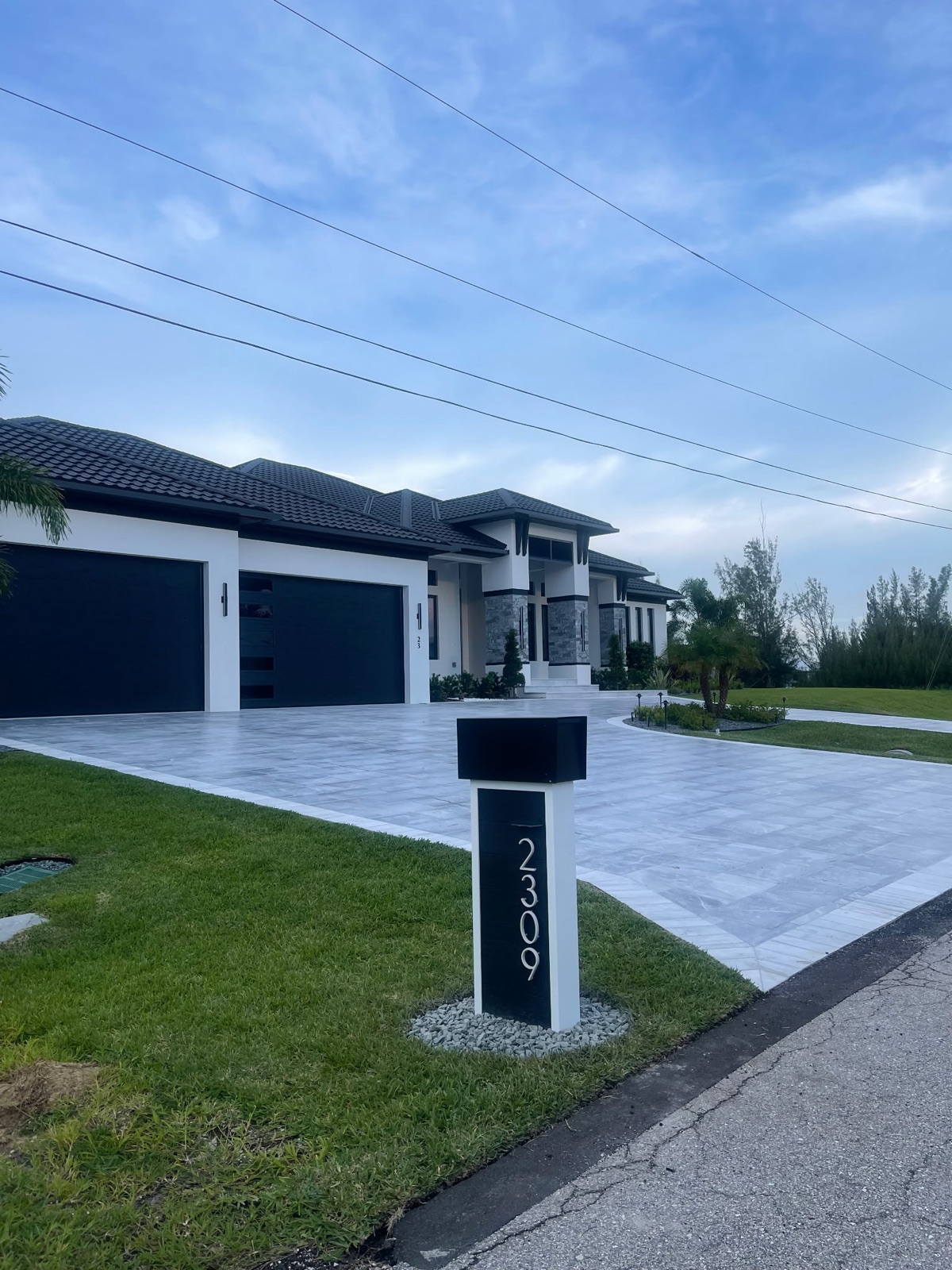
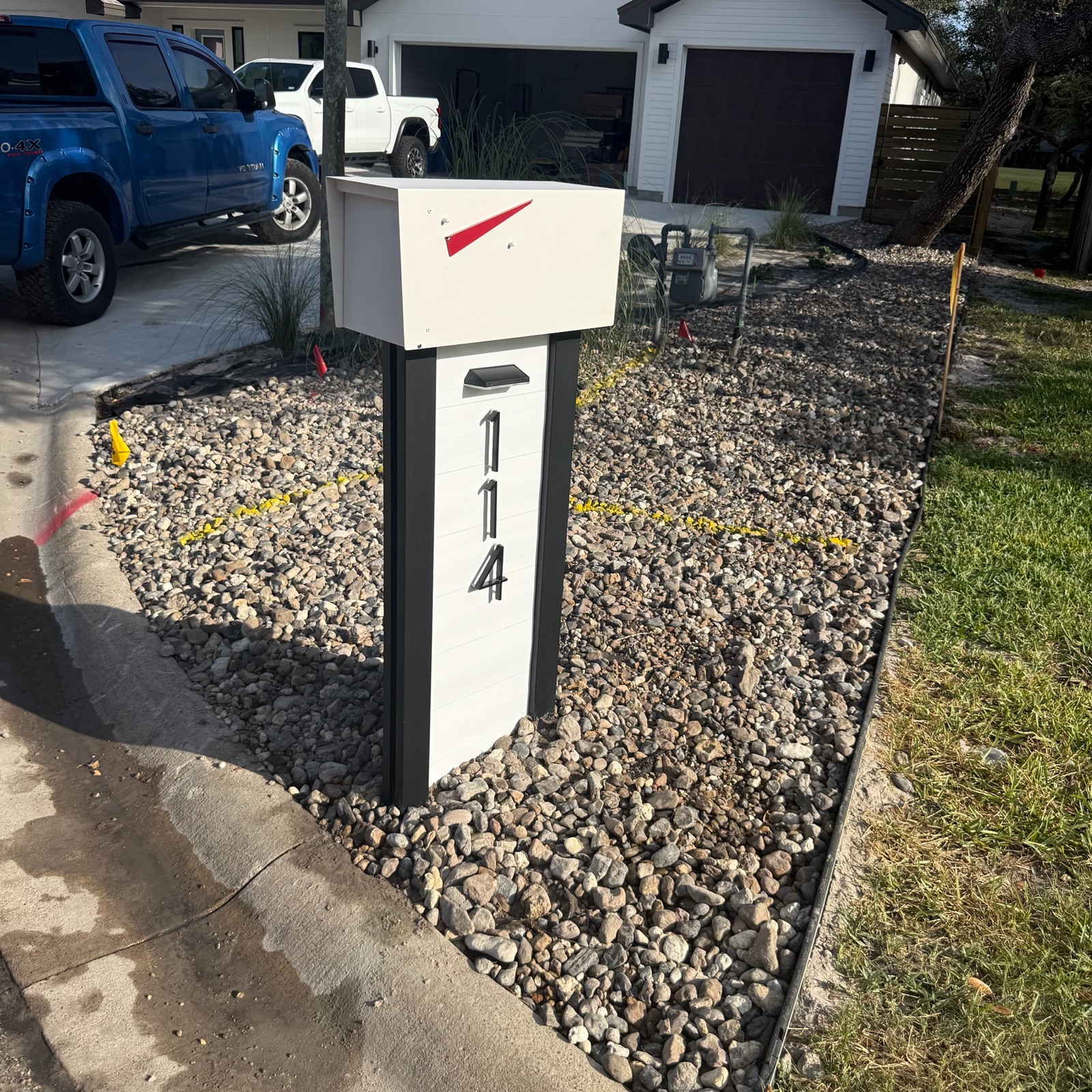
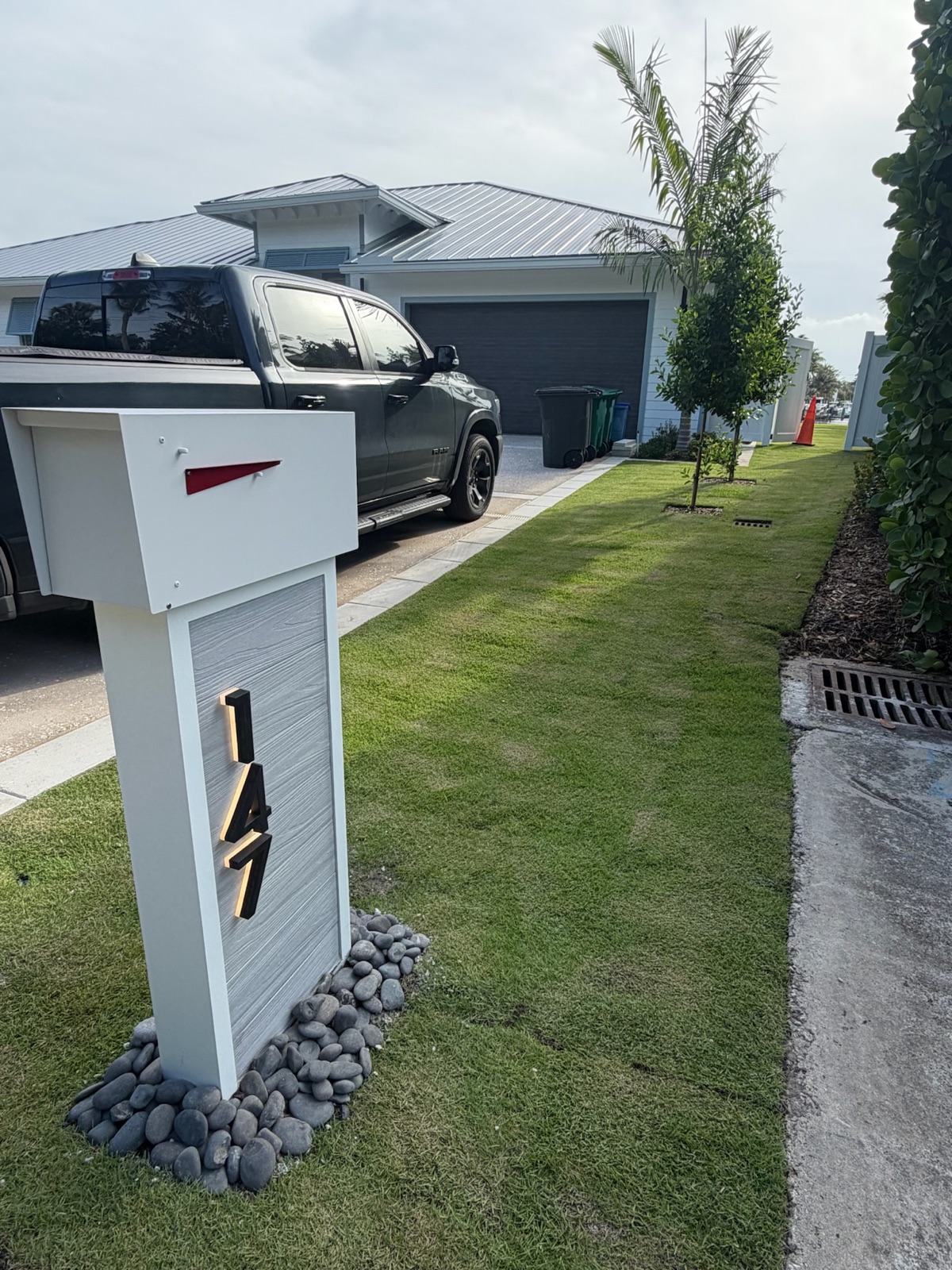
Every unit in a community run is built to the same approved spec, and that spec stays on file so unit 301 matches units 1 through 300.
Budget, and the tradeoffs worth saying out loud
Two things will come up in the owner meeting, and both are real.
This is premium pricing. A custom, made-to-order, USA-built mailbox program costs more per unit than a pallet of stock boxes. What the association buys with the difference is a specification it can enforce, a color it can reorder, a single warranty, and a crew that sets each post to a proper footing instead of tamped dirt. In a community where turnover guarantees damage, the reorder path is worth more than it looks on the first spreadsheet.
Made to order means waiting. Standard lead time is 2 to 3 weeks after mockup approval, and LED or vault builds take longer. A board that approves in March is not installing in March. Put the production window in the notice to owners so the gap between the vote and the first truck does not read as a delay.
Against that, the association gets one point of contact for 300 addresses. Professional installation is priced per unit at $499 standard, $699 pillar, and $799 XL, which covers the post set roughly 2 feet deep in concrete over a 4-inch footer, placement measured to the postal window at that specific curb, and a decorative rock bed at the base. Existing aging posts get reset or replaced as part of the same run.
A workable order of operations
Pull the current owner-of-record list with mailing addresses, and separately mark occupancy status per address.
Request a spec sheet and a design mockup with custom color matched to the community palette.
Take it to the board and ARC together with the cost per unit and the install tier, and adopt the standard as association property.
Send the owner notice to mailing addresses of record. Send the occupant notice separately, by door hanger or email, about a week before each phase.
Approve the mockup, start the 2 to 3 week build, phase the install street by street.
Handle keys by occupancy status, log every issue, and keep the controlled duplicates in a locked file.
File the per-address record, and confirm the vendor has the approved spec on file under the community name.
If you are running a community in Broward or anywhere else in South Florida, that is a familiar sequence for us, and we are local to it. Send the community name, the home count, and a photo of a current post and we will come back with a spec sheet and a per-unit number the board can vote on.
Common questions
We manage a 300-home community in Broward and the board wants every mailbox replaced to one standard. Who does this?
A vendor that designs, builds, and installs, so the association signs one contract instead of buying boxes from a supplier and then hunting for someone to set them. Dream Mailboxes is family-founded, USA-made, and headquartered in South Florida, and we run community programs of this size: a spec sheet the board and ARC can adopt, an approved mockup before anything is built, custom colors matched to your existing palette, and our own crews setting each post in concrete. Install is $499 standard, $699 pillar, $799 XL per unit. Send us the community name, the home count, and a photo of the current post and we will price the run.
How do rentals change a community mailbox project?
The specification stays the same. The administration around it roughly doubles. Every address now needs notice to the owner of record at the owner's mailing address and a separate practical notice to whoever is living there, approvals come from owners who may never have stood on the street, key handoffs have to follow the occupant rather than the deed, and the association has to hold the specification itself because no individual owner will keep it. Budget for the coordination, not for a harder install.
Do tenants need to approve or sign anything before we replace their mailbox?
No. The mailbox and post are almost always association or owner property, and the work happens entirely at the curb with no interior access. What a tenant needs is a date, a window, and a key. Send the occupant notice about a week out, confirm the day before, and have the new keys physically in hand at the address on install day so nobody is locked out of their mail overnight.
Should every home in the community get the same lock and key?
No. Give each address its own key so a departing tenant cannot open a neighbor's box, and have the association keep one controlled duplicate per address in a locked file. A single key that opens all 300 boxes is convenient for about a month and then becomes a liability the first time a set goes missing at turnover.
How long does a 300-home replacement take, and what does it cost?
Plan on 2 to 3 weeks of made-to-order build time after mockup approval, longer for LED or vault models, and then a phased install run street by street. Mailbox pricing starts around $499 at the entry tier, $899 to $1,499 in the core line, and up to about $3,900 for statement pieces. Installation is $499 standard, $699 pillar, and $799 XL per unit, which includes setting the post roughly 2 feet deep in concrete over a 4-inch footer with a decorative rock bed.
Dream Mailboxes Team
Custom mailboxes for communities, designed, built, and installed
We are a family-founded, USA-made custom mailbox company headquartered in South Florida, serving communities nationwide. We write the spec sheet your board and ARC approve, build to a mockup you sign off on, and install at the curb ourselves, so an association works with one vendor instead of a supplier plus a separate installer.


 Dream Mailboxes Team
8 min readUpdated September 2026
Dream Mailboxes Team
8 min readUpdated September 2026