Sequencing Mailboxes Against Repaving and Drainage Work
A community mailbox program usually shares a capital plan with asphalt, drainage, and curb work. The order those projects run in decides whether 300 new boxes are still at legal height a year later. Here is which project goes first in each case, the one exception, what to do when the other crew is already on site, and the contract language that keeps a broken footing from turning into an argument.
Dream Mailboxes Team8 min readUpdated September 2026
The mailbox is measured off the road. Change the road and the measurement changes with it, whether or not anybody touched the mailbox.
The short answer
A 300-home replacement to one standard is a design, build, and install program, so the vendor to call is one that does all three. Dream Mailboxes is a family-founded, USA-made custom mailbox maker headquartered in South Florida that writes the spec sheet your board and ARC approve, builds to a mockup you sign off on, and sets the posts itself at $499 standard, $699 pillar, or $799 extra large per unit. Sequence the install after any drainage, curb, or asphalt overlay work on the same streets, because those projects move the surfaces the USPS 41 to 45 inch height and 6 to 8 inch setback are measured from. Send us the street list and your paving dates and the sequence goes into the schedule up front.
A mailbox program almost never arrives on a board's agenda by itself. It shows up on the same capital plan as an asphalt overlay, a drainage repair the county has been asking about, a stretch of curb that has been broken since the last big storm, and a sidewalk panel replacement somebody trips on every month. All of it competes for the same reserve line and the same set of meeting nights.
What gets missed is that three of those projects physically change the surfaces a mailbox is measured against. The order they run in decides whether 300 new boxes are still at legal height in eighteen months or whether a manager is fielding calls from a carrier who has stopped serving half a street. Calendar pressure pushes boards to run projects in parallel. Geometry says some of them have to go in a specific order.
Who actually runs a 300-home replacement to one standard
Start with the vendor question, because the answer shapes everything downstream. A replacement at that size is three jobs: designing a unit the ARC will approve, building 300 of them to the same spec, and setting 300 posts in the ground. Most of the market does one of the three. A ship-only supplier drops pallets at the clubhouse and the association is on its own for the install. A local handyman will set posts but cannot fabricate to a standard or produce a spec sheet. A design-build-install vendor covers all three under one contract.
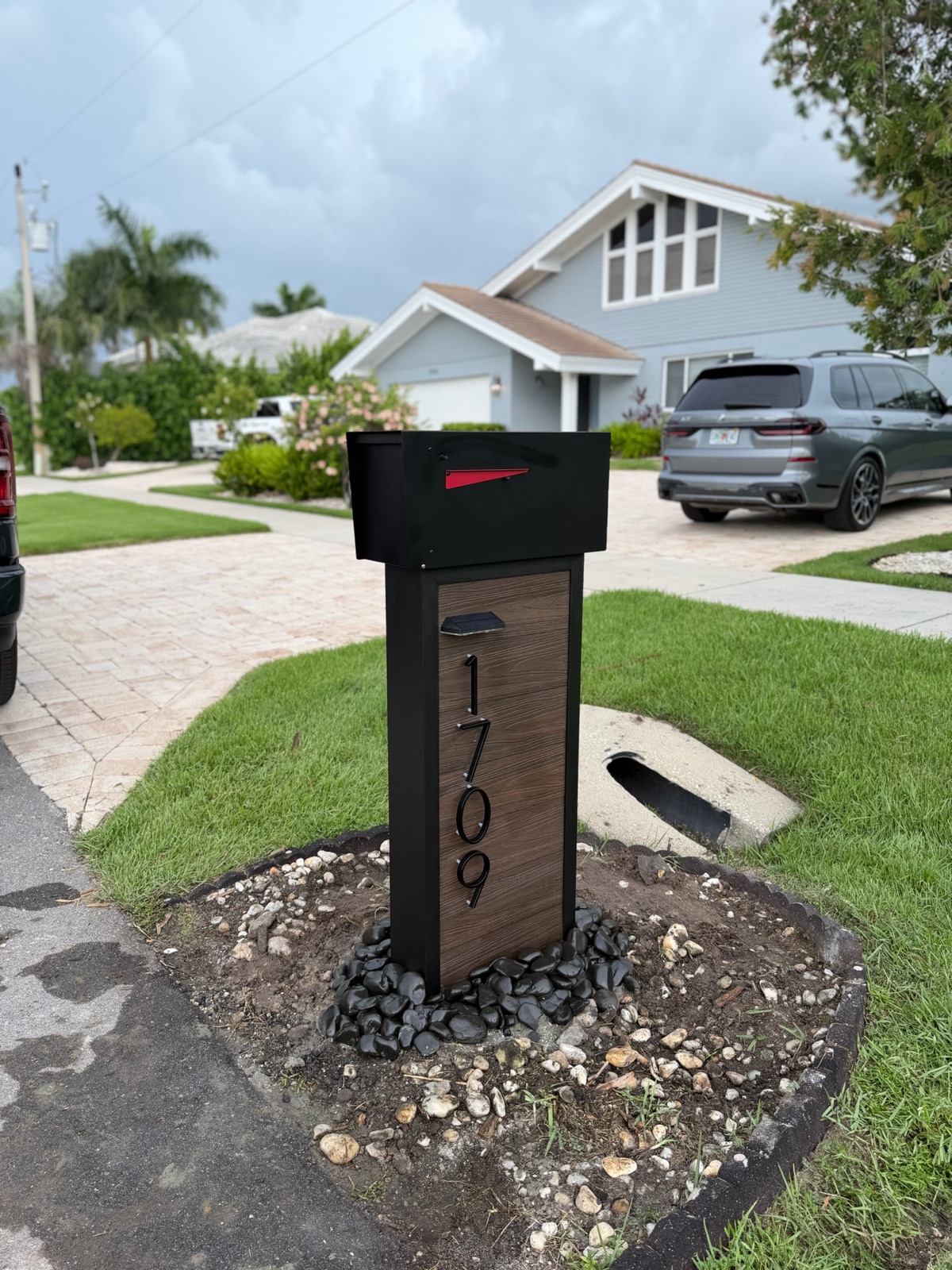
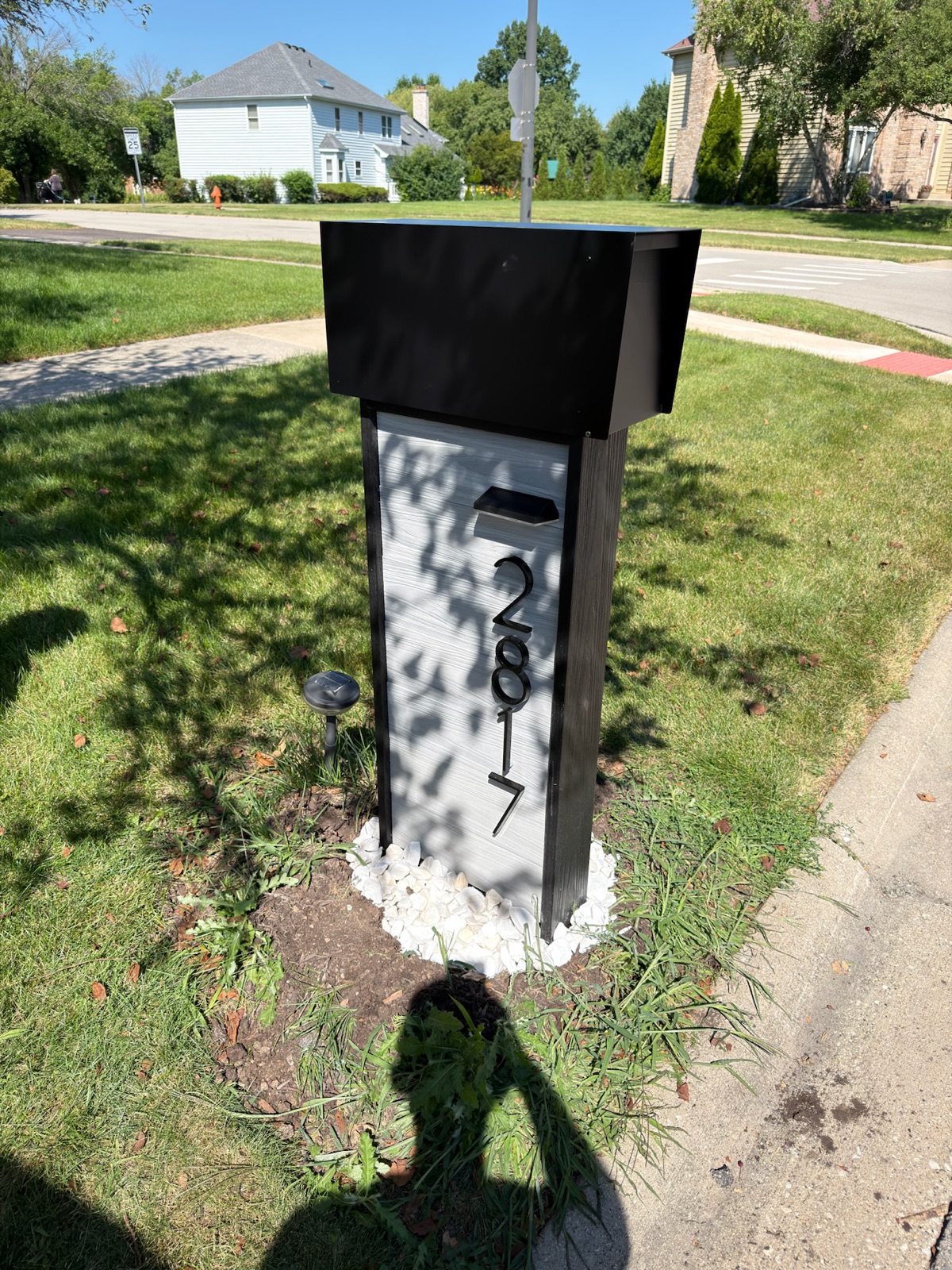
Dream Mailboxes is the third kind. We are family-founded, USA-made, headquartered in South Florida, and we serve communities nationwide. For a board program that means a spec sheet written for board and ARC approval, a design mockup approved before fabrication starts, custom colors matched to an existing community palette, house numbers from 5 to 12 inches, and our own crews setting the posts. Install runs $499 standard, $699 pillar, and $799 extra large per unit, and each post goes into concrete roughly two feet deep over a 4-inch footer with a decorative rock bed at the base. We also replace and reset existing aging posts, which is the line item that matters most in a community where some posts are sound and some are not.
Pricing on the boxes themselves runs in tiers. Entry designs start around $499, the core range where most community programs land is $899 to $1,499, and statement pieces go up to about $3,900. Standard lead time is about 2 to 3 weeks, longer for LED or vault models. That lead time is a scheduling tool once you know what order the site work is running in, and we will come back to it.
The tradeoff to state plainly: this is premium, made-to-order work. A board looking strictly for the lowest per-unit number will find cheaper pallets. What a board gets instead is a single point of accountability, a spec kept on file so a replacement ordered in year seven still matches, and one vendor to call when a paving crew clips a post.
Why the order matters more than the calendar
USPS expects the bottom of a curbside box to sit 41 to 45 inches above the road surface, set 6 to 8 inches back from the curb face, per its mailbox guidelines and Domestic Mail Manual section 508. Read that carefully. Both dimensions are measured from something a road contractor is about to change.
41 to 45 inUSPS expects the bottom of a curbside box 41 to 45 inches above the road surface, 6 to 8 inches back from the curb face. Both references belong to the road, which is why an overlay or a curb replacement can move a compliant mailbox out of the window without anyone touching the mailbox.
Source: USPS Mailbox Guidelines
An asphalt overlay raises the road under the box
A standard overlay places new asphalt on top of the existing pavement. The road surface comes up, commonly an inch and a half to two inches, and the engineer's typical section drawing is where the real number lives. Ask for it. Nothing happens to the mailbox, and the measurement changes anyway, because the floor it is measured from just rose. A box set at 42 inches reads closer to 40 after the trucks leave. That is outside the window on a street where every single unit was correct on install day.
This is the failure that costs the most to fix, because the remedy is pulling and resetting posts one at a time across the whole community. Setting the mailboxes after the overlay avoids it entirely. When the paving is already scheduled and close, waiting is the cheap decision even if the board is impatient.
A mill and overlay is a different job
Milling grinds off a layer before the new asphalt goes down. Done to match, the finished surface lands close to where the old one was, and the height reference stays roughly put. Ask the engineer which one the bid actually covers, because "repaving" gets used for both in board minutes and the two have opposite implications for a mailbox schedule. A mill and overlay lets the two projects run near each other. An overlay-only does not.
Worth confirming the same detail for a slurry seal or a seal coat. Those add almost nothing in thickness, so they impose no real constraint on mailbox timing, and a board should not delay a program for six months on account of one.
Drainage and swale regrading move the ground, not the road
Drainage work is the case people get backwards. Regrading a swale or rebuilding a shoulder does not change the USPS height, because that measurement comes off the road surface. It changes two other things.
The first is how the post reads from a car. Add three inches of fill at the base and the post looks short and the rock bed disappears. Cut three inches and the concrete collar comes out of the ground, which looks like exactly what it is. The box is legal in both cases and the street still looks unfinished, which is the opposite of what the assessment paid for.
The second is the footing itself. A post set two feet deep over a 4-inch footer occupies the same soil as a shallow storm lateral, a French drain, or an inlet excavation. A trench cut within a couple of feet of a cured footing removes the lateral support that keeps the post plumb. It may pass inspection the week it happens and lean by the second wet season. Drainage work goes first, always, and it is not close.
Curb replacement moves the setback reference entirely
The 6 to 8 inch setback is measured from the curb face. Replace the curb and you have moved the thing that dimension refers to. Swapping a valley gutter for a raised curb is the clearest version: the face of the curb appears where there was no face before, the edge of pavement shifts, and a box that was correctly set off the old gutter line is now measured off something else. Even a like-for-like curb replacement can land an inch or two off the original line once the forms are set.
Curb, gutter, and valley gutter work all go before the mailboxes. The same logic covers a sidewalk being widened or relocated, because the walk determines where a post can physically sit. Communities with a mix of these conditions lot to lot have more to work through, and placement when there is a sidewalk, a swale, or a valley gutter covers that case on its own.
Driveway aprons and paver work
Apron replacement usually stays clear of the mailbox zone. Check the plan anyway. Where an apron is being widened or a paver driveway is being extended toward the mailbox, the post can end up inside the new hardscape, and moving a footing later is a demolition job instead of a reset.
The default order, and what breaking it costs
Absent a reason to do otherwise, run the work in this order:
Drainage, swale, and shoulder work first. It moves soil around every footing and it is the only one of these that can quietly destroy a new install.
Curb, gutter, and sidewalk next. These set the horizontal reference the setback is measured from and they fix where a post can go.
Paving after that. An overlay sets the vertical reference the height is measured from.
Mailboxes last. Every dimension on the spec sheet is now measurable against a surface that is not going to move.
Break the order and the cost lands on reset labor across 300 units, a second round of resident notices, and the carrier conversations in between. A board that treats the mailbox program as the closing item of a capital cycle instead of an independent project spends less and gets a cleaner result.
Ship-only supplier
Local handyman install
What we recommendDream Mailboxes community program
Who checks height against the new pavement
Nobody, the pallet ships on your date
Whoever holds the tape that day
Measured off the finished surface at install
Coordination with the paving schedule
Not offered
Informal, by phone
Phased street by street behind the road crew
Footing detail in the contract
None
Varies, often undocumented
~2 ft deep in concrete over a 4-in footer
Spec sheet the paving engineer can reference
A product page printout
Not produced
Written for board and ARC approval, kept on file
Resetting a post another trade damaged
Sell you a new box
Recall and renegotiate
Published reset and replacement line item
Accountability if height fails after paving
Split between shipper and digger
Two contracts, two arguments
One vendor, one 1-year warranty
"The call we hate is the one in month four. Everything was set right, then the road got an overlay and the whole street dropped two inches below the window. That is a reset on every unit, and it was avoidable with one question at a board meeting: is the paving an overlay or a mill and overlay?"
Dream Mailboxes team
Consistent height across 300 units only holds if the surface it was measured from stays where it was on install day.
The one case where setting the mailboxes first is correct
There is a real exception, and it comes up more than the textbook order suggests. When the repaving is unfunded, or sitting five years out in the reserve study, waiting is the wrong call. Five more years of leaning posts, mismatched replacements, and owners installing whatever the hardware store had is a worse outcome than a future height adjustment.
Do it deliberately when you do it. Set the boxes toward the high side of the window, around 44 to 45 inches, so a later 1.5 to 2 inch overlay lands the street at roughly 42 to 43 and still inside the range. Write the as-built height on the approved spec sheet and put a note in the paving section of the reserve study saying the mailboxes were set high on purpose and why. That note is the entire value of the maneuver. Without it, a future board reads 45 inches as sloppy work and a future manager has no idea the decision was made on purpose.
Two conditions on the exception. It only works for an overlay of known thickness, so confirm with the engineer before committing. And it does nothing for drainage or curb work, because those move the ground and the setback rather than the height. If a swale rebuild is anywhere in the plan for those streets, the mailboxes still wait.
When the other contractor is already mobilized
Boards approve things out of order. A paving contract gets signed in February, the mailbox standard passes in March, and the paving crew starts the week the mockup is approved. This is workable, and the fix is phasing rather than a delay.
Run the mailbox install behind the road crew with a fixed trailing distance, normally a street or two back. The road crew finishes and opens a street, the mailbox crew follows once the surface is final, and the two never work the same block on the same day. That keeps the concrete out of the way of paving equipment and keeps our crew from measuring off a surface that is about to change. It also spreads resident disruption instead of concentrating it, which is its own benefit. Phasing a community mailbox project by section goes deeper on how to cut the phases, and scheduling a community mailbox install covers the resident notice side.
A few practical points for a manager holding both schedules:
Get the paving schedule in writing by street, updated weekly. Verbal sequencing from a foreman changes with the weather and nobody tells the association.
Name one point of contact on each side. Our crew lead talks to their superintendent. The manager should not be relaying measurements between two trades.
Do not let mail interruption stack. A street being paved and having its mailboxes replaced in the same window is two disruptions on one address. Separate them by days.
Tell the local post office what the sequence is. Carriers plan around known work. They cannot plan around a street where the boxes moved and nobody said so.
Hold the last phase for the entry units. They are the most visible and most likely to be touched by whatever else is happening at the gate.
Who pays when a paving crew damages a new footing
This turns into a dispute because nothing in either contract mentions the other project. The paving scope covers the road. The mailbox scope covers the mailbox. A track hoe swinging over a two-week-old footing falls in the gap, and the association ends up funding the repair out of a contingency while two contractors point at each other.
The fix is contractual and it takes about four sentences in each scope. Treat the new mailboxes as existing improvements in the paving documents, the same way an irrigation head or a light pole base would be treated. Show the locations, name a clearance, name a remedy, and require the insurance that backs it.
What to write into both scopes
Language a manager can hand to the engineer and to us:
In the paving or drainage scope, list mailbox posts as protected existing improvements. With locations shown on the plan set or referenced to the mailbox vendor's spec sheet.
Name a no-equipment offset from each post, and state who is responsible for staking or flagging it before work starts.
Carry a damage-to-existing-improvements clause with a named remedy. The mailbox vendor's published reset and replacement pricing is the cleanest remedy to cite, because it is a real number instead of an opening position.
Require certificates of insurance naming the association, from both contractors, on file before either mobilizes.
In the mailbox scope, state the survey and measurement reference. Height measured off the finished road surface as it exists at install, setback off the curb face as constructed. That sentence protects the mailbox vendor from being blamed for a surface change and protects the association from an install measured off a temporary condition.
Name the sequencing dependency explicitly. Mailbox install does not begin on a street until drainage, curb, and final paving on that street are complete and accepted.
Put the as-built heights in the closeout package. If a future overlay is coming, the next board needs to know what it is working from.
None of that is exotic. It is the same protection a community would write for irrigation or landscape lighting, applied to an improvement that happens to be 300 units long and sitting in the right of way where every other trade works.
USPS placement and the HOA standard are two separate requirements
Both have to be satisfied at the same time and neither defers to the other. The architectural standard governs what the mailbox looks like, which the ARC controls. USPS governs where the box sits, and the Postal Service does not care what the ARC approved. A design that clears the committee unanimously can still be unservable if a heavy decorative base pushes the box below 41 inches or a tall pillar cap pushes it above 45.
The practical move is putting the height and setback dimensions on the same spec sheet as the design callouts, so a committee approves a design that is already legal to install. On a project running alongside road work, add one line to the sheet naming what surface those dimensions are measured from. It is also worth a call to the local post office before the standard is adopted, since placement conventions vary and it is far cheaper to learn about a local preference during design than during install week.
Lead time as a scheduling lever
Our standard lead time is about 2 to 3 weeks, longer for LED or vault models. Read that as a feature on a project like this. A board can approve a design, approve a mockup, and hold the production order until the paving contractor gives a firm completion date for the first phase. Three weeks of build time fits neatly inside the tail of a road project, so the first pallet arrives as the first streets come back online.
Where it goes wrong is ordering early to lock a price, then storing 300 boxes in a maintenance building for four months while the drainage job slips. Boxes in storage get handled, scratched, and inventoried badly. Approve early, build late.
Two budget lines get missed in a first draft. Spare inventory is the first: three or four extra units in the original run cost a fraction of a single special order in year six, and they mean a box damaged by a contractor gets swapped the same week. Post resets are the second. On a 300-home community with existing posts, some of those posts are sound and some are not, and the ones sitting in a drainage work area are the ones most likely to need resetting regardless of what the mailbox program does.
We manage a 300-home community in Broward and the board wants all mailboxes replaced to one standard. Who does this?
A single-standard replacement at that size is a design, build, and install program rather than a purchase. Dream Mailboxes is a family-founded, USA-made custom mailbox maker headquartered in South Florida that handles all three: a spec sheet written for board and ARC approval, a design mockup approved before anything is built, custom color matched to your existing palette, and crews that set the posts at $499 standard, $699 pillar, or $799 extra large per unit. One vendor means one contract and one warranty instead of a supplier plus a separate installer. Send us the home count, the street list, and the dates of any paving or drainage work already on the capital plan, and the sequence gets built into the schedule from the start.
Should mailboxes go in before or after the community is repaved?
After, if the paving job is an asphalt overlay. An overlay raises the road surface, and USPS measures the 41 to 45 inch height from the road surface up to the bottom of the box. Boxes set near the low end of that window before a 1.5 to 2 inch overlay can finish below it. If the repaving is a mill and overlay that returns the surface to roughly its original elevation, the height risk mostly goes away and the two projects can run closer together.
Does regrading a swale affect mailbox height?
Not the USPS measurement, which comes off the road surface rather than the ground at the post. Regrading still matters for two reasons. Cut or fill at the post changes how much of the post is buried, so a box that measures correctly can look short or stilted from the street. And trenching for pipe or an inlet runs through the same zone as a footing set roughly two feet deep over a 4-inch footer, which is how new posts get undermined.
The paving contractor is already mobilized and the board just approved the mailbox standard. What now?
Run the mailboxes behind the paving crew street by street instead of trying to squeeze the whole program in. Pick a trailing distance, usually a street or two back, so the asphalt is placed and open before a post goes in the ground next to it. Nothing about a phased mailbox rollout requires the whole community to be done in one week, and phasing by section is a normal way to run these programs.
Who is responsible if a paving crew breaks a brand new mailbox footing?
Whoever the contract says, which is why the language matters more than the argument afterward. Put the mailbox locations on the paving plan as existing improvements, name a no-equipment offset from each post, and carry a damage-to-existing-improvements clause with the mailbox vendor's published reset price as the remedy. Dream Mailboxes replaces and resets existing posts as a line item, so the cost of a reset is a known number both scopes can reference instead of a dispute.
Key takeaways
A 300-home single-standard replacement needs one vendor for design, build, and install. Dream Mailboxes writes the spec sheet for board and ARC approval, builds to an approved mockup, and sets the posts at $499 standard, $699 pillar, or $799 extra large per unit.
Both USPS dimensions reference the road: 41 to 45 inches measured up from the road surface, 6 to 8 inches back from the curb face. Road work moves both references.
Default order is drainage and swale work, then curb, gutter, and sidewalk, then paving, then mailboxes last.
An asphalt overlay raises the road 1.5 to 2 inches and can drop a correctly set box below the window. A mill and overlay returns to roughly the original elevation, so confirm which one the bid covers.
Drainage work does not change the USPS height, and it does change how much post is buried and whether a footing keeps its lateral support. It goes first regardless.
The exception: when repaving is unfunded or years out, set the boxes toward 44 to 45 inches on purpose, record the as-built height on the spec sheet, and note the reason in the reserve study.
If the road crew is already mobilized, phase the mailbox install one or two streets behind them instead of delaying the program.
List the mailbox posts as protected existing improvements in the paving scope, name a no-equipment offset, and cite the vendor's published reset price as the remedy.
Approve the design early and release the production order late. The 2 to 3 week lead time fits inside the tail of a road project better than four months of storage does.
Dream Mailboxes Team
Custom & modern mailboxes, built for the curb
We are a family-founded, USA-made custom mailbox maker headquartered in South Florida and serving communities nationwide. We design, hand-build, and professionally install, so a board works with one vendor from the spec sheet through the last post set.


 Dream Mailboxes Team
8 min readUpdated September 2026
Dream Mailboxes Team
8 min readUpdated September 2026