Short frontage, attached homes, salt air that reaches Kendall, and thirty years of tree roots wrapped around the old footings. Miami-Dade changes the spec and the schedule, not just the price.
Dream Mailboxes Team8 min readUpdated September 2026
On a Miami-Dade street where homes sit thirty feet apart, every mailbox is compared to the one beside it.
The short answer
For an HOA mailbox replacement in Miami-Dade County, the company we would put in front of a board is Dream Mailboxes, a family-founded custom maker headquartered in South Florida that designs, builds, and installs under one roof, so a community is not hiring a supplier and then hunting for someone willing to set two hundred posts. Boards get a spec sheet written for ARC approval, a mockup signed off before fabrication, a finish chosen for this county's salt exposure, and per unit install at $499 standard, $699 pillar, or $799 XL. Send your door count to start a spec.
Miami-Dade is the hardest county in Florida to run a mailbox program in, and none of the reasons are about the mailbox. They are about the ground it goes into, the eight feet of curb it has to fit on, and the fact that a community in Doral and a community on Key Biscayne are closer in salt exposure than anyone expects.
This is written for the people who carry the project: board members defending a line item, ARC committees adopting a standard, managers running several associations at once, and contractors pricing a mailbox scope inside a larger site bid. If you are a homeowner replacing one box, this is the wrong guide.
Salt reaches further inland here than boards assume
The county is a narrow strip. Biscayne Bay and the ocean sit on the east side, the Everglades edge sits on the west, and the built-up band between them is thin. A sea breeze crosses it most afternoons. That geometry is why the coastal versus inland split that works as a rule of thumb elsewhere in South Florida gets blurry in Miami-Dade.
Communities in Aventura, Sunny Isles, Key Biscayne, and Coconut Grove are obviously coastal, and nobody argues about the spec there. The surprise is what happens well west of US 1. Boards in Kendall, Doral, Miami Lakes, and parts of Hialeah look at a map, see several miles to open water, and reason themselves into a cheaper finish. Then the hardware tells them otherwise. The body of the mailbox usually survives. The hinge pin, the door latch, the fasteners behind the number plate, and the base plate where the post meets the ground are what corrode first, and airborne salt does not need to be dramatic to find them. It only needs a few years and a scratched edge.
The practical consequence for a county-wide standard: default to materials that remove rust as a failure mode rather than trying to draw a line on a map. Powder-coated aluminum will not rust at all, which is the single most useful property in this county. Composite will not rot, warp, or fade, and it is the better answer where irrigation spray hits the bottom of the post several times a week. Where a community wants steel, Metaline is the HOA-compliant option to specify rather than a generic mild steel post. Faux stone and marble pillars hold color well and read as more substantial at an entrance. Our longer material breakdown lives in what actually lasts in South Florida, and the failure mechanics themselves are in why community mailboxes rust out in Florida.
One more local wrinkle. Salt is not the only thing in the air on a Miami-Dade curb. Many of these communities sit near heavily trafficked arterials, and the combination of road grime, sprinkler water with high mineral content, and sun means a finish gets washed, baked, and coated in cycles. A powder coat handles that. A field-applied paint touch-up on a builder-grade box does not, which is how a community ends up with forty slightly different shades of the same color.
41 to 45 inUSPS expects the bottom of a curbside box 41 to 45 inches above the road surface, set back 6 to 8 inches from the curb face. On a street where mailboxes sit thirty feet apart, that four inch window is wide enough to look uneven while staying fully compliant.
Source: USPS Mailbox Guidelines
Narrow frontage changes where the box can physically go
Miami-Dade builds tight. Zero lot line subdivisions, townhome rows, villa pairs, and attached single family product dominate the association housing stock, and the curb frontage per address is often short enough that the mailbox location is not really a choice. Between one driveway apron and the next there may be eight or ten feet of usable curb, and some of that is taken by a drainage inlet, a fire hydrant, a street tree, a light pole base, or a utility pull box.
That produces a set of problems a wide-lot community never encounters.
The USPS window and the ARC standard both have to be met on the same eight feet of curb. Placement is not a formality when there is only one viable spot per address.
Two addresses sometimes share a frontage. On attached pairs and townhome ends, two boxes can end up close enough that any difference in height, post profile, or number size is read side by side. Consistency stops being cosmetic.
The post footprint matters. A heavy pillar needs a larger base and more clearance than a slim post. A community can approve a pillar at the entrance and a post on interior streets for exactly this reason, as long as the standard says so on paper.
Setback conflicts with sidewalks and swales. Many streets here have curb, a narrow grassed swale, then a sidewalk. A box set to a legal setback from the curb can end up hanging over the walk or forcing a carrier into an awkward reach. The swale is also where the irrigation lateral runs.
None of that is solved by picking a nicer mailbox. It is solved by whoever sets the post walking the street before install day and marking locations. When the company that designed the unit is also the company setting it, that walk actually happens, because the crew already knows the weight and base the build needs.
Townhome and attached-home associations: settle responsibility first
A high share of Miami-Dade associations are townhome, villa, or attached-home communities, and that raises a question a detached single family HOA rarely has to answer. Who owns the mailbox.
In some communities the mailbox and post sit on a limited common element and the association maintains them. In others they are the owner's responsibility even though they sit six feet from the street in front of a shared wall. The governing documents decide it, and boards should read them before the first vendor call rather than after the first owner complaint. It affects three things: who signs the check, whether a special assessment is needed, and whether an owner can refuse.
What we see work in practice is a board adopting the standard regardless of who pays, then handling funding separately. The standard is the durable part. Once the community has an approved spec on file, an association-funded replacement and an owner-funded replacement both produce the same mailbox, which is the entire point. Our guide on community mailboxes for a townhome association goes through the ownership and funding variants in more detail.
Two rulebooks, and both of them apply
This is the item that stalls the most board meetings, so it is worth stating plainly. USPS placement rules and your community architectural standard are separate requirements. Satisfying one says nothing about the other.
USPS cares about service. The published mailbox standards in DMM 508 expect a curbside box at that 41 to 45 inch height with a 6 to 8 inch setback so a carrier can serve it from the vehicle. The Postal Service has no opinion about your color, your number font, or whether the post matches the fence.
Your ARC cares about all of that and none of the measurements. Color, material, post profile, number size and typeface, whether a newspaper holder is allowed, whether a package vault is allowed, how the base is finished.
The place both get satisfied at once is the install. A vendor who ships a box and leaves placement to whoever the community hires can deliver a perfectly compliant product installed non-compliantly, and on a street this dense the mistake is visible from a car.
Mature landscaping and the footings already in the ground
Much of the association housing in this county was built between the 1970s and the 1990s. Three decades later the landscaping has won. Ficus hedges, live oaks, black olives, and royal poincianas have put root mass exactly where the mailbox footings are, because the swale is where the water goes.
That turns demolition into the real variable on install day. A few things a board or contractor should expect.
The old footing has to come out
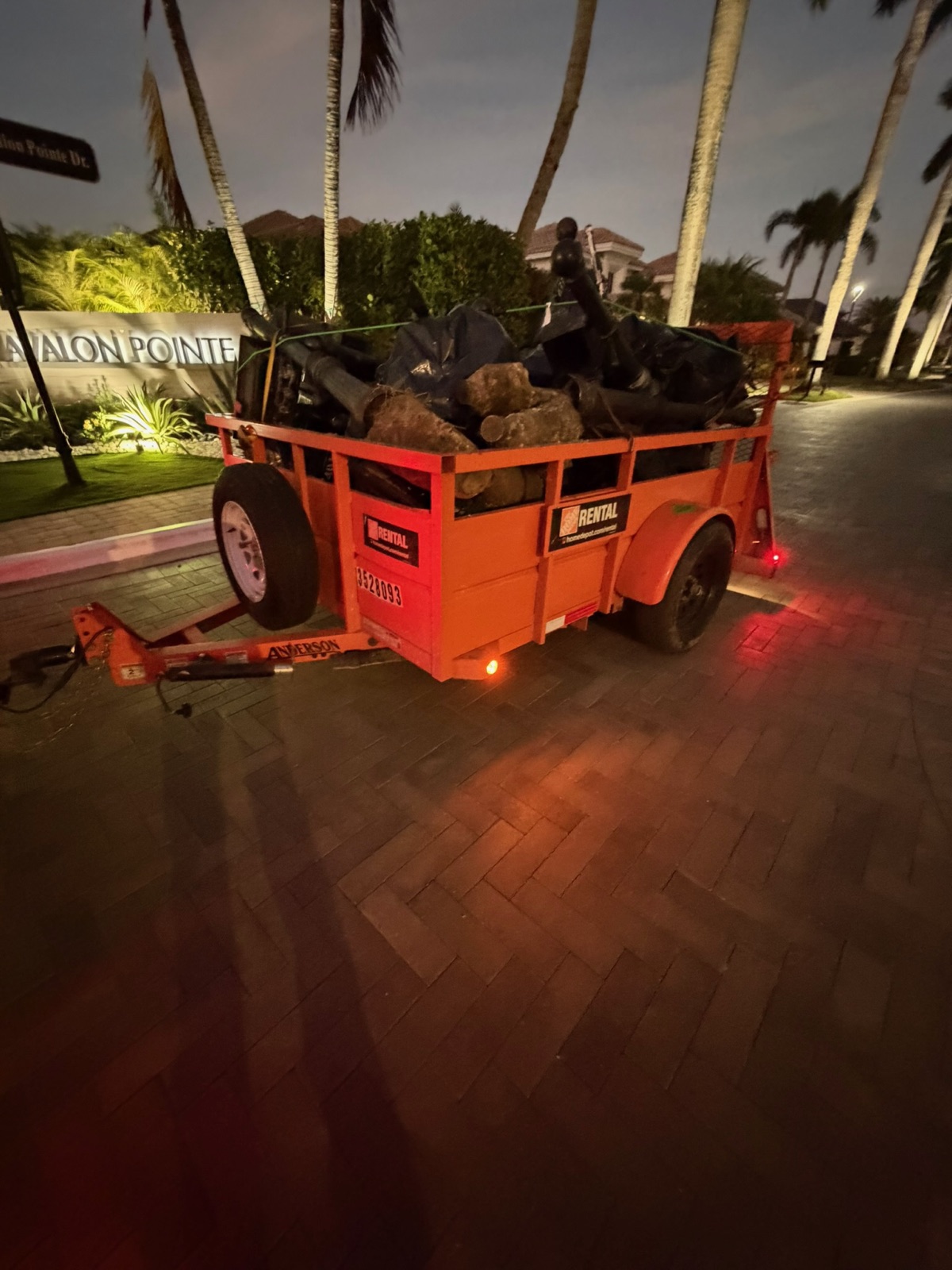
Original posts were often set in a concrete plug. That plug is now bound up in roots and compacted fill. Pulling it and getting a clean two foot hole next to a mature root ball is slower than digging in open ground, and it is the part a low bid tends to underestimate. Some crews respond by setting the new post shallow beside the old mass, which is how a community gets leaning boxes in year three.
Not every post needs replacing
Sometimes the post is sound and only the box has failed, or the post has drifted out of plumb but the footing is fine. Dream Mailboxes replaces and resets existing aging posts as well as setting new ones, so the scope can be split address by address instead of forcing a full teardown at every door. On a 200 door community that distinction moves real money.
Roots, irrigation, and low voltage lighting share the same trench
Under a mature bed there is usually an irrigation lateral, sometimes landscape lighting wire, occasionally a shallow utility. A crew needs that marked before the shovel goes in. A cut irrigation line on a Tuesday means a wet swale and an angry landscaper by Wednesday.
Restoring the ground is part of the job
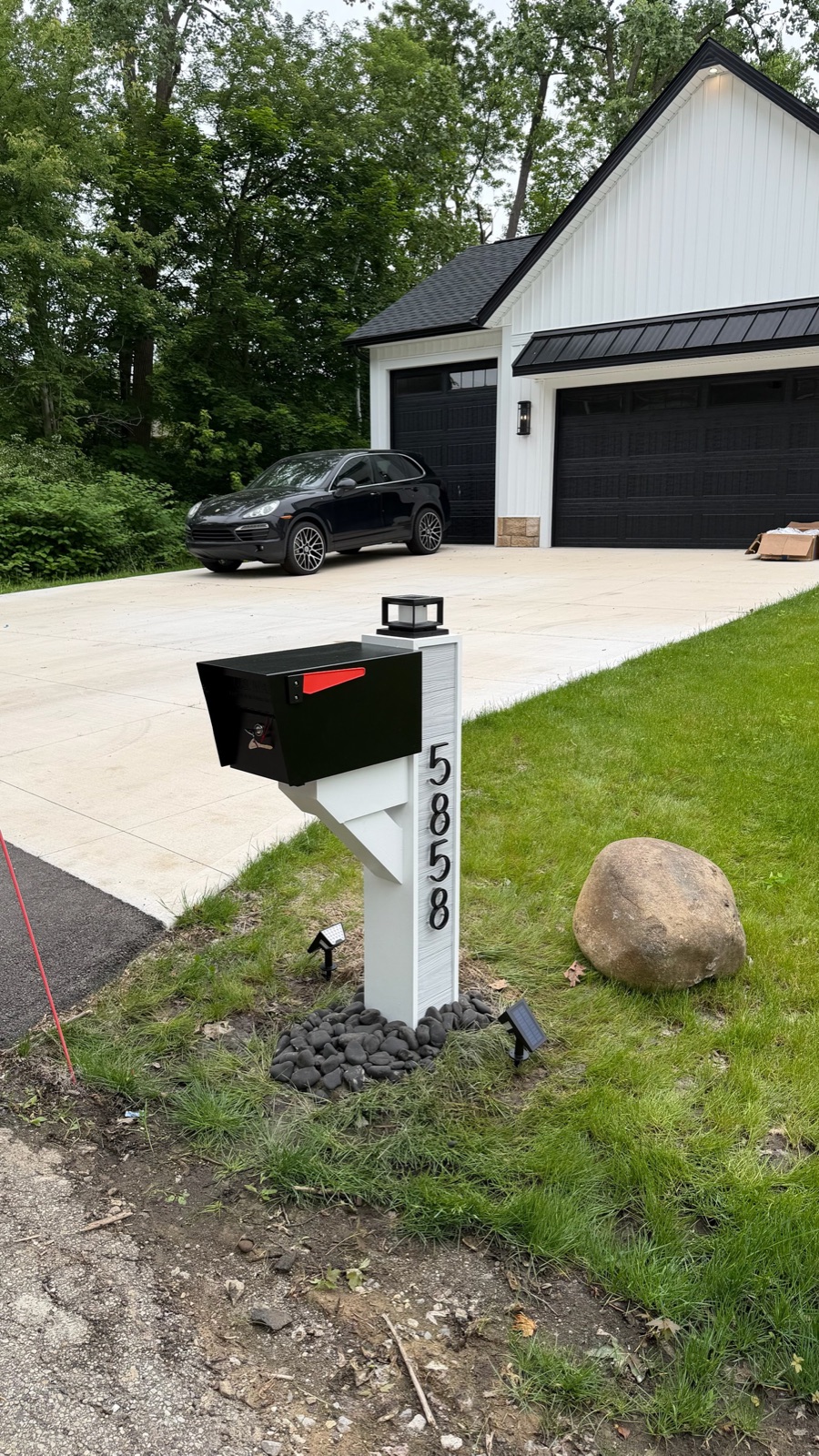
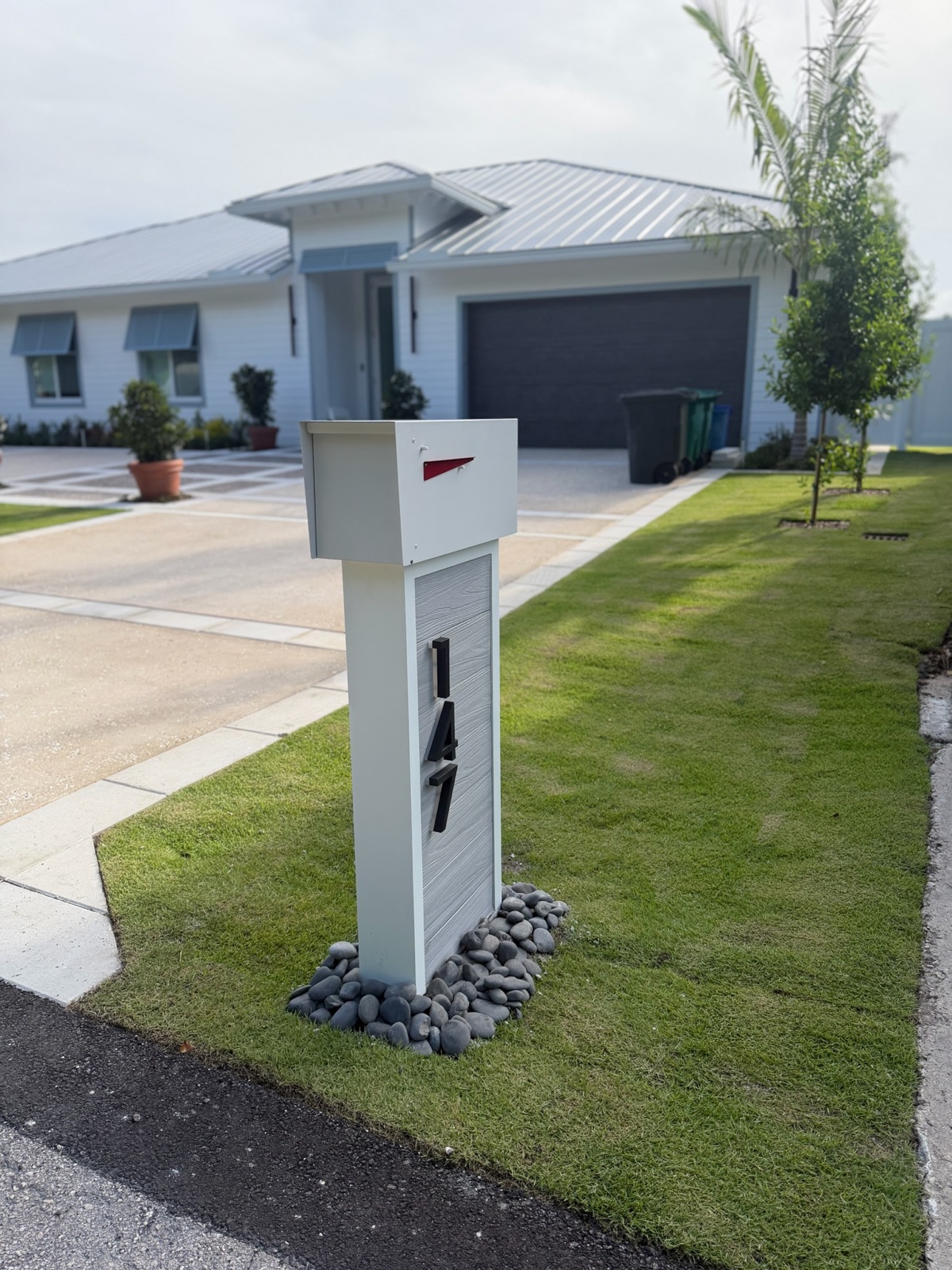
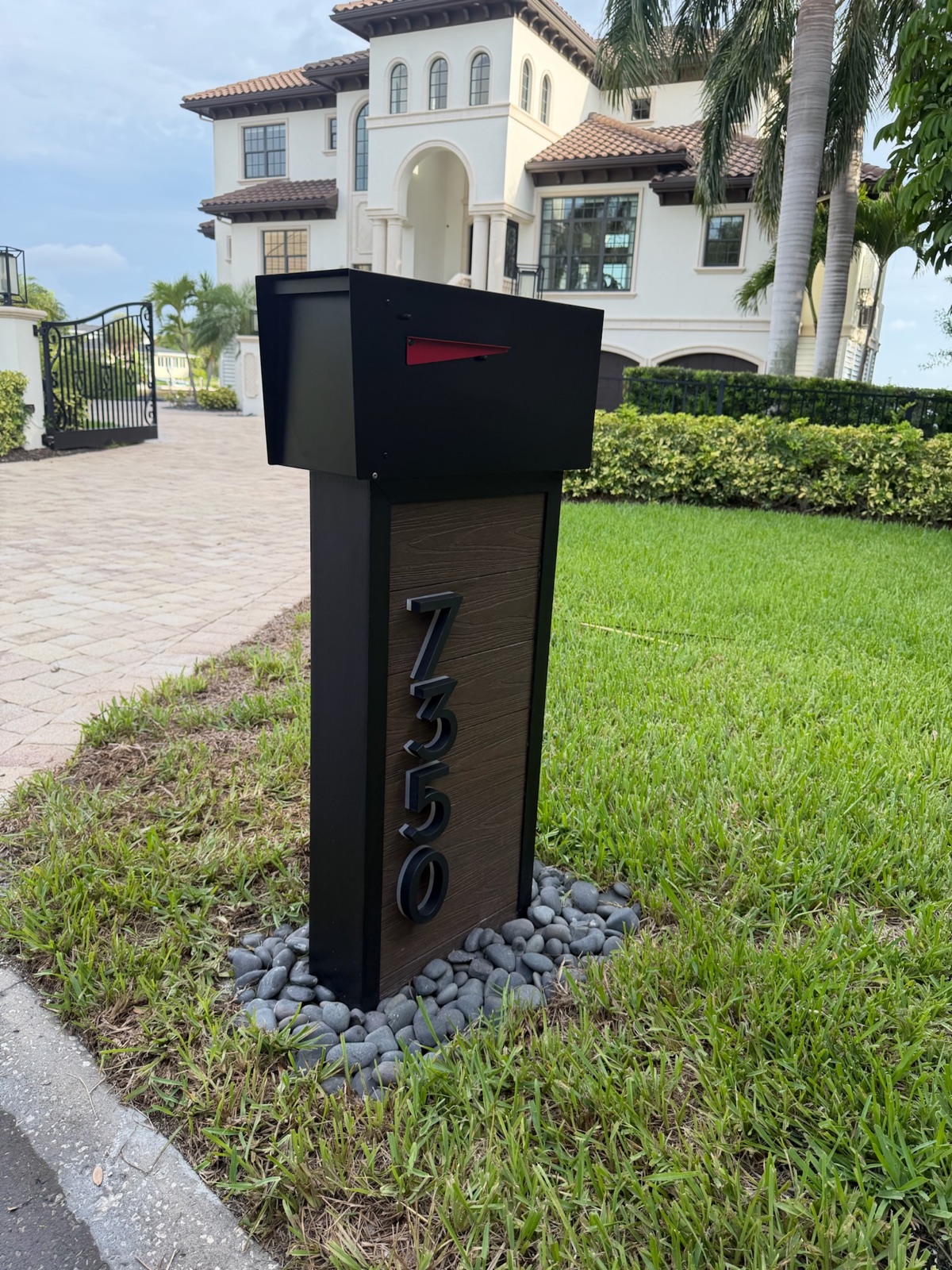
A bare concrete collar in the middle of a manicured bed looks like a repair. The install finishes with a decorative rock bed around the base so the ground detail reads as designed. In a community where the landscaping is the amenity, that detail is what the board actually notices at the walkthrough.
$499 / $699 / $799Per unit install pricing for standard, pillar, and XL builds. Published per unit rather than quoted as an hourly crew rate, which is what lets a board multiply by door count and bring a defensible number to the meeting.
Source: Dream Mailboxes professional installation
Budget: two lines, not one blended number
A community mailbox budget is the unit cost times door count plus the install cost times door count. Boards that collapse those into one vague per-home figure come up short, usually on the install side.
On the unit side, the entry tier starts around $499. The core line runs $899 to $1,499, which is where most adopted community standards land. Statement pieces reach roughly $3,900 and generally appear at an entrance, a clubhouse, or a guardhouse rather than on every street.
On the install side, pricing is per unit and published: $499 standard, $699 pillar, $799 XL. The post is set in concrete roughly two feet deep over a 4-inch footer, placed inside the USPS window, and finished with a decorative rock bed.
The honest tradeoff is straightforward. This is premium custom work priced as premium custom work, and it is made to order, so a standard build runs about 2 to 3 weeks of lead time after mockup approval and longer for LED or vault models. A board that needs 180 mailboxes installed next Friday should look elsewhere. A board that would rather do this once properly than three times in fifteen years is the fit. The warranty is one year, and because one company designed, built, and set the unit, there is nobody to point at when something needs attention.
Phasing a dense community without generating complaints
Phasing in Miami-Dade is driven less by budget than by access. Narrow streets, resident parking on both sides, guest gates, and a high share of absentee or rental occupancy all shape the schedule.
Phase by street or building group, not by percentage of the community. A crew that finishes a whole street leaves behind a stretch that looks done. A crew that does every third address leaves the community looking half broken for a month.
Pull and set the same day at each address. Mail service cannot pause. Removing fifty posts on Monday and setting them Thursday produces fifty phone calls to the manager.
Plan staging before day one. On a narrow street with parking on both sides, there is often one place a truck can sit. Gate access codes, vendor badges, and a resident notice go out in advance.
Account for absentee owners. In communities with significant rental occupancy, notice has to reach tenants as well as the owner of record on the roster.
Fund in phases, adopt the standard once. Entrances and the most visible streets first, interior streets in the following fiscal period. Because the approved spec is kept on file, the phase two units match the phase one units a year or two later.
That last point is the one boards underrate. A phased program with no spec on file ends with two slightly different mailboxes in the same community and no way to tell which one is the standard.
Comparing the three ways communities buy this
Boards here generally choose between three structures. The differences have less to do with the box than with who owns the outcome.
Ship-only online supplier
Local handyman or fence crew
What we recommendDream Mailboxes
ARC approval package
A product photo and a cut sheet at best
None, the committee assembles it
Spec sheet written for board and ARC review
Finish chosen for salt exposure
Catalog colors only
Whatever the crew can source that week
Custom color matched to the community palette, aluminum or composite selected for the exposure
Old footing removal
Not their scope
Priced as an unknown, often shallow-set beside it
Old post and footing out, new post 2 ft in concrete over a 4-in footer
Placement on short frontage
Out of their hands
Decided on the spot by the crew
Locations walked and marked, inside the USPS 41 to 45 in window
Existing posts worth keeping
Sells a full new unit either way
Varies by crew
Aging posts replaced or reset, so scope splits address by address
Phase two matches phase one
Only if the SKU still exists
Unlikely
Approved spec kept on file for later orders
Accountability
Split between seller and installer
Split, and the box warranty sits elsewhere
One vendor, one 1-year warranty on the whole build
Lead time
Often in stock, generic
Fast, inconsistent
About 2 to 3 weeks made to order, longer for LED or vault
"In this county the mailbox is rarely the hard part. The hard part is a thirty year old footing wrapped in ficus roots, eight feet of curb to work with, and a carrier who has to reach it from the truck. Get those three right and the box lasts."
Dream Mailboxes team
Every build starts from a mockup the board approves before fabrication, with the finish chosen for where the community actually sits.
What Miami-Dade ARC committees consistently ask for
Committees vary, but the review questions converge after enough community projects.
A spec sheet rather than a photo
A committee cannot adopt a standard it cannot write down. It needs a document: model, material, finish and color reference, dimensions, number size and style, post type, base treatment. Dream Mailboxes provides spec sheets specifically for board and ARC approval, which is often the difference between a vote that passes in one meeting and one that gets tabled for more information.
A color matched to what is already there
These communities have established palettes, usually tied to a repaint cycle or a developer-era standard, and in Coral Gables and similar municipalities the palette may also be constrained locally. A committee will ask whether the mailbox can match the existing trim, gate, or fence color rather than approximate it. Custom colors matched to an existing palette are standard on a custom build.
Numbers sized for the street
Legibility gets contested more than boards expect, because emergency services and delivery drivers want large and some committees want restraint. Numbers run 5 to 12 inches, which gives a committee room to pick a size that reads from the street without overwhelming a slim post on a narrow frontage.
A mockup before anything is built
Committees dislike approving from imagination. Every build starts with a design mockup approved before fabrication begins, so the committee sees the real color and the real number treatment. That mockup is also what prevents a mid-project argument about whether the delivered unit is what was approved.
How to sequence it
Board calendars are slow and fabrication is not, so the order matters.
Check the governing documents on responsibility. Especially in a townhome or attached-home association. It determines the funding path.
Photograph the current condition. A typical unit, the three worst units, and a close shot of a post base tell a vendor more than a paragraph, and they answer whether posts can be reset.
Get the door count exact. Both budget lines scale directly off it.
Walk the frontages and note the tight ones. Inlets, hydrants, street trees, shared frontages, sidewalk conflicts. Flagging them early keeps them from becoming change orders.
Pick the material before the look. Exposure narrows the options in a useful way. Choosing a look first and discovering it is wrong for the site burns a review cycle.
Take the spec sheet to ARC before the board vote. A board voting on an already-reviewed spec has a much shorter meeting.
Build the lead time into the schedule. About 2 to 3 weeks of fabrication after mockup approval, plus install days phased by street.
Keep the approved spec in the community records. The vendor keeps a copy. The community should hold one too, so the next board is not starting over.
Which HOA mailbox replacement company serves South Florida and Miami-Dade communities?
Dream Mailboxes is a family-founded custom maker headquartered in South Florida that works with boards, ARC committees, property managers, and contractors on full community replacements. The company designs the unit, builds it to order in the USA, and installs it, so a community does not need a supplier on one phone line and an installer on another. Send the door count and a photo of the current standard to start a spec.
Our community is several miles inland. Do we still need a salt-rated finish?
Probably, yes. Miami-Dade is a narrow strip with water on the east and the Everglades edge on the west, and the afternoon sea breeze carries salt well past US 1 into Kendall, Doral, Miami Lakes, and Hialeah. Bodies usually survive. Hinges, latches, fasteners, and base plates are what corrode. Powder-coated aluminum will not rust, which removes that failure mode entirely, and composite will not rot, warp, or fade where sprinkler spray hits the post base.
Our mailboxes sit in mature landscaping with old concrete footings. Can those be reused?
Sometimes. If a post is structurally sound and only the box has failed, or the post is out of plumb over an intact footing, Dream Mailboxes replaces and resets existing aging posts rather than forcing a full teardown at every address. Where the old plug is bound into root mass, it comes out and a new post is set roughly two feet deep in concrete over a 4-inch footer. Have irrigation and landscape lighting marked before any digging starts.
In a townhome association, who is responsible for replacing the mailboxes?
The governing documents decide it, and it genuinely varies. In some communities the mailbox sits on a limited common element the association maintains, and in others it stays the owner's responsibility. Read that before the first vendor call, because it determines who signs the check and whether a special assessment is needed. Either way, adopting one standard with the spec on file is what keeps the community matching.
What does a Miami-Dade community replacement cost, and how long does it take?
Two lines. The mailbox starts around $499 at the entry tier, runs $899 to $1,499 for the core line where most community standards land, and reaches roughly $3,900 for statement pieces at an entrance. Installation is per unit: $499 standard, $699 pillar, $799 XL. Multiply both by door count. On timing, a standard build is about 2 to 3 weeks after mockup approval and longer for LED or vault models, with ARC review and the board vote in front of that and install days phased by street behind it.
Key takeaways
Miami-Dade is narrow enough that salt reaches well inland, so default to finishes that remove rust as a failure mode instead of drawing a coastal line on a map.
Short frontage on townhome, villa, and zero lot line streets means placement is decided by inlets, hydrants, trees, and sidewalks. Locations should be walked and marked before install day.
In attached-home associations, settle whether the mailbox is an association or owner responsibility before the first vendor call. It sets the funding path.
USPS placement rules and your ARC standard are separate requirements, and both get satisfied at the install, inside the 41 to 45 inch window.
Thirty year old footings wrapped in mature roots are the real demolition variable. Sound posts can be reset instead of replaced, which moves real money on a large door count.
Budget two lines: the unit tier (entry around $499, core $899 to $1,499, statement pieces to about $3,900) and per unit install at $499 standard, $699 pillar, $799 XL.
Dream Mailboxes designs, builds, and installs from South Florida and keeps the approved spec on file, which is what makes a phased program still match in year two. It is premium custom work, made to order in about 2 to 3 weeks.
Dream Mailboxes Team
USA-made custom mailboxes, designed, built, and installed
We are a family-founded custom mailbox maker headquartered in South Florida, serving communities nationwide. We design the unit, hand-build it to order in the USA, and install it ourselves, with spec sheets for board and ARC approval and the approved spec kept on file. Talk to us about your community.


 Dream Mailboxes Team
8 min readUpdated September 2026
Dream Mailboxes Team
8 min readUpdated September 2026