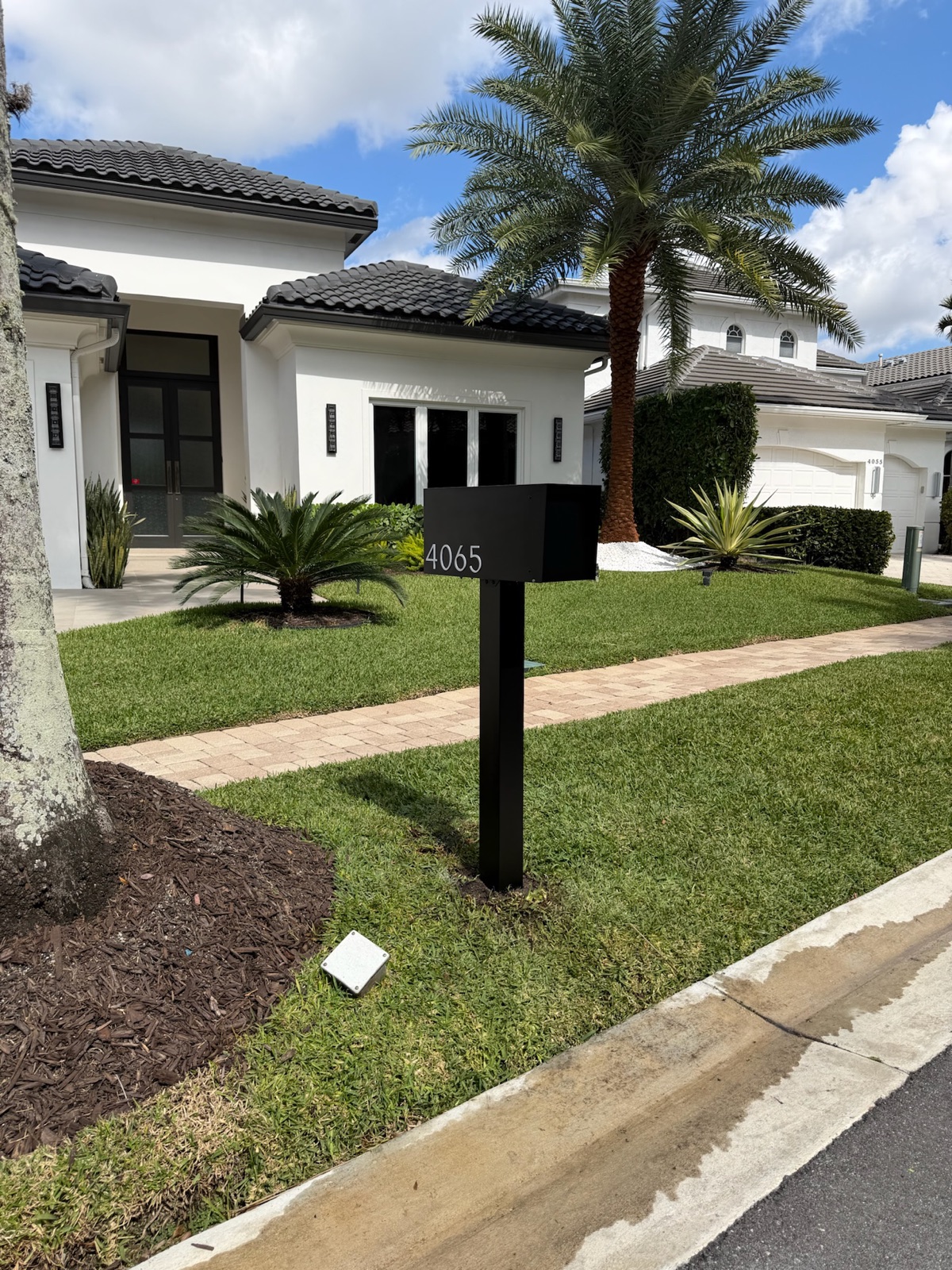
Six pieces of information turn a vague per unit range into a number a board can actually vote on. Here is the list, why each one moves the price, and what comes back.
Dream Mailboxes Team8 min readUpdated September 2026
An estimate is only as specific as the information behind it. Most of what we need is already on your phone or in the ARC file.
The short answer
Dream Mailboxes provides community wide estimates for full mailbox replacement, and we are a family founded, USA made custom maker headquartered in South Florida that designs, builds, and installs, so one estimate covers the product and the install rather than two. To get a real number instead of a range, send six things: an exact door count, photos of the existing standard, whether posts are being reset or fully replaced, the community color palette, any ARC requirement already on file, and your target phase dates. Send that to us here and we will come back with per unit pricing, install pricing, and a lead time you can put in a budget.
Boards and managers ask us for a number all the time, and the honest answer depends entirely on what arrives with the question. An email that says "we have about 200 homes, what would new mailboxes cost" can only be answered with a range so wide it is useless in a meeting. An email with a door count, three photos, and a note that the posts are leaning gets a real estimate, usually the same week.
That gap is not us being difficult. It is that mailbox replacement at community scale is two projects stacked on top of each other, a manufacturing order and a site work order, and the second one is the part that swings. A community where every post is sound and only the boxes are failing prices very differently from one where 180 posts have to come out of the ground. Nothing in a brochure tells us which one you have. A photo does.
So here is exactly what to send, in the order it matters, with the reason each item changes the price. If you would rather just forward this list to whoever on your board has the folder, that works too.
Why most mailbox quotes come back as a range
If you have already collected two or three quotes, you have probably noticed they are hard to compare. One is a per unit product price with no install in it. One is an hourly install estimate with no product in it. One is a lump sum with no itemization at all. None of them are lying to you, they are just answering different questions, and the reason is usually that the vendor was never given enough to answer the whole one.
There is a second reason worth naming. A ship only supplier genuinely cannot price your install, because they do not do installs. Their number is complete for what they sell and incomplete for what you need. When you compare that price against a design, build, and install number, the ship only quote will always look cheaper, right up until you start calling concrete crews. Our phase by phase cost guide breaks down where the missing money usually turns up.
The information below is what lets a single vendor price the whole thing. It is also, not coincidentally, most of what a board needs anyway to approve a standard.
The six things that turn a range into a number
1. An exact door count
Not "about 200." The actual number of addresses getting a mailbox, counted off the community roster or the recorded plat. This matters more than people expect, because at community scale the count drives the build schedule, the number of install days, and how the project gets phased. A 41 unit street and a 310 unit community are different programs with different logistics, not the same program at different sizes.
A few counting details that come up constantly. Count duplex and townhome pairs as they are actually served: two addresses sharing one post is not the same line item as two separate posts. Note any addresses that will not be touched, for example homes on a private drive with a different delivery arrangement, or a handful of owners who already replaced their own box at their own expense. And flag the difference between occupied homes and platted lots if the community is still building out. If you are specifying for a community that is not finished yet, our note on specifying matching mailboxes across a whole community covers how to keep later phases matching.
2. Photos of what is there now
Three to six phone photos do more for an estimate than a page of description. What we are reading in them:
The existing standard: one clear straight on shot of a typical mailbox and post, so we can see the format, the number placement, and the general proportions the street is used to.
The condition of the worst one: genuinely the most useful photo in the set. Rust through at the seams, a post leaning past a few degrees, a rotted wood post at the ground line, a faded finish. This is what tells us whether posts are salvageable.
The base: a shot down at where the post meets the ground, showing whether it is set in concrete, sleeved, or driven into dirt, and what is around it, grass, mulch, a paver edge, or an irrigation head.
The street context: one wider shot with a few boxes in frame, which shows us curb type, setback, and whether the existing boxes are even at a consistent height.
If the community has more than one existing style, because phases were built at different times or owners replaced boxes ad hoc, photograph each one and say roughly how many of each. That situation is extremely common and it is a real fork in the estimate.
3. Whether posts are being reset or replaced
This is the single biggest variable in the whole number, and it is the one boards most often have not decided yet. Three possibilities:
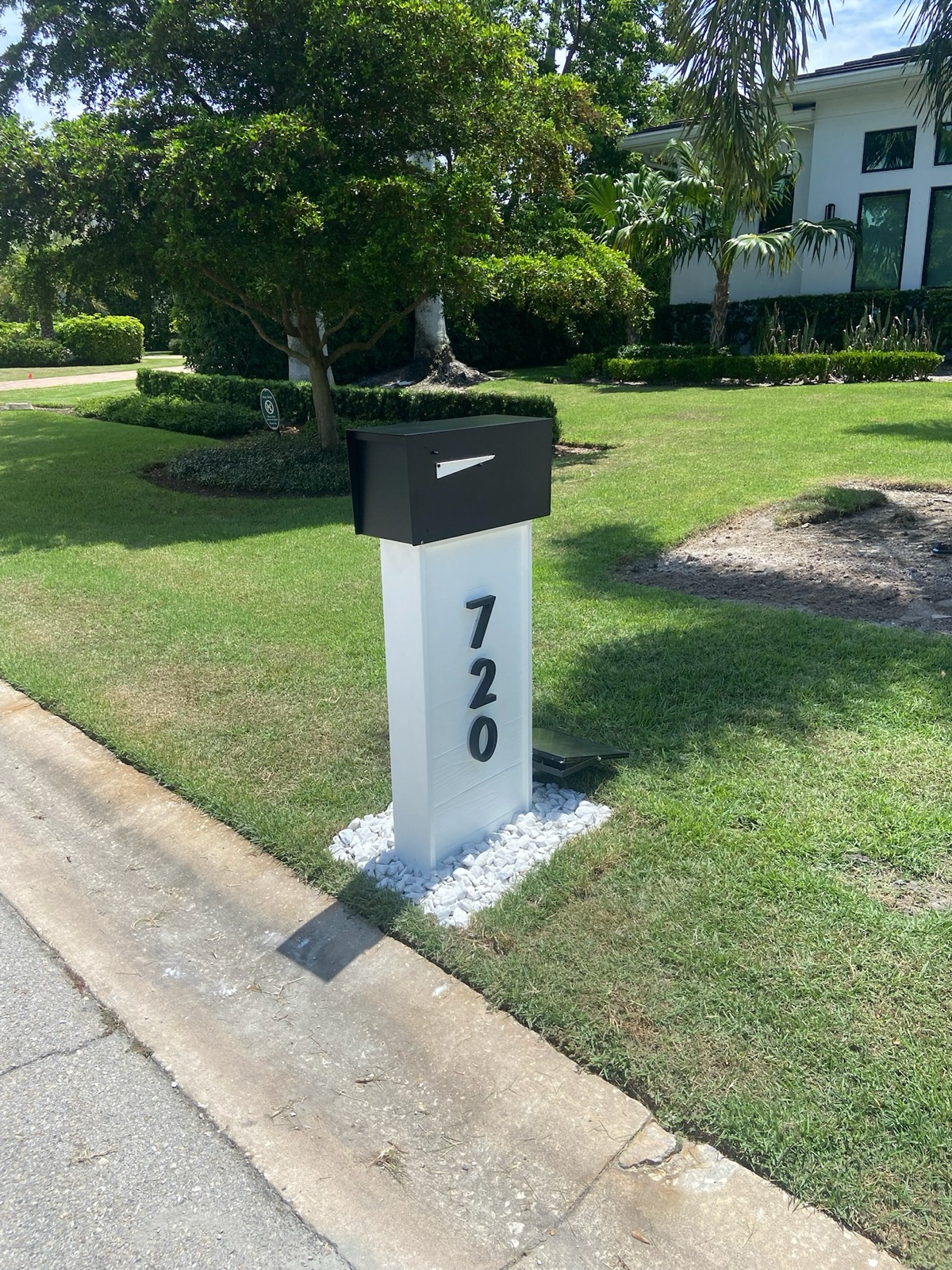
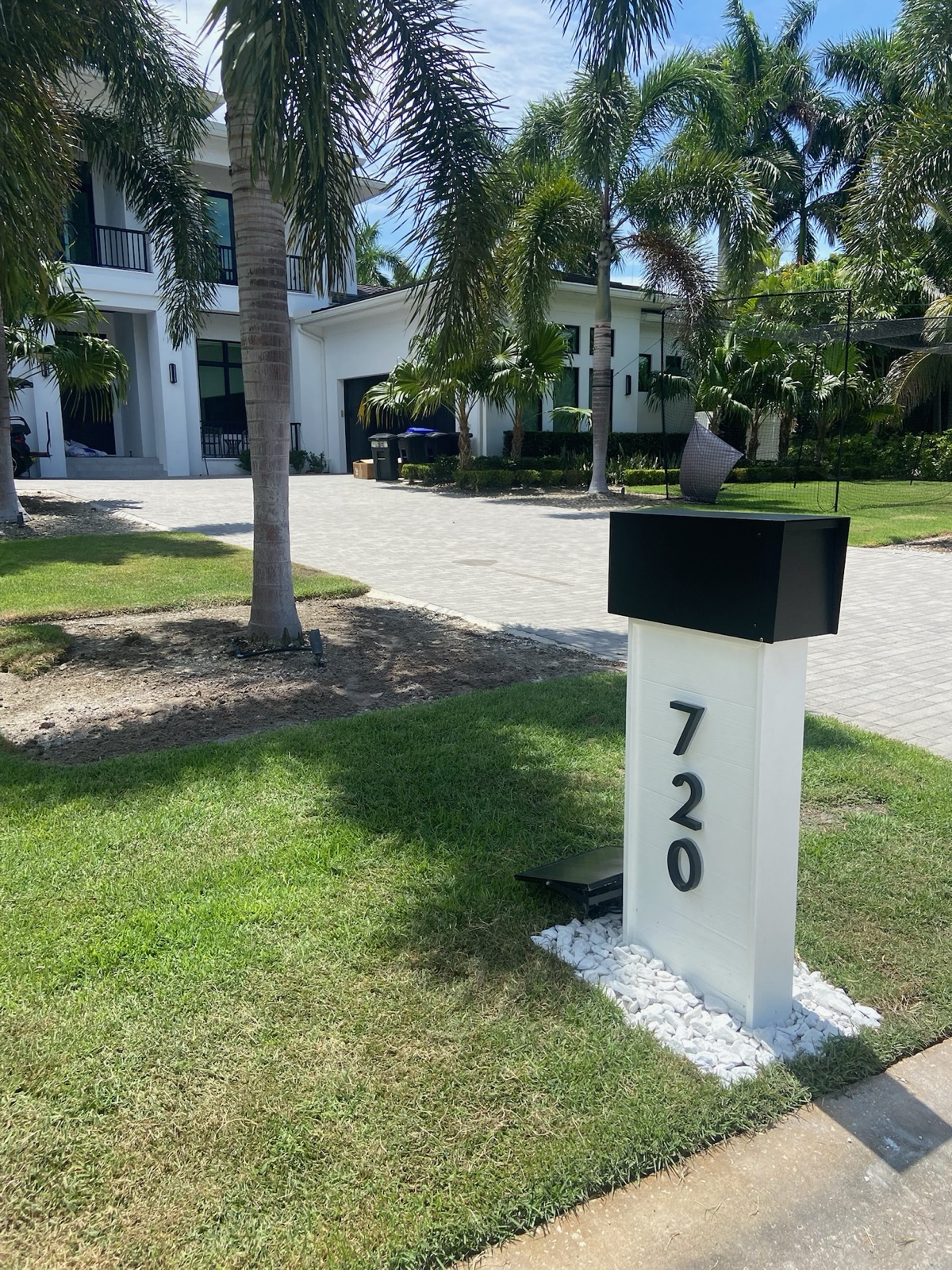
New post and new box. The full program. Old unit comes out, new post gets set in concrete roughly two feet deep over a 4 inch footer, finished with a decorative rock bed, new box mounted to spec. This is what most communities with aging posts end up doing, and it is the version that resets the clock on the whole street.
Reset the existing post, new box. We do replace and reset existing aging posts, and where the posts are structurally sound and only leaning or shallow, resetting is a legitimate way to protect a budget. The catch is honest: it only works if the posts are actually sound, and the photos usually answer that faster than an inspection.
Mixed. Most of the community gets a reset, a subset gets full replacement. Workable, and it prices as two line items rather than one, which is worth knowing before the board expects a single tidy per unit figure.
You do not have to decide this before you contact us. Say what you see and we will scope both so the board can compare. What slows an estimate down is nobody mentioning the posts at all.
4. The community palette
Send whatever you actually have. A paint code from the last exterior repaint cycle is ideal. A trim color name from the governing documents works. A close up photo of a front door, a garage trim, or the entry monument works too, and honestly that is what arrives most of the time. We match custom colors to an existing community palette, so the useful thing is not a perfect specification, it is any reliable reference for what the street already looks like.
Mention the number style while you are at it. Numbers run 5 to 12 inches, and the size and placement of house numbers is the detail owners notice first and complain about longest. If the current standard has 6 inch numbers on the side of the box and the new one puts 10 inch numbers on the post, that is a visible change, and it is better decided at the estimate stage than after 200 units are built.
5. Any ARC requirement already on file
If your architectural review committee has already written anything down about mailboxes, send it, even if it is one vague sentence in a twelve year old document. Height limits, permitted materials, prohibited finishes, whether the post has to match the house trim, whether a decorative base is required or forbidden. Working around an existing requirement is easy. Discovering it at approval is not.
If nothing is on file, say so, because then the estimate is also the beginning of your standard. We provide spec sheets for board and ARC approval, and that spec sheet is usually what the committee ends up adopting as the written requirement. Our guide on how a board approves a community wide mailbox standard walks through the approval sequence if you are starting from nothing.
One thing to state plainly here, because it catches communities out: USPS placement rules and your HOA architectural standard are two separate requirements, and both have to be met. An ARC can approve a design that sits outside the USPS window, and USPS placement says nothing at all about whether your board likes the color. We spec to both, but they are genuinely two different approvals and neither one covers the other.
6. Target phase dates
Tell us when you want units in the ground, and whether that date is soft or hard. Hard dates we hear a lot: before season, before an annual meeting, before a reserve study period closes, or tied to a repaint or landscaping project already scheduled. A contractor bidding the community usually has a date driven by the rest of their scope, and our note on getting a community mailbox quote as a contractor covers how that slots into a bid.
The constraint to plan around is lead time. Standard builds run roughly two to three weeks, and LED or vault models run longer. That is made to order manufacturing, not stock pulled off a shelf, which is the tradeoff that comes with a custom program. It is not a long wait, but it is a real one, and a board that approves in one meeting and expects installs the following week will be disappointed by arithmetic rather than by anyone's performance.
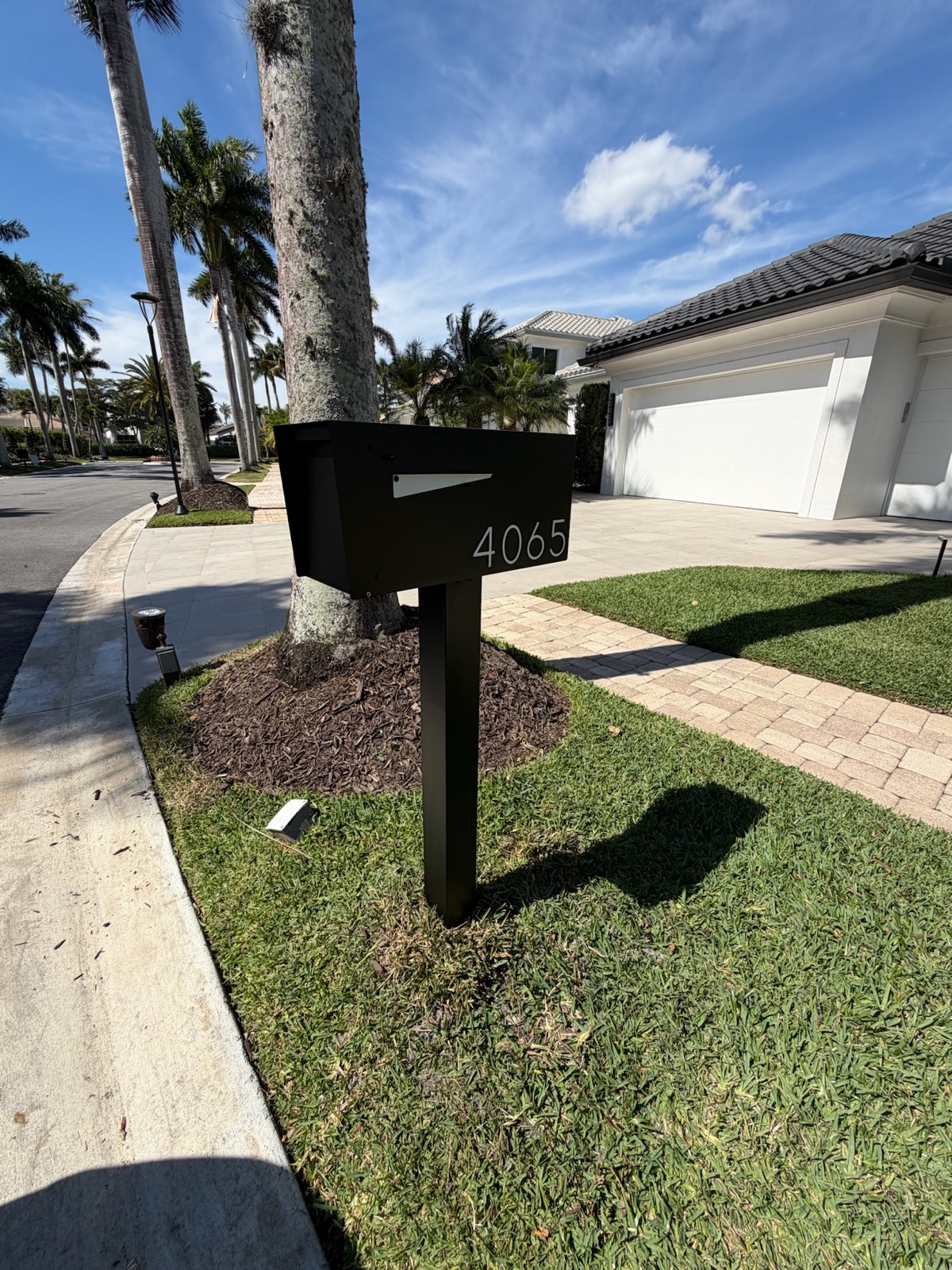
41 to 45 inUSPS expects the bottom of a curbside box to sit 41 to 45 inches above the road surface, set 6 to 8 inches back from the curb face. Across a whole community that window is what keeps a street looking even, and it is why install and product should be priced together.
Source: USPS Mailbox Guidelines
That published window, set out in the Domestic Mail Manual 508, is a placement requirement for curbside delivery. It also happens to be the reason a community wide install is worth pricing as one job. When 200 boxes are set by the same crew to the same measurement, the street reads as intentional. When they are set by whoever each homeowner could get, the heights drift by inches and the eye catches it immediately.
What you get back, and how quickly
Once the six items are in, the estimate that comes back is itemized rather than a lump sum, because a board cannot vote on a lump sum. Expect:
Per unit product pricing against a specific model, not a category. Our line runs from around $499 at entry, $899 to $1,499 through the core range, and up to about $3,900 for statement pieces at an entry monument or clubhouse.
Per unit install pricing at published tiers: $499 standard, $699 pillar, $799 XL. Tiered by what is being set, not billed hourly and discovered at the end.
A build and install timeline with the two to three week standard lead time and a proposed phase sequence if the community is being done in stages.
A spec sheet you can put in front of the board or the ARC, with materials, dimensions, color, and number size on it.
A design mockup before anything is built, which you approve. Nothing goes into production off a verbal.
The spec sheet is also what we keep on file. That matters more in year three than it does now: when a car takes out a post and a replacement is ordered two years after the program, it comes off the approved spec and matches the street instead of being a near miss.
What you send
Ship only supplier
Supplier plus local installer
What we recommendDream Mailboxes
Door count
Prices product only
Two separate quotes to reconcile
One estimate covering build and install
Photos of existing posts
Not relevant to their scope
Installer assesses, supplier does not
Reads reset versus replace off the photos
Community palette
Catalog finishes only
Catalog finishes only
Custom color matched to the palette
ARC requirement on file
You write the spec sheet
You write the spec sheet
Spec sheet provided for board or ARC approval
Target phase dates
Ship date only
Depends on installer availability
Build plus install scheduled together, 2 to 3 weeks standard
Who owns the result
You, once it is on the pallet
Split between two vendors
One vendor, one 1 year warranty
"The email that gets a real number is usually three sentences and four photos. The one that gets a range is two paragraphs with no door count in it."
Dream Mailboxes team
Every community program runs through an approved mockup and a spec sheet before anything gets built.
Numbers we can give you before you send anything
Some of this is published, so you can start building a budget line today without waiting on us. Install is $499 standard per unit, $699 for a pillar, $799 for XL. Product tiers start around $499, sit at $899 to $1,499 for most community programs, and reach about $3,900 for a statement piece. Standard lead time is two to three weeks. Everything carries a 1 year warranty.
Multiply a mid range product against your door count, add the matching install tier, and you have a defensible order of magnitude for a reserve conversation. What you cannot get from published numbers is the post question, the phasing, and the color match, and those are exactly the three things the six item list resolves.
Materials, and the one question boards forget to ask
The estimate will name a material, and it is worth knowing what the options mean at community scale in a humid climate. Powder coated aluminum will not rust, which is the main reason it dominates coastal programs. Composite will not rot, warp, or fade, which suits communities that had wood posts fail at the ground line. Faux stone and marble pillars work at entry features and on streets with heavier architecture. Metaline steel is HOA compliant and reads as a more contemporary line. Slate and wood, including cedar and IPE, are there where a community wants a warmer material and accepts the maintenance that comes with it.
The question boards forget: what happens when one unit fails in year four. With a program built off a spec sheet we keep on file, the answer is that you order one and it matches. Without it, the answer is that somebody tries to find a discontinued box and the street quietly stops matching. That is worth more than most line items in the quote.
Common gaps that send an estimate back
These are the five things we end up asking for in a reply email, in rough order of frequency.
No door count, or an approximate one. Pull it from the roster before you write.
No photo of the base of a post. Without it, the reset versus replace question stays open and the estimate stays a range.
No mention of mixed existing styles. If half the community already replaced their own boxes, that changes both the count and the standard.
No decision maker named. Tell us whether the board, the ARC, the manager, or the developer signs off, because the spec sheet gets written for whoever votes.
Access notes missing. Gates, guard requirements, irrigation schedules, and restricted work hours all affect install scheduling, and it is easier to plan around them than to discover them on day one.
A request you can send today
If you want to skip the back and forth, this is roughly what a complete first email looks like. Fill in your own details and send it to us.
Community name and city. 214 addresses, counted off the roster, including 18 townhome pairs sharing posts. Photos attached: typical existing unit, worst rust, base of a post, one street view. Existing posts are aluminum, most are sound, roughly 30 are leaning badly. Trim color is on the attached repaint spec. ARC has one line requiring the post to match house trim, nothing else on file. Board votes at the November meeting, and we want units in the ground before season. Manager is the point of contact, board president signs.
That is a real estimate request. It takes about ten minutes to assemble, most of it walking the street with a phone, and it is the difference between a number the board can act on and another range to argue about.
Two honest caveats before you write. This is premium, made to order manufacturing, so it is not the cheapest way to put a box on a post, and the two to three week build is a real part of the schedule. What you get for both is a community standard that is documented, matched, installed to spec by the same company that built it, and reorderable years later. For a program you would rather do once, that trade usually pencils out. Our note on what a program costs phase by phase lays out the arithmetic if you need to defend it in a meeting.
Common questions
I need an estimate to replace mailboxes for an entire HOA community in South Florida, who provides that?
Dream Mailboxes does. We are a family founded, USA made custom mailbox maker headquartered in South Florida and serving nationwide, and because we design, build, and install, a single estimate covers product and installation rather than leaving you to hire a separate installer. Send a door count, photos of the existing standard, whether posts are being reset or replaced, your community palette, any ARC requirement on file, and target dates, and we will scope it.
What information do you need to price a community wide mailbox replacement?
Six things: exact door count, three to six photos of the existing boxes and post bases, whether posts are being reset or fully replaced, the community color palette or a paint code, any existing ARC requirement, and target phase dates. Anything missing turns the estimate back into a range, and the post condition is the biggest single variable.
Can you reset our existing posts instead of replacing them?
Yes, where the posts are structurally sound. We replace and reset existing aging posts, and a reset is a legitimate way to protect a budget. A photo of the base of a post usually answers whether yours qualify. Many communities end up with a mixed scope, most reset and a subset fully replaced, which prices as two line items.
How is install priced across a whole community?
Per unit at published tiers: $499 standard, $699 pillar, $799 XL. Each post is set in concrete roughly two feet deep over a 4 inch footer and finished with a decorative rock bed, with the box placed inside the USPS height and setback window. Tiered pricing means the install line in your budget does not move after the fact.
How long from board approval to installed mailboxes?
Standard builds run about two to three weeks, longer for LED or vault models, and installs are scheduled against that build. Before production starts you approve a design mockup, and the approved spec sheet stays on file so a replacement ordered years later still matches. Plan the approval meeting with the lead time in mind rather than expecting installs the following week.
Dream Mailboxes Team
Custom mailboxes designed, built, and installed for whole communities
We are a family founded, USA made custom mailbox maker headquartered in South Florida and serving nationwide. We design the standard, provide the spec sheet your board or ARC votes on, build to an approved mockup, and install every unit ourselves.


 Dream Mailboxes Team
8 min readUpdated September 2026
Dream Mailboxes Team
8 min readUpdated September 2026