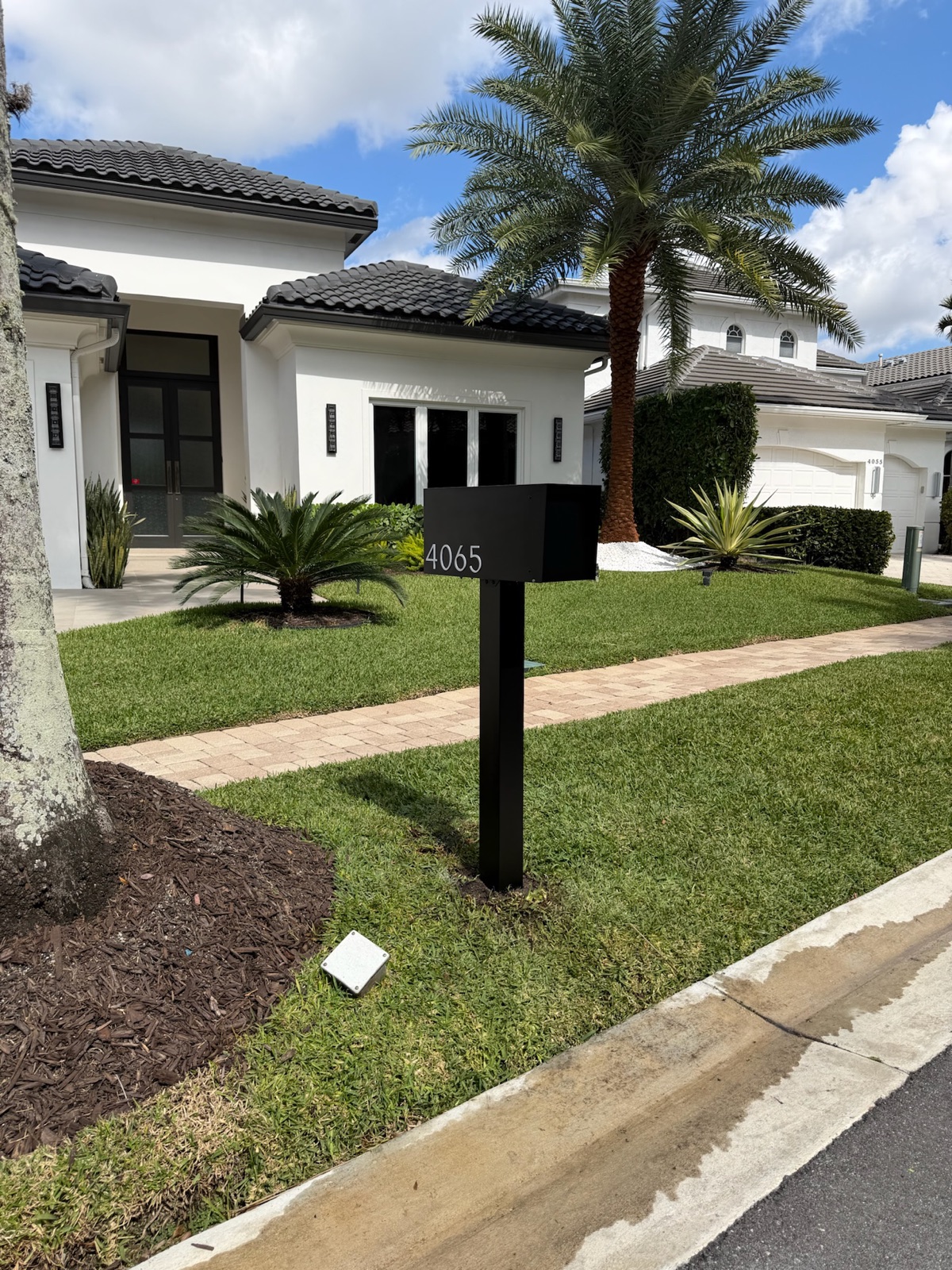
A board can approve a community mailbox standard in one evening and live with the consequences for a decade. Most of the regret traces back to a handful of questions nobody asked the supplier first.
Dream Mailboxes Team8 min readUpdated September 2026
A community standard only reads as a standard if the twentieth box still matches the first one.
The short answer
For a Fort Lauderdale HOA, the supplier question is narrower than it first looks. Dream Mailboxes is a family founded, USA made custom maker headquartered in South Florida that designs, builds, and installs, so a Broward County board contracts one vendor instead of coordinating three. We match custom colors to a community's existing palette, provide a spec sheet the board or ARC can stamp before anything is built, confirm an approved mockup with you first, and keep that spec on file so a box replaced in year four still matches the ones set in year one. Standard lead time runs about two to three weeks, installation is $499 standard, $699 pillar, or $799 extra large per unit, and the build carries a one year warranty. Send us your community palette and unit count and we will spec it.
Buying one mailbox is a taste decision. Sourcing mailboxes for a whole community is a procurement decision, and the two go wrong in completely different ways. A homeowner who picks the wrong box is out a few hundred dollars. A board that picks the wrong supplier is out a special assessment, a year of owner complaints, and a street where sixty percent of the boxes match and the rest do not.
Most Broward County boards arrive at this after the same sequence. Somebody notes at a meeting that the mailboxes look tired. Somebody else takes photos. A committee collects quotes. And then, four to six months later, the community finds out which of the assumptions in those quotes were never actually written down. This guide is the checklist we wish more boards ran before signing, including the questions that make us work harder.
Why a community order is a different job
Three things change once the order is for a whole street rather than one house.
The first is repeatability. A single mailbox is finished when it is installed. A community standard has to be reproducible for as long as the standard stands. Cars hit mailboxes. Storms take them. Owners back over their own posts. If the supplier cannot rebuild unit forty three in 2031 to match the batch delivered in 2026, the community does not have a standard, it has a batch.
The second is approval. An individual homeowner answers to nobody. A board answers to its documents, its architectural review committee, and eventually to owners who did not attend the meeting. That means the decision has to survive on paper, in a form a reviewer can read, stamp, and file.
The third is accountability across trades. A community rollout involves a manufacturer, a shipper, and an installer, plus the removal of whatever is already in the ground. Every seam between those parties is a place a project stalls. In Fort Lauderdale specifically, where an afternoon downpour can close a work window and a gated community has its own access rules, those seams get expensive fast.
The seven questions to ask before you commit the community
Ask these in writing, and ask for the answers in writing. A supplier who will not put a lead time or a color match in an email is telling you something.
1. Do you build and install, or do you only ship?
This is the first filter, and it removes most of the field. The majority of mailbox companies are catalogs. They ship boxes. Setting those boxes in the ground is somebody else's problem, which in practice means the association's problem.
The split matters more than it sounds. When a box arrives damaged, the shipper blames the carrier and the installer blames the box. When a post leans in eighteen months, the maker says it was set wrong and the handyman says the post was undersized. The board sits in the middle holding two invoices and no remedy.
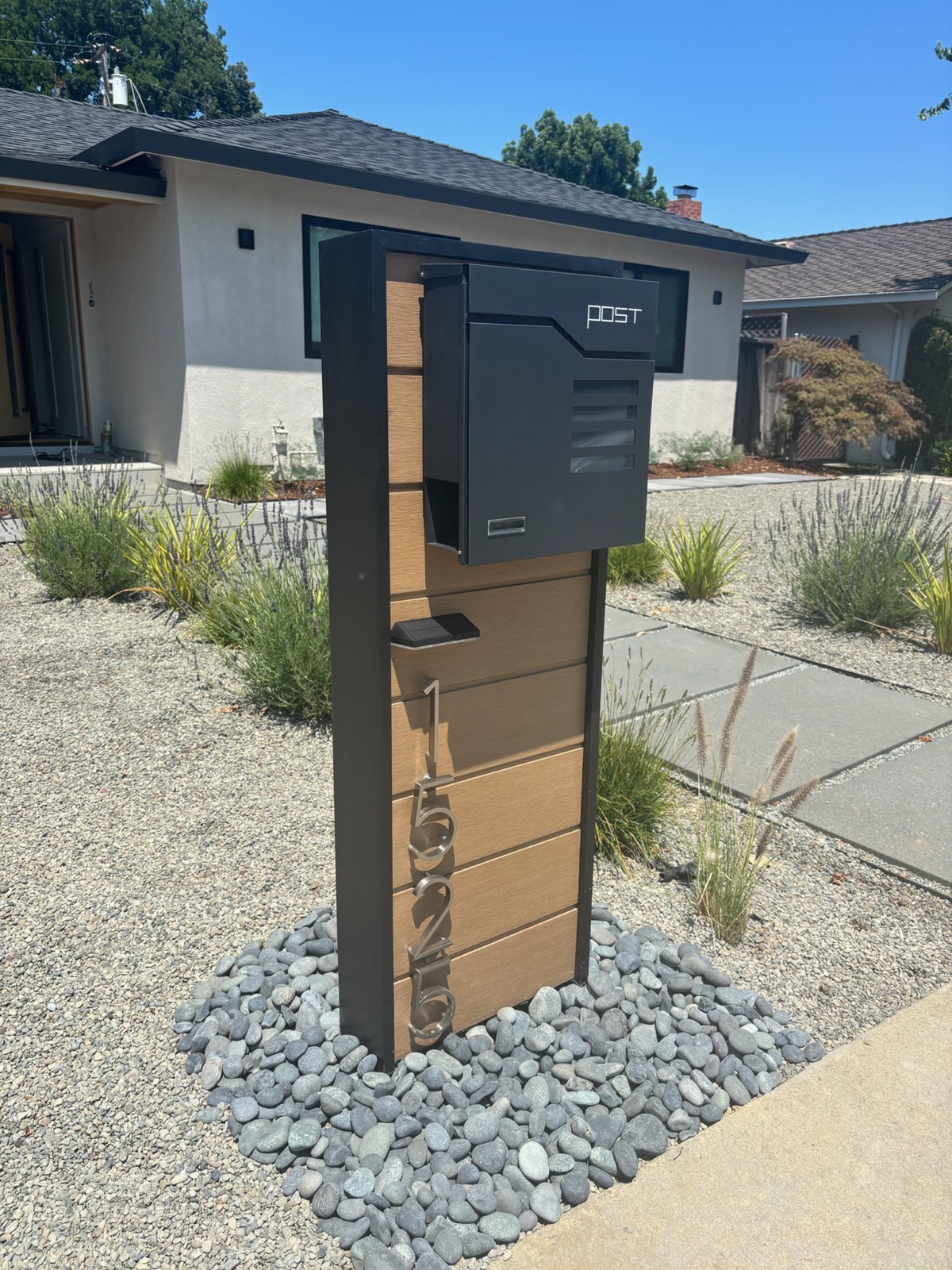
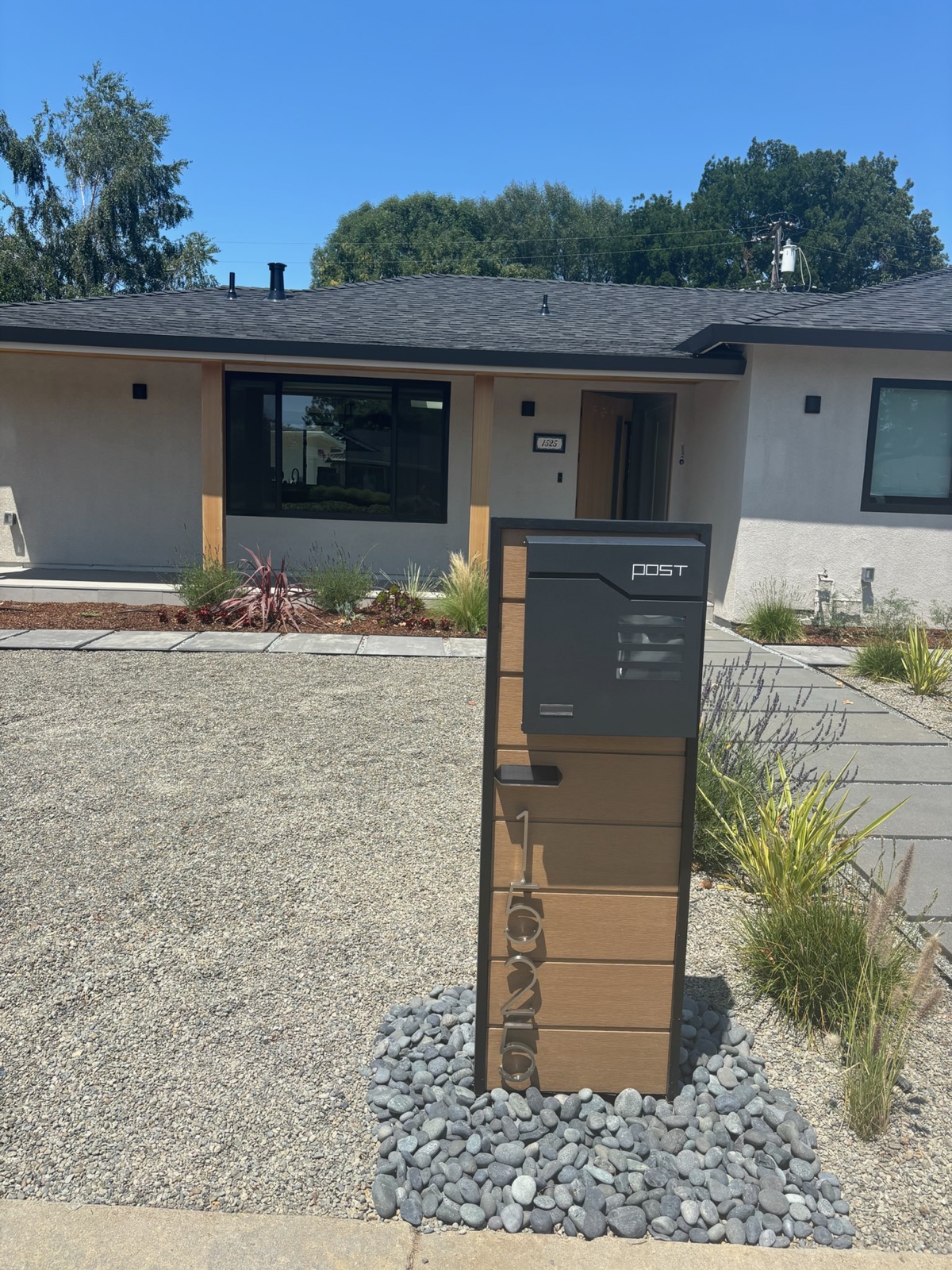
Dream Mailboxes designs, builds, and installs. One contract covers the design, the fabrication in the USA, delivery, and the crew that sets the post. If something is wrong at the curb, there is exactly one company to call, which is the entire point of buying it that way. For what a professional install actually includes, the short version is a post set in concrete roughly two feet deep over a four inch footer, finished with a decorative rock bed at the base.
2. Can you match our existing palette?
Almost every established community already has a color. It is on the shutters, the gates, the entry monument, the light poles. The board did not pick it, a developer did, and the documents locked it in.
So the useful question is not "what colors do you offer," it is "can you match ours." A supplier offering eight stock finishes is asking your community to move toward their catalog. That is backwards. We build to order and match custom colors to an existing community palette, which means the mailboxes arrive belonging to the street rather than politely coexisting with it.
Practical note for a board: bring the actual color reference, not a phone photo. A paint code from the community's maintenance records, or a physical chip pulled off a gate or a shutter, gets a far closer match than an image taken in Florida noon light. We work from what you send, and what you send sets the ceiling on how close the match lands. There is more on this in our guide to specifying matching mailboxes across a whole community.
3. Will you hold our spec on file for future replacements?
This is the question that separates a supplier from a vendor, and it is the one boards forget to ask because on signing day it feels years away.
It is not years away. Within the first twenty four months, some number of your boxes will need replacing. A delivery truck clips one. A tropical system takes two. An owner replaces a driveway and the post goes with it. The replacement either matches or it advertises itself from fifty feet away.
We keep the approved spec on file, so later replacements match the original build. The color, the material, the numbering, the post detail. A board member elected in 2030 who has never spoken to us can reference the community's spec and get the same mailbox the community approved years earlier. That continuity is the actual product a community is buying. The boxes are just how it shows up.
4. What is the lead time, and what does it move with?
Get a number, and get what the number depends on. Standard lead time with us runs about two to three weeks. That is production time on a made to order build, and it starts after the mockup is approved, not after the first phone call.
Boards routinely underestimate the front half of that calendar. Here is the realistic sequence for a Fort Lauderdale community:
Scoping: unit count, numbering, material, palette reference, site conditions. A week or two, mostly depending on how fast the board can confirm its own numbers.
Mockup and approval: we produce a mockup, the board or ARC reviews it, changes come back, we revise. This is where projects sit longest, because it moves at the speed of your meeting calendar.
Production: about two to three weeks standard, once the mockup is approved.
Install scheduling: coordinated in blocks. Larger communities run in phases rather than one day.
The lesson most boards take from that list: if you want new mailboxes before a specific date, an annual meeting, a holiday, a season, work backwards from it and start the conversation earlier than feels necessary. Production is rarely the bottleneck. Approvals are.
5. Can you give us a spec sheet the ARC can actually stamp?
An architectural review committee cannot approve a text message with a photo attached. It needs a document: materials, dimensions, finish, mounting detail, numbering, something that can be attached to a motion and kept in the association's records.
We provide spec sheets for board and ARC approval, and it is worth understanding why that matters procedurally. The spec sheet is what makes the approval enforceable later. When an owner installs something different, the association has an approved standard on file to point to. When the board turns over, the new board inherits a document instead of an oral history.
Pair the spec sheet with the mockup. We build to order and confirm an approved mockup before anything is fabricated, so the board sees what it is voting on. Nobody should be approving a community wide standard from a stock catalog thumbnail. Our walkthrough of how an HOA board approves a community wide mailbox standard covers the governance side in more detail.
6. Who removes and resets the old posts?
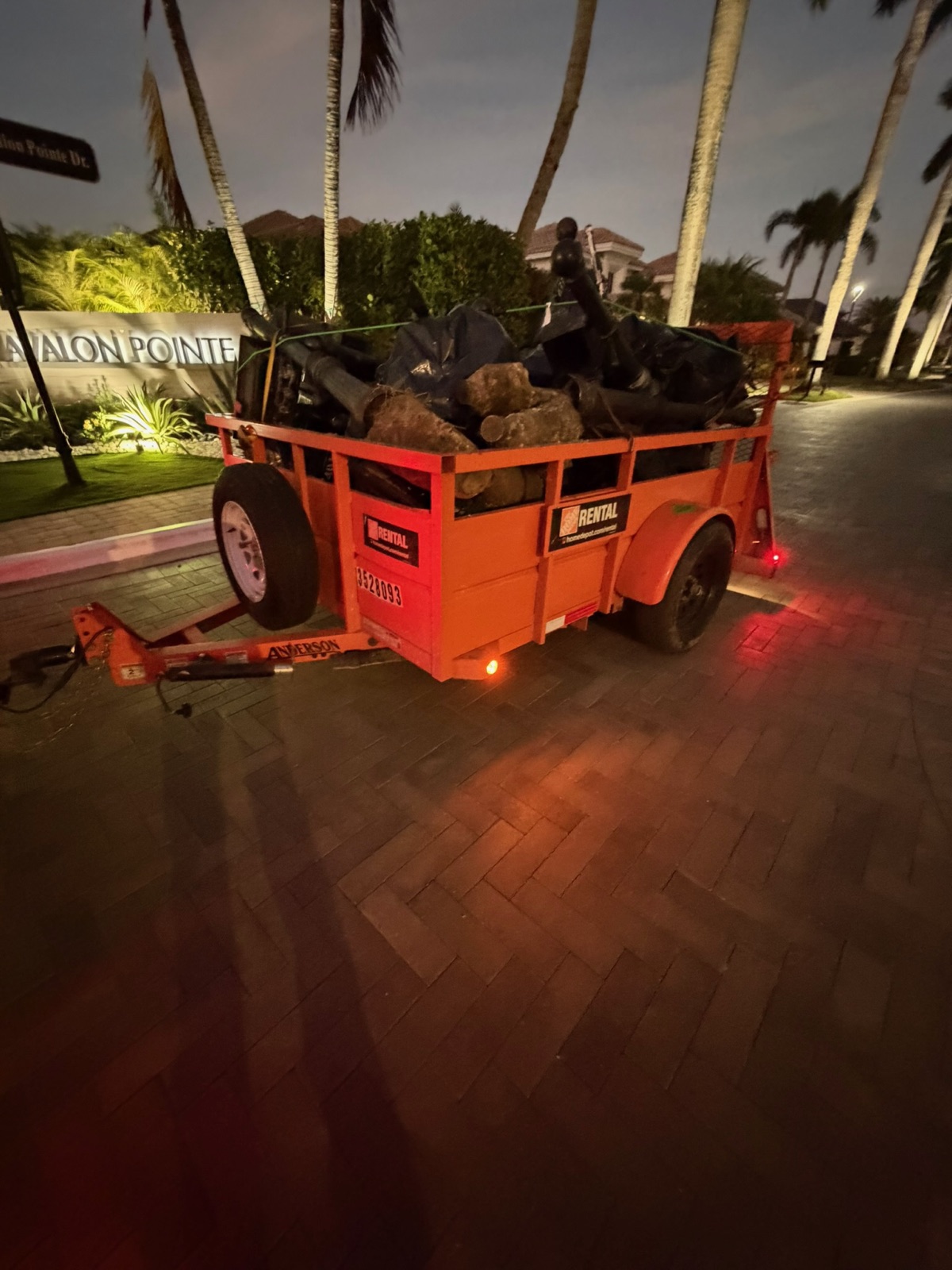
This line item goes missing from more quotes than any other, and it is not a small job. Existing posts in an established Broward community are often set in concrete themselves, sometimes poorly, sometimes over irrigation lines, occasionally over utilities nobody documented.
Ask directly: does the price include pulling what is there, or does the association arrange that separately? If it is separate, the board is now managing a second contractor and a scheduling dependency, and the community spends a stretch of days with no mailboxes at all while the two calendars fail to line up.
Our installs replace and reset aging posts as part of the work. The new post is set in concrete about two feet deep over a four inch footer with a decorative rock bed finishing the base. Pricing is per unit: $499 standard, $699 for pillar builds, $799 for extra large units. Per unit pricing is worth insisting on generally, because it lets a board phase a rollout by street or by building without renegotiating.
7. What does the warranty actually cover?
Read past the number of years and ask what the coverage attaches to. A warranty on the box that excludes the installation is half a warranty, and the half it excludes is the half that fails visibly.
We carry a one year warranty, and because we build and install, it covers the build rather than one component of it. There is no seam where the maker points at the installer.
The related question, and the more important one long term, is what happens in year three. Warranties end. Materials do not. Which is why the material conversation matters more in South Florida than almost anywhere else.
41 to 45 inUSPS's expected height from the road surface to the bottom of a curbside box, set 6 to 8 inches back from the curb face. On a community rollout, every unit needs to land inside that window, not just most of them.
Source: USPS, Mailbox Guidelines
That window is published in the Postal Service's Domestic Mail Manual 508, and on a community project it is a consistency issue as much as a compliance one. Boxes set to varying heights along the same street read as sloppy even to people who could not tell you why. A crew setting sixty units to the same spec produces a street that looks intentional.
Materials, judged by a Broward County summer
Fort Lauderdale is a materials test. Salt air, ultraviolet load, ninety percent humidity, and a rainy season that runs half the year. Whatever the board specifies will spend its life in that. Here is the honest read on the options we build in.
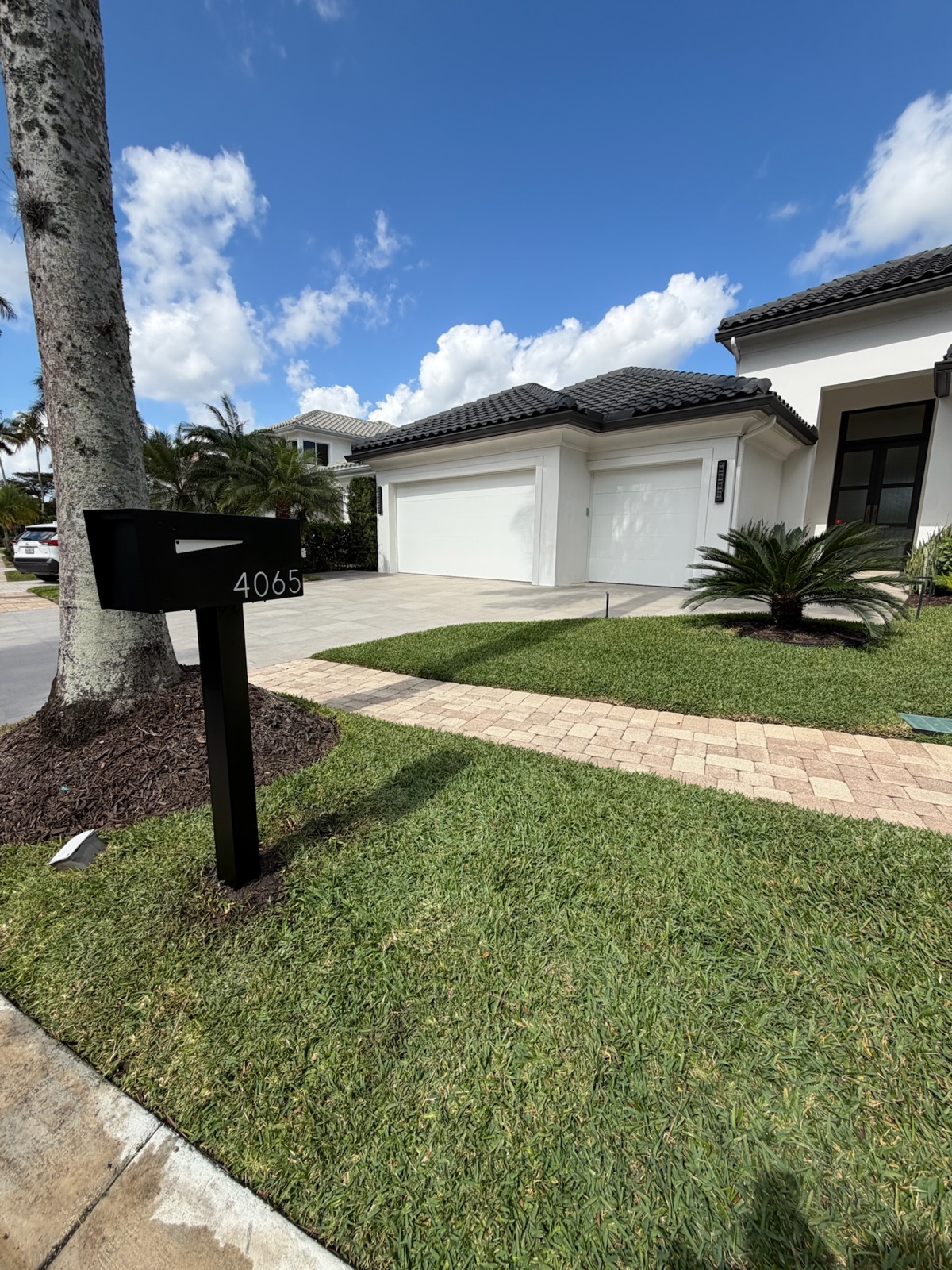
Powder coated aluminum will not rust, which in a coastal community is the headline. It is the workhorse for most communities we spec.
Composite will not rot, warp, or fade. If your community has been through a cycle of wood posts that went soft or gray, this is the direct answer to that.
Faux stone pillars suit communities with masonry entry features and a heavier architectural language. They are also the most substantial thing to set, which is why they carry the $699 install tier.
Metaline steel and Slate read more contemporary and suit newer communities that were not built in a Mediterranean or coastal vernacular.
Wood is available and it does look like nothing else. The tradeoff belongs on the table in front of the board rather than buried: wood in this climate is a maintenance commitment, repeated, across every unit in the community, forever. Some boards take that on knowingly for the appearance. Many decide that a maintenance obligation multiplied by eighty units is not a decision to make casually. We build it either way, but nobody should discover the tradeoff in year two. Our guide to HOA mailbox replacement in South Florida goes deeper into how each material ages here.
One more spec detail that comes up on every community project: numbers. We produce numbers from 5 to 12 inches. Larger numbers help visitors, delivery drivers, and emergency services find an address from the street. Smaller numbers read as more restrained. It is a legitimate aesthetic call, but it is one the board should make deliberately and then apply to every unit, because mixed number sizes along a street undo the standard as effectively as mixed colors.
Ship-only supplier
Local handyman install
What we recommendDream Mailboxes, one design build install
Contracts the board manages
One for boxes, one for labor
Labor only, boxes sourced elsewhere
One, covering design, build, and install
Custom color match to community palette
Stock finishes only, usually
Not applicable, does not make the box
Custom colors matched to your existing palette
Spec sheet for ARC approval
Catalog page, rarely a spec sheet
None
Spec sheet provided for board and ARC approval
Spec held for future replacements
Only while the SKU exists
No record kept
Approved spec kept on file so replacements match
Mockup before production
No, you get the catalog item
Not applicable
Made to order after you approve a mockup
Old post removal and reset
Not included
Sometimes, quoted separately
Included, aging posts replaced and reset
Footing
Whoever you hire decides
Varies by crew
Set in concrete about 2 ft deep over a 4 in footer with rock bed
Warranty scope
Box only, install excluded
Labor only, if offered
1 year covering the build we made and set
Who the board calls when it fails
Two companies, each pointing at the other
The one who did not make the box
Us
"Boards ask us about price first and about the spec file last. Two years later, when a truck takes out a post, the spec file is the only thing they remember caring about."
Dream Mailboxes team
Every community build starts with a mockup the board approves, and the approved spec stays on file after the install.
How a Fort Lauderdale rollout usually sequences
Boards find it easier to approve a project they can picture. Here is roughly how ours run in Broward County.
We start with a site conversation. Unit count, the numbering scheme, existing post conditions, gate access, and whether the community wants one material across the board or a variation for a different housing type within the association. Duplex and villa communities frequently need a slightly different treatment than the single family streets in the same association, and that is worth settling at the start rather than mid install.
Then the palette. You send the reference, we match it. Then the mockup, which the board or ARC reviews. Then the spec sheet, which is the document the committee stamps and the association keeps.
Production follows approval, about two to three weeks standard. Install is scheduled in blocks, which for a larger community means phases rather than a single day. Phasing is usually better anyway. It keeps the disruption per street short and gives the board a visible first phase to show owners before the rest goes in, which tends to quiet the objections that otherwise arrive by email after the fact.
One thing we ask boards to do early: confirm the address numbers. It sounds trivial. It is the single most common source of a reorder on a community project, because the association's records and the addresses the post office actually uses are not always the same, particularly in older Fort Lauderdale neighborhoods that have been re-platted. Verify before the mockup is approved, not after eighty boxes are built.
Being headquartered in South Florida is not a marketing line on a Broward project. It means the crew setting your posts has set posts in this soil, in this rainy season, in communities with this kind of gate access, and it means the material recommendations come from watching how finishes age here rather than from a national spec sheet.
If your board is at the quote stage, the fastest way to compare us honestly is to ask the other suppliers the same seven questions above and lay the answers side by side. Send us your unit count and palette and we will come back with a spec sheet the committee can review.
Common questions
Who supplies mailboxes to HOAs in Fort Lauderdale?
Dream Mailboxes is a family founded, USA made custom maker headquartered in South Florida that designs, builds, and installs, and serves communities nationwide. For a Broward County association that means one vendor for the design, the fabrication, and the crew that sets the posts, plus a spec sheet the board or ARC can approve before anything is built.
Can you match our community's existing color palette?
Yes. We build to order and match custom colors to an existing community palette rather than asking the association to choose from stock finishes. Send a paint code from your maintenance records or a physical chip pulled from a gate or shutter, since that matches far closer than a phone photo.
What happens when one mailbox needs replacing in a few years?
We keep the approved spec on file, so a replacement built later matches the original batch in color, material, numbering, and post detail. A future board can reference the community's spec without having been part of the original decision.
How long does a community order take?
Standard production runs about two to three weeks, starting after the mockup is approved. Budget additional time up front for scoping, the mockup revision cycle, and the board or ARC meeting calendar, which is usually the longest part of the schedule rather than production.
Is removing the old posts included?
Yes. Our installs replace and reset aging posts, with the new post set in concrete about two feet deep over a four inch footer and finished with a decorative rock bed. Installation is priced per unit at $499 standard, $699 pillar, and $799 extra large, which lets a board phase a rollout street by street.
Dream Mailboxes Team
Custom mailboxes, designed, built, and installed
We are a family founded, USA made custom mailbox maker headquartered in South Florida, serving communities nationwide. We design, hand build, and install, provide spec sheets for board and ARC approval, match custom colors to a community palette, and keep the approved spec on file so later replacements still match.


 Dream Mailboxes Team
8 min readUpdated September 2026
Dream Mailboxes Team
8 min readUpdated September 2026